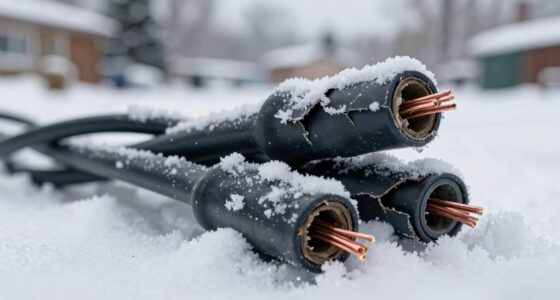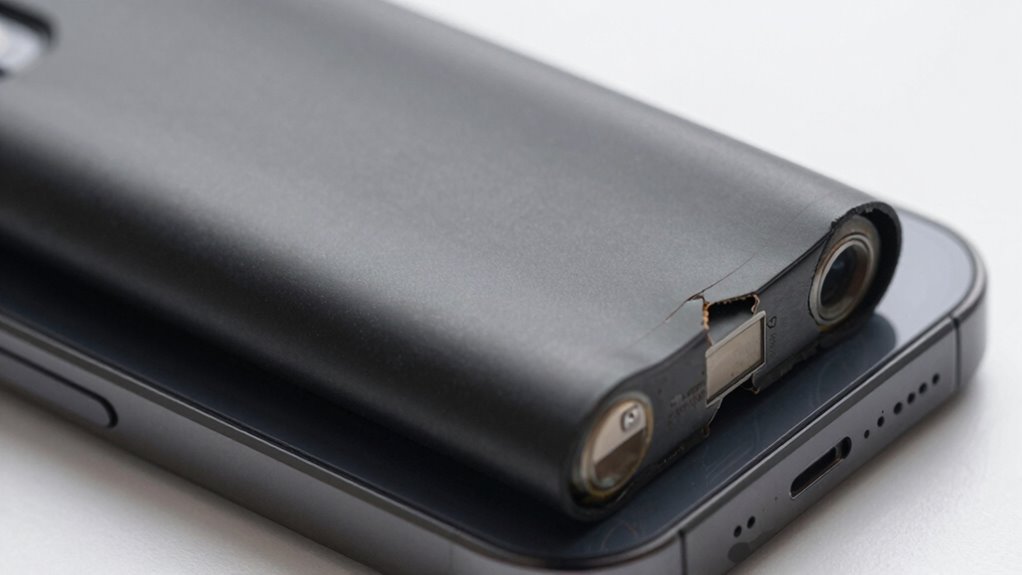

If you notice your battery swelling, disconnect the device immediately, turn it off, and move it to a safe, well-ventilated area away from heat or flames. Don’t puncture, squeeze, or try to fix it yourself—these actions can cause fires or leaks. Handle it with insulated gloves and store in a non-flammable container until you can have it disposed of properly. Continue exploring for essential safety tips to prevent hazards.

Get backup power and energy gear delivered free — and shop member deals
- Fast, free delivery on millions of items
- Access to Prime Big Deal Days deals on October 6–7
- Prime Video, Amazon Music and more included
Key Takeaways
- Immediately disconnect the device from power and turn it off to prevent further damage or hazards.
- Handle the swollen battery with insulated gloves, avoiding punctures or squeezing, and transfer it to a non-flammable surface.
- Do not attempt to puncture, crush, or repair the battery yourself; dispose of it through authorized e-waste channels.
- Keep the battery isolated from other electronics and store in a cool, dry, fire-resistant container until proper disposal.
- Avoid using the device or charging it further; seek professional assistance for safe removal, inspection, or replacement.
Recognizing the Signs of a Swollen Battery

A swollen battery often shows visible signs that indicate something’s wrong before it becomes dangerous. You might notice the device feels unusually bulky or feels softer when pressed. The casing may appear deformed, bulging, or warped, often lifting or lifting away from the device. Sometimes, the battery surface develops cracks or leaks, and you might see discoloration or corrosion around the edges. In some cases, a swollen battery causes the device to malfunction, shut down unexpectedly, or fail to hold a charge. Keep an eye out for a distorted case, swelling, or unusual bulges. Recognizing these early signs can prevent accidents and help you take prompt action to ensure safety. Never ignore visible signs of swelling; it’s a warning you shouldn’t overlook. Proper handling and immediate response are essential in battery safety to prevent potential hazards, including fire risks that can occur if the swelling worsens. Being aware of proper disposal methods can also help prevent environmental contamination and further hazards. Additionally, understanding risk management strategies can help you mitigate harm and protect yourself and your device.
Immediate Actions to Take When Swelling Is Detected

When you notice signs of a swollen battery, it’s vital to act immediately to prevent potential hazards. First, stop charging your device and disconnect it from power. Power down the device safely, and if possible, move it to a well-ventilated, non-flammable area away from combustible materials. Handle the swollen battery with insulated gloves and place it on a non-flammable surface, such as metal or ceramic. Store it separately from other batteries, and avoid any contact with skin or eyes in case of leakage. Do not attempt to puncture, crush, or repair the battery. If the battery is removable, seal it in a non-conductive, fire-resistant container. Understanding battery chemistry can help you recognize warning signs earlier and prevent dangerous situations. Being aware of battery chemistries also supports safe disposal practices and reduces environmental impact. Recognizing warning signs early allows for more effective intervention and minimizes risk. Contact the manufacturer or a professional disposal service for proper handling and recycling. Additionally, understanding battery chemistry can help you recognize warning signs earlier and prevent dangerous situations.
Things to Avoid Doing With a Swollen Battery

Avoid puncturing, crushing, or attempting to manually compress a swollen battery, as doing so can trigger thermal runaway, fires, or explosions. Never try to squeeze or force the battery back into its case—internal damage or leaks could worsen, increasing hazards. Don’t continue charging or connect the device to power; this raises the risk of overheating and gas buildup. Avoid using makeshift repairs like taping or pressing on the bulge, which can conceal serious damage and delay proper handling. Never dispose of a swollen battery in household trash, recycling, or incinerate it—these actions pose environmental and fire risks. Also, refrain from handling it with unprotected hands or near heat sources until it’s safely isolated and disposed of properly. Proper disposal methods are essential to prevent environmental contamination and safety hazards. Recognizing the importance of battery safety helps prevent accidents and ensures proper handling of damaged batteries. Additionally, understanding battery technology can aid in identifying potential issues early and avoiding dangerous situations. Being aware of signs of battery failure allows for quicker response and safer disposal practices.
Proper Handling and Temporary Storage Procedures
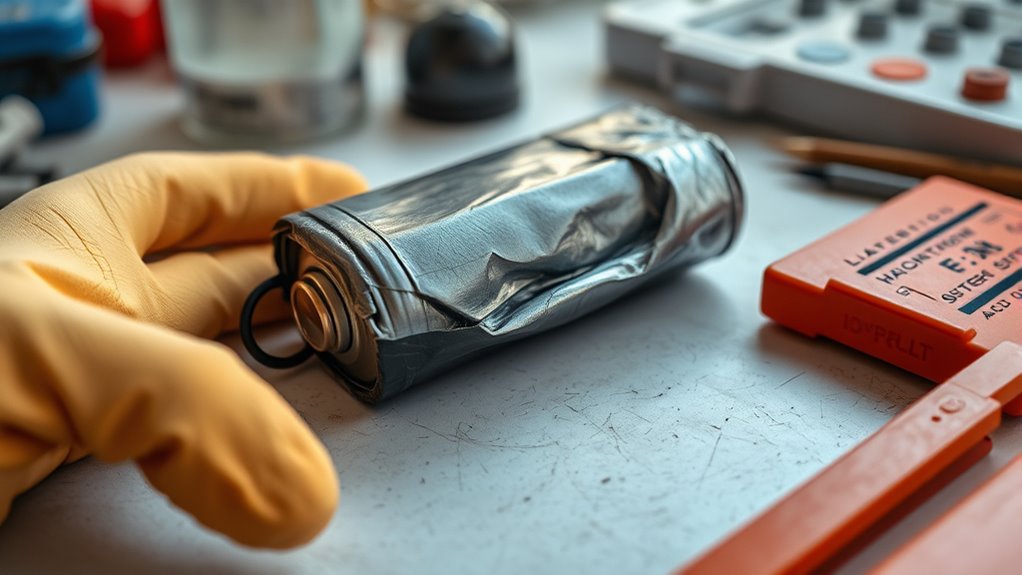
When handling a swollen battery, always wear protective equipment like gloves and eye protection to prevent contact with leaked chemicals. Afterward, isolate the battery from other items and store it in a non-flammable area to reduce fire risk. Proper temporary storage helps guarantee safety until you can dispose of or have it inspected professionally. Additionally, understanding battery safety protocols can help you respond more effectively in such situations. Being aware of fire prevention measures related to lithium batteries can further minimize hazards during storage. Consulting trusted Gold IRA markets resources can also provide guidance on safe disposal and professional inspection procedures. Recognizing vetted dog care practices may be useful if you need to seek assistance or advice on pet safety during emergencies. In cases of free floating batteries, ensure they are kept away from metal objects to prevent short circuits and potential hazards.
Use Protective Equipment
Handling a swollen or leaking battery requires the use of appropriate protective equipment to minimize exposure to hazardous chemicals and reduce the risk of injury. Always wear insulated gloves to prevent skin contact with leaked electrolyte, which can be corrosive. Use safety goggles or a face shield to protect your eyes from splashes or fumes. Work in a well-ventilated area away from heat sources, open flames, or combustible materials. If possible, handle the battery with non-conductive tools to avoid short circuits. Keep your clothing free of metal jewelry or accessories that could cause sparks. When moving the battery, do so gently to prevent rupture or further damage. Proper protective gear ensures your safety during handling, storage, and disposal processes. Additionally, it is advisable to consult air purifier maintenance guidelines to ensure proper handling and disposal of batteries to prevent environmental contamination. Always be aware of battery safety protocols to mitigate risks associated with hazardous materials. Moreover, understanding vetted safety equipment can further improve your protective measures during such incidents. Regular training on piercing care and hygiene can also prepare you for managing unexpected situations involving body modifications. Being familiar with proper storage procedures can help prevent accidents related to battery swelling.
Isolate From Other Items
To minimize the risk of thermal runaway or fire, you must isolate a swollen or leaking battery from other items immediately. This prevents potential fires, chemical exposure, or damage to nearby objects. First, place the battery on a non-flammable surface such as ceramic or metal, away from combustible materials. Keep it separated from other batteries or electronics to avoid cross-contamination or short circuits. Use a non-conductive container, like a glass or metal tray, to hold the battery securely. Avoid stacking or crowding other items around it. Ensure the area is well-ventilated and restrict access to prevent accidental contact. Proper isolation reduces the chance of a dangerous incident and keeps others safe during handling and transport. Additionally, consult nanotechnology advancements that can offer safer, more efficient disposal or containment methods for damaged batteries. Implementing advanced containment techniques can further reduce risks associated with damaged batteries during disposal.
Store in Non-Flammable Area
Storing a swollen or leaking battery in a non-flammable area is essential to minimize fire and chemical hazards. Place the battery on a non-flammable surface like ceramic or metal in a well-ventilated space away from heat sources, open flames, and combustible materials. Keep it isolated from other batteries and electronics to prevent short circuits or propagation of damage. Use a fire-resistant container, such as a metal or glass tray, to contain any leaks or further swelling. If the battery is removable, carefully handle it with insulated gloves and eye protection. Do not store it in pockets, bags, or near clothing. Ensure the storage area remains cool, dry, and free from direct sunlight until proper disposal or professional handling.
Safe Transportation and Disposal Guidelines

Transporting and disposing of swollen batteries require careful adherence to safety protocols to prevent fire, chemical exposure, and environmental harm. Always handle swollen batteries with insulated gloves and eye protection. Place them in a non-conductive, fire-resistant container and keep them separate from other batteries. When transporting, ensure terminals are covered with tape to avoid short circuits, and follow local hazardous-waste rules. Do not attempt to repair or dismantle the battery yourself, as this risks leaks or fires. Instead, hand over the batteries to authorized e-waste recyclers, retailer take-back programs, or hazardous-waste facilities. Proper disposal prevents environmental contamination and reduces fire hazards. Always follow manufacturer instructions and local regulations to guarantee safe and responsible handling during transportation and disposal.
- Use non-conductive containers with terminals covered
- Transport to certified hazardous waste facilities or recyclers
- Follow local regulations for packaging and shipping
Long-term Strategies to Prevent Battery Swelling

Implementing proactive habits and choosing quality components are essential for preventing battery swelling over the long term. Always use chargers and cables recommended by your device manufacturer to avoid overcharging or damaging the battery’s internal structure. Store your devices and spare batteries in cool, dry places, avoiding direct sunlight and high humidity that accelerate aging. Regularly monitor battery health and replace batteries showing signs of rapid capacity loss or excessive heat during charging. Avoid charging to 100% or discharging completely, as these extremes stress the battery and promote swelling. Select devices from reputable manufacturers with robust battery management systems (BMS) and transparent support policies. Maintaining good charging habits and environment control considerably reduces the risk of long-term battery degradation and swelling.
Why Professional Assistance Is Critical

Because swollen batteries pose significant safety risks, seeking professional assistance is essential rather than attempting DIY repairs or disposal. Professionals have the expertise, proper tools, and safety protocols to handle these hazardous batteries safely. Handling a swollen battery improperly can cause fires, explosions, or chemical leaks. By consulting specialists, you guarantee proper disposal and reduce risk to yourself and the environment. They can evaluate the battery’s condition, determine the cause of swelling, and advise on safe replacement options.
- Properly dispose of damaged batteries through authorized e-waste programs
- Avoid shortcuts that could cause thermal runaway or chemical exposure
- Ensure safe transportation and handling by trained personnel
How to Choose Safer Batteries and Charging Practices

You should choose batteries that are certified by reputable organizations to guarantee safety and quality. Following proper charging habits, like using the right charger and avoiding extreme temperatures, can considerably reduce risks. By making informed choices and practicing safe charging, you help prevent battery swelling and potential hazards.
Opt for Certified Batteries
Choosing certified batteries is essential for guaranteeing safety and reducing the risk of swelling, fire, or explosion. Certified batteries come from reputable manufacturers that adhere to strict safety standards, quality controls, and testing procedures. They often feature built-in safeguards like advanced battery management systems (BMS) that prevent overcharging, overheating, and deep discharging. When selecting batteries, verify compatibility with your device and look for official certification marks (like UL, IEC, or CE). Avoid unbranded or cheap alternatives, as they often lack proper safety features and may contain manufacturing defects. Investing in certified batteries helps ensure reliable performance and reduces the likelihood of internal damage that can lead to swelling or dangerous failures.
- Check for official safety certifications (UL, CE, IEC)
- Purchase from reputable, authorized dealers
- Avoid unbranded or suspiciously cheap options
Follow Proper Charging Habits
Adopting proper charging habits is essential to maintain your battery’s safety and longevity. Always use the charger and cables recommended by the manufacturer, and avoid untrusted fast chargers that bypass safety features. Don’t charge your device at extreme temperatures or leave it plugged in constantly; these conditions increase stress on the battery. Avoid charging to 100% or discharging completely to zero whenever possible, as these extremes accelerate degradation. Keep your device in a cool, dry place during charging, and unplug once it’s full. Regularly monitor battery health and replace aging batteries before they swell. By following these habits, you reduce the risk of overheating, gas buildup, and swelling, ensuring your device stays safe and functional longer.
Frequently Asked Questions
Can a Swollen Battery Still Be Used Safely Temporarily?
You should not use a swollen battery temporarily. It poses serious safety risks like fire, explosion, or chemical leaks. Instead, immediately stop using the device, disconnect it from power, and isolate the battery in a non-flammable container. Contact the manufacturer or professional disposal services for proper handling. Using a swollen battery, even briefly, can endanger you and your surroundings, so always prioritize safe disposal.
How Long Can a Swollen Battery Be Stored Before Disposal?
You should dispose of a swollen battery as soon as possible—think of it as a ticking time bomb, ready to ignite unexpectedly. Store it in a non-flammable container in a ventilated area, away from heat or flames, and handle with care. Don’t wait days or weeks; prolonged storage increases risk of leakage, fire, or environmental harm. Contact a professional recycler immediately for safe disposal, prioritizing safety above all.
Is It Safe to Puncture or Dismantle a Swollen Battery?
No, it’s not safe to puncture or dismantle a swollen battery. Doing so can cause thermal runaway, fires, or explosions because it releases flammable gases and hazardous chemicals. You should handle the battery carefully, place it in a non-conductive, fire-resistant container, and contact professional disposal services. Never try to repair or open the battery yourself, as this poses serious safety risks.
Can Swelling Occur Without Noticeable External Damage?
Swelling can happen silently, like a quiet storm brewing inside your device, without any outward sign. You might not see cracks or bulges, but the internal pressure increases from gas generation, electrolyte breakdown, or manufacturing flaws. This unseen danger means your battery could be expanding beneath the surface, risking rupture or fire. Always stay alert, regularly check for subtle changes, and handle any suspicion of swelling with caution and proper disposal.
Are All Lithium-Ion Batteries Equally Prone to Swelling?
Not all lithium-ion batteries are equally prone to swelling. You should know that batteries from reputable manufacturers with good quality control, advanced BMS, and proper design are less likely to swell. Cheaper or poorly made batteries, or those with manufacturing defects, are more vulnerable. Always use certified chargers and avoid extreme temperatures to minimize swelling risk. Regularly monitor your battery’s health and replace it if you notice any signs of damage or excessive heat.
Conclusion
Remember, a swollen battery is like a warning whisper from your device—pay attention before it becomes a loud problem. Handle it with care, avoid rushing into fixes, and seek professional help when needed. By choosing smarter charging habits and safer batteries, you can keep the quiet signals of trouble at bay. Stay vigilant, and let your device’s gentle hints guide you toward safer, more confident tech use.
Fall Picks
fall essentials
As an affiliate, we earn on qualifying purchases.