
Your refrigerator typically uses about 1 to 2 kilowatt-hours of power daily, depending on its size, age, and efficiency. Well-maintained, modern models with good insulation and energy-efficient parts tend to use less energy. Factors like temperature settings and placement also impact consumption. By understanding how these elements work, you can optimize your fridge’s performance and save energy—discover more ways to cut costs and improve efficiency as you explore further.
Key Takeaways
- Standard refrigerators typically consume between 1–2 kWh daily, depending on size, age, and efficiency.
- Energy-efficient models with higher ratings tend to use less power per day.
- Power use varies based on temperature settings, placement, and how often the door is opened.
- Regular maintenance, like cleaning coils and sealing doors, reduces daily energy consumption.
- Using a watt-meter or energy monitor over 24 hours provides accurate daily power usage data.

Jackery Portable Power Station Explorer 300, 293Wh Backup Lithium Battery, Solar Generator for Outdoors Camping Travel Hunting Blackout (Solar Panel Optional)
SPEED UP YOUR RECHARGEABILITY: It takes only 2 hours to recharge 80% battery of the power station through...
As an affiliate, we earn on qualifying purchases.
Factors Affecting Refrigerator Energy Consumption
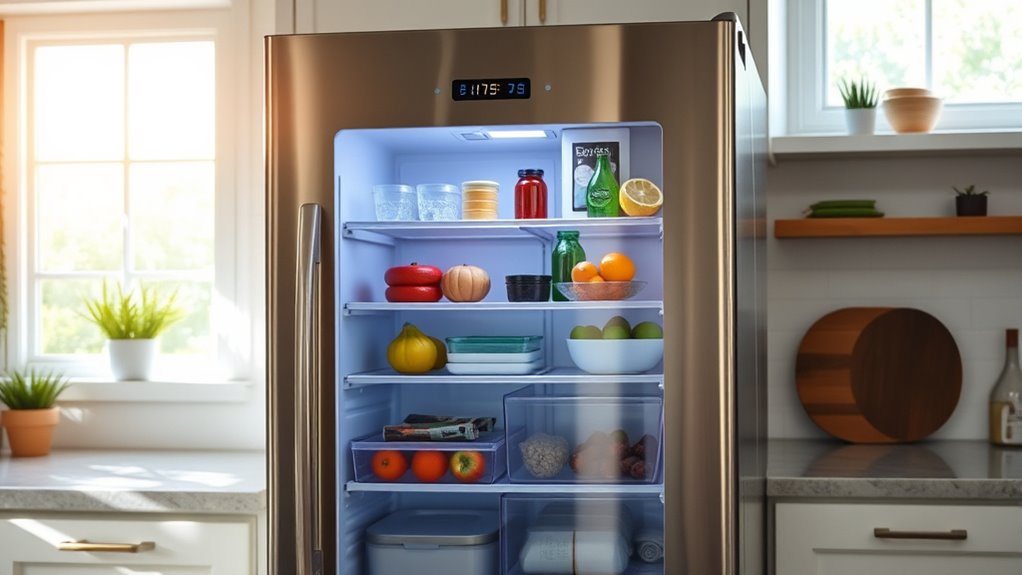
Several factors influence how much energy your refrigerator consumes. One key aspect is refrigerator insulation, which affects how well the appliance retains cold temperatures. Better insulation reduces the workload on your compressor, saving energy. Additionally, compressor technology plays a significant role; modern compressors are more efficient and adapt to cooling demands more effectively. If your fridge has advanced compressor systems, it will typically use less power compared to older models. The quality of insulation and the type of compressor work together to determine overall energy consumption. Ensuring your refrigerator is properly insulated and equipped with efficient compressor technology can substantially lower your energy bills. Regular maintenance, like sealing doors tightly, also helps optimize these factors and keeps energy use in check. Incorporating energy-efficient components into your refrigerator design further enhances its overall efficiency and sustainability. Understanding energy consumption patterns can help you better manage your household energy use and reduce costs.

Anker SOLIX C1000 Gen 2 Portable Power Station, 2,000W (Peak 3,000W) Solar Generator, Full Charge in 49 Min, 1,024Wh LiFePO4 Battery for Home Backup, Power Outages, and Camping (Optional Solar Panel)
49 Min UltraFast Recharging: With upgraded HyperFlash tech, fully recharge at 1,600W—for outage prepping, camping trips, or tailgating...
As an affiliate, we earn on qualifying purchases.
Average Daily Power Use of Standard Fridges
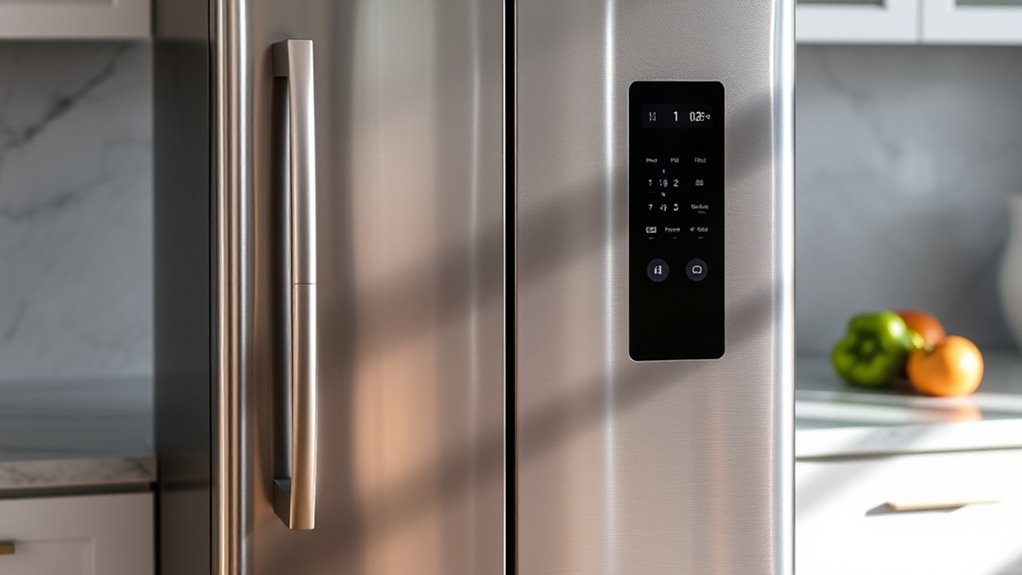
On average, a standard refrigerator consumes between 1 and 2 kilowatt-hours of electricity per day. Your fridge’s daily power use largely depends on its size, age, and energy efficiency. Higher energy star ratings typically mean lower daily energy consumption, helping you save money and reduce environmental impact. However, power consumption myths can lead you to overestimate or underestimate your fridge’s actual energy use. For example, some believe newer models always use less energy, but poorly maintained units or older, inefficient models can still be significant energy users. To get a clear picture, check your appliance’s energy label. Knowing the average daily power use helps you make informed decisions about energy-efficient appliances and better understand your household’s overall energy footprint. Understanding energy efficiency ratings can further assist you in selecting appliances that minimize energy consumption. Additionally, regular maintenance of your refrigerator can help ensure it operates at optimal efficiency. Properly sealing door gaskets and cleaning condenser coils are essential parts of refrigerator maintenance that can significantly impact energy use, especially when combined with energy-efficient design features.

Jackery Solar Generator 1000 v2 with 200W Solar Panel,1070Wh Portable Power Station LiFePO4 Battery,1500W AC/100W USB-C Output, 1Hr Fast Charge for Outdoor,Off-Grid Living,RV,Emergency
Powerful yet Compact: Boasting a 1,500W AC output and a 3,000W surge peak, the Solar Generator 1000 V2...
As an affiliate, we earn on qualifying purchases.
How to Calculate Your Refrigerator’s Energy Use
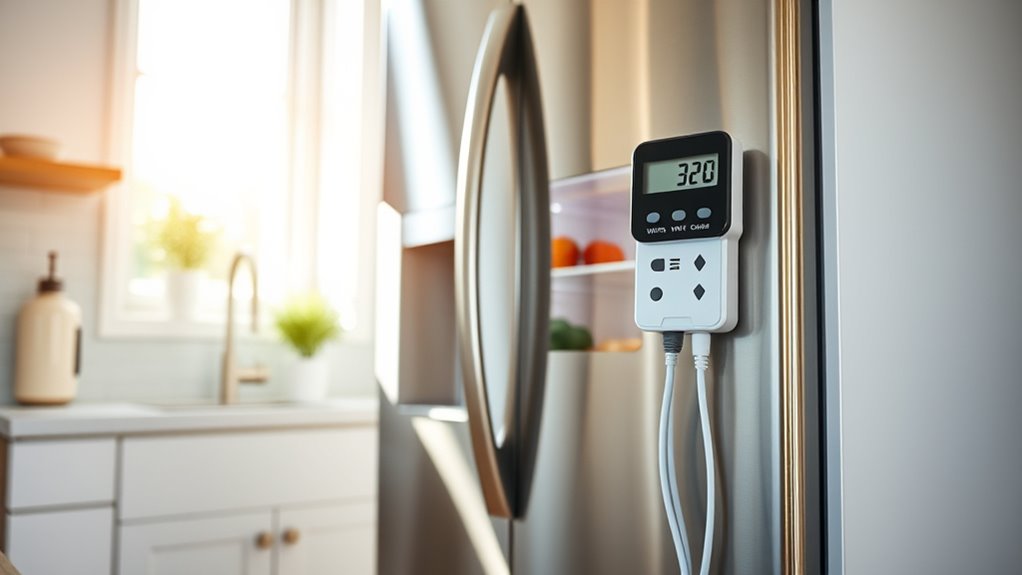
To accurately determine your refrigerator’s energy use, you need to track its power consumption over time. Begin by locating the refrigerator’s wattage, usually found on the label inside or behind the unit. Use a watt-meter or energy monitor plugged into the outlet, then connect your fridge to it. Record the power consumption over a 24-hour period, noting the readings at regular intervals. To perform a precise power calculation, multiply the average wattage by the number of hours the compressor runs each day. This gives you the daily energy consumption in watt-hours or kilowatt-hours. Tracking this data helps you understand your fridge’s actual energy use, allowing you to estimate costs and identify potential efficiency improvements. Energy monitoring tools can assist in providing more accurate readings and insights. Additionally, understanding the energy efficiency ratings of your appliance can help you choose models that consume less power over time. Being aware of power fluctuations can also help you identify irregularities in your fridge’s operation that may affect energy consumption.

Portable Solar Generator, 300W Portable Power Station with Foldable 60W Solar Panel,110V Pure Sine Wave 280Wh Battery Power Pack with USB DC AC Outlet for Camping Smart Devices RV Van Outdoor-Orange
Portable Generator with 60W Solar Panel Included: with a big battery pack, ZeroKor 300W power stations Generator are...
As an affiliate, we earn on qualifying purchases.
Comparing Energy Efficiency Ratings
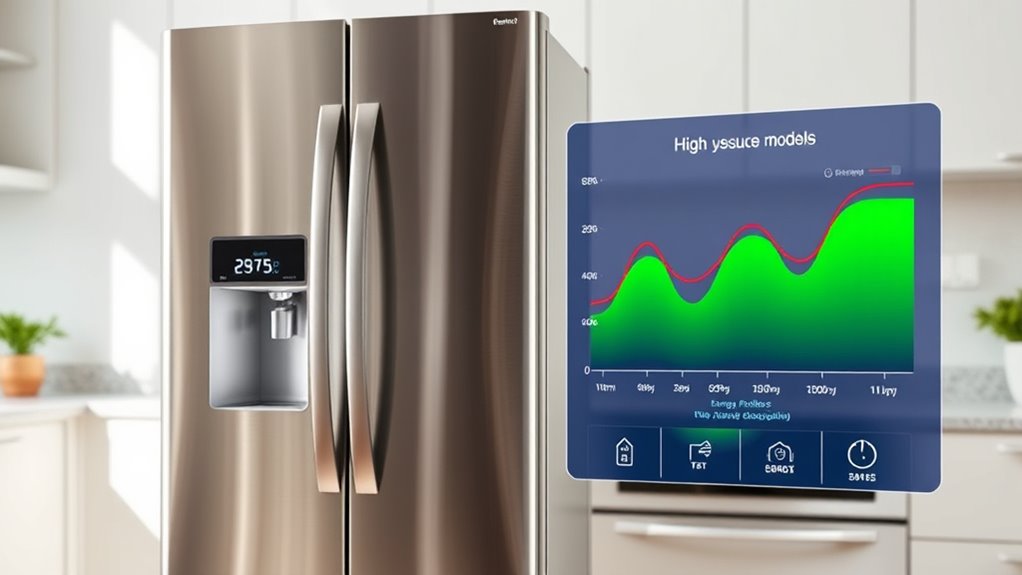
How do you determine which refrigerator is more energy-efficient? Start by comparing their Energy Star ratings and power consumption labels. These ratings indicate how well a fridge uses energy relative to its size and features. Look for models with higher Energy Star scores; they typically consume less power while performing well. Visualize it as choosing a device that:
- Minimizes your energy bills with lower power consumption
- Saves the environment by reducing energy waste
- Provides reliable cooling without excessive energy use
Focusing on these ratings helps you identify appliances that use less power daily. Energy efficiency ratings are a helpful tool in making informed purchasing decisions. Additionally, understanding energy consumption patterns can further guide you toward selecting the most efficient model for your needs. Recognizing power consumption variations among different models can help you make smarter choices. As technology advances, AI-driven solutions are increasingly used to optimize appliance performance and reduce energy use. Remember, an Energy Star-certified refrigerator is designed to be more efficient, offering savings over the long run while maintaining performance. Exploring energy-saving tips can also help you reduce overall electricity use and extend the lifespan of your refrigerator.
Impact of Size and Capacity on Power Usage
Larger refrigerators generally consume more power because they have more space to cool and maintain. With increased capacity, your fridge must work harder, especially if insulation isn’t ideal. Good refrigerator insulation helps reduce energy use by keeping cold air in and warm air out, offsetting some of the increased size’s impact. Additionally, bigger units typically have larger compressor sizes to handle the extra volume, which can lead to higher energy consumption. The compressor’s size directly influences how much power your fridge uses to maintain the set temperature. Keep in mind that a well-insulated, appropriately sized refrigerator can operate efficiently despite its capacity. Proper energy efficiency ratings can also guide you toward a more sustainable choice. Furthermore, understanding the power consumption of your specific model can help you better estimate daily energy use, especially when considering energy-saving features that many modern refrigerators include. Modern technology and design improvements continue to optimize energy use, making it possible for larger models to operate more efficiently. Additionally, choosing models with advanced insulation techniques can significantly reduce overall power consumption even in larger units.
The Role of Age and Maintenance in Energy Consumption

Older refrigerators tend to use more energy than newer, more efficient models. Regular maintenance, like cleaning coils and checking seals, can substantially reduce power consumption. Proper temperature settings also help guarantee your fridge isn’t working harder than it needs to. Additionally, understanding energy-efficient ratings can guide you in selecting models that consume less power. Some models with higher horsepower are designed to run more smoothly and efficiently, leading to lower energy use over time. Keeping your refrigerator well-maintained ensures optimal performance and energy savings, which can significantly lower your utility bills. Regularly monitoring energy consumption patterns can help identify if your refrigerator starts to use more power than usual, indicating potential issues to address.
Old vs. New Efficiency
As refrigerators age, their energy efficiency typically declines, making maintenance and timely upgrades crucial for saving power. Older models often have worn refrigerator insulation, which allows cold air to escape and forces the compressor to work harder. Additionally, outdated compressor technology consumes more energy compared to modern, energy-efficient systems. You might notice a difference in your fridge’s performance, with older units running longer or louder. Visualize the internal components wearing out, reducing cooling effectiveness. Common signs of decreased efficiency include:
- Poor insulation leading to temperature fluctuations
- A louder, less responsive compressor
- Higher energy bills despite minimal use
Understanding how fan trailers contribute to community-driven storytelling can inspire innovative approaches to appliance design and user engagement. Upgrading to newer models with advanced compressor technology and better insulation can substantially cut your energy consumption. It is also beneficial to consider professional maintenance to ensure all components function optimally and extend the appliance’s lifespan. Additionally, it’s helpful to regularly clean refrigerator coils to prevent dust buildup that can hinder cooling efficiency and increase energy use.
Maintenance Impact on Power
Regular maintenance plays a vital role in keeping your refrigerator energy-efficient, especially as it ages. Over time, dust and debris can clog condenser coils, forcing the compressor to work harder during cooling cycles. This increases power consumption and shortens the appliance’s lifespan. Additionally, the insulation quality can deteriorate with age, allowing heat to seep in and forcing the refrigerator to run more frequently. Properly cleaning coils and checking seals help maintain maximum insulation, reducing unnecessary cooling cycles. When your refrigerator is well-maintained, it doesn’t have to overcompensate for inefficiencies, which saves energy and lowers your utility bills. Regular upkeep ensures that your fridge runs smoothly, maintains consistent temperature, and consumes the least power possible over its lifespan.
Proper Temperature Settings
Proper temperature settings are essential for minimizing energy consumption, especially as your refrigerator ages or if it hasn’t been maintained properly. Incorrect temperature calibration can cause your fridge to work harder, increasing power use. When the temperature isn’t set correctly, your appliance may run more frequently during cooling cycles, wasting energy. To optimize efficiency, keep the fridge at the recommended 37°F (3°C) and the freezer at 0°F (-18°C). Visualize your fridge as a well-balanced system:
- A thermostat that accurately measures internal temperature
- Cooling cycles that run smoothly without excessive frequency
- Proper airflow around stored items to prevent overworking the compressor
Maintaining correct temperature settings ensures your fridge operates efficiently, reducing unnecessary power consumption over time.
Tips for Reducing Your Refrigerator’s Energy Footprint
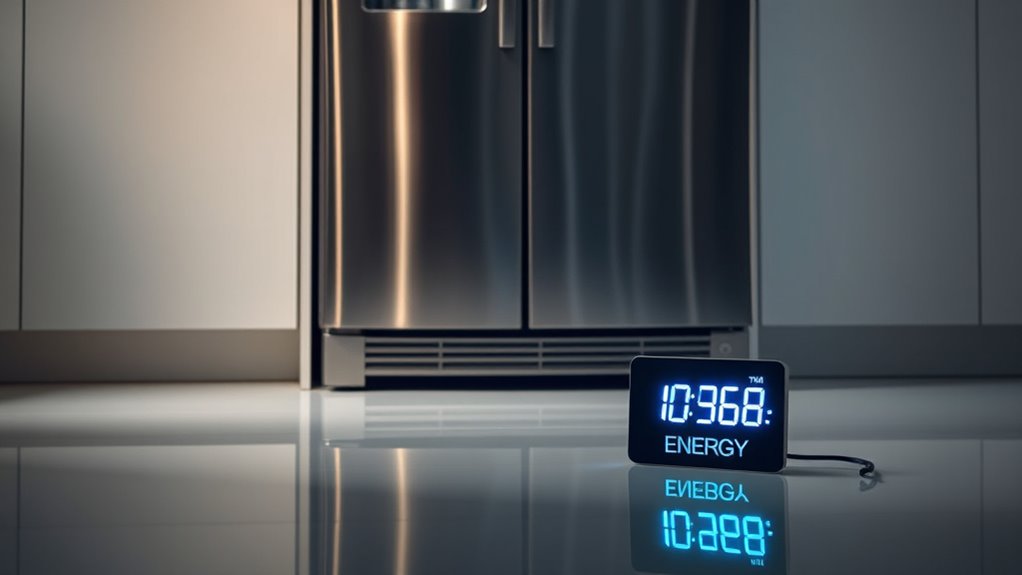
To cut down your refrigerator’s energy use, start by setting it to the most efficient temperature and avoiding unnecessary adjustments. Make sure to keep it well-maintained and properly positioned, away from heat sources and in a cool spot. These simple steps can make a big difference in reducing your energy footprint.
Energy-Efficient Settings
Adjusting your refrigerator’s settings can substantially cut down on energy use. Many models include energy saving modes that optimize compressor operation and reduce power consumption when full cooling isn’t needed. Familiarize yourself with the appliance labeling, which indicates energy efficiency ratings; choosing a model with a high rating means less energy is used daily. To maximize savings, set your fridge to the recommended temperature—around 37°F (3°C)—and avoid overloading it, which hampers airflow. Imagine the following:
- A sleek control panel with simple buttons for switching to eco mode
- Clear labels on the door indicating ideal temperature zones
- A modern display showing real-time energy consumption
Using these features effectively helps you lower your energy footprint while keeping your food fresh.
Proper Maintenance and Placement
Regularly cleaning the condenser coils and door seals guarantees your refrigerator runs efficiently. Proper placement also plays a crucial role in reducing energy use. Keep your fridge in a cool, ventilated spot away from heat sources like ovens or direct sunlight. Maintain good interior organization to prevent overstuffing, which hampers air circulation and affects food preservation. Efficient organization makes it easier to access items quickly and reduces the time the door stays open. Use this table to visualize best practices:
| Placement Tips | Organization Tips | Food Preservation Focus |
|---|---|---|
| Keep away from heat sources | Avoid overstuffing | Maintain ideal temperatures |
| Ensure good ventilation | Use clear containers | Keep perishable items fresh |
| Position in a cool spot | Regularly clean interior | Minimize door openings |
Proper maintenance and placement extend your fridge’s lifespan and lower energy costs.
Understanding Power Consumption Labels and Metrics
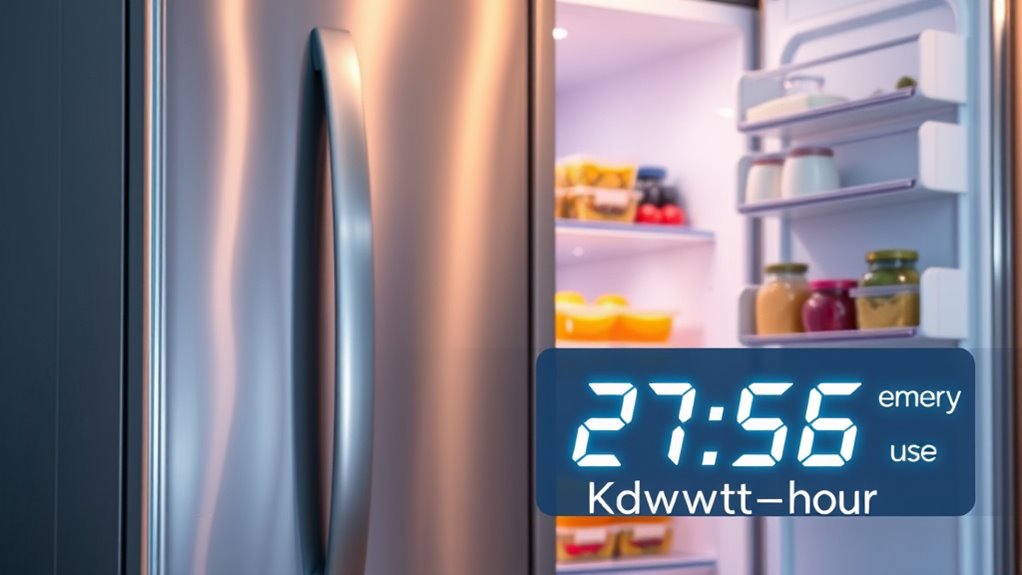
Understanding power consumption labels and metrics is essential when evaluating how much energy your refrigerator uses. These labels provide crucial information, helping you compare models and estimate daily energy use. Look for the energy metric, often expressed in kilowatt-hours (kWh) per year, which indicates overall efficiency. Power consumption labels typically feature:
- A clear figure showing annual energy consumption, like “350 kWh/year”
- Efficiency ratings or star ratings to compare models easily
- Additional details on typical daily or monthly use
Cost Implications of Refrigerator Energy Use
The energy consumption of your refrigerator directly impacts your monthly electricity bills. Conducting a cost analysis helps you understand how much energy use adds to your expenses and identifies opportunities for energy savings. If your fridge is old or inefficient, it may be costing you more than necessary. Upgrading to a newer, ENERGY STAR-rated model can markedly reduce your costs over time. Proper maintenance, like cleaning coils and sealing doors tightly, also lowers energy use. Additionally, adjusting temperature settings to ideal levels prevents unnecessary energy drain. By paying attention to these factors, you can make smarter choices that cut costs and improve your fridge’s efficiency. Ultimately, understanding the cost implications encourages you to adopt habits that maximize energy savings while keeping your appliance running smoothly.
Future Trends in Refrigerator Energy Efficiency

Future refrigerators will likely incorporate smart technology to optimize energy use and adapt to your habits. Eco-friendly refrigerants will become more common, reducing environmental impact while maintaining efficiency. These innovations will help you save energy and support sustainability efforts effortlessly.
Smart Technology Integration
As smart technology continues to advance, refrigerators are becoming more efficient by integrating features like sensors, Wi-Fi connectivity, and artificial intelligence. These innovations enable real-time energy monitoring, helping you track power use and identify savings opportunities. Imagine a fridge that automatically adjusts its temperature based on your usage patterns or alerts you when door seals aren’t tight. With smart technology, you can remotely control and monitor your appliance from your phone, reducing unnecessary energy consumption. Visualize a fridge that learns your habits and optimizes its operation accordingly. This integration not only saves power but also extends appliance lifespan. As these features become more affordable, expect future refrigerators to be smarter, more efficient, and better at managing energy use through advanced sensors and connectivity.
Eco-Friendly Refrigerant Use
Have you considered how eco-friendly refrigerants are shaping the next generation of energy-efficient refrigerators? These refrigerants reduce environmental impact by minimizing refrigerant leakage, which has historically contributed to ozone depletion and global warming. Manufacturers are now adopting eco-friendly alternatives like hydrofluoroolefins (HFOs) and natural refrigerants such as propane and isobutane. These options not only lower the potential for refrigerant leakage but also improve overall energy efficiency. As regulations tighten, appliance makers are investing in safer, more sustainable refrigerant solutions to meet future standards. By choosing refrigerators with eco-friendly refrigerants, you’re supporting a greener future while potentially reducing your energy consumption. This shift reflects a broader trend toward sustainable technology that benefits both the environment and your power bills.
Frequently Asked Questions
Does the Location of My Refrigerator Affect Its Power Consumption?
Yes, the location of your refrigerator affects its power consumption. Proper refrigerator placement minimizes heat transfer effects, so avoid placing it near heat sources like ovens or direct sunlight. Guarantee good airflow around the unit to prevent overheating. When you optimize placement, your fridge runs more efficiently, using less energy. Keep it in a cool, shaded spot to help it maintain internal temperatures easily and save on electricity costs.
How Does Ambient Room Temperature Impact Refrigerator Energy Use?
You’ll notice your refrigerator uses up to 25% more energy when ambient room temperatures rise above 75°F. Higher temperatures force your fridge to work harder to maintain cool temperatures, especially if insulation quality isn’t ideal. Ambient humidity also impacts energy use because increased moisture makes the compressor run longer to remove excess humidity from inside. Keep your room cooler and well-ventilated to save energy and reduce costs.
Are Smart Refrigerators More Energy-Efficient Than Traditional Models?
Smart refrigerators are generally more energy-efficient than traditional models because they include energy-saving features and smart technology. These features allow you to monitor and control your fridge’s energy use remotely, optimize cooling cycles, and reduce unnecessary power consumption. By leveraging smart technology, you can easily adjust settings to save energy, making smart refrigerators a better choice for reducing your electricity bills and environmental impact.
What Is the Typical Lifespan of an Energy-Efficient Refrigerator?
Your energy-efficient refrigerator typically lasts around 10 to 15 years with proper maintenance. Regularly cleaning coils, checking door seals, and avoiding overloading help extend its lifespan. Incorporate energy-saving tips like setting the right temperature and minimizing door openings to reduce strain. Well-maintained models not only save energy but also last longer, ensuring you get the most value from your investment.
How Often Should I Replace My Refrigerator to Save Energy?
Think of your refrigerator as a loyal guardian of freshness—eventually, it needs retirement to keep energy bills low. You should replace it every 10-15 years, especially when energy-saving tips show declining efficiency. Regular refrigerator maintenance, like cleaning coils and checking seals, extends its life. When it becomes less reliable or consumes more power, it’s time to upgrade, ensuring your kitchen stays eco-friendly and cost-effective.
Conclusion
Now that you know how much power your fridge uses daily, you’ll be shocked at how tiny tweaks can save you a fortune—imagine slashing your energy bills by hundreds! By understanding efficiency ratings and adopting simple tips, you could turn your humble fridge into a powerhouse of savings. Don’t let your appliance secretly drain your wallet; take control today and release the full energy-saving potential hiding in your kitchen!