
Understanding amps, volts, and watts helps you manage your home’s electrical system safely and efficiently. In the U.S., most outlets supply 120 volts, and the circuit’s amperage limits how much power you can safely draw, calculated by multiplying volts by amps. For example, a 15-amp circuit provides up to 1,800 watts. Keeping loads within 80% of the breaker’s capacity guarantees safety. If you want to master these calculations and keep your appliances running smoothly, there’s more to learn ahead.
Listen free for 30 days with Audible
Thousands of audiobooks and originals — cancel anytime.
As an affiliate, we earn on qualifying purchases.
Key Takeaways
- Power in outlets is calculated by multiplying volts (120V) by amps (e.g., 15A or 20A).
- The 80% rule limits continuous loads to ensure safety, reducing the maximum wattage from circuit capacity.
- Typical household circuits support up to 1,440W on 15A and 1,920W on 20A circuits safely.
- Larger appliances often require dedicated circuits at higher voltage (240V) and amperage (30-50A).
- Matching breaker ratings with receptacle capacity and using proper wiring prevents overloads and ensures safety.
As an affiliate, we earn on qualifying purchases.
Understanding Household Voltage Standards
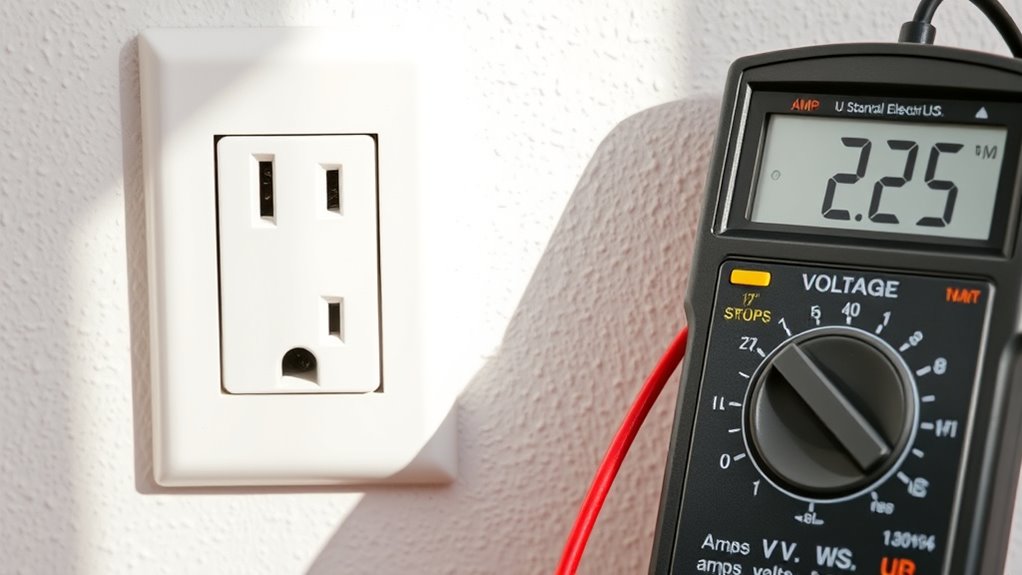
Understanding household voltage standards is essential for safe and effective electrical usage. In the U.S., most general-purpose outlets provide around 120 volts, with a typical range of 108 to 132 volts, ensuring your devices operate correctly. The older labels like 110V or 115V are still used but are interchangeable with the modern 120V standard. Mains frequency is steady at 60 Hz, which affects motors and timing devices. For large appliances, circuits often supply 240 to 250 volts, specifically for dryers, ranges, and HVAC equipment. Always verify your household voltage and confirm your appliances match the voltage supplied. Using incompatible voltage levels can damage devices or pose safety hazards, so understanding these standards helps you prevent accidents and ensure reliable operation. household voltage standards are designed to provide consistent power, minimizing fluctuations that could harm your electronics. Additionally, understanding these standards helps you choose the right power adapters and avoid potential electrical issues.
As an affiliate, we earn on qualifying purchases.
How Amperage Defines Circuit Capacity
Amperage, or the current capacity of a circuit, directly determines how much electrical load it can safely handle at once. Each circuit has a breaker rated for a specific amperage—typically 15 or 20 amps in residential settings. This rating indicates the maximum current the circuit can carry without tripping the breaker. Exceeding this limit risks overheating wires, damaging devices, or causing fires. To keep safety margins, electricians recommend loading circuits to only about 80% of their rated capacity for continuous use. For example, a 15A circuit should handle no more than 12A regularly. Understanding your circuit’s amperage helps you avoid overloads and ensures your electrical system operates safely and efficiently. Proper circuit capacity is essential for safely powering sauna heaters, cold plunge systems, and other high-demand equipment. Being aware of electrical load management and ampacity can further help prevent overloads and maintain system longevity. Additionally, advancements in AI-driven solutions may soon transform how we evaluate and optimize electrical systems for safety and efficiency.
As an affiliate, we earn on qualifying purchases.
Calculating Power: Watts, Volts, and Amps
Knowing your circuit’s amperage and voltage helps you determine how much power your devices can draw, which is measured in watts. To calculate watts, just multiply volts by amps. For example, a 120V outlet with a 15A circuit can supply up to 1,800 watts theoretically. However, for continuous use, stick to 80% of that, which is 1,440 watts. If you have a 20A circuit at 120V, the maximum is 2,400 watts, but the safe continuous limit is 1,920 watts. For higher power needs, like appliances, circuits may run at 240V and 30A, providing up to 7,200 watts. Always check device labels and confirm your wiring and breaker ratings match to prevent overloads. Understanding contrast ratio is also important for ensuring your projector provides the best image quality. This math keeps your setup safe and efficient, especially when considering power management to optimize energy consumption and avoid overloads. Regularly reviewing your electrical load can help prevent overloading circuits and potential hazards. Additionally, understanding electrical safety guidelines is crucial when working with or modifying your electrical system. Being aware of circuit capacity helps you plan your device usage responsibly and avoid dangerous overloads.
As an affiliate, we earn on qualifying purchases.
Typical Outlet Ratings and Their Uses
Understanding typical outlet ratings helps you choose the right circuits and receptacles for your needs. Most homes use 15- or 20-amp outlets for general use, while larger appliances require specialized circuits. Matching receptacle types with safety features like GFCI or AFCI is essential to prevent hazards and guarantee code compliance. Familiarity with Rhythm Failure can also inform your choices if you’re selecting equipment for audio setups or home recording spaces. Additionally, knowing the power requirements of your devices ensures safe and efficient operation. Being aware of bank SWIFT/BIC codes can also be useful when handling financial transactions that may be part of larger home improvement projects or equipment purchases. Recognizing fire safety standards related to electrical outlets can further help ensure your home remains safe during electrical upgrades or installations. Understanding protective styling benefits through techniques like crochet styling for locs can also help in maintaining safe and healthy hair during electrical work or other home projects.
Common Circuit Ratings
Most residential electrical outlets are rated for either 15 or 20 amps, which determines the amount of current they can safely carry and influences their typical applications. A 15-amp circuit is common in bedrooms and general-purpose rooms, suitable for lighting and low-power devices. A 20-amp circuit is used in kitchens, garages, and bathrooms where heavier loads like appliances and power tools are common. It’s important to match the circuit breaker’s rating with the receptacle and wiring to guarantee safety. For larger appliances, dedicated circuits with ratings of 30, 40, or 50 amps are used, usually at 240 volts. Always verify breaker labels and wiring to ensure proper matching and compliance with electrical codes. Additionally, understanding circuit ratings helps prevent overloads and electrical hazards in your home. Proper knowledge of Electrical Safety and circuit capacity can also help you troubleshoot issues and ensure your home’s wiring remains safe over time. Being aware of circuit capacity is crucial when planning for future electrical needs or upgrades to avoid potential hazards. Staying informed about circuit standards ensures that your electrical system remains compliant and safe as your home’s power demands grow. Recognizing the importance of proper wiring can further enhance the safety and efficiency of your electrical system.
Receptacle Types & Safety
Receptacle types vary based on their design and safety features, and selecting the right one is essential for both safety and functionality. Here’s what you should know:
- Type A (two-prong): Common in older homes, ungrounded, and less safe.
- Type B (three-prong): Grounded for safety, standard for modern outlets.
- GFCI outlets: Use in wet areas like kitchens and bathrooms to prevent shocks.
- AFCI outlets: Installed in living spaces to reduce fire risks from arcing faults.
Choosing the correct piercing aftercare and ensuring proper maintenance can also contribute to overall safety in electrical setups. Proper selection of receptacle type to circuit and environment guarantees safety and compliance. Always verify outlet ratings and consider upgrading older or ungrounded outlets for better protection. Proper receptacle selection minimizes hazards and ensures your electrical system runs smoothly, especially when considering electrical safety practices in your home. Additionally, understanding circuit ratings helps prevent overloads and potential electrical fires.
Typical Appliance Circuits
Different appliances require specific circuit ratings to operate safely and efficiently. For most household devices, 15-amp circuits at 120 volts are common, suitable for lighting, small electronics, and bedroom outlets. Heavier-use areas like kitchens, garages, and bathrooms typically use 20-amp circuits to handle higher loads, such as microwaves, toasters, or power tools. Large appliances like ovens, dryers, and ranges often need dedicated circuits rated at 30, 40, or 50 amps at 240 volts, matching their wattage requirements. Always verify your circuit breaker’s rating and ensure receptacles match that capacity. Remember, continuous loads shouldn’t exceed 80% of the circuit’s maximum, preventing overloads and hazards. Properly rated circuits help keep your appliances running smoothly and safely.
Matching Receptacles and Breakers Safely
You need to make sure your receptacles and breakers match for safety and code compliance. Using the wrong breaker with a receptacle can cause overheating, electrical hazards, or damage. Always verify the breaker’s amperage and the receptacle’s ratings before making any connections.
Proper Receptacle and Breaker Pairing
Matching receptacles and breakers is essential for electrical safety and code compliance. You need to verify the breaker rating matches the receptacle’s capacity to prevent overloads or hazards. Here’s what to check:
- Breaker Amperage: Confirm the breaker is rated for 15A or 20A, matching the receptacle’s designed load.
- Receptacle Rating: Verify the receptacle’s amperage label, ensuring it can handle the breaker’s current.
- Wiring Compatibility: Make sure wiring gauge supports the breaker and receptacle ratings—15A circuits use 14-gauge wire, 20A use 12-gauge.
- Code Compliance: Follow NEC guidelines, avoiding mismatched pairings like a 15A receptacle on a 20A breaker, which is unsafe and illegal.
This pairing prevents overheating, electrical fires, and code violations.
Ensuring Compatibility and Safety
Ensuring compatibility and safety between receptacles and breakers is essential to prevent electrical hazards. You must verify that the breaker’s amperage matches the receptacle’s rating; using a 15A outlet on a 20A breaker can overload wires and cause fires. Always check the breaker label for its rating and confirm the receptacle’s capacity before adding appliances or loads. Use Ground-Fault Circuit Interrupters (GFCIs) in wet areas and Arc-Fault Circuit Interrupters (AFCIs) in living spaces to protect against faults. Avoid mismatched wiring or forcing plugs into incompatible outlets. If you’re unsure about the wiring, breaker ratings, or receptacle compatibility, consult a licensed electrician. Proper matching guarantees safe operation, reduces the risk of shocks, and keeps your home compliant with electrical codes.
Power Management for Continuous Loads
Managing power for continuous loads is essential to prevent overloading circuits and maintain safe electrical operation. You should always keep loads below 80% of the circuit’s breaker capacity. Here’s how to do it:
- Check your circuit breaker’s amperage rating, typically 15A or 20A.
- Calculate the maximum continuous wattage using the 80% rule (e.g., 120V × 12A = 1,440W for a 15A circuit).
- Avoid exceeding this wattage with appliances or devices running simultaneously.
- Use dedicated circuits for high-power appliances like refrigerators or space heaters to prevent overloads.
Following these steps helps ensure your circuits handle continuous loads safely without tripping or causing hazards. Always verify your breaker ratings and load calculations to stay within safe limits.
The Role of Voltage and Current in Appliances
Understanding how voltage and current interact in appliances helps you grasp how they perform and why proper sizing of circuits matters. Voltage provides the push needed for electricity to flow, while current indicates how much electricity flows through the device. An appliance designed for 120V and 15A will need a circuit capable of delivering 1,800 watts (120V × 15A). If the current exceeds the circuit’s capacity, the breaker trips, preventing damage or fire. Use the table below to see common appliance needs:
| Appliance Type | Voltage | Current (Amps) |
|---|---|---|
| Light bulb | 120V | 0.5A |
| Microwave | 120V | 10A |
| Dryer | 240V | 30A |
Matching voltage and current guarantees safe, efficient operation.
International Differences and Travel Tips
When traveling internationally, it’s crucial to be aware of voltage and frequency differences to keep your devices safe and functional. Different countries have varying standards, so understanding these differences helps prevent damage. Here’s what you need to know:
Be aware of voltage and frequency differences to protect your devices when traveling internationally.
- Voltage ranges: Many countries use 220–240V, while the U.S. uses 120V. Using a device rated only for 120V abroad can cause overheating.
- Frequency: Some regions run at 50Hz, while the U.S. is 60Hz. This affects timers, clocks, and motor-driven devices.
- Plug types: International outlets have different shapes and pin configurations. Always carry the appropriate plug adapter.
- Converters vs. adapters: Use a voltage converter for single-voltage devices, and a plug adapter just to fit the outlet shape. Never assume compatibility.
Practical Tips for Home Electrical Planning
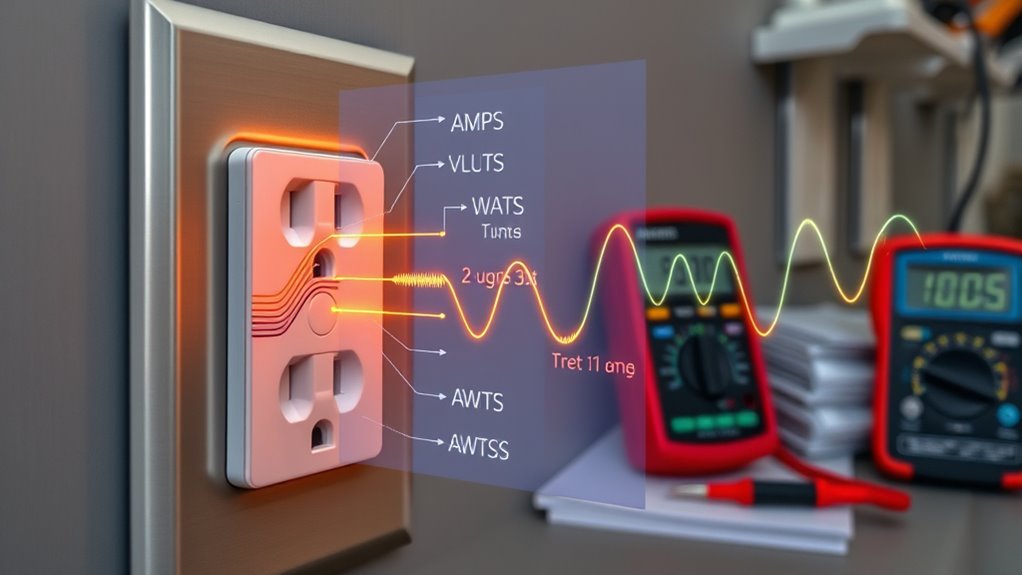
Planning your home’s electrical system carefully guarantees safety, efficiency, and future flexibility. Start by checking your circuit breakers’ labels to confirm amperage before adding new appliances or loads. Match receptacles and plugs to their rated circuits—using a 15A outlet on a 20A circuit is unsafe. Use the 80% rule: don’t exceed 80% of the circuit’s capacity continuously (e.g., 1,440 watts on a 15A/120V circuit). For large appliances, install dedicated high-amperage circuits (30A or more) at 240V. Regularly inspect older outlets, replace two-prong with grounded or GFCI outlets, and ensure wiring matches breaker ratings. When upgrading or expanding, consult a licensed electrician to avoid code violations and safety hazards. Proper planning prevents electrical problems and keeps your home safe.
Frequently Asked Questions
How Do I Determine the Amperage of an Existing Circuit?
To determine the amperage of an existing circuit, start by checking the circuit breaker label in your electrical panel; it indicates the maximum amperage. If you’re unsure, turn off the breaker, remove the outlet or device, and look for the breaker’s stamped or printed rating. You can also use a clamp meter around the wire to measure current directly, but always prioritize safety and consider consulting a professional if needed.
Can I Use a Higher-Rated Breaker on a Lower-Rated Receptacle?
You shouldn’t use a higher-rated breaker on a lower-rated receptacle. It’s like putting a bigger engine in a small car—dangerous and against code. The breaker protects the wiring and device; if it’s too high, it can overload and cause fire hazards. Always match the breaker’s amperage to the receptacle’s rating, ensuring safety and compliance. When in doubt, consult a licensed electrician to keep your home safe.
What Safety Devices Are Recommended for Outdoor Outlets?
You should install GFCI (ground-fault circuit interrupter) outlets for outdoor use to protect against electrical shock. GFCIs detect leaks current and shut off power quickly, especially in wet conditions. Also, use weatherproof outlet covers to shield the receptacle from rain and debris. These safety devices are essential for outdoor outlets, ensuring safety and compliance with electrical codes, and should be tested regularly for proper functioning.
How Do Voltage Fluctuations Affect Sensitive Electronics?
Voltage fluctuations can cause your sensitive electronics to malfunction or get damaged. When voltage spikes, your devices may overheat, shorten their lifespan, or even fail completely. Conversely, dips in voltage can lead to erratic operation or data loss. To protect your electronics, use surge protectors or uninterruptible power supplies (UPS). Regularly check your power sources, and avoid plugging critical devices into outlets prone to unstable voltage for safety and longevity.
Are Dual-Voltage Devices Safe to Use With Converters?
Yes, dual-voltage devices are safe to use with converters, but you need to be careful. Make sure the converter is rated for your device’s wattage and designed for continuous use. Always check the device label for voltage and wattage requirements, and use a proper step-up or step-down converter. Avoid cheap or unmarked converters, as they can cause damage or safety hazards. When in doubt, consult a professional.
Conclusion
By understanding volts, amps, and watts, you can confidently navigate your home’s electrical system, ensuring safety, efficiency, and peace of mind. You’ll know how to match outlets with appliances, prevent overloads, and manage power wisely. Think of your electrical setup as a well-orchestrated symphony—each component working in harmony, each element playing its part. With this knowledge, you’ll power your home smoothly, efficiently, and safely, now and for years to come.
NFL season / tailgating Picks
team gear
As an affiliate, we earn on qualifying purchases.