
To convert kilowatt-hours (kWh) to watt-hours (Wh), simply multiply the kWh value by 1,000. This quick formula helps you size batteries and backup systems accurately. For example, 3 kWh equals 3,000 Wh. Remember, understanding these units guarantees your system can handle daily loads and unexpected demands. If you want to master more conversion techniques and avoid common pitfalls, keep exploring this essential knowledge.
Key Takeaways
- Multiply the kilowatt-hours (kWh) by 1,000 to convert to watt-hours (Wh).
- The formula: Wh = kWh × 1,000, provides a quick conversion method.
- Use this conversion to size batteries and estimate energy needs accurately.
- Remember, kWh measures energy; Wh is a smaller unit used for precise calculations.
- Accurate kWh to Wh conversion ensures reliable backup system planning and performance.

12V 5Ah Lithium LiFePO4 Deep Cycle Battery, 1 Pack, 2000+ Cycles 12 Volt Rechargeable Battery for Alarm System, Chamberlain 41A6357-1/ LiftMaster 485LM 8550W/ Craftsman 4228 Garage Door Opener
Integrated BMS for Safety: Equipped with a Battery Management System (BMS), this 12V LiFePO4 battery ensures optimal performance…
As an affiliate, we earn on qualifying purchases.
As an affiliate, we earn on qualifying purchases.
Understanding the Basic Conversion Between Kwh and Wh
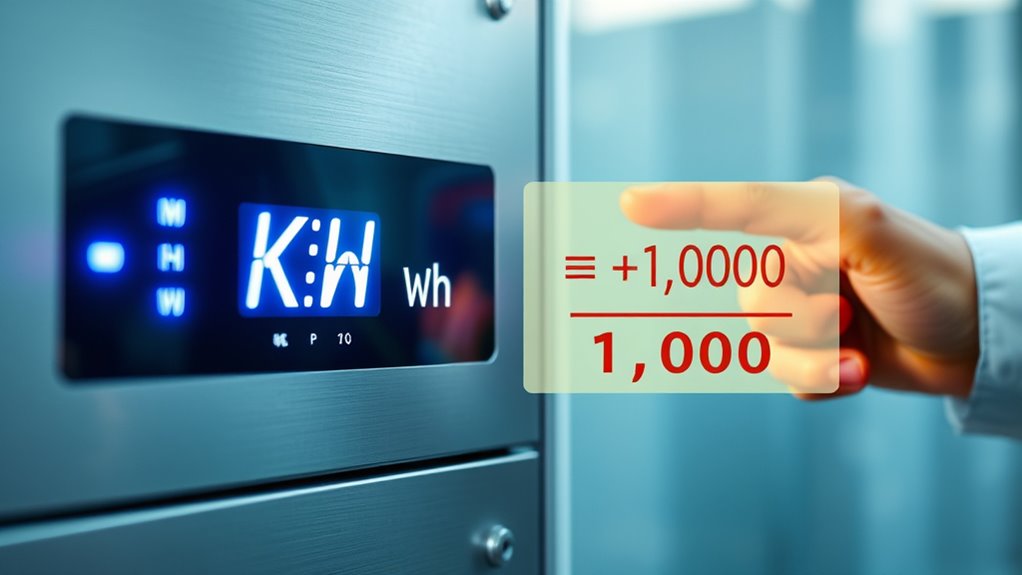
To understand the basic conversion between kilowatt-hours (kWh) and watt-hours (Wh), it helps to recognize that 1 kWh equals 1,000 Wh. This means you can convert kWh to Wh simply by multiplying the number of kilowatt-hours by 1,000. For example, if you have 2 kWh, that equals 2,000 Wh. Conversely, to go from Wh back to kWh, you divide the watt-hours by 1,000. This straightforward relationship forms the foundation for many energy calculations. Remember, kWh and Wh measure energy, not power, which is measured in kW and W. Understanding energy units is crucial for making informed decisions about home and small-shop power solutions. Recognizing the difference between power and energy helps ensure accurate system sizing and calculations. Additionally, being aware of energy consumption patterns can assist in optimizing your backup plans and energy efficiency. A clear grasp of these units also aids in interpreting energy bills and monitoring your overall energy usage.

BLAVOR Solar Power Bank 10,000mAh, Portable Wireless Charger, 20W Fast Charging External Battery Pack with USB C for Cell Phones, Solar Panel Charging with Dual Flashlight for Camping
Brand-Oriented and Outdoor Charger Pro: With over 10 years of experience in solar power banks, BLAVOR has already…
As an affiliate, we earn on qualifying purchases.
As an affiliate, we earn on qualifying purchases.
Applying the Formula for Energy and Power Conversion
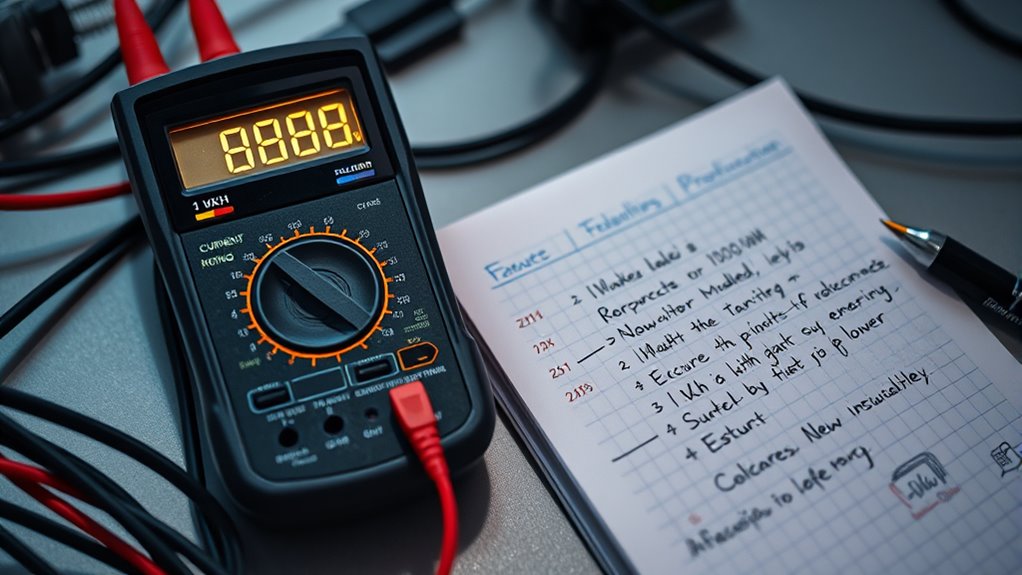
When working with energy and power, applying the correct formulas allows you to accurately convert between units and understand the relationship over time. To convert energy (kWh) into average power (W), use: P (W) = (kWh × 1,000) ÷ hours. For example, 3 kWh over 6.5 hours equals approximately 462 W. Conversely, to find energy from power, use: kWh = (W × hours) ÷ 1,000. This helps you estimate battery capacity or appliance energy use. Remember, converting between units requires attention to time frames and the distinction between power and energy. Proper application of these formulas guarantees precise sizing of backup systems and accurate energy assessments. Understanding energy units is essential for safe and effective system design. Additionally, system efficiency impacts overall performance and backup reliability. Recognizing power ratings of devices ensures more accurate calculations and system planning. Knowledge of electricity consumption patterns further refines your calculations and system sizing.
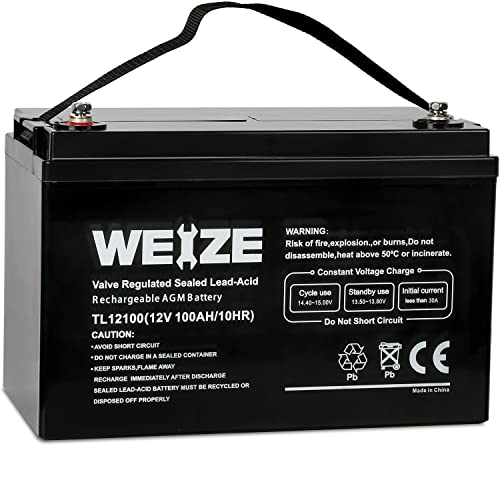
Weize Deep Cycle AGM 12 Volt 100Ah Battery, Maintenance-Free, 3% Self-Discharge Rate, 1150A Max Discharge Current, Perfect for RV, Solar, Trolling Motor, Wind, Marine, Camping and Off-Grid System
MAINTENANCE FREE: 12.99x 6.73x 8.43 inches. Weize 12v 100Ah sealed lead acid battery is manufactured with absorbent glass…
As an affiliate, we earn on qualifying purchases.
As an affiliate, we earn on qualifying purchases.
Practical Examples for Battery Backup Sizing and Planning

Planning a battery backup system starts with understanding your energy needs and converting them into usable capacity. To do this effectively, consider these steps:
Start planning a battery backup by understanding your energy needs and adjusting for efficiency and safety margins.
- Calculate your daily energy consumption in kWh and convert it to Wh by multiplying by 1,000. Knowing your energy consumption helps you select the right battery size and avoid overspending. Understanding your energy needs is fundamental to effective system sizing and long-term reliability. Being familiar with battery chemistry can also influence your choice of batteries and their performance characteristics. Additionally, evaluating your system’s scalability ensures your backup can grow with future energy demands.
- Determine your load’s average power in W by dividing daily Wh by the number of hours of use. This provides insight into the continuous power your system must support.
- Account for inverter efficiency and depth-of-discharge to find the actual usable Wh. Inverter efficiency impacts how much stored energy can be effectively used, while depth-of-discharge influences battery longevity and capacity planning.
- Add a reserve margin of 10–30% to cover system degradation and unexpected loads. This reserve margin ensures your system remains reliable over time.
- Remember that deep-cycle batteries are designed for repeated charge and discharge cycles, making them ideal for backup systems. Proper sizing and maintenance of these batteries are crucial for optimal performance.
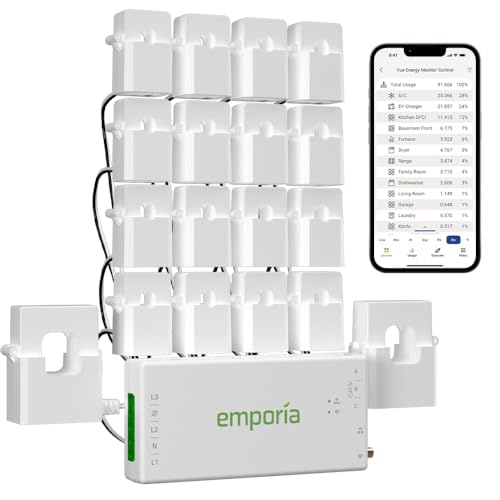
Emporia Vue 3 Home Energy Monitor – Smart Home Automation Module and Real Time Electricity Usage Monitor, Power Consumption Meter, Solar and Net Metering for UL Certified Safe Energy Monitoring
SAFETY YOU CAN TRUST WITH UL CERTIFICATION: With Emporia Energy, your home energy monitoring is safe, reliable, and…
As an affiliate, we earn on qualifying purchases.
As an affiliate, we earn on qualifying purchases.
Quick Reference Conversions and Common Use Cases
Are you looking for quick ways to convert energy units between kilowatt-hours and watt-hours or need handy references for common electrical calculations? Knowing that 1 kWh equals 1,000 Wh helps streamline your calculations. For fast mental math, remember: 0.001 kWh equals 1 Wh, and 5 kWh equals 5,000 Wh. When estimating appliance energy use, multiply power (W) by hours, then divide by 1,000 to get kWh or multiply kWh by 1,000 for Wh. For battery sizing, convert your total energy needs from kWh to Wh by multiplying by 1,000. Understanding energy units is crucial for accurate system design and troubleshooting. Using these quick conversions can help in understanding energy units and their applications in various contexts. It’s also helpful to be familiar with performance metrics, which assist in assessing system efficiency and effectiveness. Use these quick conversions for billing, system design, or troubleshooting. Keep in mind that understanding whether you’re working with energy (kWh/Wh) or power (kW/W) is essential to accurate calculations.
Avoiding Mistakes: Units, Efficiency, and Calculation Pitfalls
Mistakes in electrical calculations often stem from confusing units, neglecting efficiency losses, or misapplying formulas. To avoid these pitfalls, keep these points in mind:
- Differentiate units: Remember, kWh measures energy, while kW measures power. Mixing these leads to errors.
- Include efficiency: Always factor in inverter and wiring efficiency—don’t assume 100%. For example, use 85–90% for batteries and inverters.
- Use correct formulas: When converting, multiply or divide by 1,000 as needed. Forgetting this causes miscalculations.
- Maintain clarity: Be explicit if values are rated, usable, or average, preventing misinterpretation during planning.
- Understand your components: Recognizing how Free Floating systems operate helps in accurately assessing capacity and performance. Additionally, understanding electrical units is crucial for precise calculations and avoiding costly mistakes. A solid grasp of battery capacity concepts can further improve your planning accuracy. Being aware of system efficiencies allows for more accurate energy budgeting and system sizing.
Sticking to these rules ensures accurate calculations, avoiding costly mistakes in your backup system design.
Real-World Metrics and Numbers for Home and Solar Systems
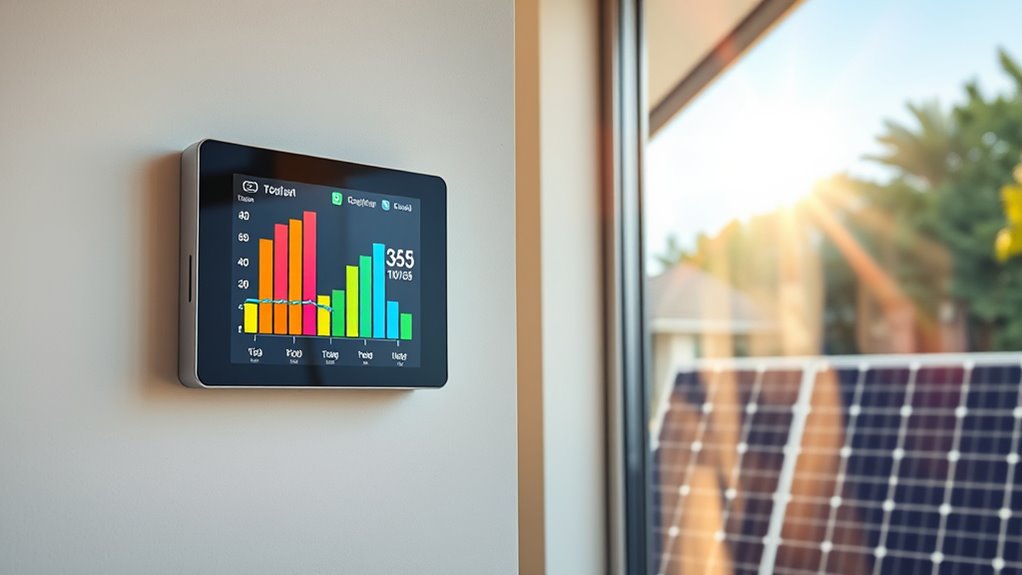
Understanding the typical energy metrics for homes and solar systems helps you size batteries and inverters more accurately. Most homes consume between 20 to 50 kWh daily, which translates to 20,000 to 50,000 Wh. For solar, a 5 kW system might produce around 20 kWh daily, or 20,000 Wh, depending on location and sunlight hours. Battery capacities often range from 5 kWh (5,000 Wh) to over 13 kWh (13,000 Wh), with usable energy decreased by inverter and battery efficiency—usually around 80-90%. Knowing these numbers helps you estimate backup duration, select appropriate inverter ratings, and plan for future expansion. Understanding energy metrics helps you grasp the typical consumption and production figures, ensuring your system can handle daily loads, unexpected surges, and any degradation over time. Being aware of system efficiency and actual energy losses ensures more accurate planning and reliable performance of your backup system. Additionally, incorporating energy loss considerations into your calculations can improve system reliability and longevity, preventing unexpected outages. Using actual data guarantees your system can handle daily loads, unexpected surges, and any degradation over time.
Frequently Asked Questions
How Do Inverter Efficiency Losses Affect Wh Calculations in Backup Systems?
Inverter efficiency losses decrease the usable watt-hours (Wh) in your backup system. To account for this, you multiply your calculated Wh by the inverter’s efficiency percentage (e.g., 90%). This gives you the actual usable energy. For example, if you have 4,000 Wh and a 90% efficient inverter, you’ll get 3,600 Wh of usable power. Always include inverter efficiency in your planning to ensure reliable backup performance.
What’s the Difference Between Nominal, Usable, and Rated Watt-Hours?
You need to understand that nominal watt-hours are the rated capacity of a battery or system, indicating its maximum potential. Usable watt-hours account for efficiencies and depth-of-discharge, reflecting the actual energy available for use. Rated watt-hours are similar to nominal but may include manufacturer specifications. Always consider usable watt-hours for planning, as this value shows the real energy you can reliably use, avoiding overestimations.
How to Convert Daily Household Energy Use From Kwh to Battery Capacity in Wh?
Your household energy use is likely a mountain of power, but converting from kWh to Wh is simple. Just multiply your daily kWh by 1,000. For example, if you use 20 kWh daily, you need a battery capacity of 20,000 Wh. This helps you size your battery bank precisely. Always consider efficiency and reserve margins to make certain your backup system handles the load during power outages smoothly.
Why Is It Important to Consider the Time Frame When Converting Kwh to W?
You need to contemplate the time frame when converting kWh to W because power (W) measures the rate of energy use at a specific moment, while energy (kWh) accounts for total consumption over time. Without including time, your conversion becomes meaningless. By factoring in hours, you accurately determine the average power demand, which is essential for sizing batteries, inverters, and backup systems to meet your actual energy needs reliably.
How Do Temperature and Wiring Losses Impact Actual Usable Energy Storage?
Think of your energy storage like a water tank—if pipes are clogged or the tank’s cold, less water gets used. Temperature and wiring losses reduce your actual usable energy, much like a leaky faucet wastes water. Cooler temps improve battery efficiency, while poor wiring adds resistance, causing drops in stored energy. You need to account for these factors to make certain your backup system delivers as promised, not just on paper.
Conclusion
Mastering the kWh to Wh conversion is like having a secret code for your energy needs. With this quick formula in hand, you’ll navigate backup plans confidently, avoiding common pitfalls. Think of it as your trusty map guiding you through the maze of battery sizing and energy planning. Keep these conversions handy, and you’ll always be prepared—turning complex numbers into a walk in the park, rather than a mountain to climb.