When choosing an extension cord, pay close attention to its label to guarantee it’s suited for your needs. Indoor cords typically have neutral colors and basic ratings, while outdoor cords feature bright colors like orange or yellow and weather-resistant markings. The label indicates whether the cord is rated for outdoor conditions, higher wattage, or specific environments. Understanding these signs helps keep you safe and efficient—keep reading to learn more about what these labels mean and how to select the right one.
Key Takeaways
- Indoor cords lack weather-resistant insulation and are designed for short-term, controlled environment use.
- Outdoor cords feature durable, weatherproof coatings and bright colors for visibility and safety in outdoor conditions.
- Labels indicate whether a cord is suitable for indoor or outdoor use through specific symbols and color coding.
- Outdoor cords support higher wattage loads and are longer for distant outlets, while indoor cords are shorter and less rugged.
- Properly reading labels ensures safe, appropriate use and prevents hazards like electrical shock or damage.

Anker SOLIX C1000 Gen 2 Portable Power Station, 2,000W (Peak 3,000W) Solar Generator, Full Charge in 49 Min, 1,024Wh LiFePO4 Battery for Home Backup, Power Outages, and Camping (Optional Solar Panel)
49 Min UltraFast Recharging: With upgraded HyperFlash tech, fully recharge at 1,600W—for outage prepping, camping trips, or tailgating...
As an affiliate, we earn on qualifying purchases.
Understanding the Labeling System for Extension Cords
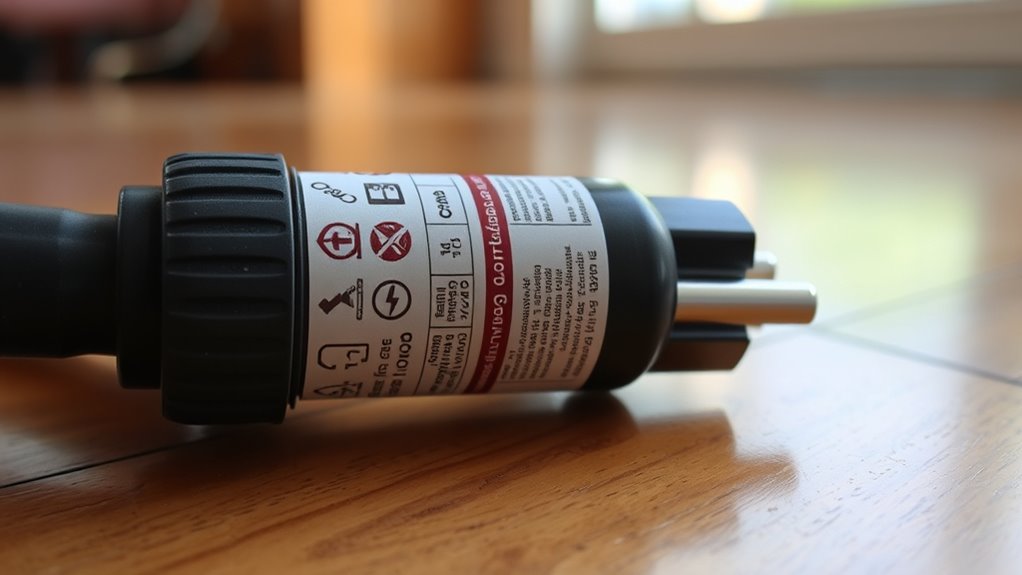
Understanding the labeling system for extension cords is essential because it helps you choose the right cord for your needs. Cord color coding is a quick visual cue; for instance, outdoor cords often feature bright colors like orange or yellow to signal they’re weatherproof. Extension cord ratings, usually marked on the cord itself, indicate the maximum power load and suitability for indoor or outdoor use. Look for labels that specify the cord’s gauge, wattage capacity, and whether it’s rated for outdoor conditions. These ratings guarantee safety and performance, preventing electrical hazards. Paying attention to color coding and ratings allows you to select a cord that matches your environment and power requirements, ensuring efficient operation and safety during use. Additionally, understanding electrical safety standards can help you identify high-quality cords that meet proper safety criteria. Being aware of safety standards can also guide you in choosing a durable and reliable extension cord for various applications. Recognizing gauge ratings is vital because it directly affects the cord’s capacity to handle electrical current safely and efficiently. Furthermore, understanding insulation materials can provide insight into a cord’s durability and weather resistance, which is particularly important for outdoor use. Knowing how cord length impacts voltage drop can help you select the appropriate extension cord for your specific power needs, especially over longer distances.

OUPES Mega 1 Portable Power Station 2000W (Surge 4500W), 1024Wh LiFePO4 Battery Solar Generator, Expandable to 5kWh, UPS, for Home Backup Power, Camping & Road Trips (Solar Panel Optional)
REVOLUTIONARY FAST-CHARGING TECHNOLOGY: Experience industry-leading recharge speeds with 0-80% capacity in just 36 minutes via AC, or an...
As an affiliate, we earn on qualifying purchases.
Key Differences Between Indoor and Outdoor Extension Cords
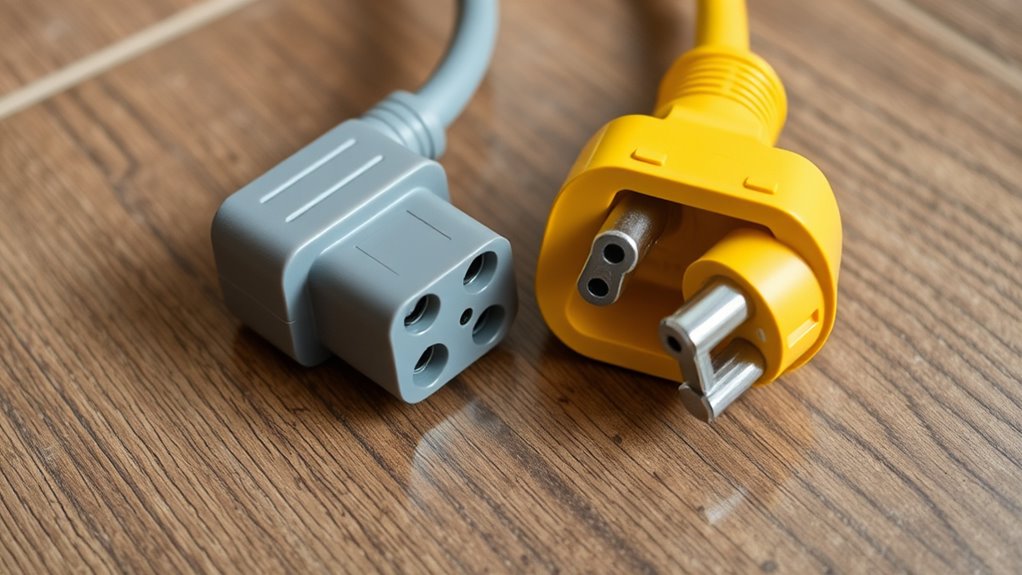
Indoor and outdoor extension cords differ primarily in their construction and intended use, which directly affects safety and performance. Indoor cords are designed for short-term use and are less resistant to moisture, temperature extremes, and physical wear. Outdoor cords, however, are built with durable insulation and weather-resistant materials, making them suitable for exposure to the elements. The power source for outdoor cords is often more versatile, supporting higher wattage appliances or tools. Additionally, outdoor extension cords tend to be available in longer lengths to reach distant outdoor outlets, while indoor cords are usually shorter. Choosing the right cord depends on understanding these differences to guarantee safety, efficiency, and longevity for your specific needs. Properly rated cords are essential for ensuring safe and reliable operation in various environments, especially when considering weather-resistant materials. Using the correct extension cord for your environment helps prevent hazards such as electrical shocks or fires, emphasizing the importance of selecting the right cord type for your application. Selecting cords with appropriate insulation can further enhance safety and performance in both indoor and outdoor settings, and being aware of their specific construction features can help you make informed choices.

Jackery Solar Generator 1000 v2 with 200W Solar Panel,1070Wh Portable Power Station LiFePO4 Battery,1500W AC/100W USB-C Output, 1Hr Fast Charge for Outdoor,Off-Grid Living,RV,Emergency
Powerful yet Compact: Boasting a 1,500W AC output and a 3,000W surge peak, the Solar Generator 1000 V2...
As an affiliate, we earn on qualifying purchases.
Material and Construction Features to Watch For
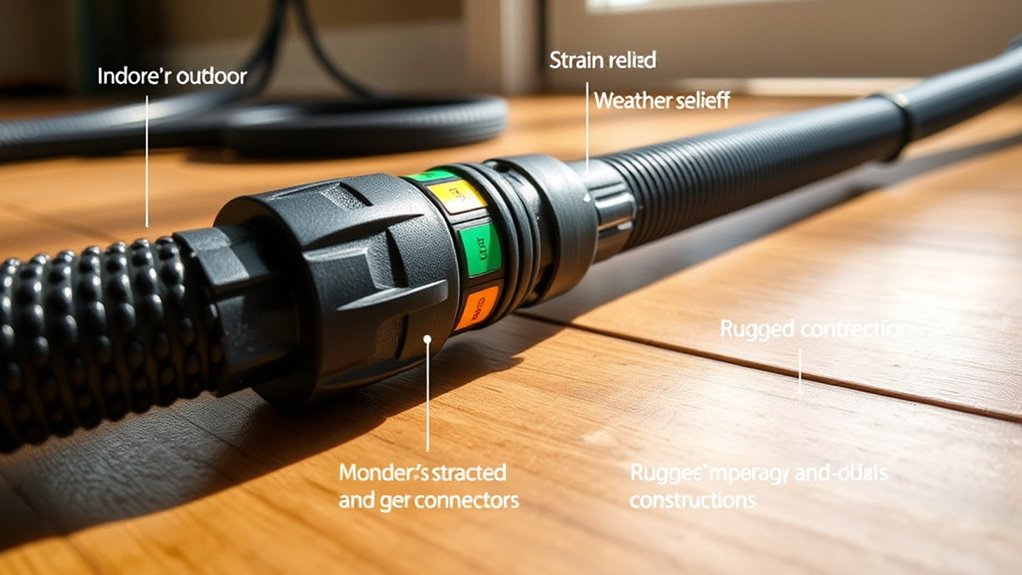
When choosing an extension cord, pay close attention to the material’s durability and flexibility to guarantee it withstands regular use. Check the insulation and protective coatings, especially for outdoor cords, to prevent damage from weather or abrasion. These features help keep you safe and ensure your cord lasts longer in various conditions. Additionally, understanding material quality and construction can guide you towards selecting a more reliable and safer extension cord. For added safety, look for cords with safety certifications, which indicate compliance with industry standards and enhance overall reliability. Recognizing UL ratings can also provide assurance of a cord’s safety and quality standards. Being aware of insulation materials can further inform your choice for specific environments or applications. Moreover, selecting cords with weather-resistant coatings can significantly improve performance in outdoor settings.
Material Durability and Flexibility
Choosing the right extension cord depends heavily on its material durability and flexibility, which directly impact safety and longevity. The cord material should be sturdy enough to withstand daily wear, environmental exposure, and potential abrasions, especially for outdoor use. Look for cords made with high-quality, weather-resistant rubber or reinforced plastics, which resist cracking and breaking over time. Flexibility is equally important; a flexible cord allows easier handling, coiling, and storage without cracking or becoming brittle. A highly flexible cord maintains its integrity even after repeated use and exposure to temperature changes. When selecting an extension cord, prioritize those that combine durable cords with excellent flexibility, ensuring safe operation and prolonged lifespan in various settings. Additionally, choosing cords with appropriate insulation can further protect against electrical hazards and enhance durability over time. For outdoor applications, it’s also crucial to consider material durability, as it ensures the cord remains functional despite harsh weather conditions. Incorporating cords with weather-resistant coatings can provide extra protection against moisture and UV damage, extending their usability outdoors. Ensuring the cords have flexible insulation materials can also improve overall handling and safety during use. Moreover, selecting cords with impact-resistant outer jackets can help prevent damage from accidental drops or rough handling, increasing their lifespan and reliability.
Insulation and Protective Coatings
Insulation and protective coatings are critical features to contemplate because they safeguard the cord’s internal wiring from damage and prevent electrical hazards. High-quality wire insulation ensures that the internal conductors remain insulated from moisture, chemicals, and physical wear. Protective coatings add an extra layer of defense against environmental factors like UV rays, abrasion, and temperature fluctuations, especially for outdoor cords. When choosing an extension cord, check that the insulation is durable and rated for your intended environment. Look for cords with thick, sturdy protective coatings that resist cracking and splitting. Proper insulation and coatings help prevent shorts, shocks, and fires, making your extension cord safer for everyday indoor and outdoor use. Always select cords with appropriate insulation and coatings for the specific conditions you’ll encounter. Additionally, understanding the importance of best heat pump practices can help you maintain a safe and energy-efficient home environment. Being aware of insulation durability can further ensure your extension cords remain safe over time, especially in challenging conditions. Ensuring the insulation and coatings are resistant to environmental stressors can extend the lifespan and safety of your cords even further.

BLUETTI Elite 100 V2 Portable Power Station, 1024Wh LFP Battery Backup w/ 4 1800W AC Ports (3600W Surge), 35% Smaller, Fast Charge and UPS Solar Generator for Camping, Road Trip, Outages, Home Backup
[Power 11 Devices] - With a 1024Wh capacity, Elite 100 V2 portable power station delivers 1800W AC output...
As an affiliate, we earn on qualifying purchases.
Safety Considerations When Using Extension Cords
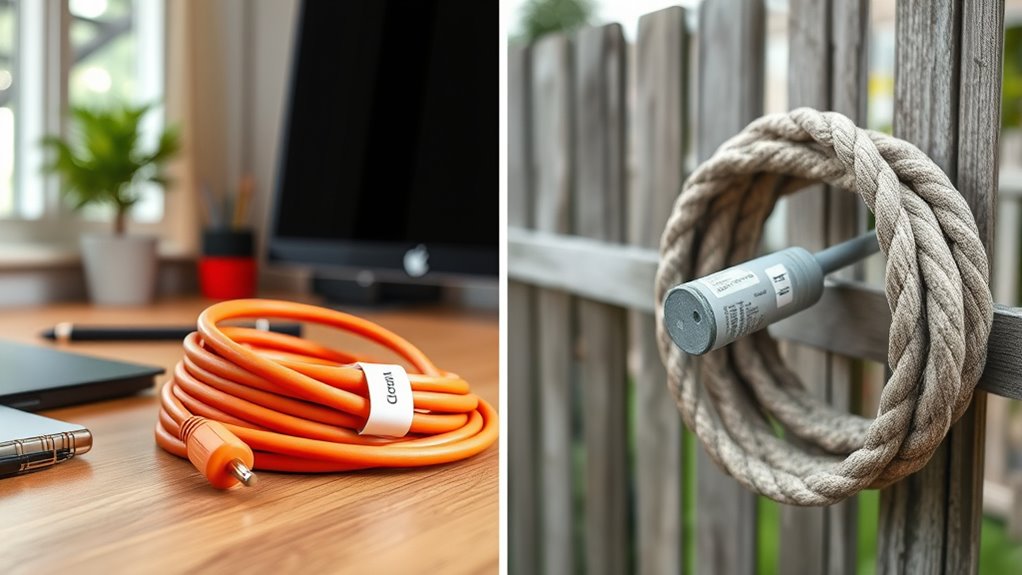
Using extension cords safely is essential to prevent electrical hazards and accidents. Always check that the cord is rated for your intended use, especially outdoor cords, which are designed to resist moisture and temperature changes. Avoid overloading the cord; plugging in too many devices can cause overheating and increase the risk of fire hazards. Keep cords away from water, sharp objects, and high-traffic areas to reduce trip hazards and prevent damage. Never force a plug into an outlet or use damaged cords, as exposed wiring can lead to electrical shock or spark a fire. Disconnect cords when not in use and don’t run them under rugs or furniture to avoid overheating. Practicing these safety measures helps protect you from potential electrical shocks and fire hazards. Additionally, using properly labeled extension cords ensures you are selecting the right cord for your specific needs. Incorporating smart home technology, such as surge protectors with built-in safety features, can further enhance electrical safety in your home. Always consider cord quality as a key factor when choosing extension cords to ensure durability and safety. Moreover, selecting cords with safety certifications can provide extra assurance of their reliability and safety standards. Being aware of outdoor cord ratings helps ensure that the extension cord you use is suitable for exterior conditions and weather exposure.
How to Read and Interpret the Labels on Extension Cords
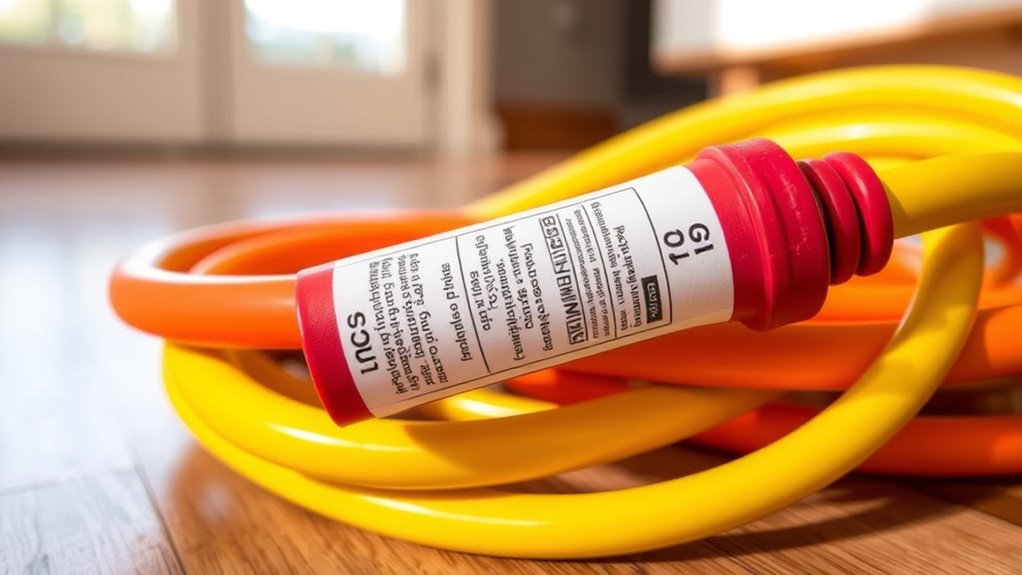
Understanding how to read and interpret the labels on extension cords is crucial for guaranteeing safe and proper use. These labels provide essential information through cord label symbols and color coding, helping you identify suitable cords for indoor or outdoor use. Pay attention to the following:
- Cord label symbols: Icons indicating indoor or outdoor suitability.
- Color coding: Colors like green or yellow often signal outdoor-rated cords.
- Voltage and wattage ratings: Ensure the cord matches your power needs.
- Gauge numbers: Lower numbers mean thicker wire, handling more current.
- UL or safety certifications: Look for these marks to confirm safety standards.
Tips for Selecting the Right Extension Cord for Your Needs
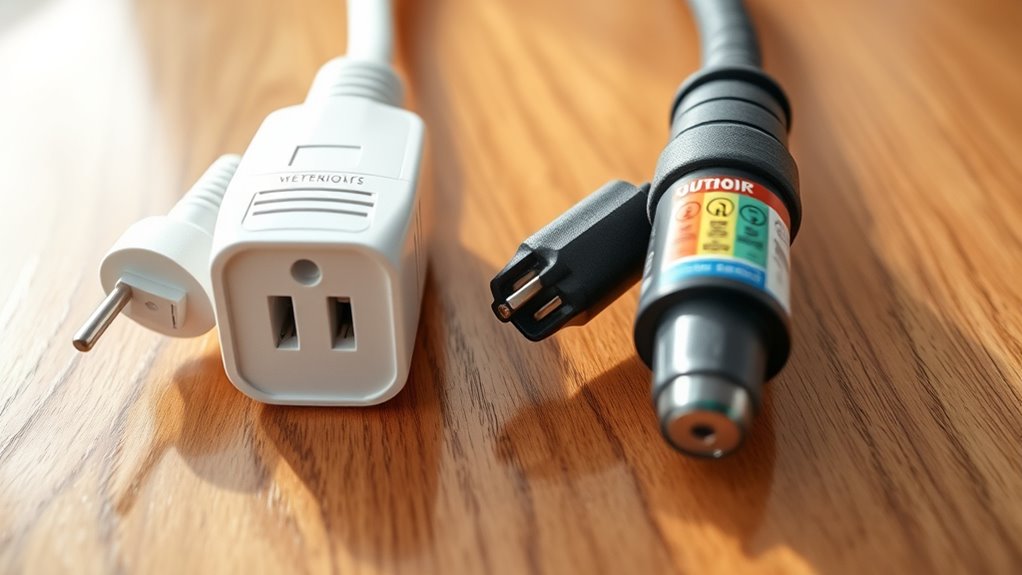
Choosing the right extension cord depends on your specific needs and the environment where you’ll use it. Start with cord length considerations—measure the distance between your power source and the device, and select a cord slightly longer to avoid strain or tripping hazards. Avoid using excessively long cords, as they can cause voltage drops and reduce performance. Also, pay attention to the color coding significance; outdoor cords typically feature bright colors like orange or yellow for visibility and safety, while indoor cords are often neutral shades. Make sure the cord’s power rating matches or exceeds your device’s requirements. By considering these factors, you make certain of safe, efficient use and prevent potential hazards or damage.
Frequently Asked Questions
Can Indoor Extension Cords Be Used Outdoors in Emergencies?
You shouldn’t use indoor extension cords outdoors in emergencies because they lack outdoor durability and indoor safety features. Indoor cords aren’t designed to withstand moisture, UV rays, or rough handling, which can lead to electrical hazards. For safety and reliability, always choose an extension cord labeled for outdoor use. This guarantees it’s built to handle outdoor conditions, keeping you safe during emergencies and protecting your equipment from potential damage.
Are There Specific Color Codes for Indoor Versus Outdoor Extension Cords?
Think of extension cords as ambassadors of safety—color coding serves as their uniform. Yes, there are specific color codes for indoor versus outdoor cords. Outdoor cords typically feature bright yellow or orange labels, signaling their rugged, weather-resistant nature. These color distinctions follow labeling standards that help you quickly identify the right cord for each environment, reducing hazards and ensuring safe, efficient use wherever you need power.
How Long Can I Safely Leave an Outdoor Extension Cord Plugged In?
You can generally leave an outdoor extension cord plugged in for the duration of your project, but it’s essential to prioritize cord safety and monitor for signs of wear or damage. To guarantee electrical lifespan and safety, unplug the cord when not in use, especially during adverse weather. Regularly inspect for cracks or fraying, and avoid overloading to prevent overheating, which can compromise both safety and the cord’s longevity.
Do Extension Cord Labels Indicate Maximum Wattage Capacity?
Yes, extension cord labels do indicate maximum wattage capacity through wattage labeling, which is part of extension cord standards. When you see these labels, they tell you the maximum wattage the cord can safely handle, helping you avoid overloads. Always check the label before plugging in high-wattage devices, especially outdoors, to verify you’re using a cord rated for your power needs and maintaining safety.
Are There Eco-Friendly Options for Outdoor Extension Cords?
You might think eco-friendly outdoor extension cords aren’t durable, but many are made with eco-friendly materials and recyclable cords that stand up to weather and wear. These options reduce environmental impact while providing safe power solutions. Look for cords labeled as recyclable or made from sustainable materials. Switching to eco-conscious cords helps protect the planet without sacrificing performance, making your outdoor projects both efficient and environmentally responsible.
Conclusion
Remember, choosing the right extension cord isn’t just about convenience—it’s about keeping your space safe and efficient. By paying close attention to labels and understanding their meaning, you can avoid potential mishaps. Think of it as giving your devices a gentle hug, ensuring they get the right support without unnecessary risks. When in doubt, opt for safety first. After all, a little extra care now can make all the difference later.