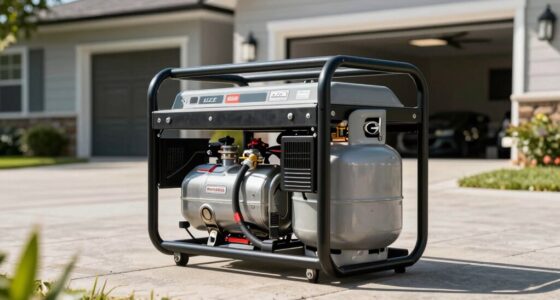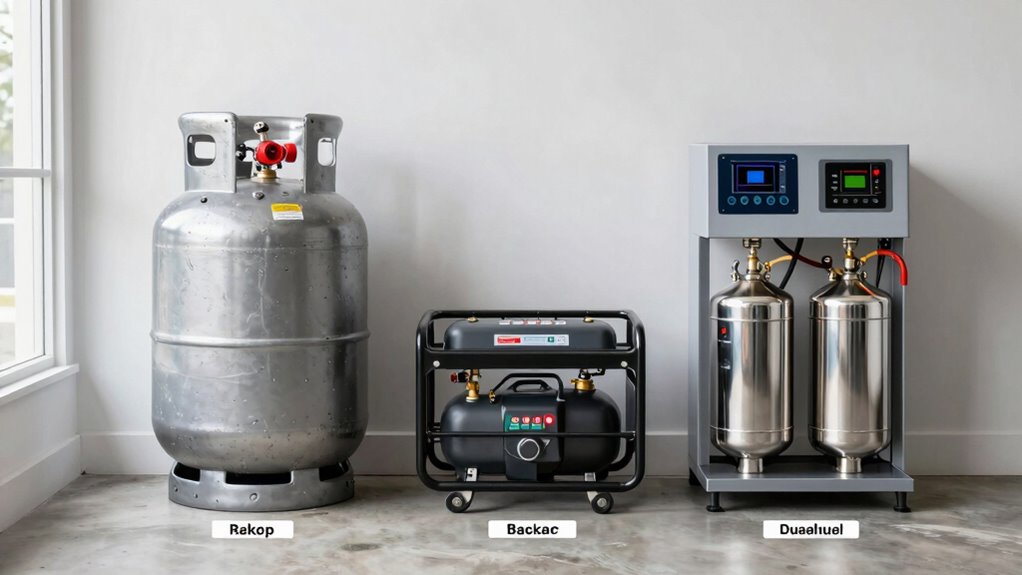

To decide between gas, propane, and dual fuel for your home backup, consider your local infrastructure, budget, and reliability needs. Gas generators are cheaper but rely on utility lines, which can be disrupted. Propane offers fuel independence and cleaner burns, while dual fuel provides flexibility during outages. Think about fuel storage, ongoing costs, and your area’s supply options. If you want a clearer picture, you’ll find more useful details below.

Get backup power and energy gear delivered free with Prime
- Fast, free delivery on millions of items
- Prime Video, Amazon Music and more included
- Member-only deals all year
Key Takeaways
- Assess local fuel infrastructure and availability to determine if natural gas, propane, or dual fuel options are practical.
- Consider initial costs versus long-term operational expenses for each fuel type.
- Evaluate the reliability of utility power and fuel supply during outages.
- Determine safety and storage preferences, especially for propane tanks on-site.
- Choose a system that offers flexibility to switch fuels during extended outages or fuel shortages.
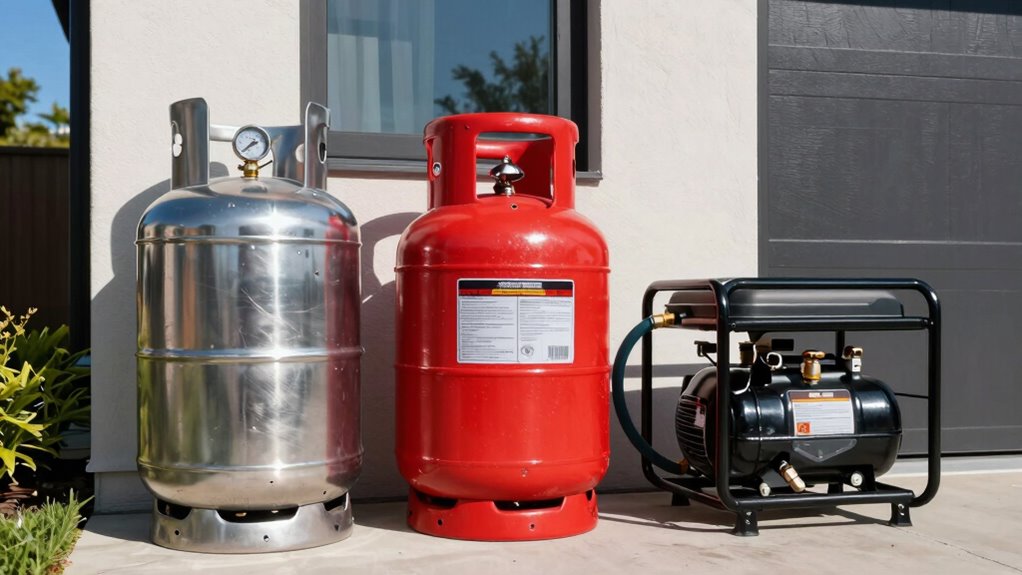
When choosing a home backup power system, understanding the differences between gas, propane, and dual fuel options is essential. Each fuel type offers unique advantages and challenges, and your decision should align with your energy needs, budget, and preferences for alternative energy sources. Gas-powered generators are the most common and typically the most affordable upfront, making them a popular choice for many homeowners. They run on natural gas supplied through a pipeline, so you don’t need to store fuel on-site. This setup offers convenience and continuous supply as long as your utility service remains active. However, during extended power outages or natural disasters, if the utility line is down, your gas generator might not operate unless you have an alternative fuel source or a backup connection.
Choosing between gas, propane, and dual fuel generators depends on your energy needs, budget, and reliability preferences.
Propane generators, on the other hand, rely on stored fuel in tanks, which means you’re not entirely dependent on your utility company. Propane burns cleaner than natural gas, resulting in less wear and tear on your generator, potentially extending its lifespan. Plus, propane can be stored safely on your property, giving you peace of mind during prolonged outages. The main drawback is that you’ll need to monitor and refill your propane tanks periodically, which adds to ongoing maintenance costs. When it comes to cost comparison, propane generators tend to be slightly more expensive upfront than natural gas models, but their fuel storage flexibility can be worth the extra investment if you face frequent or extended outages.
Dual fuel systems combine the best of both worlds, allowing you to switch between natural gas and propane depending on availability, cost, or personal preference. This flexibility can be a significant advantage if you’re interested in alternative energy sources or want to maximize reliability. While dual fuel generators usually come with a higher initial price tag, they provide a level of versatility that can be valuable during different scenarios. They also give you the ability to choose the most economical fuel at any given time, which can help with ongoing cost management. When comparing expenses, consider both the initial purchase and long-term fuel costs. Natural gas tends to be cheaper, especially if you already have access to a pipeline, but propane may be more economical if you prefer stored fuel or want independence from utility outages. Additionally, considering fuel storage options and how they align with your lifestyle can further influence your decision-making process. It’s also important to evaluate the **reliability** of your fuel supply, especially in areas prone to natural disasters or infrastructure disruptions. Understanding the fuel infrastructure in your location can help you make an informed choice that ensures consistent power during emergencies. In the end, your choice should balance your budget, fuel availability, and how much you value flexibility in your backup power system. Evaluating the cost comparison and considering alternative energy options will help ensure you select the most suitable and reliable solution for your home.
natural gas home backup generator
As an affiliate, we earn on qualifying purchases.
As an affiliate, we earn on qualifying purchases.
Frequently Asked Questions
What Are the Initial Installation Costs for Each Backup Fuel Type?
You’ll find that initial installation costs vary, primarily influenced by fuel storage needs and setup complexity. Gas connections tend to be less expensive since they’re often already in place, while propane requires tank installation, increasing costs. Dual fuel systems combine both, so installation costs are higher due to added components. Conducting a detailed cost estimation helps you compare fuel storage expenses and choose the most economical backup system for your home.
How Do Maintenance Requirements Differ Among Gas, Propane, and Dual Fuel Systems?
Think of maintenance like tending a garden—each fuel type needs different care. Gas systems require regular checks on pipelines and safety precautions for leaks. Propane systems need tank inspections and valve maintenance, while dual fuel setups demand upkeep for both. Fuel storage safety is vital across all. You must stay vigilant, perform routine maintenance, and follow safety precautions to keep your backup system reliable and safe, no matter your choice.
Which Fuel Option Offers the Longest Lifespan for Emergency Use?
Propane generally offers the longest lifespan for emergency use because it stores safely for years when kept in proper fuel storage tanks, unlike natural gas which is supplied continuously. You should follow strict safety protocols when handling and storing propane, ensuring tanks are in good condition and kept outdoors. This reduces risks and guarantees reliable fuel availability during power outages, making propane the best choice for long-term emergency preparedness.
Are There Any Local Regulations Affecting Fuel Storage or Usage?
You need to check local regulations, as regulation compliance can vary widely. Some areas require storage permits for propane tanks or gas supplies, and there might be restrictions on tank size or placement. Contact your local authorities or building department to understand specific rules. Ensuring you adhere to these regulations helps avoid fines and safety issues, and it makes your fuel storage legal and secure for backup power use.
How Do Environmental Impacts Compare Across the Three Fuel Options?
The environmental impact varies across fuel types. Gas typically produces lower emissions compared to propane, which releases more greenhouse gases. Dual fuel systems offer flexibility, allowing you to choose cleaner options. Emissions comparison shows that natural gas is generally cleaner than propane, but both are cleaner than diesel or gasoline. Your choice affects your carbon footprint, so consider local air quality standards and your sustainability goals when selecting the best backup fuel.
As an affiliate, we earn on qualifying purchases.
Conclusion
Ultimately, choosing between gas, propane, and dual fuel comes down to understanding your home’s needs, your budget, and your energy preferences. Consider the reliability of each fuel type, the availability in your area, and your long-term goals. Decide whether simplicity, cost-efficiency, or versatility matters most. By weighing these factors carefully, you’ll make a smart, confident choice—one that keeps your home powered, protected, and prepared for anything that comes your way.
As an affiliate, we earn on qualifying purchases.
As an affiliate, we earn on qualifying purchases.
Halloween Picks
halloween
As an affiliate, we earn on qualifying purchases.