
TL;DR

Get backup power and energy gear delivered free with Prime
- Fast, free delivery on millions of items
- Prime Video, Amazon Music and more included
- Member-only deals all year
A visitor to Unitree’s Hangzhou factory reported that much of its actuator production still relies on people operating winding machines, despite a viral video showing a humanoid assembling robots. The account argues that changing robot designs and low labor costs limit the case for automating production today, while leaving an opportunity for Western companies that build factory machinery.
A visit to Unitree’s Hangzhou factory found people operating many of the machines used to make the Chinese robotics company’s actuators, despite a widely viewed video showing a humanoid assembling robots. In a report, Josef Chen argues that this gap leaves room for Western companies to build the machinery that could automate robot production, particularly as Unitree’s product designs continue to change.
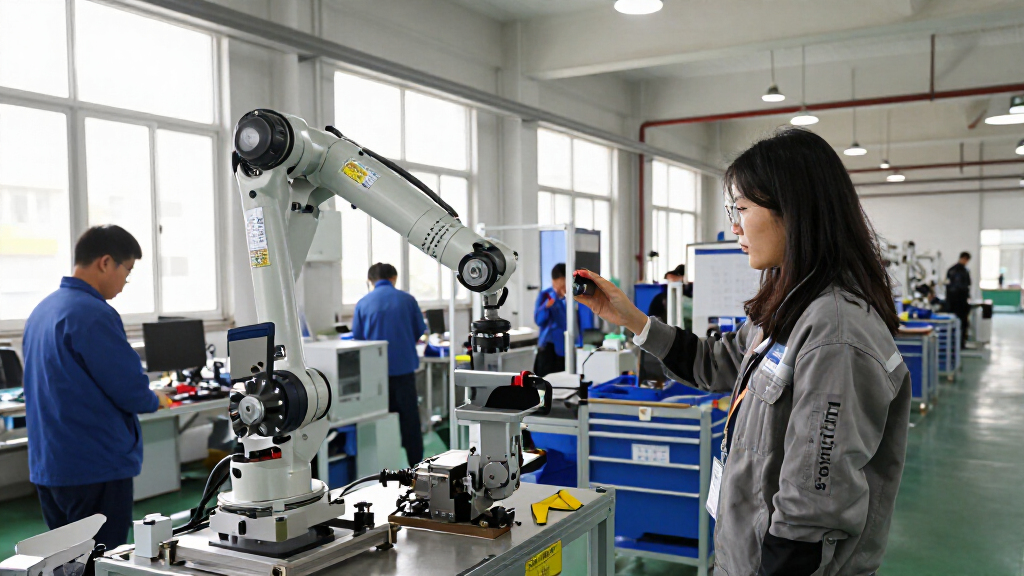
Chen said he toured the factory on a Wednesday and was not permitted to take photographs on the production floor. In the building making actuators—the motors that drive a robot’s joints—he saw one or two new automated lines, while people operated older winding machines across the rest of the floor. Winding involves wrapping copper wire around a motor core. Chen said he did not know what share of Unitree’s motors came from the automated lines.
The report contrasts that visit with Unitree’s viral video of a humanoid doing assembly work at the factory. The company described the work in the video as an “actual deployment”, but Chen says its IPO prospectus calls it a pilot and says assembly is “currently mainly manual.” The prospectus, as summarized in the report, put the book value of all Unitree’s machinery at about $1.7 million at the end of 2025. Unitree made nearly 32,000 robots that year; the figures do not establish how much machinery was used for each unit or how production was distributed across sites.
Chen reports that labor, including outsourced assemblers, accounted for 8% of Unitree’s manufacturing costs in 2025, with most of the remainder going to parts. Unitree expects a motor line under construction to cut labor per motor by more than half, but the company estimates that the change would reduce the cost of one robot model by less than 2%. The report says labor per robot had roughly halved since 2023, which the filing attributed to scale, standardized processes and more skilled staff—not solely to automation.
The Opening in Factory Automation
The factory account challenges a simple picture of Chinese robotics production as already dominated by automated factories. Chen’s observations indicate that human labor remains part of Unitree’s manufacturing, while the company’s own filing describes assembly as mainly manual. That distinction matters to businesses and policymakers weighing where future gains in robotics supply chains may come from.
Chen’s argument is that automation is not necessarily the immediate cost lever for a producer whose labor share is reported at 8% and whose products change frequently. A machine designed around one robot can lose value when the design changes. If companies can build flexible production equipment for parts that stay stable across models, however, manufacturers in the West may compete in a valuable part of the supply chain. This is Chen’s interpretation of the factory visit, not a confirmed forecast of who will capture that market.
The account also points to a mismatch between humanoid robots’ public profile and their present industrial role. Chen cites Unitree figures showing that, in the first nine months of 2025, three-quarters of humanoid revenue came from research and education, while less than 5% came from factories or other industrial work. That suggests current interest and sales do not yet establish broad factory use.
Products Worth Considering

Roborock Qrevo S Pro Robot Vacuum and Mop

Dreame L50 Ultra Robot Vacuum and Mop Combo

Dreame X60 Max Ultra Complete Robot Vacuum and Mop
As an affiliate, we earn on qualifying purchases.
Changing Robots, Changing Production
Unitree’s production strategy is tied to how quickly its robots evolve. Chen says a factory machine built for a product that changes each year may need costly changes or replacement. He compares this to tailoring clothes for a growing teenager: dedicated equipment is easier to justify once a product’s design is stable. In Unitree’s case, he identifies joint modules and motors as more suitable early targets for automation because the company’s robots share those components.
The report says Unitree’s CEO, Wang Xingxing, told a conference in Wuzhen on the day of the tour that the company had spent ten years on the robot’s body and would now focus more on its “brain.” Chen also describes a demonstration in which a G1 robot, reportedly running GPT-6, fetched Wang a bottle of water from another room, but did so slowly. The account does not provide independent performance testing or detail the demonstration’s setup.
Chen uses the history of Ford’s Model T to explain why production equipment may follow product design rather than lead it. Ford’s early moving assembly line handled magnetos through manual operations; specialized machine tools arrived after the Model T’s design was settled. Ford later shut its plants for six months while changing from the Model T to the Model A, a transition Chen cites as a warning about investment in equipment built for a product that is about to change. He also notes an earlier Foxconn plan to deploy a million robots, which did not reach that target within the proposed three years.
“Assembly is “currently mainly manual.””
— Unitree’s IPO prospectus, as quoted by Josef Chen
What the Factory Figures Cannot Show
The tour was a single visit, and Chen was not allowed to photograph the production floor. He does not know what proportion of motors is made on automated lines, how many workers were present across the full operation, or how production varies between buildings and product lines. The reported machinery value also does not show how much equipment Unitree leases, how assets are allocated, or the degree of automation elsewhere in its supply chain.
The company’s video, prospectus and reported cost figures describe different aspects of production and should not be treated as direct measures of one another. The source material does not independently verify the 2025 production and cost figures, the expected savings from the new motor line, or the timing and scope of that line’s operation. It is also unclear whether Unitree’s labor share or production methods have changed since the figures cited.
Chen’s conclusion that Western firms can build the machines that make robots is an argument, not evidence that Western suppliers will win contracts or outperform competitors. The report gives no named Western manufacturer, customer agreement or announced investment tied to that opportunity.
The Test Is Scalable Automation
The next measurable development cited in the report is Unitree’s planned motor-production line. Its expected effect—more than halving labor per motor but cutting the cost of one robot model by less than 2%—will be worth comparing with actual operating results once the line is running. The source material does not give a completion date.
For Unitree, the wider test is whether it can turn humanoid demonstrations and research sales into reliable industrial work while its designs keep changing. For Western companies, Chen’s case depends on whether they can supply flexible automation equipment without betting on a single robot design. No specific follow-up announcement or contract is identified in the report, so the competitive outcome remains open.
Key Questions
What did Josef Chen see at Unitree’s factory?
Chen reported seeing one or two new automated actuator lines and people operating older winding machines across much of the production floor. He said he was not permitted to take photographs there and did not know what share of motors came from automated lines.
Does Unitree’s humanoid assembly video show fully automated production?
That is not established by the source material. Unitree called the video an “actual deployment,” while Chen says its IPO prospectus described assembly as a pilot and said it was “currently mainly manual.”
How much of Unitree’s manufacturing cost was labor?
Chen reports that labor, including outsourced assemblers, made up 8% of manufacturing costs in 2025. The source does not independently verify the figure or provide a more detailed breakdown of production costs.
Why does Chen think Western firms could benefit?
His argument is that Unitree’s products change quickly, making dedicated production machinery risky, while some components such as motors are more stable. He believes Western firms could compete by building flexible machinery for robot manufacturing; the report does not identify a company that has secured such business.
How much of Unitree’s humanoid business was industrial?
According to figures cited by Chen, less than 5% of humanoid revenue in the first nine months of 2025 came from factories or other industrial work. Three-quarters came from research and education, and Chen says some sales classified as industrial involved guided tours.
Source: josef.cn