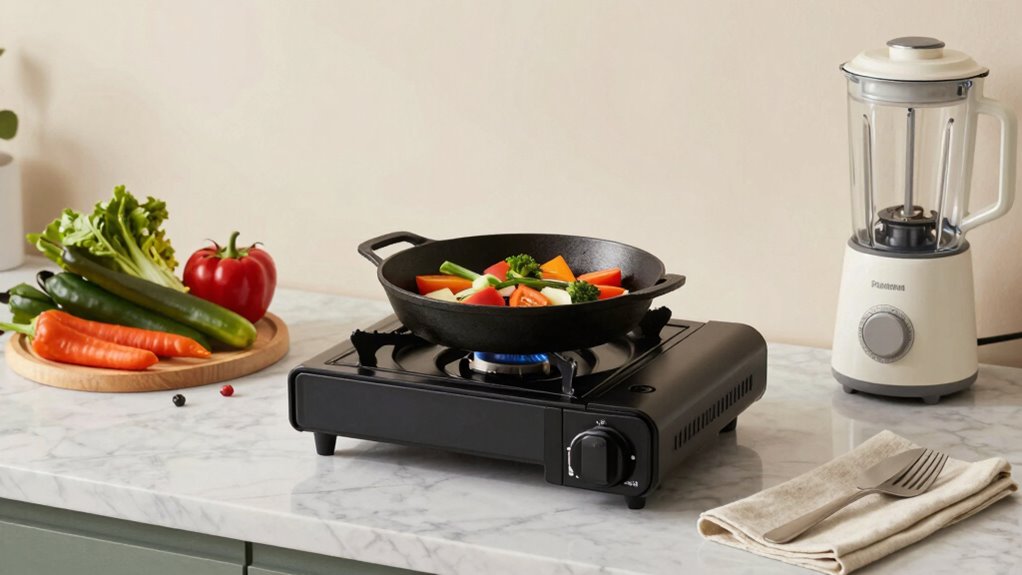

To cook without power and avoid turning your kitchen into a campground, try using solar ovens, thermal cookers, or ember-based slow cooking methods. Portable stoves, camping burners, or open-flame Dutch ovens are great for quick or traditional recipes. You can also prepare no-cook meals or preserve foods with solar dehydrators and cold storage techniques. Keep exploring these options for efficient, peaceful outdoor-inspired cooking that fits right into your home.
Key Takeaways
- Utilize solar ovens and thermal cookers to prepare meals without electricity, keeping your kitchen energy-efficient and clutter-free.
- Incorporate portable camping stoves or burners for quick, no-power cooking without transforming your kitchen into an outdoor setup.
- Use ember and coal-based slow cooking techniques in heat-safe containers to prepare flavorful meals indoors or in covered spaces.
- Opt for no-cook meals like salads, sandwiches, or pre-prepped snacks that require no appliances or power sources.
- Store and prepare foods with cold storage methods and proper temperature management to ensure freshness without electricity.

Jackery Portable Power Station Explorer 300, 292Wh Backup LiFePO4 Battery, Solar Generator for Outdoors Camping Travel Hunting Blackout (Solar Panel Optional)
SPEED UP YOUR RECHARGEABILITY: It takes only 2 hours to recharge 80% battery of the power station through...
As an affiliate, we earn on qualifying purchases.
Using a Solar Oven for Efficient Sun-Based Cooking

A solar oven harnesses the power of the sun to cook food without any electricity or fuel. This makes solar cooking an eco-friendly and cost-effective way to prepare meals. By trapping sunlight and converting it into heat, your solar oven can reach high temperatures suitable for baking, roasting, and boiling. It’s perfect for making sun-powered meals during sunny days, especially when you want to avoid using traditional appliances. Setting up a solar oven is simple—you just position it in direct sunlight and adjust the reflective surfaces to maximize heat absorption. As you watch your food cook slowly and evenly, you’ll appreciate how this method minimizes energy use while delivering delicious results. Proper installation practices are essential to ensure your solar oven operates effectively and safely, preventing heat loss and maximizing efficiency. Incorporating efficient heat retention techniques can further improve cooking performance and reduce cooking time. Additionally, understanding solar oven designs can help you choose the best setup for your outdoor cooking needs. For optimal results, selecting the right reflective materials can significantly enhance heat capture and cooking speed. Solar cooking is a smart, sustainable choice for outdoor enthusiasts and anyone seeking no-power cooking options.

Anker SOLIX C1000 Gen 2 Portable Power Station, 2,000W (Peak 3,000W) Solar Generator, Full Charge in 49 Min, 1,024Wh LiFePO4 Battery for Home Backup, Power Outages, and Camping (Optional Solar Panel)
49 Min UltraFast Recharging: With upgraded HyperFlash tech, fully recharge at 1,600W—for outage prepping, camping trips, or tailgating...
As an affiliate, we earn on qualifying purchases.
Mastering the Art of Dutch Oven Cooking Over a Campfire

To master Dutch oven cooking over a campfire, start by selecting the right oven for your needs, considering size and material. You’ll need to learn how to control heat without electricity, using techniques like managing firewood and adjusting lid placement. Additionally, understanding transfer switch and fuel‑storage options can help ensure safety and efficiency during cooking. Proper campfire safety practices are essential to prevent accidents and ensure a successful outdoor culinary experience. Properly handling sticking wall decor can also assist in creating a safe and enjoyable outdoor cooking environment, preventing hazards. For instance, utilizing outdoor cooking equipment designed specifically for open flames can improve safety and cooking results. Furthermore, practicing fire management techniques such as building a proper fire ring and maintaining a steady fire can greatly influence your cooking success. Finally, understanding essential campfire techniques guarantees your meals cook evenly and safely every time.
Choosing the Right Dutch Oven
Choosing the right Dutch oven is vital for successful campfire cooking, as not all models are built to withstand open flames or deliver even heat. Look for a sturdy cast iron oven with thick walls for durability and heat retention. A well-fitting lid is essential, as it traps moisture and helps cook food evenly, especially over an open fire. Ensure the lid sits snugly to prevent heat and smoke from escaping. Consider models with a smooth, sturdy handle for easy handling when hot. If possible, opt for a Dutch oven with a raised lip or lip design, which aids in stacking coals on top for consistent heat. Selecting a high-quality cast iron Dutch oven with a secure fitting lid makes your campfire cooking more reliable and enjoyable. Additionally, paying attention to heat distribution properties can help prevent hot spots and ensure your food cooks uniformly. Choosing a Dutch oven with good heat retention can greatly improve cooking results over an open flame. When selecting your Dutch oven, also consider its seasoning and maintenance requirements to ensure longevity and optimal performance. Properly seasoned cookware enhances non-stick qualities and overall durability, making your cooking experience smoother. Moreover, maintaining the right level of oil coating on the surface can help protect the cast iron and improve its cooking performance over time.
Controlling Heat Without Power
Mastering heat control over a campfire is essential for successful Dutch oven cooking, especially since you can’t rely on knobs or timers. To regulate temperature, you need to understand heat insulation and manage the fire’s intensity. Adjust the number and placement of hot coals beneath and on top of the oven to control heat levels precisely. Lifting or adding coals lets you fine-tune the temperature regulation. Using a heat diffuser or a layer of sand under the Dutch oven also helps insulate and distribute heat evenly. Proper heat management ensures your dishes cook evenly and prevents scorching. Additionally, familiarizing yourself with different cooking techniques can improve your results. Here’s a quick guide:
| Coals Placement | Heat Level | Suitable For |
|---|---|---|
| Few coals underneath | Low, slow cooking | Stews, braises |
| Coals on top | Moderate heat | Baking, roasting |
| Coals underneath & on top | High heat | Searing, boiling |
| No coals (away from oven) | Cool, warming | Holding cooked food |
Essential Campfire Techniques
Effective campfire techniques are key to achieving consistent results when cooking with a Dutch oven. To master campfire baking and solar dehydration, you need to control heat effectively. Keep a close eye on the fire’s size and adjust the ashes for even heat distribution. Use these techniques:
- Position the Dutch oven strategically to avoid direct flames, ensuring even cooking.
- Rotate the oven periodically for consistent baking, similar to solar dehydration methods.
- Use hot coals on top and underneath for stable, predictable heat.
- Cover your Dutch oven with a lid or foil to retain moisture and prevent over-browning.
- Monitoring water chemistry and temperature, similar to pool maintenance, helps maintain optimal cooking conditions.
These methods help you bake bread or dehydrate fruits without electricity, turning your campfire into a versatile kitchen tool. Practice makes perfect, so experiment with different setups to find what works best.

Jackery Solar Generator 1000 v2 with 200W Solar Panel,1070Wh Portable Power Station LiFePO4 Battery,1500W AC/100W USB-C Output, 1Hr Fast Charge for Outdoor,Off-Grid Living,RV,Emergency
Powerful yet Compact: Boasting a 1,500W AC output and a 3,000W surge peak, the Solar Generator 1000 V2...
As an affiliate, we earn on qualifying purchases.
Cooking With a Rocket Stove for Quick and Clean Meals
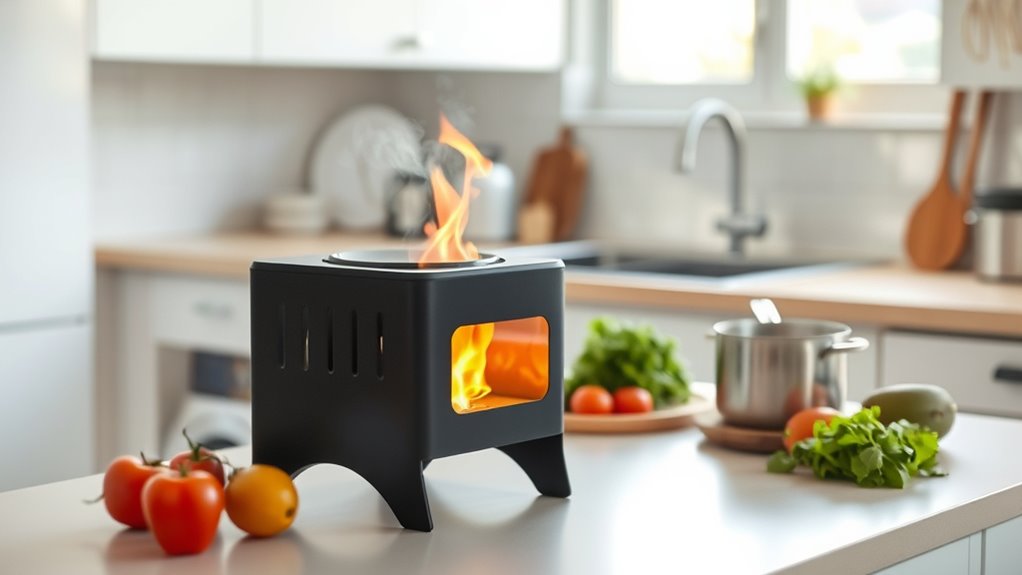
A rocket stove offers a fast and efficient way to cook meals without relying on electricity or gas. Its design concentrates heat, making it perfect for outdoor meal prep and scaling recipes easily. You can quickly prepare soups, stews, or even stir-fries, saving time and fuel. Because it uses small amounts of biomass like wood or twigs, it’s both eco-friendly and economical. The clean burning process means fewer smoke emissions, keeping your outdoor space more comfortable. Proper ventilation is important to ensure safe and healthy cooking conditions. Additionally, the simple setup of a rocket stove allows for easy transport, so you can take it on camping trips or outdoor adventures. Plus, with its simple setup, you can enjoy cooking without the mess of traditional stoves. Whether you’re preparing a quick snack or a full meal, a rocket stove helps you stay self-sufficient and minimizes your environmental impact while delivering hot, satisfying dishes. Incorporating sustainable fuel sources can further reduce your carbon footprint while cooking outdoors. Using innovative combustion technology can also help optimize efficiency and reduce emissions during outdoor cooking. Embracing clean-burning methods not only improves air quality around your cooking area but also enhances safety during extended use.

OUPES Mega 1 Portable Power Station 2000W (Surge 4500W), 1024Wh LiFePO4 Battery Solar Generator, Expandable to 5kWh, UPS, for Home Backup Power, Camping & Road Trips (Solar Panel Optional)
REVOLUTIONARY FAST-CHARGING TECHNOLOGY: Experience industry-leading recharge speeds with 0-80% capacity in just 36 minutes via AC, or an...
As an affiliate, we earn on qualifying purchases.
Employing a Camping Stove or Portable Butane Burner
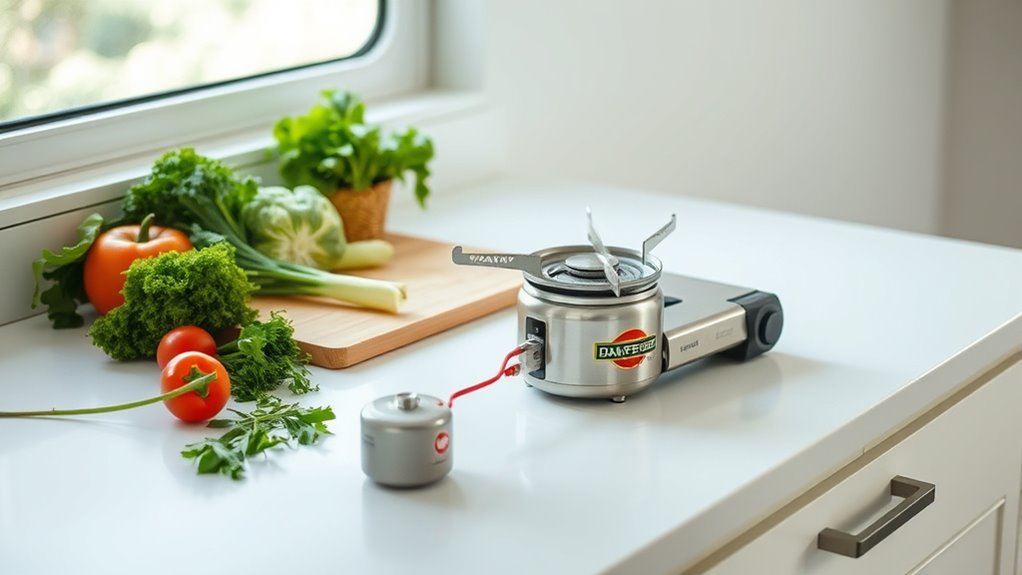
When you need a reliable cooking option away from home, a camping stove or portable butane burner provides a convenient solution. These devices are perfect for simple meals, whether you’re outdoors or using them indoors for no-power cooking. You can easily set up an indoor grilling station or use an electric skillet alongside your burner to expand your options. For safety and convenience, choose models with adjustable flame controls and stable surfaces. Keep in mind that these burners work well for boiling, frying, or simmering without electricity. They’re also great for heating pre-made meals or preparing fresh ingredients. Compactness and portability make them ideal for small spaces and quick, efficient cooking when traditional power sources are unavailable. Proper safe operating procedures ensure you can use these devices confidently and avoid hazards during your cooking endeavors. Additionally, selecting fuel-efficient models can extend usage time and reduce the need for frequent refueling, making them more practical for extended use. Incorporating energy-efficient features can further enhance their performance and safety during use.
Preparing No-Cook Meals for Instant Satisfaction

After exploring portable cooking methods, you might find that sometimes the quickest way to satisfy your hunger is with no-cook meals. Instant snack ideas like trail mix, yogurt with fruit, or pre-cut veggies can provide quick energy without any prep. For a no-cook breakfast, consider options like overnight oats, smoothies, or peanut butter on whole-grain bread. These meals require minimal effort and deliver instant satisfaction. Keep a stash of hearty, ready-to-eat foods in your pantry or cooler so you’re always prepared. No-cook meals are perfect when you’re short on time or power, allowing you to enjoy nutritious, satisfying food with just a few simple ingredients. With these ideas, you can stay fueled without turning your kitchen into a campground.
Harnessing the Power of a Heat Retainer or Thermal Cooker
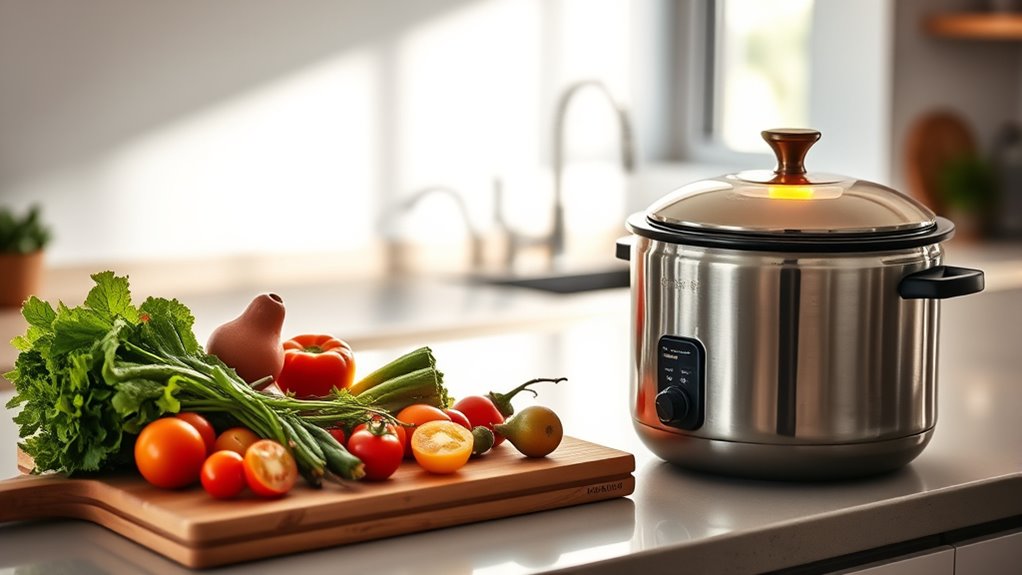
Heat retainers and thermal cookers trap heat to finish cooking with minimal energy, making them highly efficient. They work by maintaining high temperatures for hours, saving you power and fuel. These tools are perfect for slow-cooked stews, rice, and other dishes that benefit from gentle, sustained heat.
How Heat Retainers Work
Ever wondered how a heat retainer keeps your food warm without additional energy? It relies on heat retention and thermal insulation to trap warmth inside. When you preheat the container, it minimizes heat loss, maintaining a consistent temperature for hours. The container’s thick walls are designed for thermal insulation, preventing heat from escaping. This means your food stays hot without needing electricity or stoves. To maximize effectiveness:
- Preheat the retainer before adding hot food
- Use a well-insulated, airtight lid
- Avoid opening the container frequently
- Choose a model with thick, quality insulation
Energy Efficiency Benefits
Have you considered how a heat retainer or thermal cooker can substantially boost your energy efficiency? By trapping heat during cooking, these devices reduce the need for continuous stove or oven use, leading to significant energy savings. Since they rely on retained heat rather than active power, they consume minimal or no electricity or gas once sealed. This reduction not only lowers your utility bills but also decreases your environmental impact by cutting down on carbon emissions associated with energy production. Using a thermal cooker allows you to cook safely with less energy, making it an eco-friendly choice. Over time, this approach supports sustainable living while maintaining delicious meals, proving that saving energy doesn’t mean sacrificing convenience or quality.
Ideal Cooking Applications
Thermal cookers excel in preparing hearty stews, soups, and braised dishes that benefit from slow, steady heat. They’re perfect for dishes that need hours of gentle simmering without constant attention. You can also use them for indoor grilling, where the retained heat provides a consistent temperature for vegetables or small cuts of meat. An electric skillet works well for sautéing, frying, or simmering, especially when you want a controlled, no-power alternative. These appliances are ideal for making chili, casseroles, or even warming bread. By combining a thermal cooker with an electric skillet or indoor grilling, you can diversify your no-power cooking repertoire without sacrificing flavor or texture. These methods are efficient, quiet, and perfect for energy-conscious cooking.
Utilizing an Ember or Coals Method for Slow Cooking

Using embers or hot coals for slow cooking offers a traditional, no-power method to prepare flavorful meals. You can set up a makeshift stove by carefully arranging the coals in a shallow pit or heat-safe container, maintaining a consistent temperature for hours. This technique works well for dishes like stews, roasts, or even indoor baking if you have a heat-safe surface. Coals provide steady heat without electricity, making them ideal electric appliance alternatives when power is out. To control the heat, adjust the number and placement of the embers. Remember to monitor the temperature regularly and add more coals as needed. With patience, you’ll enjoy tender, well-cooked meals that preserve flavor without relying on modern appliances.
Making the Most of a Solar Food Dehydrator and Preserving Foods

A solar food dehydrator offers a practical way to extend your food’s shelf life and preserve flavors without relying on electricity. To maximize its benefits, focus on effective dehydrator techniques for food preservation. First, thinly slice fruits and vegetables to ensure even drying and quicker dehydration. Second, rotate trays regularly to promote uniform airflow. Third, monitor temperature and humidity levels to prevent mold or spoilage. Fourth, store dried foods in airtight containers, away from light and moisture, to maintain quality. Using these dehydrator techniques, you can preserve seasonal harvests, make nutritious snacks, and reduce waste. A solar dehydrator not only conserves resources but also empowers you to enjoy home-preserved foods year-round, all without turning your kitchen into a campground.
Creative Use of Cold Storage Techniques and No-Heat Food Preparation
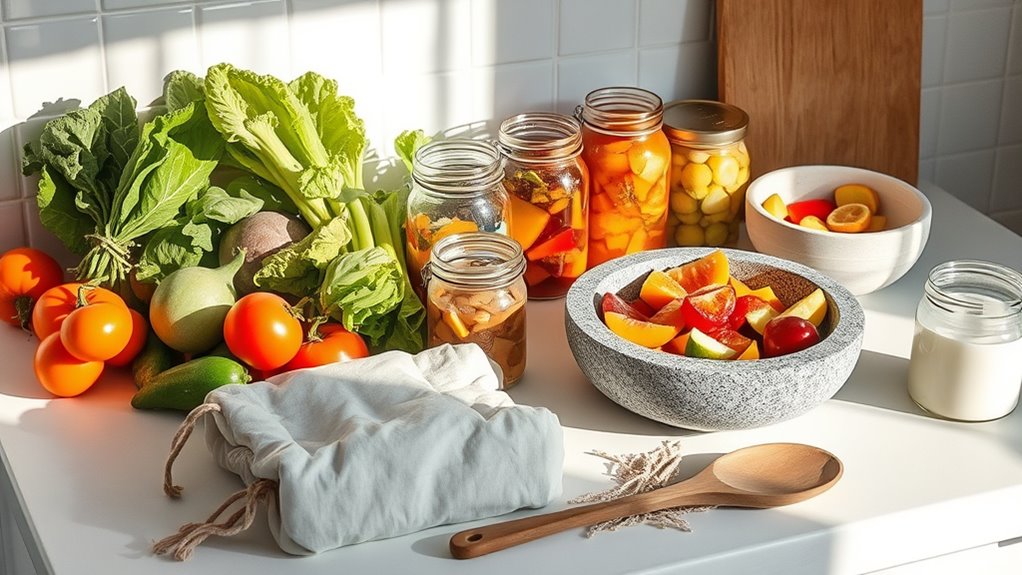
Even without heat, you can creatively extend your food’s freshness through cold storage techniques. Proper refrigeration techniques slow bacterial growth, keeping perishables edible longer. Use a cool, shaded spot or insulated containers to maintain low temperatures. To organize your cold storage, consider this setup:
| Food Type | Temperature Range | Storage Tips |
|---|---|---|
| Fresh produce | 32-40°F | Keep in breathable bags or crisper drawers |
| Dairy & eggs | 35-40°F | Use airtight containers to prevent odor transfer |
| Cooked foods | 35-40°F | Store in shallow containers for quick cooling |
| Meats & seafood | 32-38°F | Keep on bottom shelves to prevent cross-contamination |
Frequently Asked Questions
Can I Cook Full Meals Without Any Electricity or Gas?
Yes, you can cook full meals without electricity or gas by using solar ovens or open flame cooking. Solar ovens harness sunlight to cook food, making them eco-friendly and practical in sunny conditions. Open flame methods, like camping stoves or fire pits, allow you to prepare complete meals outdoors. Both options eliminate reliance on power, letting you enjoy cooking anywhere, anytime, without turning your kitchen into a campground.
How Safe Are No-Power Cooking Methods for Beginners?
No-power cooking methods are generally safe for beginners when you follow proper safety tips. Did you know that most accidents occur due to improper handling or lack of awareness? To stay safe, always keep flammable items away, use equipment on stable surfaces, and monitor cooking closely. With these beginner tips, you’ll minimize safety concerns and confidently prepare meals without electricity, making your no-power cooking experience both safe and enjoyable.
What Are the Best Foods to Prepare Without Heat?
You can prepare a variety of foods without heat by focusing on preserved and ready-to-eat options. Think canned vegetables, dried fruits, nuts, and pre-cooked meats stored in your fridge or portable appliances like coolers and portable refrigerators. For food preservation, consider pickled items or jerky that don’t require cooking. These foods stay safe and tasty, making them ideal for no-power situations where quick, easy, and nutritious meals are essential.
How Long Do No-Power Cooking Methods Typically Take?
No-power cooking methods vary in time, but solar ovens usually take 1 to 3 hours to cook meals, depending on the weather and food type. Cold storage keeps ingredients fresh without heat, but it doesn’t cook. If you’re short on time, plan ahead with solar ovens for slow-cooked dishes or rely on cold storage for ready-to-eat foods, making meal prep simple without electricity.
Are No-Power Cooking Options Suitable for Large Families?
Yes, no-power cooking options can work for large families, but you should consider alternative methods that suit your needs. These methods often involve slow cooking or outdoor grilling, which may require extra time. Always prioritize safety considerations, such as proper ventilation and avoiding open flames indoors. Planning ahead helps guarantee everyone gets fed without stress, making these options practical even for bigger households.
Conclusion
With these no-power cooking options, you can enjoy a hearty meal without turning your kitchen into a medieval castle’s pantry. Whether you harness the sun’s energy or master the art of open-fire cooking, you’ll enjoy the satisfaction of preparing food off-grid. So, channel your inner pioneer, embrace these time-tested methods, and cook like a modern-day Robinson Crusoe—no electricity required, just ingenuity and a dash of adventure.