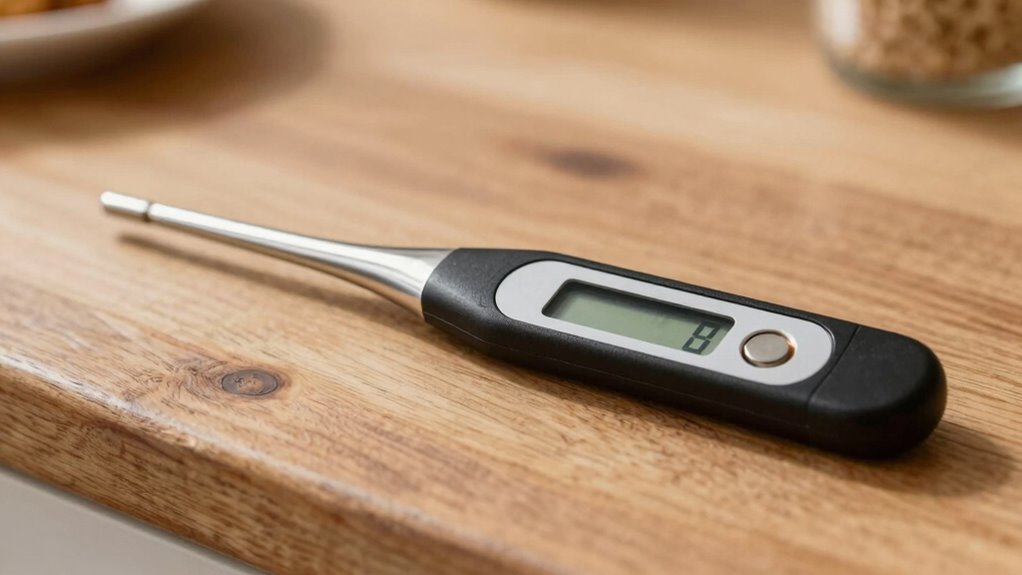

A food thermometer is a small but essential tool that helps you cook meals safely and perfectly. It comes in various types like digital, infrared, and probe models, each suited for different tasks. By checking temperatures accurately, you prevent undercooking or overcooking, protecting yourself from foodborne illnesses. Proper use and calibration guarantee reliable results. Keep learning how this simple device can make a big difference in your cooking success.
Key Takeaways
- Food thermometers ensure meats and dishes reach safe internal temperatures, preventing foodborne illness.
- Proper calibration and cleaning maintain thermometer accuracy and hygiene.
- Different types, like digital and infrared, suit various cooking needs for quick or surface measurements.
- Using a thermometer helps avoid undercooking or overcooking, ensuring perfect results every time.
- Regular use of food thermometers promotes food safety, reduces waste, and boosts confidence in meal preparation.

Alpha Grillers Meat Thermometer Digital – Instant Read Food Thermometer for Cooking & Grilling – Professional Kitchen Gifts for Men, Dad & Mom
Instant Read Food Thermometer | Our instant read thermometer features a temperature probe and advanced, highly accurate technology…
As an affiliate, we earn on qualifying purchases.
As an affiliate, we earn on qualifying purchases.
Understanding Different Types of Food Thermometers

Understanding the different types of food thermometers is essential for choosing the right tool for your cooking needs. Digital thermometers give quick readings with a clear display, perfect for busy kitchens. They often include features like preset alarms and backlit screens, making them versatile for meats, poultry, and delicate foods. Infrared models are especially useful for measuring surface temperatures without contact, which is helpful when handling hot or delicate surfaces. Specialized options include infrared models that measure surface temperatures without contact, and probe types for continuous internal monitoring during long cooks. Each type serves specific purposes, so consider your cooking style and the foods you prepare most often. Selecting the appropriate thermometer also involves understanding proper calibration to ensure accurate measurements. Regular calibration helps maintain measurement accuracy over time, preventing temperature inaccuracies that could compromise food safety. Additionally, choosing a thermometer with durable construction can extend its lifespan in busy or challenging cooking environments. Proper maintenance and accurate readings are crucial for safe and successful cooking outcomes. To ensure your thermometer remains reliable, always follow manufacturer instructions for proper storage and care. Picking the right thermometer guarantees accuracy, safety, and better cooking results every time.

Etekcity Infrared Thermometer Laser Temperature Gun 774, Meat Food Candy Oven Thermometer for Griddle Accessories, Heat Gun for Cooking Refrigerator Tools, Adjustable Emissivity & Max Measure, Yellow
𝐕𝐞𝐫𝐬𝐚𝐭𝐢𝐥𝐞 𝐓𝐨𝐨𝐥𝐬: Infrared technology allows you to measure various objects at home and outdoors; Use it for 𝒎𝒆𝒂𝒕,…
As an affiliate, we earn on qualifying purchases.
As an affiliate, we earn on qualifying purchases.
How to Properly Use Your Food Thermometer for Accurate Results
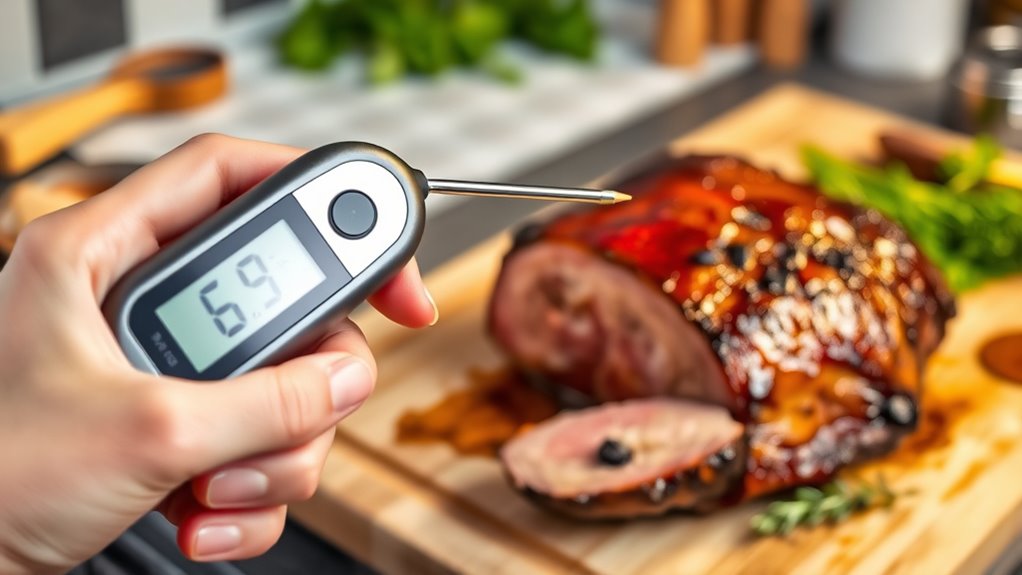
To guarantee your food thermometer provides accurate readings, it’s important to use it correctly every time you cook. Start by inserting the probe into the thickest part of the food, avoiding bones, fat, or gristle. For thin foods, use a tip-sensitive thermometer. Ensure the thermometer is clean before each use to prevent cross-contamination. Allow the thermometer to stabilize for a few seconds before reading. For digital models, check the display; for analog, wait until the needle steadies. Calibrate dial thermometers periodically. Use the table below to understand the best practices for different thermometer types:
| Thermometer Type | Insertion Technique | Calibration Tips |
|---|---|---|
| Digital | Insert fully, wait | Calibrate monthly |
| Analog | Deep, steady | Check against boiling water |
| Specialized | Follow specific use | Refer to manufacturer |
Additionally, regularly inspecting and maintaining your thermometer ensures consistent accuracy, mirroring the importance of proper air purifier maintenance for optimal performance. Proper thermometer calibration is essential to maintain reliability over time and prevent inaccurate readings that could lead to food safety issues. Maintaining your thermometer’s accuracy is similar to regular device calibration, which helps ensure consistent results in various applications. Being aware of measurement accuracy best practices can help you avoid costly mistakes when preparing food.
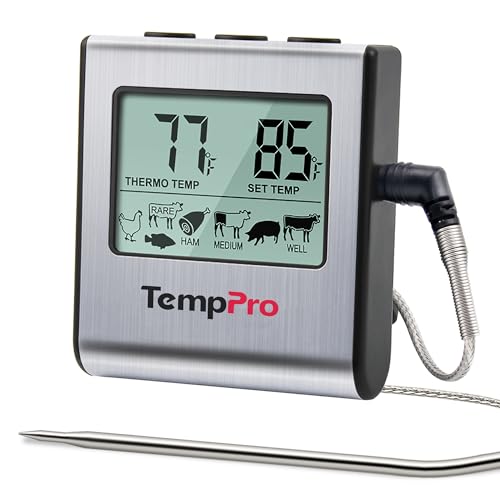
TempPro TP16 Large LCD Digital Cooking Food Meat Thermometer for Smoker Oven Kitchen BBQ Grill Thermometer Clock Timer with Stainless Steel Temperature Probe(Previously ThermoPro)
Cook mode with USDA preset temperature settings: ThermoPro cooking thermometer ideal for meat, oven, smoker or stove top;…
As an affiliate, we earn on qualifying purchases.
As an affiliate, we earn on qualifying purchases.
Key Food Safety Temperatures and Why They Matter

Maintaining proper food temperatures is essential for preventing foodborne illnesses and ensuring safe, quality meals. Knowing the critical temperatures helps you guarantee bacteria like Salmonella and E. coli are destroyed. For example, poultry should reach at least 165°F, while ground meats need 160°F. Beef, pork, and lamb roasts are safe at 145°F with a rest time, and fish should be cooked to 145°F. Hot foods must stay above 140°F to prevent bacteria growth, while leftovers should be cooled quickly and stored below 40°F. Using your thermometer to verify these temperatures assures safety and quality. Proper food safety practices include maintaining correct temperatures during storage and handling. Ignoring these guidelines risks contamination, illness, and wasted food. Precise temperature control is your best tool for safe cooking and storing practices.
Alpha Grillers Meat Thermometer Digital – Instant Read Food Thermometer for Cooking & Grilling – Professional Kitchen Gifts for Men, Dad & Mom
Instant Read Food Thermometer | Our instant read thermometer features a temperature probe and advanced, highly accurate technology…
As an affiliate, we earn on qualifying purchases.
As an affiliate, we earn on qualifying purchases.
Tips for Calibrating and Maintaining Your Thermometer
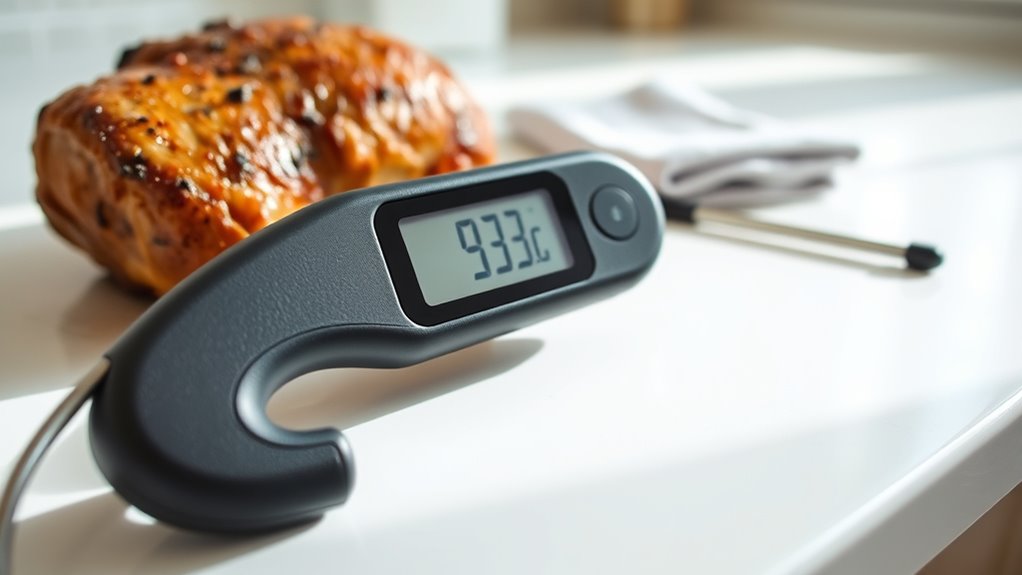
Regularly calibrating your food thermometer guarantees it provides accurate readings, which is essential for food safety and quality. To calibrate, use the ice water method: fill a glass with ice and a little water, then insert the probe without touching the sides or bottom. Wait until the reading stabilizes; it should be 32°F (0°C). If it’s off, adjust the thermometer if possible or note the discrepancy. For dial thermometers, use the calibration nut or screw to set the correct temperature. Keep your thermometer clean and dry, and store it properly to prevent damage. Replace batteries in digital models as needed to ensure reliable performance. Regular maintenance guarantees consistent, accurate readings, helping you cook safely and prevent foodborne illnesses. Understanding food safety is key to making informed decisions in your kitchen. Additionally, proper storage of your thermometer can extend its lifespan and maintain accuracy over time. Regularly inspecting and calibrating your thermometer ensures it remains accurate despite daily use.
Choosing the Right Thermometer for Your Cooking Needs

Choosing the right thermometer depends on your specific cooking needs and the types of foods you prepare. If you cook meats and poultry frequently, a digital or instant-read thermometer offers quick, accurate readings. For thick roasts or casseroles, an analog dial thermometer works well, especially if durability is a priority. Infrared surface thermometers are ideal for checking grill surfaces or cookware surfaces without contact. If you need continuous monitoring during long cooks, leave-in probes are perfect. For precise internal temperatures in baked goods or thin foods, thermocouple or tip-sensitive digital models are best. Consider features like preset alarms, backlit displays, or wireless connectivity based on your convenience. Matching the thermometer type to your cooking style guarantees safety, minimizes waste, and improves overall results.
Benefits of Using a Food Thermometer in Everyday Cooking

Using a food thermometer in everyday cooking offers immediate benefits by ensuring your food reaches safe internal temperatures, which helps prevent foodborne illnesses. It gives you confidence that poultry, meats, and seafood are cooked thoroughly, reducing the risk of bacteria like Salmonella and E. coli. A thermometer also helps you avoid undercooking, which can be dangerous, or overcooking, which ruins texture and flavor. By monitoring temperatures, you can achieve perfect doneness every time, saving money and reducing waste by preventing overcooking. Many thermometers offer quick, accurate readings, making it easy to check without disrupting your cooking process. Properly understanding safe cooking practices can further enhance your kitchen safety and efficiency. Overall, using a thermometer promotes healthier, safer, and tastier meals, giving you peace of mind with each dish you prepare.
Frequently Asked Questions
How Often Should I Replace or Upgrade My Food Thermometer?
You should replace or upgrade your food thermometer at least once a year, especially if it’s digital or analog. Regularly check its accuracy by testing it in ice water or boiling water, and recalibrate if needed. If you notice inconsistent readings, damage, or battery issues, it’s time for a new one. Upgrading guarantees you maintain safe cooking practices, reduce food waste, and prevent foodborne illnesses effectively.
Can I Use the Same Thermometer for Both Grilling and Baking?
Sure, you can use the same thermometer for grilling and baking, but don’t expect perfect results. Grilling often requires surface or infrared measurements, while baking needs internal temps, so a versatile digital or specialized probe can handle both. Just remember, using the right tool for each task guarantees accurate readings, preventing undercooked or overdone food. Don’t sacrifice precision—your taste buds will thank you.
Are Digital Thermometers Suitable for Outdoor or Camping Use?
Yes, digital thermometers are suitable for outdoor or camping use. They offer quick readings, high accuracy, and easy-to-read displays, making them convenient for cooking over campfires or grills. Just make certain you choose a rugged, battery-operated model with a durable design and possibly a backlit display for visibility in low light. Keep extra batteries handy, and calibrate if needed, so you can reliably monitor your food’s safety wherever you cook.
What Is the Best Way to Store My Food Thermometer?
You should store your food thermometer in a clean, dry place, ideally in a protective case or a designated drawer to prevent damage. Keep it away from extreme temperatures, moisture, and magnetic fields that could affect accuracy. If it’s a digital model, remove the batteries if you won’t use it for a while to avoid corrosion. Regularly calibrate and clean it for peak performance.
How Do I Troubleshoot Inaccurate Readings on My Thermometer?
To troubleshoot inaccurate readings on your thermometer, first calibrate it according to the manufacturer’s instructions. Check the battery if it’s digital, replacing it if needed. Make certain the sensor is clean and free of debris, and insert it properly into food without hitting bone or fat. For analog models, verify the dial‘s accuracy by testing in ice water or boiling water. Regular calibration and maintenance keep your readings precise.
Conclusion
Using a food thermometer is like having a reliable map on a journey—you’ll avoid costly mistakes and enjoy perfectly cooked meals every time. By understanding the different types, practicing proper use, and maintaining your thermometer, you guarantee food safety and better results. Think of it as your kitchen’s secret weapon, turning everyday cooking into a safe, delicious experience. With this small tool, you’ll master big culinary wins without breaking a sweat.