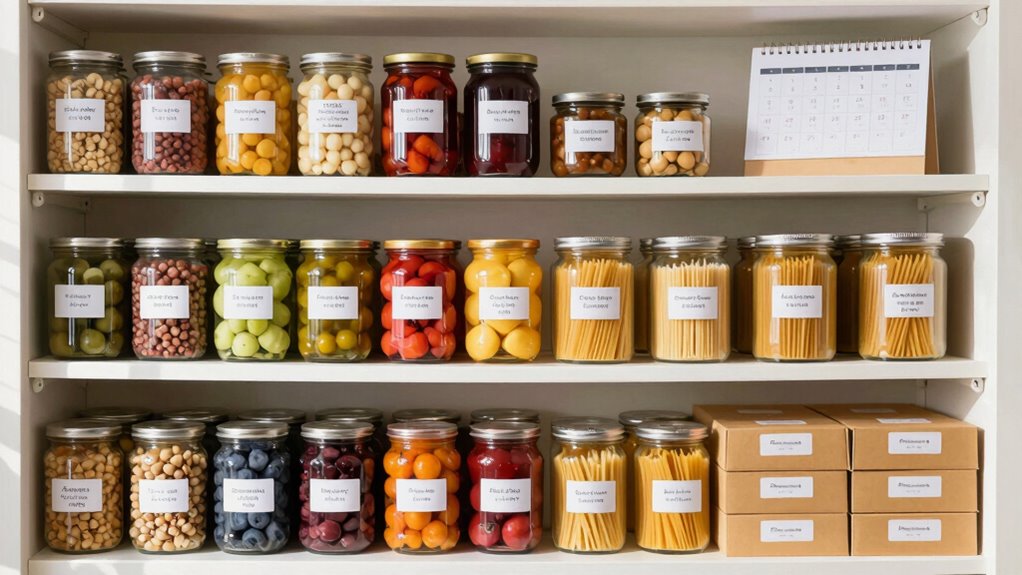

Implementing food rotation makes your pantry planning much easier by keeping ingredients fresh and organized. When you rotate items based on expiration dates, you prevent waste and avoid missing or forgotten ingredients. Clear storage containers and visual cues help you quickly identify what needs using soon. This streamlined approach reduces stress, saves money, and makes meal prep faster. If you’re curious about more tips to perfect your system, stay tuned for helpful strategies that can transform how you manage your pantry.

Get backup power and energy gear delivered free with Prime
- Fast, free delivery on millions of items
- Prime Video, Amazon Music and more included
- Member-only deals all year
Key Takeaways
- Food rotation ensures older items are used first, preventing spoilage and reducing waste during outages.
- It streamlines inventory management, making it easier to identify what’s available and needed.
- Proper rotation minimizes unexpected shortages by maintaining an organized, accessible pantry.
- Consistent use of expiration dates simplifies planning and reduces last-minute shopping.
- Combining rotation with meal prep ensures efficient use of supplies, saving time and effort during outages.
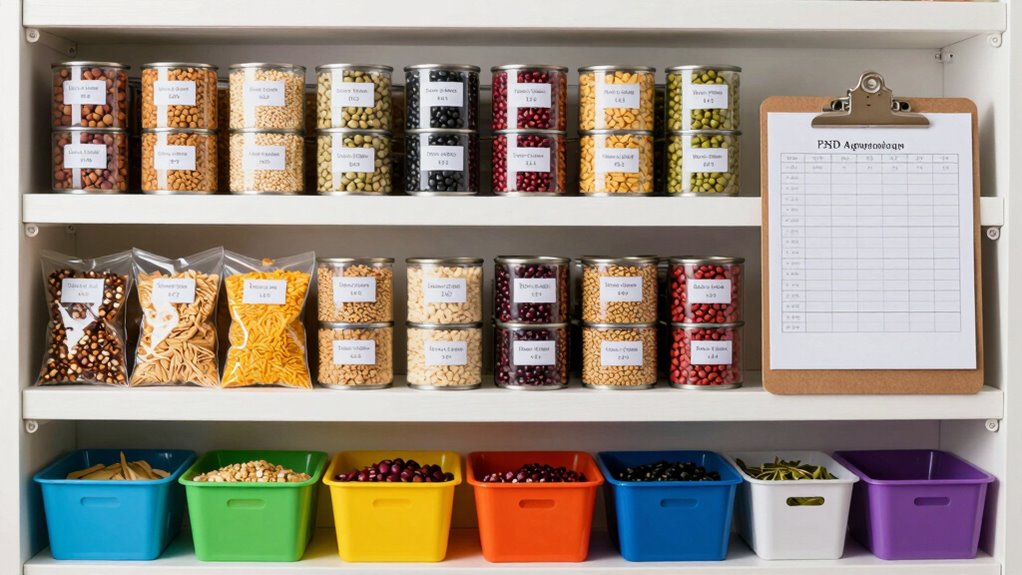
Keeping your pantry organized can feel overwhelming, but implementing a food rotation system makes it much easier. When you consistently rotate your food, you prevent items from getting lost in the back or forgotten until they expire. This approach streamlines your meal prep, ensuring you use ingredients before they go bad, saving money, and reducing waste. Food rotation isn’t just about tidy shelves; it’s a practical strategy that keeps your pantry functional and your meal planning seamless. Incorporating biodiversity-friendly practices in your storage choices can also promote a more sustainable pantry environment.
Effective food rotation keeps your pantry tidy, saves money, and makes meal planning effortless.
One key to effective food rotation is using smart storage solutions. Clear containers, labeled with purchase or expiration dates, help you see what you have at a glance. When you set up your storage solutions, place newer items behind older ones, so you naturally use the older stock first. This simple adjustment makes a huge difference because it encourages you to consume products before they expire, minimizing spoilage and waste. With the right containers and labels, you create a visual cue that prompts you to check expiration dates regularly, which keeps your pantry fresh and organized. Additionally, understanding food preservation techniques can further extend the shelf life of your pantry staples. Incorporating proper storage conditions like temperature and humidity control can also significantly impact food longevity. Regularly rotating your stock based on expiration dates helps prevent spoilage and ensures you’re always using the freshest ingredients. Developing a habit of checking your pantry periodically can also help you identify potential food waste before it happens, further supporting your sustainability goals.
Meal prep plays a significant role in maintaining a smooth food rotation system. When you plan your meals around what’s already in your pantry, you’re less likely to buy unnecessary duplicates or perishables that may go bad quickly. Preparing meals in advance also allows you to portion out ingredients, which helps you track what’s being used and what needs to be replenished. As you prep, you can prioritize using ingredients nearing their expiration date, ensuring nothing goes to waste. Meal prepping in conjunction with a solid food rotation system turns your pantry into a well-oiled machine, making shopping trips more efficient and less frequent.
Another benefit of food rotation is that it simplifies inventory management. Instead of digging through cluttered shelves, you develop a habit of checking your stock regularly. This habit helps you identify what needs restocking and what should be used soon, making your shopping list more accurate. It also gives you a clear picture of your pantry’s contents, so you can plan meals better and avoid overbuying. Over time, this consistency makes pantry planning less stressful and more strategic, giving you more confidence in managing your food supplies.
food storage containers with labels
As an affiliate, we earn on qualifying purchases.
As an affiliate, we earn on qualifying purchases.
Frequently Asked Questions
How Often Should I Rotate My Pantry Items?
You should rotate your pantry items every 3 to 6 months to keep them fresh and guarantee meal prep stays efficient. Regularly check expiration dates and use clear storage solutions so you can easily see what needs replacing. Incorporate this into your routine by organizing items logically, making it easier to identify what’s due for rotation. Consistent rotation saves time, reduces waste, and keeps your outage pantry reliable in emergencies.
What Tools Can Help With Food Rotation?
Think of food rotation tools as your pantry’s trusty lighthouse, guiding your meal prep and storage efforts. Using clear storage containers makes it easy to see what’s inside, while labeling ensures you prioritize older items first. Consider a food inventory app to track expiry dates and quantities. These tools help you keep your pantry organized, making it simple to rotate foods efficiently, prevent waste, and stay prepared for any outage.
How Do I Track Expiration Dates Effectively?
You should use clear expiration labels on all your stored items, writing the date when you purchase or open them. Implement effective storage methods, like airtight containers and designated sections for new and old stock, to easily see what needs to be used first. Regularly check these labels and adjust your storage as needed, so you stay on top of expiration dates and keep your pantry fresh and organized.
Can Food Rotation Reduce Food Waste?
Think of your pantry as a garden where every item is a seed. Food rotation acts like a diligent gardener, reducing food waste by ensuring older items are used first, preventing surplus from spoiling. When you prioritize shelf stability and rotate stock regularly, you cut down on unnecessary food surplus. This practice keeps your pantry fresh, efficient, and eco-friendly, making sure nothing goes to waste and every resource is maximized.
What Are Signs of Spoiled Pantry Items?
You’ll notice spoiled pantry items through changes in shelf life and storage conditions. Look for mold, off smells, or discoloration, especially on items past their expiration date or stored improperly. If packaging is bulging or leaking, it’s a sign of spoilage. Maintaining proper storage conditions—cool, dry, and airtight—helps prolong shelf life and prevents spoilage. Regularly checking your pantry keeps you aware of signs and helps avoid consuming spoiled food.
As an affiliate, we earn on qualifying purchases.
Conclusion
By mastering food rotation, you’ll turn your pantry into a well-oiled machine, transforming chaos into clarity. Imagine your shelves as a perfectly choreographed dance, where every jar and box moves seamlessly, never wasting a crumb or a minute. Outages become minor hiccups rather than disasters, and meal planning feels like a breeze. With rotation, you’ll wield your pantry like a culinary superhero, conquering chaos and keeping your kitchen running smoother than ever imagined!
expiration date labels for food storage
As an affiliate, we earn on qualifying purchases.
As an affiliate, we earn on qualifying purchases.
As an affiliate, we earn on qualifying purchases.
Halloween Picks
halloween
As an affiliate, we earn on qualifying purchases.