
TL;DR
Open a free Amazon Business account
Business pricing, bulk buying and tax-exempt orders.
Create a free accountAs an affiliate, we earn on qualifying purchases.
This article examines the evolving role of user interfaces in the demo scene, highlighting recent innovations and their impact on digital art. It discusses confirmed developments and ongoing debates within the community.
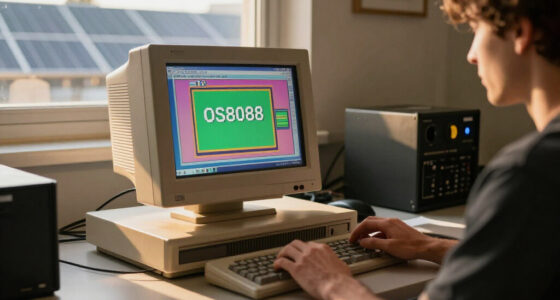
Recent demonstrations within the demo scene have showcased innovative approaches to user interface design, highlighting its growing importance in digital art and real-time audiovisual performances. These developments are confirmed through recent event presentations and community discussions, emphasizing how UI choices influence artistic expression and user engagement in this niche but influential digital culture.
The demo scene is a community focused on creating visually impressive real-time audiovisual demos, often pushing the boundaries of computer graphics, sound, and interactivity. Over recent months, several prominent demos have featured novel user interfaces that enhance user engagement and artistic expression. These interfaces range from minimalist overlays to complex control schemes integrated into the visual experience itself.
Sources from recent demo scene events, such as Revision and Breakpoint, confirm that artists and developers are experimenting with UI elements that are both functional and aesthetically integrated. Some demos incorporate touch-based controls, gesture recognition, and customizable overlays, marking a shift toward more interactive and user-centric designs. These innovations aim to make the demos more accessible and engaging for audiences, blurring the line between performer and viewer.
Community members and scene veterans have highlighted that these UI innovations are not merely superficial but serve to deepen the artistic narrative, allowing creators to manipulate visuals and sound in more intuitive ways. While some of these interfaces are still in experimental stages, their presence at recent showcases signals a significant evolution in how the scene approaches user interaction.
Impact of UI Innovations on Digital Art Expression
The emerging trends in user interface design within the demo scene are significant because they influence how digital art is experienced and created. By adopting more interactive and accessible UIs, artists can reach broader audiences and push creative boundaries. These developments also reflect broader shifts in digital culture toward more immersive and user-driven content, potentially affecting other fields such as gaming, live performance, and multimedia art.
Furthermore, these UI advancements could set new standards for real-time visual art, encouraging more experimentation and innovation. As the scene continues to evolve, the integration of novel interfaces might lead to more collaborative and participatory artistic practices, expanding the scope of what is possible in digital demonstrations.
touch screen control interface for digital art
As an affiliate, we earn on qualifying purchases.
As an affiliate, we earn on qualifying purchases.
Recent Trends and Historical Background of UI in the Demo Scene
The demo scene has historically been a space for technical mastery and artistic experimentation, dating back to the 1980s with home computer demos. Over time, the focus has shifted from purely technical feats to include aesthetic and interactive elements. In recent years, the community has increasingly emphasized user interfaces that enhance interactivity, especially as hardware capabilities improve.
Recent major demo releases, such as those from groups like Farbrausch and Conspiracy, have experimented with UI elements, but the current wave of innovations appears more user-centric, integrating controls that allow viewers to influence visuals directly. This shift reflects a broader trend in digital art toward participatory experiences, driven by advances in hardware like touchscreens, motion sensors, and VR interfaces.
While the core aesthetic remains rooted in technical mastery, the focus on UI design signals a new phase where audience engagement and interactivity are becoming central to demo scene productions.
“The way interfaces are integrated into demos now is transforming how we think about audience participation and artistic control.”
— Alexei Ivanov, demo scene veteran
gesture recognition controller for interactive displays
As an affiliate, we earn on qualifying purchases.
As an affiliate, we earn on qualifying purchases.
Unconfirmed Aspects of UI Adoption and Future Directions
While several demos showcase innovative UIs, it remains unclear how widespread these practices will become across the entire demo scene community. Some artists and groups are still experimenting, and there is debate over whether these interfaces will become standard or remain niche innovations. Additionally, the long-term impact on artistic practices and audience engagement is still being evaluated, with some questioning whether these UI elements enhance or distract from the core visual art.
customizable overlay software for audiovisual performances
As an affiliate, we earn on qualifying purchases.
As an affiliate, we earn on qualifying purchases.
Upcoming Demos and Community Discussions on UI Trends
Several upcoming demo scene events, including Revision 2024 and Assembly, are expected to feature new releases emphasizing UI innovations. These will serve as benchmarks for assessing how these approaches are adopted and refined. Additionally, community forums and developer discussions are likely to explore the technical and artistic potential of interactive interfaces further, shaping future trends in the scene.
As an affiliate, we earn on qualifying purchases.
Key Questions
How are user interfaces changing in the demo scene?
Recent demos are incorporating more interactive elements like touch controls, gesture recognition, and customizable overlays, making the experience more engaging and participatory.
Are these UI innovations widely adopted?
It is still uncertain. While some artists are experimenting with new interfaces, their widespread adoption across the scene remains to be seen.
What benefits do these new UIs bring to the demo scene?
They enhance audience engagement, enable more intuitive control for creators, and expand artistic possibilities through interactivity.
Could UI innovations influence other digital art forms?
Yes, these developments may inspire similar approaches in gaming, live performances, and multimedia art, encouraging more participatory experiences.
Source: hn
Fall Picks
fall essentials
As an affiliate, we earn on qualifying purchases.