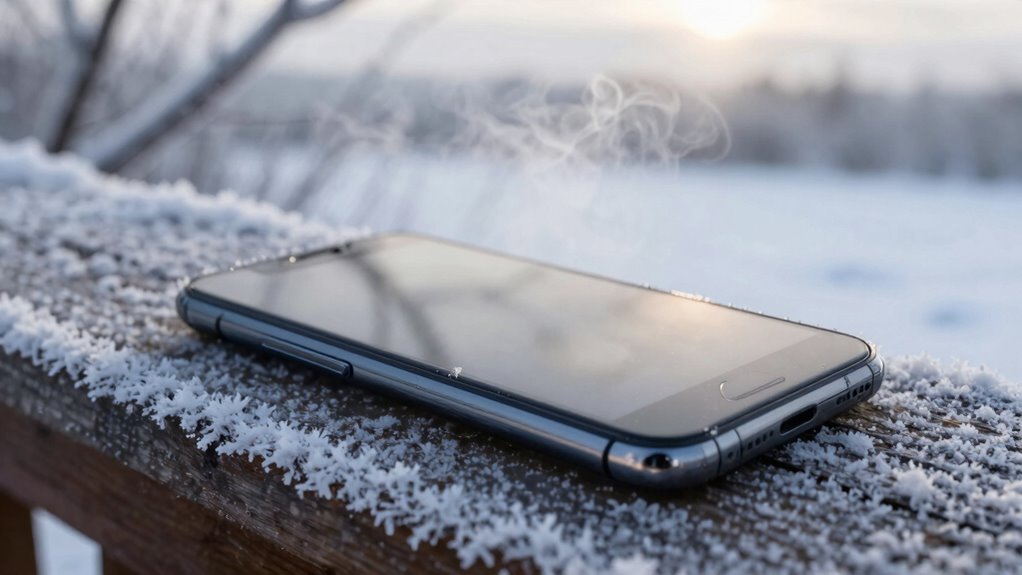

Cold weather slows down the chemical reactions inside your phone’s battery and increases internal resistance, making it harder for your device to deliver power. This causes your battery to drain faster and can lead to unexpected shutdowns, even if it shows a high charge. Exposure to cold weakens battery components and reduces overall capacity. To learn how to protect your battery and keep your device running smoothly in winter, keep exploring for useful tips.

Get backup power and energy gear delivered free with Prime
- Fast, free delivery on millions of items
- Prime Video, Amazon Music and more included
- Member-only deals all year
Key Takeaways
- Cold temperatures slow chemical reactions inside the battery, reducing power output and causing faster drain.
- Lower electrolyte conductivity in cold impairs lithium ion movement, decreasing charge and discharge efficiency.
- Increased internal resistance from cold leads to voltage drops and unexpected device shutdowns.
- External factors like wind and metal surfaces accelerate heat loss, further draining the battery.
- Cold exposure can cause long-term battery damage, reducing lifespan and performance over time.
cold weather phone battery protector
As an affiliate, we earn on qualifying purchases.
As an affiliate, we earn on qualifying purchases.
How Cold Temperatures Affect Battery Chemistry
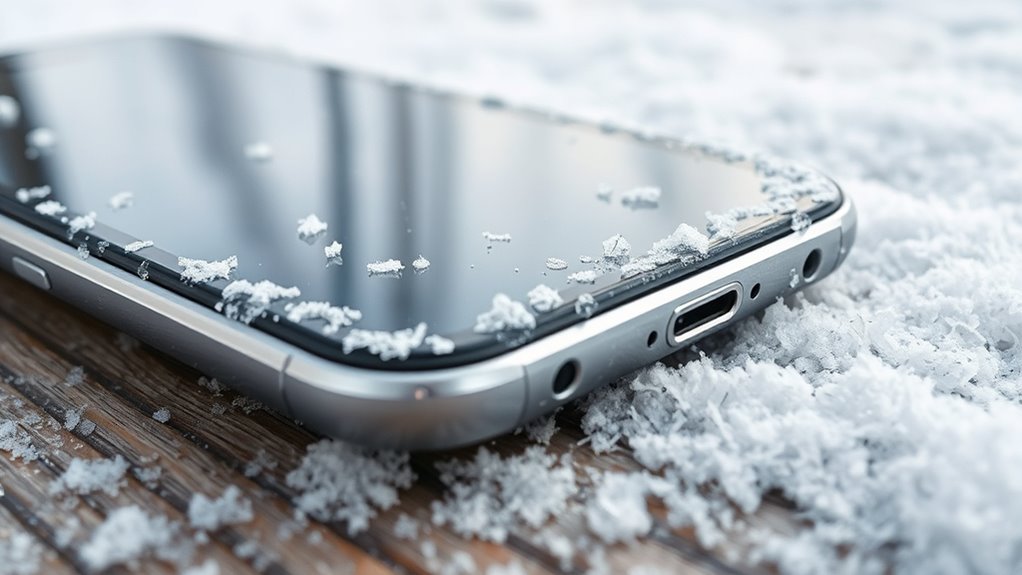
Cold temperatures directly impact the chemical reactions inside a battery, slowing down the movement of lithium ions between the cathode and anode. When it’s cold, the electrolyte’s conductivity drops, making it harder for lithium ions to travel smoothly. This sluggish movement reduces the battery’s ability to generate power efficiently. As a result, your device’s energy output diminishes, even if the battery meter shows plenty of charge. The internal reactions that produce electrical energy become less active, causing your phone or device to shut down unexpectedly. Additionally, cold increases internal resistance, making it tougher for the battery to charge and discharge normally. This chemical slowdown doesn’t just drain your battery faster; it hampers its overall performance, leaving your device less responsive and more prone to sudden power loss. Properly managing your device’s temperature can help maintain its battery life and overall efficiency in cold weather. Being aware of how temperature affects your battery can help you take proactive steps to prevent unexpected shutdowns during winter outages, especially since battery chemistry plays a crucial role in performance. Furthermore, temperature sensitivity varies among different battery types, affecting how quickly they degrade in cold conditions.
As an affiliate, we earn on qualifying purchases.
Why Your Phone Shuts Down Unexpectedly in Winter
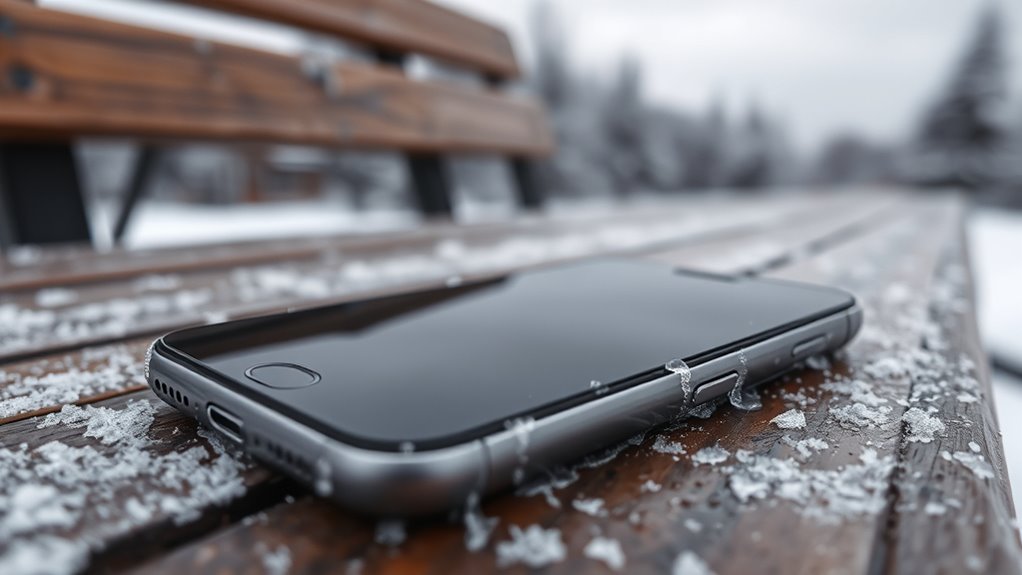
Your phone can shut down unexpectedly in winter because low temperatures cause internal chemical reactions to slow considerably. This slowdown increases internal resistance, making it harder for the battery to deliver power. Even if your battery meter shows a healthy charge, the phone may still turn off suddenly due to these chemical and electrical issues. Cold temperatures also cause the battery’s internal components to malfunction, disrupting the flow of lithium ions. Additionally, the Free Floating nature of batteries in cold weather means they are more prone to losing their charge quickly. This phenomenon is linked to the chemical reactions inside the battery becoming sluggish, which directly impacts performance. Here’s what happens:
Cold winter temperatures can cause your phone to shut down unexpectedly despite a healthy battery charge.
- Chemical reactions become sluggish, reducing power output
- Internal resistance spikes, impeding charge/discharge
- Battery voltage drops below safe thresholds unnoticed
- Battery meter becomes inaccurate in cold
- Metal components conduct cold, accelerating drain
- The disrupted ion flow further impairs the battery’s ability to maintain a charge, increasing the likelihood of shutdowns. Moreover, the temperature sensitivity of lithium-ion batteries plays a significant role in these issues, especially during prolonged exposure to cold environments. Additionally, battery management systems may not accurately reflect the true charge level under these conditions, leading to unexpected shutdowns.
As an affiliate, we earn on qualifying purchases.
The Impact of Temperature on Lithium-Ion Battery Performance
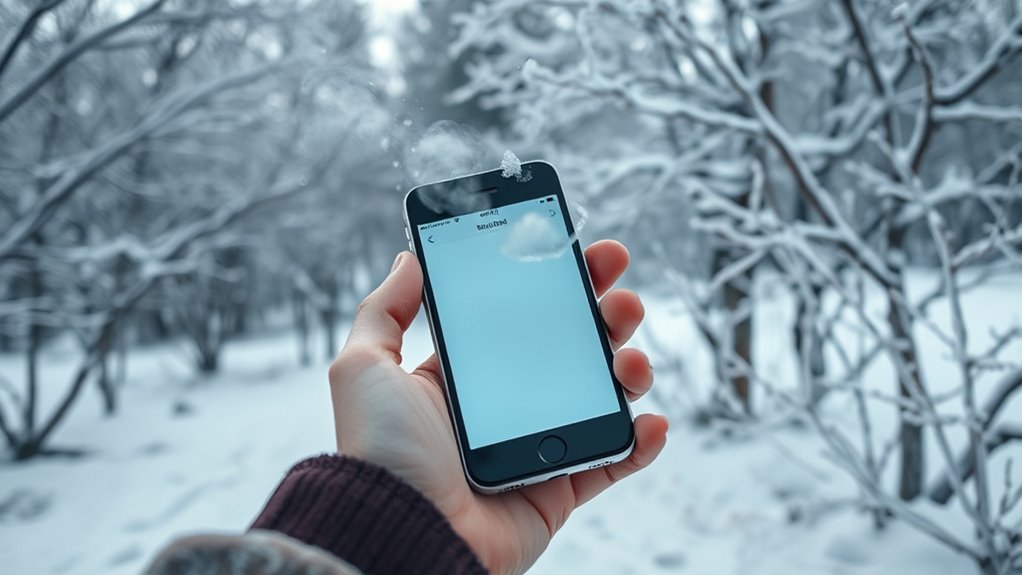
Temperature has a significant effect on lithium-ion battery performance, especially at low temperatures. When it’s cold, lithium ions slow down as they move between the cathode and anode through the electrolyte, reducing the battery’s energy efficiency. Your battery meter, calibrated for warmer temperatures, can still show a high charge level—often 30% or more—but the battery may shut off unexpectedly due to poor internal reactions. Internal resistance increases, making it harder for the battery to deliver power or accept a charge. Metal components like aluminum conduct cold quickly, further accelerating drain. In freezing weather, your phone doesn’t actually discharge faster; instead, it malfunctions because the chemical reactions inside become sluggish, impairing performance and causing unexpected shutdowns. Additionally, thermal management systems in some devices attempt to mitigate these effects but are often insufficient in extreme cold. Proper insulating materials and temperature regulation techniques can help maintain optimal performance levels in cold environments, especially when considering battery chemistry and design features that improve cold-weather resilience. Recognizing and addressing cold-weather effects can significantly extend your device’s usability during winter conditions, and understanding these performance limitations can help you take proactive steps to protect your battery.
insulated smartphone battery cover
As an affiliate, we earn on qualifying purchases.
As an affiliate, we earn on qualifying purchases.
Signs Your Battery Is Struggling in Cold Weather
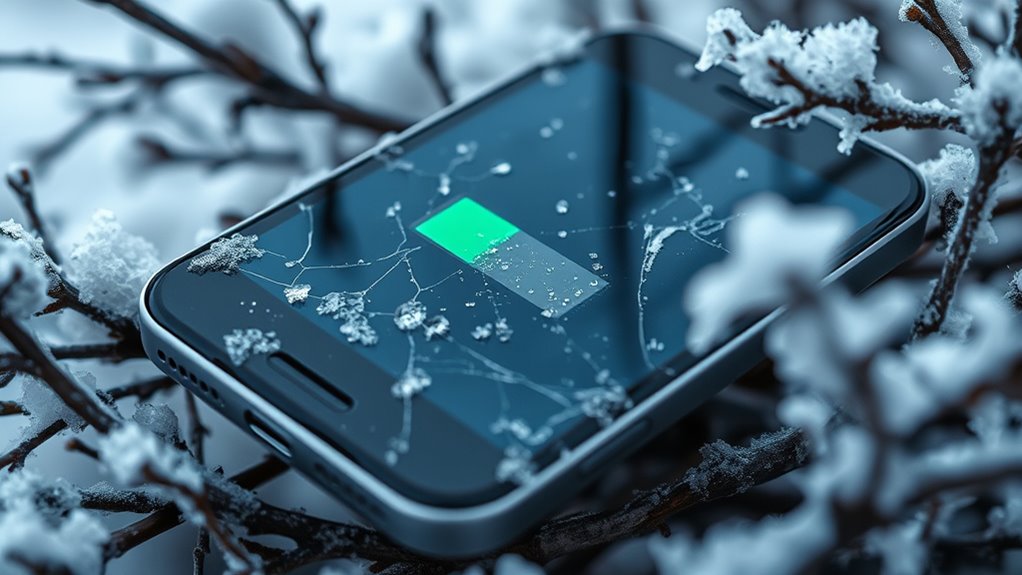
When a battery starts struggling in cold weather, it often exhibits noticeable warning signs that indicate it’s not functioning properly. You might notice your phone shutting down unexpectedly, even when the battery shows 30% or more. Slow charging or longer recharge times are common, and the device may feel unusually warm or cold to the touch. You could also experience rapid battery drain or inconsistent performance, with the screen flickering or apps crashing unexpectedly. Additionally, the battery indicator may appear inaccurate, showing higher levels than it actually has. Keep an eye out for these signs, as they signal your battery is compromised by the cold and needs attention to prevent sudden shutdowns or damage.
Practical Tips to Protect Your Phone’s Battery in Winter
To protect your phone’s battery in winter, keep it warm by storing it in your pocket or inside a case. Adjust your settings to optimize battery life, like activating low power mode and lowering screen brightness. These simple steps can help prevent unexpected shutdowns and extend your battery’s performance in cold weather. Additionally, being aware of battery performance issues can help you better manage your device during chilly conditions, especially since cold weather can accelerate net worth depletion in electronics. Incorporating a high-performance heating feature into your phone case can provide extra warmth and safeguard your device’s battery life even further. Understanding lifestyle for longevity can also guide you in maintaining your device’s health over time, as regular care and appropriate usage patterns contribute to its durability.
Keep Devices Warm
Keeping your phone warm is essential to prevent battery drain and unexpected shutdowns in cold weather. When temperatures drop, lithium-ion batteries struggle to perform, increasing internal resistance and causing rapid shutdowns even if the battery shows charge. To protect your device:
- Keep it in your pocket or close to your body heat.
- Store it in a warm, insulated bag when not in use.
- Avoid exposing it to wind or cold surfaces.
- Use a thermal case designed for cold conditions.
- Warm your phone indoors before charging or heavy use.
- Being aware of battery chemistry helps in understanding how cold impacts your device’s performance. Additionally, understanding environmental effects on batteries can help you better prepare for winter conditions. Recognizing how thermal management influences battery health is crucial for maintaining optimal device performance. Proper insulation can also help maintain a consistent temperature and improve overall battery longevity. Maintaining a stable temperature minimizes chemical degradation, extending your battery’s lifespan during winter. These simple steps help maintain excellent battery chemistry and reduce the risk of sudden shutdowns. By keeping your device at a stable, warm temperature, you ensure better performance and prolong your battery’s lifespan during winter’s harsh conditions.
Optimize Battery Settings
Adjusting your phone’s battery settings can substantially reduce cold-weather power drain. Start by enabling low power mode or battery saver, which limits background activity and reduces energy use. Dimming your screen and lowering brightness also help conserve power in freezing conditions. Closing unused apps prevents unnecessary drain from background processes. To make it easier, here’s a quick reference:
| Setting | Action | Benefit |
|---|---|---|
| Low Power Mode | Turn on when outdoors in cold weather | Reduces background activity |
| Screen Brightness | Lower brightness or enable auto-brightness | Extends battery life |
| App Management | Close unused apps and background processes | Prevents unnecessary drain |
Applying these tips keeps your battery working longer and helps avoid sudden shutdowns in winter. Being aware of battery health can also help you maintain optimal performance during the colder months.
How External Factors Accelerate Battery Drain Outdoors
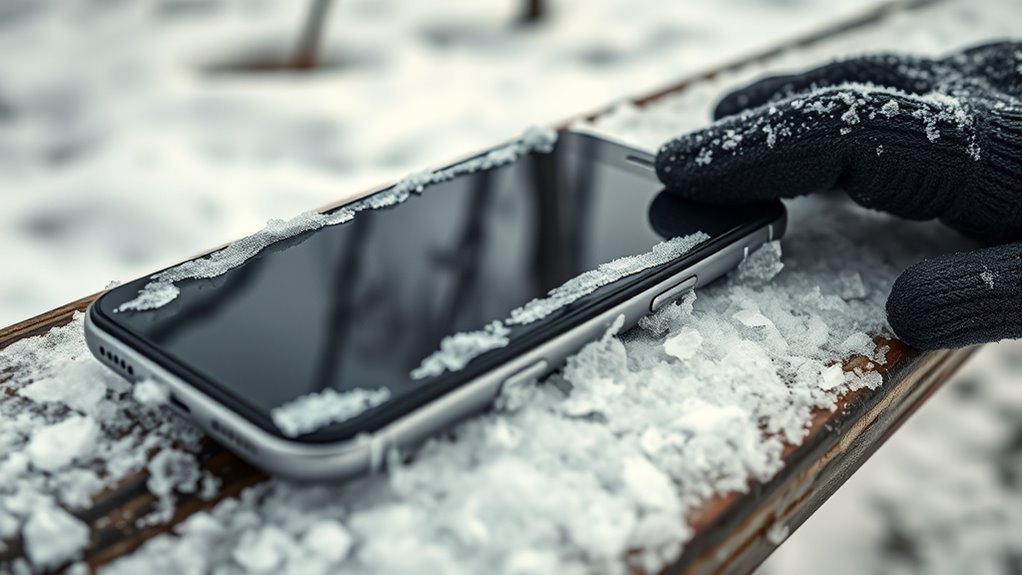
External factors like cold wind, metal surfaces, and rapid temperature changes can considerably speed up battery drain outdoors. Cold wind accelerates heat loss, causing your phone’s temperature to drop quickly, which hampers battery chemistry. Metal surfaces like railings or car doors conduct cold efficiently, drawing heat from your device. Rapid temperature shifts strain the internal chemical reactions, leading to malfunction. Additionally, when temperatures fluctuate suddenly, your battery’s internal resistance spikes, impacting performance.
Be aware of these external influences:
- Wind chills drain heat faster from your device
- Metal surfaces increase cooling rates
- Sudden temperature changes cause chemical stress
- Cold surfaces transfer heat away quickly
- Exposure to wind and cold accelerates power loss
The Long-Term Effects of Cold Exposure on Battery Life
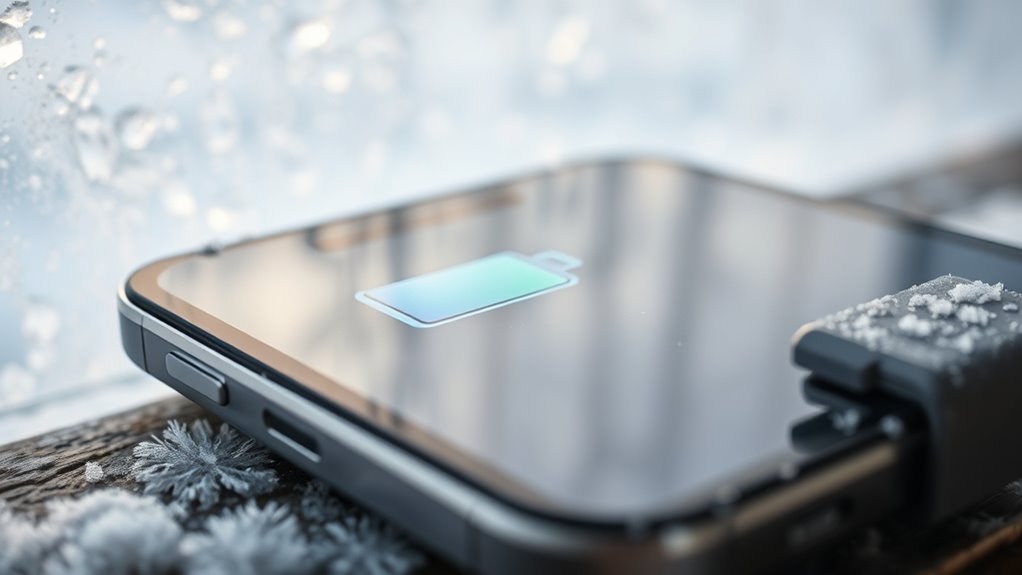
Cold exposure can cause material degradation inside your battery, weakening its structure over time. It also suppresses internal chemical reactions, making the battery less efficient and more prone to damage. As a result, your battery’s overall lifespan shortens, leading to reduced performance and earlier replacement needs.
Material Degradation From Cold
Prolonged exposure to low temperatures accelerates material degradation inside batteries, leading to long-term performance issues. Cold weakens the structural integrity of internal components, causing irreversible damage over time. This deterioration can reduce overall capacity and shorten lifespan.
- Cracks form in electrode materials, impairing charge flow
- Separator layers become brittle and prone to failure
- Electrolyte breakdown reduces ion mobility permanently
- Metal connectors corrode faster in cold environments
- Internal adhesives lose adhesion, causing internal disconnections
These changes hinder proper chemical reactions and electrical flow, making your battery less reliable. Even if the battery warms up again, the damage remains, resulting in reduced capacity and shorter cycle life. Cold-induced material wear compromises your device’s long-term usability, emphasizing the importance of protecting batteries from extreme cold.
Chemical Reaction Suppression
When your battery is exposed to low temperatures over time, its internal chemical reactions become suppressed, leading to long-term performance degradation. Cold slows down the movement of lithium ions between the cathode and anode, reducing the battery’s ability to generate power efficiently. This suppression hampers the chemical processes necessary for energy transfer, causing the battery to deliver less capacity even if it appears charged. Over repeated cold exposures, these slowed reactions can cause permanent damage to the active materials, weakening the overall structure of the battery. As a result, your phone’s ability to hold a charge diminishes, and its performance worsens. Long-term cold exposure effectively hampers the fundamental chemistry that keeps your battery functioning at its best.
Reduced Battery Lifespan
Exposing your battery to low temperatures repeatedly causes long-term damage that reduces its overall lifespan. Cold exposure accelerates chemical wear and stresses internal components, leading to diminished capacity over time. You might notice your battery holds less charge or drains faster even after warming up. Cold-induced chemical reactions weaken the battery’s structure, causing irreversible damage. This results in fewer charge cycles before needing replacement. Keep in mind:
- Accelerates chemical deterioration inside the battery
- Increases internal resistance, reducing efficiency
- Causes physical wear on electrodes and separators
- Shortens overall cycle life
- Leads to earlier battery failure and costly replacements
Cold temperatures don’t just temporarily drain your phone; they cause lasting harm, shortening your device’s usable life. Protect your battery by minimizing cold exposure to extend its lifespan.
Strategies for Maintaining Battery Health During Freezing Temperatures
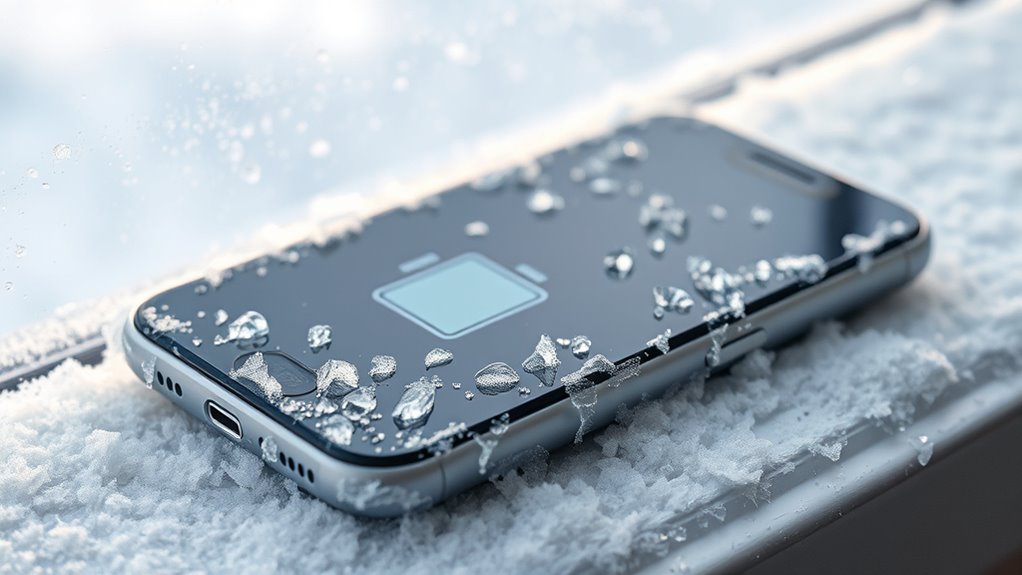
To maintain your battery’s health during freezing temperatures, it’s essential to keep your device warm and minimize exposure to cold conditions. Store your phone in your pocket or inside a warm bag when outside. Avoid using your device in extreme cold, as it accelerates battery drain and can cause shutdowns. Before charging, warm your phone indoors to prevent chemical damage. Reduce screen brightness and close unused apps to lessen power consumption. Using external chargers or portable power banks can help when your battery is low.
| Action | Benefit | Tips |
|---|---|---|
| Keep phone in pocket or bag | Maintains internal temperature | Use thermal pouches or insulated cases |
| Limit outdoor use | Prevents rapid drain | Stay indoors during extreme cold |
| Warm device before charging | Protects battery chemistry | Use indoor heat sources before plugging in |
| Use power-saving mode | Extends battery life | Activate on your device to reduce energy use |
Frequently Asked Questions
Can Using My Phone in Cold Weather Damage the Battery Permanently?
Yes, using your phone in cold weather can cause permanent damage to the battery. Cold temperatures slow down the internal chemical reactions, increasing internal resistance and potentially harming the lithium-ion cells. Repeated exposure to freezing conditions, especially while charging, can degrade the battery over time. To protect it, keep your phone warm, avoid prolonged outdoor use, and charge indoors when possible. This helps maintain your battery’s health and longevity.
Does Keeping My Phone Warm Prevent Battery Drain in Winter?
Yes, keeping your phone warm can prevent battery drain in winter. When you shield your device from the cold, you slow down chemical reactions inside the battery, maintaining its efficiency longer. Keep it in your pocket or a warm bag, and avoid exposing it to freezing temperatures. This simple step helps preserve battery life, ensures your phone stays operational, and prevents unexpected shutdowns during those chilly winter days.
Are Some Phone Models Better Suited for Cold Weather Battery Performance?
Some phone models are better suited for cold weather, especially those with advanced battery management systems and higher-quality lithium-ion cells. You should look for phones with efficient thermal regulation, which helps maintain battery performance in low temperatures. Devices designed for outdoor use or rugged smartphones often perform better in cold conditions. Keep your phone warm and avoid exposing it to extreme cold to maximize battery life during winter.
How Does Battery Age Influence Cold Weather Performance?
You’ll notice that as your battery ages, its performance in cold weather worsens. Older batteries have reduced capacity and chemical stability, making them more susceptible to cold-induced shutdowns. The internal chemical reactions slow further, and internal resistance increases, causing faster power loss or sudden shut-offs. To keep your device running longer, avoid exposing an aging battery to extreme cold, and consider replacing it if performance declines considerably.
Is It Safe to Keep My Phone Charging in Freezing Temperatures?
It’s risky to charge your phone in freezing temperatures because the cold can cause chemical damage inside the battery. When you plug in your phone outdoors, the internal reactions slow down or malfunction, potentially harming the battery long-term. Instead, warm your device indoors first. Keep it in a pocket or use insulation to prevent cold exposure. Charging in a warmer environment guarantees safety and maintains your battery’s health.
Conclusion
Did you know that smartphones can lose up to 50% of their battery capacity in freezing temperatures? Cold weather speeds up chemical reactions inside your battery, causing it to drain faster and potentially damage it long-term. To keep your phone running smoothly, follow simple tips like keeping it warm and avoiding extreme outdoor exposure. Staying mindful of these factors helps extend your battery life during winter and keeps your device reliable when you need it most.
Halloween Picks
halloween
As an affiliate, we earn on qualifying purchases.