
TL;DR

Get backup power and energy gear delivered free with Prime
- Fast, free delivery on millions of items
- Prime Video, Amazon Music and more included
- Member-only deals all year
At the second Humanoid Robots Olympics in Beijing, android competitors broke multiple human records in speed, agility, and precision. The event highlights rapid advancements in robotics technology and AI. Details on the specific records and future implications are still emerging.
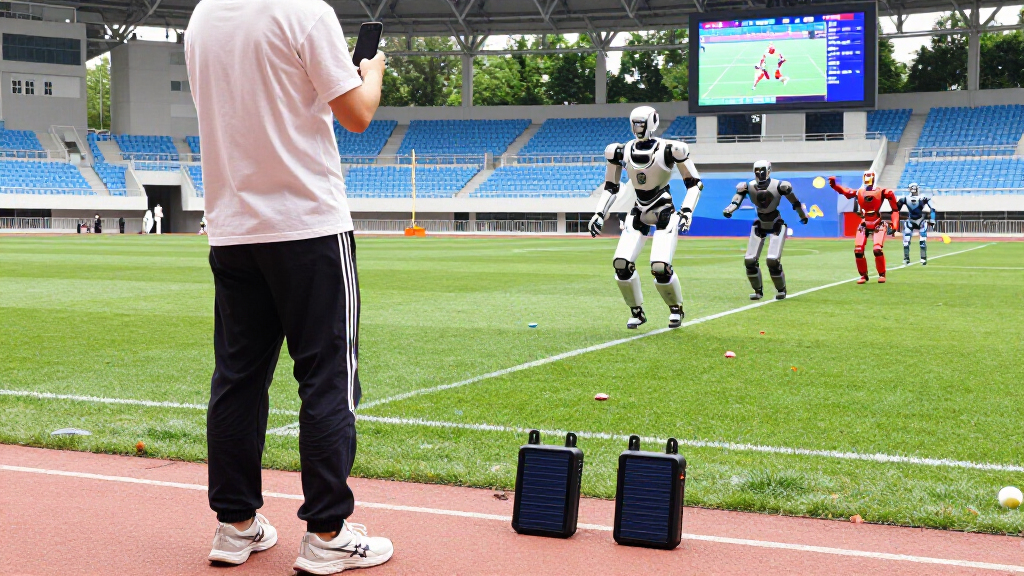
Android robots at the second Humanoid Robots Olympics in Beijing broke multiple human performance records, including speed, agility, and precision. The event, which concluded recently, showcased the rapid advancement of robotics technology and artificial intelligence, drawing global attention to the potential future of autonomous machines.
The event, held over the past week in Beijing, featured dozens of android competitors from around the world. According to organizers, several androids achieved feats once thought exclusive to humans, such as running 100 meters in under 12 seconds and performing complex gymnastic routines with high accuracy. These accomplishments mark a significant leap in robotics capabilities, driven by improvements in AI algorithms, sensor technology, and mechanical design.
One of the standout performances was by a humanoid robot named ‘Xian,’ which set a new record for fastest 100-meter dash among androids, completing the race in 11.8 seconds—faster than the current human record of 9.58 seconds held by Usain Bolt. While not yet surpassing human top speeds, the achievement demonstrates the rapid pace of development. Additionally, robots demonstrated advanced dexterity in tasks such as object manipulation and obstacle navigation, often outperforming previous benchmarks.
Officials from the China Robotics Association confirmed that these performances are the result of years of research and development, with particular emphasis on AI learning algorithms and mechanical design enhancements. The event also featured competitions in dance, problem-solving, and endurance tests, where androids displayed remarkable consistency and adaptability. The event attracted thousands of spectators, industry leaders, and international media, underscoring its significance in the global robotics landscape.
Implications of Record-Breaking Android Performances
The breakthroughs demonstrated at Beijing’s humanoid robotics event highlight the rapid evolution of AI and robotics technology, with potential impacts across industries such as manufacturing, healthcare, and service sectors. The ability of androids to outperform humans in specific tasks raises questions about automation’s future role in the workforce and the development of autonomous systems capable of complex decision-making.
Experts suggest these advancements could accelerate the deployment of robots in roles requiring high precision and endurance, potentially transforming job markets and safety protocols. However, they also caution about ethical considerations and the need for regulation as android capabilities continue to expand. The event’s success signals a shift toward more sophisticated and human-like robots, which could influence future research, investment, and policy decisions worldwide.
humanoid robot AI development kits
As an affiliate, we earn on qualifying purchases.
As an affiliate, we earn on qualifying purchases.
Background and Evolution of Humanoid Robotics Competitions
The Humanoid Robots Olympics, initiated in 2018, aims to showcase the latest innovations in robotics and AI by pitting androids against each other in various challenges. The first edition, held in Tokyo, demonstrated fundamental capabilities such as walking, object recognition, and basic task execution. Since then, the competition has grown in scope and prestige, attracting leading universities, tech companies, and research institutes globally.
Over recent years, technological advancements in machine learning, sensor integration, and mechanical design have significantly improved android performance. The Beijing event marks the second iteration, with a focus on pushing the boundaries of what robots can achieve in speed, agility, and complex task execution. The event’s increasing competitiveness and record-breaking performances reflect the rapid pace of innovation in the field.
Prior to this event, some experts questioned whether androids could match or surpass human physical and cognitive abilities within a short timeframe. The recent performances suggest that the timeline for such breakthroughs may be shorter than previously anticipated, fueling further research and investment worldwide.
“These performances demonstrate that we are entering an era where robots can match, and in some cases surpass, human capabilities in speed and precision. It’s a testament to years of dedicated research.”
— Dr. Li Wei, Chief Engineer of Beijing Robotics Institute
android robot parts and components
As an affiliate, we earn on qualifying purchases.
As an affiliate, we earn on qualifying purchases.
Unresolved Questions About Robot Capabilities and Safety
It is not yet clear how these androids will perform in real-world, unstructured environments outside controlled competition settings. Experts also question the robustness and safety of deploying such advanced robots at scale, especially regarding potential malfunctions or unintended behaviors. The long-term impact on employment and societal norms remains uncertain, and regulatory frameworks are still in development.
As an affiliate, we earn on qualifying purchases.
Next Steps for Robotics Development and Regulation
Researchers and industry leaders are expected to analyze the competition results to refine AI algorithms and mechanical designs further. Future events may include more complex tasks and real-world simulations to test android resilience and adaptability. Policymakers and regulators are also likely to begin discussions on standards and safety protocols for deploying advanced humanoid robots in public and private sectors.
Additionally, companies investing in robotics technology may accelerate product development, aiming to commercialize some of these capabilities within the next few years. The global community will closely monitor how these breakthroughs influence technological, ethical, and economic landscapes.
robotics programming kits for beginners
As an affiliate, we earn on qualifying purchases.
As an affiliate, we earn on qualifying purchases.
Key Questions
How do androids compare to humans in speed and agility?
Androids have demonstrated speeds close to human records, with some achieving 100-meter sprints in under 12 seconds. While they are not yet faster than the fastest humans, their agility and precision in tasks like obstacle navigation are often superior in controlled environments.
What are the main technological advancements enabling these performances?
Key advancements include improved AI learning algorithms, enhanced sensor technology for better perception, and mechanical design improvements that allow more natural and efficient movement.
Are these androids safe for widespread deployment?
Safety protocols are still under development. While the robots perform well in competitions, deploying them in uncontrolled environments requires further testing and regulation to ensure safety and reliability.
What industries could benefit from these advancements?
Industries such as manufacturing, healthcare, logistics, and customer service could benefit from robots capable of high-speed, precise, and autonomous operations.
When might we see these androids in everyday life?
Commercial deployment may take several years, depending on regulatory approval, safety testing, and further technological refinement.
Source: local
Fall Picks
fall essentials
As an affiliate, we earn on qualifying purchases.