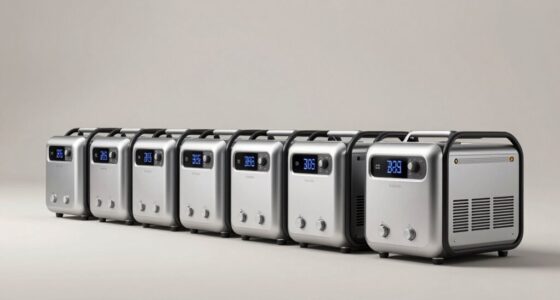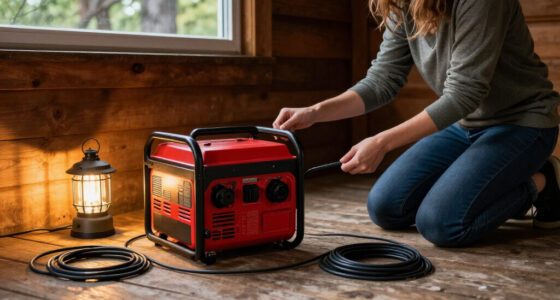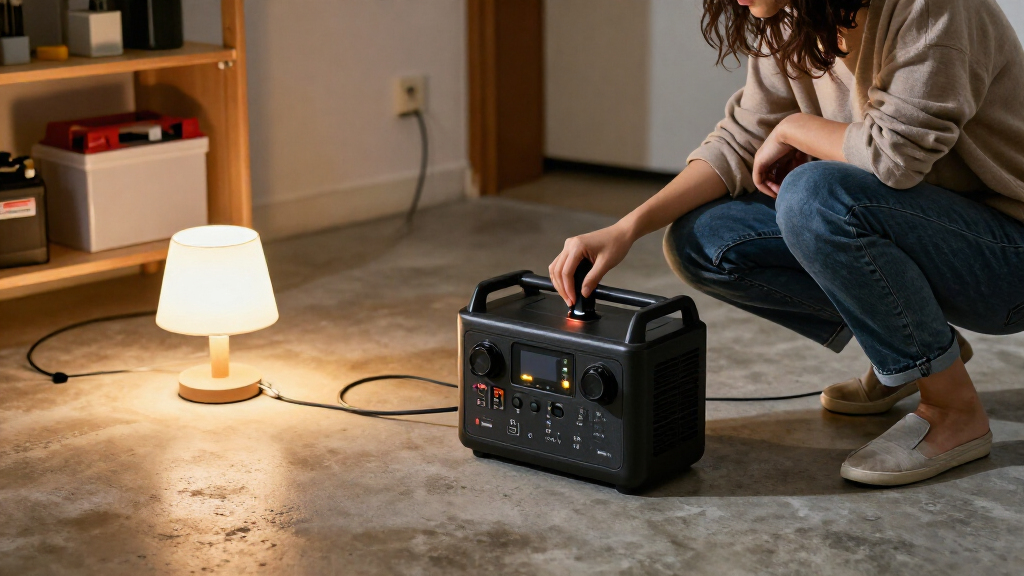
For most home users, I’d start with the Jackery Explorer 1000 v2: its battery-based design suits quiet backup for small electronics and selected essentials, though it cannot power large household loads for long. The WEN 6800-Watt Dual-Fuel generator stands out when higher output and fuel flexibility matter, while the DaranEner 192Wh is a compact choice for phones, lights, and other low-draw devices. The main tradeoff is between quiet, indoor-friendly battery stations with limited stored energy and fuel generators that offer more output but require outdoor operation, fuel, and maintenance. I compare those differences across all nine options below so you can match a unit to the loads you actually need to support.

Get backup power and energy gear delivered free with Prime
- Fast, free delivery on millions of items
- Prime Video, Amazon Music and more included
- Member-only deals all year
Complete the kit


Key Takeaways
- Battery stations and fuel generators solve different outage problems: Jackery and DaranEner models suit quiet, low-draw backup, while WEN, PowerSmart, Oxseryn, and ERAYAK models target loads that need more continuous output.
- The Jackery Explorer 1000 v2 is the most balanced battery pick in this lineup: it offers more stored energy than the small stations, but remains a poor substitute for a generator when several large appliances must run.
- The WEN 6800-Watt dual-fuel model is the generator pick for flexibility: its higher output and choice of fuel suit heavier backup needs, at the cost of greater size, noise, and upkeep than battery stations.
- Small battery capacity sharply limits outage runtime: the 192Wh DaranEner and roughly 300Wh-class Jackery and EnginStar units make more sense for devices and short-duration needs than sustained household backup.
- Two Oxseryn listings share a 4400-watt description: buyers should compare the exact model, included equipment, and manufacturer specifications rather than assume the listings represent distinct performance tiers.
| PowerSmart 4000-Watt Portable Inverter Generator |  | Best Mid-Size Gas Generator for Home Backup | Fuel type: Gasoline | Starting wattage: 4,000 watts | Running wattage: 3,200 watts | VIEW LATEST PRICE | See Our Full Breakdown |
| Jackery Explorer 1000 v2 Portable Power Station |  | Best Battery Backup for Home Essentials | Battery capacity: 1,070Wh | Battery type: LFP | AC output: 1,500W | VIEW LATEST PRICE | See Our Full Breakdown |
| Jackery Explorer 300 Portable Power Station, 292Wh |  | Best Compact Battery Station for Outage Basics | Battery capacity: 292Wh | Battery chemistry: LiFePO4 | Peak surge: 600W | VIEW LATEST PRICE | See Our Full Breakdown |
| DaranEner Portable Power Station, 192Wh LiFePO4 Battery, 300W Output |  | Best Lightweight Station for Short Outages | Battery capacity: 192Wh | Battery type: LiFePO4 | AC output: 300W, 600W surge | VIEW LATEST PRICE | See Our Full Breakdown |
| WEN 6800-Watt Dual-Fuel RV-Ready Electric Start Inverter Generator |  | Best High-Output Dual-Fuel Pick | Engine: 224cc | Fuel types: Gasoline and propane | Gasoline output: 6,800 surge watts; 5,100 rated watts | VIEW LATEST PRICE | See Our Full Breakdown |
| Oxseryn 4400-Watt Gas-Powered Inverter Generator |  | Best for Higher-Power Home Backup | Fuel type: Gasoline | Peak output: 4,400 watts | Running output: 3,400 watts | VIEW LATEST PRICE | See Our Full Breakdown |
| EnginStar 300W 296Wh Portable Power Station |  | Best for Lightweight Essentials Backup | Battery capacity: 296Wh | AC output: 300W | AC outlets: 2 | VIEW LATEST PRICE | See Our Full Breakdown |
| Oxseryn 4400-Watt Gasoline Inverter Generator |  | Best for RV-Ready Outdoor Backup | Fuel type: Gasoline | Starting wattage: 4,400 watts | Running wattage: 3,400 watts | VIEW LATEST PRICE | See Our Full Breakdown |
| ERAYAK 2400W Portable Inverter Generator |  | Best for Quieter, Mid-Range Generator Backup | Peak output: 2,400 watts | Running output: 1,800 watts | Noise level: 52.5 dB at 7 meters and 25% load | VIEW LATEST PRICE | See Our Full Breakdown |
| portable power inverters for home | Weight | Runtime |
|---|---|---|
| PowerSmart 4000-Watt Portable | 50.7 pounds | Up to 8 hours at 25% load |
| Jackery Explorer 1000 v2 Porta | 23.8 pounds | — |
| Jackery Explorer 300 Portable | 7.1 pounds | — |
| DaranEner Portable Power Stati | 5.73 pounds | — |
| WEN 6800-Watt Dual-Fuel RV-Rea | — | Up to 6.1 hours at half load on gasoline; up to 9 hours at half load on a 20-pound propane tank |
| Oxseryn 4400-Watt Gas-Powered | 57 pounds | Up to 14 hours at 25% load |
| EnginStar 300W 296Wh Portable | 6.5 pounds | — |
| Oxseryn 4400-Watt Gasoline Inv | 56 pounds | Up to 14 hours at 25% load in ECO mode |
| ERAYAK 2400W Portable Inverter | 42 pounds | Up to 16 hours at 25% load in Eco Mode |
More Details on Our Top Picks
PowerSmart 4000-Watt Portable Inverter Generator
For buyers who need more sustained power than a compact battery station can supply, the PowerSmart delivers 3,200 running watts and clean output with less than 3% total harmonic distortion. That gives it a wider role in a home outage than the Jackery Explorer 300, which is better suited to phones, lights, and other modest loads. Its 120V 30A twist-lock outlet adds flexibility for compatible connections, while the 50.7-pound weight keeps it more manageable than the larger WEN 6800-Watt generator.
The tradeoff is fuel dependence: the 1.3-gallon tank runs for up to eight hours only at 25% load, so heavier use means more frequent refueling. It is also gasoline-only, unlike the WEN’s dual-fuel setup. I’d choose this PowerSmart for moderate home backup when portability matters, not for long unattended outages or whole-home loads.
Pros:- 3,200 running watts offer more appliance capacity than the small battery stations in this roundup.
- Less than 3% total harmonic distortion suits sensitive electronics.
- Lighter and smaller than the WEN 6800-Watt generator.
- Parallel capability can add output with a compatible PowerSmart generator and separately purchased kit.
Cons:- The 1.3-gallon tank limits run time, especially at higher loads.
- Gasoline-only operation lacks the fuel flexibility of the WEN dual-fuel model.
- Parallel kit is not included.
Best for: Households seeking a portable gasoline generator for moderate 120V backup loads, such as selected appliances and electronics.
Not ideal for: People who need extended high-load operation, propane flexibility, or backup for 240V equipment; the small tank and 120V output limit its fit.
- Fuel type:Gasoline
- Starting wattage:4,000 watts
- Running wattage:3,200 watts
- Voltage:120 volts
- Fuel tank capacity:1.3 gallons
- Runtime:Up to 8 hours at 25% load
- Noise level:Under 59 dBA at 23 feet at 25% load
- Weight:50.7 pounds
Our verdict“Choose the PowerSmart for portable, mid-range 120V home backup, but pick the WEN for more output and dual-fuel flexibility.”
Jackery Explorer 1000 v2 Portable Power Station
The Jackery Explorer 1000 v2 is the strongest fit here for quiet, fuel-free backup when the goal is keeping devices and modest essentials running rather than powering large appliances. Its 1,070Wh LFP battery and 1,500W AC output give it far more capacity than the Jackery Explorer 300 or DaranEner 192Wh station. Three AC outlets plus USB ports also let several devices draw power without a separate outlet splitter.
Compared with the PowerSmart and WEN generators, the Jackery avoids gasoline, exhaust, and engine noise, but its stored energy is finite: once depleted, it needs a charging source. Fast charging has a setup caveat, since the one-hour charge mode must be enabled in the app, and solar charging works only with Jackery panels. I’d favor it for indoor-friendly outage support, not for running high-draw household appliances through a long outage.
Pros:- 1,070Wh LFP battery and 1,500W AC output exceed the capacity and output of the smaller Jackery Explorer 300 and DaranEner.
- No gasoline engine means no generator exhaust or refueling during operation.
- Three AC outlets and multiple USB ports support several devices at once.
- App charging modes include emergency fast charging and a quiet overnight mode.
Cons:- One-hour charging requires enabling emergency charging in the app.
- Solar panels are sold separately and must be Jackery panels.
- Finite battery capacity makes it a weaker match than fuel generators for sustained, high-load backup.
Best for: Households that want quiet, indoor-friendly backup for routers, phones, laptops, lights, and other modest loads.
Not ideal for: Buyers who need long-duration power for high-wattage appliances or broad solar-panel compatibility; battery capacity and brand-specific solar support limit those plans.
- Battery capacity:1,070Wh
- Battery type:LFP
- AC output:1,500W
- Surge peak:3,000W
- Charging time:1 hour with emergency charging enabled; 1.7 hours by default
- Ports:3 AC, 2 USB-C, 1 USB-A, 1 DC car port
- Weight:23.8 pounds
- Solar charging:Compatible only with Jackery solar panels; panel not included
Our verdict“Pick the Explorer 1000 v2 for quiet backup of home essentials, and choose a generator if you need sustained power for larger loads.”
Jackery Explorer 300 Portable Power Station, 292Wh
Small size is the Explorer 300’s main advantage: at 7.1 pounds, it is easier to move between rooms or keep ready for a short outage than the Jackery Explorer 1000 v2. Its 292Wh LiFePO4 battery and six connection options suit phones, a laptop, a small light, or similar essentials, while the 100W USB-C port can charge compatible devices directly. For someone who needs a portable backup kit rather than household-level power, that simpler scale can be a benefit.
Its 300W rated output sharply limits appliance choices, though, and its battery stores less than a third of the Explorer 1000 v2’s energy. The DaranEner is even lighter and has a built-in LED light, but offers only 192Wh; the Jackery is the better pick when extra battery capacity matters more than the smallest carry weight. I’d skip it for refrigerators, heaters, or extended outage coverage.
Pros:- At 7.1 pounds, it is easier to carry than the larger Jackery Explorer 1000 v2.
- 292Wh capacity exceeds the DaranEner’s 192Wh battery.
- Six device connections include a 100W USB-C PD port.
- LiFePO4 battery is rated for over 4,000 charge cycles.
Cons:- 300W rated output excludes many appliances and higher-draw devices.
- 292Wh capacity is limited for extended home backup.
- Solar panels are sold separately.
Best for: Apartment residents and travelers who want a lightweight station for phones, laptops, lights, and other low-power essentials.
Not ideal for: Households seeking backup for major appliances, loads above 300W, or long outages without a recharge source.
- Battery capacity:292Wh
- Battery chemistry:LiFePO4
- Peak surge:600W
- Weight:7.1 pounds
- Ports:2 AC, 1 USB-C PD, 2 USB-A, 1 car port
- USB-C output:100W
- AC charging time:4 hours
Our verdict“Choose the Explorer 300 for portable backup of small electronics and lights, not for appliance-level home power.”
DaranEner Portable Power Station, 192Wh LiFePO4 Battery, 300W Output
The DaranEner is the lightest option in this group at 5.73 pounds, making it a practical grab-and-carry station for a brief outage or a room where outlets are unavailable. Its 300W pure sine wave output and 60W USB-C PD port cover small electronics, while the LED light adds a useful task or emergency-lighting function. Compared with the Jackery Explorer 300, it is lighter and includes the built-in light, but its 192Wh battery holds less energy than the Jackery’s 292Wh.
This is a small-device backup choice, not an appliance substitute: the 300W output rules out many household loads, especially those with high startup surges. Its AC input is capped at 100W, and solar input at 60W, so recharging options are modest. The Jackery Explorer 1000 v2 is a better fit for longer backup and higher output; I’d choose DaranEner only when low carry weight and basic device charging matter most.
Pros:- At 5.73 pounds, it is lighter than the Jackery Explorer 300.
- Built-in LED offers four modes, including SOS.
- 60W USB-C PD and multiple outputs support several small devices.
- LiFePO4 battery is rated for more than 3,500 cycles.
Cons:- 192Wh capacity is lower than the Jackery Explorer 300’s 292Wh.
- 300W AC output cannot handle many appliances or high startup surges.
- AC and solar input limits are modest, and solar panels and car charging cables are not included.
Best for: People assembling a lightweight outage kit for phones, small electronics, and emergency lighting.
Not ideal for: Buyers who need to run appliances, want longer battery runtime, or expect fast solar replenishment.
- Battery capacity:192Wh
- Battery type:LiFePO4
- AC output:300W, 600W surge
- AC outlets:2
- USB-C output:60W PD
- AC recharging input:Maximum 100W
- Solar input:Maximum 60W DC
- Weight:5.73 pounds
Our verdict“Choose the DaranEner for a very light emergency station for small electronics, but select the Jackery Explorer 300 for more stored energy.”
WEN 6800-Watt Dual-Fuel RV-Ready Electric Start Inverter Generator
For buyers whose home backup plan needs substantial output, the WEN is the clear step up from the PowerSmart: it provides 5,100 rated watts on gasoline and supports 120V/240V connections. Its propane option also gives households an alternative fuel source, with up to nine hours of runtime at half load on a 20-pound tank. Electric start, wheels, and a telescoping handle make this large generator more manageable than its output class might suggest.
Those advantages come with size and operating tradeoffs. At 64 dB at quarter load, it is louder than the PowerSmart’s stated under-59 dBA at a comparable 25% load, and it still relies on fuel rather than stored battery power like the Jackery Explorer 1000 v2. The bonded-neutral 240V setup supports low-power Level 2 EV charging, but a parallel connection kit is sold separately. I’d choose it for heavier backup needs, not quiet indoor use or a compact emergency kit.
Pros:- Rated output reaches 5,100 watts on gasoline and 4,500 watts on propane.
- Dual-fuel operation provides a choice of gasoline or propane.
- 120V/240V output supports a broader range of connections than the 120V PowerSmart.
- Electric start, CO shutdown protection, wheels, and a telescoping handle support safer, easier operation.
Cons:- At 64 dB at quarter load, it is louder than the PowerSmart at a similar load.
- Fuel-based operation requires outdoor placement and refueling, unlike the Jackery battery stations.
- 240V parallel connection kit is sold separately.
Best for: Homeowners who need higher-output 120V/240V backup and want the option to run on gasoline or propane.
Not ideal for: People prioritizing quiet operation, indoor use, or a lightweight, fuel-free backup source; this is a larger combustion generator.
- Engine:224cc
- Fuel types:Gasoline and propane
- Gasoline output:6,800 surge watts; 5,100 rated watts
- Propane output:6,000 surge watts; 4,500 rated watts
- Voltage:120V/240V
- Noise level:64 dB at quarter load
- Runtime:Up to 6.1 hours at half load on gasoline; up to 9 hours at half load on a 20-pound propane tank
- Warranty:3 years
Our verdict“Pick the WEN for higher-output home backup with fuel flexibility, and choose a battery station for quiet power for smaller loads.”
Oxseryn 4400-Watt Gas-Powered Inverter Generator
For a household that needs more than phone charging and small electronics, this Oxseryn offers 3,400 running watts and a 30A RV outlet, making it better suited to running several modest loads than the EnginStar 300W power station. Its 2-gallon tank is rated for up to 14 hours at 25% load, which can stretch fuel during lighter backup use. The tradeoff is that this is a gasoline generator, not a battery inverter: it needs fuel and must run outdoors, away from living spaces, with exhaust kept clear of doors and windows. At 57 pounds, it is portable for its output but not an easy carry for everyone. I’d choose it over the ERAYAK 2400W when higher output matters more than quieter, lower-load operation; skip it if you want indoor-ready battery power.
Pros:- 3,400 running watts provide more capacity for household loads than the EnginStar 300W.
- 30A RV outlet adds a useful connection option for compatible equipment.
- Rated for up to 14 hours at 25% load.
- Overload protection and low-oil shutdown add basic operating safeguards.
Cons:- Requires gasoline and must be operated outdoors because of exhaust.
- At 57 pounds, it is less convenient to move than a small battery station.
- Factory testing may leave a slight gasoline smell on delivery.
Best for: Households seeking a portable generator for outdoor operation that can support multiple modest home-backup loads and an RV connection.
Not ideal for: Apartment residents or anyone needing silent, indoor-use backup; it runs on gasoline and requires safe outdoor placement.
- Fuel type:Gasoline
- Peak output:4,400 watts
- Running output:3,400 watts
- Outlets:2 x 120V AC, 1 x 30A RV, 1 x 12V DC
- Fuel tank:2 gallons
- Runtime:Up to 14 hours at 25% load
- Weight:57 pounds
- Engine:4-stroke
Our verdict“Choose this Oxseryn when you want substantially more generator output than a compact battery station can provide and can operate it safely outdoors.”
EnginStar 300W 296Wh Portable Power Station
The EnginStar makes the most sense for small electronics and essential low-wattage devices, not major appliances. Its 296Wh battery, 300W pure sine wave AC output, and mix of AC, USB, USB-C, and DC ports give it more flexibility than a basic phone power bank, while its 6.5-pound weight is far easier to carry than either Oxseryn generator. That portability comes with a firm ceiling: devices that draw more than 300W are outside its stated AC capacity, and stored energy is limited compared with the Jackery Explorer 1000 v2. I’d pick the EnginStar over the 42-pound ERAYAK if carrying weight and indoor-friendly battery operation matter more than sustained output. Solar charging is an option, but the compatible panel is not included.
Pros:- Weighs 6.5 pounds, making it much easier to carry than the gasoline generators in this group.
- Pure sine wave AC output and multiple port types support a range of small devices.
- Can recharge from a wall outlet, compatible solar panel, or 12V car socket.
- ETL certification and listed overload and short-circuit protection.
Cons:- 300W AC output rules out many higher-power appliances.
- The 296Wh battery offers less stored energy than larger stations such as the Jackery Explorer 1000 v2.
- Compatible solar panel is not included.
Best for: People who want a light, portable battery for phones, laptops, and other low-wattage essentials during short outages, travel, or camping.
Not ideal for: Households expecting to run high-draw appliances or keep several devices powered for an extended outage; its output and 296Wh capacity are limited.
- Battery capacity:296Wh
- AC output:300W
- AC outlets:2
- AC waveform:Pure sine wave
- USB-C output:18W
- Weight:6.5 pounds
- Charging methods:Wall outlet, compatible 12–25V solar panel, or 12V car socket
- Certification:ETL
Our verdict“Choose the EnginStar for portable, low-wattage backup you can carry easily, not for powering major home appliances.”
Oxseryn 4400-Watt Gasoline Inverter Generator
This Oxseryn overlaps closely with the 4400-watt Oxseryn OXOG10, so I’d separate them by their listed details rather than treat them as different power classes. The EDOG10 pairs 3,400 running watts with an RV port and a fuel gauge, which helps when the generator is serving an RV or outdoor backup setup. Its up to 14-hour runtime at 25% load in ECO mode matches the other Oxseryn’s stated light-load runtime, while the open-frame design and noise rating under 72 dBA at 23 feet make it a less appealing choice near occupied rooms. At 56 pounds, it is marginally lighter than the OXOG10, but still requires careful handling. I’d favor the quieter-sounding ERAYAK for smaller loads; this model fits buyers who need more output and an RV connection.
Pros:- 3,400 running watts offer far more output than the EnginStar 300W.
- RV port supports compatible RV power connections.
- Fuel gauge makes it easier to monitor the 2-gallon tank.
- Rated for up to 14 hours at 25% load in ECO mode.
Cons:- Open-frame construction and a rating under 72 dBA at 23 feet may be noticeable nearby.
- Gasoline operation requires fuel storage and safe outdoor use.
- At 56 pounds, it is not as easy to carry as a compact battery station.
Best for: RV owners and households wanting a portable gasoline generator for outdoor backup with an RV connection and a fuel gauge.
Not ideal for: People who need quiet operation close to neighbors or want a battery unit for indoor use; this has an open frame and gasoline exhaust.
- Fuel type:Gasoline
- Starting wattage:4,400 watts
- Running wattage:3,400 watts
- Outlets:2 x 120V AC, 1 x 12V DC, 1 x RV port
- Fuel tank:2 gallons
- Runtime:Up to 14 hours at 25% load in ECO mode
- Noise level:Under 72 dBA at 23 feet
- Weight:56 pounds
Our verdict“Pick the EDOG10 for outdoor RV or home backup where its higher wattage and RV port matter more than low noise or indoor-ready battery power.”
ERAYAK 2400W Portable Inverter Generator
The ERAYAK is the middle ground between battery stations and the larger Oxseryn generators: it supplies 1,800 running watts, enough for a narrower set of household loads, while weighing 42 pounds. Its stated 52.5 dB noise level at 7 meters and 25% load makes it a more neighbor-conscious generator choice than the open-frame Oxseryn EDOG10, though that figure applies to a specific load and distance. The listed low total harmonic distortion is aimed at sensitive electronics, and Eco Mode is rated for up to 16 hours at 25% load. That runtime depends on load, and gasoline operation still means outdoor placement. Compared with the Jackery Explorer 1000 v2, the ERAYAK brings fuel-powered runtime and higher stated output, but gives up battery operation and indoor convenience.
Pros:- 1,800 running watts provide more capacity than the EnginStar 300W.
- Rated at 52.5 dB at 7 meters and 25% load, quieter on paper than the Oxseryn EDOG10.
- Low stated total harmonic distortion is suited to sensitive electronics.
- Eco Mode runtime is rated up to 16 hours at 25% load.
Cons:- Gasoline use requires outdoor operation and fuel planning.
- Its 1,800 running watts are below the 3,400 running watts of either Oxseryn generator.
- At 42 pounds, it may be awkward to carry over longer distances.
Best for: Homeowners who need a relatively compact gasoline generator for moderate loads and want lower stated noise than the open-frame Oxseryn.
Not ideal for: People seeking indoor-safe, silent backup or enough output for several high-demand appliances; it needs outdoor operation and provides 1,800 running watts.
- Peak output:2,400 watts
- Running output:1,800 watts
- Noise level:52.5 dB at 7 meters and 25% load
- Total harmonic distortion:0.2%–1.2%
- Runtime:Up to 16 hours at 25% load in Eco Mode
- Fuel consumption at 100% load:0.2375 gal/hour
- Weight:42 pounds
- Outlets:2 AC outlets, 2 USB ports, 1 DC output
Our verdict“Choose the ERAYAK if you want a mid-output gasoline inverter with a lower stated noise level than the open-frame Oxseryn, and can operate it outdoors.”

How We Picked
I ranked these options by how well their design fits home outage use, not by headline wattage alone. The main criteria were usable output for likely household loads, stored energy or fuel flexibility, ease of setup, portability, and the practical demands of noise, ventilation, refueling, and maintenance. A battery station can run indoors quietly, but its runtime depends on limited stored energy; a fuel generator can support higher loads for longer with fuel on hand, but must operate outdoors and needs safe placement.
The ordering favors versatility for common home backup needs, then separates compact electronics backup from higher-output generator use. I treated the two similarly described Oxseryn 4400-watt listings cautiously because their names alone do not establish a meaningful difference. This ranking is a guide to matching power type and scale to a household’s priorities; it is not a claim that every product can run every appliance, and buyers should verify rated output, starting surge, outlets, and model-specific safety instructions before purchase.
| portable power inverters for home | Runtime |
|---|---|
| PowerSmart 4000-Watt Portable | Up to 8 hours at 25% load |
| Jackery Explorer 1000 v2 Porta | — |
| Jackery Explorer 300 Portable | — |
| DaranEner Portable Power Stati | — |
| WEN 6800-Watt Dual-Fuel RV-Rea | Up to 6.1 hours at half load on gasoline; up to 9 hours at half load on a 20-pound propane tank |
| Oxseryn 4400-Watt Gas-Powered | Up to 14 hours at 25% load |
| EnginStar 300W 296Wh Portable | — |
| Oxseryn 4400-Watt Gasoline Inv | Up to 14 hours at 25% load in ECO mode |
| ERAYAK 2400W Portable Inverter | Up to 16 hours at 25% load in Eco Mode |
Factors to Consider When Choosing Portable Power Inverters For Home
Before choosing a portable power inverter for home use, I’d work backward from the equipment you need to keep running. The word “inverter” covers two very different setups in this roundup: battery power stations and fuel-powered inverter generators. These factors help prevent a common mismatch—buying for a large wattage number when the real need is quiet overnight power, or choosing a compact battery that cannot sustain the intended load.
Add Up Running Watts and Startup Surges
List the devices you want to run at the same time and check their running watts on the label or manual. Appliances with motors or compressors, such as refrigerators and pumps, can draw more power briefly when starting, so the inverter’s surge rating matters alongside its continuous rating. A unit that covers the steady load may still trip when a motor starts. Avoid adding every possible appliance to one imagined load; decide which items truly need simultaneous power. If a load’s startup requirement is unclear, check the appliance maker’s data or ask a qualified electrician before choosing an inverter. This calculation often matters more than choosing the largest number in a product name.
Estimate Runtime, Not Just Capacity
Battery capacity is commonly expressed in watt-hours, while appliances draw watts, so a rough runtime estimate starts with capacity divided by the load. Actual runtime is lower because of conversion losses, changing power demand, and the battery’s usable limits. A small station can be a good match for a router and lights yet disappoint when asked to run a refrigerator for hours. Fuel generators avoid the same fixed battery-capacity ceiling, but runtime depends on fuel capacity, load, and the specific model’s consumption. Think in terms of hours needed between recharging or refueling, not just whether a device can turn on. Leave a margin rather than planning around a best-case calculation.
Choose Battery Convenience or Generator Output
Battery stations produce no exhaust at the point of use and are generally quieter, making them suitable for indoor backup when used as directed. Their limits are stored energy, recharge time, and the loads their inverter can handle. Fuel generators can serve higher-demand needs and keep going while fuel is available, but they make noise and produce dangerous exhaust. They must be operated outdoors, well away from doors, windows, and vents, following the manual and local safety guidance. Don’t run a generator in a garage, basement, or other enclosed space, even with a door open. The right type depends on whether quiet operation or sustained high output matters more.
Plan Safe Connection to Home Circuits
Plugging individual devices directly into a portable unit is different from powering household wiring. Connecting a generator to a home circuit without approved transfer equipment can send power back onto utility lines, creating a serious hazard for utility workers and damaging equipment. If you want to power selected circuits, have a qualified electrician specify compatible transfer equipment and installation. Check whether the unit’s outlets and connections suit your intended setup before buying; output wattage alone does not guarantee a convenient connection. For a simpler arrangement, prioritize devices that can safely plug directly into the power station or generator. Follow the manufacturer’s instructions for grounding, cords, and load limits.
Check Portability, Noise, and Placement
“Portable” can mean a small station that one person can move easily or a fuel generator that needs more space and careful handling. Consider where the unit will be stored, how far it must travel, and whether you can move it safely when fuel or accessories are involved. Noise affects placement too: a louder generator may be a poor fit near bedrooms or close neighbors, even if its output is attractive. Battery stations are quieter, but still need appropriate clearance and a dry, stable location according to their instructions. For generator use, plan the outdoor position before an outage, including a safe distance from openings and a way to secure the unit. Portability is only useful if the setup works in your home’s actual layout.
Factor in Charging, Fuel, and Ongoing Care
A battery station is only ready when it has been charged and stored within the maker’s recommended conditions; check how it recharges and how long that takes. A fuel generator calls for a supply plan, safe fuel storage, routine maintenance, and occasional operation or checks according to its manual. Dual-fuel capability can add choice, but it does not remove the need to store and handle fuel safely. Commonly overlooked details include the cost and availability of suitable extension cords, required maintenance supplies, and whether the unit’s outlets match your devices. Pay more for added output or flexibility only when you have a clear use for it. For occasional phone and light backup, those capabilities may add bulk without solving a real need.
Frequently Asked Questions
Can I run a refrigerator from a portable power station during an outage?
Possibly, but check the refrigerator’s running draw and startup surge against the station’s continuous and peak output. Then estimate how long the station’s stored energy can support that load, allowing for conversion losses and the refrigerator cycling on and off. A battery station may handle short periods or a modest appliance load, but a small-capacity model can run out well before an extended outage ends. For longer operation, compare the practical fuel use and safe outdoor setup of a generator. If keeping food cold is a priority, test the plan before an emergency rather than relying on a capacity label alone.
Is a portable fuel generator safe to run inside my house or garage?
No. Fuel-powered generators produce carbon monoxide and must be operated outdoors, never inside a home, garage, basement, or enclosed area. Keep the generator well away from doors, windows, and vents, and follow the manufacturer’s placement and operating instructions along with local safety guidance. A partially open garage door does not make indoor operation safe. If indoor, quiet backup is the priority, a battery power station is the relevant type in this roundup, though its available runtime and output are more limited. Use working carbon monoxide alarms in the home as an added safety measure, not as permission to operate a generator indoors.
How do I know whether an inverter’s wattage is enough for my appliances?
Start by adding the running watts of the devices you expect to use at the same time, then compare that total with the unit’s continuous output rating. For appliances with motors or compressors, check startup surge requirements and compare them with the unit’s surge rating. The figure in a product name may not describe continuous output, so verify the exact specification for the model you are considering. Also check voltage, outlet type, and any limits on individual outlets. When appliance data is missing or a hardwired circuit is involved, consult the manufacturer or an electrician instead of guessing.
Can I connect a portable generator to my home’s electrical panel?
Only through equipment designed for that purpose and installed correctly, such as a compatible transfer switch or approved interlock arrangement. Never connect a generator to a household outlet or improvise a backfeed connection; it can energize utility lines and create a risk of fire or electric shock. Have a qualified electrician confirm the setup, circuit limits, and generator compatibility. If you only need to power a few plug-in devices, using appropriate cords directly from the generator may be simpler, provided you follow the unit’s instructions and do not overload it. Panel connection is a separate installation decision, not just a matter of buying a higher-wattage model.
Should I choose a battery station or a fuel-powered inverter generator for home backup?
Choose a battery station when quiet operation, indoor use as directed, and backup for lower-draw electronics are your main priorities. Choose a fuel generator when your plan calls for higher output or longer operation with fuel available, and you can place and maintain it safely outdoors. Battery stations are limited by stored energy and recharging access; generators bring noise, exhaust, fuel handling, and upkeep. Some households may use a battery station for immediate indoor needs and a generator for heavier outdoor backup, but each device still needs to match the intended loads. The best fit follows your outage plan, not a general claim that one power type is always better.
Conclusion
For the broadest mix of quiet home backup and usable battery capacity, I’d choose the Jackery Explorer 1000 v2 as best overall, while keeping expectations to selected essentials rather than whole-home power. The best value by use case is the DaranEner 192Wh if your needs stop at phones, lights, and other modest loads; it is not a budget substitute for a larger backup system. For best premium, higher-output generator use, the WEN 6800-Watt Dual-Fuel makes sense for buyers who can manage outdoor operation and fuel. I’d call the Jackery Explorer 300 the best choice for beginners who want a simple, compact station for light-duty essentials, with the understanding that its capacity is limited. For specific needs, choose the WEN when dual-fuel flexibility and higher output lead, or a compact battery station when quiet, device-level backup matters most; compare the two Oxseryn listings by exact model details before treating them as separate choices.
Halloween Picks
halloween
As an affiliate, we earn on qualifying purchases.