To keep your sump pump ready for storm season without panicked testing, regularly inspect and clean the pump and pit, guaranteeing no debris or blockages. Maintain proper water levels, check that backup systems like batteries and alarms are functioning, and keep electrical connections and discharge lines clear. Ensure good ventilation to prevent mold growth and schedule annual professional inspections. Staying proactive and attentive will help you stay prepared — learn more tips to safeguard your home.
Key Takeaways
- Regularly inspect and clean the sump pit, discharge lines, and pump components to ensure proper operation.
- Test the pump manually during calm weather to verify functionality without causing panic.
- Maintain and charge backup batteries; conduct periodic backup system tests to confirm readiness.
- Keep pathways and drainage areas clear of debris to prevent obstructions during heavy rain.
- Schedule annual professional inspections to identify and address potential issues proactively.
Regularly Inspect and Clean Your Sump Pump and Pit

Regular inspections and cleaning are essential to keep your sump pump functioning properly. Regular upkeep helps extend the sump pump lifespan and prevents unexpected failures during storms. Start by unplugging the unit and removing any debris or dirt from the pump and pit. Check for signs of wear or corrosion, especially on the float switch and power cord. Cleaning the pit prevents clogs and reduces pump noise levels, making the operation quieter. Ensure the discharge pipe is free of obstructions. Keeping everything clean and in good condition not only prolongs your pump’s life but also ensures it runs smoothly when needed most. Additionally, navigation and mapping techniques used in household robots can be applied to monitor the condition of your sump pump system remotely. Regularly testing your backup power options ensures your sump pump will operate during power outages. Incorporating preventative maintenance routines can further improve reliability and reduce the risk of system failure. Conducting routine performance checks can help identify potential issues before they become serious problems. Remember, a well-maintained sump pump offers peace of mind, knowing it will work efficiently during heavy rain or flooding.
Test Your Sump Pump Gently During Calm Weather

Since heavy rain isn’t falling, it’s a good opportunity to gently test your sump pump to guarantee it’s working properly. During calm weather, activate your pump briefly to observe its operation. This preventive maintenance helps identify issues early, especially if you’ve integrated home automation systems or recent sump pump upgrades. To visualize the process, consider this overview:
| Step | What to Do | Expected Result |
|---|---|---|
| Start the test | Manually trigger the pump | Pump activates smoothly |
| Observe the flow | Check water movement in the pit | Water drains efficiently |
| Listen for sounds | Hear the motor running | Quiet, steady operation |
| Check for leaks | Inspect around the sump area | No leaks or unusual noises |
| Verify automation | Ensure system notifications work | Alerts confirm proper functioning |
Additionally, reviewing your sump pump’s installation and maintenance ensures it remains reliable during storms. Regular inspection procedures can help prolong its lifespan and performance. This gentle testing keeps your system ready without unnecessary panic.
Check the Power Supply and Backup Systems

Make certain your sump pump’s power outlet functions by plugging in a device and testing it. Next, verify that the backup battery system is fully charged and ready to go in case of a power outage. Staying proactive with these checks ensures your pump stays operational when you need it most. Additionally, consider incorporating a Free Floating system that allows your pump to adapt to changing water levels, providing more reliable performance during unpredictable storm conditions. Regular maintenance and understanding your home electrical system can also help prevent unexpected failures during storm season. Being familiar with your whole-house water filtration setup can further ensure overall home readiness, especially during severe weather events. Ensuring your electrical connections are properly grounded adds an extra layer of safety and reliability.
Verify Power Outlet Functionality
Ensuring your sump pump has a reliable power source is essential for effective operation during flooding. Start with power outlet testing by plugging in a device to confirm the outlet works. If it doesn’t, outlet troubleshooting may be necessary, such as checking circuit breakers or fuses. Make sure the outlet is grounded properly and free from damage. Consider using a surge protector to prevent damage from power surges. Regularly inspect the outlet for signs of wear or corrosion. Also, verify the power cord is undamaged and securely connected. If you have a backup power system, ensure it’s connected properly and ready to activate if the main power fails. Taking these steps helps prevent unexpected failures during storm season. Additionally, implementing local automation systems can help monitor power status remotely and alert you to any issues before they become critical. Incorporating smart home security technology can provide real-time alerts if power disruptions occur, further safeguarding your sump pump’s functionality. Moreover, understanding the importance of power supply reliability can help you prioritize maintenance and preparedness efforts. To further enhance your preparedness, consider conducting periodic power outlet tests to confirm consistent performance over time.
Test Backup Battery System
After confirming your main power outlet is functioning properly, it’s important to verify that your backup battery system is ready to take over if the primary power fails. Regular battery maintenance guarantees your backup system remains reliable during storms. Check the battery’s age and replace it if it’s over three to five years old. Test the backup system by disconnecting the main power and observing the sump pump’s operation. Ensure the battery holds a charge and activates promptly. Use the following table to monitor key aspects:
| Inspection Item | Action Needed | Notes |
|---|---|---|
| Battery Voltage | Confirm it’s within recommended range | Replace if low |
| Connection Integrity | Check for corrosion or loose wires | Tighten or clean as needed |
| Pump Activation | Verify pump runs during backup test | Confirm reliable backup |
| Battery Maintenance | Schedule regular checks | Prevent failure surprises |
| Backup System Reliability | Ensure system switches seamlessly | Maintain storm readiness |
Additionally, maintaining cybersecurity principles can help protect your smart sump pump system from potential cyber threats. Incorporating regular system updates can further enhance the security and functionality of your backup systems. Regularly inspecting the power supply connections ensures consistent operation and prevents unexpected failures.
Clear Debris and Obstructions From Drains and Discharge Lines
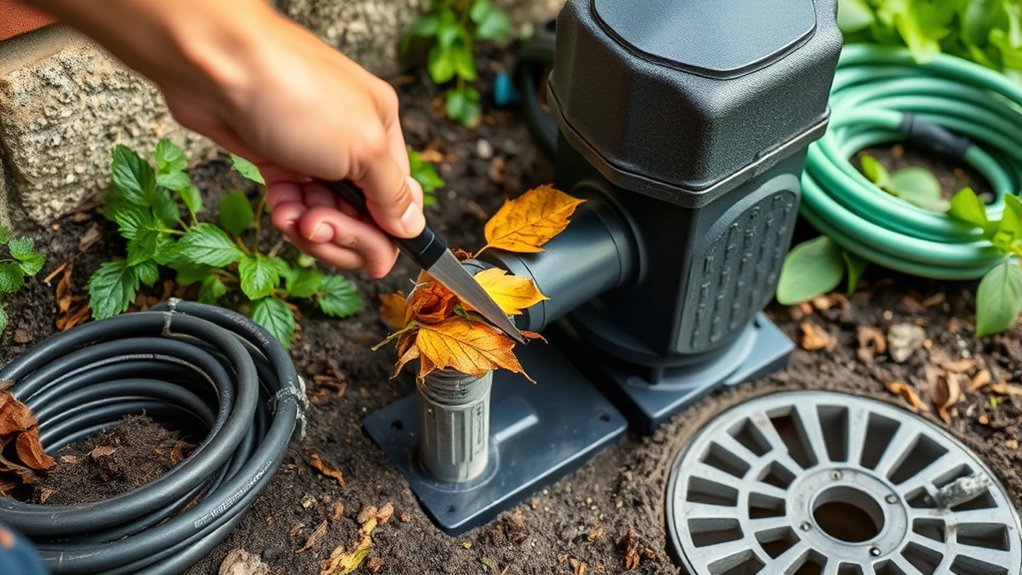
To keep your sump pump functioning properly, maintaining regular removal of debris and obstructions from the drains and discharge lines is vital. Drain blockage can prevent water from flowing away, risking flooding. To guarantee smooth operation, inspect and clear these pathways periodically. Additionally, understanding auditory processing skills can help in identifying early signs of system malfunction. You should:
- Remove any leaves, dirt, or debris clogging the intake or discharge pipes
- Check for ice buildup in colder weather and thaw if necessary
- Clear any obstructions around the discharge point outside
- Ensure the discharge line is free of kinks or damage that could restrict flow
- Regularly systematically inspect the entire sump pump system to identify potential issues early
- Recognize early warning signs of pump failure through unusual noises or cycling patterns
- Consider using professional mechanic shops for fuel injection cleaning periodically to ensure your system’s optimal performance, especially if your sump pump is integrated with a comprehensive home water management system. Being aware of common system malfunctions can also help you respond promptly before major issues arise.
Regular debris removal prevents blockages and keeps water moving efficiently. Keeping these pathways clear reduces the risk of sump pump failure during heavy rain and ensures it’s ready when you need it most.
Maintain Proper Sump Pit Water Levels

Maintaining the correct water level in your sump pit is essential for reliable pump operation. When soil moisture levels rise after heavy rain, water naturally seeps into the sump pit. Guarantee your sump pit depth is appropriate so the pump can activate at the right time without running dry or flooding. If the water level is too low, your pump might not activate when needed; if it’s too high, it could cause overflow or damage. Regularly check the water level, especially during wet seasons, and adjust if necessary. Keep soil moisture in mind—if the ground is saturated, water will accumulate faster. Properly managing your sump pit water levels helps prevent unnecessary pump wear and ensures you’re prepared for storm season. Understanding nanotechnology advancements can also lead to innovative solutions for monitoring and maintaining sump systems more efficiently. Utilizing smart sensor technology can further enhance your ability to track water levels in real-time, reducing the need for manual checks and providing early alerts for potential issues. Incorporating automatic level controls can help maintain consistent water levels without constant manual intervention. Additionally, implementing advanced monitoring systems can give you greater peace of mind by providing timely updates and alerts directly to your device.
Install and Maintain a Battery Backup System

Choosing a reliable battery backup is essential to guarantee your sump pump keeps working during power outages. You should also test the system regularly to confirm it activates properly when needed. Staying proactive helps protect your home from flooding when it matters most.
Choose Reliable Battery Backup
A reliable battery backup is vital to guarantee your sump pump continues working during power outages. When choosing a backup, prioritize models with proven durability and sufficient capacity for your needs. Regular battery maintenance is essential to prevent failure when you need it most. Look for systems with integrated power monitoring features that alert you to battery health issues early. Consider the following:
- Long-lasting batteries with high reserve capacity
- Easy access for routine battery maintenance
- Clear power monitoring indicators
- Compatibility with your existing sump pump system
Regularly Test System Function
How can you guarantee your sump pump system remains reliable during a power outage? Regular testing is essential. You should run your system weekly or monthly to ensure proper operation. Check the battery backup, if installed, to confirm it powers the sump pump during outages. Use your maintenance checklist to verify connections, inspect the sump pump capacity, and listen for unusual noises. Testing involves pouring water into the pit to activate the pump and observing its response. This proactive approach helps identify issues early. Keep a log of tests and maintenance tasks to track performance. Remember, a well-maintained system minimizes panic during storms.
| Test Step | Equipment Needed | Frequency |
|---|---|---|
| Check backup battery | Multimeter, charger | Monthly |
| Run sump pump | Water source in pit | Weekly |
| Inspect sump pump wiring | Visual inspection | Monthly |
| Record performance | Maintenance checklist | Each test session |
Ensure Proper Ventilation and Prevent Mold Growth

Ensuring proper ventilation in your sump pump area is essential to prevent mold growth and maintain a healthy environment. Adequate airflow helps meet ventilation requirements and reduces moisture buildup, which is vital for mold prevention. To improve ventilation, consider installing vents or exhaust fans to promote air circulation. Keep the area free of clutter that can block airflow, and regularly inspect for condensation or dampness. Make certain any windows or vents remain unobstructed to facilitate fresh air exchange. Proper ventilation not only safeguards against mold but also prolongs the life of your sump pump by preventing excess humidity. Focus on maintaining consistent airflow, especially during damp seasons, to keep the area dry and mold-free.
Schedule Professional Maintenance Checks Annually

Scheduling professional maintenance checks for your sump pump each year helps catch potential issues before they cause backups or failures. During an annual maintenance, a trained technician will perform a professional inspection to ensure all components are functioning properly. This includes checking the float switch, motor, and discharge pipe for blockages or wear. Regular maintenance can identify early signs of trouble, such as leaks or corrosion, so you can address them before a storm hits. By scheduling these checks annually, you reduce the risk of unexpected breakdowns during heavy rain. Professional inspection also provides peace of mind, knowing your sump pump is ready when you need it most. Prioritize annual maintenance to keep your sump pump in top condition and avoid panic during storm season.
Keep Emergency Supplies and Contact Information Handy

Having emergency supplies and contact information readily accessible is crucial in a flood or sump pump failure. You should keep an emergency kit nearby, containing essentials like flashlights, batteries, and first aid supplies. Make sure your contact info for emergency services, plumbers, and friends or family members is easy to find and up to date. Store these details in a waterproof container or on a digital device that’s always charged. Consider including a list of nearby shelters or evacuation routes. Regularly review and update your contact info to guarantee it’s current. Having these items prepared minimizes panic and saves precious time when floodwaters threaten your home. Keep your emergency kit and contact info in a designated spot so you can access them quickly if trouble strikes.
Stay Informed About Weather Alerts and Storm Warnings

Staying informed about weather alerts and storm warnings helps you respond quickly if conditions worsen. Regularly check weather radar updates and storm tracking services to stay ahead of severe weather. Sign up for local alerts through your phone or community alerts system, so you receive timely notifications. Pay attention to official sources like the National Weather Service for warnings about heavy rain, flooding, or storms that could threaten your area. Monitoring weather radar allows you to see storm movement in real-time, giving you a clearer picture of when severe weather is approaching. Staying alert ensures you have enough time to prepare your sump pump and secure your property, reducing potential flood damage and avoiding panic during sudden storms.
Frequently Asked Questions
How Often Should I Replace My Sump Pump?
You should replace your sump pump every 7 to 10 years to ensure peak storm preparedness. Regular sump pump maintenance, like cleaning and inspecting for damage, helps extend its lifespan. Keep an eye on its performance during storms and listen for unusual noises. Staying proactive with maintenance and timely replacement guarantees your system works efficiently when you need it most, reducing flood risks during heavy storms.
Can I Automate Sump Pump Testing?
Your sump pump automation can be a game-changer, saving you from the chaos of manual checks. Yes, you can set up automatic testing with smart sensors or timers that trigger the pump periodically, ensuring it’s always ready. Incorporate these into your regular maintenance schedules for peace of mind. This way, your pump stays vigilant, and you avoid the nightmare of unexpected failures during heavy storms.
What Signs Indicate My Sump Pump Is Failing?
You’ll notice your sump pump is failing if it makes strange noises, runs constantly, or doesn’t turn on when water rises. Regular pump maintenance, like checking the float switch and cleaning the drain, helps prevent failures. Keep an eye on any signs of rust or leaks, and make sure the discharge line isn’t clogged. Prompt drain cleaning and maintenance keep your sump pump reliable, especially during storm season.
How Do I Prevent Freezing in Sump Pump Pipes?
An ounce of prevention is worth a pound of cure. To prevent freezing in your sump pump pipes, you should insulate your pipes with pipe insulation, especially during cold weather. Also, make certain drain clearance by removing any debris or ice buildup that could block water flow. These steps keep your sump pump functioning smoothly, reduce the risk of freezing, and help it handle heavy storm season demands without fail.
What Are the Best Practices for Installing a Backup System?
You should install a reliable backup system with a backup battery to guarantee your sump pump works during power outages. Connect the backup battery properly, and regularly check its charge. Additionally, set up alarm systems that notify you if the backup system activates or if there’s a malfunction. By doing this, you’ll stay informed and prepared, keeping your sump pump operational during storms without panic testing.
Conclusion
By regularly inspecting your sump pump and staying prepared, you can prevent costly flooding during storms. Did you know that over 90% of basement flooding incidents could be minimized with proper maintenance? Taking these simple steps guarantees your system works reliably when you need it most. Keep emergency supplies nearby, stay informed about weather alerts, and you’ll safeguard your home and peace of mind all storm season long.