During outages, indoor humidity can rise quickly, making your home feel sticky and uncomfortable while risking mold growth and electrical issues. To avoid this, use fans and ventilation to promote airflow, keep windows closed if outdoor humidity is high, and operate dehumidifiers with batteries if available. Limit moisture sources like cooking and showering, and promptly wipe spills. Continuing further will show you practical tips to keep your home dry and safe during power outages.
Key Takeaways
- Use fans and portable dehumidifiers to improve airflow and reduce indoor humidity during outages.
- Keep windows open when outdoor air is dry to promote natural cross-ventilation.
- Minimize moisture sources like cooking and showering, and use exhaust fans to vent humid air outside.
- Regularly monitor humidity levels with hygrometers and set dehumidifiers to 40-50% for optimal comfort.
- Seal leaks and wipe spills promptly to prevent moisture buildup and mold growth in your home.

APC UPS 600VA / 330W UPS Battery Backup & Surge Protector, 7 Outlets (NEMA 5-15R), USB Charging Port, BE600M1 Uninterruptible Power Supply for Computers, Wi-Fi Routers, and Home Office Electronics
KEEP YOUR COMPUTER, WI-FI AND ROUTER RUNNING THROUGH POWER OUTAGES: Supplies short‑term battery power during outages to maintain...
As an affiliate, we earn on qualifying purchases.
Understanding Indoor Humidity Levels During Power Outages

During a power outage, indoor humidity levels can quickly rise because the cooling systems that usually control moisture stop functioning. Without air conditioning or dehumidifiers, moisture accumulates more freely, especially if you’re cooking, showering, or breathing. The EPA recommends keeping indoor humidity between 30-50%, but during outages, levels can easily surpass this range, sometimes exceeding 60%. Elevated humidity makes your house feel sticky and uncomfortable. It also creates a perfect environment for mold and mildew to develop in walls, carpets, and upholstery. Since moisture no longer gets removed naturally, indoor air becomes more humid, increasing the risk of electrical issues, corrosion, and device malfunctions. Understanding this quick rise helps you take steps to manage humidity and protect your home during outages. Additionally, knowing how to control indoor humidity levels can help prevent damage to your electrical systems and appliances during power interruptions. Being aware of indoor humidity management techniques can make a significant difference in maintaining a comfortable and safe home environment during these times. Proper ventilation and humidity control strategies can help mitigate these issues effectively, especially considering the impact of indoor humidity on health during prolonged outages.

Jackery Solar Generator 1000 v2 with 200W Solar Panel,1070Wh Portable Power Station LiFePO4 Battery,1500W AC/100W USB-C Output, 1Hr Fast Charge for Outdoor,Off-Grid Living,RV,Emergency
Powerful yet Compact: Boasting a 1,500W AC output and a 3,000W surge peak, the Solar Generator 1000 V2...
As an affiliate, we earn on qualifying purchases.
The Impact of Outages on Indoor Moisture and Air Quality

Power outages directly impact indoor moisture and air quality by halting ventilation systems and dehumidifiers that normally control humidity levels. Without these systems running, excess moisture from cooking, showering, and breathing accumulates, causing indoor humidity to rise. High humidity fosters mold growth, mildew, and musty odors, which can worsen air quality and pose health risks. Additionally, stagnant air reduces fresh airflow, trapping pollutants and allergens inside your home. Over time, these conditions can lead to condensation on windows and walls, accelerating structural damage. The lack of proper airflow and moisture control during outages makes your home feel sticky, damp, and uncomfortable. Managing indoor humidity becomes even more critical during power failures to prevent long-term damage and maintain healthy air quality. Proper humidity regulation helps mitigate these issues and sustain a healthier indoor environment during outages. Ensuring effective indoor air circulation can also help reduce the buildup of excess moisture and improve overall air quality during such times. Regularly monitoring indoor humidity levels with a hygrometer can help homeowners stay informed and take timely action to prevent issues. Implementing backup systems like portable dehumidifiers can further assist in maintaining optimal humidity levels during outages.

BLUETTI Elite 30 V2 Portable Power Station 600W (Power Lifting 1500W), 288Wh LiFePO4 Battery with 10ms UPS, Emergency Backup Power for Home Blackout/Winter Storm, Solar Generator for Camping/Road Trip
[288Wh On-the-Go Power] - Only 9.4 lbs lightweight, carry it anywhere during storms! 288Wh capacity meets daily &...
As an affiliate, we earn on qualifying purchases.
Recognizing Signs of Excess Humidity in Your Home

You might notice visible mold growing on walls, ceilings, or around windows, which is a clear sign of excess humidity. A persistent musty odor can also indicate high moisture levels lurking behind walls or in carpets. Keep an eye out for these signs, especially after outages when humidity tends to spike. Recognizing cultural insights about moisture can help you better understand and address home humidity issues effectively. Additionally, understanding humidity control methods can empower you to maintain a healthier indoor environment and prevent issues related to building resilience during power outages. Being aware of indoor humidity levels can guide you in taking appropriate steps to ensure comfort and safety.
Visible Mold Growth
Have you noticed patches of mold or mildew appearing on walls, ceilings, or other surfaces? Visible mold indicates excessive moisture and high humidity levels, often worsened during outages when ventilation is limited. Mold spores thrive in damp environments, spreading quickly on drywall, wallpaper, fabric, or wood. Look for fuzzy, discolored spots that can be black, green, or gray. These patches may feel slimy or fuzzy to the touch and often have a musty odor nearby. Ignoring mold growth can lead to health issues like allergies or respiratory problems. Check hidden areas like behind furniture, under sinks, or in corners, as mold can grow out of sight. Addressing visible mold promptly helps prevent structural damage and improves indoor air quality. Proper ventilation is essential for controlling humidity and reducing mold risk during power outages, especially when humidity levels tend to rise indoors. Maintaining air circulation can help prevent the buildup of moisture that fosters mold growth. Additionally, understanding moisture control techniques can further safeguard your home from mold issues. Proper ventilation strategies are a key part of comprehensive moisture management.
Musty Odor Presence
A persistent musty odor is often one of the first signs that your home is experiencing excess humidity. This smell indicates mold, mildew, or trapped moisture lurking in hidden spots. If you notice this scent lingering, it’s time to investigate.
- Damp walls or ceilings that feel clammy
- Condensation on windows or mirrors
- Persistent odors despite cleaning
- Mold patches in corners or under sinks
- Warping or swelling of wood or wallpaper
These signs point to high moisture levels that can lead to structural damage and health issues. Ignoring the smell can worsen the problem, making your home uncomfortable and unsafe. Recognizing excess humidity early and taking corrective measures can prevent costly repairs and health risks.
Additionally, monitoring field‑of‑view and humidity levels with appropriate sensors can help you better manage moisture and prevent long-term issues. Regularly checking for cybersecurity vulnerabilities in your home devices can prevent hacking attempts that might disrupt your humidity control systems.

Jackery Portable Power Station Explorer 300, 293Wh Backup Lithium Battery, Solar Generator for Outdoors Camping Travel Hunting Blackout (Solar Panel Optional)
SPEED UP YOUR RECHARGEABILITY: It takes only 2 hours to recharge 80% battery of the power station through...
As an affiliate, we earn on qualifying purchases.
Practical Steps to Reduce Indoor Moisture During Outages
To reduce indoor moisture during outages, you should use fans to improve airflow and help dry out humid areas. Keep dehumidifiers running effectively to maintain ideal humidity levels and prevent mold growth. Additionally, minimize moisture sources like cooking, showering, and laundry until power is restored to keep humidity in check. Incorporating connected home fitness technology such as smart humidity sensors can also help monitor moisture levels more accurately during outages. Using smart home automation to schedule dehumidifier operation or fan activation can optimize moisture control even when manual intervention isn’t possible. Understanding home energy management can further assist in maintaining a balanced indoor environment during power disruptions. Implementing proper ventilation strategies can significantly enhance moisture reduction efforts during outages.
Ventilate With Fans
Wondering how to reduce indoor humidity during outages? Ventilating with fans can help you quickly lower moisture levels. Use exhaust fans in bathrooms and kitchens to remove humid air effectively. Position portable fans near open windows or vents to promote airflow and dry out damp spaces. Make sure fans run during and after activities like cooking or showering to prevent moisture buildup. Keep windows open if outdoor conditions allow to encourage natural cross-ventilation. Be mindful of moisture sources and use fans strategically to prevent mold and electrical issues.
Here’s how fans can make a difference:
- Remove humid air from enclosed spaces
- Speed up moisture evaporation
- Keep air circulating for even drying
- Reduce condensation on walls and ceilings
- Prevent mold growth and electrical problems
Use Dehumidifiers Effectively
During power outages, using dehumidifiers effectively is key to preventing excess moisture buildup indoors. First, choose a portable dehumidifier with a low power draw to conserve battery life if running on backup power. Place it in the most humid areas, such as basements or bathrooms, where moisture collects. Keep doors and windows closed to prevent additional humidity from entering. Regularly empty the water reservoir to maintain efficiency. If you have a dehumidifier with a built-in humidistat, set it to maintain 40-50% humidity; otherwise, monitor the environment with a hygrometer. Run the device continuously during the outage, especially in humid conditions. This approach helps prevent mold growth, electrical issues, and the sticky, uncomfortable feeling inside your home.
Minimize Moisture Sources
Controlling indoor moisture levels is essential during power outages, especially when using dehumidifiers alone isn’t enough. You can reduce moisture sources to keep humidity in check and prevent mold growth. Turn off appliances that produce excess moisture, like humidifiers or vaporizers. Limit cooking and showering if possible, or use exhaust fans to vent moisture outside. Avoid drying clothes indoors, which can spike humidity. Keep windows closed to prevent humid air from entering. Be mindful of breathing, as it adds moisture.
- Don’t leave faucets dripping, which adds unnecessary water.
- Avoid opening bathroom or kitchen cabinets that trap humid air.
- Seal leaks and cracks around windows and doors.
- Use towels to wipe up spills immediately.
- Keep vents covered if humidity levels rise.
The Role of Ventilation and Airflow in Controlling Humidity
Proper ventilation and airflow play a crucial role in managing indoor humidity levels, especially during outages when moisture can quickly accumulate. You want to guarantee fresh air circulates to prevent dampness that fosters mold and mildew. Opening windows or vents, if available, helps exhaust humid air and introduce drier outside air. Using fans strategically also promotes airflow, reducing moisture buildup. Here’s a quick visual:
| Ventilation Method | Effect on Humidity |
|---|---|
| Opening windows | Replaces moist indoor air |
| Exhaust fans | Removes humid air |
| Ceiling fans | Circulates air evenly |
| Portable fans | Directs air to dry spots |
Consistent airflow prevents pockets of high humidity, keeping your home dry and comfortable during outages.
Safe Use of Dehumidifiers and Fans When Power Is Restored
When power is restored after an outage, safely using dehumidifiers and fans is essential to prevent moisture-related electrical issues. First, ensure all devices are in good working condition and follow manufacturer instructions carefully. Avoid plugging multiple devices into one outlet to prevent overloads. Keep dehumidifiers and fans away from water sources or damp areas to reduce the risk of shocks. Regularly check for overheating or unusual smells during operation.
- Feel confident that you’re protecting your home’s wiring and appliances
- Prevent dangerous electrical shocks from moisture exposure
- Keep your living space comfortable without risking fires
- Extend the lifespan of your devices
- Restore a safe, dry environment quickly and effectively
Preventing Electrical Damage Caused by High Humidity
High humidity levels can quickly damage your electrical system by promoting corrosion, rust, and short circuits. To prevent this, guarantee your home’s humidity stays between 30-50%, especially during outages. Regularly inspect electrical wiring, outlets, and switches for signs of moisture or corrosion, and address issues promptly. Applying waterproof coatings or sealants to vulnerable connections adds an extra layer of protection. Use surge protectors to guard against voltage spikes caused by moisture-related damage. Keep appliances away from damp areas and avoid running heat-producing devices that increase indoor humidity. Ventilate spaces well, especially if water has been involved. Maintaining a dry environment reduces the risk of electrical failures, prolongs the lifespan of your systems, and keeps your home safer during high humidity conditions.
Maintenance Tips to Protect Electrical Systems During Humid Conditions
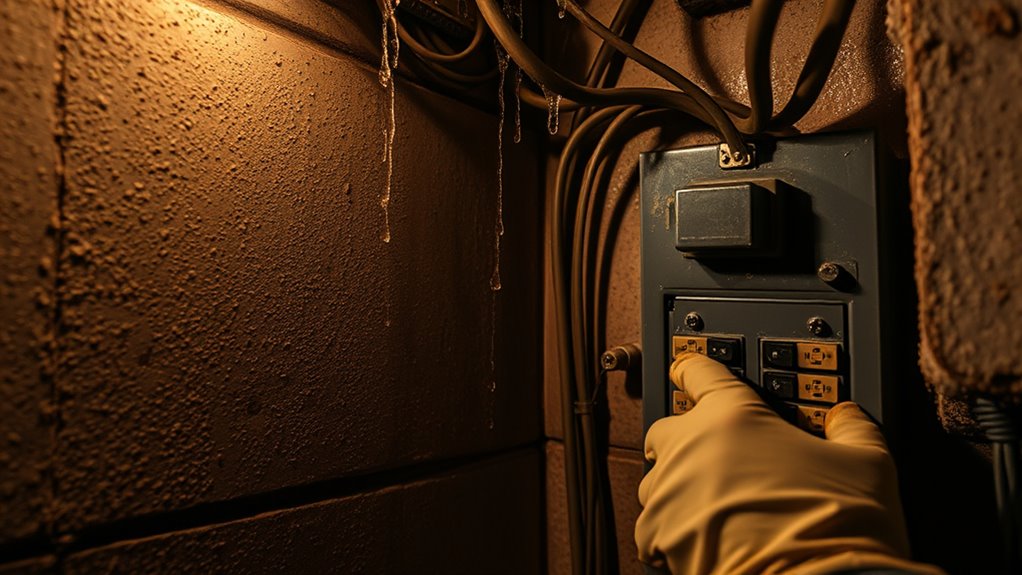
To safeguard your electrical systems during humid conditions, regular maintenance is essential. By staying proactive, you can prevent corrosion, short circuits, and other damage caused by moisture. Keep an eye on these critical steps:
Regular maintenance prevents moisture damage and keeps your electrical system safe and reliable.
- Schedule annual inspections with a licensed electrician.
- Seal cracks and gaps to prevent moisture intrusion.
- Apply protective coatings on outdoor wiring and connections.
- Replace aging or damaged wiring immediately.
- Install surge protectors to guard against voltage spikes.
These actions help preserve your system’s integrity, reduce risks, and extend the lifespan of your electrical components. Consistent upkeep ensures that moisture doesn’t compromise safety or performance. Taking these simple steps gives you peace of mind, especially during humid seasons and outages when vulnerabilities increase. Stay vigilant, and your electrical system will remain resilient against moisture-related issues.
Long-Term Strategies for Managing Humidity and Avoiding the “Sticky House” Feel
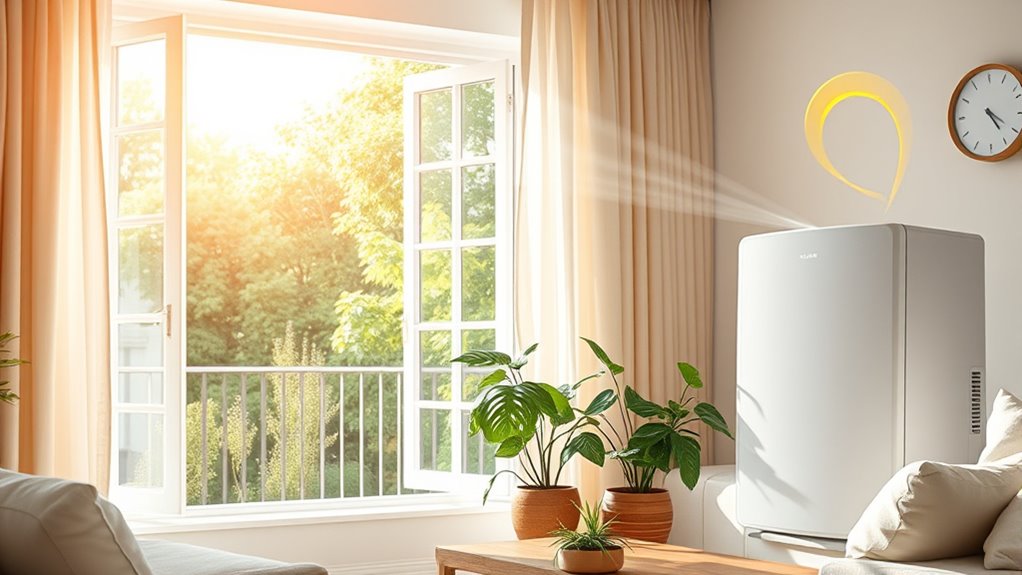
Managing indoor humidity over the long term requires adopting sustainable practices that keep levels within the ideal 30-50% range. Invest in a reliable humidifier or dehumidifier to maintain consistent moisture levels, especially during extreme weather or outages. Regularly inspect and seal leaks around windows, doors, and pipes to prevent excess moisture infiltration. Improve ventilation by using exhaust fans in kitchens and bathrooms, and consider installing an energy recovery ventilator to promote airflow without losing conditioned air. Keep HVAC systems well-maintained and consider adding moisture-absorbing materials like silica gel or charcoal in problem areas. Avoid overusing heat appliances that increase humidity, and use dehumidifiers during humid months. These strategies help prevent mold, electrical issues, and that sticky, uncomfortable feeling indoors.
Frequently Asked Questions
How Can I Monitor Indoor Humidity Without Power?
You can monitor indoor humidity without power by using a simple analog hygrometer. Place it in a central spot where you spend most of your time. Check it regularly to keep humidity within the 30-50% range. These devices don’t need batteries or electricity, making them perfect during outages. Keep an eye on the readings, and adjust your ventilation or use moisture absorbers to stay comfortable and prevent electrical issues.
What Are Safe Alternatives to Dehumidifiers During Outages?
Think of your home like a sponge—when it’s soaked, it’s uncomfortable. During outages, avoid dehumidifiers and opt for natural methods. Open windows when possible to let fresh air circulate, use fans to encourage evaporation, and place moisture-absorbing materials like silica gel or charcoal in problem areas. These simple steps help keep humidity in check, preventing mold and electrical issues without relying on power-hungry devices.
How Quickly Does Humidity Cause Electrical Damage?
Humidity can cause electrical damage in just a few days if levels stay above 50%. Moisture accelerates corrosion on wires, switches, and electrical components, increasing the risk of short circuits, overheating, and voltage surges. The longer humidity remains high, the more damage occurs, leading to costly repairs or replacements. To protect your home, keep humidity below 50% and address moisture issues promptly during outages.
Can Indoor Plants Help Control Humidity During Outages?
Indoor plants can’t magically control humidity during outages, but they do help a little. Think of them as tiny natural dehumidifiers, absorbing moisture through their leaves and roots, reducing that sticky, oppressive feeling. However, don’t rely solely on plants—ventilation, fans, and moisture control measures are essential. Use plants as a helpful supplement to your overall humidity management strategy, especially when power is out and other options are limited.
What Is the Ideal Way to Ventilate a Humid House Safely?
To ventilate a humid house safely, open windows and doors during cooler parts of the day to increase airflow and reduce moisture. Use exhaust fans in bathrooms and kitchens to vent excess humidity outside. Avoid over-ventilating during humid weather, which can bring in more moisture. Consider installing exhaust or whole-house ventilation systems with humidity controls for consistent, safe airflow. Regularly monitor indoor humidity levels to keep them within the recommended 30-50%.
Conclusion
By managing indoor humidity during outages, you can avoid turning your home into a swampy nightmare. Stay vigilant with ventilation, use portable dehumidifiers safely, and keep an eye on signs of excess moisture. Think of your home as a delicate oasis—balancing humidity is like taming a wild beast. With these tips, you’ll guarantee your house stays comfortably dry and damage-free, no matter how fierce the storm or outage feels.