
TL;DR

Get backup power and energy gear delivered free with Prime
- Fast, free delivery on millions of items
- Prime Video, Amazon Music and more included
- Member-only deals all year
Johnson Controls has announced Frick HeatPAC, a packaged ammonia heat pump designed to recover waste heat from industrial refrigeration systems and supply hot water for food and beverage processes. The company says the units deliver 200 kW to 2,000 kW of heating capacity; its efficiency and cost-savings figures are application-dependent estimates, not guaranteed results.
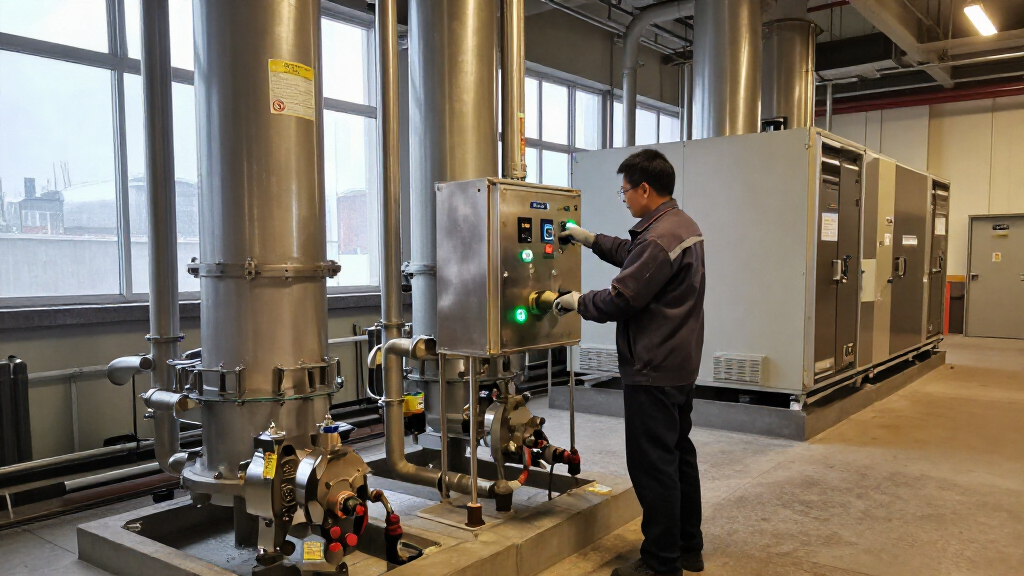
Johnson Controls has announced Frick HeatPAC, a packaged ammonia heat pump designed for food and beverage processing facilities. It recovers heat from ammonia refrigeration systems to provide hot water for uses such as pasteurisation, sanitation and space heating, connecting facilities’ cooling and heating needs.
The HeatPAC range has a stated heating capacity of 200 kW to 2,000 kW and is designed to produce water at 130°F to 190°F (54°C to 88°C). Johnson Controls says the units are pre-engineered, factory-assembled and tested, with a standardised design intended to reduce the complexity of specifying an industrial heat pump built to order.
According to the product information reported by Cooling Post, the package includes a welded plate-and-shell condenser with an integrated desuperheater, two-stage oil separation and a crankcase ventilation system. A variable-frequency drive provides a standard 4:1 turndown for part-load operation. The ammonia charge can be as low as 87 pounds (40 kilograms), and a Frick Quantum HD controller is designed to connect with a range of plant control systems.
Johnson Controls says standardisation may lower upfront investment and shorten lead times by weeks compared with engineered-to-order industrial heat pumps. Those are company claims; the source report does not give a specific price, delivery schedule or comparison project. The equipment is the first Frick product engineered around the Mark 5 Sabroe reciprocating compressor platform.
Turning Refrigeration Heat Into Process Hot Water
Food and beverage plants may use energy to remove heat through refrigeration while separately paying to generate hot water for production and cleaning. A heat pump that captures some of the refrigeration system’s rejected heat can link those operations, potentially reducing the need for a separate heat source and making use of existing plant infrastructure.
Johnson Controls says HeatPAC can be up to seven times more energy efficient than a natural gas boiler for typical food and beverage applications. The company also presents a modelled cheese-production example in which a system supplying 2,000 kW of water at 140°F (60°C) could cut annual energy costs by up to 40% against gas boilers. Both figures depend on application and assumptions; they are not universal performance guarantees. For operators, actual savings would depend on factors including energy prices, operating hours, heat availability and required water temperatures.
The packaged format may matter to facilities weighing capital cost and project schedules as well as operating performance. A standard design could simplify equipment selection and integration, but the announcement does not establish how much faster or less costly a particular installation would be.
Products Worth Considering

Ring Alarm 8-Piece Kit (2nd Gen) Home Security System

Ring Alarm 5-Piece Wireless Security System

Bose SoundLink Max Bluetooth Speaker
As an affiliate, we earn on qualifying purchases.
A Packaged Addition to Frick Equipment
HeatPAC is aimed at industrial sites that already use ammonia refrigeration and have a recurring need for high-temperature water. Rather than replacing refrigeration equipment, the product is presented as a way to recover heat from those systems and deliver it to processes that need heat. Potential applications named by the company include pasteurisation, sanitation and space heating.
Johnson Controls offers Frick Coolware selection software to help users enter application details and estimate heat demand, efficiency and operating costs. The company says the software can estimate how much waste heat a proposed system would require and how much useful heat it would supply. Such outputs are projections based on inputs, not measured results at a customer’s facility.
Savings Depend on Site Conditions
The announcement does not identify a customer installation, independently verified operating results or a specific commercial delivery date. It also does not state the prices or energy assumptions behind the general comparison of HeatPAC with natural-gas boilers. The cheese-producer example is described as a modelled case, and its projected savings depend on the values entered into Coolware.
It remains unclear how the system’s performance will vary across facilities with different refrigeration loads, heat demand, energy tariffs and operating schedules. The source report also provides no full installation-cost figures or details on site modifications that might be needed for integration. Prospective users would need application-specific assessment rather than relying on headline efficiency or cost estimates.
Application Assessments Will Set Expectations
The next step for a facility considering HeatPAC would be to assess its refrigeration system, available waste heat and demand for hot water. Johnson Controls’ Coolware can generate estimates from application inputs, while a site-specific review would be needed to test those projections against actual operating conditions and energy prices.
Further details that would help evaluate the launch include confirmed installation schedules, project costs and measured performance at operating facilities. The announcement and source report do not set out a customer rollout timetable or provide results from a named deployment.
Key Questions
What is the Frick HeatPAC?
It is a packaged ammonia heat pump from Johnson Controls that recovers heat from ammonia refrigeration systems and supplies hot water for industrial uses.
What temperatures and capacities does it cover?
The announced range is 200 kW to 2,000 kW of heating capacity, with hot water temperatures from 130°F to 190°F (54°C to 88°C).
Does Johnson Controls guarantee seven times the efficiency of a boiler?
No. Johnson Controls says HeatPAC can be up to seven times more energy efficient than a natural-gas boiler in typical food and beverage applications. The figure is a company claim and the source does not present it as a guaranteed result for every site.
How much could a facility save?
The company’s modelled cheese-producer example projects annual energy-cost reductions of up to 40% against natural-gas boilers for a specified hot-water load. Actual savings would depend on site conditions, energy prices and the assumptions entered into the model.
Source: coolingpost.com