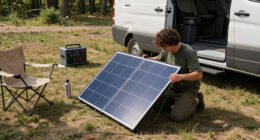
Start by checking your refrigerators and freezers’ wattage to understand their power needs and estimate how long your battery backup must last during outages. Make certain your battery capacity can handle both steady and startup surges, especially for compressor motors. Consider adding solar panels to supplement power and reduce battery drain. Properly size and wire the system for safety and efficiency, and include monitoring tools to keep everything in check. If you stay with us, you’ll uncover more tips to optimize your backup system.

Get backup power and energy gear delivered free with Prime
- Fast, free delivery on millions of items
- Prime Video, Amazon Music and more included
- Member-only deals all year
Key Takeaways
- Determine the total wattage and surge power of the refrigerator and freezer to size the battery system accordingly.
- Prioritize critical appliances by estimating their backup duration during outages to size the battery capacity properly.
- Use energy-efficient models and optimize operation to reduce overall power consumption and extend backup runtime.
- Incorporate surge capacity in batteries to handle compressor startup currents without system failure.
- Plan for regular monitoring and maintenance to ensure reliable backup performance for refrigerators and freezers.
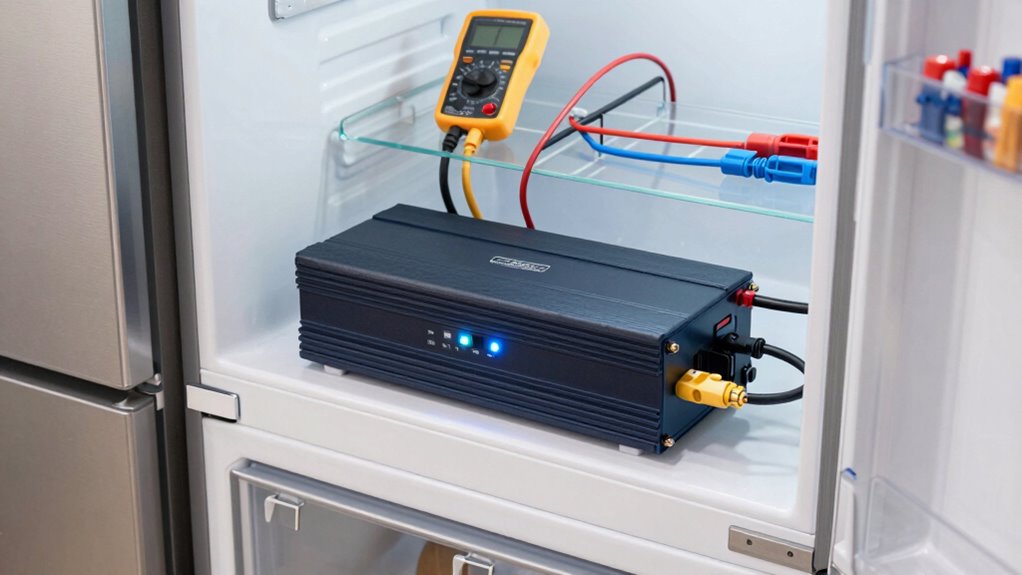
When planning a battery backup for your refrigerators and freezers, understanding your appliance’s power needs and how a backup system can keep them running during outages is crucial. You need to assess the total energy consumption of each appliance, which typically involves checking their wattage and estimating how long they might be without power. This step ensures you select a battery system capable of handling the load and providing backup duration that aligns with your needs. Proper power management is essential here; it helps you optimize energy use and prevents unnecessary drain on your batteries, especially if you’re aiming for a sustainable, off-grid setup or supplementing your existing power supply with renewable energy sources like solar installation.
Integrating solar installation into your backup plan can significantly enhance your power management strategy. Solar panels can generate clean energy during the day, reducing reliance on stored battery power and extending your system’s capacity. When designing your system, consider how much energy your solar setup can produce and how it syncs with your battery bank. A well-thought-out system allows you to store excess solar power and draw from it during outages, making your backup more resilient and sustainable. This approach also helps you size your batteries more accurately, avoiding overspending on capacity you don’t need or risking insufficient backup during longer power interruptions. Additionally, understanding your energy consumption patterns can further optimize your system’s efficiency and maximize energy savings.
Next, you’ll want to determine the type and size of batteries that fit your needs. Lithium-ion batteries, for example, are more efficient and have longer lifespans than traditional lead-acid options, making them a popular choice for critical appliances like refrigerators and freezers. When sizing your batteries, account for both the surge power during startup and the continuous power draw. Remember that your backup system should be capable of handling the initial surge when the compressor kicks in, which often requires a higher capacity than the running load. Proper power management ensures your system can handle these surges without failure, keeping your perishable goods safe. Proper power management strategies can further optimize your system’s performance and longevity. Considering battery lifespan and maintenance requirements is also vital for long-term reliability.
Finally, plan your system’s wiring, safety features, and monitoring tools. A robust setup includes circuit protection, automatic transfer switches, and monitoring systems to track battery health and energy flow. This full-circle approach ensures your refrigerator and freezer stay operational during outages, whether you’re relying on grid power, solar energy, or a combination of both. Thoughtful planning and a clear understanding of your power needs will give you confidence that your backup system is reliable, efficient, and ready to keep your essentials cold whenever the grid falters. Regular maintenance and monitoring are crucial for ensuring your system continues to operate optimally over time.
refrigerator battery backup system
As an affiliate, we earn on qualifying purchases.
As an affiliate, we earn on qualifying purchases.
Frequently Asked Questions
What Is the Average Battery Backup Runtime for Refrigerators?
The average battery backup runtime for refrigerators varies based on battery capacity, but typically, you can expect 4 to 8 hours of backup duration. Larger batteries with higher capacity can extend this period, while smaller ones might only last a few hours. To maximize backup duration, consider your refrigerator’s power draw and select a battery with adequate capacity, ensuring your appliance stays cold during outages.
How Do I Determine the Power Consumption of My Freezer?
Think of your freezer as a silent beast, quietly consuming power. To determine its power consumption, check the label for wattage or amps and volts, then use the formula: Power (W) = Voltage x Current (A). For accurate battery capacity planning, do a power calculation by estimating daily usage. This way, you’ll know how much energy your freezer needs and can match it with the right battery backup.
Can Solar-Powered Battery Backups Support Refrigerators Long-Term?
Yes, solar-powered battery backups can support refrigerators long-term if you have enough backup capacity and sufficient solar power. You’ll need to size your system to match your freezer’s energy needs, ensuring it can generate and store enough energy during sunny periods. Properly designed, a solar backup can keep your fridge running smoothly for extended periods, reducing reliance on grid power, especially during outages or off-grid situations.
What Safety Precautions Are Needed When Installing Battery Backups?
When installing battery backups, prioritize safety by following clear installation guidelines. Visualize a secure, well-lit workspace where your hands are steady and tools are organized. Wear insulated gloves and eye protection to guard against potential sparks or acid leaks. Always handle batteries with care, avoiding short circuits or overcharging. Keep batteries upright and away from open flames. Properly ventilate the area to prevent dangerous fumes, ensuring your setup remains safe and reliable.
How Often Should I Maintain or Replace My Battery Backup System?
You should check your battery backup system annually to guarantee it’s functioning properly, and follow the manufacturer’s maintenance schedule. Battery lifespan varies, but most backups need replacement every 3 to 5 years. Regularly inspecting for corrosion, testing the system, and replacing batteries when they near the end of their lifespan helps maintain reliability. Staying proactive with maintenance ensures your refrigerator and freezer stay protected during power outages.
solar panel for home backup power
As an affiliate, we earn on qualifying purchases.
As an affiliate, we earn on qualifying purchases.
Conclusion
By planning your battery backup carefully, you guarantee your refrigerators and freezers stay powered, your food stays fresh, and your peace of mind stays intact. You’ll be prepared for outages, protected from spoilage, and confident in your setup. With the right choices, the right capacity, and the right installation, you’ll create a reliable backup system that works when you need it most. Keep your appliances running, keep your food safe, and keep your worries at bay.
lithium-ion deep cycle batteries
As an affiliate, we earn on qualifying purchases.
As an affiliate, we earn on qualifying purchases.
As an affiliate, we earn on qualifying purchases.
Halloween Picks
halloween
As an affiliate, we earn on qualifying purchases.