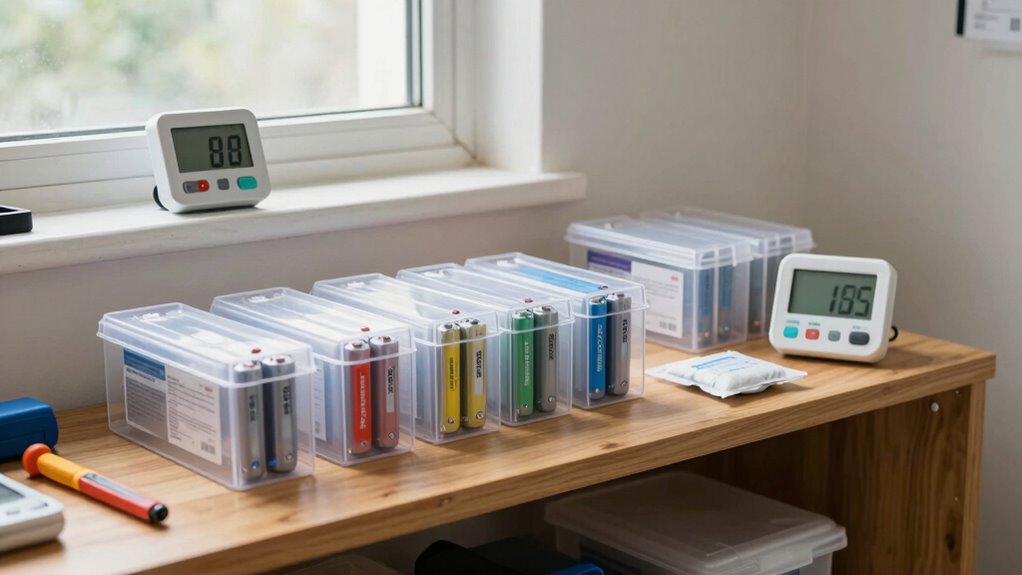

To store lithium backup batteries properly between seasons, keep them in a cool, dry place at around 40-70°F (4-21°C) and avoid extreme heat or freezing temperatures. Store them in a partially charged state, around 30-50%, and use sealed containers or original packaging for extra protection. Check on your batteries regularly and guarantee they’re away from electromagnetic interference, moisture, and direct sunlight. If you want detailed tips on keeping your batteries safe and efficient, keep exploring further.

Get backup power and energy gear delivered free with Prime
- Fast, free delivery on millions of items
- Prime Video, Amazon Music and more included
- Member-only deals all year
Key Takeaways
- Store batteries in a cool, dry place between 40°F and 70°F to prevent capacity loss and safety hazards.
- Keep batteries at a partial charge of 30-50% to minimize deterioration during long-term storage.
- Use sealed containers or original packaging to protect from moisture, electromagnetic interference, and physical damage.
- Regularly inspect batteries and maintain proper charge levels to ensure safety and performance.
- Recycle or dispose of batteries responsibly according to local regulations after storage.
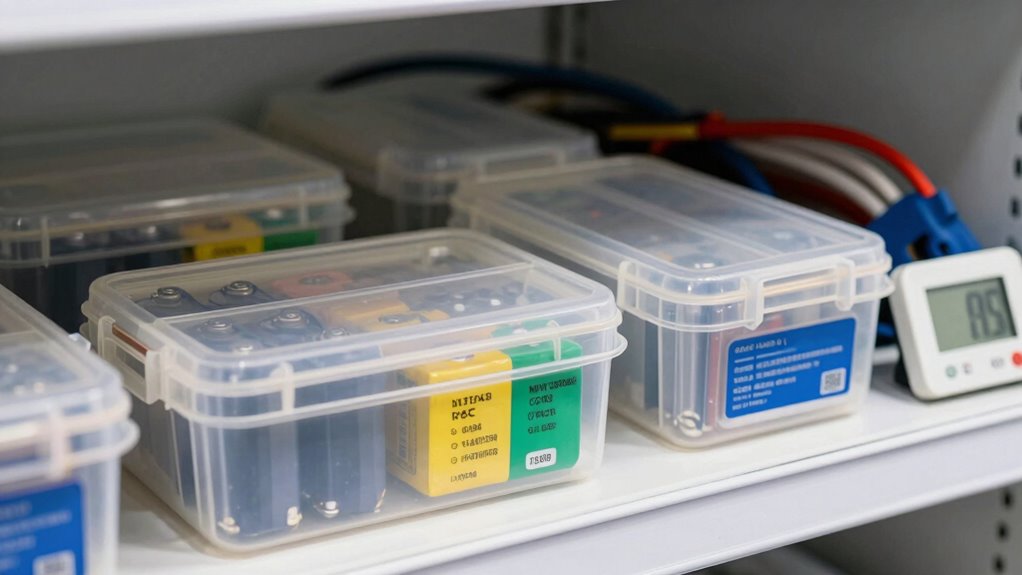
Properly storing lithium backup batteries is crucial to guarantee their safety, longevity, and reliable performance. When you’re not using these batteries for an extended period, how you handle their storage can make a significant difference. One key aspect is understanding the significance of correct storage temperature. Lithium batteries perform best when kept in a cool, dry environment, ideally between 40°F and 70°F (4°C and 21°C). Avoid exposing them to extreme heat or cold, as high temperatures accelerate capacity loss and can even cause safety hazards, while freezing temperatures can damage internal components. Maintaining a stable temperature helps prevent capacity degradation and ensures that your batteries are ready to perform when needed. Additionally, temperature management plays a vital role in preserving the battery’s lifespan and safety during storage. It’s also beneficial to keep batteries away from any sources of electromagnetic interference, which can impact their performance over time.
Storing lithium backup batteries in a cool, dry environment preserves performance and safety.
Another critical factor to contemplate is battery recycling. When lithium batteries reach the end of their lifespan or become damaged, proper disposal is essential to protect the environment. You should seek local recycling programs or designated collection points to dispose of used batteries responsibly. This not only minimizes environmental impact but also ensures that hazardous materials are handled safely. Properly recycling your old batteries prevents leaks of toxic substances and supports sustainable practices, making it a responsible choice for every user. Additionally, understanding the safe handling of lithium batteries helps prevent accidents during storage and disposal. Being aware of the battery lifespan can help you plan for timely replacements and avoid unexpected failures. Incorporating storage best practices further reduces the risk of accidents and prolongs the effective use of your backup batteries.
In addition to temperature control and recycling, you should store lithium backup batteries in a cool, dry place away from direct sunlight and moisture. Moisture can cause corrosion, which damages the internal structure and reduces battery life. It’s best to keep them in a sealed container or original packaging, and if you’re storing multiple batteries, make sure they don’t come into contact with each other to prevent accidental short circuits. If the batteries are partially discharged, store them at around 30-50% charge. Fully charged or completely drained batteries are more prone to deterioration over time, so maintaining a moderate charge level can extend their lifespan. Proper storage conditions are essential to prevent damage and ensure the batteries remain safe during long-term storage. Regular checks and maintenance can further help identify potential issues early and keep your backup system dependable.
lithium backup battery storage case
As an affiliate, we earn on qualifying purchases.
As an affiliate, we earn on qualifying purchases.
Frequently Asked Questions
Can Lithium Backup Batteries Be Stored Outdoors Safely?
You shouldn’t store lithium backup batteries outdoors safely. Exposure to extreme temperatures, moisture, and sunlight can damage the batteries or cause safety hazards. Instead, use a proper battery enclosure in a cool, dry, and well-ventilated indoor space. This prevents environmental damage and guarantees the batteries stay in peak condition. Outdoor storage isn’t recommended because it increases risks and can shorten the lifespan of your lithium backup batteries.
How Often Should I Check Stored Lithium Batteries?
You should check your stored lithium batteries at least once every three to six months. Regular battery maintenance involves inspecting for signs of swelling, corrosion, or damage, and guaranteeing the voltage remains within recommended levels. Good storage techniques include keeping batteries in a cool, dry place and avoiding extreme temperatures. Frequent checks help prevent potential issues, extend battery life, and ensure they’re ready for use when needed.
What Temperature Is Too Hot for Storing Lithium Batteries?
You should avoid storing lithium batteries in temperatures above 77°F (25°C), as heat can cause internal damage and reduce lifespan. Proper temperature regulation is vital, so make sure your storage area has good insulation to prevent temperature fluctuations. Using battery insulation materials can help maintain a consistent environment, protecting your batteries from heat stress and prolonging their durability. Always monitor storage conditions to keep your lithium batteries safe and functional.
Do Lithium Batteries Need to Be Fully Charged Before Storage?
You should partially charge lithium batteries to around 40-60% before storage, as fully charging or discharging can harm their lifespan. Follow charging precautions and avoid overcharging to guarantee storage safety. Keeping batteries at the right charge level minimizes capacity loss and prevents potential hazards. Regularly check stored batteries and recharge if the voltage drops below recommended levels to maintain their health and safety during off-season storage.
Can Lithium Backup Batteries Be Stored With Other Types of Batteries?
Think of your batteries as a team needing harmony. You can store lithium backup batteries with other types, but use a dedicated storage container to prevent leaks or reactions. Keep in mind, mixing batteries complicates recycling later—so, consider separate storage for safe battery recycling. Proper organization guarantees safety and longevity, helping you avoid potential hazards and make future disposal easier.
sealed lithium battery storage container
As an affiliate, we earn on qualifying purchases.
As an affiliate, we earn on qualifying purchases.
Conclusion
Storing your lithium backup batteries properly is like giving them a gentle pause, ready to spring back to life when needed. Keep them in a cool, dry place, and check on the voltage periodically—think of it as giving your batteries a friendly nudge. With these simple steps, you’ll guarantee they’re always ready to power your moments of need, turning storage into a silent guardian rather than a forgotten shadow. After all, your backup batteries deserve a good rest!
partial charge lithium batteries
As an affiliate, we earn on qualifying purchases.
As an affiliate, we earn on qualifying purchases.
battery storage temperature monitor
As an affiliate, we earn on qualifying purchases.
As an affiliate, we earn on qualifying purchases.
Halloween Picks
halloween
As an affiliate, we earn on qualifying purchases.