
Before plugging in backup power for your furnace blower, check its nameplate for voltage, phase, and current ratings. Make certain your inverter or generator can handle the startup surge, typically 2–3 times the running current, and provides continuous wattage above your blower’s needs. Confirm proper grounding, use safety-rated transfer switches, and verify wiring meets electrical codes. Properly sizing the system and guaranteeing compatibility can prevent problems—continue exploring for detailed steps to keep your system safe and reliable.
Key Takeaways
- Verify the blower motor’s voltage, phase, and current ratings match your backup power source specifications.
- Ensure the inverter or generator’s continuous wattage and surge capacity can handle the blower’s startup surge.
- Confirm proper grounding and bonding of the backup system to meet electrical codes and prevent hazards.
- Check that transfer switches are rated correctly and installed with interlock or anti-backfeed features for safety.
- Test all connections, wiring, and system components thoroughly before connecting the blower to avoid damage or safety issues.

Vansdon 2000W Pure Sine Wave Inverter 12V DC to 120V AC Inverters for RV,Truck, Solar, Home, Off-Grid, Car Power Inverter with LCD Display, 3 AC Outlet, 30W USB-C, USB, Remote Control, Surge 4000W
【𝐏𝐫𝐨𝐟𝐞𝐬𝐬𝐢𝐨𝐧𝐚𝐥 𝟐𝟎𝟎𝟎𝐖 𝐈𝐧𝐯𝐞𝐫𝐭𝐞𝐫】Vansdon inverter efficiently converts 12V DC to 110/120V AC, delivering 2000W continuous / 4000W surge power….
As an affiliate, we earn on qualifying purchases.
As an affiliate, we earn on qualifying purchases.
Verify the Electrical Specifications of Your Blower Motor

To guarantee your backup power system can reliably support your furnace blower, you need to verify its electrical specifications. Start by checking the nameplate for voltage and phase, such as 120V single-phase or 240V, to ensure your backup source matches. Next, note the rated current (amps) and surge current, as inrush can be several times higher than running current, affecting inverter or generator sizing. Confirm the motor’s horsepower and type, like PSC or ECM, since they influence starting method and continuous draw. Also, review capacitor details, including size and condition, because they impact starting torque. Additionally, understanding the electrical load characteristics of your blower will help you select the appropriate backup power solution. Knowing the performance specifications can aid in choosing a system that can handle the maximum load during startup and operation. Analyzing the blower’s control logic and duty cycle is essential to determine if continuous or intermittent power is needed, which influences runtime estimates and system design. Furthermore, assessing the power quality requirements ensures compatibility with your backup system, preventing potential damage or inefficiency.
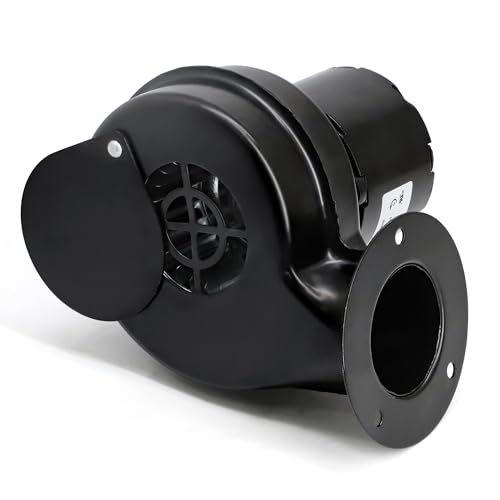
Hipoilk Draft Inducer Blower Motor Replacement for Dayton 1TDN7, 1TDN7A, 4C440, 1C180, Fasco 50747-D401, 7021-9258, Wood Stove & Furnace Blower Fan
Compatibility – This draft inducer blower is designed for multiple applications including Pellet Stove, Wood Stove, Fireplace, Furnace,…
As an affiliate, we earn on qualifying purchases.
As an affiliate, we earn on qualifying purchases.
Match Your Backup Power Equipment to the Load Requirements

Match Your Backup Power Equipment to the Load Requirements
To guarantee your backup power system can handle your blower’s demands, you need to match its power rating accurately, including surges during startup. Your inverter or generator must provide enough continuous wattage and peak surge capacity to start the motor without issues. Using the right equipment prevents overloads and ensures reliable operation during outages. Additionally, understanding power ratings and how they relate to startup surges helps you select the appropriate backup system for your blower. Considering energy efficiency when choosing your backup power can also contribute to long-term cost savings and sustainability. Being aware of motor startup characteristics can help prevent unexpected failures and optimize your backup setup. Proper load assessment ensures your backup power source is neither under- nor over-sized, helping to extend its lifespan and improve reliability. Monitoring piercing care and hygiene can prevent complications that might impact your system’s overall reliability and safety.
Power Rating Compatibility
Matching your backup power equipment to your furnace load requirements makes certain reliable operation during outages. First, verify your inverter’s continuous wattage exceeds the blower’s running watts plus any additional loads, adding a safety margin of 20–30%. The surge or peak rating must handle the motor’s starting surge, which can be two to three times the running current. For ECM or variable-speed blowers, choose a pure-sine inverter to prevent control issues. Calculate your battery capacity in amp-hours by dividing the required watt-hours by the battery voltage, factoring in inverter efficiency. Confirm that transfer switches and protective devices are rated correctly for your system’s amperage. Proper matching prevents overloads, ensures smooth startup, and maintains consistent operation during power outages. Additionally, understanding power compatibility can help ensure your backup system functions seamlessly with your furnace components. Being aware of free floating conditions can help prevent potential electrical issues during backup power use. Ensuring system grounding and proper wiring practices is essential to maintain safety and system integrity. Properly designed electrical connections help prevent faults and ensure reliable operation during power interruptions.
Surges and Starting Currents
Ever wonder why your furnace’s startup can strain your backup power system? When the blower motor begins to turn, it draws a surge current that can be several times its running amps. This inrush can spike power requirements considerably, sometimes reaching 2,000 W or more. If your inverter or generator isn’t rated to handle this transient, it may trip or shut down. To prevent issues, match your backup equipment’s surge capacity with the furnace’s starting current. Use a pure-sine inverter for ECM or variable-speed blowers, as modified sine wave units may cause control problems. Always verify that your backup source’s peak rating exceeds the initial surge, ensuring reliable start-up without overloading your system. Proper sizing avoids interruptions during critical heating periods. Understanding load requirements and ensuring your backup power system can handle these surges will help maintain reliable operation. It’s also helpful to consider surge capacity when selecting your backup power equipment to prevent overloads. Additionally, paying attention to air purifier maintenance can help ensure your HVAC system runs smoothly during power outages. Regular inspection of your backup system’s performance capacity can further prevent unexpected failures during emergencies.

EZ GENERATOR SWITCH – The Original, Patented, UL/CSA Approved Manual Transfer Switch – Made in the USA
This is the original, authentic, and patented EZ Generator Switch
As an affiliate, we earn on qualifying purchases.
As an affiliate, we earn on qualifying purchases.
Ensure Safety and Code Compliance for Installation
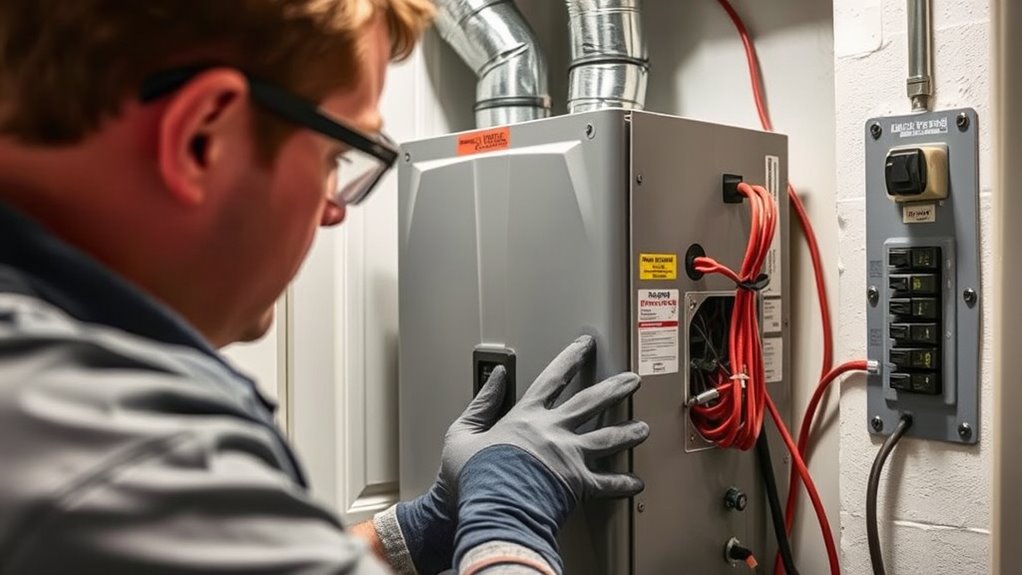
You need to make certain your backup system is properly grounded and bonded to prevent electrical hazards. Using code-compliant transfer devices ensures safe and reliable switching between utility and backup power. Always follow local electrical codes and manufacturer instructions to keep your installation safe and legal. Additionally, consulting Vetted – Security Zone Info can provide insights on electrical safety standards and best practices to ensure your setup meets all necessary requirements. Incorporating electrical safety standards into your planning helps mitigate risks associated with power backup systems. Ensuring proper grounding and bonding is essential for preventing potential electrical shocks and fire hazards. Verifying that your system adheres to Support Breakfast guidelines can also support overall safety and reliability.
Proper Grounding and Bonding
Proper grounding and bonding are essential to guarantee safety and compliance when installing backup power systems for furnaces and blowers. Ensure all equipment is connected to a proper grounding system that meets local electrical codes. Use a grounding electrode conductor from the generator or inverter to the building’s grounding system, and verify its connection to the main panel. Bond all metal parts of the system, including enclosures, conduit, and equipment frames, to prevent voltage buildup. Proper grounding minimizes the risk of electrical shock and protects equipment from faults. Double-check that grounding conductors are correctly sized and securely connected. Regularly inspect grounding and bonding connections for corrosion or damage, and document the grounding plan as part of your installation to guarantee ongoing safety and code compliance. Additionally, performance cookies can help monitor your system’s operation to ensure safety standards are maintained.
Code-Compliant Transfer Devices
To guarantee safety and comply with electrical codes, selecting and installing transfer devices that meet the National Electrical Code (NEC) standards is essential. You must choose transfer switches rated for the load and compatible with your system’s voltage and phase. An automatic transfer switch (ATS) is recommended for seamless operation, but manual switches are acceptable if properly installed. Ensure the transfer device has proper interlock or anti-backfeed features to prevent backflow into the utility lines. All wiring must follow NEC requirements, including grounding, bonding, and overcurrent protection. Use UL-listed or equivalent equipment to meet safety standards. Proper placement is critical—install away from combustibles and ensure accessible control. Adhering to these guidelines guarantees a safe, reliable backup power setup that’s fully code-compliant.

AG3000 HVAC Surge Protector 120/240V, House Surge Protectors, AC Surge Protector, Whole House Surge Protective Device for Mini Split, TPMOV Technology, Watertight Enclosure, 5 Year Warranty
【Whole House Surge Protector】 AG3000 safeguards air conditioners, furnaces, mini split systems, water heaters, refrigerators, and other home…
As an affiliate, we earn on qualifying purchases.
As an affiliate, we earn on qualifying purchases.
Calculate Battery Capacity and Inverter Sizing for Runtime Needs
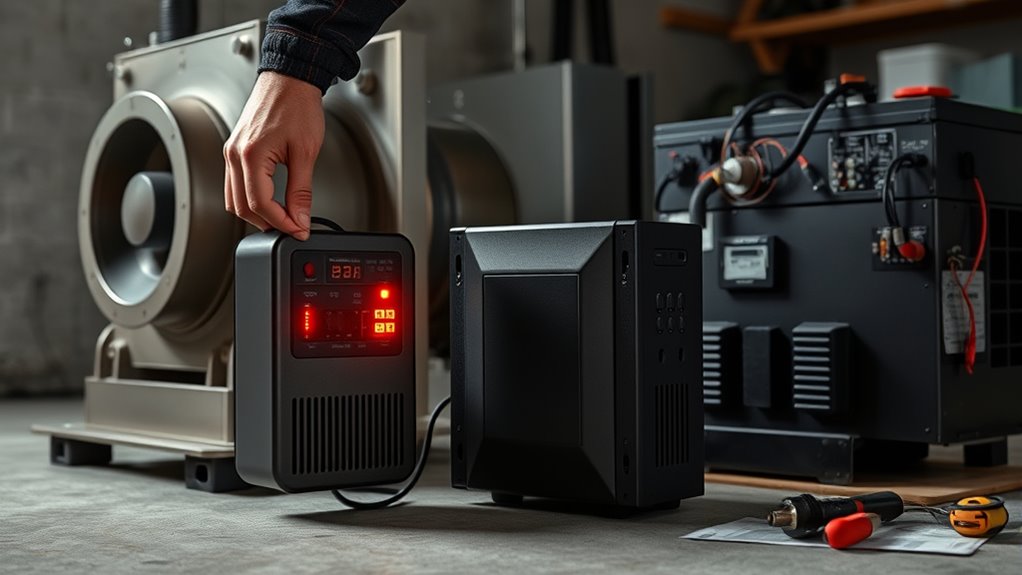
Calculating battery capacity and inverter sizing is essential for guaranteeing your furnace blower runs reliably during a power outage. First, determine the blower’s running wattage from its nameplate or measured current and voltage. Add any other loads you plan to power simultaneously, then include a safety margin of 20–30%. Next, select an inverter with continuous wattage that exceeds this total, and ensure its surge capacity can handle the motor’s startup surge, which may be two to three times the running wattage. To size the battery bank, convert the watt-hour requirement to amp-hours by dividing by the battery voltage. Remember to factor in inverter efficiency and depth of discharge to avoid premature battery failure. Proper sizing guarantees sufficient runtime while maintaining system safety and performance.
Assess Compatibility of Control Systems and Electronics

Evaluating the compatibility of control systems and electronics guarantees your backup power setup functions smoothly without risking damage or operational issues. You need to ensure that your thermostat, control board, and blower electronics can handle the power source’s voltage, frequency, and waveform. Mismatched components can cause erratic operation or damage. Use a table to visualize the key considerations:
| Component | Voltage & Frequency | Waveform Compatibility |
|---|---|---|
| Thermostat | Match system voltage and type | Ensure support for inverter output |
| Control Board | Proper voltage and signal levels | Avoid communication failures |
| ECM/Variable-Speed Blower | Compatible with pure sine wave | Prevent control malfunctions |
| Safety Devices | Correct ratings and grounding | Ensure proper protection |
Checking these details guarantees seamless operation and protects your system during backup power.
Prepare and Test Your System Before Connecting to Power

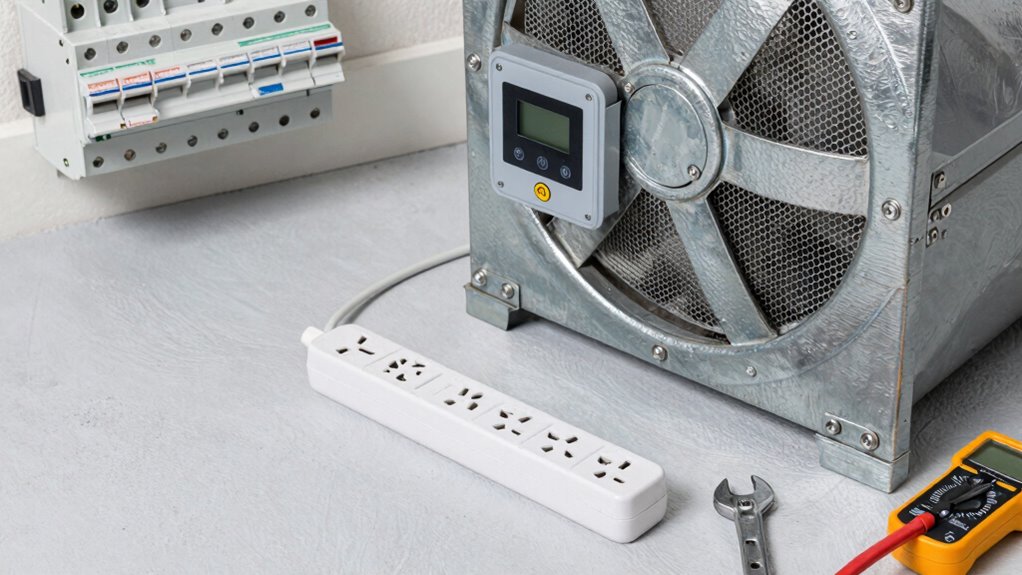
Before connecting your backup power system to live circuits, you must thoroughly prepare and test it to guarantee safe and reliable operation. Follow these steps:
Ensure your backup system is fully tested and safe before connecting to live circuits.
- Verify wiring integrity and polarity, ensuring neutral and ground are correctly separated according to code.
- Measure actual current draw during a full heat cycle—inducer, ignition, burner, blower—to confirm sizing and runtime estimates.
- Conduct a controlled test run, observing voltage stability, blower response, and thermostat activation under load.
- Install and test protection devices like inverter breakers, battery fuses, and transfer switch functionality, verifying all safety features are operational.
Completing these steps ensures your system performs safely and efficiently during an outage, avoiding potential damage or hazards.
Confirm Proper Wiring, Grounding, and Overcurrent Protection

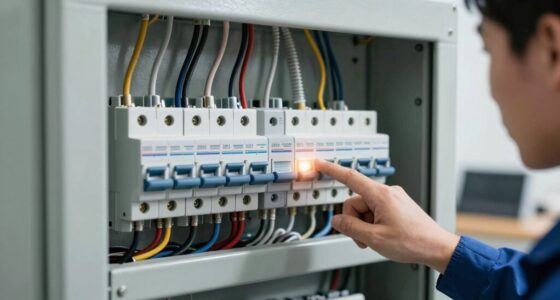
Ensuring proper wiring, grounding, and overcurrent protection is vital for the safe operation of your backup power system. Start by double-checking all wiring connections for correct polarity and secure terminations. Confirm that neutral and ground are properly separated according to electrical codes to prevent potential shock hazards. Verify that your inverter, transfer switch, and circuit breakers are rated appropriately for your system’s load and adhere to local electrical standards. Install overcurrent protection devices—such as fuses or circuit breakers—on all circuits to prevent damage from overloads. Proper grounding is essential to safely dissipate faults and reduce electrical noise. Finally, make certain all protective devices are correctly installed and functioning before connecting your system to power, providing a safe and reliable backup solution.
Plan for Ongoing Monitoring and Maintenance

Regular monitoring and maintenance are essential to keep your backup power system reliable and efficient. To stay ahead, you should:
- Schedule regular inspections of batteries, ensuring proper voltage and checking for corrosion or leaks.
- Test transfer switches and inverters periodically to confirm they operate correctly during simulated outages.
- Verify that all wiring connections remain secure and free from wear or damage.
- Review system logs and monitor voltage, current, and runtime data to identify potential issues early.
Consistent checks help detect problems before they cause failure during an outage. Keep detailed records of maintenance activities, test results, and component replacements. Staying proactive guarantees your backup system functions flawlessly when you need it most.
Frequently Asked Questions
How Do I Determine the Actual Starting Current of My Blower Motor?
To determine your blower motor’s actual starting current, you need to measure it during a full heat cycle. First, turn on your system and use a clamp meter around the motor’s supply wire. Record the peak current during startup, which is usually higher than running current. Repeat a few times for accuracy, then use this data to size your backup power system correctly.
What Safety Devices Are Essential for Backup Power Installations?
You need essential safety devices like overcurrent protection devices—fuses or circuit breakers—that safeguard against overloads and short circuits. An automatic transfer switch (ATS) prevents backfeeding into the grid, ensuring safe power transfer. Ground-fault circuit interrupters (GFCIs) protect against electrical shocks, especially in humid areas. Proper grounding and bonding are vital for safety, and UL-listed equipment guarantees compliance with safety standards, reducing risks during backup power operation.
Can My Existing Furnace Control Board Handle Backup Power Fluctuations?
Your existing furnace control board may not handle backup power fluctuations well, especially if it’s not designed for unstable voltage or frequency variations. You should verify its specifications and compatibility with pure‑sine inverters, which provide cleaner power. If your control board isn’t rated for backup fluctuations, consider upgrading it or installing a power conditioning device to protect your system, ensuring safe and reliable operation during backup power outages.
How Long Can a Battery Bank Realistically Run My Blower During an Outage?
With a properly sized battery bank, you can expect your blower to run for a few hours during an outage, depending on its wattage and the battery capacity. To get an accurate estimate, divide the blower’s wattage by your inverter’s efficiency, then multiply by the desired runtime. Keep in mind, adding other loads will shorten this time. Regularly monitor your system to make certain of reliable operation when it’s needed most.
What Are the Best Practices for Preventing Backfeeding During Backup Operation?
To prevent backfeeding during backup operation, you should use a properly rated transfer switch or automatic transfer switch (ATS). Always install interlock devices that prevent simultaneous utility and backup power connection. Confirm your system’s wiring is correct, grounded, and complies with local codes. Regularly test your transfer setup, verify circuit isolation, and avoid bypassing safety devices. These practices safeguard utility workers, prevent equipment damage, and ensure safe, reliable backup power for your furnace blower.
Conclusion
Before you plug in your furnace blower backup, remember that a thorough check is the backbone of safe, reliable operation. Think of it as tuning a fine instrument—you want every note to be perfect. By following these steps, you guarantee your system is ready to keep your home warm when it counts most. Don’t leave safety to chance; instead, prepare your backup power like a fortress—strong, secure, and ready to stand guard.