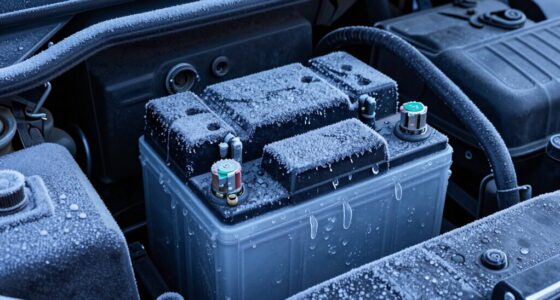
Fast charging can mean three different things because it depends on the power output, communication protocols, and device capabilities. Some chargers deliver high wattage to speed up charging quickly, while others use specialized protocols to optimize safety and battery health. Wireless and wired options also differ, with wired charging generally faster. Plus, device types and market labels add more variation. To understand how these factors influence your charging speed, keep exploring the details behind each aspect.
Key Takeaways
- Different charging speeds are defined by varying wattages, protocols, and device capabilities, leading to multiple interpretations of “fast.”
- Market labels like “Fast,” “Super-fast,” or “Turbo” lack standardization, causing confusion about actual charging speeds.
- Wired and wireless fast charging use distinct technologies and power levels, resulting in different speed definitions.
- Device hardware, firmware, and thermal management strategies influence the achievable “fast” charging rate.
- “Fast charging” can refer to initial peak wattage, overall charging time, or the charging protocol used, which vary widely.

380W USB C Charger Block,with 4 USB Cables 8-Port USB C Charging Station Dual 100W Laptop Charger Fast Charger Type C Charging Block for MacBook Pro, Dell XPS, iPhone, iPad, Tablet (Bright Black)
【8 in 1 USB C Charging Station】100W x 2 USB C and 30Wx3 USB C+30Wx3 USB A (380W…
As an affiliate, we earn on qualifying purchases.
As an affiliate, we earn on qualifying purchases.
Power Output and Peak Wattage

When it comes to fast charging, the key metric is often peak wattage, which indicates the maximum power delivered to your device during initial charging. Higher wattage means faster energy transfer, reducing the time it takes to charge your device. This wattage is calculated by multiplying voltage by current (volts × amps). Many fast chargers advertise peak wattage ratings, like 18W, 45W, or even 100W+, to showcase their charging speed. Keep in mind, though, this peak power is only during the initial phase when the battery is empty or nearly empty. As the battery charges, the power tapers to protect its health. Different devices support different maximum wattages, so the real-world charging speed depends on both your charger’s peak wattage and your device’s capabilities. Understanding charging curves can help you better interpret how your device charges over time. Additionally, device compatibility plays a crucial role in achieving optimal charging performance. Moreover, safety considerations are essential to prevent overheating or damage during rapid charging, especially when considering the power management systems built into modern devices. Recognizing the importance of thermal regulation can further prevent overheating issues during high-wattage fast charging processes.
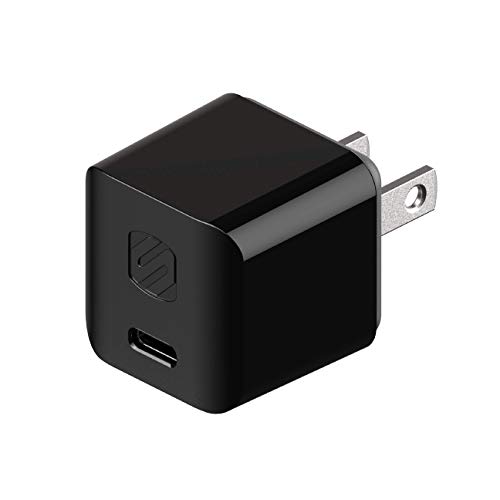
Scosche HPDC30M Powervolt 30W USB Type-C Wall Charger Compatible with Power Delivery 3.0, 2.0 and Standard USB-C Devices, Fast Charging, Black
POWER DELIVERY 3.0 CHARGE: Delivers an incredibly fast charge of up to 4 times faster than a standard…
As an affiliate, we earn on qualifying purchases.
As an affiliate, we earn on qualifying purchases.
Communication Protocols and Compatibility
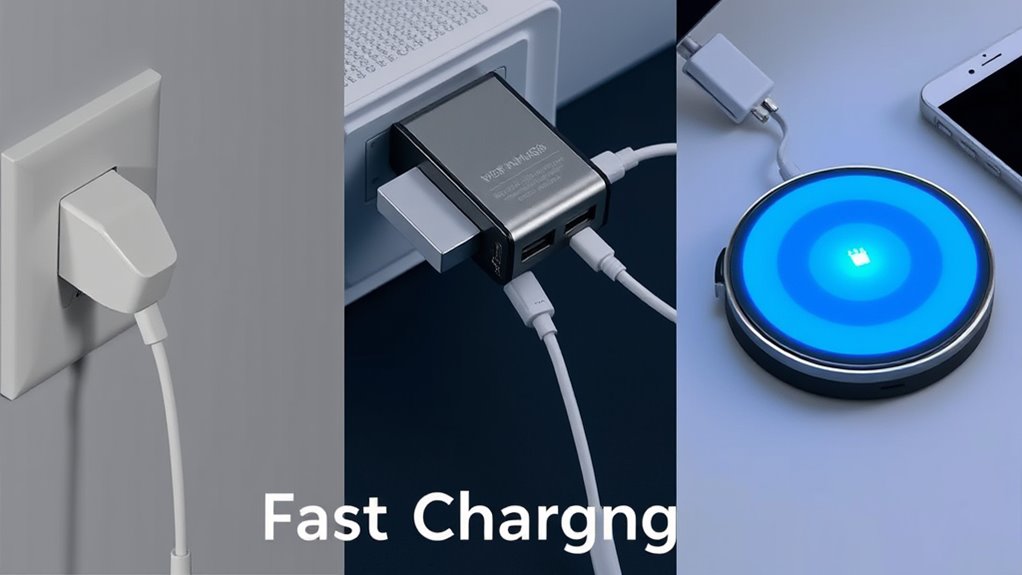
Communication protocols are essential for making certain that your device and charger work together safely and efficiently during fast charging. They define how the charger and device exchange information to set ideal voltage and current levels, preventing damage. For example, USB Power Delivery (USB‑PD) is a widely adopted standard supporting high wattages and broad compatibility across brands. Proprietary protocols like Qualcomm Quick Charge or Oppo’s VOOC often require compatible chargers and cables, limiting interoperability. Your device’s hardware and firmware determine which protocols it supports, impacting whether it can realize advertised fast-charging speeds. Proper communication guarantees safe power delivery, minimizes risks, and assures the charger provides the right amount of power without overheating or damaging the battery. Compatibility hinges on matching supported protocols between your device and charger. Additionally, understanding communication standards can help you stay informed about emerging features and trends in fast-charging technology. Being aware of protocol negotiation is crucial for troubleshooting connectivity issues and optimizing charging efficiency, especially when integrating new fast-charging protocols into your device ecosystem. A clear understanding of device compatibility can also prevent potential damage and optimize charging performance.
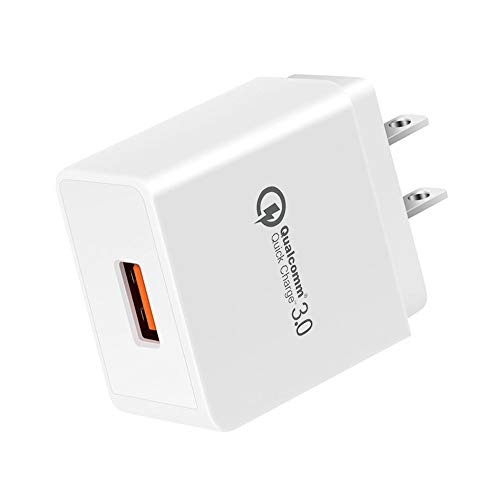
Quick Charge 3.0, 18W USB Wall Charger QC 3.0 Adapter 3A Fast Charger Compatible with iPhone 12 11 Pro X XR XS Max | Galaxy S21 S20 FE S10 S10e S9 S8 Note 20 Ultra 10 9 8 | Pixel 5-4A-4-3-2-XL Phones
1, Compact size and international compatibility(100-240V) make this portable qc charger an ideal travel or daily companion
As an affiliate, we earn on qualifying purchases.
As an affiliate, we earn on qualifying purchases.
Charging Strategies and Techniques
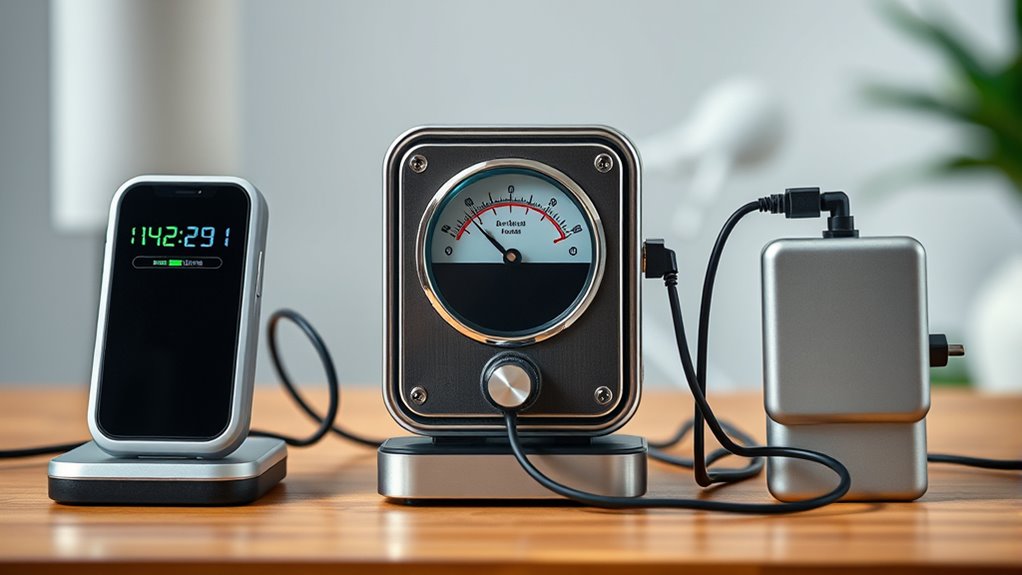
Charging strategies and techniques focus on how devices optimize power delivery to maximize speed while protecting battery health. You can enhance charging efficiency by understanding these methods:
- Voltage Boosting: Increasing voltage (e.g., 9V, 12V, 20V) allows higher wattage without excessively raising current, reducing resistive heat. For electric bikes, higher voltages can significantly improve charging times and performance.
- Current Management: Using higher current with lower voltage demands thicker cables and robust connectors to handle heat and safety risks. Proper current regulation is essential in high-performance electric dirt bikes and other fast-charging systems.
- Multi-Cell and Architectural Approaches: Incorporating dual cells or split charging paths helps distribute power evenly, lowering stress on individual components and speeding up charging. Advanced battery architecture ensures more balanced and efficient charging cycles. Additionally, implementing charge balancing techniques can further enhance battery longevity and charging speed.
Furthermore, implementing Free Floating designs in charging systems can help prevent overloads and ensure consistent power flow. These strategies balance rapid charging with thermal limits and battery preservation, ensuring safe and effective power delivery. Proper technique selection depends on device design, cable quality, and charger compatibility.

MagSafe Charger 2 Pack 15W Magnetic Wireless Charger Fast Charging Pad Compatible with iPhone 17/16/15/14/13/12 Series & AirPods 4/3/2/Pro Magnetic MagSafe Charging Pad with Dual Ports
【Strong Magnetic Alignment|Secure & Stable Charging】Equipped with an advanced magnetic array, the charger automatically aligns to the optimal…
As an affiliate, we earn on qualifying purchases.
As an affiliate, we earn on qualifying purchases.
Wireless Versus Wired Fast Charging
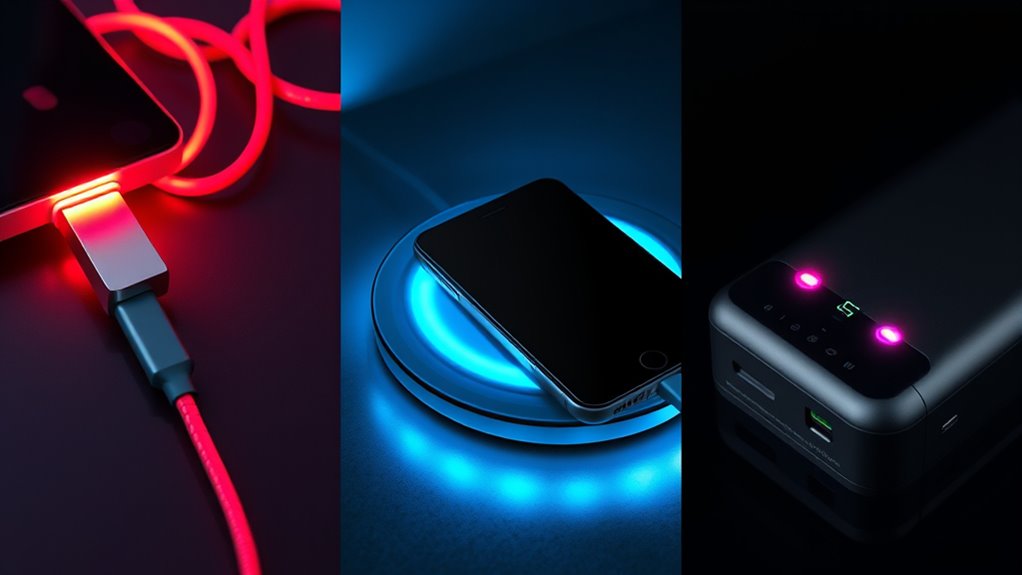
Wireless fast charging offers a convenient way to power your devices without plugging in cables, but it generally falls short of wired fast charging in speed and efficiency. Wireless chargers rely on magnetic induction or resonant coupling, which introduces energy losses and thermal issues, limiting wattage output. While high-end wireless pads can deliver up to 15W or more, this is still slower than wired fast charging, which can push 100W or higher. Additionally, proper alignment and device temperature management affect wireless charging speeds, often reducing actual power delivery. Wired fast charging benefits from lower resistance, direct electrical connection, and advanced protocols that negotiate higher wattages safely. Overall, wired fast charging remains the faster, more reliable option for quickly replenishing your device’s battery. The efficiency of wired charging also depends on the quality of cables and chargers used, emphasizing the importance of proper equipment. Understanding the fundamentals of charging technology can help users optimize their charging setup for maximum speed and safety. For instance, thermal management plays a critical role in maintaining optimal charging performance and preventing overheating during fast charging sessions. Moreover, advancements in battery chemistry and control algorithms continue to improve charging speeds and safety features. Staying informed about charging standards can further enhance your device’s charging efficiency and compatibility.
Impact on Battery Health and Thermal Management

Fast charging can generate significant heat, which, if uncontrolled, may damage your battery over time. Manufacturers implement power limiting strategies to prevent overheating and preserve battery health. However, consistently pushing for rapid charge cycles can increase risks to your battery’s longevity, especially without proper thermal management. Additionally, using proper charging equipment designed for fast charging can help mitigate these risks. Proper thermal management systems in the device can also play a crucial role in maintaining battery health during fast charging. Implementing advanced cooling technologies can further enhance thermal regulation and protect the battery during high-rate charging sessions, particularly in devices with integrated cooling solutions that actively dissipate heat more efficiently.
Heat Generation and Damage
As power levels increase during fast charging, heat generation becomes a significant concern because elevated temperatures can accelerate battery degradation and compromise safety. Excess heat can cause permanent damage, reduce capacity, and shorten your device’s lifespan. To manage these risks, manufacturers implement various strategies:
- Thermal protections: Devices monitor temperature and throttle charging speed when heat rises too high.
- Cooling systems: Some phones and chargers include active cooling or heat sinks to dissipate heat more effectively.
- Charging protocols: Techniques like voltage and current adjustments help limit heat buildup during fast charging sessions.
Ignoring heat management can lead to permanent damage, safety hazards, and reduced battery health over time. Proper thermal regulation is essential for safe, long-lasting fast charging.
Power Limiting Strategies
Power limiting strategies are key to balancing charging speed with battery health and thermal management. They control how much power flows into your device, preventing overheating and long-term damage. These strategies include adjusting voltage, current, or both during charging, often using protocols like USB‑PD or PPS. They also involve hardware features that limit power when sensors detect high temperatures or high state-of-charge (SOC). To visualize, consider this table:
| Strategy Type | Effect |
|---|---|
| Voltage regulation | Prevents overvoltage stress |
| Current limiting | Reduces heat from high amperage |
| Thermal throttling | Cools device during fast charge |
| Power negotiation | Balances speed and safety |
| Dual-cell architecture | Distributes load, lowers heat |
Additionally, power management hardware plays a crucial role in implementing these strategies effectively. Integrating advanced thermal sensors helps these systems respond more accurately to temperature changes, further protecting the battery. Moreover, dynamic power adjustment allows the system to adapt in real-time to varying conditions, optimizing both speed and safety. These methods ensure rapid charging without compromising battery longevity.
Battery Longevity Risks
Charging at high speeds can pose significant risks to your device’s battery health if not managed properly. Fast charging generates extra heat, which accelerates battery aging and reduces overall capacity. To protect your battery, be aware of these risks:
- Heat buildup: Excessive heat during fast charging can cause chemical degradation inside the battery, leading to capacity loss over time.
- Overvoltage stress: Charging at higher voltages may push the battery beyond its ideal limits, increasing wear and tear.
- Thermal management challenges: Inadequate cooling or prolonged high-current charging can cause temperature spikes, further damaging the battery’s lifespan.
Proper thermal management and avoiding constant use of maximum fast-charging settings help maintain your battery’s health longer.
Market Labels, Cables, and Real-World Performance
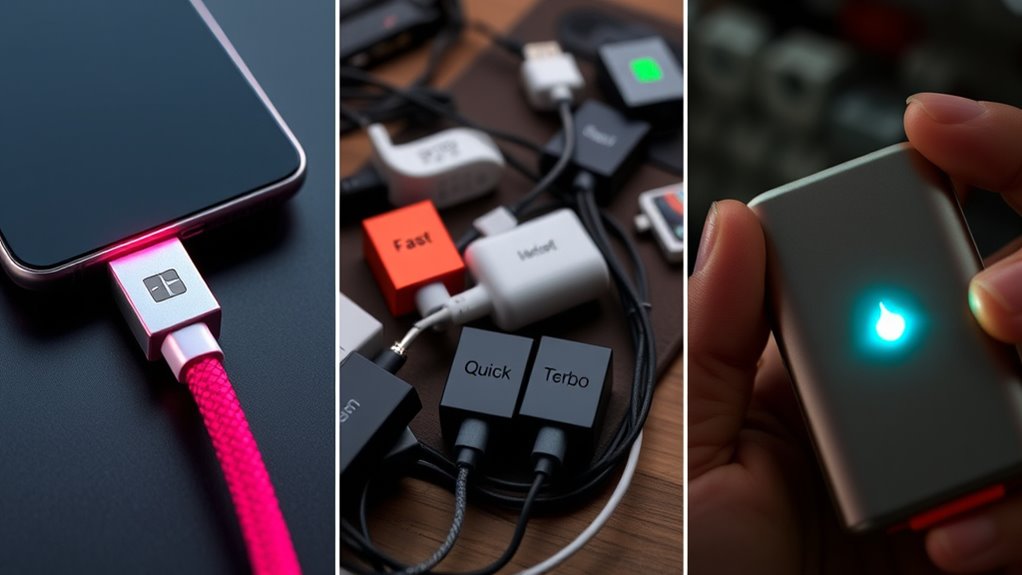
You might notice that fast charging labels can be confusing or inconsistent across brands. The cables and connectors you use play a big role in achieving the advertised speeds and ensuring safety. In real-world use, the actual charging performance often falls short of marketing claims due to compatibility issues, thermal limits, and negotiation between devices and chargers.
Labeling Variability and Clarity
Market labels for fast charging can be highly inconsistent, making it hard to gauge real performance from ads. You might see terms like “Fast,” “Super-fast,” or “Turbo,” but they often lack clear definitions. To clarify, consider these points:
- Labels vary widely—some use peak wattage, others focus on charging time or protocol.
- Cables matter—certified, high-current cables are essential; uncertified ones can limit speed or cause safety issues.
- Real-world results differ—negotiated power, thermal limits, and device compatibility often reduce actual charging speeds below advertised claims.
Understanding these factors helps you make better choices and avoid overestimating a charger’s capabilities based on marketing alone.
Cables and Compatibility Issues
Cables play an essential role in achieving the fast-charging speeds advertised by manufacturers. Using the wrong cable can limit power transfer, regardless of your charger or device capabilities. Look for cables rated for high current and wattage, such as USB-C cables certified for Power Delivery (PD) or PPS standards. Uncertified or low-quality cables may not handle the required amperage safely or efficiently, leading to slower charging or potential safety risks. Compatibility between your device, charger, and cable is vital—some devices only support fast charging with specific cable types. Market labels can be confusing, so verify specifications and certifications before purchasing. Using the right cable ensures you get the best possible performance and reduces the risk of damage to your device or charger.
Actual vs. Advertised Speeds
Although manufacturers often advertise impressive fast-charging speeds, real-world results frequently fall short due to various factors. You may notice that your device doesn’t reach the claimed wattage or charging times. Several reasons contribute to this gap:
- Negotiation Limits: The device and charger communicate to agree on a safe voltage and current, often reducing speeds to protect the battery.
- Thermal Management: Heat buildup triggers throttling, lowering power to prevent damage, especially during prolonged charging.
- Cable and Compatibility: Using uncertified or low-rated cables can restrict power transfer, preventing you from achieving advertised speeds.
Always check if your hardware supports the claimed fast-charging protocols and use quality cables to maximize real-world performance.
Variations Across Device Types and Use Cases
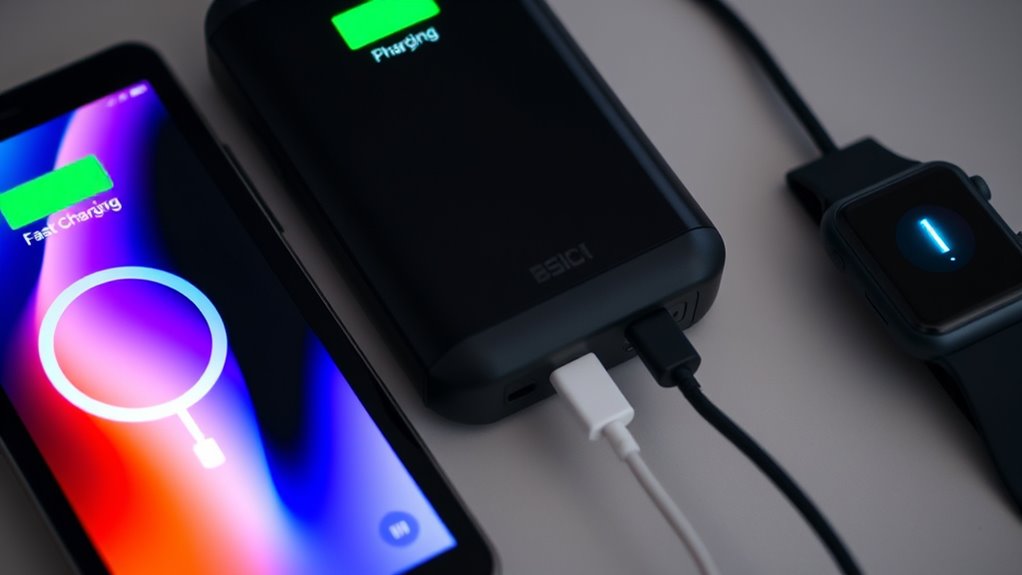
Different device types and use cases demand varying approaches to fast charging, driven by their unique power requirements, thermal constraints, and design priorities. Smartphones typically prioritize compact size and thermal management, favoring lower wattage speeds like 20–100W for safety and longevity. Laptops need higher wattages, often exceeding 100W, to ensure quick power-up without overheating, requiring robust cooling systems. Electric vehicles (EVs) demand ultra-fast DC charging in the hundreds of kilowatts, designed for long-distance travel and high capacity. Wearables and earbuds, with smaller batteries, use minimal fast-charging power to prevent heat buildup. Each device type balances speed, safety, and durability differently, shaping the specific protocols, hardware, and techniques employed in their fast-charging strategies.
Frequently Asked Questions
How Do Different Fast-Charging Protocols Affect Device Compatibility?
Different fast-charging protocols affect device compatibility by dictating how chargers and devices communicate and negotiate power levels. Protocols like USB Power Delivery (USB-PD) are widely compatible across brands, while proprietary systems such as VOOC or SuperCharge often require specific chargers and cables. Using a matching protocol guarantees you get the advertised fast-charging speeds, but using mismatched protocols may result in slower charging or no fast charge at all.
What Factors Determine Actual Charging Speed During a Session?
Think of your device’s charging as a dance where every step matters. The factors that determine your actual charging speed include the power negotiated between your device and charger, the protocol support, and the cable quality. Thermal management, battery health safeguards, and how the device handles voltage and current also play roles. These elements work together, sometimes like a well-choreographed routine, to influence how quickly your device reaches full charge.
Can Fast Wireless Charging Match Wired Charging Speeds?
Fast wireless charging generally can’t match wired charging speeds yet. Wireless chargers face higher energy losses, limited power delivery, and alignment issues that slow down the process. Although newer technologies boost wireless wattage, they still fall short of wired charging’s efficiency and higher wattage capabilities. So, if you want the fastest charge possible, wired charging remains your best bet, especially for high-capacity devices.
How Does Thermal Management Influence Fast Charging Performance?
Thermal management considerably impacts your fast charging performance by controlling heat generated during rapid charging. When your device efficiently dissipates heat, it maintains higher charging speeds without overheating. Poor thermal management causes throttling, reducing power transfer to protect the battery, prolonging charge times. Using devices with good cooling systems or avoiding high ambient temperatures helps sustain fast charging speeds, ensuring a quicker, safer charge cycle while preserving your battery’s health.
Are Higher Peak Wattages Always Better for Device Longevity?
Higher peak wattages aren’t always better for your device’s longevity. They deliver faster charges, but they also generate more heat, which can accelerate battery wear. You need a balance—moderate power levels that charge quickly without overheating. When your device manages thermal limits and uses smart charging protocols, it maintains longevity. So, prioritize safe, controlled charging over just seeking the highest wattage, and your device will stay healthier longer.
Conclusion
Did you know that over 80% of smartphone users aren’t aware that “fast charging” can mean different things? Whether it’s peak wattage, communication protocols, or charging techniques, the term’s variability affects your device’s performance and battery health. So, next time you see “fast charging,” remember it might not be what you expect. Understanding these differences helps you choose the right charger and protect your device’s longevity.