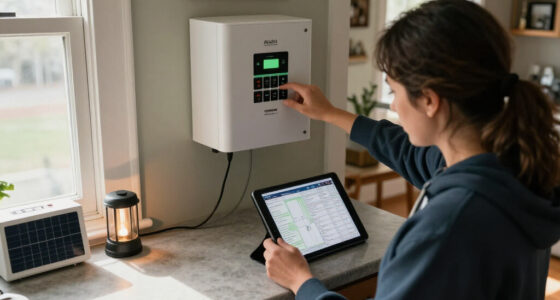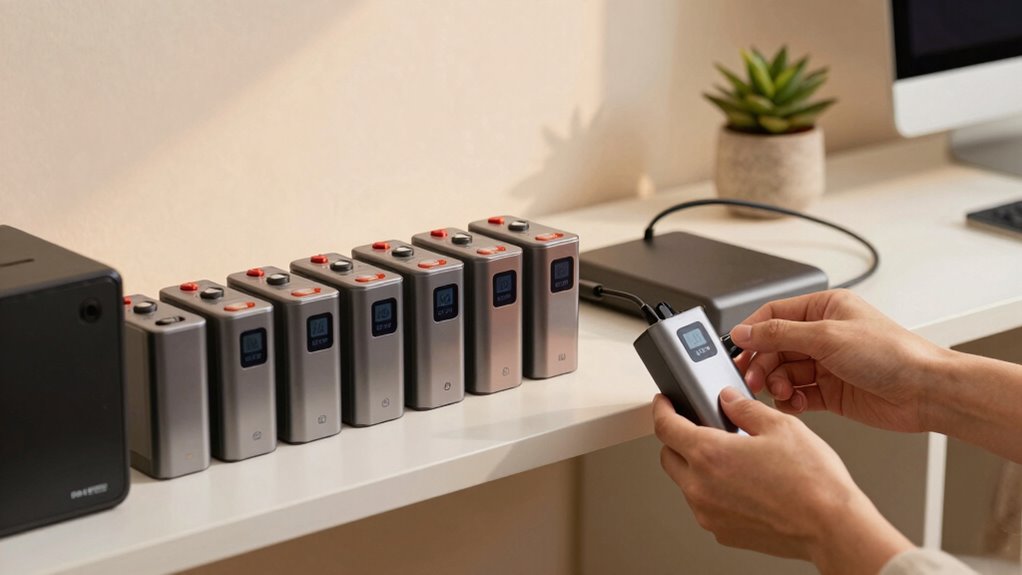
To extend your indoor backup battery’s lifespan, regularly inspect it for corrosion and loose connections, and keep terminals clean and tight. Avoid deep discharges and maintain a proper charge within recommended levels, especially in moderate temperatures. Monitor its performance with tools or cloud-based alerts, and guarantee both system updates and professional inspections are up to date. Proper placement in a climate-controlled area plus understanding your BMS helps maximize longevity, so keep these habits in mind for reliable backup power when needed.

Get backup power and energy gear delivered free with Prime
- Fast, free delivery on millions of items
- Prime Video, Amazon Music and more included
- Member-only deals all year
Key Takeaways
- Regularly inspect and clean terminals to prevent corrosion and ensure secure connections.
- Maintain proper charge levels and avoid deep discharges to extend battery life.
- Keep batteries in climate-controlled environments to prevent temperature-related damage.
- Use monitoring tools to track battery health and address issues early.
- Schedule routine professional inspections and keep system software up to date.
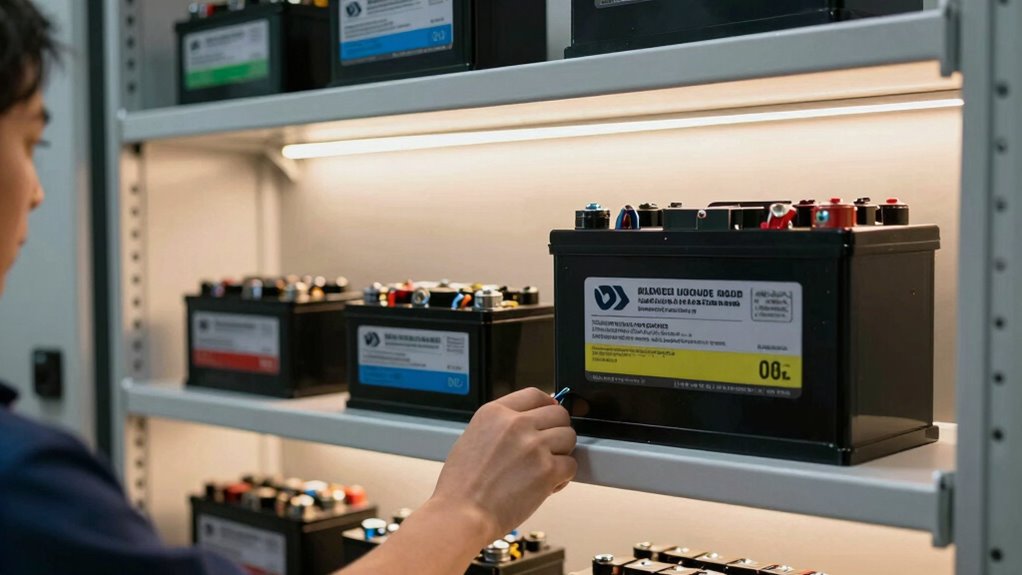
Having an indoor backup battery is essential for guaranteeing your home stays powered during outages, but simply installing one isn’t enough. To truly benefit from your system, you need to develop good habits that extend its lifespan and ensure reliable emergency power when you need it most. One of the most important habits is regular battery maintenance. Just like any other equipment, your backup battery requires periodic checks to guarantee it’s functioning at its best. This means inspecting for corrosion, loose connections, or any signs of wear and tear. Keeping terminals clean and tight prevents power disruptions and prolongs the battery’s life. Don’t forget to review the manufacturer’s guidelines for maintenance routines, as some batteries might need specific checks or recharging procedures. Neglecting these steps can lead to reduced capacity, making your backup system unreliable during an emergency.
Another habit that greatly impacts your battery’s longevity is proper charge management. Many people forget that batteries don’t last forever, especially if they’re constantly overcharged or drained too deeply. To maintain peak emergency power readiness, avoid letting your battery fully discharge regularly, as deep discharges can shorten its lifespan. Instead, aim to keep the battery charged within recommended levels, and if your system has a maintenance mode or automatic shut-off, use it to prevent overcharging. Also, consider ambient temperature; batteries perform best within a moderate temperature range. Excessive heat or cold can degrade their capacity over time, so placing the backup system in a climate-controlled area is wise. Additionally, understanding the importance of battery health, which can be maintained through proper care and monitoring, is crucial for long-term reliability. Regularly monitoring the battery’s capacity and performance, along with understanding battery chemistry, can help you catch issues early and ensure your system remains ready when needed. Developing an awareness of battery management systems and their features can also help optimize performance and extend lifespan. It’s also beneficial to keep abreast of cloud-based monitoring options, which can provide real-time data and alerts for your battery’s health.
You should also stay vigilant about software updates and system calibration. Many backup batteries come with management systems that need periodic updates to optimize performance and safety features. Staying current with these updates ensures your battery operates efficiently and prevents unexpected failures. Additionally, scheduling routine professional inspections can help catch potential issues early, saving you money and hassle in the long run. These inspections can verify that the system’s components, including the inverter and charger, are functioning properly, and that the battery’s health remains strong.
indoor backup battery maintenance kit
As an affiliate, we earn on qualifying purchases.
As an affiliate, we earn on qualifying purchases.
Frequently Asked Questions
How Often Should I Test My Backup Battery?
You should test your backup battery at least once every three to six months to ensure proper functioning. Regular testing is vital for battery maintenance and catching potential issues early. During testing, verify that the battery holds a charge and activates correctly. Adjust your testing frequency based on usage and manufacturer recommendations. Consistent testing helps extend your battery’s lifespan and guarantees reliable backup power during emergencies.
What Temperature Range Is Best for Indoor Batteries?
The ideal temperature for indoor batteries is between 20°C and 25°C (68°F to 77°F). Maintaining perfect storage conditions helps prevent capacity loss and extends lifespan. Avoid exposing your batteries to extreme heat or cold, as high temperatures accelerate chemical degradation, and cold temperatures can reduce performance temporarily. Keep batteries in a cool, dry place, away from direct sunlight, to guarantee they stay in top condition longer.
Can I Mix Different Brands of Backup Batteries?
You shouldn’t mix different brands of backup batteries, as it risks damaging your system. Battery compatibility and brand interoperability are essential for reliable performance. Mixing brands can cause uneven charging, reduce lifespan, or even lead to failures when you need backup most. Stick to the same brand and type for your backup batteries. This way, you guarantee their longevity and consistent, dependable power—vital when the lights go out unexpectedly.
How Do Environmental Factors Affect Battery Lifespan?
Environmental factors vital impact your backup battery’s lifespan. You should maintain temperature stability, avoiding extreme heat or cold, which can degrade internal components. Humidity control is equally important; high humidity causes corrosion, while low humidity prevents moisture buildup. By keeping the environment consistent and within recommended ranges, you help preserve your battery’s performance and extend its lifespan, ensuring it remains reliable when you need it most.
Is It Necessary to Fully Discharge My Backup Battery Regularly?
Think of your backup battery as a delicate dance partner; full discharges aren’t always necessary. You don’t need to regularly drain it completely, as doing so can wear down its capacity over time. Instead, aim for partial charges, keeping the number of charging cycles low. This gentle choreography preserves your battery’s health, prolonging its capacity and ensuring it’s ready to step in when you need it most.
battery monitoring tools for home backup systems
As an affiliate, we earn on qualifying purchases.
As an affiliate, we earn on qualifying purchases.
Conclusion
By adopting good indoor backup battery habits, you’re nurturing a silent guardian that quietly guards your home’s energy needs. Think of your battery as a delicate garden—consistent care and mindful use help it flourish and last longer. Stay vigilant, avoid overuse, and keep it well-maintained. With these habits, your backup battery will serve as a steadfast lighthouse, shining its dependable light through any storm, ensuring your home remains safe and powered when you need it most.
climate-controlled battery storage enclosure
As an affiliate, we earn on qualifying purchases.
As an affiliate, we earn on qualifying purchases.
professional battery inspection service
As an affiliate, we earn on qualifying purchases.
As an affiliate, we earn on qualifying purchases.
Halloween Picks
halloween
As an affiliate, we earn on qualifying purchases.