
When choosing an extension cord, understanding the gauge helps you determine its safety and capacity. Thicker cords (lower gauge) handle more power but can heat up if overloaded. The “heat test” involves running a device and feeling for excessive warmth, which indicates a risk. Many forget this step, risking fire or damage. If you keep exploring, you’ll discover how to interpret heat test results and ensure safe, efficient use.
Key Takeaways
- The “Heat Test” involves monitoring a cord under load to assess if it heats excessively, indicating improper gauge or overload.
- Proper gauge selection minimizes heat buildup, preventing insulation damage and fire hazards during extended use.
- Thinner cords (higher gauge) are more prone to heat accumulation under heavy loads, making the heat test crucial for safety checks.
- A safe heat test result shows the cord remains warm but not hot after moderate use, confirming appropriate gauge and capacity.
- Regularly performing the heat test helps identify overheating issues before damage or safety risks occur.

CyberPower ST425 Standby UPS Battery Backup and Surge Protector, 425VA/260W, 8 Outlets, Compact, UL Certified
425VA/260W Standby Battery Backup Uninterruptible Power Supply (UPS) System uses simulated sine wave output to safeguard home office...
As an affiliate, we earn on qualifying purchases.
Understanding Extension Cord Gauge: What Does It Mean?
Understanding Extension Cord Gauge: What Does It Mean?
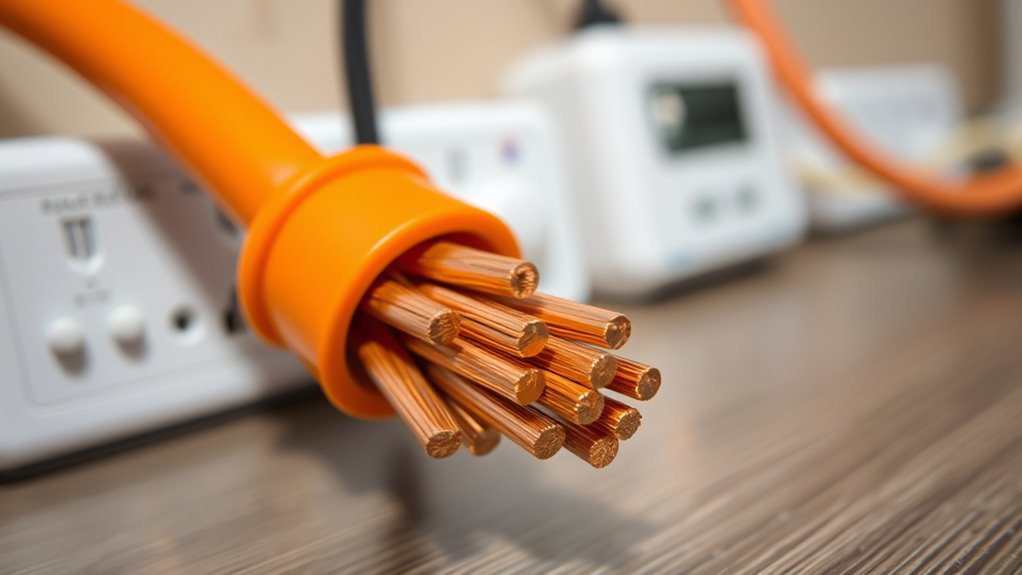
Have you ever wondered what the numbers on an extension cord’s gauge actually mean? These numbers indicate the thickness of the wire inside the cord, which directly impacts its electrical capacity and safety. Thicker wires with a lower gauge number can handle more current, reducing the risk of overheating. Proper insulation is essential for preventing grounding issues and maintaining safety. Poor grounding issues often stem from using a cord with inadequate insulation quality, which can lead to electrical shocks or fire hazards. Wire thickness directly influences a cord’s ability to safely carry electrical load, making it a critical factor in selection. Additionally, calibration of the cord’s components ensures consistent performance and safety standards. When selecting an extension cord, it’s also important to consider the energy efficiency of the wire, as it can affect overall power consumption and performance. Understanding gauge helps you choose a cord that matches your power needs and ensures it’s properly grounded. Lower gauge cords are generally safer for high-power devices, but always check the insulation quality to prevent grounding issues. Properly rated cords with good insulation ensure safe, reliable operation for all your electrical tasks.

Amazon Basics UPS Battery Backup & Surge Protector, 400VA/255W, 6 Outlets, Uninterruptible Power Supply, Small Compact Size, Black
Standby uninterruptible power supply (UPS) with 400VA / 255W battery backup; ideal for home networks, IoT devices, and...
As an affiliate, we earn on qualifying purchases.
The Relationship Between Gauge and Electrical Capacity

When choosing an extension cord, remember that thicker wires can handle higher power and reduce voltage drop. Smaller gauge numbers mean more heat and better capacity, but they also limit how far the cord can run safely. Understanding these relationships helps you select the right gauge for your electrical needs. Additionally, considering safe installation practices ensures your setup remains reliable and secure during use. Properly managing cable length and gauge can prevent overheating and potential hazards, especially when using cords for extended periods. Recognizing the importance of wire insulation can further enhance safety by reducing the risk of electrical faults. Moreover, being aware of piercing materials and their compatibility with skin sensitivities can help prevent complications during body modifications. Being informed about Gold IRA markets can also guide you in diversifying your investments securely.
Thicker Wire, Higher Power
A thicker wire, indicated by a lower gauge number, can carry more electrical current safely and efficiently. This means that as the wire gauge decreases, its power capacity increases, allowing it to handle higher loads without overheating. When selecting an extension cord, understanding the relationship between wire gauge and power capacity is vital. A cord with a lower gauge will support more devices or power-hungry tools because it reduces resistance and heat buildup. Proper gauge selection minimizes risks and maximizes performance. Additionally, Leave No Trace principles emphasize the importance of sustainable practices in outdoor environments, which can include safe and responsible use of extension cords and electrical devices in camping settings. Knowing how to select the right gauge can also prevent overloading and potential electrical hazards, ensuring safety during use. Recognizing the electrical capacity of your extension cord helps in making informed decisions that protect both your devices and yourself. Understanding wire gauge is essential for avoiding dangerous situations and ensuring long-term safety.
Gauge Limits Voltage Drop
Since thinner wires have higher gauge numbers, they offer greater resistance, which causes voltage to drop over the length of the extension cord. This voltage drop can affect your device’s performance and safety. To help identify suitable cords, look for color coding on the insulation—typically, lower gauges like 14 or 12 are marked with specific colors, indicating higher capacity. Remember, the longer the cord, the more resistance builds up, increasing voltage loss. For example, a 25-foot extension cord with a higher gauge might handle less power than a shorter, thicker one. Always match the gauge to the cord length and the equipment’s electrical needs. Proper gauge selection guarantees minimal voltage drop, maintaining device efficiency and preventing overheating. Understanding electrical capacity helps ensure you choose the right extension cord for your specific application.
Smaller Gauge, More Heat
Ever wonder why thinner extension cords tend to heat up more than thicker ones? It’s mainly due to their smaller gauge, which means less conductive wire inside. With less wire, the electrical current faces more resistance, generating heat. This heat buildup is intensified if the cord’s wire insulation isn’t rated for higher temperatures, increasing safety risks. Additionally, as the cord length increases, resistance also rises, causing even more heat in thinner gauges. Longer cords with small gauge wire can become dangerously hot, especially under heavy loads. Choosing a thicker gauge reduces resistance, limits heat, and ensures safer operation. Proper gauge selection is crucial not only for safety but also for maintaining the efficiency of your powered tools. Always consider both wire insulation quality and cord length when selecting an extension cord to prevent overheating and potential hazards. Moreover, in environments where safety is critical, adhering to mammography guidelines and understanding the importance of proper equipment can help prevent health-related risks associated with electrical overheating. Proper electrical setup includes understanding how wire resistance impacts heat generation and safety. Ensuring your extension cords meet industry standards can further reduce risks and improve overall safety. Recognizing the impact of digital distractions can also help ensure careful handling of electrical equipment to prevent accidents.

GOLDENMATE 1000VA/800W Lithium UPS Battery Backup and Surge Protector, Backup Battery Power Supply with LiFePO4 Batteries(230.4 Wh), Sinewave UPS System, 10 Years Lifespan, 8 Outlets, LCD Display
[LiFePO4 Battery, Ultra-long Endurance]: This lithium UPS is equipped with a state-of-the-art Lithium Iron Phosphate Battery Pack, delivering...
As an affiliate, we earn on qualifying purchases.
Why Thicker Cords Are Not Always Better
You might think thicker cords are always safer, but higher gauge numbers actually mean thinner wires. Thinner cords can heat up more quickly, increasing the risk of overheating and fire. Sometimes, choosing a cord with the right gauge for your needs is safer than just going for the thickest one. Proper air purifier maintenance and regular filter checks can help prevent electrical issues caused by overheating. Additionally, using appropriate extension cords designed for your specific power requirements can further reduce hazards. It’s also important to consider the wire insulation quality, as poor insulation can lead to heat buildup and potential safety risks. Being aware of the gauge-to-purpose relationship ensures you select cords that safely handle your electrical demands. Knowing how to interpret gauge standards helps ensure you pick the safest and most effective extension cord for your needs.
Higher Gauge Means Thinner
Contrary to what many might assume, a higher gauge number actually means a thinner wire inside the cord. This is because gauge numbers are inversely related to wire thickness. As the gauge increases, the wire’s diameter decreases, resulting in reduced wire thickness. Thinner wires have higher electrical resistance, which can affect how efficiently power flows through the cord. While thicker cords might seem better because they appear more robust, they don’t always suit every situation. Using a cord with too high a gauge number for your needs can lead to increased resistance and potential overheating. So, choosing a cord with the right gauge is essential—not just for safety but also for ensuring ideal performance. Understanding wire resistance is key to selecting the safest and most effective extension cord. Additionally, heat testing can help identify cords that are suitable for high-demand applications, ensuring safety and efficiency.
Heat Buildup Risks
While thicker extension cords are often perceived as safer because they can handle more current, they can also pose heat buildup risks if not used properly. When selecting a wire gauge, bigger isn’t always better if the cord isn’t suited for your specific needs. Improper use can lead to dangerous heat buildup, which may damage the cord or cause fires. To avoid this, keep these points in mind:
- Use the appropriate wire gauge for your device’s current; overloading a thicker cord can still cause heat buildup.
- Avoid extending a cord beyond its rated capacity, as this increases resistance and heat.
- Regularly inspect cords for signs of overheating or damage, especially if they feel warm during use.
Understanding the relationship between wire gauge and heat buildup helps prevent hazards and ensures safe operation.

APC UPS 600VA / 330W UPS Battery Backup & Surge Protector, 7 Outlets (NEMA 5-15R), USB Charging Port, BE600M1 Uninterruptible Power Supply for Computers, Wi-Fi Routers, and Home Office Electronics
KEEP YOUR COMPUTER, WI-FI AND ROUTER RUNNING THROUGH POWER OUTAGES: Supplies short‑term battery power during outages to maintain...
As an affiliate, we earn on qualifying purchases.
The Role of Heat in Extension Cord Safety
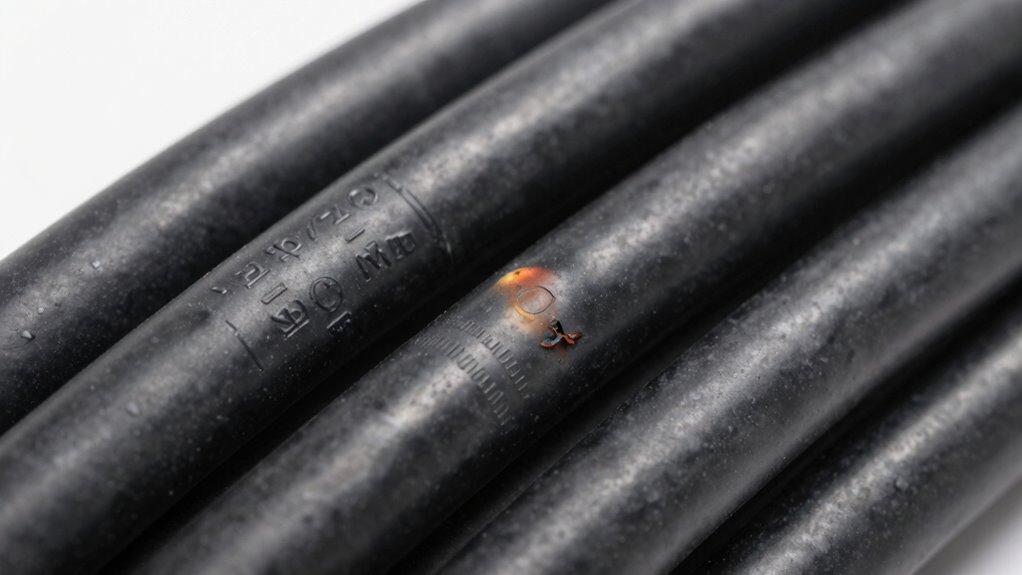
Heat plays a critical role in extension cord safety because excessive warmth can cause the insulation to degrade and increase the risk of electrical fires. When cords overheat, it weakens electrical insulation, making exposed wires more vulnerable to short circuits. Proper grounding techniques help prevent shock hazards, but heat buildup can compromise even grounded cords if they aren’t rated correctly. To guarantee safety, always choose extension cords with appropriate gauge and insulation quality for your load. Overheating not only damages the insulation but can also lead to melting or fires, especially if the insulation is compromised. Monitoring heat and avoiding prolonged high-current use protect both your cord and your environment. Understanding how heat affects extension cords is essential for safe operation and long-term durability.
Performing the Heat Test: Step-by-Step Guide
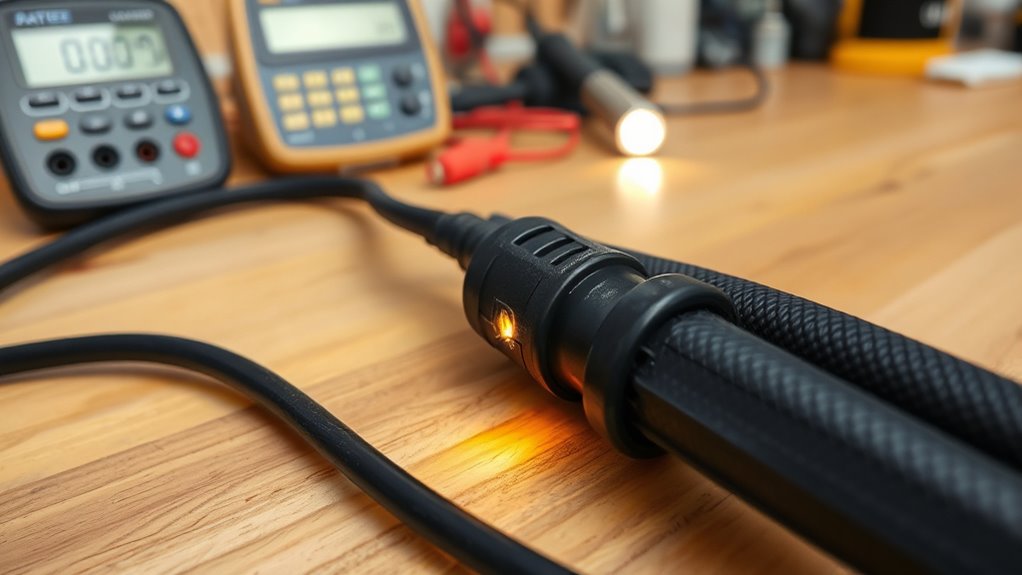
Performing the heat test is an essential step to guarantee your extension cord can safely handle current loads. To do this, follow these steps:
Perform a heat test to ensure your extension cord safely handles current loads.
- Plug in the extension cord and connect a device that draws a moderate current, considering the wire gauge’s capacity.
- Carefully monitor the cord for any signs of excessive heat after about 15-20 minutes.
- Touch the cord gently to check if it becomes unusually warm or hot, indicating it may be undersized for your needs.
Always remember, a proper heat test helps you determine if the wire gauge is appropriate for your setup. If the cord heats up markedly, it’s a sign to switch to a thicker gauge to prevent hazards.
Interpreting Heat Test Results for Safe Usage
Interpreting the results of your heat test is crucial to guarantee your extension cord’s safe operation. If the cord insulation feels warm or slightly hot, it’s generally acceptable, but if it’s very hot to touch, that indicates potential overload or poor quality. Heat buildup can weaken the insulation, increasing the risk of short circuits. Check the plug compatibility as well—if the plug or outlet gets unusually warm, it suggests poor contact or excessive current flow. Always ensure your cord matches the power demands of your devices. A safe extension cord should maintain a comfortable temperature during use without signs of overheating. Proper interpretation helps prevent electrical hazards and prolongs the lifespan of your cord, ensuring safe, reliable operation every time.
Common Mistakes When Choosing and Testing Extension Cords

Choosing the right extension cord involves understanding its specifications and testing it properly to guarantee safety. Common mistakes include overlooking cord insulation quality, which affects durability and heat resistance, and ignoring plug compatibility, risking poor connections. To avoid these errors:
- Never select a cord with inadequate insulation for your environment, as it can lead to overheating.
- Always check that the plug fits your outlets properly; incompatible plugs can cause sparks and damage.
- Avoid testing cords by plugging in devices without inspecting their gauge and insulation ratings, which can result in unsafe conditions.
Tips for Ensuring Safe and Efficient Power Delivery
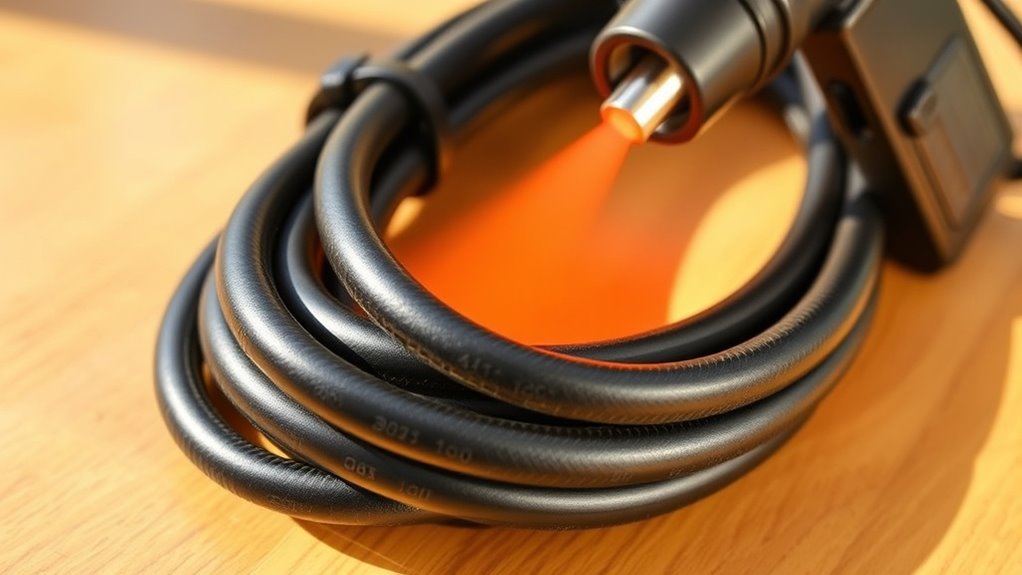
To guarantee safe and efficient power delivery through your extension cord, it’s essential to select the right gauge for your needs and maintain proper usage practices. Confirm the cord’s insulation is intact, preventing exposure to moisture or damage that could cause shorts or shocks. Always check plug compatibility; using the correct plug type ensures a secure connection and reduces risk. Avoid overloading cords beyond their rated capacity, which can cause overheating and fire hazards. Keep cords away from high-traffic areas to prevent damage or tripping. Properly store cords when not in use to prolong insulation integrity. Regularly inspect for wear or damage, replacing cords that show signs of deterioration. Following these tips helps maintain safe, reliable, and efficient power delivery.
Frequently Asked Questions
How Often Should I Perform the Heat Test on My Extension Cord?
You should perform the heat test on your extension cord during regular safety inspections, ideally every few months or whenever you notice signs of wear. This cord maintenance helps prevent overheating and electrical hazards. During the test, check for excessive heat after use, especially under load. Regularly inspecting your extension cords guarantees they remain safe and functional, reducing fire risks and prolonging their lifespan.
Can a Cord’s Gauge Change Over Time or With Use?
No, a cord’s gauge doesn’t change over time or with use. However, gauge deterioration can occur if the cord gets damaged or wears out, impacting its ability to handle current safely. Heavy or frequent usage can degrade insulation and connectors, making the cord less reliable. Always inspect your extension cord regularly for signs of wear or damage, and replace it if you notice any issues to guarantee safety and performance.
Are There Specific Brands Known for Safer Extension Cords?
Think of brands like UL or ETL as your safety guides, much like trusted friends in the dark. You’ll want extension cords with strong brand reputation and clear product certification to guarantee safety. Brands such as Southwire, Iron Forge, and Coleman often meet these standards. Always check for proper certification labels, and avoid off-brand cords, which may lack quality control and increase risks, especially when you’re using high-power devices.
What’s the Ideal Temperature Range for Extension Cord Safety?
You should aim for extension cords that stay below 140°F (60°C) to guarantee safety. Wire gauge standards help determine the appropriate cord for your needs, but monitoring temperature thresholds is vital. If a cord feels hot to touch or exceeds this range, it’s unsafe. Always choose cords with proper insulation and rated for your device’s power requirements, and avoid overloading to prevent overheating and potential hazards.
How Does Ambient Temperature Affect Heat Test Results?
Ambient temperature substantially impacts heat test results because higher temperatures reduce heat dissipation, making cords more prone to overheating. Conversely, cooler environments enhance heat dissipation, helping prevent excessive heat buildup. When testing extension cords, consider the ambient temperature as it influences how well the cord manages heat. You should perform tests in consistent conditions to accurately assess safety, ensuring your cords stay cool and safe during use.
Conclusion
Remember, knowing the gauge, performing the heat test, and understanding safety tips keeps you confident and protected. Choose wisely, test regularly, and stay alert to avoid overheating, overloads, and hazards. Keep your cords safe, keep your devices powered, and keep your home secure. By staying informed and proactive, you guarantee your extension cords serve you well—efficiently, safely, and reliably. Your safety depends on it, so stay vigilant, stay prepared, and stay protected.