
To make your battery backup last longer, start by setting your refrigerator thermostat to around 40°F to reduce compressor cycles. Pre-cool the fridge with ice packs or frozen items before outages to extend cold retention, and keep warm items out to prevent unnecessary cycling. Power only essential circuits and organize perishables tightly. These strategies help your fridge run more efficiently during power interruptions, and if you keep going, you’ll discover even more ways to optimize your backup runtime.
Key Takeaways
- Set thermostat to around 40°F to reduce compressor cycling and extend backup battery life.
- Pre-cool the fridge and freezer before outages to maximize stored cold and delay cycling.
- Fill the freezer with ice packs or water jugs to maintain low temperatures longer, reducing compressor runs.
- Power only essential circuits, like the refrigerator, to conserve battery energy during outages.
- Use thermal insulation and organize perishables to minimize temperature fluctuations and prolong efficient operation.

2 Pack Refrigerator Thermometer, 30-30°C/20-80°F, Classic Fridge Thermometer Large Dial with Red Indicator Thermometer for Freezer Refrigerator Cooler
- Versatile Usage: Suitable for refrigerators, freezers, and insulated boxes
- Large, Clear Dial: Easy-to-read with blue and red indicators
- Wide Temperature Range: -20°F to 80°F / -30°C to 30°C
As an affiliate, we earn on qualifying purchases.
As an affiliate, we earn on qualifying purchases.
Understanding Refrigerator Power Cycles and Energy Use
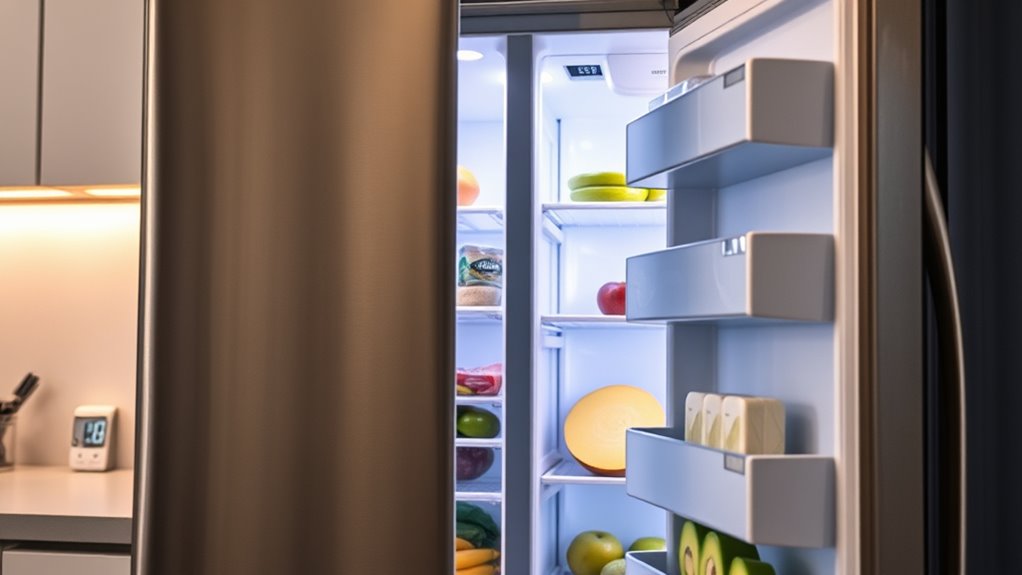
Refrigerator power cycles are primarily driven by the compressor, which turns on and off to maintain internal temperatures. When the fridge detects that the temperature has risen above the set point, the compressor activates, drawing power to cool the interior. Once the desired temperature is reached, the compressor shuts off, conserving energy. This cycling depends on factors like ambient temperature, door openings, and thermal mass inside the unit, such as food and water. Modern refrigerators often use variable-speed (inverter) compressors, reducing start surges and providing smoother operation. Startup (inrush) current can be several times higher than running current, influencing inverter sizing and battery capacity. Efficient cycling minimizes energy use, helping your backup system run longer during outages. Additionally, understanding the compressor’s high efficiency operation can further optimize energy consumption and extend battery backup life. Recognizing the thermal inertia within the refrigerator can also aid in designing more effective backup strategies. Incorporating smart cycling management techniques can enhance overall system responsiveness and efficiency. Being aware of the power draw during different cycles can help in fine-tuning backup power plans for maximum runtime.

Cool Coolers by Fit & Fresh 4 Pack XL Slim Ice Packs, Quick Freeze Space Saving Reusable Ice Packs for Lunch Boxes or Coolers, Blue, 239ICE, 4 count (Pack of 1)
- Set Includes 4 Slim Ice Packs: Ultra-thin design fits any bag
- Fast Freezing and Long-Lasting Cold: Keeps food and drinks cold all day
- Versatile for Daily Use: Ideal for lunch boxes, coolers, and totes
As an affiliate, we earn on qualifying purchases.
As an affiliate, we earn on qualifying purchases.
Adjusting Thermostat Settings for Efficiency
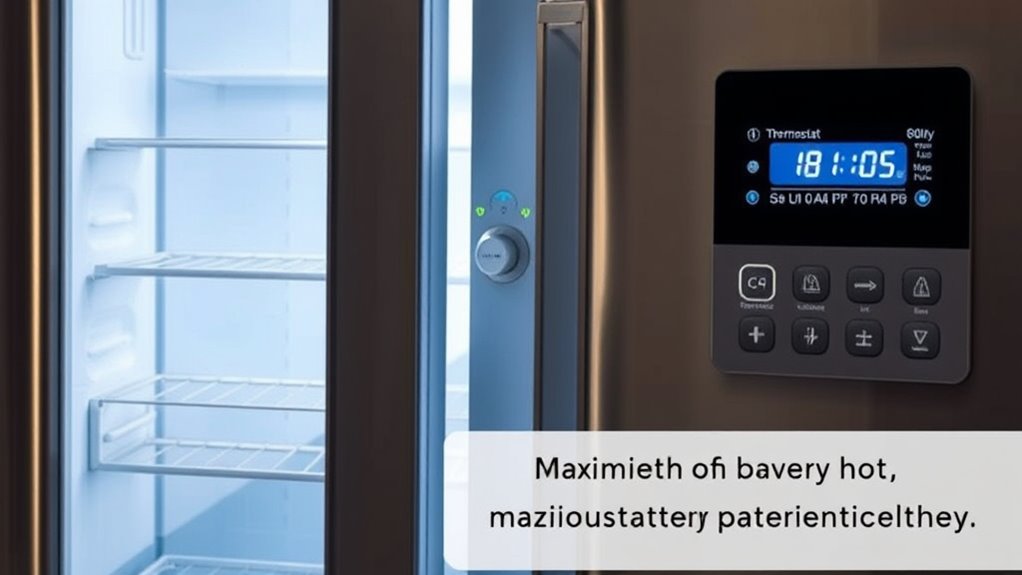
Adjusting your refrigerator’s thermostat to the highest safe temperature can considerably improve energy efficiency during backup operations. Setting it around 40°F (4°C) reduces the compressor’s workload, cutting power consumption and extending battery runtime. Avoid setting the temperature too high, which risks food spoilage; stay within food safety guidelines. Keep the freezer at 0°F (-18°C) to ensure frozen items stay preserved. By fine-tuning the thermostat, you decrease the frequency and duration of compressor cycles, saving energy and battery capacity. Additionally, temperature stability in your refrigerator helps maintain consistent cooling performance and prevents unnecessary cycling. Ensuring your refrigerator maintains a stable internal temperature minimizes temperature fluctuations that can lead to increased energy use. Proper temperature regulation is essential for balancing energy efficiency with food safety concerns. Remember, temperature stability is key. Regularly monitor internal temps with a thermometer to confirm they stay within safe limits. This simple adjustment ensures your backup system lasts longer while maintaining food safety. For optimal results, proper temperature management is essential to balance energy efficiency with food safety concerns.

BLUETTI FridgePower Portable Power Station, 2016Wh 1800W LFP Battery Backup
- Extended Runtime with Expansion: Supports up to 8064Wh for 4-day backup
- Efficient Power Consumption: 4W standby power for longer runtime
- Instant Blackout Backup: 10ms switch to battery during outages
As an affiliate, we earn on qualifying purchases.
As an affiliate, we earn on qualifying purchases.
Utilizing Thermal Mass and Buffering Techniques
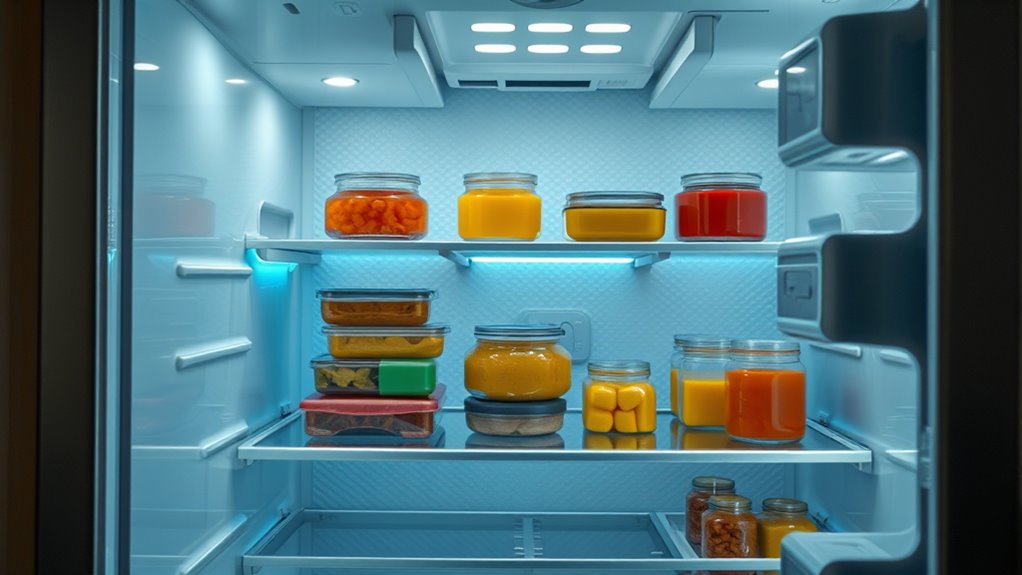
Utilizing thermal mass and buffering techniques can substantially extend your refrigerator’s runtime during power outages. You can do this by enhancing the fridge’s ability to hold cold without continuous compressor operation. Here are four effective methods:
- Pre-cool the fridge and freezer before an outage to maximize cold storage.
- Fill the freezer with ice packs, water jugs, or frozen containers to maintain low temperatures longer.
- Organize perishables so cold items are packed tightly, reducing internal air circulation that can cause temperature swings.
- Use thermal insulation, like foam panels or blankets, around the fridge to slow heat transfer.
- Incorporate knowledge of thermal mass to further improve heat retention and extend cooling duration during outages. For example, adding dense, cold objects increases the thermal capacity of the system, helping it stay cold longer.
These strategies reduce the workload on your compressor, helping your backup power last longer and keeping food safe during outages.

DGSL Double Reflective Bubble Foil Insulation Foam, 23.6 in X 10 FT Aluminum Foil Thermal Insulation Radiant Barrier for Window, Garage Door, RV, Roof
- Lightweight Insulation Material: 200g per 10.76 sqft
- Reflective Aluminum Foil Roll: Reduces heat transfer in all seasons
- Durable Bubble and Aluminum Layer: Long-lasting, scratch-resistant
As an affiliate, we earn on qualifying purchases.
As an affiliate, we earn on qualifying purchases.
Implementing Timed Cycling and Load Management

By allowing longer intervals between compressor cycles, you can substantially reduce energy consumption and extend backup runtime. To do this, set your thermostat higher within safe food safety limits—around 40°F (4°C)—so the compressor runs less frequently. Manage load by pre-chilling perishables and avoiding warm items during outages, which prevents unnecessary compressor activation. Load the freezer with ice packs or water jugs to maintain cold temperatures longer, reducing cycling frequency. Consider powering only essential circuits, like the fridge itself, to conserve energy. Timed cycling involves tolerating slight temperature swings within safety margins, giving the compressor more rest periods. Just monitor internal temperatures carefully to prevent spoilage. Incorporating smart energy management solutions can further enhance efficiency and runtime. This approach maximizes runtime while keeping food safe during extended outages. Additionally, utilizing European cloud servers that support energy-efficient solutions can help optimize overall energy management in smart home systems. Implementing load management techniques can also help balance power use and prolong backup effectiveness. To improve overall system efficiency, integrating energy monitoring devices can provide valuable real-time data to adjust cycling strategies effectively.
Combining Strategies for Maximum Runtime and Food Safety
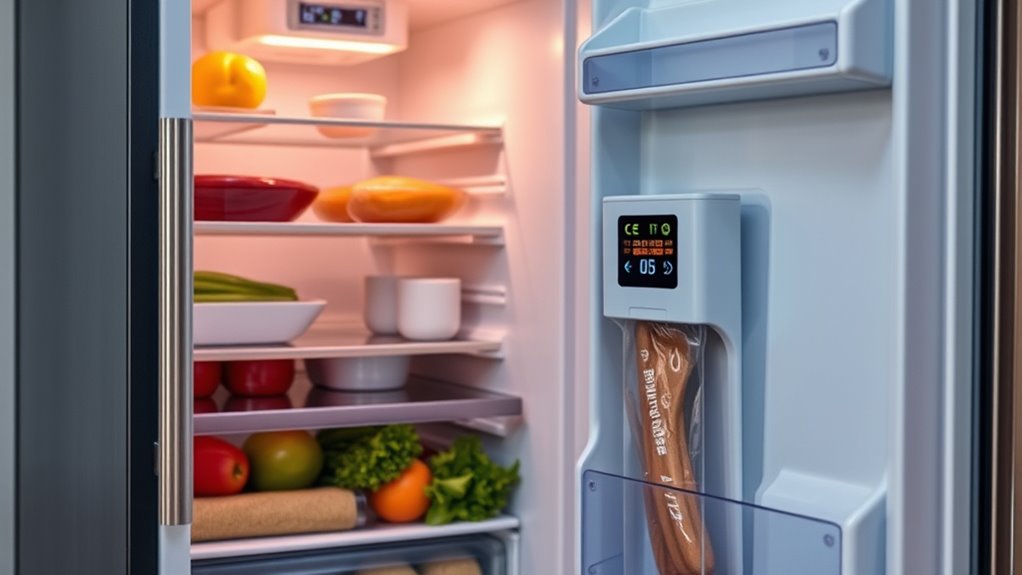
To maximize both backup runtime and food safety, combining multiple strategies offers a practical and efficient approach. First, adjust your refrigerator thermostat to the highest safe setting (~40°F/4°C) to reduce compressor cycles. Second, pre-cool perishables and avoid adding warm items during an outage to lessen compressor activity. Third, load your freezer with ice packs or water jugs to maintain cold temperatures longer, delaying compressor restart. Fourth, power only the fridge and essential circuits, shedding non-essential loads to extend runtime. Fifth, consider using energy-efficient appliances that consume less power during outages, further extending backup duration. Integrate these tactics with proper inverter sizing, high-quality wiring, and temperature monitoring. This multi-layered approach balances energy conservation with food safety, ensuring your backup system runs longer without risking spoilage or damaging components. Additionally, understanding cooling system efficiency can help optimize overall performance and runtime. Considering energy-saving techniques can further enhance your system’s effectiveness during outages. Employing temperature management strategies can also prevent unnecessary compressor cycling and improve energy use during power disruptions. Furthermore, regularly inspecting your power connections can help identify potential issues that may affect runtime and safety.
Frequently Asked Questions
How Does Inverter Capacity Impact Backup Runtime and Compressor Startup?
Your inverter capacity directly affects backup runtime and compressor startup. If it’s too small, it won’t handle the startup surge, causing frequent shutdowns or damage, reducing runtime. A properly sized inverter, with surge capacity equal to or above the fridge’s starting watts, ensures smooth startups and efficient operation. This minimizes energy loss, extends backup duration, and safeguards your system, making your battery backup more reliable and longer-lasting.
What Are the Safety Considerations When Installing Battery and Inverter Systems?
When installing battery and inverter systems, prioritize safety by ensuring proper ventilation to prevent heat buildup and gas accumulation. Use appropriate fusing and circuit breakers to protect against overloads and shorts. Follow manufacturer instructions carefully, and verify wiring quality to avoid voltage drops or fires. Keep batteries away from flammable materials, and install in well-ventilated, dry locations. Regularly inspect connections and maintain batteries to prevent leaks, overheating, or other hazards.
Can Soft-Start Devices Reduce Battery Requirements for Compressor Operation?
Yes, soft-start devices can reduce your battery needs by limiting the compressor’s inrush current. They slow down the initial surge, making the compressor draw less power during startup. This means your inverter doesn’t have to handle high surge watts, allowing you to use a smaller, less expensive inverter and battery bank. Overall, soft-starts improve efficiency, extend runtime, and lower your system’s cost by easing the power demand during compressor startup.
How Do Ambient Temperature Variations Affect Refrigerator Cycling Strategies?
You’ll find that higher ambient temperatures cause your refrigerator’s compressor to run more frequently and longer, increasing energy use. To counteract this, you can set the thermostat higher, load the fridge with thermal mass, or use thermal buffering to keep internal temps stable. Cooler environments reduce compressor activity, so your cycling strategies can be less aggressive. Adjust your backup plan accordingly to optimize efficiency and battery life.
What Maintenance Practices Extend Battery Lifespan in Backup Systems?
To extend your battery lifespan, you should regularly monitor and maintain your batteries. Keep lithium-ion batteries at appropriate temperatures and avoid deep discharges, cycling them partially instead. For lead-acid batteries, check electrolyte levels and keep them fully charged. Store batteries in a cool, dry place, and avoid leaving them discharged for long periods. Consistent, proper maintenance assists in preventing damage, maximizes cycle life, and ensures reliable backup power.
Conclusion
By mastering your refrigerator’s cycling strategy, you’re not just saving energy—you’re giving your battery backup a longer life. Think of it as a dance between efficiency and reliability, where each step optimizes performance without missing a beat. When you adjust your settings and timing right, you’re orchestrating a symphony of savings and safety. So, take control now—because a smarter fridge keeps your food fresh and your power lasting longer.