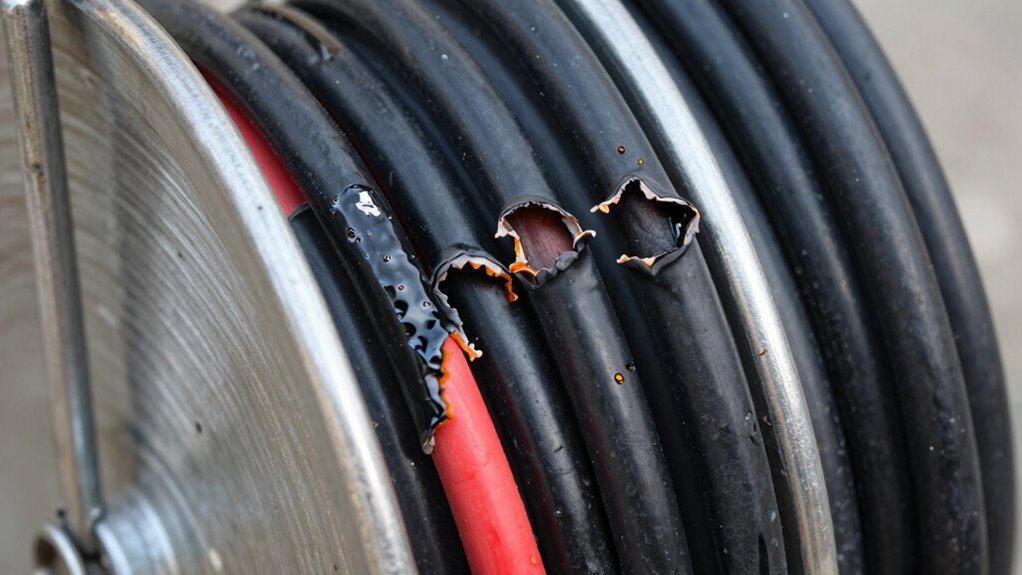

Leaving cord reels coiled during use traps heat inside, causing the internal temperature to rise due to electrical resistance, magnetic effects, and poor airflow. This heat softens or melts the insulation, especially if the cord is overused or overloaded, leading to damage and safety hazards. Proper unwinding and heat management help prevent insulation failure. To understand how coil design and safety practices protect your cords, keep exploring these important points.
Key Takeaways
- Coiling cords traps heat, causing internal temperatures to rise and softening insulation materials like PVC or rubber.
- Tight coils restrict airflow, preventing heat dissipation and increasing the risk of insulation melting over time.
- Prolonged heat buildup accelerates insulation degradation, leading to softening, cracking, or melting of protective layers.
- Insufficient cooling in coiled cords causes heat to accumulate, raising core temperatures above safe thresholds.
- Leaving cords tightly wound under load can cause inductive heating and material breakdown, risking insulation failure.

SURAIELEC 50 FT Retractable Extension Cord Reel, 12AWG Heavy Duty Power Cord with Handle Rewind, 4 Grounded Outlets, USB-A & USB-C Ports, 15A Circuit Breaker, ETL Listed for Garage, Jobsite, Camping
Power Anywhere with Tangle-Free Cord: Bring reliable power to your work area with 4 outlets on a 50FT…
As an affiliate, we earn on qualifying purchases.
As an affiliate, we earn on qualifying purchases.
How Electrical Resistance Causes Heat in Coiled Cables

Electrical resistance in coiled cables directly causes heat generation when current flows through them. As electricity passes, the conductor’s resistance converts electrical energy into thermal energy, producing heat. The more resistance a wire has, the more heat it generates under load. When cables are tightly wound in a coil, internal resistance causes localized heating, especially in inner turns where airflow is limited. This resistance-related heat increase is proportional to the square of the current (I²R), meaning higher currents profoundly raise temperatures. Over time, repeated heating cycles degrade insulation and reduce the cable’s capacity to dissipate heat. Consequently, the coil’s internal resistance becomes a critical factor in heat buildup, making it essential to understand and manage resistance to prevent insulation damage and potential hazards. Additionally, thermal management techniques can help mitigate heat accumulation and prolong cable lifespan. Proper spacing and ventilation are also crucial to ensure adequate cooling and prevent overheating. Regular inspection and avoiding excessive coiling tightness are important practices to minimize localized heating effects, as cable design can influence how heat is distributed and dissipated.

Heavy Duty Double Welding Cable Reel, Welding Reels for Leads, Black Double Side Swivel Base 10" Reel, Suitable for use with 150 ft of 1/0 Cable and 125 ft of 2/0 Cable, 6-Yr Service.
Materials Used: Heavy duty double welding cable Reel is made of industrial grade carbon steel to withstand the…
As an affiliate, we earn on qualifying purchases.
As an affiliate, we earn on qualifying purchases.
The Impact of Winding Patterns on Heat Dissipation
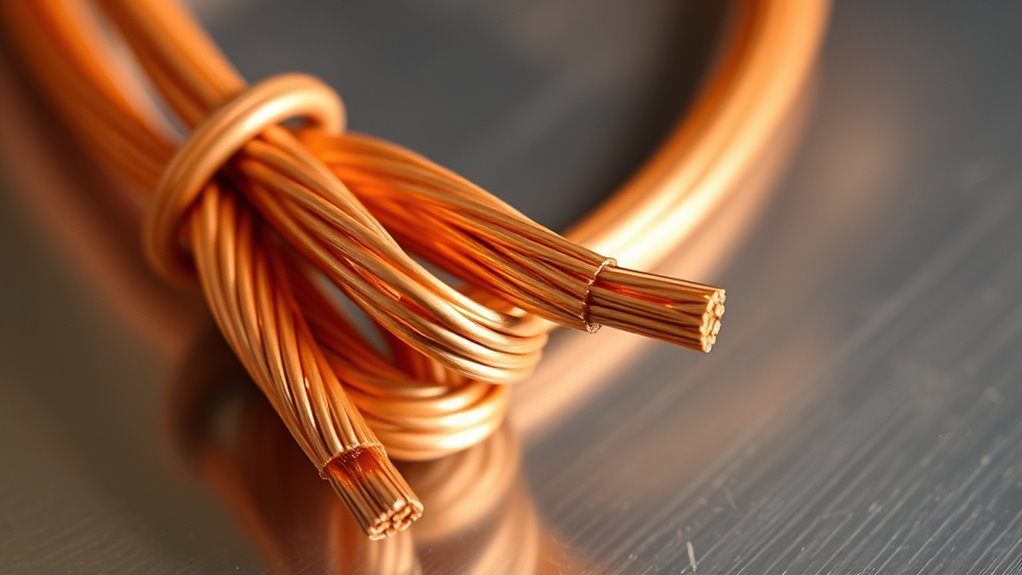
Winding patterns directly influence how well a cord reel disperses heat during use. When you wind a cable tightly in uniform layers, airflow between the turns is limited, trapping heat and raising internal temperatures. Loose or uneven winding allows better air circulation, helping cool the conductors more effectively. Spiral or crisscross patterns prevent heat buildup by avoiding uniform layering, which can create hot spots. Proper winding ensures that heat generated from electrical resistance disperses quickly, reducing the risk of insulation melting or degradation. Additionally, incorporating thermal management techniques into the design of winding patterns can further enhance heat dissipation. Conversely, tight, repetitive coils restrict cooling, increasing local temperatures and accelerating insulation breakdown. Always wind your reel with some space between turns and avoid overly tight coils to promote better heat dissipation and prolong the reel’s lifespan.

Bayco KW-130 Cord Storage Reel with Center Spin Handle, 150-Feet
Electric cord reels made of high-quality impact-resistant plastic materials, lightweight and durable, and can be exposed to high-intensity…
As an affiliate, we earn on qualifying purchases.
As an affiliate, we earn on qualifying purchases.
Magnetic Effects and Inductive Heating in Coiled Conductors
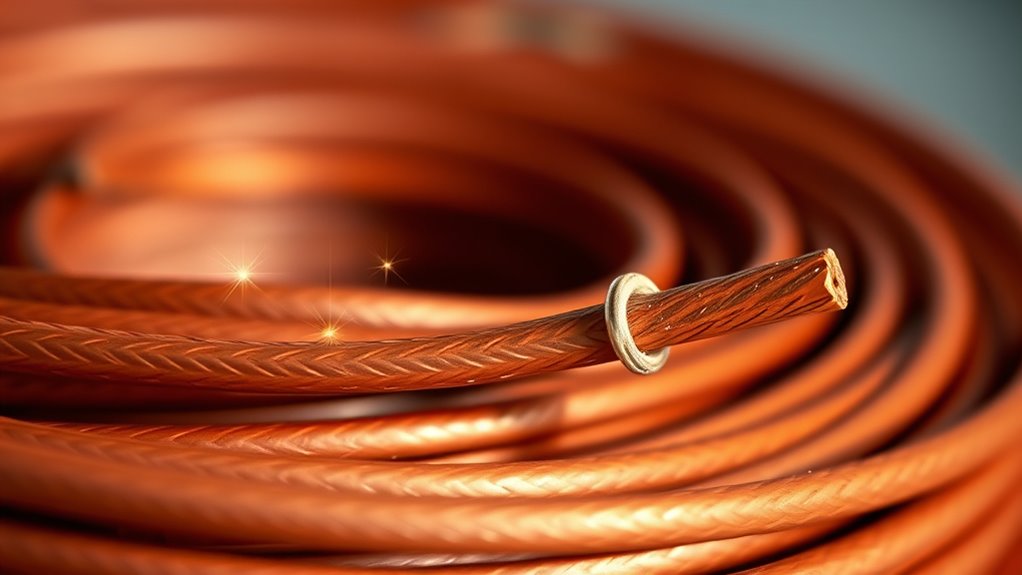
When a cable is coiled tightly, magnetic coupling between adjacent turns can generate heat through inductive effects. As AC flows through the conductor, changing magnetic fields induce eddy currents within neighboring turns. These currents produce additional heat, especially in tightly wound coils where magnetic flux linkage is strong. The resulting heating adds to resistive losses, increasing the internal temperature of the coil. Over time, this inductive heating can raise the insulation’s temperature beyond its safe limit, softening or melting the material. The effect is more pronounced at higher currents and frequencies. Without proper spacing or ventilation, the combination of resistive and inductive heating can cause insulation failure, exposing conductors and risking short circuits or fires. Managing coil design and load levels helps mitigate these magnetic heating effects. Additionally, the horsepower of electric dirt bikes illustrates how electric motors generate significant heat during operation, emphasizing the importance of proper insulation and cooling in all electrical devices. Proper coil design and load management are essential for preventing insulation degradation due to inductive heating. Employing appropriate coil spacing and using thermally resistant materials further helps reduce the risk of insulation failure caused by magnetic heating. Incorporating thermal management strategies is crucial for maintaining coil integrity and safety.

DEWENWILS Retractable Extension Cord Reel, 80FT Heavy Duty Open Cord Reel for Indoor Outdoor, 14/3 AWG SJTW, 4 Grounded Outlets, 13 Amp Circuit Breaker,Handle Rewind, Metal Stand, ETL Listed
[Heavy Duty & Wide Application] Equipped with 80ft durable 14/3 gauge SJTW extension cord, our outdoor extension cord…
As an affiliate, we earn on qualifying purchases.
As an affiliate, we earn on qualifying purchases.
The Risks of Overloading and Prolonged Use of Coiled Reels
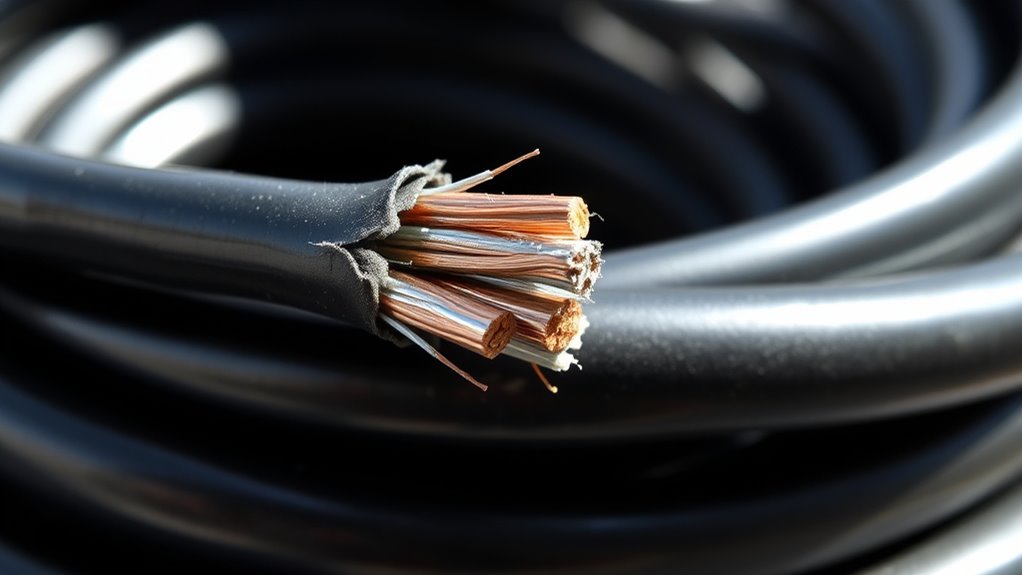
Overloading a coiled reel or using it for extended periods can substantially increase the risk of overheating and insulation failure. When you draw more current than the reel’s rated capacity, resistance in the conductors produces excess heat. Coiling limits airflow, trapping heat between turns and preventing proper cooling. Additionally, the natural heat dissipation of the reel is compromised when coiled, making it more susceptible to damage. Proper cable management ensures heat is effectively dispersed, reducing the likelihood of insulation deterioration. Prolonged use under heavy loads causes internal temperatures to rise, softening or melting insulation materials like PVC or rubber. This damage exposes conductors, risking short circuits, arcing, and fires. Insulation degradation accelerates with repeated heating cycles, reducing its protective properties. Even if the external surface doesn’t feel hot, internal turns can reach dangerous temperatures. Always respect the reel’s rated current, fully unwind before heavy use, and avoid bundling or overloading to prevent insulation damage and potential hazards. Smart home gym equipment and connected devices benefit from proper maintenance to ensure safety and longevity.
Material Limits: How Insulation Softens and Melts Under Heat
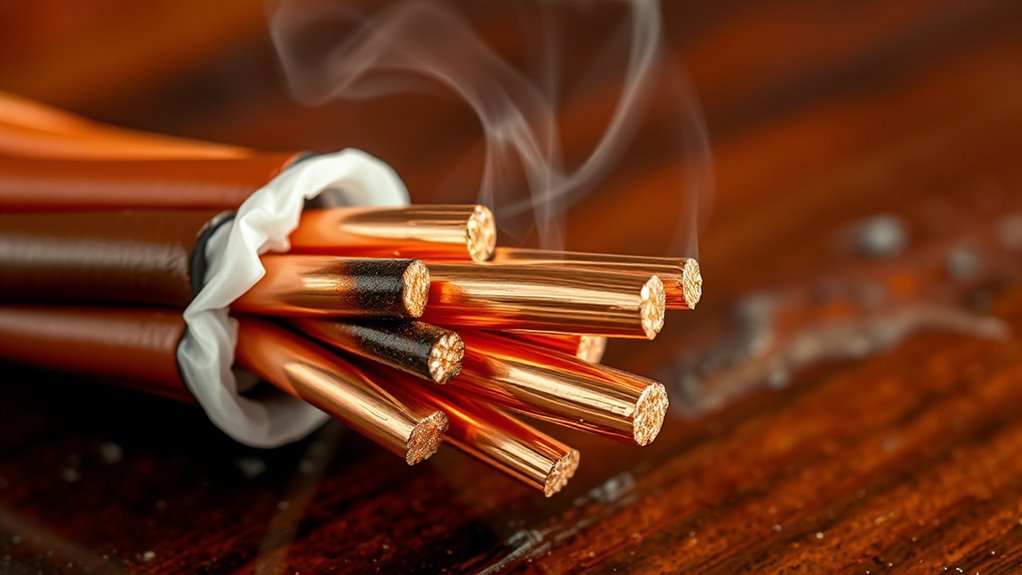
Insulation materials like PVC and rubber have specific temperature limits that, if exceeded, cause them to soften and eventually melt. When a cord heats beyond these thresholds—generally around 56°C for some PVC insulations—the polymer structure begins to lose its rigidity. Softening reduces mechanical strength, increasing the risk of insulation deformation and damage. Continued exposure to high heat accelerates polymer oxidation, causing embrittlement and deterioration over time. When insulation melts, conductors can become exposed, creating short circuits and electrical hazards. Heat also accelerates chemical breakdown, releasing toxic fumes and residues. Understanding material limits in insulation helps prevent damage and ensures electrical safety. In tightly coiled cords, internal temperatures can rise considerably higher than surface temperatures, making insulation failure more likely. Recognizing these material limits helps prevent insulation damage and ensures electrical safety. Proper storage practices help manage heat buildup and extend the lifespan of cords. Additionally, awareness of heat dissipation techniques can further reduce risks associated with coiled cords.
Internal vs. External Temperature: Why the Core Gets Hotter
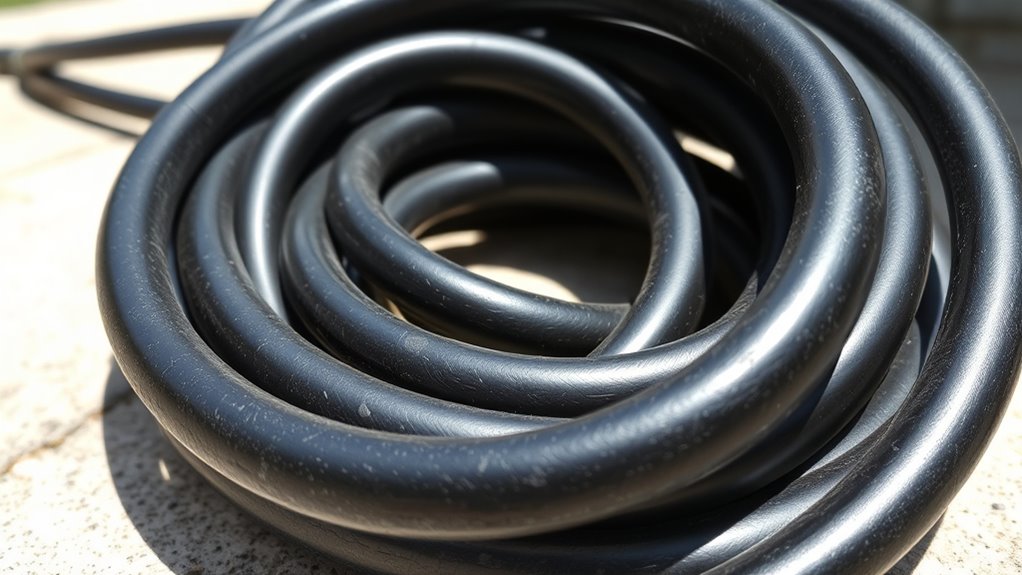
The core of a coiled extension cord heats up more than its outer surface because heat generated by electrical resistance and magnetic effects is trapped inside the tightly wound turns. When current flows through the conductors, resistance causes I²R heating, which builds up internally. The layered winding limits airflow, preventing heat dissipation and causing temperatures to rise inside the coil. Additionally, magnetic coupling between adjacent turns produces eddy currents and inductive heating, further escalating internal temperatures. Since the heat can’t escape easily, the core becomes considerably hotter than the outer surface. This internal heat buildup can soften insulation and degrade materials faster, increasing the risk of melting and damage. That’s why the core often reaches higher temperatures than what you see externally. Understanding the material properties helps explain how insulation can break down under prolonged heat exposure.
The heat retention caused by the coil’s design also means that once heated, the internal temperature can stay elevated longer, compounding the risk of damage over time.
Safety Standards and Best Practices for Using Cord Reels
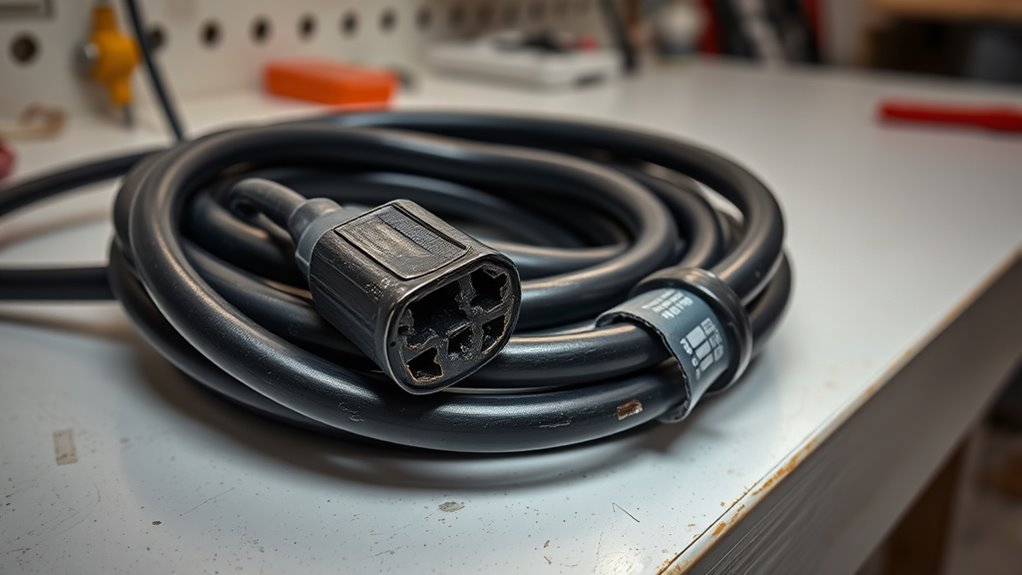
To guarantee safe use of your cord reel, always follow proper unwinding procedures to prevent overheating and insulation damage. Make sure you’re using a reel rated for your specific load and continuously inspect it for signs of wear or damage. Regularly checking for potential scams associated with purchasing quality equipment can help you avoid counterfeit or substandard products that may compromise safety. Being aware of product authenticity and verifying sellers can further reduce risks. When selecting equipment, consider appropriate cable ratings to ensure safety standards are met. Proper storage and handling also play a crucial role in maintaining the integrity of your cord reel and ensuring ongoing safety. Adhering to these best practices helps minimize risks and keeps your workspace safe. Additionally, regularly check for wear and tear to ensure your equipment remains reliable and compliant.
Proper Unwinding Procedures
When using cord reels, it’s essential to fully unwind the cable before applying a load, as coiled or partially wound cords trap heat and can lead to overheating. Keeping the cord fully extended allows air to circulate around the conductors, helping dissipate heat and prevent insulation damage. Failing to unwind properly increases the risk of localized heating, which can soften or melt insulation. To guarantee safety, follow these best practices:
- Always unwind the entire length before use
- Avoid twisting or knotting the cord during unwinding
- Do not coil the cable tightly while under load
- Use reels rated for continuous unwinding if needed
- Inspect the reel and cable for damage before use
- Proper unwinding techniques reduce heat buildup and help maintain insulation integrity. Proper unwinding also ensures compliance with safety standards and reduces the risk of electrical hazards.
Correct Reel Ratings Use
Using the correct reel ratings is key to preventing overheating and insulation damage during operation. Always check the reel’s maximum amperage and wattage ratings, ensuring your load doesn’t exceed them. Use reels designed for continuous duty if your application demands extended use, and select appropriately gauged cables to reduce resistance and heat buildup. Fully unwinding the reel before use allows cooling and prevents heat trapping that can cause insulation softening or melting. Follow manufacturer instructions carefully, especially regarding load limits and proper handling. Replace reels with signs of damage, melting, or deformation immediately, and don’t attempt repairs on compromised insulation. Using rated reels properly helps avoid dangerous overheating, insulation failure, and potential fires, keeping your workspace safe.
Regular Inspection Practices
Regular inspection of your cord reels is essential to guarantee safe operation and prevent potential hazards. You should routinely check for signs of damage, wear, or heat damage that compromise insulation integrity. Look for melted, cracked, or deformed insulation, and verify that the reel fully unwinds without resistance. Conduct insulation resistance tests if necessary, and ensure connectors are intact. Keep an eye on internal components for corrosion or corrosion-related resistance increases. Regular inspections help identify issues before they cause failures or fires.
- Check for melted or cracked insulation
- Ensure the reel unwinds smoothly
- Test for proper insulation resistance
- Inspect connectors and terminals for corrosion
- Replace damaged reels immediately
Recognizing Signs of Damage and Preventing Insulation Failure
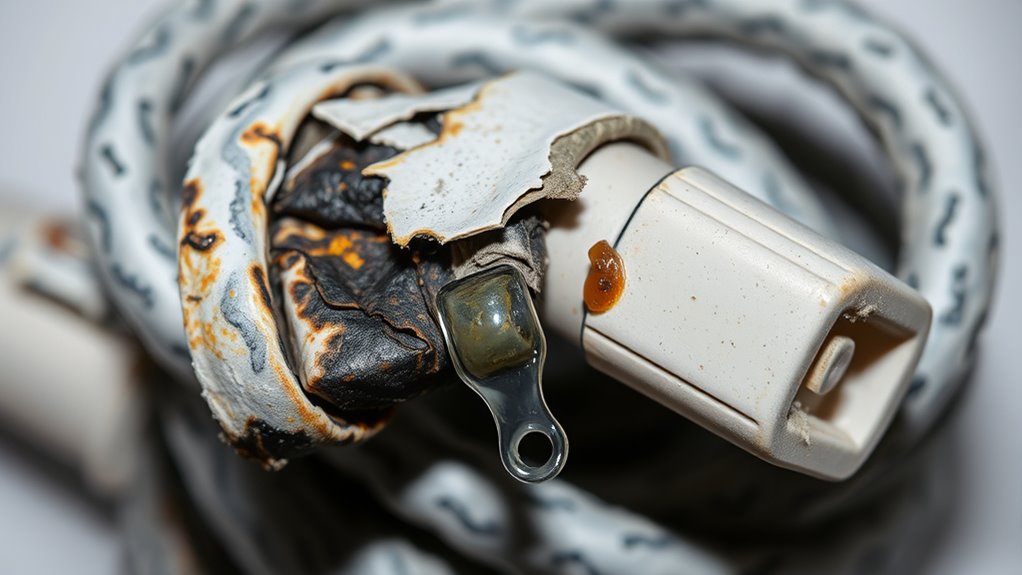
You should regularly check your cord reel for visible insulation damage like cracks, melting, or deformation. Unusual smells or haze around the reel are signs that insulation may be overheating or breaking down. Performing routine inspections helps catch issues early and prevents insulation failure that could lead to shorts or fires.
Visible Insulation Damage Signs
Visible signs of insulation damage are critical indicators that a cord reel may be unsafe to use and could fail unexpectedly. You should regularly inspect your reels for these warning signs to prevent electrical hazards. Look for:
- Cracks or cuts in the insulation surface
- Melting or softening areas, especially near connectors
- Discoloration or burn marks indicating heat exposure
- Loose or frayed insulation fibers
- Deformation, such as bulging or warping of the reel casing
These signs suggest insulation has been compromised, increasing the risk of short circuits, arcing, or electrical fires. Ignoring visible damage can lead to insulation failure during use, resulting in serious safety hazards. Always replace reels that show any of these signs and avoid using damaged equipment.
Unusual Smells or Haze
Unusual smells or haze emanating from a cord reel are clear warning signs that insulation may be degrading or has already failed. A burning plastic or chemical odor indicates that insulation material is softening or melting due to excessive heat. Similarly, haze or smoke suggests that the insulation’s polymer components are breaking down, releasing fumes. These signs often result from internal overheating caused by overloading, poor ventilation, or prolonged use while tightly wound. Ignoring these cues can lead to further damage, short circuits, or fires. If you notice any strange odors or hazy emissions, stop using the reel immediately. Ventilate the area, inspect the reel for visible damage, and replace it if necessary. Addressing these warning signs promptly helps prevent insulation failure and potential hazards.
Regular Inspection Practices
Regular inspections of cord reels help catch insulation damage before it leads to safety hazards. You should routinely examine your reel for signs of wear, melting, or cracking. Pay special attention to areas near the connections and coil turns, where heat damage often begins. Look for discoloration, deformation, or softened insulation. Additionally, check for:
- Frayed or exposed conductors
- Cracks or tears in the outer casing
- Signs of melting or bubbling
- Discoloration or burn marks
- Loose or damaged connectors
Perform these inspections after each use, especially if the reel has been heavily loaded or stored in hot conditions. Promptly replacing or repairing damaged reels prevents insulation failure, reducing the risk of short circuits, fires, or electrical shocks. Regular checks are essential for safe, reliable operation.
Frequently Asked Questions
How Quickly Can Insulation Melt When a Reel Remains Coiled Under Load?
Insulation can start melting within minutes if you leave a reel coiled under load, especially at high currents. As the reel heats up, internal temperatures can easily exceed 56°C, causing softening and melting of the insulation. Continuous use, poor ventilation, and tight winding accelerate this process. To prevent damage, always fully unwind reels when under load and avoid bundling or overloading them, ensuring proper cooling and safety.
Are There Specific Reel Designs That Reduce Heat Buildup During Prolonged Use?
You should look for reels with built-in ventilation or designed with open winding patterns that promote airflow. Reels featuring high-quality, heat-resistant insulation materials and rated for continuous duty also help reduce heat buildup. Additionally, reels with thermal protection devices and proper gauge wiring ensure safer, cooler operation during prolonged use. Always choose a reel suited for your workload, and fully unwind it to allow heat dissipation and prevent insulation damage.
Can Ambient Temperature or Humidity Influence Insulation Degradation in Coiled Cords?
Sure, ambient temperature and humidity do affect insulation degradation, but they’re usually secondary to overloading and improper coil use. Hotter environments accelerate polymer breakdown, softening insulation and increasing melting risk. High humidity can lead to condensation inside the reel, promoting corrosion and insulation deterioration over time. To stay safe, store cords in cool, dry places, and always follow manufacturer guidelines for use and storage—these measures help prevent insulation damage regardless of climate.
What Role Do Connectors and Fittings Play in Insulation Failure When Coiled?
Connectors and fittings can contribute to insulation failure when coiled because poorly fitted or damaged connectors increase electrical resistance, causing localized heating. Loose or corroded connections may spark or produce hot spots, softening insulation over time. Additionally, inadequate insulation around fittings can trap heat, accelerating insulation breakdown. Always guarantee connectors are properly rated, secure, and free from corrosion to prevent these issues and extend the lifespan of your cable.
How Does Repeated Coil Heating Affect Long-Term Insulation Integrity?
They say “heat is the enemy of durability,” and repeated coil heating confirms that. Over time, consistent high temperatures soften and embrittle your insulation, making it more prone to cracks, tears, or melting. As insulation degrades, it loses its protective qualities, increasing risks of short circuits or electrical failures. Regularly overheating coils accelerate chemical breakdown, reducing insulation lifespan and risking long-term damage that could compromise your safety and equipment.
Conclusion
Just like Icarus flew too close to the sun, leaving your cord coiled can cause it to overheat and melt. By understanding how heat builds up in coils, you can prevent insulation failure and keep your workspace safe. Remember, careful use and proper storage aren’t just good habits—they’re your shield against hidden dangers. Stay vigilant, and don’t let your tools become a modern-day myth of caution ignored.