
Storing batteries in a garage exposes them to heat risks that can speed up degradation or cause fires. Elevated temperatures trigger chemical reactions, swelling, and even thermal runaway, which is hard to control. To stay safe, keep batteries in cool, well-ventilated indoor spaces away from sunlight and heat sources. Using temperature monitors and proper storage methods helps prevent accidents. If you want to learn how to reduce these risks effectively, here’s what you need to know.
Key Takeaways
- Store batteries in cool, climate-controlled environments away from direct sunlight and heat sources to prevent thermal degradation.
- Use proper ventilation and airflow around batteries to dissipate heat and reduce the risk of thermal runaway.
- Regularly inspect batteries for swelling, damage, or unusual warmth, and handle any signs of overheating immediately.
- Avoid overcharging by using compatible, smart chargers with automatic shutoff to minimize heat buildup during charging.
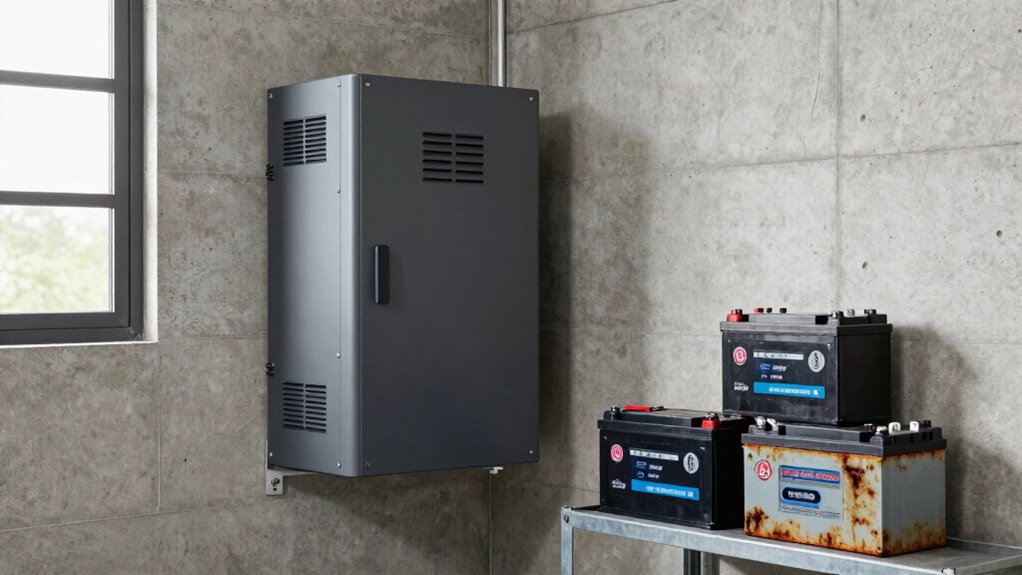
- Consider dedicated storage cabinets designed for batteries with temperature regulation and fire-resistant features for enhanced safety.

Anker SOLIX C1000 Gen 2 Portable Power Station, 2,000W (Peak 3,000W) Solar Generator, Full Charge in 49 Min, 1,024Wh LiFePO4 Battery for Home Backup, Power Outages, and Camping (Optional Solar Panel)
49 Min UltraFast Recharging: With upgraded HyperFlash tech, fully recharge at 1,600W—for outage prepping, camping trips, or tailgating...
As an affiliate, we earn on qualifying purchases.
Understanding Thermal Runaway in Lithium-Ion Batteries
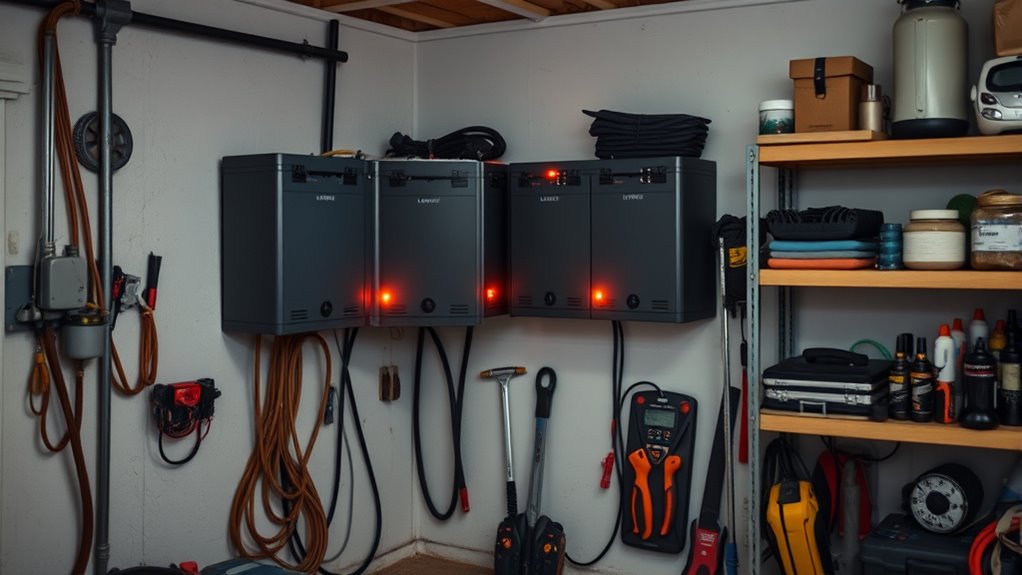
Understanding thermal runaway in lithium-ion batteries is essential because it’s a chain reaction that can quickly lead to fires or explosions. When a battery’s temperature rises beyond a safe point, usually due to high charging currents or external heat, it triggers exothermic reactions inside the cells. This process produces more heat, which accelerates the reaction further, creating a positive feedback loop. If the temperature continues to climb, the electrolyte and other materials decompose, releasing toxic, flammable gases. Additionally, insufficient thermal management in storage environments like garages can exacerbate these risks. Proper ventilation can help dissipate heat and gases, reducing the chance of thermal runaway. High ambient temperatures, like those in garages, lower internal resistance, making it easier for heat to build up faster than it can dissipate. Once thermal runaway starts, controlling or extinguishing the fire becomes extremely challenging, posing serious safety risks. Research into advanced materials and improved battery design are ongoing to develop safer alternatives and better thermal management solutions, potentially reducing these risks in the future.

Jackery Portable Power Station Explorer 300, 293Wh Backup Lithium Battery, Solar Generator for Outdoors Camping Travel Hunting Blackout (Solar Panel Optional)
SPEED UP YOUR RECHARGEABILITY: It takes only 2 hours to recharge 80% battery of the power station through...
As an affiliate, we earn on qualifying purchases.
How Garage Temperatures Accelerate Battery Degradation
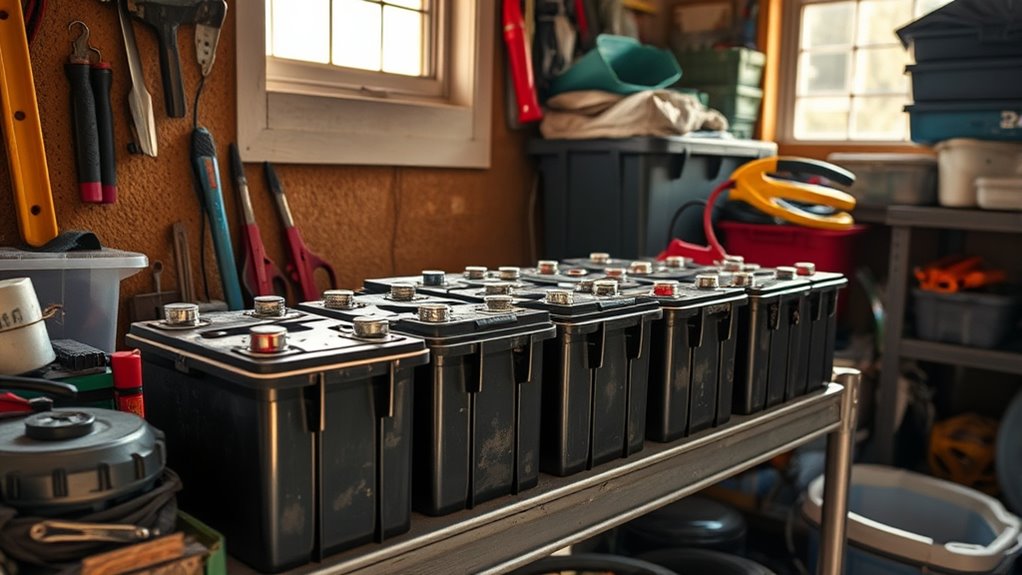
Garage temperatures often rise above ideal levels, speeding up battery aging and reducing lifespan. Sudden temperature swings cause stress on battery cells, leading to irreversible damage. Keeping batteries in stable, cooler environments helps preserve their capacity and safety. Additionally, implementing simple storage strategies can significantly mitigate heat risks and extend battery life. Using proper ventilation can also help dissipate excess heat and maintain a more consistent temperature environment for stored batteries. Creating a biodiversity-friendly storage space by avoiding clutter and ensuring airflow can further enhance safety by reducing the risk of heat buildup. Incorporating natural insulation methods can help stabilize temperature fluctuations and protect batteries from extreme garage conditions. Employing temperature monitoring devices provides real-time data to maintain optimal storage conditions and prevent overheating.
Elevated Temperatures Accelerate Aging
High temperatures markedly speed up the chemical reactions inside lithium-ion batteries, leading to faster degradation of their key components. This process reduces capacity, shortens lifespan, and increases safety risks. The table below shows how temperature affects battery aging:
| Temperature (°F) | Effect on Capacity | Estimated Lifespan Reduction |
|---|---|---|
| 60 | Prime | Full lifespan |
| 77 | Slight acceleration | 10-15% reduction |
| 95 | Moderate acceleration | 25-30% reduction |
| 113 | Significant aging | 50% or more |
| 140+ | Rapid degradation | Lifespan halved or less |
Keeping batteries in high-heat garages accelerates aging, causing irreversible damage and reducing useful life. Cooler, stable environments help preserve battery health longer. Proper storage conditions are essential to maintain optimal battery performance and safety, as temperature control greatly impacts battery longevity. Additionally, thermal management systems can help mitigate heat buildup and extend battery life, especially in hot climates or poorly ventilated spaces. Implementing heat mitigation strategies is crucial to prevent premature battery failure and ensure safety over time.
Temperature Swings Damage Cells
Frequent temperature swings in garages can cause significant damage to lithium-ion batteries, accelerating their degradation beyond what steady high temperatures do. When temperatures fluctuate rapidly, the internal structure of the battery experiences expansion and contraction, leading to mechanical stress and microcracks in the electrodes. These microcracks reduce the battery’s ability to hold a charge and increase internal resistance, which generates more heat during use. Over time, this cycle worsens, causing irreversible capacity loss and potential safety hazards like thermal runaway. The constant cycling between cold and hot conditions prevents the battery’s chemistry from stabilizing, accelerating aging. To protect your batteries, avoid placing them in environments with extreme or sudden temperature changes, and opt for stable, climate-controlled storage options. Proper storage practices, such as keeping batteries in a stable environment, can significantly prolong their lifespan and safety. Additionally, understanding thermal management techniques can help mitigate heat-related risks and extend battery longevity. Being aware of the heat sensitivity of lithium-ion cells can further guide you in choosing safer storage solutions, especially when combined with proper insulation. Incorporating temperature regulation devices can also help maintain consistent conditions and prevent damaging fluctuations.

BLUETTI Elite 30 V2 Portable Power Station 600W (Power Lifting 1500W), 288Wh LiFePO4 Battery with 10ms UPS, Emergency Backup Power for Home Blackout/Winter Storm, Solar Generator for Camping/Road Trip
[288Wh On-the-Go Power] - Only 9.4 lbs lightweight, carry it anywhere during storms! 288Wh capacity meets daily &...
As an affiliate, we earn on qualifying purchases.
Common Triggers of Battery Abuse and Fire Risks
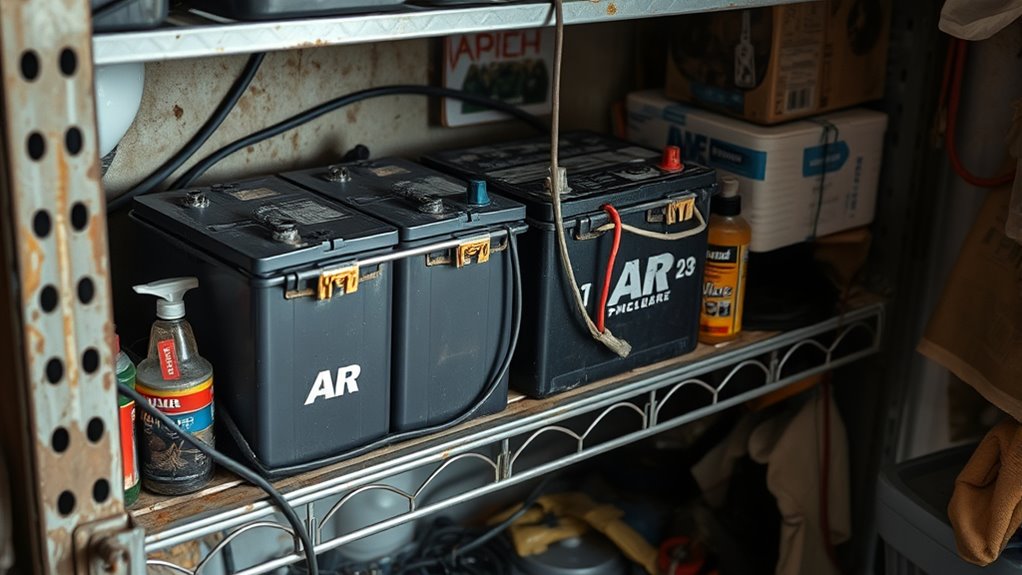
Battery abuse and fire risks often stem from improper handling or environmental conditions that cause excessive heat buildup. Overcharging batteries or using incompatible chargers can generate internal heat, increasing the chance of thermal runaway. Mechanical damage from drops or impacts damages cells, releasing gases and increasing fire risk. In high ambient temperatures, internal resistance drops, allowing more current and causing overheating. Short circuits from faulty wiring or insulation failures can rapidly escalate to fires. Wet or flooded batteries heighten the risk of short circuits, leading to dangerous thermal events. Fast-charging on hot days accelerates electrolyte breakdown and swelling, further raising the risk. Ignoring manufacturer guidelines or neglecting proper maintenance amplifies these dangers, making proper handling and environmental awareness vital to preventing battery abuse and fire hazards. Proper storage conditions are essential for reducing heat-related risks and ensuring safety.

Jackery Solar Generator 1000 v2 with 200W Solar Panel,1070Wh Portable Power Station LiFePO4 Battery,1500W AC/100W USB-C Output, 1Hr Fast Charge for Outdoor,Off-Grid Living,RV,Emergency
Powerful yet Compact: Boasting a 1,500W AC output and a 3,000W surge peak, the Solar Generator 1000 V2...
As an affiliate, we earn on qualifying purchases.
Recognizing the Signs of Battery Thermal Runaway
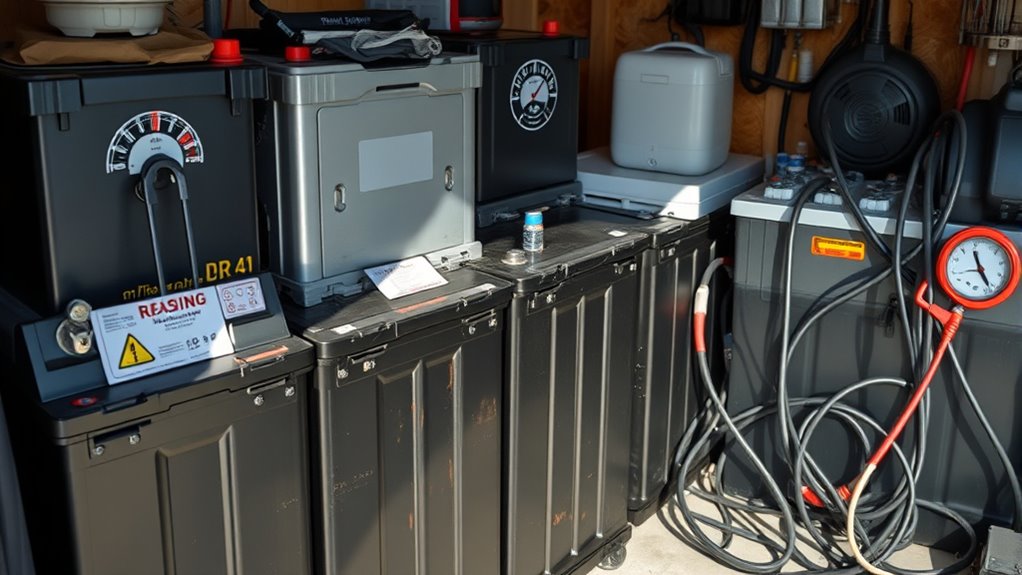
You should watch for signs like unusual heat emissions, which can indicate the battery is overheating. Swelling or deformation of the battery case is a clear warning that thermal runaway might be starting. Additionally, a burning smell nearby could signal dangerous chemical reactions underway.
Unusual Heat Emissions
Unusual heat emissions are among the earliest warning signs of thermal runaway in lithium-ion batteries. If you notice your battery pack or storage area suddenly feels markedly abnormally hot, don’t ignore it. These emissions can signal critical internal issues, risking fire or explosion. Be alert for the following signs:
- A persistent, intense warmth in the battery or surrounding area
- Unexpected heat buildup during charging or discharging
- Hot spots that feel notably hotter than other parts of the battery
- Rapid temperature increases with no apparent reason
These clues indicate the battery’s internal reactions are spiraling out of control. Ignoring them could lead to catastrophic failure, fires, or toxic gas release. Recognizing heat emissions early can help you prevent dangerous situations and take immediate action. Proper storage techniques can also reduce the risk of heat buildup and thermal runaway in your batteries. Additionally, understanding battery chemistry can aid in selecting safer alternatives and designing more secure storage solutions. Being aware of thermal management strategies is crucial to maintaining battery safety and longevity. Moreover, incorporating temperature monitoring devices can provide real-time alerts and prevent unnoticed heat buildup before it becomes hazardous.
Swelling or Deformation
Swelling or deformation of a battery is a clear and urgent warning sign of thermal runaway. When you notice a battery bulging, puffing, or changing shape, stop using it immediately. This indicates internal gas buildup caused by excessive heat, chemical breakdown, or damage. As the battery’s internal pressure increases, the outer casing can warp or swell visibly. Ignoring these signs raises the risk of fire or explosion, especially if the battery continues to operate or is punctured. Always handle swollen batteries with care, using protective gear, and dispose of them safely according to local regulations. Recognizing swelling early helps prevent catastrophic failures and protects your property and safety from the dangers of thermal runaway.
Burning Smells
A burning smell emanating from your garage battery indicates a serious thermal runaway event is underway. You need to act immediately to prevent fire or explosion. The smell signals that the battery’s internal temperature has skyrocketed, releasing toxic gases and risking a catastrophic failure. Recognize these warning signs:
- Sharp, acrid odor that lingers and worsens
- Hazy smoke or fumes near the battery
- Visible melting or deformation of the casing
- Unusual warmth or heat radiating from the battery
Ignoring these signs can lead to deadly fires, toxic exposure, and extensive property damage. Stay alert, and don’t delay response efforts. Safely disconnect power, evacuate the area, and call emergency services if needed. Early detection could save your life and property.
The Dangers of Fire and Toxic Gas Emissions
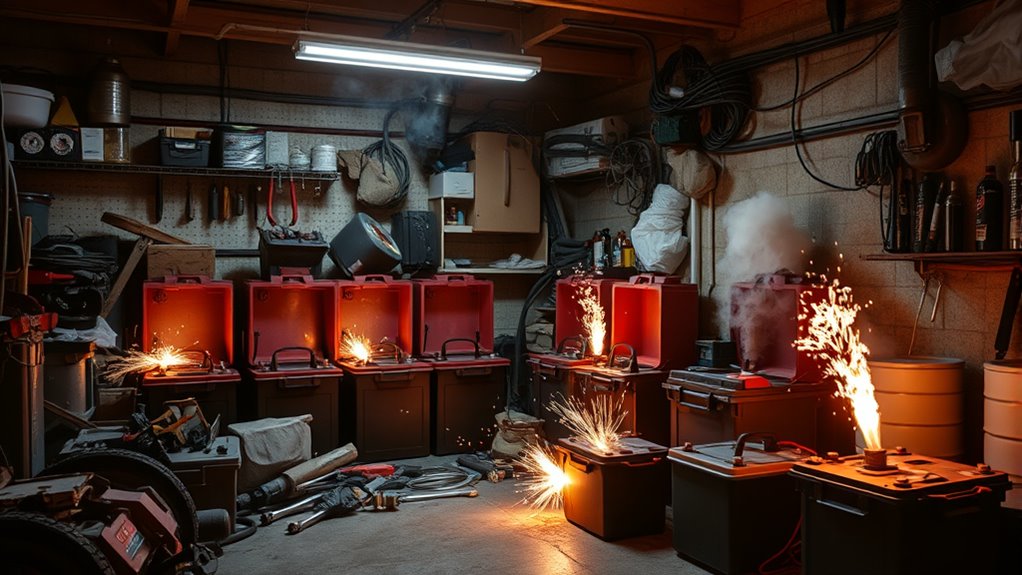
Fire and toxic gas emissions from lithium-ion batteries pose serious safety hazards, especially during thermal runaway incidents. When a battery overheats or is damaged, it can enter a chain reaction where heat causes further reactions, leading to a fire or explosion. During this process, highly flammable gases like hydrogen, carbon monoxide, and other toxic fumes are released, which can quickly fill your garage and endanger your health. These gases are not only flammable but also toxic, causing respiratory issues, poisoning, or even suffocation if inhaled in high concentrations. Fire suppression becomes more difficult because water reacts violently with lithium, intensifying fires. Recognizing these risks is vital to prevent accidents and guarantee your safety when storing batteries in garage environments.
Impact of Heat on Battery Lifespan and Performance
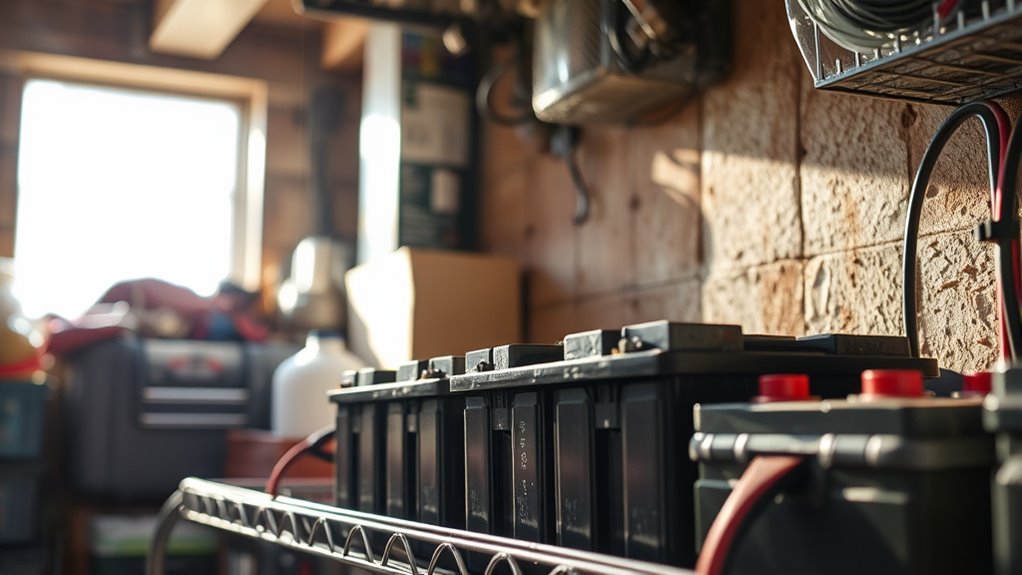
Heat considerably accelerates the degradation of lithium-ion batteries, reducing both their capacity and lifespan. When exposed to high temperatures, chemical reactions inside the battery speed up, causing irreversible damage. This leads to diminished performance, less energy storage, and a shorter overall life. You might notice your battery drains faster or fails prematurely.
High temperatures speed up lithium-ion battery degradation, causing faster capacity loss and reduced lifespan.
- Your battery’s capacity drops sharply, leaving you with less power when you need it most.
- It ages faster, forcing costly replacements sooner than expected.
- Heat causes internal components to break down, risking sudden failure.
- Prolonged exposure can ignite thermal runaway, risking fire and damage.
Understanding this impact underscores the importance of keeping batteries cool. Proper storage and cautious charging habits can help preserve their performance and extend their lifespan.
Safe Storage Practices for Lithium-Ion Batteries
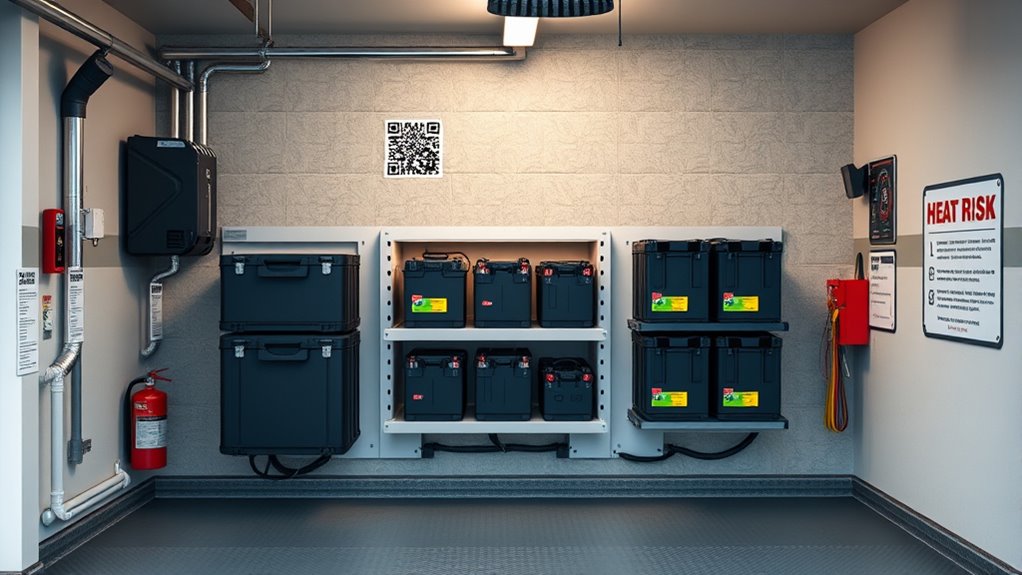
To guarantee the safety and longevity of lithium-ion batteries, proper storage practices are essential. Always store batteries in a cool, dry place away from direct sunlight and heat sources. Ideal temperatures range between 60°F and 70°F; avoid extremes that accelerate degradation. Keep batteries at a partial charge, around 30-50%, to prevent capacity loss caused by over-discharging or overcharging. Use fireproof containers or cabinets designed for battery storage to contain potential thermal runaway incidents. Ensure proper ventilation to dissipate heat and avoid enclosed spaces that trap heat. Regularly inspect batteries for swelling, leaks, or damage, and dispose of compromised units following local regulations. Maintaining these practices reduces risks and extends battery lifespan, ensuring safer and more reliable operation.
Ideal Indoor Locations for Battery Storage
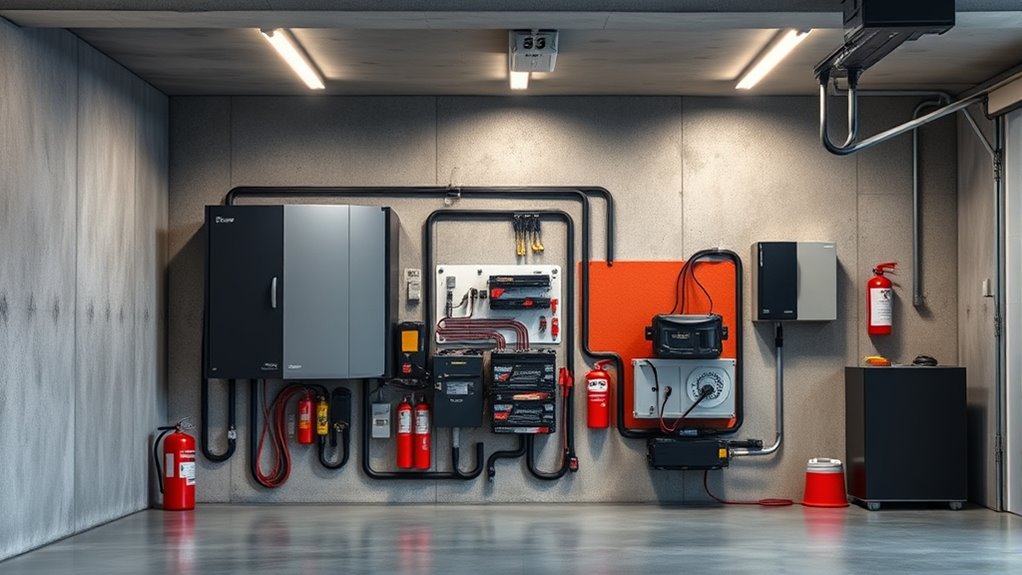
Choosing the right indoor location for battery storage can markedly reduce the risks associated with thermal runaway and capacity loss. You want a spot that stays cool, dry, and well-ventilated. Avoid areas prone to heat buildup or drastic temperature swings. Guarantee the space is free from flammable materials and has easy access for monitoring. Proper placement minimizes heat exposure and prevents accidental damage.
- Find a climate-controlled closet or utility room to keep temperatures stable.
- Keep batteries away from heating vents, sunlight, or heat-generating appliances.
- Choose a space with good airflow to dissipate any heat safely.
- Guarantee the area is free from moisture and flooding risks, like basements prone to water.
Tips for Safe Charging and Handling in Hot Environments
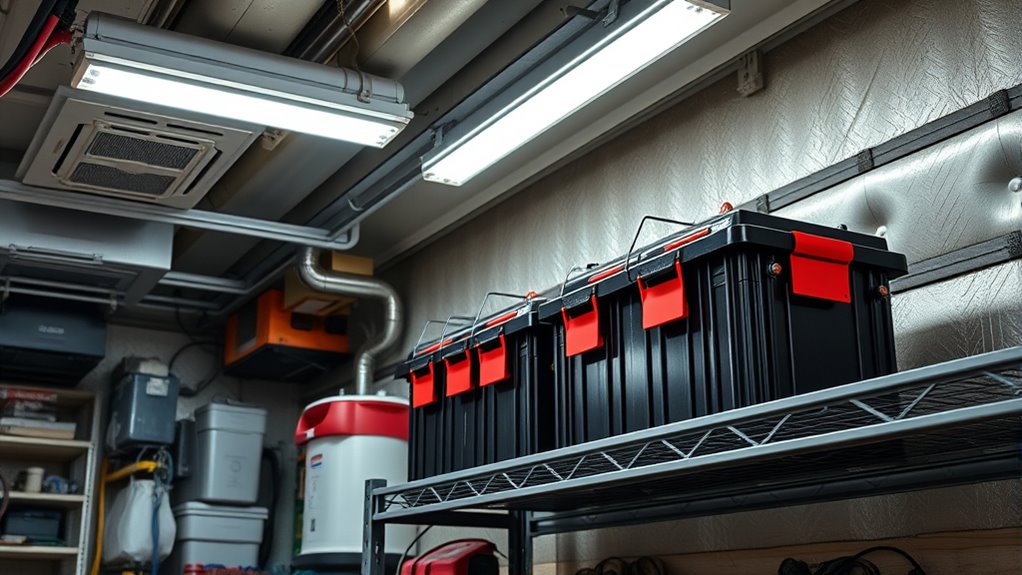
To prevent overheating, always charge your batteries in the shade and avoid direct sunlight. Once fully charged, unplug them promptly to reduce the risk of thermal buildup. Taking these simple steps helps protect your batteries from heat-related damage and potential safety hazards.
Charge in Shade
Charging your batteries in shade substantially reduces the risk of overheating and thermal runaway. When you keep your batteries out of direct sunlight, you prevent unnecessary heat buildup that can push temperatures into dangerous zones. Cooler environments help maintain ideal performance and extend your battery’s lifespan.
To guarantee safety, consider these tips:
- Choose shaded, well-ventilated areas to keep temperatures low.
- Avoid charging during peak heat hours, typically mid-afternoon.
- Use shading devices or canopies if natural shade isn’t available.
- Monitor battery temperatures regularly to catch early signs of overheating.
Unplug After Full
Unplugging your batteries once they’re fully charged is essential, especially in hot environments, to prevent overheating and thermal runaway. Leaving batteries connected after reaching full charge can cause continuous current flow, generating excess heat. In high temperatures, this heat buildup accelerates chemical reactions, increasing the risk of thermal runaway, fires, or explosions. Always monitor your charging process and disconnect the charger promptly once the battery indicates full capacity. Use timers or smart chargers with automatic shutoff features to avoid accidental overcharging. Guarantee proper ventilation during charging and keep batteries in a cool, shaded place. Regularly inspect batteries for swelling, leaks, or damage. Taking these steps minimizes heat-related hazards and prolongs your battery’s lifespan, safeguarding your property and personal safety.
Implementing Safer Alternatives for Garage Battery Management
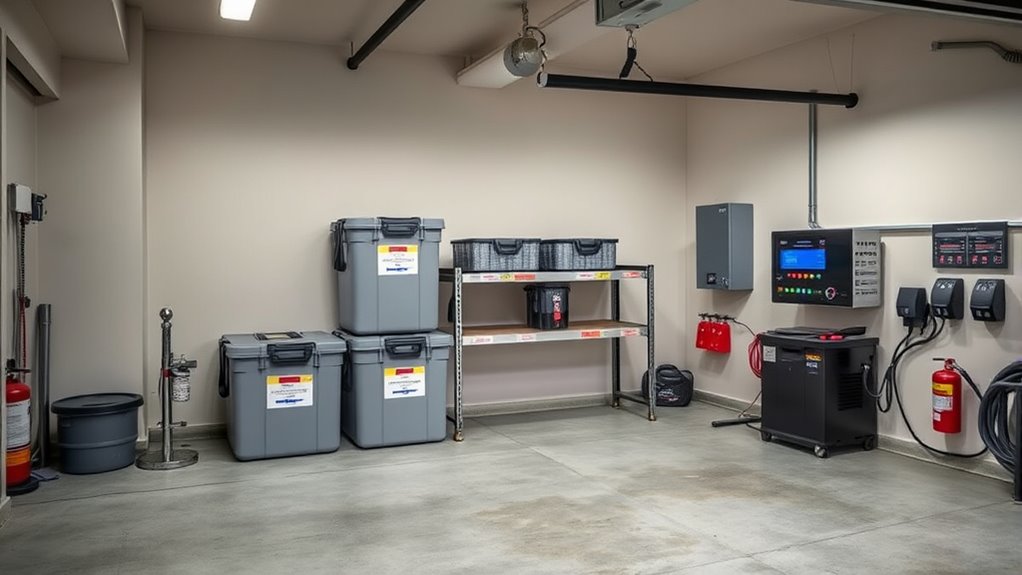
Implementing safer alternatives for garage battery management requires careful placement and environmental control. You should prioritize indoor, climate-controlled spaces like entryway closets or utility rooms to minimize heat exposure. Avoid placing batteries in direct sunlight or hot garages, especially during summer heatwaves. Regularly monitor temperatures and unplug chargers once batteries are full to prevent overcharging and heat buildup. Ensure proper airflow around batteries to dissipate heat efficiently. Consider using temperature sensors and ventilation systems to maintain stable conditions.
Prioritize indoor, climate-controlled spaces and ensure proper airflow to safely manage garage batteries.
- Feel secure knowing your batteries are protected from dangerous heat spikes.
- Prevent devastating fires by choosing the safest storage spots.
- Save your investment by extending battery lifespan through temperature regulation.
- Gain peace of mind with proactive safety measures, avoiding thermal runaway risks.
Frequently Asked Questions
Can Small Temperature Fluctuations Cause Thermal Runaway in Lithium-Ion Batteries?
Small temperature fluctuations can trigger thermal runaway in lithium-ion batteries if they occur frequently or reach critical thresholds. When temperatures rise even slightly above the ideal range, the internal resistance drops, causing more heat buildup. This positive feedback loop can accelerate quickly, especially under additional stress like overcharging or physical damage. To prevent this, keep your batteries in stable, temperature-controlled environments and avoid sudden temperature swings.
How Do Battery Management Systems Mitigate Heat-Related Risks?
Battery management systems (BMS) help prevent heat-related risks by monitoring temperature, voltage, and current in real time. They automatically shut down charging or discharging if temperatures rise too high or if abnormal conditions occur, preventing thermal runaway. BMS also balance cells to avoid uneven heating, optimize charging rates within safe limits, and alert you to potential issues. This active management keeps your batteries safer, extending lifespan and reducing fire hazards.
Are There Specific Battery Chemistries Less Prone to Thermal Runaway?
You might wonder if some battery chemistries are less prone to thermal runaway. Lithium iron phosphate (LiFePO4) batteries, for example, are indeed safer because they have a more stable chemical structure and lower internal resistance. This reduces heat buildup and the risk of fire or explosion. While no battery is completely risk-free, choosing LiFePO4 can substantially lower your chances of thermal runaway, especially in high-temperature environments like garages.
What Are the Best Fire Suppression Methods for Lithium-Ion Battery Fires?
You should use a Class D fire extinguisher specifically designed for metal fires, including lithium-ion batteries. If unavailable, smother the fire with sand or a fire blanket to cut off oxygen. Avoid using water or foam, as they can intensify the fire or react dangerously. Keep a fire suppression plan in place, and always wear proper PPE if you need to intervene. Call emergency services immediately for battery fires.
How Can Homeowners Monitor Battery Temperature in Garage Storage?
You can monitor your garage battery temperature with a reliable thermal sensor or temperature probe connected to a monitoring system. Place sensors near the batteries to get accurate readings and set alerts for high temperatures above safe thresholds, like 60°C (140°F). Regularly check your system, especially during hot weather, to catch potential thermal runaway risks early. Using smart monitoring devices helps you maintain a safe environment and prolong battery lifespan.
Conclusion
Think of your garage battery setup as a delicate balance beam—you need to keep it steady and safe. By understanding the heat risks and choosing safer storage options, you prevent small sparks from turning into dangerous wildfires. Always handle your batteries with care, especially in hot environments, and consider safer alternatives. With proper precautions, you’ll keep your energy source stable and your home safe, like a lighthouse guiding ships away from rocky shores.