
Solar battery charge controllers regulate power from solar panels to protect batteries and manage charging. My best overall pick is the Victron Energy SmartSolar MPPT 100/50, which stands out for its higher 50A capacity and broad 12/24V use; the smaller Victron SmartSolar 75/15 suits modest systems, while the Renogy Wanderer Li 30A PWM offers a simpler choice for compatible 12V setups. The main tradeoffs are MPPT efficiency and system flexibility versus PWM simplicity, along with the need to match controller capacity, panel voltage, and battery chemistry. A compact controller can fit a small off-grid system, but it cannot safely serve a larger array just because its display lists multiple battery types. Read on for the full comparison, selection criteria, and guidance on choosing a controller that fits your system.

Get backup power and energy gear delivered free with Prime
- Fast, free delivery on millions of items
- Prime Video, Amazon Music and more included
- Member-only deals all year
Key Takeaways
- The two Victron SmartSolar MPPT models mark the clearest capacity split: the 100/50 is better suited to larger systems, while the 75/15 is a more compact choice for lower-current installations.
- MPPT does not automatically mean a better fit. The list includes small MPPT controllers alongside basic PWM models, so panel configuration and system size matter more than the label alone.
- Battery compatibility varies by model. Several listings explicitly name LiFePO4 support, while buyers should check charging profiles rather than assume every controller supports every chemistry.
- Waterproofing and display features address different needs. SOLPERK options emphasize waterproof construction, while LCD-equipped PWM models prioritize at-a-glance status and straightforward operation.
- Amperage ranges from small 8A and 10A units to 100A listings. That spread makes system sizing the first filter; a feature-rich controller is still unsuitable if its ratings do not match the array and battery bank.
| Victron Energy SmartSolar MPPT Solar Charge Controller, 75V, 15A, 12/24V |  | Best for Connected System Monitoring | Model: MPPT 75|15 | Maximum voltage: 75V | Maximum current: 15A | VIEW LATEST PRICE | See Our Full Breakdown |
| 100A MPPT Solar Charge Controller with LCD Display |  | Best for Simple 12V/24V Setup | Brand: Depvko | Battery voltage: 12V/24V auto-recognition | Display: LCD | VIEW LATEST PRICE | See Our Full Breakdown |
| HHFLY 30A MPPT Solar Charge Controller, 12/24V Auto-Switch |  | Best for Battery-Type Flexibility | Maximum current: 30A | System voltage: 12V/24V auto-detect | Battery compatibility: OPEN, AGM, GEL, 3S 11.1V lithium-ion, and 4S 12.8V LiFePO4 | VIEW LATEST PRICE | See Our Full Breakdown |
| SUNAPEX 12V 10A MPPT Solar Charge Controller for LiFePO4, AGM, Gel, and Lead-Acid Batteries |  | Best Compact 12V MPPT Pick | Model: FX-10AMP | Controller type: MPPT | Battery voltage: 12V | VIEW LATEST PRICE | See Our Full Breakdown |
| SOLPERK 8A 12V Waterproof Solar Charge Controller |  | Best for Weather-Exposed Small Setups | Model: 001 | Voltage: 12V | Maximum current: 8A | VIEW LATEST PRICE | See Our Full Breakdown |
| Renogy Wanderer Li 30A PWM Solar Charge Controller 12V |  | Best for Higher-Current 12V PWM Setups | Controller type: PWM | System voltage: 12V | PV input voltage: 25V | VIEW LATEST PRICE | See Our Full Breakdown |
| SOLPERK MPPT Solar Charge Controller 10A 12V Waterproof |  | Best Compact MPPT for Small 12V Systems | Controller type: MPPT | System voltage: 12V | Battery compatibility: AGM, gel, flooded, and LiFePO4 | VIEW LATEST PRICE | See Our Full Breakdown |
| Victron Energy SmartSolar MPPT 100/50 Solar Charge Controller, 100V, 50A, 12/24V |  | Best Premium Controller for Expandable Systems | Controller type: MPPT | Maximum solar voltage: 100V | System voltage: 12/24V | VIEW LATEST PRICE | See Our Full Breakdown |
| SOLPERK 10A Waterproof 12V/24V PWM Solar Charge Controller with LED Display |  | Best for Simple 12V/24V Outdoor Installations | Controller type: Three-stage PWM | Maximum current: 10A | Supported system voltage: 12V/24V | VIEW LATEST PRICE | See Our Full Breakdown |
| 12V 20A PWM Solar Charge Controller with LCD for LiFePO4, AGM, and Gel Batteries |  | Best PWM Pick for Built-In Device Charging | Controller type: PWM | System voltage: 12V | Charging current: 20A | VIEW LATEST PRICE | See Our Full Breakdown |
| Renogy Wanderer 10A PWM Solar Charge Controller, 12V/24V |  | Best for Small, Mixed-Battery Setups | System voltage: 12V/24V | Charging type: PWM, four-stage | Compatible batteries: AGM, Gel, Flooded, Lithium | VIEW LATEST PRICE | See Our Full Breakdown |
| 10A MPPT Solar Charge Controller – Bateria Power SunRock 10, 12V, 150W Max PV, 30Voc, compatible with Gel, AGM, Lead‑Acid & LiFePO4 batteries |  | Best Compact MPPT Pick | Controller type: MPPT | Maximum charge current: 10A | System voltage: 12V | VIEW LATEST PRICE | See Our Full Breakdown |
| LiTime 12V/24V 30A MPPT Solar Charge Controller with Bluetooth and LCD Display |  | Best for Connected, Higher-Capacity Systems | System voltage: 12V/24V | Controller type: MPPT, 30A | MPPT efficiency: 99% tracking; up to 98% peak conversion | VIEW LATEST PRICE | See Our Full Breakdown |
| Rolokit 30A PWM Solar Charge Controller with LCD Display and Dual USB Ports |  | Best for Simple Lead-Acid Loads | Controller type: PWM, 30A | System voltage: 12V or 24V, automatic | Compatible batteries: Open, AGM, and GEL lead-acid | VIEW LATEST PRICE | See Our Full Breakdown |
| Renogy Adventurer 30A 12V/24V PWM Solar Charge Controller with LCD Display |  | Best Flush-Mount PWM Upgrade | Controller type: PWM, 30A | System voltage: 12V/24V | Battery compatibility: Lithium, AGM, gel, flooded, sealed | VIEW LATEST PRICE | See Our Full Breakdown |
| solar battery charge controller | System voltage | Controller type | Display | Dimensions |
|---|---|---|---|---|
| Victron Energy SmartSolar MPPT | 12V/24V | — | — | 4.7 × 2.1 × 1.8 in |
| 100A MPPT Solar Charge Control | — | — | LCD | 6.7 × 3.7 × 1.6 in |
| HHFLY 30A MPPT Solar Charge Co | 12V/24V auto-detect | — | LCD | 6.6 × 3.7 × 1.6 in |
| SUNAPEX 12V 10A MPPT Solar Cha | — | MPPT | — | — |
| SOLPERK 8A 12V Waterproof Sola | — | — | LED | — |
| Renogy Wanderer Li 30A PWM Sol | 12V | PWM | — | 5.5 × 3.9 × 1.8 in |
| SOLPERK MPPT Solar Charge Cont | 12V | MPPT | LCD listed in specifications; LED indicators listed in description | 3.15 × 2.76 × 0.87 in |
| Victron Energy SmartSolar MPPT | 12/24V | MPPT | No built-in display | 7.32 × 5.12 × 2.76 in |
| SOLPERK 10A Waterproof 12V/24V | — | Three-stage PWM | — | 1.97 × 3.19 × 0.83 in |
| 12V 20A PWM Solar Charge Contr | 12V | PWM | LCD with battery voltage and 25%, 50%, 75%, and 100% charge indicators | — |
| Renogy Wanderer 10A PWM Solar | 12V/24V | — | — | 5.2 × 3.1 inches |
| 10A MPPT Solar Charge Controll | 12V | MPPT | LCD with LED indicator | — |
| LiTime 12V/24V 30A MPPT Solar | 12V/24V | MPPT, 30A | — | — |
| Rolokit 30A PWM Solar Charge C | 12V or 24V, automatic | PWM, 30A | LCD | — |
| Renogy Adventurer 30A 12V/24V | 12V/24V | PWM, 30A | Backlit LCD | — |
More Details on Our Top Picks
Victron Energy SmartSolar MPPT Solar Charge Controller, 75V, 15A, 12/24V
I’d put the Victron Energy SmartSolar MPPT 75|15 near the top for buyers who want more than basic charging: its Bluetooth connection supports live monitoring, configuration, alarms, and firmware updates through VictronConnect. That’s a more capable monitoring setup than the LCD on the HHFLY 30A MPPT, though the HHFLY offers higher current capacity and more explicitly listed battery modes. The Victron’s synchronized charging is useful when several compatible controllers share a battery bank, while its configurable load output can disconnect devices when battery voltage drops too low. The tradeoff is its 15A limit, which rules it out for larger arrays, and its LED or minimal display won’t provide the at-a-glance readout some buyers want. I’d choose it for a modest system where app-based control matters more than screen size or raw amperage.
Pros:- Bluetooth app supports monitoring, configuration, alarms, and firmware updates.
- Compatible controllers can synchronize their charging stages.
- Configurable load output can disconnect devices at a set low battery voltage.
- MPPT tracking and charge algorithms support solar power conversion, including in partial shade.
Cons:- 15A maximum current limits its suitability for larger systems.
- LED or minimal display offers less at-a-glance information than the LCD on the HHFLY 30A MPPT.
- Plastic construction may be less appealing to buyers seeking a more rugged-feeling enclosure.
Best for: Owners of modest 12V or 24V systems who want Bluetooth monitoring, controller synchronization, and a configurable low-voltage load output.
Not ideal for: Buyers with larger solar arrays needing more than 15A, or anyone who wants a prominent onboard LCD rather than app-based monitoring.
- Model:MPPT 75|15
- Maximum voltage:75V
- Maximum current:15A
- System voltage:12V/24V
- Connectivity:Bluetooth
- Certification:UL1741
- Dimensions:4.7 × 2.1 × 1.8 in
- Weight:0.58 kg
Our verdict“Choose the Victron SmartSolar 75|15 for app-led control and coordinated charging in a modest system, not for high current capacity or a full onboard display.”
100A MPPT Solar Charge Controller with LCD Display
The Depvko 100A MPPT is aimed at buyers who want a straightforward setup: it automatically recognizes a 12V or 24V battery, then presents operating information and adjustable settings on an LCD. Compared with the Victron Energy SmartSolar MPPT 75|15, it puts more emphasis on an onboard screen and dual USB ports than Bluetooth monitoring and coordinated charging. Its listed up to 99% efficiency and protections against overcharge, short circuit, and reverse polarity make a clear feature set, but the product data doesn’t specify battery chemistries or maximum PV voltage, details I’d want before sizing a system. Automatic detection also has a setup condition: connect the battery before the panels, and the battery needs a base charge. I’d favor it for a basic installation where the LCD and USB outputs are useful, but verify system compatibility before buying.
Pros:- Automatically recognizes 12V or 24V batteries.
- LCD displays performance information and supports setting adjustments.
- MPPT charging is listed at up to 99% efficiency.
- Includes dual USB ports and overcharge, short-circuit, and reverse-polarity protections.
Cons:- Battery must be connected before the solar panels for voltage detection.
- Automatic detection requires the battery to have a base charge.
- Product data does not specify supported battery chemistries or maximum PV voltage.
Best for: Owners of basic 12V or 24V systems who want automatic voltage recognition, an LCD for local adjustments, and two USB ports.
Not ideal for: Buyers who need Bluetooth monitoring, documented battery-chemistry support, or clearly specified PV voltage limits before sizing an array.
- Brand:Depvko
- Battery voltage:12V/24V auto-recognition
- Display:LCD
- USB ports:Dual
- Listed efficiency:Up to 99%
- Protection features:Overcharge, short-circuit, and reverse-polarity protection
- Dimensions:6.7 × 3.7 × 1.6 in
- Warranty:12 months; lifetime technical support
Our verdict“Pick the Depvko for an LCD-led 12V/24V setup with USB outputs, after confirming its battery and PV limits match your equipment.”
HHFLY 30A MPPT Solar Charge Controller, 12/24V Auto-Switch
The HHFLY 30A MPPT stands out for combining automatic 12V/24V detection with listed modes for lead-acid, lithium-ion, and LiFePO4 batteries. That makes it a more clearly documented match for varied battery setups than the Depvko 100A MPPT, whose product data does not name supported chemistries. Its LCD and three-stage charging show system and battery information while supporting bulk, absorption, and float charging; seven listed protection functions add coverage beyond basic charging controls. There is a setup wrinkle for lithium owners: the lithium modes must be selected manually, so auto-detection doesn’t handle everything. The two USB ports are limited to 5V/2A each, and the product data specifies battery configurations rather than a broad range of lithium pack voltages. I’d shortlist it when its listed chemistries and configurations match the battery, but check those details before connecting.
Pros:- Automatically detects 12V or 24V systems.
- Lists support for OPEN, AGM, GEL, 3S lithium-ion, and 4S LiFePO4 batteries.
- LCD displays charging, battery, and system information.
- Includes three-stage charging, two USB ports, and seven listed protection functions.
Cons:- Lithium battery modes require manual button-press selection.
- USB output is limited to 5V/2A per port.
- Plastic construction may not suit buyers seeking a more rugged enclosure.
Best for: Small-system owners using a listed lead-acid type, 3S lithium-ion, or 4S LiFePO4 battery who want an LCD and up to 30A charging.
Not ideal for: Buyers with lithium packs outside the listed configurations, or anyone who wants lithium battery modes to be selected automatically.
- Maximum current:30A
- System voltage:12V/24V auto-detect
- Battery compatibility:OPEN, AGM, GEL, 3S 11.1V lithium-ion, and 4S 12.8V LiFePO4
- Charging stages:Bulk, absorption, float
- Display:LCD
- USB ports:2 × 5V/2A
- Protection functions:Open circuit, short circuit, overcurrent, overcharge, reverse polarity, over-discharge, self-recovery
- Dimensions:6.6 × 3.7 × 1.6 in
Our verdict“Choose the HHFLY when its listed battery configurations suit your system and you want a 30A MPPT controller with an LCD and broad protection coverage.”
SUNAPEX 12V 10A MPPT Solar Charge Controller for LiFePO4, AGM, Gel, and Lead-Acid Batteries
For a small 12V installation, the SUNAPEX FX-10AMP offers a focused feature set: 10A charging, support for LiFePO4 and several lead-acid types, plus an LCD and LED indicators. It’s a lower-current choice than the HHFLY 30A MPPT, so it makes more sense for a smaller array than for a system likely to grow. The LCD reports voltage and current, while USB and USB-C outputs add a way to power compatible devices without adding a separate charging accessory. Its battery-type coverage is useful, but the controller is limited to 12V and cannot be used with solar panels that have built-in controllers. Connection order and polarity also matter: the supplied information calls for connecting the panel first and correct polarity. I’d choose it for a compact, single-voltage setup, not as a flexible controller for expanding or 24V systems.
Pros:- Supports LiFePO4, AGM, gel, and lead-acid 12V batteries.
- LCD shows voltage and current, with LED charging-status indicators.
- USB and USB-C outputs can power compatible devices.
- Lists bulk, absorption, float, and equalization charging stages.
Cons:- Works with 12V batteries only.
- Not suitable for solar panels with built-in controllers.
- Requires correct polarity and the specified panel-first connection order.
Best for: Owners of compact 12V solar setups who need a 10A MPPT controller for LiFePO4, AGM, gel, or lead-acid batteries and value USB-C output.
Not ideal for: Buyers planning a 24V or 36V battery system, using panels with built-in controllers, or needing more than 10A charging capacity.
- Model:FX-10AMP
- Controller type:MPPT
- Battery voltage:12V
- Charging current:10A
- Compatible batteries:LiFePO4, lead-acid, gel, AGM
- Outputs:USB and USB-C
- Charging stages:Bulk, absorption, float, equalization
- Warranty:1 year
Our verdict“Choose the SUNAPEX for a compact 12V system that benefits from several battery modes and USB-C, but skip it if you need higher current or a 24V setup.”
SOLPERK 8A 12V Waterproof Solar Charge Controller
The SOLPERK 8A is the weather-focused pick in this group: its IP67 waterproof enclosure and SAE connector suit small 12V installations where outdoor exposure and simple wiring matter. Compared with the SUNAPEX FX-10AMP, it has less charging capacity and only LED indicators, but its stated protection from water and lack of battery power consumption when sunlight is absent may appeal for a basic outdoor setup. It supports LiFePO4, AGM, GEL, and lead-acid batteries, with protections covering reverse current, overheating, short circuits, overcharging, over-voltage, and reverse polarity. The main constraint is substantial: this is an 8A, 12V controller, not a choice for larger arrays or 24V batteries. I’d pick it for a small, exposed system where enclosure protection outweighs detailed display information and higher current.
Pros:- IP67 waterproof enclosure is suited to weather-exposed installations.
- Compatible with LiFePO4, AGM, GEL, and lead-acid batteries.
- SAE connector supports a simple connection approach.
- Lists six electrical protections and no battery power consumption when sunlight is absent.
Cons:- Designed for 12V systems only.
- 8A maximum current limits it to smaller setups.
- LED indicators provide less detailed information than the SUNAPEX LCD.
Best for: Owners of small outdoor 12V solar setups using LiFePO4, AGM, GEL, or lead-acid batteries who want a waterproof enclosure and SAE connection.
Not ideal for: Buyers with 24V systems, larger arrays needing more than 8A, or anyone who wants an LCD with detailed voltage and current readings.
- Model:001
- Voltage:12V
- Maximum current:8A
- Compatible batteries:LiFePO4, AGM, GEL, lead-acid
- Display:LED
- Connector:SAE
- Warranty:1 year
Our verdict“Pick the SOLPERK 8A for a small, weather-exposed 12V system where IP67 protection and an SAE connector matter more than display detail or charging capacity.”
Renogy Wanderer Li 30A PWM Solar Charge Controller 12V
The Renogy Wanderer Li makes the most sense when a 12V system needs more charging current than the 10A SOLPERK controllers can provide. Its 30A rating suits a larger PWM array, while support for AGM, gel, flooded, and manually selected lithium batteries gives it more chemistry flexibility than the SOLPERK 10A PWM model. That does not make it an MPPT alternative: compared with the Victron SmartSolar MPPT 100/50, it lacks MPPT tracking and is limited to 12V systems, so buyers focused on extracting more from variable or shaded panel output should look at the Victron instead. The compact IP32 housing and wall or DIN-rail mounting help in RV and marine installations, but IP32 is less protective than the IP67 rating listed for the SOLPERK options. Status comes from LEDs unless you add the separate BT-1 module, and the one-year warranty is relatively short.
Pros:- 30A charging capacity exceeds the 10A SOLPERK PWM options.
- Supports AGM, gel, and flooded batteries automatically, with manual lithium selection.
- Compact housing offers wall or DIN-rail mounting.
- Optional BT-1 module adds app-based monitoring.
Cons:- PWM design lacks the power-point tracking offered by the Victron SmartSolar MPPT 100/50.
- Bluetooth requires a separate BT-1 module, and there is no built-in display.
- IP32 protection is below the IP67 rating on the SOLPERK waterproof controllers.
Best for: RV and boat owners with a 12V battery bank who need up to 30A of PWM charging and want support for several battery chemistries.
Not ideal for: Buyers building a 24V system, seeking MPPT performance, or needing a built-in screen or higher-level water protection.
- Controller type:PWM
- System voltage:12V
- PV input voltage:25V
- Battery compatibility:Lithium (manual selection), AGM, gel, and flooded
- Protection:Overcharge, short circuit, and reverse polarity
- Dimensions:5.5 × 3.9 × 1.8 in
- Connectivity:Optional BT-1 Bluetooth module
- Warranty:1 year
Our verdict“Choose the Wanderer Li for a compact, higher-current 12V PWM installation if you can accept limited monitoring and less water protection than IP67 models.”
SOLPERK MPPT Solar Charge Controller 10A 12V Waterproof
For a small 12V setup where panel output varies, the SOLPERK 10A MPPT offers tracking technology in a notably compact package. Its stated efficiency advantage over PWM is useful when the array is modest and squeezing more charging from available sunlight matters; that sets it apart from the SOLPERK 10A PWM 12V/24V, which offers broader system-voltage support but not MPPT. The tradeoff is capacity: at just 10A and 12V, this controller is not a match for larger arrays, unlike the 30A Renogy Wanderer Li or 50A Victron SmartSolar. Its IP67 rating and compatibility with LiFePO4, AGM, gel, and flooded batteries make it appealing for portable or exposed installations. The supplied details are sparse on maximum PV voltage and configuration controls, so I would not choose it for a system that needs clearly documented expansion limits.
Pros:- MPPT design can capture more available panel power than the PWM controllers in this group.
- IP67 rating supports exposed outdoor and portable installations.
- Supports LiFePO4, AGM, gel, and flooded batteries.
- Small footprint suits installations with limited mounting space.
Cons:- 10A output is restrictive compared with the 30A Renogy and 50A Victron controllers.
- Designed for 12V systems only.
- Product data does not specify maximum PV voltage or detailed configuration options.
Best for: Owners of compact 12V solar systems who want MPPT charging, broad battery chemistry support, and a waterproof controller for outdoor use.
Not ideal for: Users with larger arrays, 24V battery systems, or installations requiring documented PV limits and advanced monitoring features.
- Controller type:MPPT
- System voltage:12V
- Battery compatibility:AGM, gel, flooded, and LiFePO4
- Display:LCD listed in specifications; LED indicators listed in description
- Dimensions:3.15 × 2.76 × 0.87 in
- Weight:0.11 kg
Our verdict“Pick this SOLPERK for a small, outdoor 12V array where compact MPPT performance matters more than expansion capacity.”
Victron Energy SmartSolar MPPT 100/50 Solar Charge Controller, 100V, 50A, 12/24V
The Victron SmartSolar MPPT 100/50 is the most capable option here for buyers who need substantial current and room to build out a system. Its 50A output, 100V solar limit, and 12/24V support put it well ahead of the 10A SOLPERK MPPT for array capacity, while MPPT tracking can help retain output when panels are partially shaded. Bluetooth and the VictronConnect app add configuration, history, alerts, and firmware updates; the Renogy Wanderer Li needs an optional module for app monitoring and remains a 12V PWM unit. The Victron can also synchronize charging with other SmartSolar controllers and manage a configurable load output. Those capabilities come with a bigger, more involved controller and no built-in display, so buyers who want simple status at a glance may prefer the LCD-equipped 20A PWM unit. Its listed plastic construction may also give some buyers pause.
Pros:- 50A output and 100V solar input accommodate larger systems than the 10A and 30A options.
- MPPT tracking supports better harvesting when panel conditions vary, including partial shade.
- Bluetooth app provides monitoring, configuration, history, alarms, and firmware updates.
- Can synchronize charging with other SmartSolar controllers and control a configurable load output.
Cons:- No built-in display; setup and monitoring rely on the app or external options.
- Higher capacity and broader configuration may be unnecessary for small 12V arrays.
- Listed construction is plastic.
Best for: Off-grid system builders with a 12V or 24V battery bank, a larger solar array, and a need for app-based setup or synchronized controllers.
Not ideal for: Buyers with small arrays who want a simple low-current controller or a built-in screen for local status checks.
- Controller type:MPPT
- Maximum solar voltage:100V
- System voltage:12/24V
- Display:No built-in display
- Connectivity:Bluetooth; VictronConnect app
- Dimensions:7.32 × 5.12 × 2.76 in
- Weight:1.5 kg
- Certification:UL1741
Our verdict“Choose the Victron when you need high-current MPPT charging, 12/24V support, and app-based system coordination rather than a basic controller with a screen.”
SOLPERK 10A Waterproof 12V/24V PWM Solar Charge Controller with LED Display
This SOLPERK is a straightforward choice when 12V/24V flexibility and weather protection matter more than MPPT efficiency. Its 10A PWM design supports modest arrays, while the SAE connection and pre-drilled mounting holes can simplify installation in a small outdoor setup. Compared with the SOLPERK 10A MPPT, it gives up tracking efficiency but adds explicit 12V/24V support; compared with the 20A LCD PWM controller, it offers a smaller current ceiling and relies on indicator lights rather than a detailed screen. The IP67 rating is a strong fit for exposed locations, and its protection list covers common wiring and voltage faults. Battery support is limited to AGM, GEL, and flooded deep-cycle types, so lithium users should choose another model, such as the Renogy Wanderer Li with manual lithium selection.
Pros:- Supports both 12V and 24V systems.
- IP67 construction suits outdoor installations.
- SAE connector and pre-drilled mounting holes simplify basic setup.
- Includes protections against under-voltage, over-voltage, overload, short circuits, and reverse connections.
Cons:- 10A maximum current limits it to modest solar arrays.
- PWM charging lacks the tracking advantage of the SOLPERK 10A MPPT.
- Battery compatibility excludes lithium, and status is limited to LED indicators.
Best for: Owners of modest AGM, GEL, or flooded-battery systems who need a waterproof PWM controller that can serve either 12V or 24V setups.
Not ideal for: LiFePO4 users, owners of larger arrays needing more than 10A, or buyers who want MPPT tracking or detailed screen readouts.
- Controller type:Three-stage PWM
- Maximum current:10A
- Supported system voltage:12V/24V
- Maximum power:150W at 12V; 300W at 24V
- Battery compatibility:AGM, GEL, and flooded deep-cycle
- Connector:SAE
- Dimensions:1.97 × 3.19 × 0.83 in
- Warranty:12 months
Our verdict“Choose this model for a small, weather-exposed 12V or 24V lead-acid setup where simple connections matter more than MPPT or lithium support.”
12V 20A PWM Solar Charge Controller with LCD for LiFePO4, AGM, and Gel Batteries
Among the PWM choices here, this 20A controller with an LCD balances more current than the 10A SOLPERK units with clearer local status than the Renogy Wanderer Li’s LED-only interface. The screen reports battery voltage and charge level, which helps a small-system owner check operating status without adding an app module. It also accepts LiFePO4, AGM, and gel batteries and supports panels up to 300W, while built-in USB-C PD and USB-A QC3.0 ports provide a handy way to charge devices at camp. That convenience does not change its core limit: it is a 12V PWM controller, not an MPPT model like the Victron SmartSolar 100/50, and it cannot serve 24V or 36V systems. Quick-connect terminals and multiple protections make installation more approachable, but buyers should match their array and battery carefully to its stated 20A ceiling.
Pros:- 20A capacity exceeds the 10A SOLPERK PWM controller.
- LCD displays battery voltage and charge-level indicators.
- Supports LiFePO4, AGM, and gel batteries.
- Built-in USB-C PD and USB-A QC3.0 ports charge compatible devices.
Cons:- PWM design does not offer MPPT tracking like the Victron SmartSolar 100/50.
- Limited to 12V systems and incompatible with 24V and 36V batteries.
- The 20A and 300W limits restrict use with larger arrays.
Best for: Campers and small 12V system owners who want an LCD, up to 20A PWM charging, lithium compatibility, and USB charging ports in one unit.
Not ideal for: Owners of 24V or 36V batteries, larger arrays that exceed its 20A/300W limits, or buyers prioritizing MPPT efficiency.
- Controller type:PWM
- System voltage:12V
- Charging current:20A
- Maximum solar panel power:300W
- Battery compatibility:LiFePO4, AGM, and gel
- Display:LCD with battery voltage and 25%, 50%, 75%, and 100% charge indicators
- USB-C output:22W PD
- USB-A output:18W QC3.0
- Safety protections:Overcharge, over-voltage, short circuit, reverse polarity, over-temperature, and nighttime anti-leakage
Our verdict“Pick this controller for a modest 12V PWM setup where an LCD and built-in USB charging are more useful than MPPT performance or multi-voltage support.”
Renogy Wanderer 10A PWM Solar Charge Controller, 12V/24V
The Renogy Wanderer 10A suits modest 12V or 24V systems where clear local status and broad battery compatibility matter more than extracting every bit of panel output. Its backlit LCD shows operating data and error codes, while four-stage charging, load controls, and electronic protections give small off-grid setups useful oversight. Unlike the Bateria Power SunRock 10, it uses PWM rather than MPPT, so it is a better fit for simpler panel-and-battery arrangements than for buyers seeking MPPT charging performance. The USB port adds a handy low-power charging point, but the controller is not weatherproof for exposed installation: its IP32 rating calls for a protected location. Lithium is supported, though manual activation is required, and Bluetooth monitoring means buying a separate module.
Pros:- Supports 12V and 24V systems and AGM, Gel, Flooded, and Lithium batteries.
- Four-stage charging, load modes, and multiple electronic protections support basic system management.
- Backlit LCD displays system data and error codes.
- Compact body includes a 5V/2A USB output.
Cons:- PWM charging is less suited than MPPT to buyers prioritizing panel energy harvest.
- Bluetooth monitoring requires a separately sold BT-1 module.
- Lithium batteries require manual activation, and IP32 offers limited water protection.
Best for: Owners of compact 12V or 24V systems who want an LCD, load control, and support for several battery chemistries in a sheltered installation.
Not ideal for: Buyers seeking MPPT performance, built-in phone monitoring, or a controller that can sit exposed to rain; Bluetooth requires an add-on and IP32 protection is limited.
- System voltage:12V/24V
- Charging type:PWM, four-stage
- Compatible batteries:AGM, Gel, Flooded, Lithium
- Self-consumption:<10mA
- Dimensions:5.2 × 3.1 inches
- Water resistance:IP32
- USB output:5V/2A
- Monitoring:RS232; Bluetooth via separately sold BT-1 module
Our verdict“Choose the Wanderer 10A for a small, sheltered system that benefits from broad battery support and an onboard display, not for advanced MPPT harvesting or outdoor exposure.”
10A MPPT Solar Charge Controller – Bateria Power SunRock 10, 12V, 150W Max PV, 30Voc, compatible with Gel, AGM, Lead‑Acid & LiFePO4 batteries
The Bateria Power SunRock 10 is the more compelling choice than the Renogy Wanderer 10A when MPPT charging is the priority in a compact 12V setup. Its 10A rating and stated limits of 150W PV power and 30V Voc make its boundaries clear: it can suit a small panel array, but it is not a stepping stone to a larger or higher-voltage system. The LCD and LED indicators make basic status checks straightforward, while the included SAE extension cables simplify certain portable installations. Weather resistance gives it an advantage over the Wanderer’s IP32 rating for outdoor use, though the supplied information does not specify an IP rating. It supports several lead-acid types and LiFePO4, but buyers who need 24V compatibility should choose another controller.
Pros:- MPPT controller design for a compact 12V system.
- LCD and LED indicators provide at-a-glance system status.
- Weather-resistant construction is suited to outdoor use.
- Includes two 130mm SAE extension cables for compatible installations.
Cons:- 12V-only compatibility rules out 24V battery systems.
- 150W maximum PV power and 30V maximum Voc restrict array size.
- The product data does not give a specific ingress-protection rating.
Best for: Owners of small 12V solar setups who want MPPT charging, clear status indicators, and SAE connections for portable or outdoor arrangements.
Not ideal for: Buyers building a 24V system or planning a larger array beyond 150W PV and 30V open-circuit voltage.
- Controller type:MPPT
- Maximum charge current:10A
- System voltage:12V
- Maximum PV power:150W
- Maximum PV Voc:30V
- Compatible batteries:AGM, Gel, Lead-Acid, Flooded, LiFePO4
- Display:LCD with LED indicator
- Included components:Controller and two 130mm SAE extension cables
Our verdict“Pick the SunRock 10 for a small 12V array where MPPT and weather resistance matter, but skip it if you need 24V support or room to expand beyond its input limits.”
LiTime 12V/24V 30A MPPT Solar Charge Controller with Bluetooth and LCD Display
The LiTime 30A MPPT is the strongest fit here for buyers pairing a larger 12V or 24V array with app-based monitoring. Its built-in Bluetooth avoids the separate BT-1 module needed by the Renogy Adventurer 30A, and its MPPT design contrasts with that Renogy model’s PWM charging. A 30A rating and stated PV limits of 450W at 12V or 900W at 24V give it more headroom than the 10A SunRock 10, while the LCD remains useful when a phone is not at hand. The tradeoff is a heavier, larger unit with manual parameter adjustments when changing battery chemistries. Its listed compatible batteries include LiFePO4 and several lead-acid types, but the data does not list flooded batteries.
Pros:- 30A MPPT capacity supports larger systems than the 10A controllers in this group.
- Built-in Bluetooth enables smartphone monitoring without a separate module.
- Supports 12V and 24V systems with stated PV limits up to 900W at 24V.
- Die-cast aluminum housing supports heat dissipation.
Cons:- At 4.4 pounds, it is less convenient for portable setups.
- Battery parameters require manual adjustment when changing chemistries.
- Listed compatibility does not include flooded batteries.
Best for: Owners of mid-sized 12V or 24V systems who want MPPT charging, built-in Bluetooth monitoring, and compatibility with LiFePO4 or listed lead-acid batteries.
Not ideal for: Portable-system buyers who need a lightweight controller, or owners who frequently change battery chemistry and prefer settings that adjust without manual configuration.
- System voltage:12V/24V
- Controller type:MPPT, 30A
- MPPT efficiency:99% tracking; up to 98% peak conversion
- Maximum PV input:450W at 12V; 900W at 24V
- Battery compatibility:LiFePO4, sealed lead-acid, gel lead-acid
- Display and connectivity:LCD with LED indicators; built-in Bluetooth
- Housing:Die-cast aluminum with plastic components
- Dimensions and weight:9.65 × 3.25 × 7.09 inches; 4.4 pounds
- Operating temperature:Up to 45°C
Our verdict“Choose the LiTime for a larger 12V/24V MPPT system where built-in Bluetooth and expansion headroom matter more than low weight or simple chemistry changes.”
Rolokit 30A PWM Solar Charge Controller with LCD Display and Dual USB Ports
The Rolokit 30A PWM stands apart for buyers who want a high stated current rating, basic load control, and two USB outputs without moving to MPPT. Its automatic 12V/24V detection is more convenient than the Bateria Power SunRock 10, which is limited to 12V, but the Rolokit is restricted to open, AGM, and GEL lead-acid batteries. That makes it a poor match for lithium owners, despite its 30A rating. The LCD supports monitoring and adjustments, and saved settings can reduce repeated setup after power interruptions. Installation order matters: the battery must be connected before the panel and load. Its plastic construction and PWM charging keep it in the simpler-use category rather than the choice for maximizing harvest from a larger array.
Pros:- Automatically supports 12V or 24V systems.
- 30A rating and multiple load modes suit basic controller duties.
- Dual 5V/3A USB ports provide two device-charging outputs.
- LCD allows status checks and parameter adjustments, with settings retention.
Cons:- Compatible only with open, AGM, and GEL lead-acid batteries.
- PWM charging is less suitable for buyers prioritizing MPPT performance.
- Battery must be connected before the solar panel and load during installation.
Best for: Owners of 12V or 24V lead-acid systems who want a straightforward PWM controller with dual USB ports and adjustable load settings.
Not ideal for: LiFePO4 or other lithium battery owners, and buyers seeking MPPT charging or a controller with stated outdoor water protection.
- Controller type:PWM, 30A
- System voltage:12V or 24V, automatic
- Compatible batteries:Open, AGM, and GEL lead-acid
- USB output:Two 5V/3A ports
- Display:LCD
- Protection:Overcurrent, short circuit, reverse connection, open circuit
- Material:Plastic
- Weight:0.14kg
Our verdict“The Rolokit suits lead-acid users who value automatic voltage detection and dual USB ports, but lithium owners and MPPT shoppers should choose a different controller.”
Renogy Adventurer 30A 12V/24V PWM Solar Charge Controller with LCD Display
The Renogy Adventurer 30A is the mounting-focused choice among these PWM controllers: its flush-mount format suits a fixed installation, and the included surface-mount attachment gives buyers a second way to place it. Compared with the Rolokit 30A, it offers broader listed battery compatibility, including lithium, plus self-diagnostics and temperature compensation; the Rolokit counters with dual USB ports. The Adventurer uses PWM, so the LiTime 30A MPPT is the better fit for buyers prioritizing MPPT energy harvest and built-in Bluetooth. Here, Renogy provides an LCD and RS232 connection, while app monitoring requires a separately sold BT-1 module. Its four-stage charging and protection features make it a capable fixed-system option, but its 12V/24V support does not change the basic PWM tradeoff.
Pros:- Supports 12V and 24V systems and lithium, AGM, gel, flooded, and sealed batteries.
- Flush mounting and included surface-mount attachment suit different fixed installations.
- Backlit LCD, self-diagnostics, and electronic protections aid system checks.
- Four-stage charging includes temperature compensation.
Cons:- PWM charging is less suited to buyers seeking MPPT performance.
- Bluetooth app monitoring requires a separately sold BT-1 module.
- The product data does not state PV input limits or maximum charge current beyond the model’s 30A designation.
Best for: Owners of fixed 12V or 24V systems who want a 30A PWM controller, multiple battery profiles, and a choice of flush or surface mounting.
Not ideal for: Buyers prioritizing MPPT charging or built-in app connectivity, since this is PWM and Bluetooth requires a separate BT-1 module.
- Controller type:PWM, 30A
- System voltage:12V/24V
- Battery compatibility:Lithium, AGM, gel, flooded, sealed
- Charging stages:Bulk, boost, float, equalization
- Display:Backlit LCD
- Grounding:Negative ground
- Connectivity:RS232; compatible with separately sold Renogy BT-1 Bluetooth module
- Mounting:Flush mount; surface-mount attachment included
- Operating temperature:-4°F to 140°F
Our verdict“Choose the Adventurer for a fixed 12V/24V installation that benefits from flexible mounting and broad battery support, but pick an MPPT model for higher harvesting performance.”
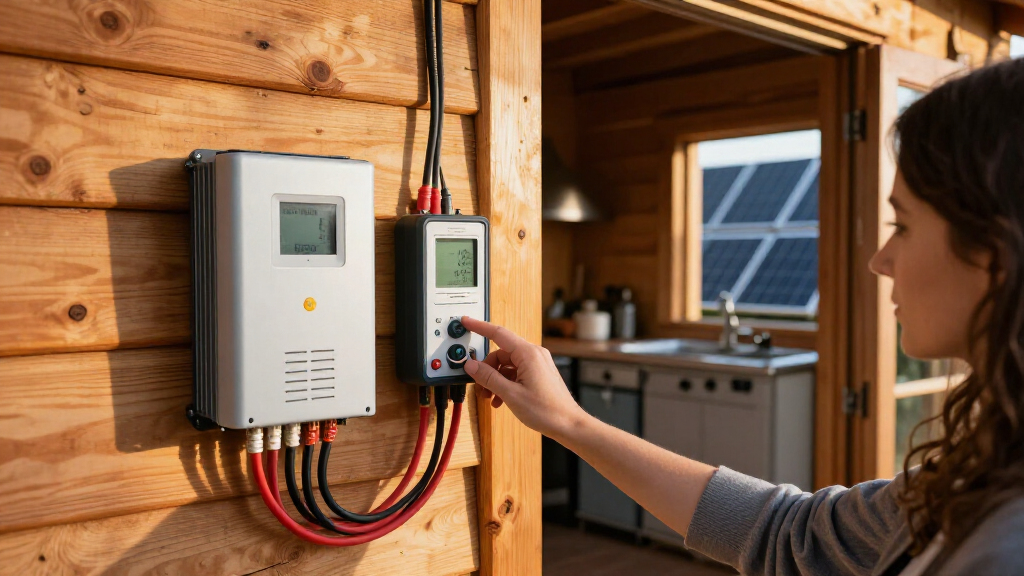
How We Picked
I compared the 15 controllers by charging method, rated current, system voltage, stated battery compatibility, and practical usability. I also looked at features that can change installation decisions, including Bluetooth, displays, waterproof construction, and USB ports. Because the supplied product information does not establish that every model shares the same specifications or support, I treated named ratings and compatibility claims as model-specific rather than assuming they transfer across the lineup.
The ranking favors controllers with a clearer fit across useful system sizes and charging needs, which puts the Victron SmartSolar 100/50 first for its 50A MPPT capacity and 12/24V range. Smaller Victron and Renogy choices follow for buyers with more limited system requirements, while the 100A listing is not ranked above them on its headline rating alone: buyers should verify its panel-voltage limits, battery profiles, and documentation before choosing it. Compact, waterproof, PWM, and entry-level options place lower for broad versatility but can be better matches for specific installations.
| solar battery charge controller | Controller type |
|---|---|
| Victron Energy SmartSolar MPPT | — |
| 100A MPPT Solar Charge Control | — |
| HHFLY 30A MPPT Solar Charge Co | — |
| SUNAPEX 12V 10A MPPT Solar Cha | MPPT |
| SOLPERK 8A 12V Waterproof Sola | — |
| Renogy Wanderer Li 30A PWM Sol | PWM |
| SOLPERK MPPT Solar Charge Cont | MPPT |
| Victron Energy SmartSolar MPPT | MPPT |
| SOLPERK 10A Waterproof 12V/24V | Three-stage PWM |
| 12V 20A PWM Solar Charge Contr | PWM |
| Renogy Wanderer 10A PWM Solar | — |
| 10A MPPT Solar Charge Controll | MPPT |
| LiTime 12V/24V 30A MPPT Solar | MPPT, 30A |
| Rolokit 30A PWM Solar Charge C | PWM, 30A |
| Renogy Adventurer 30A 12V/24V | PWM, 30A |
Factors to Consider When Choosing Solar Battery Charge Controllers
Before choosing by brand or display, I would narrow the field by the electrical limits of the system. The right controller has to match the panel array, battery bank, and installation environment at the same time; a mismatch can reduce charging performance or create an unsafe setup.
Match Controller Capacity to the Solar Array
Start with the solar array’s maximum output and the controller’s rated charging current, not with a product’s general description. The lineup spans small 8A and 10A units, 30A models, a 50A Victron, and a listing labeled 100A, so these products are not interchangeable. Allow for the array’s possible output in strong sunlight and check the manufacturer’s sizing guidance for the exact model. A controller rated too low may limit usable output or exceed its operating limits. Choosing a much larger unit than the system needs can add cost and bulk without improving a small installation. If you may expand later, check whether the controller can support that future array before buying.
Choose MPPT or PWM for Your Panel Setup
MPPT and PWM controllers suit different panel and system configurations, so the technology label should be read alongside voltage limits. MPPT models can make better use of a panel array whose operating voltage differs from the battery voltage, but only when the controller supports the array’s voltage and current. PWM can be a simpler match for a modest system designed around the battery voltage, though it may leave more panel output unused when the array and battery are poorly matched. Do not assume that every MPPT model provides the same conversion performance or panel-voltage headroom. Check the controller’s maximum PV voltage and recommended array configuration in its documentation. For a straightforward small 12V setup, a well-matched PWM unit may be more sensible than paying for MPPT features you cannot use.
Verify Battery Chemistry and Charging Settings
A controller listing that names LiFePO4, AGM, gel, or lead-acid support is a useful starting point, not a substitute for checking charge settings. Battery chemistry affects charging voltage and how the controller handles absorption, float, and any equalization behavior. Confirm that the exact model offers a profile suitable for your battery and that its settings can be changed if the battery maker specifies different values. This matters especially when a system uses lithium batteries, since a generic lead-acid profile may not match their requirements. Also check whether the controller retains settings after power loss and whether the battery maker imposes a maximum charge current. A broad compatibility list does not mean one preset fits every battery in that category.
Check System Voltage and Expansion Plans
Some controllers in this roundup support 12V and 24V systems, while others are listed for 12V only. Confirm that the controller detects the intended battery voltage correctly and supports the panel arrangement you plan to use. Moving to a 24V battery bank can reduce current for the same power, but it also affects compatibility with loads, inverters, and existing wiring. If you expect to add panels, compare the controller’s PV voltage ceiling and current rating with the expanded array rather than just the current one. A controller that fits today’s setup may become the bottleneck after an upgrade. Write down the panel and battery specifications before comparing product listings.
Decide Which Monitoring Features Matter
An LCD can make basic system status easier to check at the controller, while Bluetooth can put monitoring within reach without opening an enclosure. Neither feature fixes an undersized controller or a mismatched battery profile. Consider where the unit will be mounted: a display is less useful if it is difficult to see, and wireless monitoring depends on the app and connection working with your phone. USB ports can help with small-device charging but should not be treated as a substitute for a dedicated, properly rated power supply. For an unattended cabin or remote installation, access to useful charging data may matter more than a basic local display. Check what information the interface actually reports before paying extra for it.
Treat Enclosure and Installation Limits as Part of the Choice
Waterproof labeling may suit exposed or damp locations, but it does not remove the need to follow mounting and wiring instructions. Confirm the exact enclosure rating and whether connectors or cable entries share the same protection. Controllers also need appropriate wire size, overcurrent protection, and clearance for heat dissipation; placing one in a sealed, hot space can undermine reliable operation. Do not assume that a waterproof unit can be installed anywhere or left in direct weather without additional protection. Compare terminal capacity and wiring access if the system uses thick cables or is hard to service. The right housing is the one that matches the installation conditions while still allowing safe wiring and maintenance.
Frequently Asked Questions
Should I choose an MPPT controller or a PWM controller for a small 12V system?
Either can work if it matches the panel array, battery, and charging current. PWM is often a straightforward fit when the panel voltage is designed for a 12V battery system and the array is modest. MPPT may be a better match when panel operating voltage is higher than battery voltage, but the controller’s PV input limits must support that setup. Compare the full specifications rather than assuming MPPT is always the right choice. For a small system, simplicity and correct sizing can matter more than adding features.
Can I use a 12/24V controller with either battery-bank voltage?
A 12/24V label means the model is intended to support both system voltages, but the exact operating rules vary. Check whether the controller detects voltage automatically or requires a setting, and confirm that it supports the intended panel configuration at that voltage. The battery, inverter, loads, and wiring must all be compatible with the chosen bank voltage too. Do not infer 24V support from an LCD, a product family name, or a similar model’s specifications. Verify the manual for the exact product before connecting it.
How do I know whether a controller supports my LiFePO4 battery?
Check the exact controller’s manual for a LiFePO4 profile or user-adjustable charging settings that match the battery maker’s requirements. A product title that lists lithium compatibility does not tell you which charge voltages or behaviors are available. Confirm that any equalization function can be disabled if your battery manufacturer requires that. Also compare the controller’s maximum charge current with the battery’s recommended limit. If the settings are unclear, ask the controller or battery manufacturer before connecting the system.
Is a higher-amp controller a good choice if I may add panels later?
It can provide room to grow, but amperage alone does not determine whether a controller can handle an expanded array. Check its maximum PV input voltage, supported system voltage, permitted array power, and wiring limits. A high-current rating does not guarantee compatibility with panels wired in series, for example. Compare the planned expansion against the manufacturer’s stated limits, not just the current system’s output. If the future array is uncertain, confirm whether the controller can be replaced or the system expanded in stages.
Do waterproof construction, Bluetooth, or an LCD justify choosing one controller over another?
Those features are useful when they solve a specific installation problem. Waterproof construction may matter in a damp location, while an LCD can make local checks easier and Bluetooth may help when the controller is mounted out of sight. They do not compensate for unsuitable current ratings, missing battery profiles, or insufficient PV voltage limits. Check what the enclosure rating covers and what information the app or display provides. If your setup is indoors and easy to access, a simpler controller with the right electrical specifications may be the better match.
Conclusion
For the broadest capability in this lineup, I recommend the Victron Energy SmartSolar MPPT 100/50 as best overall, especially for systems that can use its 50A rating and 12/24V support. The Victron SmartSolar 75/15 is my best pick for a smaller system where a compact MPPT controller makes more sense, while the Renogy Wanderer 10A PWM is a practical value choice for a compatible, modest installation. Beginners who want a straightforward 12V PWM option can compare the Renogy Wanderer Li 30A with the display-equipped models, choosing by battery support and monitoring needs rather than screen size alone. For exposed locations, I would focus on the SOLPERK waterproof models and verify their exact electrical limits and enclosure details; for larger systems, start with the Victron 100/50 or investigate the 100A listing only after confirming its specifications. The best choice is the one whose PV limits, charge settings, and current rating match the system you actually plan to install.