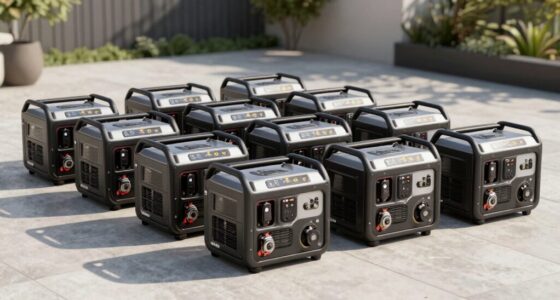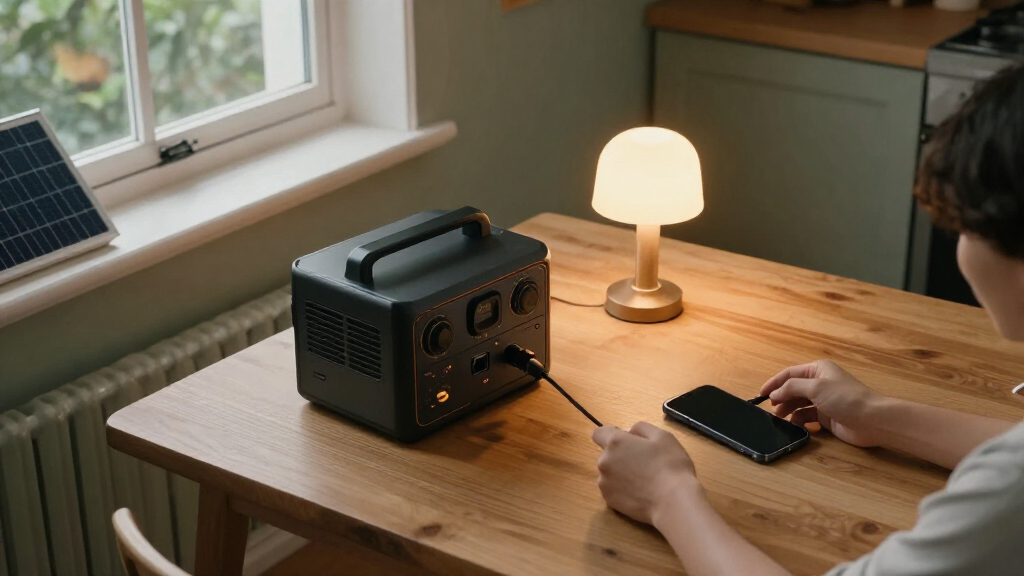
Choosing the right portable power station depends entirely on whether you need to run high-wattage appliances or just keep devices charged on the go. The Dabbsson Portable Power Station 2000L stands out as the best overall pick for those needing a balance of high capacity and fast charging capabilities. For travelers prioritizing weight savings, the Jackery Explorer 300 offers unmatched portability, while the SolarPlay 3600W serves those requiring massive power for heavy-duty tasks. The main tradeoff lies between battery capacity and physical portability; larger units run more appliances but become difficult to transport. Continue reading to see which model fits your specific energy demands.

Get backup power and energy gear delivered free with Prime
- Fast, free delivery on millions of items
- Prime Video, Amazon Music and more included
- Member-only deals all year
Complete the kit

Key Takeaways
- Capacity alone is misleading; the Dabbsson 2000L and EcoFlow Delta 3 Ultra prove that fast charging speeds matter more than raw watt-hours for daily usability.
- Small units like the ZEALOTT N66 and MARBERO are strictly for device charging and cannot support any AC appliances, making them unsuitable for camping cooking needs.
- LiFePO4 battery chemistry is now standard in mid-to-high tier models, offering a lifespan of 3000+ cycles compared to older NMC batteries found in some budget entries.
- Solar input compatibility varies wildly; the Jackery Explorer 300 with Solar Panel bundle is a better value than buying incompatible panels separately for some smaller units.
- Weight becomes a critical constraint above 1000Wh; models like the Jackery HomePower 3600 Plus require two people or wheels for practical transport.
| Dabbsson Portable Power Station 2000L |  | Best Overall for Fast-Recharging Backup | Capacity: 2048Wh | Battery type: Semi-solid LiFePO4 | Continuous output: 2200W | VIEW LATEST PRICE | See Our Full Breakdown |
| Jackery Explorer 300 Portable Power Station, 292Wh |  | Best Compact Pick for Short Trips | Capacity: 292Wh | Battery chemistry: LiFePO4 | Peak surge: 600W | VIEW LATEST PRICE | See Our Full Breakdown |
| EBL Acc2400 Portable Power Station |  | Best for Multi-Device Worksites | Capacity: 1843.2Wh | Battery chemistry: LiFePO4 | Output wattage: 2400W | VIEW LATEST PRICE | See Our Full Breakdown |
| ZeroKor 300W Portable Power Station with 60W Solar Panel |  | Best Starter Kit with Solar Included | Maximum output: 300W | Included solar panel: 60W monocrystalline | Solar panel conversion efficiency: 20.5% | VIEW LATEST PRICE | See Our Full Breakdown |
| SolarPlay 3600W Portable Power Station, 3840Wh Capacity with 400W Solar Panel |  | Best High-Capacity Option for Home Backup | Capacity: 3840Wh | Battery type: LiFePO4 | Continuous output: 3600W | VIEW LATEST PRICE | See Our Full Breakdown |
| ZEALOTT N66 Portable Power Station, 31,200mAh, 112.3Wh, 120W AC, 65W USB-C PD | 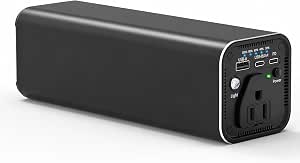 | Best for Lightweight Travel | Battery capacity: 31,200mAh / 112.3Wh | Battery type: Lithium-ion | AC output: 120W | VIEW LATEST PRICE | See Our Full Breakdown |
| EcoFlow Delta 3 Ultra 3072Wh Portable Power Station – 3600W AC Output |  | Best for High-Power Home Backup | Battery capacity: 3,072Wh | Battery type: LiFePO4 | Continuous output: 3,600W | VIEW LATEST PRICE | See Our Full Breakdown |
| DJI Power 1000 V2 Portable Power Station, 1024Wh LFP Battery |  | Best for Fast Recharging | Battery capacity: 1,024Wh | Battery type: LFP | Output: Up to 2,600W | VIEW LATEST PRICE | See Our Full Breakdown |
| Jackery Explorer 1000 v2 Portable Power Station, 1070Wh, 1500W |  | Best for App-Controlled Versatility | Battery capacity: 1,070Wh | Battery type: LFP (LiFePO4) | Output: 1,500W | VIEW LATEST PRICE | See Our Full Breakdown |
| Jackery Explorer 300 Portable Power Station with 40W Solar Panel |  | Best Small Solar Kit | Battery capacity: 292Wh | Battery chemistry: LiFePO4 | Peak output: 600W | VIEW LATEST PRICE | See Our Full Breakdown |
| Daran Portable Power Station, 89.6Wh LiFePO4 Battery, 100W |  | Best Compact LiFePO4 Pick | Battery capacity: 89.6Wh | Battery type: LiFePO4 | Battery life cycles: 3,500+ cycles | VIEW LATEST PRICE | See Our Full Breakdown |
| Anker SOLIX C1000 Gen 2 Portable Power Station |  | Best for Fast Recharging | Battery capacity: 1,024Wh | Battery chemistry: LiFePO4 | Continuous output: 2,000W | VIEW LATEST PRICE | See Our Full Breakdown |
| EcoFlow DELTA 3 Portable Power Station, 1024Wh, 1800W |  | Best for Expandable Backup | Battery capacity: 1,024Wh | Battery chemistry: LiFePO4 | AC output: 1,800W | VIEW LATEST PRICE | See Our Full Breakdown |
| Jackery HomePower 3600 Plus Portable Power Station, 3584Wh, 3600W |  | Best for Extended Home Backup | Battery capacity: 3,584Wh | Battery type: LFP | Output wattage: 3,600W | VIEW LATEST PRICE | See Our Full Breakdown |
| MARBERO Portable Power Station, 88Wh, 120W Surge, 24,000mAh |  | Best for Multi-Device Pocketable Charging | Battery capacity: 88Wh (24,000mAh) | Output wattage: 80W | Surge wattage: 120W | VIEW LATEST PRICE | See Our Full Breakdown |
| portable power station | Weight | Battery capacity | Battery type |
|---|---|---|---|
| Dabbsson Portable Power Statio | 41 lb | — | Semi-solid LiFePO4 |
| Jackery Explorer 300 Portable | About 7.5 lb (listed specifications also state 7.1 lb) | — | — |
| EBL Acc2400 Portable Power Sta | About 54–55 lb | — | — |
| ZeroKor 300W Portable Power St | — | Not specified | — |
| SolarPlay 3600W Portable Power | 97 lb | — | LiFePO4 |
| ZEALOTT N66 Portable Power Sta | About 2.4 lb | 31,200mAh / 112.3Wh | Lithium-ion |
| EcoFlow Delta 3 Ultra 3072Wh P | 72.1 lb | 3,072Wh | LiFePO4 |
| DJI Power 1000 V2 Portable Pow | — | 1,024Wh | LFP |
| Jackery Explorer 1000 v2 Porta | 23.8 lb | 1,070Wh | LFP (LiFePO4) |
| Jackery Explorer 300 Portable | 12.9 lb | 292Wh | — |
| Daran Portable Power Station | 2.54 lbs | 89.6Wh | LiFePO4 |
| Anker SOLIX C1000 Gen 2 Portab | 11.3kg | 1,024Wh | — |
| EcoFlow DELTA 3 Portable Power | 12.5kg | 1,024Wh | — |
| Jackery HomePower 3600 Plus Po | 77.2 lbs | 3,584Wh | LFP |
| MARBERO Portable Power Station | 3.2 lbs (1.04kg as listed) | 88Wh (24,000mAh) | — |
More Details on Our Top Picks
Dabbsson Portable Power Station 2000L
The Dabbsson 2000L balances substantial capacity with a recharge time that sets it apart from the larger SolarPlay Q3600. Its 2048Wh battery and 2200W continuous output can support more demanding backup and RV loads than compact 300W units, while the stated one-hour AC recharge helps shorten downtime between outages or trips. At 41 pounds, it is lighter than the EBL Acc2400, though still a substantial lift for frequent carrying. The 3300W surge rating adds headroom for appliances with startup loads, and solar input up to 800W offers an off-grid charging route. The tradeoff is that it has less stored energy and output than the wheeled SolarPlay, and its size makes it less convenient for minimalist camping.
Pros:- 2048Wh capacity supports longer use than compact 300W stations
- One-hour AC recharge can reduce downtime
- 2200W continuous output with 3300W surge capability
- 41-pound weight is comparatively manageable for this capacity
Cons:- Still heavy and bulky for regular carrying
- Less capacity and output than the SolarPlay Q3600
Best for: RV owners and households seeking a high-capacity backup station that can recharge quickly between uses.
Not ideal for: Hikers, frequent one-person campers, and buyers who need a light, compact station for short trips.
- Capacity:2048Wh
- Battery type:Semi-solid LiFePO4
- Continuous output:2200W
- Surge power:3300W
- Weight:41 lb
- AC recharge time:1 hour
- Maximum solar input:800W MPPT
- AC outlets:6
Our verdict“Choose the Dabbsson 2000L for substantial backup capacity and fast AC recharging without moving up to the much heavier SolarPlay Q3600.”
Jackery Explorer 300 Portable Power Station, 292Wh
For buyers who value easy carrying over long runtimes, the Jackery Explorer 300 is a more practical fit than the Dabbsson 2000L or EBL Acc2400. At about 7.5 pounds, it is suited to car camping and day trips where phone, camera, and laptop charging matter more than powering household appliances. Its 292Wh capacity and 300W rated output set clear limits: this is a small-device station, not a backup source for high-draw equipment. The port mix includes USB-C PD up to 100W, two AC outlets, USB-A, and a car port, so several device types can connect without adapters. LiFePO4 chemistry and a stated 4,000-plus cycles to 70% capacity support repeated use. Solar charging is available, but panels are sold separately.
Pros:- Lightweight design with an integrated handle
- USB-C PD output up to 100W
- LiFePO4 battery rated for over 4,000 cycles to 70% capacity
- Supports AC, car, and optional solar charging
Cons:- 292Wh capacity limits runtime for multiple devices or extended trips
- 300W rated output cannot run many larger appliances
- Solar panel is not included
Best for: Car campers, photographers, and mobile workers who need a light station for phones, laptops, and other small electronics.
Not ideal for: Households seeking outage backup for appliances or campers who need long runtimes for power-hungry gear.
- Capacity:292Wh
- Battery chemistry:LiFePO4
- Peak surge:600W
- Weight:About 7.5 lb (listed specifications also state 7.1 lb)
- USB-C:1 port, up to 100W PD
- AC outlets:2
- Solar charging:About 80% in 2.8 hours with a 100W panel; panel sold separately
Our verdict“Pick the Explorer 300 for portable charging on short outings, not for appliance backup or extended off-grid power.”
EBL Acc2400 Portable Power Station
The EBL Acc2400 suits users who need plenty of outlets and strong output in a single stationary setup. Its 2400W output and 1843.2Wh capacity place it closer to the Dabbsson 2000L than the compact Jackery Explorer 300, while its collection of AC, USB, DC, car, and wireless charging options is geared toward powering several devices at once. The stated 0.1-second emergency backup mode may appeal to users connecting sensitive equipment, although it should not be treated as a substitute for a dedicated UPS without checking the equipment requirements. The main compromise is portability: at roughly 54–55 pounds, it is heavier than the Dabbsson and not a casual carry. Its two-year warranty is also shorter than the Dabbsson’s listed five-year coverage.
Pros:- 2400W output and 4800W starting wattage
- Wide range of AC, USB, DC, car, and wireless charging options
- Can connect up to 12 devices
- Manufacturer claims over 3,500 charge cycles
Cons:- Heavy at approximately 54–55 lb
- Two-year warranty is shorter than the Dabbsson 2000L’s listed coverage
- Capacity is lower than the SolarPlay Q3600
Best for: Jobsite crews and group campers who need multiple device connections and high output at a mostly fixed location.
Not ideal for: Solo campers or RV users who frequently move their station and want a lighter unit with longer stated warranty coverage.
- Capacity:1843.2Wh
- Battery chemistry:LiFePO4
- Output wattage:2400W
- Starting wattage:4800W
- Weight:About 54–55 lb
- AC ports:4
- USB-C ports:2, up to 100W PD
- Warranty:2 years
Our verdict“Choose the EBL Acc2400 when output and connecting many devices matter more than easy transport or maximum capacity.”
ZeroKor 300W Portable Power Station with 60W Solar Panel
The ZeroKor is the simplest way in this group to start using solar charging without buying a panel separately. Its included 60W monocrystalline panel can help replenish a small station in suitable conditions, and the panel can also charge small devices directly. Compared with the Jackery Explorer 300, the ZeroKor’s clearest advantage is that solar hardware is included; the Jackery, however, lists a 292Wh battery and LiFePO4 chemistry, while the ZeroKor’s battery capacity and chemistry are not provided here. That missing capacity information makes it harder to estimate runtimes before purchase. The 300W output ceiling limits it to modest electronics, and appliances above that draw are unsuitable. Its protection features and SOS light add utility, but the solar panel junction box is not waterproof.
Pros:- Includes a 60W monocrystalline solar panel
- AC, DC, USB-A, and USB-C charging options
- Solar panel can charge small devices directly
- Built-in electrical protections and an SOS flashlight
Cons:- Battery capacity is not specified, making runtime hard to judge
- 300W maximum output excludes higher-draw appliances
- Solar panel junction box is not waterproof
Best for: First-time solar-power buyers who want an included panel for charging phones, tablets, and other small devices outdoors.
Not ideal for: Buyers who need documented battery capacity, long runtimes, waterproof solar hardware, or power for appliances above 300W.
- Maximum output:300W
- Included solar panel:60W monocrystalline
- Solar panel conversion efficiency:20.5%
- AC outlets:2, 300W maximum
- USB ports:3 × 5V/3A and 1 quick-charge port
- DC port:9V–12.6V, 10A maximum
- Charging methods:AC outlet, DC5521 solar input, and 12V car port
- Battery capacity:Not specified
Our verdict“Choose the ZeroKor as an entry-level solar kit for small electronics, but skip it if you need clear capacity figures or appliance-level power.”
SolarPlay 3600W Portable Power Station, 3840Wh Capacity with 400W Solar Panel
The SolarPlay Q3600 is the capacity leader in this group, aimed at users who need more stored energy and appliance support than the Dabbsson 2000L or EBL Acc2400 can provide. Its 3840Wh LiFePO4 battery and 3600W continuous output suit larger backup loads, while 15 output ports give groups or households room to connect several devices. A stated 2.5-hour AC recharge is quick for this capacity, and the unit supports up to 3500W solar input. Wheels and a telescopic handle help move it across a floor or campsite, but at 97 pounds it remains far less convenient to lift into a vehicle than the Dabbsson. The supplied description mentions a 400W solar panel in the title but lists solar as sold separately, so buyers should confirm what is included.
Pros:- Largest stated battery capacity in this group at 3840Wh
- 3600W continuous output with 5500W peak output
- AC recharge time is listed at 2.5 hours
- Wheels and telescopic handle aid movement on level surfaces
Cons:- 97 lb weight makes lifting and vehicle loading difficult
- Large footprint requires substantial storage space
- Solar panel inclusion is unclear in the supplied product details
Best for: Households, RV owners, and jobsite users who prioritize high capacity and output and can move a heavy wheeled unit.
Not ideal for: Buyers who need a station they can regularly lift alone, have limited storage space, or require certainty that a solar panel is included.
- Capacity:3840Wh
- Battery type:LiFePO4
- Continuous output:3600W
- Peak output:5500W
- Weight:97 lb
- AC recharge time:2.5 hours
- Maximum solar input:3500W
- Output ports:15: 5 AC, 6 USB, 2 DC, 1 cigarette lighter, and 1 XT60
Our verdict“Choose the SolarPlay Q3600 for high-capacity backup and heavy loads if its 97-pound body and solar-panel bundle details fit your setup.”
ZEALOTT N66 Portable Power Station, 31,200mAh, 112.3Wh, 120W AC, 65W USB-C PD
At about 2.4 pounds, the ZEALOTT N66 is the easiest option here to pack for a day trip or keep ready for small-device outages. Its 112.3Wh battery and 120W AC outlet can cover phones, cameras, and other low-power gear, while the 65W USB-C PD port is a better fit for compatible laptops than basic USB charging. Compared with the Jackery Explorer 300, it is much lighter and smaller, but gives up substantial capacity and output power. That makes it a companion for electronics, not a station for appliances or prolonged backup. The included carrying case and wall charger add practical convenience; the tradeoff is that its limited battery capacity will call for frequent recharging if several devices need power throughout the day.
Pros:- About 2.4 pounds and compact enough to pack easily
- 65W USB-C PD supports compatible laptops and other higher-draw USB-C devices
- Includes a protective case and PD wall charger
- AC, USB-C, and USB outputs support several kinds of small electronics
Cons:- 112.3Wh capacity is inadequate for extended backup or multi-day use
- 120W AC output rules out most appliances and higher-power equipment
Best for: Travelers and day hikers who want a light backup for phones, cameras, and a compatible USB-C laptop.
Not ideal for: Campers who need to run appliances or keep several devices powered for extended periods; its 112.3Wh capacity and 120W AC output are restrictive.
- Battery capacity:31,200mAh / 112.3Wh
- Battery type:Lithium-ion
- AC output:120W
- USB-C PD output:Up to 65W
- Other USB outputs:18W USB-A; 12W USB
- Ports:4
- Dimensions:8.37 × 2.82 × 2.82 inches
- Weight:About 2.4 lb
Our verdict“Choose the ZEALOTT N66 for lightweight charging of small electronics, but step up to the Jackery Explorer 300 if you need more reserve capacity.”
EcoFlow Delta 3 Ultra 3072Wh Portable Power Station – 3600W AC Output
The EcoFlow Delta 3 Ultra is the lineup’s choice for buyers who need to run demanding equipment, not simply recharge personal devices. Its 3,600W continuous output and 7,200W surge rating give it far more headroom for appliances than the Jackery Explorer 1000 v2, while its 3,072Wh LiFePO4 battery offers a much larger energy reserve. Wall, solar, car, and Smart Generator charging provide several ways to replenish it, and a sub-10ms UPS switch suits equipment that benefits from backup power with little interruption. The tradeoff is physical: at 72.1 pounds and nearly 25 inches long, it is cumbersome to move and store compared with the smaller stations here. Its scale makes more sense for a home, RV, or fixed camp setup than frequent carry-and-go use.
Pros:- 3,600W continuous output and 7,200W surge capacity handle demanding loads
- Large 3,072Wh LiFePO4 battery suits longer backup needs
- Wall, solar, car, and Smart Generator charging options
- Sub-10ms UPS switching and 25dB operation support indoor backup use
Cons:- At 72.1 pounds, it is difficult to carry without help
- Large dimensions take considerable storage and setup space
- Its capacity and output are more than many buyers need for basic device charging
Best for: Households, RV owners, and off-grid users who need high output and a large battery reserve for appliances or backup equipment.
Not ideal for: Campers or travelers who routinely lift and move their power station; its 72.1-pound weight and large footprint limit easy portability.
- Battery capacity:3,072Wh
- Battery type:LiFePO4
- Continuous output:3,600W
- Surge power:7,200W
- AC outlets:3
- Charging options:Wall outlet, solar panels, car input, EcoFlow Smart Generator
- UPS switch time:Under 10ms
- Weight:72.1 lb
- Dimensions:24.6 × 12.9 × 15.6 inches
Our verdict“Pick the EcoFlow Delta 3 Ultra for powerful, long-duration backup where its weight and size can stay manageable.”
DJI Power 1000 V2 Portable Power Station, 1024Wh LFP Battery
The DJI Power 1000 V2 pairs a useful 1,024Wh LFP battery with a headline advantage for time-sensitive setups: it can recharge to 80% in 37 minutes. Its 2,600W output also gives it more power headroom than the similarly sized Jackery Explorer 1000 v2, while two 140W USB-C ports can serve compatible high-draw devices directly. Quiet operation as low as 26dB and a 10ms UPS function make it appealing for indoor backup, work areas, and camps where noise matters. The key compromise is charging flexibility away from the wall: solar and car charging need a separate compatible adapter. That adds a purchase and a part to bring along. I’d favor this over the Jackery when rapid AC recharging and greater output matter more than an included, straightforward solar setup.
Pros:- Reaches 80% charge in 37 minutes
- 2,600W output offers more headroom than the Jackery Explorer 1000 v2
- Two 140W USB-C ports support compatible high-power devices
- Quiet operation and 10ms UPS switching suit indoor use and backup
Cons:- Solar and car charging require a separate compatible adapter
- Only the AC power cable is listed among the included components
- Its rapid recharge advantage is most useful when a wall outlet is available
Best for: Campers, mobile workers, and backup users who want a roughly 1kWh station with fast wall charging and strong AC output.
Not ideal for: Solar-first buyers who want to connect panels without sourcing an additional compatible adapter.
- Battery capacity:1,024Wh
- Battery type:LFP
- Output:Up to 2,600W
- USB-C ports:2 × 140W; 280W total
- Recharge time:80% in 37 minutes
- Noise level:As low as 26dB
- UPS switch time:10ms
- Dimensions:17.64 × 8.85 × 9.05 inches
- Warranty:Up to 5 years
Our verdict“Choose the DJI Power 1000 V2 if fast wall recharging and high output are priorities, and you are willing to arrange its solar or car adapter separately.”
Jackery Explorer 1000 v2 Portable Power Station, 1070Wh, 1500W
The Jackery Explorer 1000 v2 is a balanced pick for buyers who want a 1,070Wh LFP battery and practical mix of AC, USB, and car outputs without moving up to a much larger backup unit. Its 1,500W output and 3,000W surge capacity cover a broader range of equipment than the compact Jackery Explorer 300, while its 23.8-pound weight remains more manageable than the EcoFlow Delta 3 Ultra. App controls add fast, quiet, and energy-saving charging modes; the one-hour emergency charge is optional and requires activation in the app, rather than being the default. Solar is another tradeoff: the panel is not included, and compatibility is limited to Jackery solar panels. I’d choose it for a flexible camp or outage kit, but not for buyers who want open solar compatibility or effortless fast charging.
Pros:- 1,500W output and 3,000W surge handle more than small electronics
- LFP battery rated for over 70% capacity after 4,000 charge cycles
- AC, USB-C, USB-A, and car outputs serve varied devices
- App offers fast, quiet, and energy-saving charging modes
Cons:- Solar panel is not included and solar compatibility is limited to Jackery panels
- One-hour charging requires enabling emergency charging in the app
- At 23.8 pounds, it is less convenient to carry than compact stations
Best for: Campers and households seeking a mid-size station with multiple output types, app-based charging controls, and a long-life LFP battery.
Not ideal for: Buyers who want an included solar panel, broad third-party solar compatibility, or one-hour charging without changing app settings.
- Battery capacity:1,070Wh
- Battery type:LFP (LiFePO4)
- Output:1,500W
- Surge capacity:3,000W
- AC outlets:3 pure sine wave
- USB ports:2 USB-C; 1 USB-A
- Weight:23.8 lb
- Charging time:1 hour with app-enabled emergency charging; 1.7 hours by default
- Solar compatibility:Jackery solar panels only; panel not included
Our verdict“Pick the Jackery Explorer 1000 v2 for a versatile mid-size station if its app-controlled charging and Jackery-only solar compatibility suit your setup.”
Jackery Explorer 300 Portable Power Station with 40W Solar Panel
The Jackery Explorer 300 makes sense for short trips when a ready-made solar bundle matters more than high output. Its 292Wh LiFePO4 battery, 300W rated output, and mix of AC, USB, and car ports cover phones, cameras, and other modest loads. Unlike the ZEALOTT N66, it includes a 40W solar panel and offers considerably more stored energy, though it is also heavier at 12.9 pounds. The included panel gives the kit a practical way to recharge away from an outlet, but its 40W rating means a slow refill: the supplied data estimates about 7.5 hours to reach 80%. This is not a substitute for a larger station like the Jackery Explorer 1000 v2, and its 300W output limits appliance choices. I’d pick it for modest camping needs, not long outages.
Pros:- Includes a 40W solar panel rather than requiring a separate panel purchase
- 292Wh LiFePO4 battery is a meaningful step up from the ZEALOTT N66
- AC, USB-C, USB-A, and car ports support several device types
- Battery is rated for over 4,000 cycles to 70% capacity
Cons:- 40W panel takes about 7.5 hours to reach 80% capacity
- 300W rated output is unsuitable for many appliances
- At 12.9 pounds, it is heavier than the ZEALOTT N66 despite its modest capacity
Best for: Weekend campers and day-trip travelers who want a modest-capacity station with a solar panel included for small electronics.
Not ideal for: Buyers who need to power high-draw appliances or replenish a large battery quickly; its 300W output and 40W panel are limiting.
- Battery capacity:292Wh
- Battery chemistry:LiFePO4
- Peak output:600W
- Ports:2 AC, 1 USB-C PD, 2 USB-A, 1 car port
- USB-C PD output:100W
- Included solar panel:40W
- Weight:12.9 lb
- Dimensions:15.43 × 9.92 × 11.89 inches
Our verdict“Choose the Explorer 300 bundle for small-load trips where an included solar panel is useful and slow recharging is acceptable.”
Daran Portable Power Station, 89.6Wh LiFePO4 Battery, 100W
The Daran is the more useful choice for buyers who want a small, quiet station for phones, cameras, and other modest loads, rather than a backup source for household appliances. Its 89.6Wh LiFePO4 battery is rated for 3,500+ cycles, and its 2.54-pound frame is easier to pack than the MARBERO 88Wh, which weighs 3.2 pounds. Seven ports, including two AC outlets and two USB-C ports, offer flexibility for a compact unit, but the 100W maximum output sets a firm limit on what it can run. Fanless operation suits quiet campsites and bedside use; the built-in flashlight adds emergency utility. Solar charging is supported, though the panel and cable are not included. I would choose this over larger stations for portability, not runtime or appliance power.
Pros:- Light 2.54-pound design with a carrying handle
- LiFePO4 battery rated for 3,500+ cycles
- Seven ports include AC, USB-C, USB-A, and DC outputs
- Fanless operation and built-in flashlight with SOS mode
Cons:- 100W maximum output rules out many appliances
- Solar panel and charging cable are not included
Best for: Campers and travelers who want a lightweight, quiet station for charging phones, cameras, and small electronics.
Not ideal for: Buyers who need to run higher-wattage appliances or keep several devices powered through an extended outage; its 89.6Wh capacity and 100W output are limited.
- Battery capacity:89.6Wh
- Battery type:LiFePO4
- Battery life cycles:3,500+ cycles
- Maximum output:100W
- Output ports:7
- USB-C ports:2 (45W and 15W)
- Weight:2.54 lbs
- Charging methods:AC, USB-C PD, car, or solar; solar panel and cable not included
Our verdict“Choose the Daran for quiet, lightweight charging of small devices, but not for appliance backup or long runtimes.”
Anker SOLIX C1000 Gen 2 Portable Power Station
The Anker SOLIX C1000 Gen 2 stands out for buyers who need a full-size 1,024Wh station that can recharge quickly between uses. Its stated 49-minute AC recharge is shorter than the EcoFlow DELTA 3’s 56-minute full-charge time, while the Anker also offers 2,000W continuous output for a broader range of appliances than either compact Daran or MARBERO. A 600W solar input and sub-10ms UPS switchover add useful options for off-grid charging and protecting sensitive equipment. The tradeoff is portability: at 11.3kg, it is no longer a grab-and-go station, and the listed design has no built-in handle or wheels. With nine power outlets, it also has fewer outlets than the DELTA 3’s 13. I’d favor it for fast turnaround, not frequent carrying.
Pros:- 1,024Wh LiFePO4 battery with 2,000W continuous output
- Stated 49-minute full AC recharge
- Supports up to 600W solar input
- Sub-10ms UPS switchover and five-year warranty
Cons:- 11.3kg weight and no built-in handle or wheels make transport awkward
- Nine outlets are fewer than the EcoFlow DELTA 3’s 13
Best for: Households, RV travelers, and campers who need substantial output and want to restore charge quickly between trips or outages.
Not ideal for: Buyers who routinely carry a station over distance or need to connect many devices at once; it weighs 11.3kg and has nine outlets.
- Battery capacity:1,024Wh
- Battery chemistry:LiFePO4
- Continuous output:2,000W
- Peak output:3,000W
- AC recharge time:49 minutes
- Solar input:Up to 600W (60V maximum)
- UPS switchover:Less than 10ms
- Weight:11.3kg
- Total power outlets:9
Our verdict“Pick the Anker if fast recharging and 2,000W output matter more than easy carrying or a high outlet count.”
EcoFlow DELTA 3 Portable Power Station, 1024Wh, 1800W
The EcoFlow DELTA 3 is a strong fit for buyers who want a 1,024Wh station that can grow with their backup needs. It provides 1,800W AC output and can expand to 5kWh with compatible batteries, giving it a longer-term path the Anker SOLIX C1000 Gen 2 does not list. The 13 outlets also make it easier to connect multiple devices at once than the Anker’s nine, though the Anker offers higher continuous output at 2,000W and a quicker stated AC recharge. EcoFlow’s 500W solar input, 4,000-cycle LiFePO4 battery rating, and IP65 rating support regular outdoor use. Expansion requires additional compatible batteries, and at 12.5kg this is a substantial load to carry. I’d choose it for modular capacity, not for the lightest camping setup.
Pros:- Expandable to 5kWh with compatible batteries
- 13 outlets support multiple simultaneous connections
- LiFePO4 battery rated for 4,000 cycles to 80% capacity
- IP65 rating and up to 500W solar input
Cons:- Expansion requires purchasing compatible extra batteries
- 12.5kg weight can be burdensome for frequent carrying
- 1,800W AC output is lower than the Anker SOLIX C1000 Gen 2’s 2,000W
Best for: Campers, RV owners, and homeowners who want a 1,024Wh station now with the option to add compatible batteries later.
Not ideal for: Buyers who need the highest continuous output in this capacity class or frequently carry their station by hand; it has 1,800W output and weighs 12.5kg.
- Battery capacity:1,024Wh
- Battery chemistry:LiFePO4
- AC output:1,800W
- Surge output:3,600W
- Solar input:500W
- Maximum expandable capacity:5kWh
- Number of outlets:13
- Ingress protection:IP65
- Weight:12.5kg
Our verdict“Choose the DELTA 3 if you value expandable capacity and many outlets more than maximum output or easy portability.”
Jackery HomePower 3600 Plus Portable Power Station, 3584Wh, 3600W
For buyers who need more than a weekend’s worth of stored energy, the Jackery HomePower 3600 Plus offers a 3,584Wh battery and 3,600W output, far beyond the 1,024Wh EcoFlow DELTA 3. It can also expand to 21kWh per unit, or up to 43kWh with multiple units, and parallel operation supports 240V. That capacity makes it a better fit for extended outages or larger power demands than either mid-capacity option, but its 77.2-pound weight changes what portable means: wheels and a telescopic handle help move it over suitable ground, yet lifting it remains difficult. The listed two outlets are sparse compared with the DELTA 3’s 13, so buyers should check whether their connection needs fit. It accepts AC, solar, generator, and hybrid charging; solar panels are optional.
Pros:- Large 3,584Wh capacity and 3,600W output
- Expandable to 21kWh per unit or 43kWh with multiple units
- Parallel operation supports 240V and up to 7,200W output
- Wheels and telescopic handle help with rolling transport
Cons:- At 77.2 pounds, lifting and loading it can be difficult
- Only two outlets are listed
- Solar panels are optional, not included
Best for: Homeowners preparing for longer outages who need high capacity, expandable storage, and the ability to move the unit on wheels.
Not ideal for: Campers or users who need a station they can lift into a vehicle or connect many appliances to directly; it weighs 77.2 pounds and lists two outlets.
- Battery capacity:3,584Wh
- Battery type:LFP
- Output wattage:3,600W
- Parallel output:7,200W
- Voltage:120V; 240V in parallel
- Expandable capacity:Up to 21kWh per unit or 43kWh with multiple units
- Battery cycle life:6,000 cycles
- Charging options:Hybrid AC+DC, AC, solar, or gas generator
- Weight:77.2 lbs
Our verdict“Choose the HomePower 3600 Plus for high-capacity, expandable home backup if its weight and two-outlet layout suit your setup.”
MARBERO Portable Power Station, 88Wh, 120W Surge, 24,000mAh
The MARBERO is a small-device station for buyers who want eight connection options in a compact package, including AC, USB, USB-C PD, and car DC. Its 88Wh capacity is close to the Daran’s 89.6Wh, but the Daran is lighter at 2.54 pounds and lists LiFePO4 chemistry with a 3,500+ cycle rating—advantages for buyers focused on carrying weight and battery longevity. MARBERO instead offers one more port and a stated 80W output with 120W surge, suited to charging several modest devices rather than running demanding appliances. The included adapter reaches 80% charge in two hours, and a built-in light adds emergency use. Its listed 230V AC output may not suit every buyer’s equipment, so check device compatibility. Solar panels are compatible but not listed as included.
Pros:- Eight output ports cover AC, DC, USB, and USB-C PD
- Compact design with a carrying handle
- Built-in LED light includes SOS mode
- Reaches 80% charge in two hours with the included adapter
Cons:- 80W output limits use with higher-power devices
- Solar panel is not listed as included
- 230V AC output may not match every device or region
Best for: Travelers and campers who want a small station with varied port types for phones, tablets, lights, and other low-power devices.
Not ideal for: Buyers seeking long-lasting LiFePO4 cycle life, output above 80W for sustained use, or a station for higher-power appliances.
- Battery capacity:88Wh (24,000mAh)
- Output wattage:80W
- Surge wattage:120W
- Output ports:8
- AC output voltage:230V
- Weight:3.2 lbs (1.04kg as listed)
- Charging time:0–80% in 2 hours with included adapter
- Solar compatibility:MARBERO 30W or 60W solar panels
Our verdict“Choose the MARBERO for compact, multi-port charging of small devices, but pick the Daran for lighter weight and a stated LiFePO4 cycle-life rating.”
How We Picked
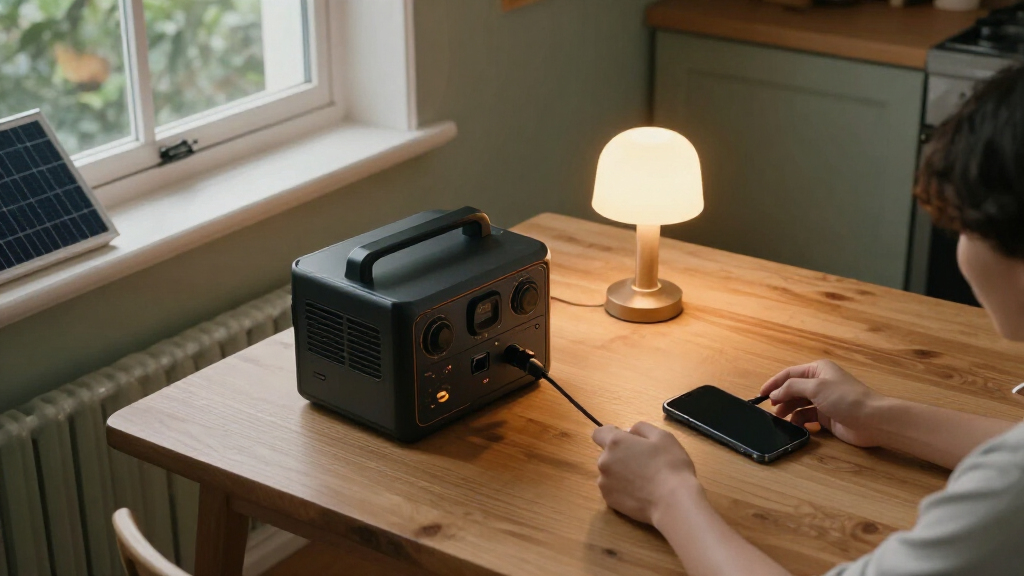
I evaluated these portable power stations based on three primary criteria: power output efficiency, charging speed, and portability. Rather than just looking at advertised watt-hours, I analyzed the usable capacity after inverter losses and the time required to reach a full charge from empty. This distinction separates units that are genuinely useful for home backup from those that are merely large battery bricks.
The ranking logic prioritizes versatility for the top spots. A unit like the Dabbsson 2000L ranks high because it bridges the gap between camping convenience and home emergency readiness. Conversely, specialized units like the ZEALOTT N66 are ranked lower for general use but remain top picks for their specific niche of ultra-light travel. I also penalized models with proprietary charging cables or poor solar MPPT controller efficiency, as these create friction for real-world users.
| portable power station | Battery type |
|---|---|
| Dabbsson Portable Power Statio | Semi-solid LiFePO4 |
| Jackery Explorer 300 Portable | — |
| EBL Acc2400 Portable Power Sta | — |
| ZeroKor 300W Portable Power St | — |
| SolarPlay 3600W Portable Power | LiFePO4 |
| ZEALOTT N66 Portable Power Sta | Lithium-ion |
| EcoFlow Delta 3 Ultra 3072Wh P | LiFePO4 |
| DJI Power 1000 V2 Portable Pow | LFP |
| Jackery Explorer 1000 v2 Porta | LFP (LiFePO4) |
| Jackery Explorer 300 Portable | — |
| Daran Portable Power Station | LiFePO4 |
| Anker SOLIX C1000 Gen 2 Portab | — |
| EcoFlow DELTA 3 Portable Power | — |
| Jackery HomePower 3600 Plus Po | LFP |
| MARBERO Portable Power Station | — |
Factors to Consider When Choosing Portable Power Stations
Selecting a portable power station involves balancing raw power against practical constraints like weight and recharge time. Here are the key factors that should drive your decision.Understanding Watt-Hours vs. Output Watts
Many buyers confuse capacity with power output. Watt-hours (Wh) determine how long a device runs, while Output Watts (W) determine what devices can run. A 500Wh station cannot run a 1200W hair dryer, regardless of capacity. Check the surge rating if you plan to use motors or compressors, as startup spikes can exceed running watts. Always calculate your total load before purchasing to avoid underestimating needs.
The Importance of Battery Chemistry
Lithium-ion Phosphate (LiFePO4) has largely replaced older NMC chemistries in quality units. LiFePO4 offers roughly four times the cycle life, meaning it lasts years longer with daily use. It is also more thermally stable, reducing fire risks during high-load operation. While NMC batteries are lighter, the longevity and safety benefits of LiFePO4 make it the superior choice for long-term investment. Avoid units that do not specify their cell chemistry.
Charging Speed and Power Station Efficiency
A large battery is useless if it takes two days to recharge. Look for models with AC charging speeds that can fill 80% of the battery in under two hours. The Dabbsson 2000L and EcoFlow Delta 3 Ultra excel here, allowing rapid turnover between uses. Also, check the standby power consumption; some units drain their own battery when idle, which is problematic for long-term storage. Efficiency ratings above 85% are preferable for minimizing energy waste.
Portability and Form Factor
Weight is the most common complaint among owners of large power stations. Units over 1500Wh often exceed 30 pounds, making them difficult to lift into a car trunk. Look for integrated handles and wheeled designs if you need to move the unit frequently. For camping, a compact footprint matters more than raw capacity if you have limited vehicle space. Consider the shape; cylindrical or rounded designs often fit better in tight spaces than boxy units.
Solar Charging Capabilities
Solar input is not universal. Check the maximum solar input wattage and the voltage range compatibility of the built-in MPPT controller. Some stations accept up to 500W of solar input, while others cap out at 100W, severely limiting off-grid recharging speed. Ensure the panel connector type matches your existing gear to avoid buying new adapters. A high-capacity station with slow solar input is impractical for extended off-grid trips without a generator backup.
Frequently Asked Questions
Can a portable power station run a refrigerator?
Yes, but only if the station has sufficient output watts and capacity. Most modern refrigerators use 100-200 watts running, but startup surges can hit 800-1200 watts. Units like the Jackery Explorer 1000 v2 or Dabbsson 2000L can handle this, while smaller units like the ZEALOTT N66 cannot. You must also calculate runtime; a 1000Wh station might run a fridge for only 4-6 hours depending on insulation and ambient temperature.
Is it safe to leave a portable power station plugged in 24/7?
Most modern LiFePO4 stations are designed for continuous grid connection, but heat management is the key concern. Leaving a unit plugged in generates minimal heat if the battery is full, but frequent cycling during load shedding can degrade cells faster. I recommend using smart plugs to monitor temperature. If the unit feels hot to the touch while charging, unplug it. Always store these devices in cool, dry places to maximize lifespan.
What is the difference between pure sine wave and modified sine wave?
All reputable portable power stations in this roundup, such as the EcoFlow Delta 3 and Anker SOLIX C1000, use pure sine wave inverters. Pure sine waves mimic grid power and are safe for sensitive electronics like laptops, medical devices, and motors. Modified sine waves can cause buzzing in audio equipment, overheating in motors, and potential damage to sensitive chargers. Never buy a modified sine wave unit for modern electronics.
How long do these batteries actually last?
Lifespan is measured in charge cycles. LiFePO4 batteries, found in most mid-to-high tier picks like the EBL Acc2400, typically last 3000-6000 cycles before dropping to 80% capacity. If you use it once a day, that is 8-16 years. NMC batteries last 500-1000 cycles, which is 2-3 years of daily use. Calendar aging also affects batteries, so even unused units will degrade over 5-7 years. Regular calibration helps maintain accurate percentage displays.
Do I need a solar panel if I have a car charger?
Car charging is slow, typically taking 10-20 hours to fill a large station via 12V or 24V DC inputs. Solar panels allow for passive, continuous charging during the day, which is essential for multi-day off-grid trips. If you only use the station for weekend camping and return home to charge, a car charger might suffice. However, for emergency backup or extended travel, solar capability provides energy independence that a car charger cannot match.
Conclusion
To summarize the best choices for different user profiles: The Dabbsson Portable Power Station 2000L is the Best Overall pick due to its exceptional charging speed and solid LiFePO4 construction. For those on a budget, the Jackery Explorer 300 is the Best Value for light camping and device charging. The SolarPlay 3600W earns the Best Premium title for heavy-duty home backup and construction sites. Beginners should start with the Jackery Explorer 1000 v2 for its user-friendly interface and reliable ecosystem. Finally, digital nomads prioritizing weight should choose the ZEALOTT N66 as the Best Compact option for keeping laptops and phones alive without the bulk.