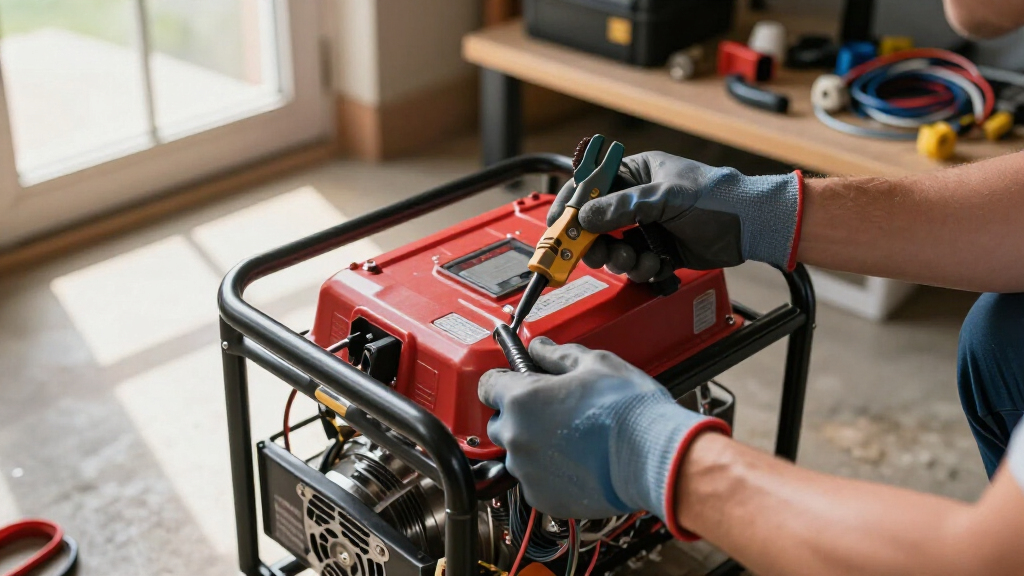

Choosing among home backup generators comes down to one question: how much of your house do you need to run, and for how long? The Generac 26kW Whole Home Generator earns the best overall spot because it replaces an automatic standby system for an entire house, with cellular monitoring and no manual setup during a storm. For tighter budgets, the Westinghouse 6500 Watt Dual Fuel with its included transfer switch delivers the best value in essential-circuit backup, while the Anker SOLIX S2000 is the strongest battery option for apartments, condos, or anyone who refuses to store fuel. The main tradeoff in this category is convenience versus cost: standby units run everything but demand professional installation and a permanent gas line, while portables cost far less but require you to set up, fuel, and manage them manually. Read on for the full breakdown of all 13 picks.
Listen free for 30 days with Audible
Thousands of audiobooks and originals — cancel anytime.
Start your free trialAs an affiliate, we earn on qualifying purchases.
Complete the kit


Key Takeaways
- Whole-home standby units (Generac 26kW and 10kW) dominated for total capacity, but their installation costs can double the sticker price — portables like the Westinghouse 14500 Peak Watt models deliver 80% of the capability at a fraction of the installed cost.
- Only one portable in the lineup, the Westinghouse 6500 Watt, ships with a transfer switch included, which closed the convenience gap with standby units and made it the clear value leader.
- Tri-fuel capability (gasoline, propane, natural gas) appeared on four generators here, and it matters more than raw wattage during extended outages because propane stores indefinitely while gasoline degrades within months.
- Battery stations (Jackery Explorer 1000 v2, Anker SOLIX S2000) scored highest for indoor safety and zero maintenance but topped out at less than a day of refrigerator-plus-basics runtime — they complement rather than replace fuel generators.
- Inverter models like the Oxseryn 4400-Watt units trade power output for quiet operation and clean electricity, making them the right choice only if your backup needs are limited to sensitive electronics and small appliances.
| Oxseryn 4400-Watts Inverter Generator, Gas Powered, Emergency Home Backup, RV Ready 30A Outlet |  | Best Budget Portable Backup | Peak Watts: 4,400 | Running Watts: 3,400 | Fuel Type: Gasoline | VIEW LATEST PRICE | See Our Full Breakdown |
| Jackery Explorer 1000 v2 Portable Power Station, 1070Wh, 1500W |  | Best Fume-Free Emergency Option | Capacity: 1070Wh | Continuous Output: 1,500W (3,000W surge) | Battery Chemistry: LiFePO4 (LFP), 4,000 cycles | VIEW LATEST PRICE | See Our Full Breakdown |
| Westinghouse 14500 Peak Watt Tri-Fuel Portable Generator with Remote Electric Start |  | Best Overall for Whole-Home Power | Peak Watts: 14,500 | Running Watts: 11,500 (gas), 13,500 (propane), 9,500 (natural gas) | Fuel Types: Gasoline, propane, natural gas | VIEW LATEST PRICE | See Our Full Breakdown |
| Anker SOLIX S2000 Portable Power Station, 2010Wh, 3000W Peak, Home Backup |  | Best Battery Backup for Indoor Use | Capacity: 2010Wh | Continuous Output: 1,500W | Peak Output: 3,000W | VIEW LATEST PRICE | See Our Full Breakdown |
| Generac 12,500 Starting Watt Tri-Fuel Portable Generator, Electric Start |  | Best Premium Fuel-Flexible Runner-Up | Starting Watts: 12,500 | Running Watts: 9,500 | Fuel Types: Gasoline, liquid propane, natural gas | VIEW LATEST PRICE | See Our Full Breakdown |
| DuroStar DS13000MX 13,000-Watt Dual Fuel Portable Generator with Electric Start |  | Best Value Big-Watt Workhorse | Peak / Running Watts: 13,000 / 10,500 | Fuel Type: Gasoline or Propane | Engine: 500cc 4-stroke | VIEW LATEST PRICE | See Our Full Breakdown |
| Westinghouse 14500 Peak Watt Dual Fuel Portable Generator with Remote Electric Start | 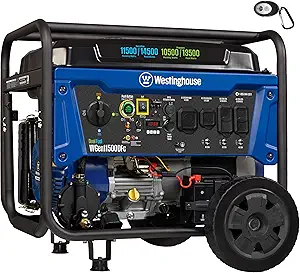 | Best for Whole-House Power | Peak / Running Watts: 14,500 / 11,500 | Fuel Type: Gasoline, Propane, Natural Gas capable | Engine: 550cc 4-stroke OHV | VIEW LATEST PRICE | See Our Full Breakdown |
| Westinghouse 13500 Peak Watt Tri-Fuel Portable Generator with Remote Electric Start |  | Best Fuel Flexibility | Peak Watts: 13,500 | Running Watts: 10,500 gas / 9,500 propane / 8,500 natural gas | Fuel Types: Gasoline, Propane, Natural Gas | VIEW LATEST PRICE | See Our Full Breakdown |
| Westinghouse 12500 Watt Dual Fuel Portable Generator with Remote Electric Start |  | Best Mid-Size Home Backup | Peak / Running Watts: 12,500 / 9,500 gas / 8,500 propane | Fuel Type: Gasoline or Propane | Engine: 457cc 4-stroke OHV | VIEW LATEST PRICE | See Our Full Breakdown |
| Generac 10kW Whole Home Generator, Transfer Switch & Cellular Capability |  | Best Entry-Level Standby | Power Output: 10kW | Fuel Type: LP or Natural Gas | Transfer Switch: Included | VIEW LATEST PRICE | See Our Full Breakdown |
| Westinghouse 6500 Watt Dual Fuel Portable Generator with Transfer Switch and CO Sensor |  | Best Mid-Size Home Backup Value | Gasoline Output (Running/Peak): 5300 / 6500 watts | Propane Output (Running/Peak): 4800 / 5800 watts | Engine: 274cc 4-Stroke OHV | VIEW LATEST PRICE | See Our Full Breakdown |
| Generac 26kW Whole Home Generator with Cellular Capability |  | Best Whole-Home Standby | Power Output: 26kW | Fuel Type: Natural gas or LP | Connectivity: Cellular with Mobile Link app | VIEW LATEST PRICE | See Our Full Breakdown |
| Oxseryn Power Equipment 4400 Watts Inverter Generator Gas Powered, Portable Open Frame Generator, Low Noise with ECO Mode, RV Ready, Emergency Home Backup |  | Best Lightweight Emergency Pick | Running Wattage: 3400 watts | Peak Wattage: 4400 watts | Engine: 208cc 4-stroke | VIEW LATEST PRICE | See Our Full Breakdown |
| home backup generator | Tank Capacity | Engine | Warranty |
|---|---|---|---|
| Oxseryn 4400-Watts Inverter Ge | 2 gallons | — | — |
| Jackery Explorer 1000 v2 Porta | — | — | — |
| Westinghouse 14500 Peak Watt T | 9.5 gallons | 550cc 4-stroke OHV | 3 years |
| Anker SOLIX S2000 Portable Pow | — | — | — |
| Generac 12,500 Starting Watt T | 7.5 gallons | — | — |
| DuroStar DS13000MX 13,000-Watt | 8.3 gallons | 500cc 4-stroke | — |
| Westinghouse 14500 Peak Watt D | 9.5 gallons | 550cc 4-stroke OHV | 3-year limited |
| Westinghouse 13500 Peak Watt T | 9.5 gallons | 500cc 4-stroke OHV | 3-year limited |
| Westinghouse 12500 Watt Dual F | 6.6 gallons | 457cc 4-stroke OHV | 3 years |
| Generac 10kW Whole Home Genera | — | — | 5 years |
| Westinghouse 6500 Watt Dual Fu | — | 274cc 4-Stroke OHV | 3 years |
| Generac 26kW Whole Home Genera | — | — | 5 years limited |
| Oxseryn Power Equipment 4400 W | — | 208cc 4-stroke | — |
More Details on Our Top Picks
Oxseryn 4400-Watts Inverter Generator, Gas Powered, Emergency Home Backup, RV Ready 30A Outlet
Not everyone needs to power an entire house during an outage, and the Oxseryn 4400-watt inverter is built around that reality. With 3400 running watts and clean inverter power, it handles a refrigerator, lights, a TV, and phone charging without the risk of frying sensitive electronics — something open-frame units like the Generac GP9500E handle less gracefully. At 56 pounds, it is also dramatically easier to move than the 219-pound Generac, and the RV-ready 30A outlet doubles its usefulness beyond emergencies. The tradeoffs are real: a 2-gallon tank means refueling roughly every half-day, and gasoline is your only fuel option, so no propane shelf-stability. Compared with the Anker SOLIX S2000, you get nearly triple the continuous output and indefinite runtime — as long as you have fuel.
Pros:- Lightweight 56-lb frame with inverter-clean power safe for laptops and phones
- ECO mode and low oil shutdown stretch fuel and protect the engine
- RV-ready 30A outlet makes it dual-purpose for camping trips
- A fraction of the price of whole-home or high-wattage tri-fuel units
Cons:- Gasoline only — fuel degrades in storage and must be rotated
- 2-gallon tank means frequent refueling through longer outages
- 3400 running watts rules out most central appliances
Best for: Renters, apartment dwellers with outdoor space, and small households who only need essentials powered during short outages
Not ideal for: Homeowners wanting to run HVAC, well pumps, or whole circuits — 3400 running watts simply won’t cover it
- Peak Watts:4,400
- Running Watts:3,400
- Fuel Type:Gasoline
- Runtime:14 hours at 25% load
- Tank Capacity:2 gallons
- Outlets:RV-ready 30A, 120V household
- Weight:56 lbs
- Safety Features:Low oil shutdown, overload protection
Our verdict“This pick makes the most sense for budget-minded buyers who want clean, portable power for essentials rather than whole-house coverage.”
Jackery Explorer 1000 v2 Portable Power Station, 1070Wh, 1500W
The Jackery Explorer 1000 v2 answers the most common portable generator complaint: no fumes, no fuel storage, no engine maintenance. Its 1070Wh LFP battery is rated for 4,000 charge cycles and a decade of service, and the one-hour fast recharge means you are not waiting overnight between uses. Compared with the Oxseryn 4400, it can safely run indoors during a storm — a genuine safety advantage — but it cannot run indefinitely, and 42 minutes at full 1500W load exposes the ceiling. Unlike the Anker SOLIX S2000, which carries nearly double the capacity, this unit trades endurance for a 23.8-pound weight you can actually carry to a car or upstairs. The seven ports, including 100W USB-C, make it far better for device charging than any gas unit here.
Pros:- Zero emissions, safe to use indoors and store anywhere
- 1-hour fast charge (with app activation) is class-leading
- LFP battery rated for 4,000 cycles and 10+ years
- Seven ports including high-watt USB-C for modern devices
Cons:- Solar panels sold separately, adding real cost for outage use
- Capacity only bridges short outages under heavy loads
- No fuel fallback — once the battery empties, you wait for grid or sun
Best for: Apartment residents, people in storm-prone areas who want indoor-safe power, and anyone pairing it with solar for extended outages
Not ideal for: Households needing to run refrigerators for multiple days — 1070Wh drains quickly under real appliance loads
- Capacity:1070Wh
- Continuous Output:1,500W (3,000W surge)
- Battery Chemistry:LiFePO4 (LFP), 4,000 cycles
- Ports:7 total, including USB-C, USB-A, AC, DC
- Recharge Time:As fast as 1 hour (AC, app activated)
- Weight:23.8 lbs
- Recharging:AC wall, solar (panels sold separately)
Our verdict“This model suits buyers who prioritize safe, silent, indoor-friendly backup for devices and short outages over multi-day endurance.”
Westinghouse 14500 Peak Watt Tri-Fuel Portable Generator with Remote Electric Start
When a storm knocks out power for days, fuel flexibility matters more than anything else, and the Westinghouse 14500 tri-fuel is the strongest answer in this lineup. With 13,500 running watts on propane and the ability to hook into a natural gas line, it can run indefinitely without ever touching a gas can — a decisive edge over the gas-only Oxseryn 4400. The remote key-fob start means you never step outside in bad weather, and 50A/30A outlets make it transfer-switch ready for true whole-circuit home connection. Compared with the Generac GP9500E tri-fuel, it delivers roughly 2,000 more running watts and longer 19-hour runtime, at a steeper price and heavier frame. First-time owners should budget for professional transfer-switch installation, which is not optional if you want the full value.
Pros:- Tri-fuel flexibility lets you run on a natural gas line for unlimited runtime
- 14,500 peak watts covers central AC, well pumps, and multiple circuits
- Remote electric start from up close or inside
- Transfer-switch ready with 50A and 30A outlets for whole-home wiring
Cons:- Heavier and pricier than dual-fuel rivals like the DuroStar DS13000MX
- Setup and transfer-switch installation add cost and complexity
- Bulky frame complicates storage in tight garages
Best for: Suburban homeowners in hurricane or ice-storm regions who want near whole-house coverage without a standby unit’s installation cost
Not ideal for: Anyone without help moving it — its bulk and weight make solo repositioning impractical, and it overpowers small essential-only needs
- Peak Watts:14,500
- Running Watts:11,500 (gas), 13,500 (propane), 9,500 (natural gas)
- Fuel Types:Gasoline, propane, natural gas
- Runtime:Up to 19 hours (gasoline)
- Tank Capacity:9.5 gallons
- Engine:550cc 4-stroke OHV
- Start:Electric with remote key fob
- Warranty:3 years
Our verdict“For homeowners who want maximum coverage and fuel flexibility from a portable unit, this is the pick that justifies its price.”
Anker SOLIX S2000 Portable Power Station, 2010Wh, 3000W Peak, Home Backup
Positioned between the Jackery Explorer 1000 v2 and full-size gas generators, the Anker SOLIX S2000 strikes a middle path: 2010Wh of capacity with a 1500W continuous output, no fuel, no fumes, and a LiFePO4 battery rated for 10,000 cycles — roughly double the longevity of Jackery’s cells. In practice, that means running a refrigerator on and off for the better part of a day, plus lights and devices, all from inside your home. Its compact 8.19-by-11-inch footprint fits a closet shelf, which no engine-driven unit in this roundup can claim. The honest limitation versus the Westinghouse 14500 is runtime: when the battery is empty, backup ends unless you have solar panels or grid power to recharge. The 1500W continuous ceiling also rules out microwaves paired with heavy appliances.
Pros:- 2010Wh capacity nearly doubles the Jackery Explorer 1000 v2
- 10,000-cycle LiFePO4 battery outlasts most competitors chemically
- Compact, closet-friendly size at 35.7 pounds with a carry-friendly shape
- Solar and AC recharging options for outage recovery
Cons:- 1500W continuous output limits which appliances can run
- No 12V DC port for car-style accessories
- Capacity still ends — no fuel top-up option like gas or propane units
Best for: Homeowners who want silent, indoor-safe backup for a fridge, medical devices, and electronics through overnight and day-long outages
Not ideal for: Anyone expecting to run high-wattage appliances like HVAC, electric water heaters, or power tools — the output cap is hard, not soft
- Capacity:2010Wh
- Continuous Output:1,500W
- Peak Output:3,000W
- Battery Chemistry:LiFePO4, rated 10,000 cycles
- Recharging:AC wall outlet, solar
- Weight:35.7 lbs
- Dimensions:8.19″L x 11.1″W x 12.7″H
Our verdict“This option stands out for buyers who want serious battery capacity and decade-long durability for indoor backup, as long as their loads stay under 1500W.”
Generac 12,500 Starting Watt Tri-Fuel Portable Generator, Electric Start
The Generac GP9500E tri-fuel lands one notch below the Westinghouse 14500 for one main reason: 9,500 running watts versus 11,500-plus on gasoline. What it counters with is Generac’s brand-typical engineering polish — COsense carbon monoxide detection that automatically shuts the engine down if fumes accumulate, a feature that matters if your placement options are tight. Its automatic voltage regulation keeps output steadier than cheaper portables, protecting HVAC control boards and electronics during brownout-level surges. Compared with the DuroStar DS13000MX, the Generac gives up some raw wattage but gains propane and natural gas capability plus a true 50A outlet for transfer-switch wiring. The 219-pound weight demands a two-person lift or a permanent parking spot in the garage. Runtime is respectable rather than exceptional at 9.5 hours at half load.
Pros:- Tri-fuel operation with natural gas for unlimited refueling
- COsense automatic shutoff adds genuine safety margin near living spaces
- AVR-regulated output protects sensitive home electronics
- 50A twist-lock outlet supports full transfer-switch installation
Cons:- 9,500 running watts trail the Westinghouse 14500 and DuroStar DS13000MX
- 219 pounds with no remote start at this price point
- Gasoline runtime trails natural-gas-connected operation
Best for: Homeowners loyal to the Generac ecosystem who want tri-fuel flexibility and strong safety engineering for essential circuits
Not ideal for: Buyers chasing maximum wattage per dollar — the dual-fuel Westinghouse and DuroStar options deliver more output for less money
- Starting Watts:12,500
- Running Watts:9,500
- Fuel Types:Gasoline, liquid propane, natural gas
- Runtime:9.5 hrs at 50% load; 14 hrs at 25% load
- Tank Capacity:7.5 gallons
- Outlets:Two 120V 20A GFCI duplex, 120/240V 30A, 120/240V 50A
- Start Type:Electric start with 12V battery
- Safety Features:COsense, low-oil shutdown, GFCI outlets
Our verdict“This model is better suited to buyers who value safety features and fuel flexibility over class-leading wattage.”
DuroStar DS13000MX 13,000-Watt Dual Fuel Portable Generator with Electric Start
The DuroStar DS13000MX delivers nearly the same running wattage as the Westinghouse WGen11500DFc — 10,500 versus 11,500 watts — typically at a friendlier price, which is why this pick makes the most sense for buyers who want whole-home-class power without the premium badge. Its all-metal construction feels more durable than the plastic-clad competition, and dual fuel operation means a propane tank can sit untouched for years as an emergency reserve. The tradeoff is refinement: there’s no remote start like the Westinghouse units, and with an 8.3-gallon tank feeding a 500cc engine, expect more frequent refueling and louder operation during extended outages. Compared with the Generac 10kW standby, you sacrifice automatic transfer but gain portability for job sites and RV use.
Pros:- 10,500 running watts handles most essential household circuits
- Dual fuel flexibility lets you stockpile propane for emergencies
- Push-button electric start beats recoil-only rivals
- All-metal construction stands up to rough handling and weather
Cons:- Heavy and awkward to move without help
- Thirsty 500cc engine means frequent refills during long outages
- Louder than inverter or standby alternatives
Best for: Budget-conscious homeowners who need 10,000+ running watts for essential circuits and also want a generator they can wheel to a job site or campsite
Not ideal for: Buyers wanting set-and-forget convenience — there’s no remote start and no automatic transfer, so someone must be home to run it
- Peak / Running Watts:13,000 / 10,500
- Fuel Type:Gasoline or Propane
- Engine:500cc 4-stroke
- Tank Capacity:8.3 gallons
- Start Type:Electric push-button
- Safety Features:CO sensor, low oil shutdown
- Outlets:5 total, 240V capable
- Voltage:120/240V
Our verdict“A solid choice for buyers who want maximum wattage per dollar and don’t mind a hands-on, noisy machine in exchange for serious power.”
Westinghouse 14500 Peak Watt Dual Fuel Portable Generator with Remote Electric Start
When the goal is covering an entire house from a portable unit, the Westinghouse WGen11500DFc is the strongest candidate in this batch. Its 11,500 running watts outmuscle both the DuroStar DS13000MX and the WGen10500TFc, and the 9.5-gallon tank stretches runtime to up to 19 hours — meaning overnight refills become optional rather than mandatory. The remote start fob is a genuine quality-of-life feature during a storm; you can fire it up from inside. Compared with the Generac 26kW standby, you give up automatic operation, but you also avoid the installation cost of a permanent unit. The honest downsides: at this size, expect a machine you’ll position once and rarely move, and a more involved first-time setup than smaller units.
Pros:- 11,500 running watts runs heavy loads like central AC
- Up to 19 hours of runtime per tank cuts overnight refueling
- Remote and electric start from up close or afar
- Transfer switch ready for clean connection to your panel
Cons:- Very heavy — plan on two people or a permanent pad
- Setup and panel connection can overwhelm first-time owners
- Premium pricing relative to lower-wattage rivals
Best for: Homeowners with larger homes — central AC, well pumps, electric ranges — who want portable power that genuinely approximates whole-house coverage
Not ideal for: Anyone without help moving it or a dedicated storage spot; casual users who only need a fridge and a few lights running
- Peak / Running Watts:14,500 / 11,500
- Fuel Type:Gasoline, Propane, Natural Gas capable
- Engine:550cc 4-stroke OHV
- Tank Capacity:9.5 gallons
- Runtime:Up to 19 hours (gasoline)
- Start Type:Electric and remote key fob
- Transfer Switch Ready:Yes
- Warranty:3-year limited
Our verdict“The closest a portable gets to true whole-house backup, ideal for buyers who prioritize raw capacity and long runtime over portability.”
Westinghouse 13500 Peak Watt Tri-Fuel Portable Generator with Remote Electric Start
The WGen10500TFc stands out for one reason the dual-fuel units can’t match: it runs on gasoline, propane, or natural gas. That third option matters more than it sounds — hooked to a home’s natural gas line, it can theoretically run indefinitely without refueling, something neither the DuroStar DS13000MX nor the WGen9500DF can do. For outage-prone regions where gasoline disappears from stations within days, that’s the difference between a 12-hour solution and a week-long one. Power does drop as you move away from gasoline (10,500 down to 8,500 running watts on natural gas), so size your circuits accordingly. It shares the family’s 19-hour gasoline runtime and remote start, but also the family’s weight — plan for a stationary setup with a tri-fuel conversion plumber if you go the natural gas route.
Pros:- Tri-fuel operation including endless natural gas supply
- Up to 19 hours of runtime on a gasoline tank
- Remote electric start plus CO sensor and low oil shutdown
- Transfer-switch-ready outlets including a 14-50R RV receptacle
Cons:- Output drops to 8,500 running watts on natural gas
- Heavy and bulky — realistically a stationary install
- Natural gas hookup requires professional plumbing
Best for: Homeowners in extended-outage regions who want to tap a natural gas line and never carry a fuel can again
Not ideal for: Renters and anyone without access to a natural gas line — the tri-fuel advantage largely disappears and a cheaper dual-fuel unit makes more sense
- Peak Watts:13,500
- Running Watts:10,500 gas / 9,500 propane / 8,500 natural gas
- Fuel Types:Gasoline, Propane, Natural Gas
- Tank Capacity:9.5 gallons
- Runtime:Up to 19 hours
- Engine:500cc 4-stroke OHV
- Start Type:Remote electric start
- Warranty:3-year limited
Our verdict“The most outage-resilient portable here, best for buyers who can connect to natural gas and want fuel independence during multi-day blackouts.”
Westinghouse 12500 Watt Dual Fuel Portable Generator with Remote Electric Start
The WGen9500DF occupies a sweet spot its larger siblings overshoot: 9,500 running watts covers the essentials — fridge, furnace blower, sump pump, some lighting, and a window AC unit — while keeping the price, weight, and fuel consumption of a smaller machine. Compared with the WGen11500DFc, you trade 2,000 running watts and 7 hours of tank runtime for a more manageable 6.6-gallon tank and a lighter footprint that’s easier to store in a garage. The remote start key fob and transfer-switch-ready 30A outlet mean it integrates cleanly with a manual transfer switch, unlike the smaller Oxseryn 4400-watt inverters, which can’t feed a panel at 240V. Its limitation is ambition: buyers with central air or a well pump should step up to the 13,500-watt models.
Pros:- 9,500 running watts handles essential circuits comfortably
- Remote start key fob from up to a distance
- 12-hour runtime from a manageable 6.6-gallon tank
- Transfer-switch-ready outlets plus RV 14-50R
Cons:- Runtime falls short of the 19-hour larger Westinghouse models
- Still heavy without integrated mobility aids on uneven ground
- First-time panel setup has a learning curve
Best for: Suburban homeowners who need essential circuits covered through typical outages and want the easiest storage and handling in the big-watt class
Not ideal for: Homes with central air conditioning, well pumps, or all-electric appliances — the 9,500 running watts won’t stretch that far
- Peak / Running Watts:12,500 / 9,500 gas / 8,500 propane
- Fuel Type:Gasoline or Propane
- Engine:457cc 4-stroke OHV
- Tank Capacity:6.6 gallons
- Runtime:Up to 12 hours
- Start Type:Remote electric and recoil
- Transfer Switch Ready:Yes (L14-30R)
- Warranty:3 years
Our verdict“The best-balanced portable in this lineup — right-sized power for essential backup without the bulk or cost of the 14,500-watt class.”
Generac 10kW Whole Home Generator, Transfer Switch & Cellular Capability
Every portable above shares one flaw: you have to be home, wheel it out, and start it. The Generac 10kW standby eliminates that entirely — an automatic transfer switch restores power within seconds, whether you’re asleep or on vacation. That’s a fundamentally different product category, and this unit is the entry point: compared with the Generac 26kW flagship, it covers essentials rather than everything, but at a fraction of the installed cost. Running on LP or natural gas means no fuel storage or refueling at all — the WGen10500TFc’s greatest strength becomes irrelevant here. The tradeoffs are real: professional installation is effectively required, remote monitoring needs a cellular subscription, and 10kW won’t carry central AC in most homes. For outage anxiety, though, nothing portable competes.
Pros:- Fully automatic operation with included transfer switch
- Runs on LP or natural gas with no refueling
- Cellular remote monitoring via Mobile Link app
- Cold start support and a 5-year warranty for long-term reliability
Cons:- Requires professional installation and a permanent pad
- Cellular monitoring needs an ongoing subscription
- 10kW limits you to essential loads, not whole-home comfort
Best for: Homeowners who travel or want zero-touch, automatic backup for furnaces, refrigeration, medical equipment, and lighting without lifting a finger
Not ideal for: Renters, DIY-minded buyers, and households needing central AC or whole-home coverage — installation is permanent and 10kW won’t run everything
- Power Output:10kW
- Fuel Type:LP or Natural Gas
- Transfer Switch:Included
- Remote Monitoring:Cellular with Mobile Link app
- Cold Start Support:Yes
- Warranty:5 years
Our verdict“The right pick for buyers who want true hands-off backup security and are ready to pay for permanent installation instead of wrestling with portables.”
Westinghouse 6500 Watt Dual Fuel Portable Generator with Transfer Switch and CO Sensor
This Westinghouse model earns its spot as the smart middle ground between big tri-fuel units like the Westinghouse 14500 Peak Watt and compact inverters. With 5,300 running watts on gasoline, it runs a refrigerator, furnace blower, and lights simultaneously without the fuel appetite of a 13,000-watt machine. The dual fuel capability means you can store propane long-term and save gasoline for emergencies, and the L14-30R outlet makes it transfer-switch ready out of the box — a feature most cheaper portables skip. Compared with the DuroStar DS13000MX, you give up roughly half the wattage but gain portability and a far friendlier price. The tradeoff: at this size, expect no electric start, and moving it without a wheel kit takes effort.
Pros:- Dual fuel flexibility lets propane serve as a long-storable backup fuel
- Up to 14.5 hours of runtime means fewer midnight refueling runs
- L14-30R outlet connects directly to a home transfer switch
- Built-in CO sensor adds a real safety layer for garage-adjacent use
Cons:- Heavy and awkward to move without an optional wheel kit
- No electric start — manual recoil only, which some buyers find tiring
- Some units arrive with residual manufacturing oil or fuel odor
Best for: Homeowners who want to power essentials through a transfer switch without paying for a whole-home standby unit
Not ideal for: Buyers wanting to run central air conditioning or whole-house loads — the wattage ceiling is too low
- Gasoline Output (Running/Peak):5300 / 6500 watts
- Propane Output (Running/Peak):4800 / 5800 watts
- Engine:274cc 4-Stroke OHV
- Fuel Tank:4.7 gallons
- Run Time:Up to 14.5 hours
- Outlets:5-20R 120V, TT-30R 30A RV, L14-30R 30A transfer-switch ready
- Safety Features:CO sensor, automatic low oil shutdown
- Warranty:3 years
Our verdict“The best value for homeowners who need reliable essential-circuit backup via a transfer switch rather than full-house coverage.”
Generac 26kW Whole Home Generator with Cellular Capability
If the question is how much backup is enough, this Generac answers with 26kW — enough to run essentially everything in a large house at once, including air conditioning. Unlike the portables in this roundup, it starts automatically within seconds of an outage and lives permanently outside your home, so there’s no dragging a machine out in a storm. Compared with the Generac 10kW Whole Home Generator, this model suits larger homes where a 10kW unit would force load-shedding compromises. The cellular connectivity and Mobile Link app let you check status from vacation, though full remote features sit behind a subscription. The honest tradeoff: this is the most expensive category here, and it requires an existing natural gas or LP supply plus professional installation, so budget accordingly.
Pros:- 26kW output covers whole-house loads including central AC
- Automatic transfer means power restores without you lifting a finger
- Cellular remote monitoring via the Mobile Link app
- 5-year limited warranty reflects long-term standby-grade reliability
Cons:- High upfront cost plus professional installation expenses
- Requires an existing natural gas or propane fuel supply
- Full remote-monitoring features demand a paid subscription
Best for: Owners of larger homes in outage-prone regions who want hands-off, whole-house power
Not ideal for: Renters, budget-limited buyers, or homes without natural gas or LP service
- Power Output:26kW
- Fuel Type:Natural gas or LP
- Connectivity:Cellular with Mobile Link app
- Operation:Automatic standby with transfer switch
- Cold Start Performance:Enhanced
- Warranty:5 years limited
Our verdict“The pick for homeowners who want true set-and-forget whole-house backup and are willing to pay standby-generator prices for it.”
Oxseryn Power Equipment 4400 Watts Inverter Generator Gas Powered, Portable Open Frame Generator, Low Noise with ECO Mode, RV Ready, Emergency Home Backup
At 56 pounds, this Oxseryn inverter is the easiest machine in this roundup to grab when the lights go out — a stark contrast to the Westinghouse 6500 Watt, which needs a wheel kit to move comfortably. The inverter design produces cleaner power safe for electronics, and the sub-72 dBA rating with ECO mode keeps it neighbor-friendly during extended outages. What you sacrifice is capacity: 3,400 running watts from a 2-gallon tank covers a fridge, some lights, and a phone charger, but a furnace blower plus a freezer may push it. Compared with battery stations like the Anker SOLIX S2000, runtime is its advantage — 14 hours of gasoline beats any battery — but you lose indoor use and silence. It’s an essentials-only backup, not a whole-home solution.
Pros:- 56-pound weight makes it genuinely one-person portable
- Inverter power is safe for laptops, phones, and TVs
- Under 72 dBA with ECO mode keeps noise tolerable in close quarters
- Up to 14 hours runtime on a single tank in eco operation
Cons:- 2-gallon tank and 3,400 running watts limit you to essential circuits
- Gasoline only — no propane flexibility like dual-fuel rivals
- Some units arrive with a slight gasoline smell from factory testing
Best for: Apartment-adjacent homeowners, campers, and RV owners who want one light unit for both trips and emergency basics
Not ideal for: Households needing to run a well pump, furnace, or multiple major appliances at once
- Running Wattage:3400 watts
- Peak Wattage:4400 watts
- Engine:208cc 4-stroke
- Fuel Tank:2 gallons
- Run Time:Up to 14 hours
- Noise Level:Under 72 dBA
- Outlets:4 total, RV-ready
- Weight:56 lbs
Our verdict“The right choice if your backup plan is a fridge, some lights, and a few chargers — and you want to carry the generator with one hand.”
How We Picked
I evaluated these 13 generators against the criteria that actually determine satisfaction during an outage: usable wattage against common household loads, fuel flexibility, startup convenience, safety features, and total cost of ownership including installation. Standby units were judged on automatic transfer capability and whole-home coverage, while portables were scored on runtime, outlet selection, and whether a transfer switch was included. Battery power stations were assessed on capacity, inverter quality, and expansion potential rather than compared head-to-head with fuel generators, since they solve a different problem.
The ranking logic follows household coverage per dollar and outage-day usability. Generators that can power a furnace, refrigerator, and well pump simultaneously ranked above those suited to a few circuits. Models with tri-fuel capability placed higher than gas-only equivalents because fuel availability is often the deciding factor in multi-day outages. Finally, I penalized units that require buyers to separately purchase and install a transfer switch, since that hidden cost and complexity catches many first-time buyers off guard.
Factors to Consider When Choosing Home Backup Generators
Before settling on a specific model, it helps to understand the decisions that shape every home backup purchase. These are the factors that separated the picks in this roundup — and the mistakes that cost buyers the most.Standby Versus Portable: The First Fork in the Road
A permanent standby generator like the Generac 26kW connects to your home’s electrical panel and natural gas line, starting automatically within seconds of an outage. That convenience comes with a price tag that often exceeds the generator itself once you factor in professional installation, permits, and a concrete pad. Portable generators cost a third as much or less, but you’re outside in the storm hooking up cords or a transfer switch, refueling every 8 to 12 hours, and managing load yourself. The honest question is how often you lose power and for how long: a household hit by multi-day outages every year will quickly justify standby installation, while someone facing an occasional overnight outage is paying dearly for automation they’ll rarely use. Also check your HOA and local noise ordinances, because permanently installed units and open-frame portables face different restrictions in many neighborhoods.
Sizing: Start With Your Must-Run Loads, Not the Marketing Number
The wattage on the box is usually peak watts, not running watts, and the gap between the two can be 25% or more. More importantly, motor-driven appliances like refrigerators, furnaces, and well pumps draw two to three times their running wattage at startup, and that surge is what actually trips breakers. Write down the running watts of everything you consider essential, add the largest startup surge you’ll encounter, and compare that total to each generator’s rated running output. In this lineup, that math is why the 12,500 to 14,500-watt portables suit three or four major circuits while a 4,400-watt inverter handles only a fridge and some lights. The most common sizing mistake is buying on peak watts and discovering at the worst possible moment that the unit can’t hold the load.
Fuel Type and Storage: The Overlooked Variable
Gasoline has a shelf life of roughly three to six months before it degrades, which means gas-only generators demand a rotation routine most owners eventually abandon. Propane stores indefinitely and burns cleaner, which is why tri-fuel models ranked so well here — they let you run on stored propane and fall back to gasoline only in a true emergency. Natural gas, available on the Generac standbys and tri-fuel Westinghouse units when connected to your home’s supply, eliminates refueling entirely but requires professional hookup. Battery stations sidestep fuel altogether but shift the constraint to stored energy: once the battery is empty, you need grid power, solar panels, or a fuel generator to refill it. Match your fuel choice to how realistically you’ll maintain it, not to what sounds most capable on paper.
The Transfer Switch Question Nobody Budgets For
Running extension cords through a window works for a single refrigerator, but powering furnace circuits or well pumps requires a transfer switch, which prevents backfeeding that can electrocute utility workers. An electrician-installed switch typically adds $500 to $1,000 to a portable generator purchase — unless you buy a model like the Westinghouse 6500 Watt that includes one in the box. Standby units require a full automatic transfer switch as part of installation, which is baked into their higher project cost. This is the single most common budgeting failure in generator buying: people comparison-shop wattage for weeks, then get blindsided by the installation line item. Price the switch and the electrician before you commit to a portable model.
Safety Features That Are Non-Negotiable
Carbon monoxide poisoning from generators kills people every year, almost always from units run too close to a home. Look for CO shutoff sensors — standard on the Westinghouse 6500 in this lineup and increasingly common across quality brands — which kill the engine if CO accumulates. Plan for the generator to sit at least 20 feet from any door or window regardless of sensors, and budget for a heavy-duty cord or transfer switch that makes that distance practical. Battery stations like the Anker SOLIX S2000 are the one category you can safely run indoors, which is precisely why apartment dwellers and condo owners should shortlist them despite their capacity limits. Never treat a fuel generator as an indoor or garage appliance, even with doors open.
Noise, Maintenance, and the Long Haul
Open-frame portables run at 70-plus decibels, loud enough to strain neighborly relations during a multi-day outage, while inverter models like the Oxseryn 4400-Watt operate at conversation volume. Standby units sit in a fixed spot with sound-dampening enclosures and exercise themselves weekly, which brings up maintenance: every fuel engine needs oil changes, air filters, and periodic runs under load, or it will fail when you need it. Battery stations are nearly maintenance-free but lose capacity over years of charge cycles. Before buying, ask yourself honestly whether you’ll perform quarterly maintenance runs. A neglected generator is worse than no generator, because it creates false confidence — the cheapest insurance policy is the one you actually keep current.
Frequently Asked Questions
Can a portable generator really power my whole house, or do I need a standby unit?
A large portable like the Generac 12,500-Watt Tri-Fuel or Westinghouse 14,500 Peak Watt can run most of a typical home — furnace, refrigerator, lights, TV, and some kitchen appliances — but not everything simultaneously, and not central air conditioning in most cases. The real limitation is management: you’ll manually juggle loads, refuel every 8 to 12 hours, and start the unit yourself. A standby like the Generac 26kW handles the entire house, including air conditioning, with zero involvement from you. If your outages are infrequent and short, a big portable with a transfer switch covers 80% of the need at a third of the installed cost. If outages are long, frequent, or you travel, the automatic standby earns its premium.
Is a battery power station enough for home backup, or will I regret not buying a fuel generator?
A battery station like the Anker SOLIX S2000 will run a refrigerator for roughly 12 to 20 hours plus phones, lights, and a CPAP machine — enough for a typical evening outage, and it’s the only option safe to use indoors. The regret sets in during multi-day outages, because once the battery is drained you need either grid power or solar panels to recover, and small solar arrays recharge these units slowly. The smart play for many households is a hybrid approach: a battery station for the first night or two of quiet, indoor-safe power, paired with a fuel generator for anything longer. If your region sees extended outages regularly, a battery alone will leave you dark while neighbors’ generators keep humming.
Why does tri-fuel capability matter so much in this lineup?
Tri-fuel generators run on gasoline, propane, and natural gas, and that flexibility directly addresses the two biggest failure points of outage preparedness: fuel degradation and fuel scarcity. Gasoline goes stale within months and becomes scarce during regional emergencies, when stations lose power or sell out. Propane stores for years without treatment, and a natural gas hookup never runs out. With a unit like the Westinghouse 13,500 or 14,500 Peak Watt tri-fuel models, you can keep propane tanks on standby indefinitely and switch fuels the moment one source runs dry. Dual-fuel models capture most of this benefit at a lower price, which is why both types ranked above gasoline-only equivalents in this comparison.
For portables, the big three are a transfer switch ($500–$1,000 installed), a weatherproof cover, and fuel storage — plus stabilized gasoline or propane tanks you rotate. Standby units carry the heaviest hidden costs: professional installation, a natural gas line connection, permits, and a concrete or gravel pad can add $3,000 to $8,000 on top of the machine. Battery stations may need solar panels or a second battery to genuinely cover a day, and those add up quickly. Budget roughly 40 to 60% of the generator’s price for a proper portable setup, and close to double for a standby installation. Buying the Westinghouse 6500 with its included transfer switch is one of the few ways to shrink these add-ons.
Are inverter generators like the Oxseryn 4400-watt models powerful enough for home backup?
They are, but only for a narrowly defined job. A 4,400-watt inverter will run a refrigerator, a few lights, a TV, and device charging — clean, stable power that’s safe for sensitive electronics, at a noise level your neighbors won’t notice. What it won’t do is start a furnace blower alongside a fridge and well pump, since combined startup surges exceed its capacity. Compared with the Westinghouse 6,500-watt dual fuel, the Oxseryn trades roughly a third of the power for quiet operation and cleaner electricity. Choose an inverter if your backup plan is ‘keep the fridge cold and the Wi-Fi on’; choose a conventional portable if your plan includes heating or cooling your home.
Conclusion
The right pick depends entirely on what an outage looks like at your address. For best overall, the Generac 26kW Whole Home Generator is the clear answer if you want true set-and-forget protection — it runs everything, starts itself, and reports status to your phone. For best value, the Westinghouse 6500 Watt Dual Fuel stands out because its included transfer switch delivers safe, essential-circuit backup without the installation bill of a standby unit. The best premium choice is the Generac 26kW for full automation, with the Westinghouse 14,500 Peak Watt Tri-Fuel as the premium portable pick when installation isn’t an option. For beginners and apartment dwellers, the Anker SOLIX S2000 or Jackery Explorer 1000 v2 remove every barrier — no fuel, no fumes, no electrician — as long as you accept shorter runtime. And for specific needs: quiet operation and clean power go to the Oxseryn inverters, maximum portable whole-house coverage to the Generac 12,500 or DuroStar DS13000MX, and a balanced middle path to the Westinghouse 12,500 dual fuel. Size your must-run loads first, price the transfer switch second, and the right generator from this list will pick itself.
Flea & tick season Picks
flea and tick prevention
As an affiliate, we earn on qualifying purchases.