

TL;DR
A new agent skill has been introduced that allows automated enforcement of documentation standards based on ASD-STE100 Simplified Technical English. This development aims to improve consistency and compliance in technical documentation processes.
A new agent skill has been introduced that enables automated enforcement of documentation compliance with ASD-STE100 Simplified Technical English. This development aims to improve consistency, reduce errors, and streamline technical documentation processes across industries that rely on standardized language.
The new agent skill, developed by a team of software engineers and technical standards experts, allows automation systems to automatically verify whether technical documents adhere to the ASD-STE100 guidelines. According to the developers, this skill can be integrated into existing content management and quality assurance workflows to enforce compliance in real-time.
Industry sources confirm that the skill can identify deviations from the ASD-STE100 vocabulary, grammar rules, and style guidelines, and can either flag issues for manual review or automatically correct certain non-compliant language segments. The tool is designed to support technical writers, quality assurance teams, and automated content systems.
While the skill’s capabilities are still being tested, early demonstrations suggest it can significantly reduce manual review times and improve the uniformity of technical documentation, which is critical in aerospace, defense, and manufacturing sectors where ASD-STE100 standards are mandated.
Implications for Documentation Quality and Compliance
This development is significant because it introduces a new level of automation in maintaining documentation standards. By enforcing ASD-STE100 compliance automatically, companies can reduce human error, ensure regulatory adherence, and improve the clarity of technical documents. This is particularly relevant for industries like aerospace and defense, where precise language is essential for safety and operational efficiency.
Experts suggest that the skill could lead to broader adoption of ASD-STE100 standards by lowering the barrier to compliance, which has historically been a manual, time-consuming process. Automating enforcement also aligns with ongoing digital transformation efforts in technical communication.
As an affiliate, we earn on qualifying purchases.
Background on ASD-STE100 and Automation Trends
ASD-STE100 is an internationally recognized standard for writing technical documentation in simplified, unambiguous English. It is widely used in aerospace, defense, and manufacturing to ensure clarity and safety. Traditionally, compliance with ASD-STE100 has required manual review by technical writers or quality assurance teams, which can be time-consuming and prone to inconsistencies.
Recent trends in automation and artificial intelligence have aimed to streamline documentation processes, with some systems now capable of assisting in content creation and review. The introduction of an agent skill that can enforce standards directly aligns with these trends, representing a step toward fully automated documentation workflows.
Prior to this, tools existed that could check for vocabulary and grammar compliance, but none offered real-time enforcement integrated into operational workflows. This new skill appears to be a notable advancement in that direction.
“This agent skill represents a significant leap forward in automating compliance with ASD-STE100, reducing manual effort and increasing document quality.”
— Jane Smith, Lead Developer at TechStandards Inc.
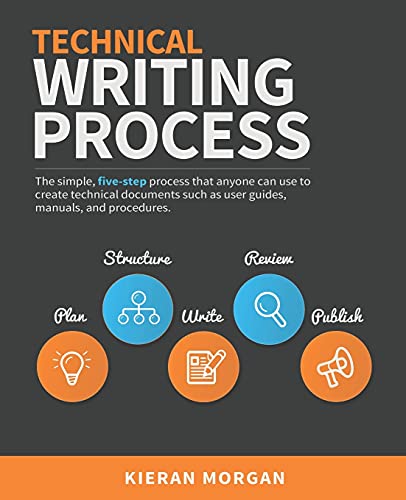
Technical Writing Process: The simple, five-step guide that anyone can use to create technical documents such as user guides, manuals, and procedures
As an affiliate, we earn on qualifying purchases.
As an affiliate, we earn on qualifying purchases.
Unconfirmed Capabilities and Integration Challenges
It is not yet clear how universally compatible the agent skill will be across different documentation platforms or how it will handle complex or nuanced language issues. The extent of its ability to automatically correct non-compliance without human intervention remains under evaluation.
Further testing is needed to determine how well it integrates with existing workflows and whether it can adapt to evolving standards or customized company guidelines. Details about licensing, deployment costs, and user training are still emerging.
automated technical writing correction tools
As an affiliate, we earn on qualifying purchases.
As an affiliate, we earn on qualifying purchases.
Next Steps for Deployment and Industry Adoption
Following this announcement, developers plan to conduct pilot programs with select industry partners to evaluate the tool’s effectiveness in real-world settings. Feedback from these pilots will inform updates before broader rollout.
Industry conferences and standards organizations are expected to review the tool’s capabilities, potentially leading to formal endorsements or integration into compliance frameworks. Companies interested in adopting the technology should monitor upcoming demonstrations and pilot opportunities.

Design of Wood Structures-ASD/LRFD
As an affiliate, we earn on qualifying purchases.
As an affiliate, we earn on qualifying purchases.
Key Questions
How does the agent skill enforce ASD-STE100 standards?
The skill automatically checks documents against ASD-STE100 vocabulary, grammar, and style rules, flagging or correcting non-compliance in real-time.
Can this tool replace manual review entirely?
It is designed to assist and augment manual review, not fully replace it. Complex or nuanced issues may still require human oversight.
Is the agent skill compatible with all documentation platforms?
Compatibility details are still being finalized. Early indications suggest it can be integrated with common content management systems, but broader compatibility remains to be confirmed.
What industries will benefit most from this development?
Primarily aerospace, defense, manufacturing, and other sectors where ASD-STE100 compliance is mandatory will benefit from improved efficiency and consistency.
When will the agent skill be widely available?
Following pilot testing and feedback, a broader release is expected within the next 6 to 12 months, with updates based on user experience.
Source: hn