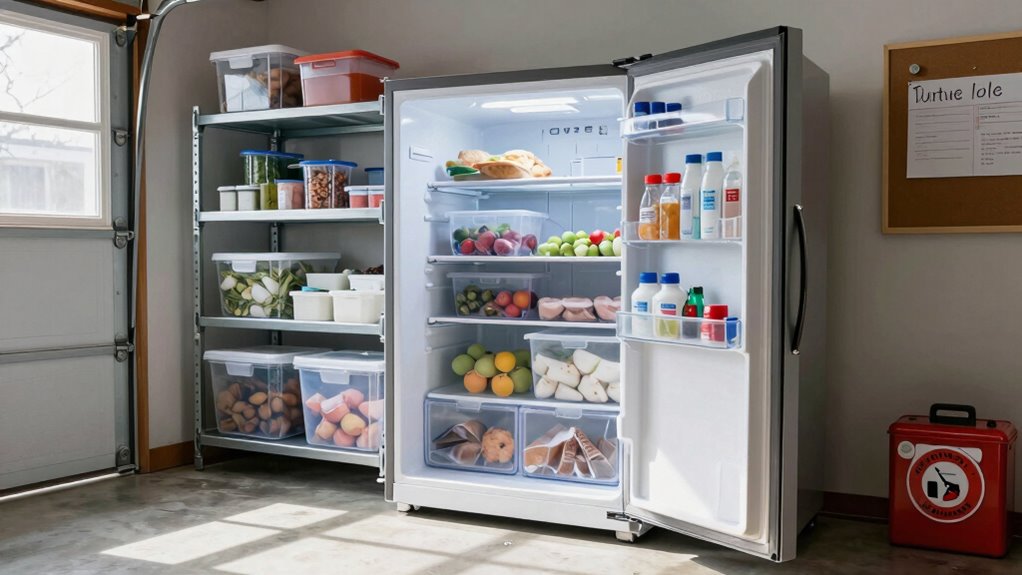

You need a dedicated outage plan for your garage freezer to prevent food spoilage, protect your investment, and guarantee safety during power outages. Keeping the freezer door closed, monitoring temperatures, and using insulation help preserve food longer. Having backup power ready and knowing when to discard food can save you money and reduce waste. By taking these steps, you’ll keep your freezer reliable in emergencies. If you want to learn more, keep exploring these essential strategies.
Key Takeaways
- Garage freezers are often in unconditioned spaces prone to temperature fluctuations during outages.
- An outage plan helps prevent spoilage and food waste by maintaining safe temperatures.
- Dedicated plans enable quick responses, reducing risks to perishable items.
- Proper insulation and monitoring extend cold retention, protecting your investment.
- Having a plan ensures safety and minimizes energy costs during power interruptions.

Have you ever wondered what to do if your garage freezer suddenly loses power? It’s a situation that can cause concern, especially if you store a lot of perishable items or specialty foods. Creating an outage plan for your garage freezer isn’t just about quick fixes; it’s about protecting your investment, preserving your food, and ensuring safety. One of the most important steps is understanding the significance of energy conservation and temperature monitoring during a power outage. When power is restored, your freezer will need to work harder to bring its temperature back to optimal levels, which can increase energy use and costs. By planning ahead, you can minimize these effects and keep your freezer running efficiently.
Preparing an outage plan helps protect food, save energy, and ensure safety during power interruptions.
The first step in your outage plan should be to prioritize energy conservation. During an outage, your goal is to keep the freezer as cold as possible for as long as possible. Avoid opening the door unnecessarily, because every time you do, you let out cold air and allow warm air to enter. Every minute the door remains closed, your freezer preserves its contents better. When power comes back, you’ll want to check the temperature and ensure it’s still safe for storing food. Installing a thermometer inside your garage freezer helps you keep tabs on the temperature without opening the door repeatedly. This simple tool provides crucial information, allowing you to determine if the contents are still safe or if they need to be discarded. Proper temperature monitoring can help prevent unnecessary waste and ensure food safety. Additionally, understanding the impact of power outages on food safety can help you make more informed decisions during emergencies. Knowing how temperature fluctuations affect food quality can further guide your actions to minimize spoilage.
Temperature monitoring becomes even more critical if the outage lasts longer than a few hours. If the temperature rises above 40°F (4°C), perishable foods like meats, dairy, and seafood risk spoilage. Having a system in place to quickly check the temperature gives you peace of mind and helps you make informed decisions about whether to keep, cook, or discard items. It’s also wise to keep a backup power source, such as a portable generator, ready for emergencies. This can help maintain consistent power to your freezer or at least keep it cooler longer during an outage. Insulating your freezer with blankets or foam panels can also extend cold retention and help slow temperature rise, which is a simple energy-saving measure that prolongs food safety during outages. Regularly checking and maintaining these insulation methods ensures they remain effective over time.
Planning ahead for garage freezer outages isn’t just about reacting when the power goes out; it’s about proactive measures to conserve energy and monitor temperatures. These steps help protect your food, reduce waste, and save money on energy costs in the long run. By understanding the importance of energy conservation and using temperature monitoring tools, you ensure your garage freezer remains a reliable storage solution, even during unexpected outages. Being prepared means you’re in control, ready to act swiftly and minimize the impact on your food and household.
garage freezer thermometer
As an affiliate, we earn on qualifying purchases.
As an affiliate, we earn on qualifying purchases.
Frequently Asked Questions
How Long Can a Garage Freezer Keep Food During an Outage?
You can usually keep food in your garage freezer for about 24 to 48 hours during an outage, but ice buildup and temperature fluctuations can shorten that time. If the power’s out for longer, your food may spoil. To maximize freshness, avoid opening the freezer often, and consider adding ice or dry ice if you expect a prolonged outage. Staying prepared helps protect your stored food effectively.
What Are the Signs of a Freezer Malfunction After an Outage?
After a power outage, you should watch for signs of freezer malfunction, such as unusual odors, excess frost, or fluctuating temperatures. Regular freezer maintenance helps identify issues early. Stay prepared with a solid outage plan, ensuring you know how to keep your food safe. If your freezer isn’t maintaining proper temperatures or if you notice leaks or strange noises, it’s time to troubleshoot or call a professional.
Should I Manually Defrost My Garage Freezer After a Power Outage?
You should definitely manually defrost your garage freezer after a power outage to keep it running smoothly. Power surges can cause ice buildup, making your freezer work like a rocket trying to stay afloat. Manual defrosting is a vital part of freezer maintenance, preventing ice from damaging the appliance and ensuring peak performance. Taking the time to do this now will save you headaches and costly repairs later.
How Can I Prevent Freezer Damage in Extreme Cold Weather?
To prevent freezer damage in extreme cold weather, you should focus on temperature monitoring and insulation enhancement. Keep an eye on your freezer’s temperature regularly to avoid freezing issues or thawing. Additionally, improve insulation around the unit to maintain a stable temperature and prevent external cold from affecting it. These measures help safeguard your frozen goods and guarantee your garage freezer operates efficiently, even during harsh weather conditions.
Is There a Recommended Backup Power Source for Garage Freezers?
Did you know that 60% of food loss during outages occurs in freezers? For your garage freezer, consider battery backups or generator options to maintain power during outages. Battery backups provide quick, reliable support for short-term power loss, while generators are ideal for longer outages, ensuring your freezer stays cold. Both options help protect your food and prevent costly spoilage, giving you peace of mind in emergencies.
backup power generator for freezer
As an affiliate, we earn on qualifying purchases.
As an affiliate, we earn on qualifying purchases.
Conclusion
Creating an outage plan for your garage freezer isn’t just smart—it’s a lifesaver in disguise. Imagine your frozen treasures turning to a puddle in the blink of an eye if you’re unprepared. By planning ahead, you keep your food safe and save yourself from a total disaster. Don’t let a power outage turn your freezer into a freezer of regret. Stay proactive, stay protected, and keep your frozen treasures safe from the chaos!
garage freezer insulation kit
As an affiliate, we earn on qualifying purchases.
As an affiliate, we earn on qualifying purchases.
temperature monitor for freezer
As an affiliate, we earn on qualifying purchases.
As an affiliate, we earn on qualifying purchases.