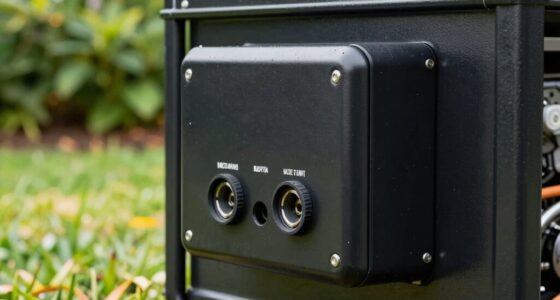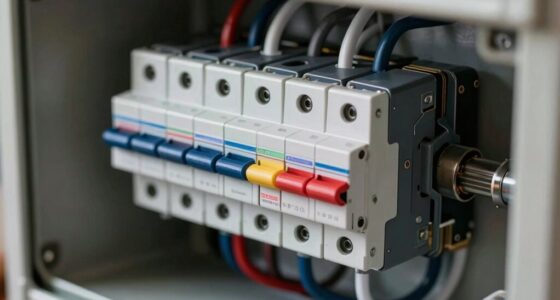
Before depending on a generator overnight, guarantee the fuel tank is full and the fuel is fresh or stabilized to avoid running out or performance issues. Check oil levels, filters, and safety features like circuit breakers and carbon monoxide detectors to keep everything operating safely. Test the generator under load, listen for unusual sounds, and monitor fuel efficiency. Taking these steps helps you confirm reliable, safe operation—you’re about to discover more tips for peace of mind.

Get backup power and energy gear delivered free with Prime
- Fast, free delivery on millions of items
- Prime Video, Amazon Music and more included
- Member-only deals all year
Key Takeaways
- Ensure the fuel tank is full, fresh, and stabilized for reliable, extended operation.
- Verify all safety features, including circuit breakers, grounding, and carbon monoxide detectors, are functional.
- Conduct a performance test to confirm steady operation, appropriate noise levels, and power capacity.
- Check oil levels, filters, and overall engine condition to prevent breakdowns during overnight use.
- Review maintenance logs and monitor fuel consumption to plan for sufficient runtime and safety.
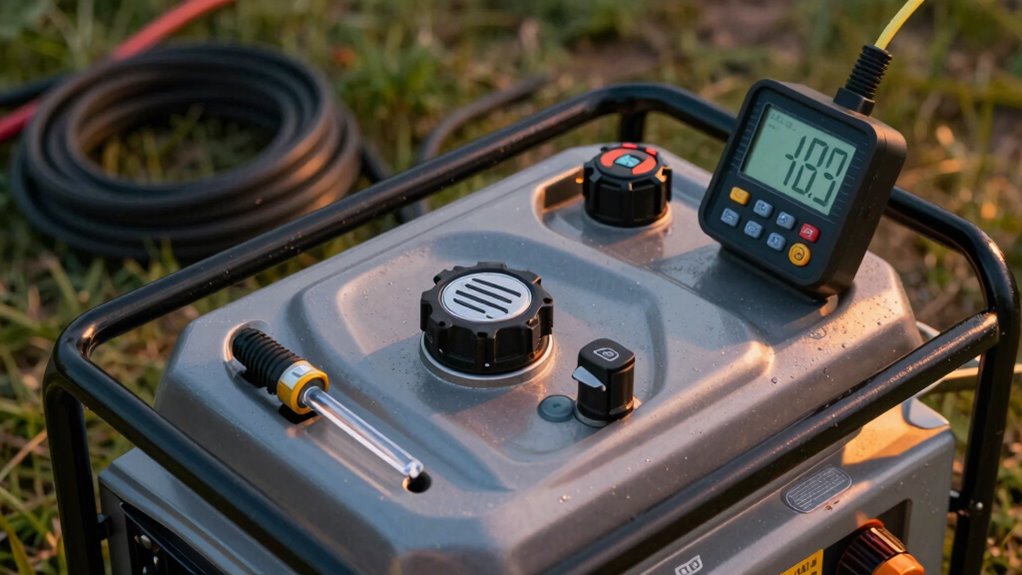
If you plan to rely on a generator for overnight power, it’s crucial to guarantee it’s in top condition before you need it. You don’t want to discover any issues when the power goes out, especially when sleep is involved. Start by inspecting the fuel level and quality. A full tank ensures continuous operation, but also check the fuel’s age and condition. Old or contaminated fuel can cause engine problems or poor performance, impacting both fuel efficiency and reliability. Consider adding a fuel stabilizer if the fuel has been sitting for a while, as this helps prevent clogging and keeps the engine running smoothly.
Next, look into the generator’s overall condition, paying close attention to oil levels and filters. Low or dirty oil can lead to overheating and engine damage. Make sure the oil is fresh and at the recommended level, and replace filters if they appear dirty or clogged. This maintenance step not only improves the longevity of your generator but also enhances its fuel efficiency, allowing it to run longer on less fuel—crucial when power is needed overnight. Additionally, inspecting the generator’s engine performance can help identify potential issues before they become serious problems. Regularly monitoring the engine’s responsiveness can also provide early warning signs of wear or mechanical faults, preventing unexpected breakdowns during critical times. Being aware of the generator’s operational history can give you further insight into its overall reliability and performance. Keeping a maintenance log can further support this understanding and help schedule future inspections.
You should also evaluate the generator’s noise levels. Overnight use requires a quieter operation to avoid disturbing others or causing discomfort. Check the manufacturer’s specifications for noise ratings and consider installing sound-dampening enclosures if noise is a concern. A generator that runs quietly is easier to manage during sleeping hours and makes the whole experience less stressful. Ensuring the generator’s power output capacity matches your needs is also essential to avoid overloads or insufficient power supply during use.
Test the generator under load if possible. Turn it on and run it with appliances or lights to simulate overnight conditions. This helps you identify any unusual vibrations, sounds, or performance issues. Make sure it starts easily and runs steadily without sputtering or surging. During this test, observe fuel consumption to get an idea of how long it can operate on a full tank. This insight is critical for planning your overnight power needs, ensuring you won’t run out of fuel midway through the night. Also, verifying the fuel efficiency of your generator can help you better estimate operating time and fuel needs for extended use.
Finally, check the safety features. Ensure that your generator has functioning circuit breakers, grounding, and carbon monoxide detectors nearby. Proper safety precautions prevent accidents and ensure you can operate the unit confidently during the night. By thoroughly checking these aspects—fuel quality, engine maintenance, noise levels, and safety—you set yourself up for a trouble-free overnight experience. When everything is in excellent condition, you can rest easy knowing your generator will reliably keep the power on without surprises.
generator fuel stabilizer for overnight use
As an affiliate, we earn on qualifying purchases.
As an affiliate, we earn on qualifying purchases.
Frequently Asked Questions
Can My Generator Handle Running Continuously All Night?
Your generator can run continuously all night if it has enough power capacity and fuel efficiency. Check the generator’s wattage output to guarantee it meets your needs without overloading. Also, verify the fuel tank size and consumption rate, so you know it can operate overnight. Regular maintenance and proper fueling help maintain efficiency and prevent shutdowns. With these factors in mind, your generator should handle overnight use smoothly.
What Maintenance Should Be Performed Before Overnight Use?
Before overnight use, you should check the fuel quality to guarantee it’s fresh and clean, preventing engine issues. Also, inspect the oil level and condition; top it off if needed and change it regularly to keep the generator running smoothly. These simple maintenance steps help prevent breakdowns, improve efficiency, and ensure your generator operates reliably throughout the night. Always follow the manufacturer’s guidelines for specific maintenance procedures.
How Do I Ensure Fuel Stability for Overnight Operation?
Fuel stability is essential for overnight generator use. To guarantee this, you should use fuel stabilizer additives in your fuel storage, which prevents degradation and gumming. Store fuel in a cool, dry place away from direct sunlight to maintain freshness. Regularly check the fuel for clarity and smell, replacing it if it appears contaminated. These steps keep your generator running smoothly and prevent unexpected breakdowns during overnight operation.
Is It Safe to Run a Generator Indoors Overnight?
No, it’s not safe to run a generator indoors overnight. Generators produce carbon monoxide, which can quickly build up in enclosed spaces. Make sure to have proper indoor ventilation if you must operate it nearby, but ideally, run your generator outside in a well-ventilated area. Always prioritize carbon monoxide safety by never running a generator inside a garage, basement, or any enclosed space, even with doors open.
What Noise Levels Are Acceptable for Overnight Generator Use?
Ever wondered how loud your generator can be without disturbing neighbors? Generally, keep noise levels below 60 decibels for overnight use, aligning with local noise regulations. Use soundproofing techniques like placing it on a pad or in a sound-absorbing enclosure to reduce noise further. Are you prepared to balance your power needs with maintaining peace? Staying within acceptable noise levels guarantees a quieter, more considerate overnight experience.
generator carbon monoxide detector
As an affiliate, we earn on qualifying purchases.
As an affiliate, we earn on qualifying purchases.
Conclusion
Remember, a stitch in time saves nine. Before relying on your generator overnight, double-check fuel levels, oil, and ventilation to guarantee safety and reliability. Regular maintenance and proper setup prevent unexpected failures and keep your power steady through the night. By taking these precautions, you’re safeguarding your home and peace of mind—because when it comes to power, it’s better to be safe than sorry. Stay prepared, and let your generator serve you reliably when you need it most.
quiet portable generator for camping
As an affiliate, we earn on qualifying purchases.
As an affiliate, we earn on qualifying purchases.
As an affiliate, we earn on qualifying purchases.
Halloween Picks
halloween
As an affiliate, we earn on qualifying purchases.