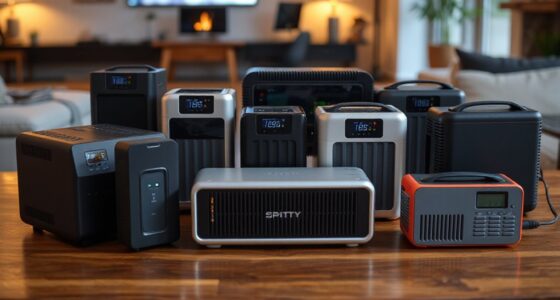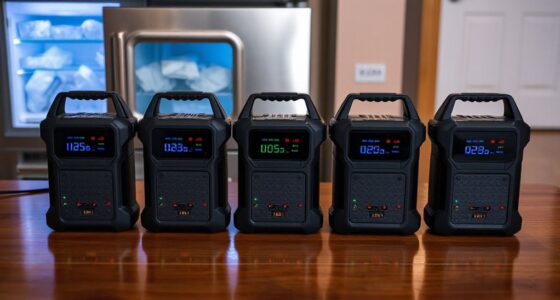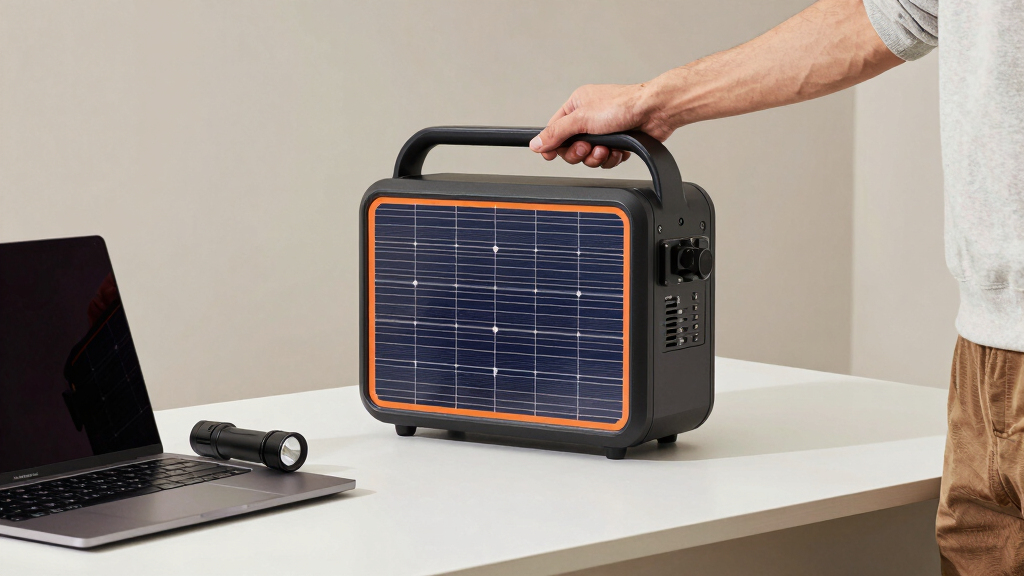
When it comes to preparing for blackouts, choosing the right solar generator kit can make all the difference. The best options offer reliable power output, durability, and ease of use during emergencies. The Jackery Explorer 2000 v2 stands out for its robust battery and fast charging, while the EF ECOFLOW DELTA 3 Classic provides versatile charging options for home backup and outdoor use. However, tradeoffs include size, cost, and setup complexity. Keep reading for a detailed breakdown of the top picks and what each offers for blackout preparedness.
Key Takeaways
- Top-rated models combine high battery capacity with fast recharge times, ensuring readiness during prolonged outages.
- Portability varies significantly; larger units are more powerful but less suitable for quick deployment or limited space.
- Expandable systems like the OUPES Mega 1 offer future-proofing, but come at a higher initial cost.
- Ease of use, including app control and simple setup, is a common feature among the best picks, aiding quick deployment.
- Price ranges widely; understanding your power needs and budget helps target the most appropriate options.




More Details on Our Top Picks
Jackery Solar Generator 300, 293Wh Portable Power Station with SolarSaga 100W Panel, 110V/300W Pure Sine Wave AC Outlet for Camping and Outdoors
The Jackery Solar Generator 300 stands out as the most balanced choice for those needing a reliable, portable power source during blackouts and outdoor adventures. Its 293Wh battery and multiple outlets—including AC, USB-C, and car ports—make it flexible enough for camping or emergency backup. Compared with the EF ECOFLOW DELTA 3, it offers a more manageable size and weight for frequent outdoor use, though it can’t power high-wattage appliances like the ECOFLOW’s 1800W output. The fact that the solar panel and power station ship separately is a minor inconvenience, but its fast recharge time (80% in 2 hours) provides peace of mind. This model is ideal for users who value portability, quick recharging, and a variety of charging options, but those needing to run heavy appliances will find it limiting.
Pros:- Lightweight and easy to carry at just 7.1 pounds
- Multiple recharging options including solar, wall, and car
- Fast recharge time and stable power output
Cons:- Solar panel and power station shipped separately
- Limited to 300W continuous output, unsuitable for high-wattage appliances
Best for: Outdoor enthusiasts and emergency preparedness users who need a lightweight, versatile backup power supply
Not ideal for: Homeowners aiming to power large appliances or entire households during outages
- Battery Capacity:293Wh
- Weight:7.1 pounds
- Outlets:2 AC, 1 USB-C PD, 1 fast charge 3.0, 1 USB-A, 1 DC car port
- Wattage:300W continuous, 200W starting
- Recharging Time:80% in 2 hours via wall
- Solar Panel Compatibility:Yes, SolarSaga 100W Air
Bottom line: This is a practical, portable option perfect for outdoor use and light emergency backup.
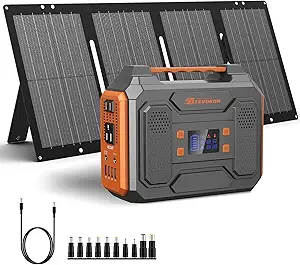
Portable Solar Generator 300W with Foldable 60W Solar Panel and Multiple Outlets
This 300W portable solar generator offers a solid balance of portability and functionality, especially suited for outdoor lovers who want to combine solar recharging with versatile device power. Its 280Wh battery and included foldable 60W solar panel make it a self-contained solution, unlike the Jackery Explorer 2000, which requires heavier, more complex setups. While its 300W output limits heavy-duty appliances, it’s perfect for charging phones, small appliances, and emergency devices during blackouts. The built-in safety protections add confidence, but the non-waterproof junction box for the solar panel and relatively small battery capacity could mean frequent recharging for extended use. This pick is best for users seeking an eco-conscious, portable power solution for moderate needs.
Pros:- Includes a foldable 60W solar panel for eco-friendly recharging
- Multiple outlets including USB and DC ports
- Built-in SOS flashlight and safety protections
Cons:- Limited to 300W output, not for high-power appliances
- Junction box for solar panel isn’t waterproof
Best for: Campers and outdoor users needing a portable, solar-rechargeable power source for moderate devices
Not ideal for: Power users with high-wattage appliances or extended blackout needs requiring larger capacity
- Wattage:300 watts
- Battery Capacity:280Wh
- Solar Panel:60W foldable monocrystalline
- Output Voltage:120V
- USB Ports:3 standard, 1 quick charge
- Protection Features:Overload, short circuit, over-voltage, overheating
Bottom line: This compact, eco-friendly generator suits outdoor users needing reliable, moderate power with solar recharging.
Jackery HomePower 3000 Portable Power Station with 2x 200W Solar Panels, 3600W Output, 3072Wh Battery, Emergency Backup for Home & Outdoors
The Jackery HomePower 3000 is designed to serve as a robust home backup, with a massive 3072Wh capacity and 3600W (7200W surge) output, making it well-suited for powering essential appliances during prolonged outages. Its LiFePO4 battery promises a longer lifespan—up to 4,000 cycles—compared to smaller models like the Explorer 2000. The high output and fast recharge (under 2 hours) are standout features, but the fact that the solar panels ship separately and in different packages adds complexity and delay to setup. Its weight and size make it less ideal for portability, but for those seeking a reliable, large-scale backup, this model provides unmatched capacity and versatility.
Pros:- Massive 3072Wh capacity for extended power needs
- Long cycle life with LiFePO4 technology
- Fast recharging via solar, AC, or DC sources
Cons:- Solar panels shipped separately, requiring multiple packages
- Heavy and bulky for portable use
Best for: Homeowners wanting a robust, long-lasting backup during extended blackouts or off-grid living
Not ideal for: Individuals needing a lightweight, portable solution for outdoor adventures or frequent mobility
- Capacity:3072Wh
- Power Output:3600W (7200W surge)
- Battery Type:LiFePO4
- Charge Time:1.7 hours
- Cycle Life:4,000 cycles
- Size:Smaller and lighter than comparable models
Bottom line: This generator is best suited for homeowners seeking dependable, large-scale backup power over extended outages.
Jackery Explorer 2000 v2 Portable Power Station with 2x200W Solar Panels, 2042Wh LiFePo4 Battery, 2200W Solar Generator, 20ms UPS, USB-C PD 100W Fast Charging
The Explorer 2000 v2 balances high capacity and portability well, with a 2042Wh LiFePo4 battery and 2200W continuous output. Its fast USB-C PD charging—up to 100W—makes it ideal for quick device recharges, and the UPS feature offers seamless power during outages. Compared with the HomePower 3000, it’s more portable at 39.5 pounds but still heavy for frequent carry, making it better suited for backup at a fixed location or occasional outdoor trips. The need for separate solar panels and shipping restrictions to PO boxes are minor hurdles, but overall, this model offers a reliable, long-lasting power supply for critical devices during outages or outdoor camping.
Pros:- Large 2042Wh LiFePo4 battery for long-lasting power
- Fast USB-C PD charging for quick device top-ups
- Reliable UPS with 20ms seamless switching
Cons:- Heavy at 39.5 pounds, less portable for frequent movement
- Requires separate purchase of solar panels
Best for: Preppers and campers needing a high-capacity, fast-charging portable power station for critical electronics
Not ideal for: Those requiring ultra-lightweight or fully integrated solar options for frequent mobility
- Battery Capacity:2042Wh
- Power Output:2200W
- Battery Type:LiFePo4
- USB-C PD:100W
- Weight:39.5 lbs
- Charging Time:66 minutes to 80%
Bottom line: This high-capacity, fast-charging station is ideal for critical electronics during extended outages or outdoor use where portability is manageable.
EF ECOFLOW Solar Generator DELTA 3 Classic with 220W Solar Panel, 1024Wh LiFePO4 Battery Portable Power Station, 1800W AC/100W USB-C Output (3600W Surge), Fast Charge for Home, Camping, RV
The EF ECOFLOW DELTA 3 Classic offers a capable 1024Wh LiFePO4 battery and 1800W (3600W surge) output, making it suitable for powering essential appliances during blackout situations. Its fast recharge, achieving 80% in just 45 minutes, surpasses many competitors like the Jackery Explorer 2000, especially for those who need quick turnaround times. The included 220W solar panel allows for off-grid recharging, but the relatively limited capacity means runtime is around 34 minutes at full load, which might not suffice for prolonged outages. Its compact dimensions and multiple outlets make it a solid choice for small households or RV use, but for large-scale or long-term power needs, larger capacity models are better.
Pros:- Fast recharging with 0-80% in 45 minutes
- Reliable UPS feature for sensitive electronics
- Lightweight and portable at 7.9″L x 11.1″W x 15.7″H
Cons:- Limited runtime at high loads (~34 minutes)
- Requires separate purchase and delivery of solar panel
Best for: Small households or RV owners seeking quick recharge and reliable power for essential devices during outages
Not ideal for: Users with high power demands or extended blackout scenarios requiring larger capacity
- Wattage:1800W
- Battery Capacity:1024Wh
- Battery Type:LiFePo4
- Fast Charging:Yes, 0-80% in 45 min
- Ports:3 AC, USB-C
- Size:7.9″L x 11.1″W x 15.7″H
Bottom line: This generator is well-suited for users needing quick recharging and reliable power for essential devices in small households or mobile setups.
OUPES Mega 1 Solar Generator with Panels Included, 2000W Power Station + 100W Panel, 1024Wh LiFePO4 Battery, Expandable to 5120Wh, APP Control, <20ms UPS for RV, Camping & Home Backup
The Anker SOLIX C1000 Gen 2 offers a balanced combination of high capacity at 1,024Wh and rapid recharging—just 49 minutes via HyperFlash—making it suitable for both home backup and outdoor adventures. Its weather-resistant design (IP67) sets it apart from bulkier models like the Anker SOLIX C2000, but it requires two separate packages for a complete setup, which can complicate deployment. While its size and weight are manageable, detailed dimensions are missing, raising questions about portability for some users. The high initial cost might also be a concern for those seeking budget options. Still, its durability and quick recharge make it a solid choice for versatile emergency use.
Pros:- Fast recharge time with HyperFlash technology
- Weatherproof IP67 rating for outdoor durability
- High capacity suitable for multiple devices
- Compact and lightweight design
Cons:- Requires two separate packages for full setup
- Higher initial cost might be a barrier
Best for: Outdoor enthusiasts or small households needing a weather-resistant, fast-recharging power station for camping or emergency backup.
Not ideal for: Those needing very high power output for heavy appliances, as this model’s maximum is 2000W, and it requires multiple components to complete the setup.
- Battery Capacity:1024Wh
- Power Output:2000W (peak 3000W)
- Recharging Time:49 minutes (AC), 1.8 hours (solar)
- Solar Panel Power:200W
- Dimensions:Smaller and lighter than similar models
- Weather Resistance:IP67
Bottom line: This pick makes the most sense for users seeking a durable, portable power station with quick recharging for outdoor or emergency scenarios.
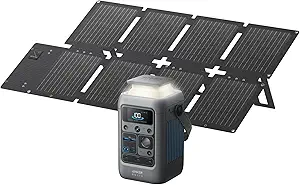
Anker SOLIX C300 Portable Power Station with 60W Solar Panel
The Anker SOLIX C300 provides a modest 288Wh and 300W output, making it best suited for quick, lightweight backup during short outages or camping trips. Its compact design and multiple USB-C ports support fast charging, but it falls short when it comes to running larger appliances or extended outages. The inclusion of a 60W solar panel allows for sustainable recharging, though details on total weight and dimensions are limited, which could impact portability. This model is less suitable for long-term blackout scenarios, but it excels in portability and ease of use for light devices.
Pros:- High-capacity 288Wh battery with 300W output
- Multiple fast-charging USB-C ports
- Lightweight and compact design
- Solar panel for eco-friendly recharging
Cons:- Limited capacity for long outages
- No detailed size or weight info available
- Requires separate purchase of carrying strap
Best for: Campers and outdoor lovers needing a lightweight, portable power source for small devices and quick recharges.
Not ideal for: Individuals planning for prolonged outages or needing to power heavy appliances, as capacity and output are limited.
- Capacity:288Wh
- Power Output:300W
- Ports:Multiple USB-C and USB-A
- Recharging Options:Fast charge via PD 3.1, solar, car
- Weight:Not specified
- Dimensions:Smaller design
Bottom line: This model makes sense for those prioritizing portability and quick recharging over high capacity or heavy-duty power needs.
Anker SOLIX C2000 Gen 2 Portable Power Station with 200W Solar Panel
The Anker SOLIX C2000 Gen 2 boasts a substantial 2048Wh capacity and a peak output of 4000W, making it ideal for powering multiple appliances during extended outages or outdoor adventures. Recharging in just 58 minutes via AC or solar adds to its appeal, especially for homes needing quick recovery after blackouts. While its weight of 41.7 pounds limits portability, its advanced features like adjustable solar panels and fast recharging offset this for users who prioritize capacity and speed. Compared with smaller models like the C300, this is better suited for serious backup plans but less practical for frequent portability.
Pros:- High capacity (2048Wh) for long-term backup
- Fast recharge in 58 minutes via AC or solar
- Peak power of 4000W supports multiple appliances
- Adjustable solar panel for efficient sunlight absorption
Cons:- Heavy at over 41 pounds
- Higher price point may be a barrier for some
Best for: Homeowners or outdoor enthusiasts requiring high-capacity, fast-recharge power solutions that can handle demanding appliances and extended outages.
Not ideal for: Users seeking lightweight, highly portable options or those with limited storage space, due to its weight and size.
- Wattage:2400W
- Peak Power:4000W
- Battery Capacity:2048Wh
- Battery Type:LiFePO4
- Weight:41.7 pounds
- Recharging Time:58 minutes
Bottom line: This pick suits users needing maximum capacity and rapid recharging for serious blackout preparedness or outdoor use, despite its weight.

How We Picked
I evaluated these solar generator kits based on several key factors relevant to blackout preparedness. Performance metrics like battery capacity, recharge speed, and inverter wattage determined how reliably they can sustain essential devices during outages. Usability aspects such as portability, setup complexity, and control interfaces also played a role. Build quality and durability were considered to ensure longevity in emergency scenarios. Lastly, value was assessed by weighing features against cost, focusing on systems that deliver dependable power without unnecessary expenses. The ranking reflects a balance of these elements, prioritizing products that excel in real-world emergency conditions.Factors to Consider When Choosing Best Solar Generator Kit For Blackout Preparedness
Choosing the best solar generator kit for blackout preparedness involves more than just battery capacity. You need to consider how the system will fit into your specific needs, including power output, portability, and ease of use. A well-chosen kit can provide peace of mind during extended outages, but selecting the wrong one can lead to underperformance or frustration. Here are some factors to keep in mind:Power Capacity and Inverter Size
The core consideration is how much power your essential devices require. Look for a system with enough wattage to run critical appliances, such as refrigerators, lights, and communication devices. The inverter’s continuous wattage rating determines what can run simultaneously without issues. Bigger capacity units can handle more devices but tend to be bulkier and pricier, so match capacity to your actual needs to avoid overspending.
Portability and Size
During a blackout, quick deployment might be necessary, especially if you need to move the system between locations. Smaller, lightweight models are easier to carry and store, but often come with lower capacity. Larger units provide more power but can be cumbersome, making them less ideal for quick setup or limited storage space. Consider where you’ll store the system and how you plan to use it to find the right balance.
Recharge Options and Speed
Fast recharging is critical if outages extend over multiple days. Solar input capacity affects how quickly the system can replenish itself during daylight hours. Some systems also support AC wall charging or car charging, offering flexibility. A system with expandable battery modules can be advantageous for long-term preparedness, but be mindful of the added cost and complexity.
Ease of Use and Control
User-friendly interfaces, such as mobile app controls and clear displays, can make a difference during stressful situations. Systems that are simple to set up and operate reduce the risk of errors when time is limited. Also, consider features like multiple outlets, USB ports, and surge protection to support a variety of devices reliably.
Cost and Value
Price varies widely depending on capacity, features, and brand reputation. While investing in a more expensive, high-capacity unit offers better long-term resilience, it may be unnecessary for those with minimal power needs. Conversely, budget models may not support all essential devices during extended outages. Balancing your budget with your anticipated power demands ensures you get the best value without sacrificing critical features.
Frequently Asked Questions
How long can a solar generator power my essential devices during a blackout?
The duration depends on the generator’s capacity and the power draw of your devices. For instance, a 2000Wh system could run a refrigerator (around 150W) for over 13 hours. To estimate your needs, list essential devices and their wattage, then divide the total watt-hours by the combined load. Keep in mind that surge wattages and inverter efficiency may slightly reduce runtime. Planning for at least a couple of days of backup power is wise if outages are prolonged.
Can I use a solar generator during a grid outage without sunlight?
Yes, most solar generators can operate using their stored battery power without sunlight. However, recharging during an outage without sunlight requires alternative sources like wall outlets or vehicle charging. To maximize readiness, choose a system with fast recharge options or expandable batteries, so you can replenish the stored energy quickly when sunlight is available again.
What’s the best size of solar generator for a small household during a blackout?
A system around 1000-2000Wh typically balances portability with sufficient power for essentials like lights, phones, and small appliances. For larger households or longer outages, consider higher capacities or systems with expandable batteries. Always match the generator’s continuous wattage rating with your critical device needs to avoid overloads. Investing in slightly more capacity than you think you’ll need provides extra peace of mind.
Are portable solar generators reliable enough for emergency backup?
Yes, many portable solar generators are designed specifically for emergency use, offering reliable power with proper maintenance. Look for models with good reviews on durability and consistent performance. Regularly testing and maintaining the system, especially before an emergency, ensures it will perform when needed. Remember, the reliability also depends on proper sizing and correct setup, so choose a unit that matches your backup power requirements.
How important is expandability in a solar generator kit for blackout prep?
Expandability allows you to increase your system’s capacity as your needs grow or as your budget allows. It can be a game-changer for long-term preparedness, enabling more devices or longer runtimes. However, systems with expandability often come at a higher initial cost and may be more complex to set up. Consider whether your power needs are likely to increase, or if a larger, fixed capacity system might be more straightforward for your situation.
Conclusion
For most households, the Jackery Explorer 2000 v2 offers an excellent balance of power, portability, and ease of use, making it the best overall choice for blackout preparedness. If you’re looking for the best value, systems like the OUPES Mega 1 provide expandable capacity at a reasonable price point. For those willing to invest more in premium features, the EF ECOFLOW DELTA 3 Classic offers fast charging and versatile outlets for both home backup and outdoor use. Beginners should consider smaller, user-friendly models like the Anker SOLIX C300, while those with larger or longer-term needs may prefer systems with expandability. Tailoring your choice to your specific power demands and budget will ensure you stay prepared during any blackout scenario.