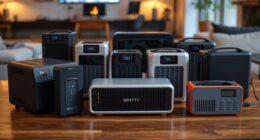
When selecting the best portable power station for family emergency use, reliability and capacity are key. The Anker SOLIX C1000 Gen 2 stands out as the best overall choice, thanks to its high 1024Wh capacity and robust 2000W power output. The Jackery Explorer 2000 v2 offers an excellent balance of capacity and fast charging, making it ideal for larger families. For those on a tight budget or seeking a compact option, the MARBERO Portable Power Station 88Wh provides basic backup power without breaking the bank. Keep in mind, tradeoffs often involve balancing capacity, weight, and price. Continue reading for a detailed breakdown of each option and how to choose the right one for your family’s needs.
Key Takeaways
- The highest capacity models, like the Jackery Explorer 2000 v2, are best suited for longer outages or larger families needing multiple device charges.
- Portable size and weight vary significantly; smaller units are easier to carry but offer less power, making them suitable for quick emergencies or outdoor use.
- Battery chemistry matters—LiFePO4 batteries tend to last longer and handle more charge cycles, increasing long-term reliability.
- Features such as fast charging, multiple outlets, and solar compatibility are crucial for versatile emergency preparedness.
- Price often correlates with capacity and features, so balancing budget against required power needs is essential for making the right choice.




More Details on Our Top Picks
Anker SOLIX C1000 Gen 2 Portable Power Station, 2000W (Peak 3000W), 1024Wh LiFePO4 Battery, Solar Generator for Home Backup and Camping
The Anker SOLIX C1000 Gen 2 stands out for its impressive 1024Wh LiFePO4 battery and rapid recharge time—just 49 minutes via AC, making it ideal for reliable home backup and off-grid camping. Its 2000W continuous power capacity surpasses many competitors like the Jackery Explorer 300, which offers less capacity and power output. However, the higher price and limited solar input (600W max) mean it’s a significant investment for those who prioritize speed and capacity over budget. The multiple output ports support a broad range of devices, including small appliances, and the UPS backup adds a layer of security during outages. Compared to the Jackery Explorer 2000, this model recharges faster and is more portable, but it’s less suited for heavy-duty, prolonged power needs due to its solar input limits.
Pros:- Fast AC recharge in just 49 minutes
- Large 1024Wh LiFePO4 battery for extended use
- Supports multiple devices with 10 output ports
- Compact and lightweight for portability
Cons:- Relatively high price point compared to smaller units
- Limited solar input capacity (600W max) may restrict solar recharging speed
Best for: Families seeking high-capacity, fast recharging, and versatile power for home backup or off-grid camping
Not ideal for: Budget-conscious users or those with limited space, as its premium price and higher solar input requirements may be restrictive
- Wattage:2000 watts
- Peak Wattage:3000 watts
- Battery Capacity:1024Wh
- Recharge Time (AC):49 minutes
- Recharge Time (Solar):1.8 hours
- Output Ports:10
Bottom line: This power station is best for families who prioritize rapid recharge, high capacity, and reliable power in emergency or off-grid scenarios.
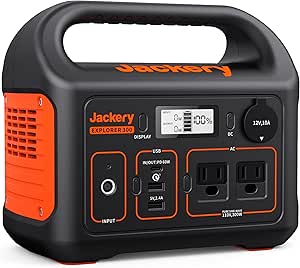
Jackery Explorer 300 Portable Power Station, 293Wh Lithium Battery, Solar Generator for Camping and Outdoors
The Jackery Explorer 300 offers a portable, lightweight solution with a 293Wh capacity, perfect for camping, short-term emergency power, and outdoor adventures. Its 300W maximum output is sufficient for small devices but falls short compared to the Anker SOLIX C1000 or Jackery Explorer 2000, making it less suitable for high-demand appliances. Its fast recharging options—around 2 hours via wall or car—are convenient, and its multiple ports, including USB-C PD, make it versatile for charging phones, tablets, and small appliances. However, the limited capacity means it cannot sustain power-hungry devices or extended outages, and solar compatibility requires additional panels, which aren’t included. Compared with larger units, it excels in portability but sacrifices capacity and power for outdoor portability and ease of use.
Pros:- Lightweight and compact at just 7.1 pounds
- Fast recharging via wall, car, or solar panels
- Multiple device charging options including USB-C PD
- Good portability for outdoor use
Cons:- Limited to 300W output, unsuitable for high-power appliances
- Battery capacity may not last through extended outages
Best for: Families needing a light, portable backup for essential devices during short outages or outdoor trips
Not ideal for: Users seeking to power larger appliances or for long-term backup, as its capacity and wattage are limited
- Wattage:300 watts
- Battery Capacity:293Wh
- Weight:7.1 pounds
- Output Ports:2 AC, 1 USB-C PD, 1 USB-A, 1 DC
- Recharging Time:2 hours (80%)
- Voltage:120V
Bottom line: This pick is ideal for families who need an easy-to-carry, quick-recharge power source for essential devices outdoors or during brief emergencies.
Portable Power Station with AC Outlet, 99.9Wh Lithium Battery, 60W Type-C, for Camping and Emergency Backup
The Portable Power Station 99.9Wh is designed for quick, easy power on the go, making it suitable for camping, travel, or small emergency needs. Its modest 99.9Wh capacity limits it to powering small devices—like phones or small lights—making it less suitable for running larger appliances or prolonged outages. The multiple ports, including Type-C PD, USB-C, and AC, provide versatility, but its 120W maximum output restricts use to low-power devices. Compared to larger options like the Jackery Explorer 2000, it’s much more portable, but that comes with reduced capacity and power. This model works best for those who need a lightweight backup for essential electronics, not for powering household appliances.
Pros:- Highly portable at just 1.65 pounds
- Multiple versatile ports including AC, Type-C, and USB
- Fast charging with built-in 60W PD Type-C cable
- Reliable for small device power needs
Cons:- Limited to 120W maximum output, unsuitable for larger appliances
- Battery capacity may not support longer durations for high-power devices
Best for: Individuals or families needing a compact, lightweight backup for essential electronics during short-term power interruptions or outdoor trips
Not ideal for: Anyone needing to run high-wattage appliances or sustain power for extended periods, due to its limited capacity
- Battery Capacity:99.9Wh
- Output Power:120W
- AC Output:120V, 80W
- Type-C Ports:2 ports, 60W PD
- Weight:1.65 lbs
- Warranty:2 years
Bottom line: This compact power station is perfect for families or individuals who need emergency power for small electronics on the go.
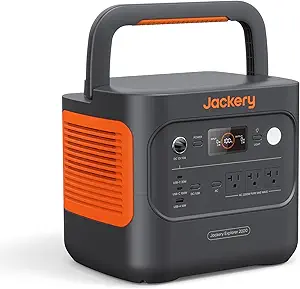
Jackery Explorer 2000 v2 Portable Power Station, 2042Wh LiFePO4 Battery, 2200W Solar Generator, USB-C PD 100W Fast Charging
The Jackery Explorer 2000 v2 offers a substantial 2042Wh capacity with 2200W continuous power, making it well-suited for families seeking reliable, long-term backup at home or in emergencies. Its LiFePO4 battery technology ensures durability and safety for extended use. Compared to the Anker SOLIX, it’s heavier at nearly 40 pounds, which may reduce portability but compensates with higher capacity and sustained power output. The 3 AC outlets and 100W USB-C PD support multiple devices simultaneously, while fast charging (102 minutes for full recharge) keeps downtime minimal. However, its weight and cost are significant considerations—less ideal for outdoor portability. This model is perfect for families who want peace of mind knowing they can sustain power for days with minimal interruption.
Pros:- Very high capacity at 2042Wh for extended use
- Fast recharge time with AC and solar options
- Multiple outlets including USB-C PD for versatile device charging
- Silent operation with low noise levels
Cons:- Heavy at nearly 40 pounds, less portable for outdoor use
- Higher price point, suited for serious backup needs rather than casual use
Best for: Families needing a high-capacity, reliable backup solution for prolonged outages or home use
Not ideal for: Users prioritizing portability or those with limited storage space, due to its weight and size
- Capacity:2042Wh
- Power Output:2200W
- AC Ports:3
- USB-C PD:100W
- Weight:39.5 lbs
- Full Charge Time:102 minutes
Bottom line: This power station is tailored for families who need a dependable, high-capacity backup for long-term outages at home or in emergencies.
Portable Solar Generator 300W with 60W Foldable Solar Panel and Multiple Outlets
The Portable Solar Generator 300W with its 280Wh battery and 60W foldable solar panel excels in outdoor environments where solar recharging is a priority. Its multiple outlets—including AC, DC, and USB—cover essential charging needs, while safety protections and a built-in flashlight provide added outdoor convenience. Compared to larger units like the Jackery Explorer 2000, this model sacrifices capacity and power output for portability and renewable energy use. It’s less suited for powering household appliances or extended outages but shines in camping, RV trips, or quick emergency scenarios where solar recharging is feasible. The performance depends heavily on sunlight, and it’s less effective in cloudy or shaded conditions, making it best for sunny environments.
Pros:- Multiple charging options including AC, USB, and DC outlets
- High conversion efficiency with foldable solar panel
- Built-in safety protections and SOS flashlight for outdoor safety
- Portable and easy to set up
Cons:- Performance declines if not regularly charged or in low sunlight
- Limited to 300W output, not suitable for high-demand devices
Best for: Families or outdoor enthusiasts looking for a portable, solar-rechargeable power source for short-term or daytime emergency power
Not ideal for: Powering high-wattage appliances or during long outages where solar recharging isn’t practical, due to limited capacity and output
- Power Output:300W
- Battery Capacity:280Wh
- Solar Panel:60W foldable
- Outlets:2 AC, 1 DC, 4 USB
- Protection Features:Over-current, over-voltage, overload
Bottom line: This solar generator is ideal for outdoor families seeking a portable, renewable power source for daytime or short-term emergencies.
Jackery Explorer 1000 v2 Portable Power Station, 1070Wh LiFePO4 Battery, 1500W AC/100W USB-C, Fast 1-Hour Charge, Solar Generator for Camping, Emergency, RV, Off-Grid
The Jackery Explorer 1000 v2 stands out for its robust 1070Wh LiFePO4 battery and impressive 1500W AC output, making it capable of running multiple essential appliances during an emergency or off-grid situation. Its fast 1-hour charging technology provides quick turnaround, a significant advantage over larger, heavier models like the Anker SOLIX C1000, which, while more powerful, is less portable. However, its dependence on Jackery-specific solar panels can limit flexibility and adds extra cost. The lightweight design with a foldable handle enhances portability, but the need for compatible solar panels for solar recharge might restrict use in some scenarios. Ideal for families seeking reliable, high-capacity power with quick recharge times while being aware that its solar input options are somewhat restrictive.
Pros:- Powerful 1500W AC output suitable for multiple appliances
- Fast 1-hour recharge with advanced technology
- Lightweight, portable design with foldable handle
- Long-lasting LiFePO4 battery with over 10 years lifespan
Cons:- Requires Jackery-specific solar panels for solar charging
- Limited to Jackery’s ecosystem, restricting third-party compatibility
Best for: Families who need a high-capacity, versatile power source that can be quickly recharged and easily transported during emergencies or outdoor trips.
Not ideal for: Users who want maximum solar flexibility or plan to use third-party solar panels, as this model is limited to Jackery’s own panels and cannot be delivered to PO boxes.
- Battery Capacity:1070Wh
- Battery Type:LiFePO4
- AC Output:1500W
- Surge Peak:3000W
- USB-C Ports:2
- Weight:23.8 lbs
Bottom line: This pick makes the most sense for families wanting dependable power with quick recharging and portability, despite solar input limitations.
DaranEner Portable Power Station 60,000mAh 192Wh LiFePO4 Battery Backup with 2 300W AC Outlets, Fast Charging for Emergency/Home/Outdoor Camping/RVs
The DaranEner Portable Power Station offers a compact, lightweight 192Wh capacity with 300W (600W surge) output, making it ideal for quick, short-term power needs during outdoor adventures or emergencies. Compared to the larger Jackery Explorer 1000, it provides significantly less capacity but excels in portability, weighing just 5.73 lbs—perfect for backpacking or quick trips. Its multiple charging options, including AC, car, and solar, add versatility, but the limited 60W solar input means slower recharging if relying solely on solar energy. It also doesn’t support high-power appliances or extended outages, which could be a drawback for some families. This model is suited for those prioritizing lightweight portability over long-term or high-power needs.
Pros:- Extremely lightweight and portable
- Multiple charging options including solar and car
- Fast charging and built-in LED flashlight
- Durable LiFePO4 battery with over 3500 cycles
Cons:- Limited capacity for powering larger appliances
- Solar input is relatively slow at 60W
- No included solar panel, additional purchase needed
Best for: Families or individuals needing lightweight backup power for short trips, camping, or quick emergency use where portability outweighs capacity.
Not ideal for: Households requiring sustained power for large appliances or long-term outages, as its capacity and power output are limited.
- Capacity:192Wh
- Output Power:300W (600W surge)
- USB-C PD:60W
- Weight:5.73 lbs
- Cycles:Over 3500
Bottom line: Ideal for families seeking a lightweight, reliable backup for short-term emergencies or outdoor activities, with awareness of its limited capacity.
MARBERO Portable Power Station 88Wh Lithium Battery Solar Generator with AC Outlet
The MARBERO Portable Power Station offers a minimal 88Wh capacity, making it suitable for quick device charges rather than powering larger appliances. Its ultra-compact size—just over 3 pounds—makes it an excellent companion for camping, short outdoor trips, or as a backup for small electronics during short outages. While it features multiple ports, including AC, USB, and USB-C, the limited capacity means it can’t sustain larger devices or longer power needs. The absence of an included solar panel means additional accessories are necessary for solar recharging, which could hinder its convenience. This option is best for those who prioritize portability and emergency device charging over sustained power.
Pros:- Extremely lightweight and portable
- Multiple output options including AC and USB
- Fast charging and SOS LED flashlight
- Compact size fits easily in backpacks
Cons:- Very limited capacity for sustained use
- No solar panel included, additional purchase required
- Not suitable for high-power appliances or long outages
Best for: Families or individuals needing ultra-lightweight power to charge phones, small gadgets, or provide emergency light during outdoor activities or short outages.
Not ideal for: Users expecting to power larger appliances or require longer backup durations, as its capacity is very limited.
- Capacity:88Wh
- Outputs:2 AC, 2 USB, 2 USB-C PD
- Weight:3.2 lbs
- Charging Time:2 hours to 80%
- Battery Type:Cylindrical batteries
Bottom line: Best suited for short-term, lightweight device charging needs where portability is a priority over capacity.
EnginStar Portable Power Station 300W 296Wh Battery Bank with 110V Pure Sine Wave AC Outlet for Outdoors, Camping, Emergency, and CPAP
The EnginStar Portable Power Station offers a balanced 296Wh capacity with a 300W pure sine wave inverter, making it well-suited for sensitive electronics like CPAP machines, laptops, and small appliances. It’s lighter than larger models like the Jackery Explorer 1000, weighing 6.5 pounds, and provides multiple charging options, including solar, wall, and car outlets. Compared to the DaranEner, which has less capacity, the EnginStar’s slightly higher wattage and pure sine wave output make it more compatible with delicate electronics. However, its 300W limit restricts use for high-power devices, and solar charging speed varies with conditions. This model suits families needing reliable, safe power for sensitive devices during outdoor or emergency situations.
Pros:- Pure sine wave output protects sensitive electronics
- Multiple charging options including solar, wall, and car
- Lightweight and portable
- Over 1000 charge cycles ensure durability
Cons:- Limited to 300W power, not suitable for larger appliances
- Solar panel sold separately, additional cost
- Charging speed depends on solar conditions
Best for: Families or individuals requiring a portable, safe power source for sensitive electronics and small appliances during outdoor adventures or emergencies.
Not ideal for: Those needing to power larger appliances or expecting to run high-wattage devices continuously, as the 300W limit may be restrictive.
- Capacity:296Wh
- Power Output:300W
- Battery Type:Lithium-ion
- Charge Cycles:Over 1000
- Dimensions:9 x 5.5 x 7.5 inches
Bottom line: A dependable choice for families needing safe, portable power for sensitive electronics and small devices in outdoor or emergency settings.
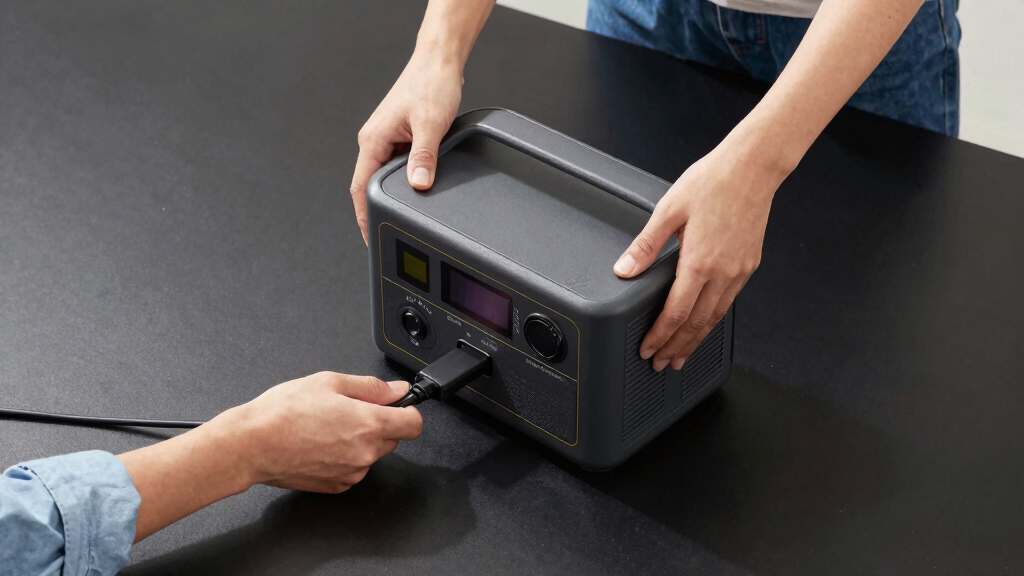
How We Picked
The products included in this roundup were evaluated based on capacity, output options, portability, durability, and value for money. Priority was given to units that provide enough power to run essential devices during an outage, such as lights, phones, and small appliances. Ease of use, charging options—including solar compatibility—and build quality also played significant roles. To rank these options, I considered how well each balances performance with affordability, aiming to highlight models suitable for family emergency scenarios rather than niche outdoor or camping use. The top picks represent a range of budgets and needs, from compact emergency backups to high-capacity powerhouses for prolonged outages.Factors to Consider When Choosing Best Portable Power Station For Family Emergency Use
Choosing the best portable power station for family emergencies involves understanding several key factors. Capacity determines how many devices and for how long you can run them. Portability affects ease of transport during evacuations or outdoor situations. Compatibility with solar panels can extend usability when grid power is unavailable. Battery chemistry influences longevity and safety, especially over multiple charge cycles. Finally, consider the number and type of outlets—USB, AC, or DC—to ensure compatibility with your essential devices. Being aware of these factors helps prevent common mistakes like underestimating capacity needs or overpaying for features you won’t use.Capacity and Power Output
Capacity, measured in watt-hours (Wh), indicates how much energy the station can store. For family emergencies, aim for at least 500Wh to power essential devices like phones, radios, and small appliances. Larger units, such as the Jackery Explorer 2000 v2, offer over 2000Wh, providing several days of backup power but are heavier and less portable. Power output, rated in watts (W), determines what devices can run simultaneously. Look for units with a continuous output that exceeds your highest power need to avoid overloads and ensure reliable operation during critical moments.
Portability and Size
Size and weight directly impact how practical a power station is during emergencies. Compact models like the MARBERO 88Wh are lightweight and easy to carry but offer limited runtime. Larger capacity units, while more powerful, tend to be bulkier and heavier, which can pose challenges during evacuation or outdoor use. Consider your typical emergency scenario: if mobility is a priority, prioritize smaller, lighter options. For prolonged outages at home, larger units may be more suitable despite the added weight.
Battery Chemistry and Longevity
Battery chemistry influences durability and safety. LiFePO4 batteries, used in many top models like the Jackery Explorer 1000 v2, last longer over multiple charge cycles and maintain stability over time. This makes them a better choice for frequent use or long-term storage. Conversely, traditional lithium-ion batteries may degrade faster, reducing overall lifespan and reliability. Investing in a unit with a robust chemistry can save money and hassle in the long run, especially when powering critical devices during emergencies.
Solar Compatibility and Charging Speed
Solar compatibility extends your power station’s usability during extended outages, especially if grid power remains unavailable. Many models support solar panel input, but the charging speed varies—some units can fully recharge in a few hours, others take longer. Fast charging capabilities, like USB-C PD ports, can also reduce downtime. When choosing, consider your access to sunlight and whether you want a system that can quickly recharge for ongoing use or emergency preparedness.
Outlet Types and Number
Multiple outlet options increase versatility—USB ports, AC outlets, and DC outputs allow charging different devices simultaneously. For family use, prioritize stations with at least one AC outlet for larger appliances and several USB ports for phones and small electronics. Some models include specialized outlets for CPAP machines or medical devices, a critical feature for health-related emergencies. Ensuring compatibility with your essential devices helps avoid frustrations during a power outage.
Frequently Asked Questions
How long will a portable power station power my essential devices during an outage?
The runtime depends on the capacity of the power station and the power draw of your devices. For example, a 1000Wh unit powering a 50W device could run for about 20 hours, but the same unit powering a 200W device would last around 5 hours. To estimate your needs, list your essential devices and their wattage, then choose a station with sufficient capacity to cover your typical usage duration. Remember, using multiple devices simultaneously will reduce overall runtime.
Is solar charging reliable enough for emergency backup?
Solar charging can be very effective if you have consistent sunlight, but it’s usually supplementary rather than primary. The recharge time depends on the panel’s wattage and sunlight conditions; a typical 100W panel might take several hours to fully recharge a large capacity station. For emergency use, pairing a solar panel with a portable power station provides added security, especially during prolonged outages, but it’s wise not to rely solely on solar without backup grid charging options.
Should I prioritize capacity or portability for family emergencies?
It depends on your typical emergency scenario. If your main concern is power outages at home, larger capacity units are preferable to run multiple devices for extended periods. However, if you need to evacuate or travel frequently, portability becomes more critical, favoring smaller, lighter models. Ideally, choose a balance that allows enough power for your essential needs without sacrificing too much mobility, especially if evacuation is part of your emergency plan.
Can I run my medical devices, like a CPAP, with a portable power station?
Many portable power stations support AC outlets capable of powering medical devices such as CPAP machines, but check the wattage requirements. A model with a pure sine wave inverter is recommended to ensure safe, stable power for sensitive electronics. Also, verify the power station’s continuous wattage rating exceeds your device’s needs. For critical health devices, investing in a station with a dedicated medical-grade outlet or backup plan is advisable.
What is the best way to maintain my portable power station for emergency readiness?
Regular maintenance involves keeping the unit fully charged and stored in a cool, dry place. Avoid letting the battery sit at a low charge for extended periods, as this can degrade performance. Periodically testing the station by powering small devices ensures it’s ready when needed. Also, keep the solar panels and cables in good condition and clean for optimal charging. Proper care extends the lifespan and guarantees reliable operation during emergencies.
Conclusion
The best overall pick for most families remains the Anker SOLIX C1000 Gen 2, thanks to its high capacity and robust output suitable for various emergency scenarios. For those seeking the best value, the Jackery Explorer 1000 v2 offers a balanced mix of power and affordability. If budget constraints are tight or portability is a priority, the MARBERO Portable Power Station provides essential backup without a hefty price tag. For large families or prolonged outages, the Jackery Explorer 2000 v2 stands out as a premium choice. Ultimately, your decision should align with your power needs, mobility requirements, and budget to ensure reliable family safety during emergencies.