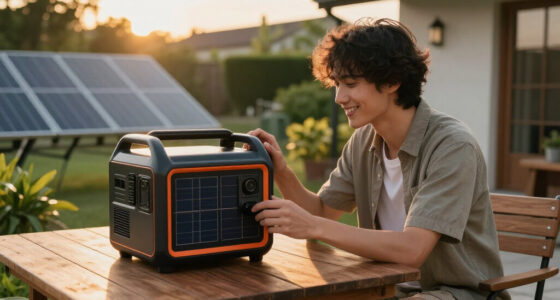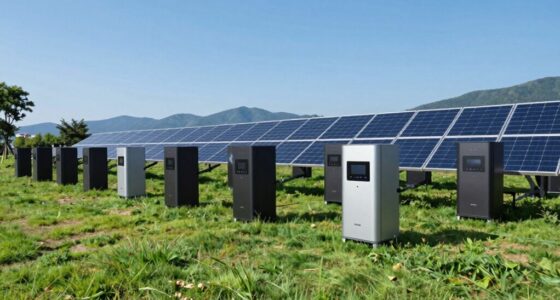

Shopping for the best LFP battery power stations means balancing capacity, inverter wattage, charging speed and expandability — and this comparison of 15 leading models shows how wide those tradeoffs run. The EcoFlow DELTA 3 Ultra Plus earns my best overall pick for pairing a 3072Wh expandable LFP battery with class-leading charging speed and enough AC output to run a household essentials kit. If raw value matters more than expandability, the BLUETTI AC180 delivers serious wattage per dollar at a midsize capacity, while the Anker SOLIX C2000 Gen 2 stands out for squeezing 2400W of output and fast recharge into a compact frame. The main tension in this category: big-capacity units like the Jackery HomePower 3600 Plus cost and weigh more, while small units like the EcoFlow RIVER 3 Plus are portable but can’t back up major appliances. Read on for the full ranking and which model fits your situation.

Get backup power and energy gear delivered free — and shop member deals
- Fast, free delivery on millions of items
- Access to Prime Big Deal Days deals on October 6–7
- Prime Video, Amazon Music and more included
Key Takeaways
- LFP chemistry is now standard across all 15 models, so the real differentiators are inverter wattage, charge speed, and whether the battery is expandable — not battery chemistry itself.
- The 2000Wh tier is the most crowded and competitive segment: the Anker SOLIX C2000 Gen 2, BLUETTI Elite 200 V2, Jackery HomePower 2000 Plus v2 and Anker SOLIX S2000 all fight on output limits and recharge times rather than capacity.
- Expandability splits the premium tier: the EcoFlow DELTA 3 Ultra Plus, Jackery HomePower 3600 Plus and VTOMAN FlashSpeed Pro 3600 support extra battery modules, while fixed-capacity units like the BLUETTI Elite 300 are cheaper upfront but capped at 3014Wh.
- Sub-300Wh units like the EcoFlow RIVER 3 Plus only make sense as grab-and-go backup for phones, laptops and CPAP machines — none of them can replace a midsize station for appliance backup.
- Several 1000Wh-class models (Jackery Explorer 1000 V2, EcoFlow DELTA 3, BLUETTI AC180) now offer 1800W+ inverters, meaning buyers no longer need to pay for a 2000Wh+ unit just to run a microwave or hair dryer.
| BLUETTI FridgePower Portable Power Station, 2016Wh, 1800W |  | Best for Whole-Home Fridge Backup | Capacity: 2016Wh | Battery type: LFP | Output power: 1800W (3600W surge) | VIEW LATEST PRICE | See Our Full Breakdown |
| BLUETTI AC180 Portable Power Station, 1152Wh LiFePO4 Battery |  | Best Value for Casual Backup | Battery capacity: 1152Wh LiFePO4 | AC output: 1800W (2700W Boost) | Outlets: 8 | VIEW LATEST PRICE | See Our Full Breakdown |
| EcoFlow DELTA 3 Ultra Plus 3072Wh Portable Power Station |  | Best Premium Whole-Home Contender | Battery capacity: 3072Wh LiFePO4 | Expandable capacity: 3kWh to 11kWh | Continuous output: 3600W (7200W surge) | VIEW LATEST PRICE | See Our Full Breakdown |
| Anker SOLIX C2000 Gen 2 Portable Power Station, 2,048 Wh, 2,400 W |  | Best Dual-Purpose Camp-and-Home Pick | Battery capacity: 2,048 Wh | Expandable capacity: Up to 4 kWh | Full recharge time: 58 minutes with combined AC and solar | VIEW LATEST PRICE | See Our Full Breakdown |
| Jackery Explorer 1000 V2 Portable Power Station |  | Best Lightweight Traveler | Capacity: 1,070Wh LFP | AC output: 1,500W (3,000W surge peak) | Ports: 3 AC, 2 USB-C (100W PD), 1 USB-A, 1 DC car port | VIEW LATEST PRICE | See Our Full Breakdown |
| Jackery HomePower 3000 Portable Power Station, 3072Wh, 3600W |  | Best Whole-Home Backup Contender | Capacity: 3072Wh | Running Output: 3600W (7200W surge) | Battery Chemistry: LiFePO4 | VIEW LATEST PRICE | See Our Full Breakdown |
| BLUETTI Elite 200 V2 Portable Power Station, 2073.6Wh, 2600W |  | Best Balance of Power and Portability | Capacity: 2073.6Wh | Continuous Output: 2600W (3900W power lifting) | Battery Chemistry: LiFePO4 | VIEW LATEST PRICE | See Our Full Breakdown |
| Anker SOLIX C1000 Gen 2 Portable Power Station |  | Best Compact LFP Pick | Capacity: 1,024Wh | Output: 2,000W (3,000W peak) | Battery Chemistry: LiFePO4 | VIEW LATEST PRICE | See Our Full Breakdown |
| BLUETTI Elite 300 Portable Power Station, 3014Wh |  | Best for RV Owners | Capacity: 3014Wh | AC Output: 2400W (4800W surge) | Battery Chemistry: LiFePO4 | VIEW LATEST PRICE | See Our Full Breakdown |
| VTOMAN FlashSpeed Pro 3600 Portable Power Station, 3096Wh, 3600W |  | Best for Whole-House Loads | Capacity: 3096Wh | Output: 3600W (6000W surge) | Battery Chemistry: LiFePO4 | VIEW LATEST PRICE | See Our Full Breakdown |
| Jackery HomePower 3600 Plus Portable Power Station, 3584Wh, 3600W |  | Best for Whole-Home Backup | Capacity: 3584Wh | AC Output: 3600W (7200W in parallel) | Voltage: 120V; 240V in parallel | VIEW LATEST PRICE | See Our Full Breakdown |
| Jackery HomePower 2000 Plus v2 Portable Power Station, 2048Wh, 2400W AC Output |  | Best Smart Expansion Pick | Capacity: 2048Wh | Expandable Capacity: Up to 12kWh | AC Output: 2400W | VIEW LATEST PRICE | See Our Full Breakdown |
| EF ECOFLOW RIVER 3 Plus Portable Power Station, 286Wh, 760W |  | Best Compact UPS | Capacity: 286Wh | Surge Output: 1200W with X-Boost | UPS Switchover: Under 10 ms | VIEW LATEST PRICE | See Our Full Breakdown |
| EcoFlow DELTA 3 Portable Power Station, 1024Wh, 1800W |  | Best Fast-Charging Value | Capacity: 1024Wh | Power Output: 1800W | Full Charge Time: 56 minutes (80% in 30 minutes) | VIEW LATEST PRICE | See Our Full Breakdown |
| Anker SOLIX S2000 Portable Power Station, 2,010Wh, 1,500W |  | Best Longevity Pick | Battery Capacity: 2,010Wh LFP (314Ah cells) | Claimed Battery Lifespan: Up to 10,000 cycles; 15 years | Continuous Output: 1,500W | VIEW LATEST PRICE | See Our Full Breakdown |
| LFP battery power station | Capacity | Weight |
|---|---|---|
| BLUETTI FridgePower Portable P | 2016Wh | — |
| BLUETTI AC180 Portable Power S | — | — |
| EcoFlow DELTA 3 Ultra Plus 307 | — | 74 lb |
| Anker SOLIX C2000 Gen 2 Portab | — | 41.7 lb (18.9 kg) |
| Jackery Explorer 1000 V2 Porta | 1,070Wh LFP | 23.8 lbs |
| Jackery HomePower 3000 Portabl | 3072Wh | 59.5 lbs |
| BLUETTI Elite 200 V2 Portable | 2073.6Wh | — |
| Anker SOLIX C1000 Gen 2 Portab | 1,024Wh | 11.3 kg |
| BLUETTI Elite 300 Portable Pow | 3014Wh | 58 lbs |
| VTOMAN FlashSpeed Pro 3600 Por | 3096Wh | 83.8 lbs |
| Jackery HomePower 3600 Plus Po | 3584Wh | — |
| Jackery HomePower 2000 Plus v2 | 2048Wh | — |
| EF ECOFLOW RIVER 3 Plus Portab | 286Wh | — |
| EcoFlow DELTA 3 Portable Power | 1024Wh | — |
| Anker SOLIX S2000 Portable Pow | — | 35.7 lbs |
More Details on Our Top Picks
BLUETTI FridgePower Portable Power Station, 2016Wh, 1800W
Most power stations in this roundup are generalists; the FridgePower is a specialist. Its 4W standby draw means it barely sips power while waiting for an outage, and the 10ms UPS switchover is fast enough that a refrigerator never notices the grid failed — matching the EcoFlow DELTA 3 Ultra Plus on switching speed. The 75mm slim profile and wall-mounting option let it live permanently behind or beside an appliance rather than in a closet. Compared with the Anker SOLIX C2000, which is a fine camping-first unit, this model is engineered around one job: keeping food cold for days. The catch is that true multi-day fridge runtime requires expansion batteries up to 8064Wh, which are a separate purchase, so the base unit alone covers roughly a day depending on the appliance.
Pros:- 4W standby consumption preserves stored charge during long idle periods
- 10ms UPS switchover keeps appliances running without interruption
- Slim 75mm chassis mounts on a wall or tucks behind appliances
- Expandable to 8064Wh for multi-day outage coverage
Cons:- Multi-day runtime claims depend on expansion batteries sold separately
- Not designed as a portable, take-it-anywhere power station like the Jackery Explorer 1000 V2
Best for: Homeowners who want a permanently installed, set-and-forget backup dedicated to a refrigerator, freezer, or sump pump
Not ideal for: Campers and van lifers — the appliance-first design, limited port selection, and fixed installation mindset waste its strengths on the road
- Capacity:2016Wh
- Battery type:LFP
- Output power:1800W (3600W surge)
- Standby consumption:4W
- UPS switchover:10ms
- Expanded capacity:Up to 8064Wh
- Thickness:75mm, freestanding or wall-mounted
Our verdict“If your priority is keeping a fridge alive through outages without thinking about it, this is the most purpose-built option in the lineup.”
BLUETTI AC180 Portable Power Station, 1152Wh LiFePO4 Battery
Between the Jackery Explorer 1000 V2 and the big home-backup units, the AC180 occupies a sweet spot: 1152Wh of LiFePO4 capacity paired with 1800W of continuous output — enough to run power tools, a microwave, or a CPAP plus essentials. The 2700W Boost mode pushes it past its class, though you have to activate it through the app rather than having it on by default, which is a small friction point the Anker SOLIX C2000 avoids with its higher native rating. Where it beats larger rivals like the EcoFlow DELTA 3 Ultra Plus is sheer practicality: a one-hour AC recharge at 1440W input means you can cycle it quickly during rolling outages. The five-year warranty is also longer coverage than most competitors offer at this capacity.
Pros:- 1800W continuous output with a 2700W Boost mode for demanding appliances
- One-hour AC recharge via 1440W input
- 20ms UPS response doubles as basic home backup
- 5-year warranty, longer than typical for this class
Cons:- Solar-only recharge takes 2.8–3.3 hours
- 2700W Boost mode must be manually enabled in the app
Best for: Budget-conscious buyers who want dependable emergency and weekend-camping power without paying for expansion ecosystems
Not ideal for: Households preparing for extended multi-day outages — 1152Wh runs a fridge for hours, not days
- Battery capacity:1152Wh LiFePO4
- AC output:1800W (2700W Boost)
- Outlets:8
- AC input / charge time:1440W, about 1 hour
- Solar input:500W, 2.8–3.3 hours
- UPS response time:20ms
- Warranty:5 years
Our verdict“The AC180 delivers the best capacity-to-practicality ratio here for buyers who need solid backup power, not a whole-home energy platform.”
EcoFlow DELTA 3 Ultra Plus 3072Wh Portable Power Station
This is the heavyweight of the batch, in capability and in actual weight: 74 pounds. What you get for the heft is 3600W continuous output with 7200W surge — enough to run well pumps, HVAC startup loads, and multiple large appliances at once, placing it ahead of the Anker SOLIX C2000‘s 2400W rating for whole-home duty. Expansion from 3kWh to 11kWh gives it the largest growth ceiling in this roundup, rivaling the Jackery HomePower 3600 Plus. The under-10ms UPS switching ties the BLUETTI FridgePower for fastest backup response, and 25dB operation means it can sit in a living space without being a nuisance. The real tradeoff is portability: unlike the 23.8 lb Jackery Explorer 1000 V2, this is effectively a rolling home appliance, and its listed two outlets mean heavy users will want a power strip or transfer switch setup.
Pros:- 3600W continuous / 7200W surge output handles heavy household loads
- Expandable from 3kWh to 11kWh, the largest ceiling in this lineup
- 25dB quiet operation suits indoor placement
- Under-10ms UPS switching for seamless backup
Cons:- At 74 pounds it is the least portable option here
- Only two outlets listed on the base unit
Best for: Homeowners building a scalable backup system that can start at 3kWh and grow toward 11kWh for near whole-home coverage
Not ideal for: Campers and anyone who needs to move a power station regularly — 74 pounds and only two outlets make it poor travel company
- Battery capacity:3072Wh LiFePO4
- Expandable capacity:3kWh to 11kWh
- Continuous output:3600W (7200W surge)
- UPS switching time:Under 10ms
- Noise level:25dB
- Charging methods:6
- Weight:74 lb
Our verdict“For buyers treating backup power as a long-term home investment rather than a portable gadget, this is the most future-proof pick of the group.”
Anker SOLIX C2000 Gen 2 Portable Power Station, 2,048 Wh, 2,400 W
The C2000 Gen 2 threads a needle most units here miss: it is genuinely portable at 41.7 lb while still delivering 2400W of rated output and a 4000W peak — more native power than the BLUETTI AC180 and twice the class of smaller travelers. A 58-minute full recharge when combining AC and solar means downtime between uses stays short, though that headline figure depends on having both sources working together, which isn’t realistic for every outing. With expansion to 4kWh and a claimed 32 hours of dual-door fridge runtime, it handles home backup credibly, though it can’t scale like the EcoFlow DELTA 3 Ultra Plus toward 11kWh. Alternator charging at 800W is a thoughtful touch for road-trippers that most rivals in this roundup don’t match. Its 9W standby draw is more than double the BLUETTI FridgePower’s, so it’s less suited to sitting idle for months waiting for an outage.
Pros:- 2400W rated output with 4000W peak handles most household appliances
- Six recharge methods including 800W alternator charging for road trips
- 41.7 lb design is portable despite the 2048Wh capacity
- Expandable to 4kWh for longer outages
Cons:- Reaching 4kWh requires a separately purchased expansion battery
- The 58-minute recharge figure requires combined AC and solar input
Best for: Buyers who want one station that splits duty between camping trips and realistic home backup without buying two units
Not ideal for: Anyone planning a permanent whole-home backup installation — the expansion ceiling and standby draw fall short of dedicated systems
- Battery capacity:2,048 Wh
- Expandable capacity:Up to 4 kWh
- Full recharge time:58 minutes with combined AC and solar
- Alternator charging:800 W, full charge in about 3 hours
- Weight:41.7 lb (18.9 kg)
- Runtime:Up to 32 hours for a dual-door fridge
Our verdict“If you refuse to choose between a camping power station and a home backup unit, this is the most balanced compromise in the roundup.”
Jackery Explorer 1000 V2 Portable Power Station
At 23.8 lb with a foldable handle, the Explorer 1000 V2 is the easiest unit here to actually carry — nearly half the weight of the Anker SOLIX C2000 and a third of the EcoFlow DELTA 3 Ultra Plus. Despite the compact body, it offers 1070Wh of LFP capacity rated for over 4,000 cycles and 1500W of output across three pure sine wave AC ports, two 100W USB-C ports, and DC options, so a campsite of phones, laptops, lights, and a portable fridge all charge at once. The one-hour emergency recharge is genuinely quick, but it only activates through the app, and default charging takes 1.7 hours. The bigger strategic drawback is solar lock-in: it only pairs with Jackery panels, which are sold separately, whereas BLUETTI and EcoFlow units here accept broader solar input. For weekend adventurers, that tradeoff is often acceptable.
Pros:- Light 23.8 lb build with foldable handle for real portability
- LFP battery rated for 4,000+ cycles at over 70% capacity retention
- Broad port selection including two 100W USB-C outputs
- App-controlled emergency, quiet, and efficient charging modes
Cons:- Solar panel not included, and compatibility limited to Jackery panels
- One-hour charging requires manually enabling emergency mode in the app
Best for: Campers, road-trippers, and apartment dwellers who want serious capacity in a genuinely carryable package
Not ideal for: Off-grid builders or buyers with existing third-party solar panels — the proprietary panel requirement adds cost and limits flexibility
- Capacity:1,070Wh LFP
- AC output:1,500W (3,000W surge peak)
- Ports:3 AC, 2 USB-C (100W PD), 1 USB-A, 1 DC car port
- Full charge time:1 hour (emergency mode); 1.7 hours default
- Battery lifespan:Over 70% capacity after 4,000 cycles
- Weight:23.8 lbs
- Solar compatibility:Jackery panels only, sold separately
Our verdict“For buyers whose power station lives in a car trunk rather than a utility closet, this is the lightest capable LFP option in the roundup.”
Jackery HomePower 3000 Portable Power Station, 3072Wh, 3600W
This option stands out for buyers who want serious backup muscle without stepping up to flagship pricing. The 3072Wh capacity and 3600W running output are enough to keep a refrigerator, lights, and a few essentials running through an overnight outage, and the 20ms UPS switching means a plugged-in computer or medical device won’t blink when the grid drops. Compared with the Anker SOLIX C1000, you’re trading portability for roughly triple the runtime — 59.5 pounds versus a far lighter unit. The hybrid AC plus DC charging route brings it to full in 1.7 hours, which beats the VTOMAN FlashSpeed Pro 3600’s two-hour estimate. The tradeoff: solar is slow, taking nine hours with two 200W panels just to reach 80%, so off-grid users should budget for more panels or rely on AC.
Pros:- 3072Wh capacity with 3600W running output handles demanding appliance loads
- UPS switching within 20ms keeps sensitive electronics running through grid drops
- Hybrid AC and DC charging reaches full in 1.7 hours
- LiFePO4 battery rated for 4,000 cycles to 70% capacity
- Five charging routes including solar, car, and generator input
Cons:- Solar charging takes 9 hours to reach 80% with only two 200W panels
- 59.5-pound weight limits portability compared with mid-size rivals
- Only 4 total power outlets, fewer than the VTOMAN’s 14
Best for: Homeowners who want plug-in UPS protection and overnight outage coverage for essential appliances
Not ideal for: Campers and van lifers who need to carry the unit regularly — 59.5 pounds and a 16-inch footprint make it a two-person lift
- Capacity:3072Wh
- Running Output:3600W (7200W surge)
- Battery Chemistry:LiFePO4
- Cycle Life:4,000 cycles to 70% capacity
- UPS Switching:≤20ms
- Charging Time:1.7 hours hybrid AC+DC; 2.2 hours AC only
- Weight:59.5 lbs
Our verdict“This pick makes the most sense for homeowners prioritizing fast refueling and seamless UPS backup over portability or sprawling outlet counts.”
BLUETTI Elite 200 V2 Portable Power Station, 2073.6Wh, 2600W
The Elite 200 V2 earns its spot by splitting the difference between the lightweight Anker SOLIX C1000 and the heavy 3kWh home-backup units like the Jackery HomePower 3000. With 2073.6Wh of capacity and 2600W continuous output, it runs a microwave or power tools while staying manageable enough to move around a house or load into an RV. The headline feature is flexibility in charging: AC at up to 1800W hits 80% in about an hour, solar can fill it in 2.4 hours with 1000W of panels, and alternator charging makes it genuinely road-trip friendly — something the Jackery lineup can’t match. The 6,000+ cycle rating also outlasts the Jackery HomePower 3000’s 4,000-cycle spec. The catch is that the fastest charge times assume you’re using the specified high-power chargers, and the manufacturer’s 17-year lifespan figure is a lab claim, not a field guarantee.
Pros:- 2600W continuous output runs demanding appliances, with 3900W power-lifting mode
- Charges via AC, solar, or vehicle alternator for true on-the-go top-ups
- 0–80% AC recharge in about 1 hour in Turbo Mode
- Silent Mode operates at 16–30dB for overnight indoor use
- Powers up to 9 devices at once
Cons:- Fastest charging requires specified 1800W AC or 1000W solar setups, which add cost
- Longevity claims like the 17-year lifespan are manufacturer statements
- Capacity falls short of the 3kWh class for extended outages
Best for: RV owners and weekend adventurers who want appliance-grade output plus fast recharging from multiple sources
Not ideal for: Buyers planning multi-day home backup — under 2.1kWh depletes quickly if you’re running a fridge and heating gear together
- Capacity:2073.6Wh
- Continuous Output:2600W (3900W power lifting)
- Battery Chemistry:LiFePO4
- Cycle Life:Over 6,000 cycles
- AC Recharge:0–80% in 1 hour (Turbo Mode, 1800W)
- Solar Recharge:Full in 2.4 hours with 1000W panels
- Noise Level:16–30dB in Silent Mode
Our verdict“This model is better suited to mobile users who want a do-everything middleweight than to buyers sizing a stationary home backup system.”
Anker SOLIX C1000 Gen 2 Portable Power Station
At 11.3kg, the C1000 Gen 2 is the featherweight of this batch, and that changes what it’s for. You give up the multi-day runtime of the BLUETTI Elite 300 — a quarter of the capacity, roughly — but you gain a unit one person can carry to a campsite, tuck under a desk, or store in a car trunk. What keeps it competitive rather than merely small is the 2,000W output with 3,000W peak, unusually high for a 1kWh-class unit and enough to start a small inverter fridge or coffee maker. Charging is also quick: 49 minutes on AC and 1.8 hours on 600W of solar, both faster per watt-hour than the larger options here. The sub-10ms UPS switchover even beats the Jackery HomePower 3000’s 20ms figure. Just note the outlet count is inconsistently listed between the description and specs, so verify port layout before buying.
Pros:- Lightest unit in this batch at 11.3kg with a compact 15-inch footprint
- 2,000W output with 3,000W peak is unusually strong for the 1kWh class
- AC recharge in 49 minutes and solar recharge in 1.8 hours
- UPS switchover under 10ms outpaces most larger rivals
Cons:- 1,024Wh capacity limits runtime to short outages or small loads
- Outlet count is listed inconsistently between description and specs
- Fast solar charging requires a compatible 600W panel setup
Best for: Campers, apartment dwellers, and anyone who needs grab-and-go backup for a CPAP, router, laptop, and lights
Not ideal for: Households expecting to run a refrigerator plus heating or cooking gear overnight — 1,024Wh won’t stretch that far
- Capacity:1,024Wh
- Output:2,000W (3,000W peak)
- Battery Chemistry:LiFePO4
- Cycle Life:At least 80% capacity after 4,000 cycles
- AC Recharge:49 minutes at 1,600W
- UPS Switchover:Under 10ms
- Weight:11.3 kg
Our verdict“This pick makes the most sense for buyers who value portability and speed over raw capacity, and who know their loads are modest.”
BLUETTI Elite 300 Portable Power Station, 3014Wh
The Elite 300 is built around a single question: what does an RV or travel-trailer owner actually need? The answer is a TT-30 RV outlet and a 12V/30A DC output, which let you plug a shore-power cord or DC system in directly instead of jerry-rigging adapters — neither the BLUETTI Elite 200 V2 nor the Anker SOLIX C1000 offers that pairing. Capacity sits right alongside the Jackery HomePower 3000 at roughly 3kWh, but the 2400W output is 1200W lower, so it’s better matched to RV loads than to a house full of simultaneous appliances. Charging is its quiet strength: 0–80% in as little as 78 minutes beats the Jackery’s AC-only figure, and the 6000+ cycle rating doubles it. The tradeoffs are real — 58 pounds with no wheels, and only two power outlets listed, which is thin for a unit this size.
Pros:- TT-30 RV outlet and 12V/30A DC output for direct vehicle integration
- 3014Wh capacity with 2400W continuous and 4800W surge output
- 0–80% recharge in as little as 78 minutes
- 6000+ cycle LiFePO4 rating with 10ms UPS switching
Cons:- 58 pounds with no wheels, harder to move than the VTOMAN FlashSpeed Pro 3600
- Only two power outlets listed despite the large capacity
- 2400W output trails the 3600W class for whole-home scenarios
Best for: RV and travel-trailer owners who want shore-power compatibility and 3kWh of capacity without an inverter install
Not ideal for: Buyers running many devices at once — the two-outlet layout forces power strips or adapters
- Capacity:3014Wh
- AC Output:2400W (4800W surge)
- Battery Chemistry:LiFePO4
- Cycle Life:6,000+ cycles
- RV/DC Outputs:TT-30 outlet, 12V/30A DC
- Recharge Time:0–80% in as little as 78 minutes
- Weight:58 lbs
Our verdict“This model is better suited to mobile power users who need RV-native connections than to stationary home-backup buyers who want maximum outlets.”
VTOMAN FlashSpeed Pro 3600 Portable Power Station, 3096Wh, 3600W
If your priority is running everything at once, this is the workhorse of the batch. With 3600W of output, a 6000W surge rating, and 14 total outlets and ports — including four AC outlets, dual 100W USB-C, and two car sockets — it can feed a household’s worth of devices where the BLUETTI Elite 300’s two outlets force hard choices. Capacity of 3096Wh matches the Jackery HomePower 3000, and like that unit it offers sub-20ms UPS switching for uninterruptible backup duty. The cycle-life rating splits the difference: 3,000+ cycles to 80% is shorter than BLUETTI’s 6,000-cycle claims, though the 6,000-cycle-to-50% figure softens that gap. At 83.8 pounds, it’s the heaviest here, but unlike the Jackery it gets wheels and a pull-up handle, which matters every single time you move it.
Pros:- 14 outlets and ports, the most in this batch, spread across AC, USB, and DC
- 3600W output with 6000W surge handles multiple large appliances
- Pull-up handle and large wheels offset the heavy build
- AC recharge in about 2 hours with up to 800W solar input
Cons:- 83.8-pound weight is the heaviest in this lineup
- 3,000+ cycle rating to 80% trails BLUETTI’s 6,000-cycle claims
- Meaningful solar charging requires a compatible high-wattage panel setup
Best for: Families preparing for extended outages who need many devices powered simultaneously from one unit
Not ideal for: Anyone who needs to lift the unit into a vehicle or upstairs — 83.8 pounds is beyond comfortable solo carrying even with wheels
- Capacity:3096Wh
- Output:3600W (6000W surge)
- Battery Chemistry:LiFePO4
- Cycle Life:3,000+ cycles to 80%; 6,000+ cycles to 50%
- Outlets:14 total (4 AC, 4 USB-A, 2 USB-C 100W, 6 DC/car)
- AC Recharge:About 2 hours
- Max Solar Input:800W
- Weight:83.8 lbs
Our verdict“This pick makes the most sense for stationary, outlet-hungry home backup where mobility is a non-issue and maximum simultaneous loads are the goal.”
Jackery HomePower 3600 Plus Portable Power Station, 3584Wh, 3600W
Most of the stations in this roundup are built around a single room or a camping trip; the HomePower 3600 Plus is built around outages. With 3584Wh and 3600W of output, it can run a fridge, furnace blower, and lights at once — territory where the EcoFlow DELTA 3 taps out. Capacity scales to 21kWh per unit, or 43kWh in parallel, and parallel pairing is also how you get 240V, which matters if you want to back up a well pump or dryer. The 6,000-cycle LFP cells outlast the 3,000–4,000-cycle ratings on smaller picks here, which matters when the battery sits on standby for years. The tradeoff is weight: the wheels and telescopic handle help, but this is a rolling suitcase, not something you carry to a campsite.
Pros:- 3600W output with parallel support up to 7200W and 240V
- Expands to 21kWh per unit or 43kWh with multiple units
- 6,000-cycle LFP cells for long-term standby reliability
- Hybrid charging plus generator input for extended outages
Cons:- 240V output is only available when running two units in parallel
- Far heavier and less portable than smaller stations in this lineup
Best for: Homeowners who want expandable, whole-circuit backup power and can accept a wheeled, permanently stationed unit
Not ideal for: Campers and van lifers — at this size and weight it defeats the purpose of a portable station
- Capacity:3584Wh
- AC Output:3600W (7200W in parallel)
- Voltage:120V; 240V in parallel
- Expandable Capacity:Up to 21kWh per unit, 43kWh with multiple units
- Recharge Time:2 hours hybrid AC+DC; 2.5 hours AC or gas generator; 4 hours solar
- Battery Cycle Life:6,000 cycles
- Operating Temperature:Down to -4°F
- Portability:Wheels and telescopic handle
Our verdict“Buy this if you’re preparing for multi-day home outages and want a system that grows with your needs; skip it if portability is the priority.”
Jackery HomePower 2000 Plus v2 Portable Power Station, 2048Wh, 2400W AC Output
The 2000 Plus v2 occupies the middle ground between the home-scale HomePower 3600 Plus and smaller picks like the Anker SOLIX S2000: 2048Wh and 2400W is enough for essential circuits during an outage without the bulk of a 3.5kWh-plus unit. Its differentiator is smart energy management with priority routing, which decides what gets power first when capacity runs low — a genuinely useful feature during a storm when you’d rather the fridge win over the TV. Expansion to 12kWh means you can start small and add batteries later. The 140W USB-C port with AVS support fast-charges compatible Apple laptops without a separate adapter. Compared with the SOLIX S2000, you give up a little raw capacity but gain 900W more continuous output.
Pros:- Expandable from 2048Wh up to 12kWh with add-on packs
- 6000+ cycle LFP cells for years of standby service
- Smart energy management prioritizes critical devices
- 140W USB-C output with AVS protocol for compatible laptops
Cons:- 2400W output limits high-draw appliances like some power tools
- Expansion packs are needed to reach true whole-home runtime
Best for: Buyers who want essential-homebackup today and the option to expand toward 12kWh later without replacing the unit
Not ideal for: Anyone who needs maximum outlets or ports — the emphasis here is capacity and power management, not port variety
- Capacity:2048Wh
- Expandable Capacity:Up to 12kWh
- AC Output:2400W
- Battery Type:LFP
- Battery Cycles:6000+
- USB-C Output:140W with AVS protocol support
Our verdict“This is the smart middle path for buyers who want room to grow — strong output now, 12kWh of headroom later.”
EF ECOFLOW RIVER 3 Plus Portable Power Station, 286Wh, 760W
Where every other entry here measures capacity in kilowatt-hours, the RIVER 3 Plus makes its case on speed and size. At 10.4 lbs and roughly nine inches square, it’s the one station in this roundup you can tuck next to a desk or router shelf, and its under-10ms UPS switchover across three AC outlets keeps sensitive electronics running through a blink-and-you-miss-it power blip. The 286Wh LiFePO4 battery won’t run a fridge for a weekend the way the Anker SOLIX S2000 will, but for modems, NAS drives, and a laptop, it’s plenty. A roughly one-hour AC recharge means it’s ready again before the next outage. Expansion via extra batteries softens the capacity ceiling, though those are separate purchases. The 3,000-cycle rating is the lowest in this batch — a fair trade for the compact footprint.
Pros:- Under-10ms UPS switchover on three dedicated AC outlets
- 10.4 lbs with a compact footprint that fits on a shelf
- About 1 hour AC recharge and up to 220W solar input
- Expandable with compatible extra batteries
Cons:- 286Wh capacity limits runtime to small electronics
- Extra batteries and solar panels are separate purchases
Best for: Home-office and networking setups that need silent, always-on battery backup for internet gear and computers
Not ideal for: Emergency-preparedness buyers — 286Wh can’t meaningfully run appliances during an extended outage
- Capacity:286Wh
- Surge Output:1200W with X-Boost
- UPS Switchover:Under 10 ms
- Battery Chemistry:LiFePO4
- Battery Lifespan:3,000 cycles to 80% capacity
- AC Recharge Time:About 1 hour
- Solar Input:Up to 220W
- Noise Level:30 dB
Our verdict“This is the pick for replacing a clunky UPS with something quieter, smarter, and LFP-based — not for whole-home resilience.”
EcoFlow DELTA 3 Portable Power Station, 1024Wh, 1800W
The DELTA 3 answers the most annoying problem with power stations: the wait. A full charge in 56 minutes — 80% in 30 — means you can top it off between uses instead of planning your day around a recharge, something neither the Anker SOLIX S2000 nor the Jackery 2000 Plus v2 can match at their sizes. With 1024Wh and 1800W, it handles the weekend-camping and emergency-essentials workload capably, running up to 13 devices at once thanks to a generous outlet count. The IP65-rated battery pack adds weather confidence, though note that protection applies to the pack, not the whole unit. Expansion to 5kWh gives it legs beyond its base capacity. The 4,000-cycle LFP rating sits mid-pack — more durable than the RIVER 3 Plus, less than Jackery’s 6,000-cycle cells.
Pros:- Full recharge in 56 minutes with combined AC and solar input
- 1800W output powers up to 13 devices simultaneously
- Expandable to 5kWh with compatible EcoFlow batteries
- 4,000-cycle LiFePO4 battery with IP65-rated battery pack
Cons:- Reaching 5kWh requires purchasing additional battery packs
- Base capacity of 1024Wh is modest for extended outages
Best for: Weekend campers and renters who want a fast-refilling 1kWh station for trips and short outages
Not ideal for: Homeowners seeking multi-day backup — 1kWh runs essentials for hours, not days, without expansion packs
- Capacity:1024Wh
- Power Output:1800W
- Full Charge Time:56 minutes (80% in 30 minutes)
- Maximum AC Input:1500W
- Solar Input:500W
- Expandable Capacity:Up to 5kWh
- Battery Cycle Life:4,000 cycles to 80% capacity
- Battery Pack Protection:IP65
Our verdict“If refuel speed matters more than raw capacity, this is the most convenient mid-size LFP station in the lineup.”
Anker SOLIX S2000 Portable Power Station, 2,010Wh, 1,500W
What separates the SOLIX S2000 from similarly sized rivals like the Jackery 2000 Plus v2 and BLUETTI Elite 200 V2 is battery endurance: Anker rates the 314Ah LFP cells at up to 10,000 cycles and 15 years of service, roughly double or triple the cycle counts elsewhere in this roundup. For a station that mostly sits in a closet waiting for outages, that shelf-life claim changes the math — you’re buying a unit you likely won’t replace. The 2,010Wh capacity and claimed 35-hour fridge runtime make it a solid emergency workhorse, and six charging methods (solar, generator, alternator, car outlet, and wall power) give you flexibility in how you refill it. The catch is output: at 1,500W continuous, it’s the weakest in its capacity class, and it lacks a 12V DC port entirely, which rules out some car accessories and DC-only gear.
Pros:- Up to 10,000 claimed charge cycles for long service life
- 2,010Wh capacity with 3,000W peak output for startup surges
- Six charging methods including solar, alternator, and generator
- Eight outlets with under-10ms UPS switchover
Cons:- 1,500W continuous output trails same-size competitors by hundreds of watts
- No 12V DC port limits compatibility with car-style accessories
Best for: Buy-and-hold emergency preparers who want a large battery that stays healthy for a decade of standby use
Not ideal for: Anyone running power-hungry tools or appliances — 1500W continuous is limiting for a 2kWh-class station
- Battery Capacity:2,010Wh LFP (314Ah cells)
- Claimed Battery Lifespan:Up to 10,000 cycles; 15 years
- Continuous Output:1,500W
- Peak Output:3,000W
- Maximum Solar Input:400W
- Outlets:8
- UPS Switchover:<10 ms
- Weight:35.7 lbs
Our verdict“Choose this for decade-scale reliability and generous capacity, provided your loads stay under 1500W.”

How We Picked
I evaluated each station through the lens of what LFP chemistry is actually good for: long cycle life, safe daily cycling and whole-home-adjacent backup. That meant prioritizing usable capacity versus inverter output (a big battery with a weak inverter can’t run appliances), charging speed (a backup unit that takes 6+ hours to refill after an outage is a liability), and expandability (whether you can add battery modules later instead of buying a whole new unit). Port selection, UPS-style passthrough behavior, app control and weight rounded out the comparison.
The ranking logic favors models that solve a specific buyer problem cleanly rather than jack-of-all-trades mediocrity. High-capacity expandable units sit near the top for home backup roles, the 1000–2000Wh tier is ranked on value per watt of output, and compact units are judged purely on portability and convenience. Every pick was also checked for genuine drawbacks — no model in this lineup is without a real tradeoff, and I call those out so the ordering stays honest.
Factors to Consider When Choosing Best LFP Battery Power Stations
Before locking in a model, it helps to understand how capacity, output and expandability interact — because the most common buying mistake in this category is optimizing the wrong spec.Match Inverter Wattage to Your Actual Loads
Buyers fixate on watt-hours and then discover their station can’t start the appliance they bought it for. Refrigerators, well pumps and power tools have surge draw two to three times their running wattage, so a 1500W inverter may trip on a device that only draws 900W continuously. A quick audit — list every device you want to run simultaneously, add 25% headroom for surges — tells you whether a 1500W-class unit like the Anker S2000 is enough or whether you need a 3600W unit like the Jackery HomePower 3600 Plus. Paying for a bigger battery while undersizing the inverter is the single most expensive mistake in this category.
Why LFP Chemistry Changes the Math on Price
Lithium iron phosphate batteries typically rate 3,000+ charge cycles to 80% capacity versus roughly 500–800 for older NMC chemistries. That means a costlier LFP station is often cheaper per usable cycle over its life, especially if you plan to cycle it daily for van life or solar off-grid use. It also means you shouldn’t pay a premium for the LFP label alone — every model in this comparison already uses it, so the differentiators are elsewhere. The chemistry also tolerates being stored at partial charge far better, which matters for an emergency unit that sits idle for months.
Expandable Versus Fixed Capacity
Expandable systems let you add battery modules later, which spreads the cost over time and future-proofs a home backup setup — but expansion batteries are often only slightly cheaper than a whole new station, and the combined weight makes the system permanently stationary. Fixed-capacity units tend to win on portability and upfront value, since you’re not paying for expansion electronics you’ll never use. A reasonable rule: if you can name the outage scenario you’re preparing for and it fits in 2kWh, buy fixed. If your needs might grow — EV charging, medical equipment, a growing solar array — expansion support pays for itself.
Charging Speed Is a Survival Spec, Not a Luxury
During a multi-day outage, recharge speed determines whether your station recovers between grid interruptions or sits half-empty when the next one hits. Units with Xpect-style fast AC input in the 1–2 hour range can top up during brief grid returns or a short generator session, while slower units need 4–7 hours of continuous input. Solar recharge matters too: check the maximum PV input wattage, not just whether solar is supported, because a 200W input cap makes a 3000Wh battery impractical to refill off-grid. Fast charging hardware adds cost and heat, so casual campers can reasonably skip it.
Weight, Noise and Where It Will Actually Live
A 3000Wh station weighs 60–80 pounds; two people or a hand truck move it, period. If your plan involves carrying the unit from house to car to campsite, anything over roughly 30 pounds defeats the purpose, and a sub-300Wh unit like the RIVER 3 Plus is the honest answer. Also consider where the unit lives between uses: LFP is thermally stable, but inverters still need ventilation, and fan noise varies enough between brands that a bedroom-located backup unit becomes an issue. Pick the form factor your real usage dictates, not the capacity your anxiety dictates.
Warranty and App Ecosystem Longevity
LFP cells outlast most electronics around them, so the warranty on the full unit — commonly 3 to 6 years in this category — is a better proxy for build confidence than cycle-life claims. Established brands with large installed bases also tend to maintain firmware and app support longer, which matters because these stations are increasingly software-defined devices with adjustable charge rates and UPS modes. Before buying, check whether the app allows disabling audible alarms and setting minimum discharge thresholds; both features affect daily usability more than most spec-sheet items. A cheaper unit from a brand with thin support can become a very expensive paperweight at year three.
Frequently Asked Questions
Is an LFP power station worth the extra cost over an older lithium-ion model?
For almost every buyer, yes — but not because LFP stores more energy; it doesn’t. The payoff is longevity and safety: LFP cells typically deliver 3,000+ cycles versus 500–800 for NMC, tolerate heat better, and are far less prone to thermal runaway. If you cycle the station weekly for camping or van life, the per-cycle cost advantage compounds quickly. If the unit sits in a closet for rare outages only, the chemistry premium matters less, and an older discounted NMC unit may serve fine. In this comparison, every model already uses LFP, so the real decision is capacity and inverter size rather than chemistry.
What size LFP power station do I need for home backup during an outage?
Start from the loads, not the battery. A refrigerator uses roughly 1–2kWh per day, router and lights a few hundred watt-hours, and a microwave or space heater demands 1000–1500W of inverter headroom the moment it starts. For a fridge-plus-essentials scenario through a day, a 1000–2000Wh unit like the EcoFlow DELTA 3 or Anker C1000 Gen 2 covers it, provided the inverter handles surge loads. For multi-day outages or whole-circuit coverage, the 3000Wh expandable tier — DELTA 3 Ultra Plus, HomePower 3600 Plus, FlashSpeed Pro 3600 — is the right starting point because you can add modules rather than start over.
Can I leave an LFP power station plugged in all the time as a UPS?
Most modern stations in this comparison support passthrough charging and UPS-style switchover, and LFP chemistry tolerates constant maintenance charging far better than older lithium packs. That said, check the switchover speed rating: units with sub-20ms transfer can safely back up computers and networking gear, while slower units may cause a reboot. Keeping the unit plugged in also means it tops itself off before an outage, which solves the classic dead-backup-battery problem. The main cost is a small standby draw and fan cycling, which matters if the unit lives in a quiet room.
How fast can these stations realistically recharge with solar panels?
It comes down to maximum PV input wattage, which varies widely even among similar-capacity units. A station accepting 400W of solar refills a 1kWh battery in roughly three good sun hours; a 3000Wh station with the same 400W cap needs most of a day. The high-end models here accept 1000W or more of panel input, which is what makes them practical for off-grid use. Be skeptical of marketing figures based on ideal conditions — real-world solar yields run 50–70% of rated panel wattage, so budget panel capacity generously if solar is your primary recharge method.
Should I buy one large station or two smaller ones for the same total capacity?
One large unit wins for home backup: it can run high-wattage appliances a small unit cannot, recharges in one session, and simplifies monitoring. Two smaller stations win for flexibility — you can send one camping while the other guards the fridge at home, and the failure of one unit doesn’t take out your entire backup. There’s also a cost angle: two 1000Wh units usually cost more per watt-hour than one 2000Wh unit. My general guidance is one big expandable station if the goal is outage resilience, multiple small ones if portability and redundancy both matter.
Conclusion
For best overall, the EcoFlow DELTA 3 Ultra Plus combines 3072Wh of expandable LFP capacity with fast charging and enough output for serious home backup — the most complete package in this lineup. The best value pick is the BLUETTI AC180, which puts full-size inverter performance into a mid-capacity frame without premium-tier pricing, with the Anker SOLIX C1000 Gen 2 as the value choice one size down. At the premium end, the Jackery HomePower 3600 Plus and VTOMAN FlashSpeed Pro 3600 justify their cost with 3600W output and expansion paths for whole-home ambitions. For beginners, the EcoFlow DELTA 3 and Jackery Explorer 1000 V2 offer forgiving, straightforward capacity to learn on. Specific needs round out the map: the EcoFlow RIVER 3 Plus for grab-and-go portability and CPAP backup, the BLUETTI FridgePower for dedicated appliance duty, and the Anker SOLIX C2000 Gen 2 when compact size and high output must coexist. Size the inverter to your loads first, then buy the battery — and the right pick becomes obvious.
Fall Picks
fall essentials
As an affiliate, we earn on qualifying purchases.