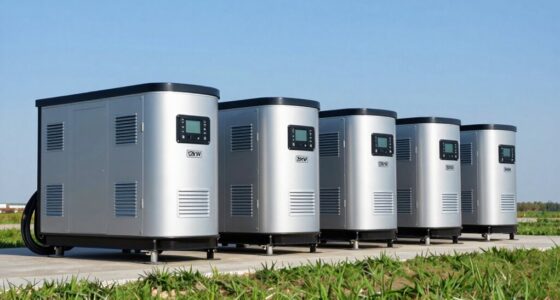
Home backup power stations range from compact units for keeping a router and phone running to large systems built for longer outages and higher-wattage appliances. I’d choose the Jackery HomePower 3600 Plus as the best overall pick here for its 3,584Wh capacity and 3,600W output; the BLUETTI Elite 200 V2 stands out for buyers who want substantial capacity with included solar panels, while the CyberPower CP2000PFCRM2U suits fixed computer and network gear that needs UPS protection. The main tradeoff is between capacity and portability, with UPS response, solar input, and outlet power also shaping what a unit can support. A power station may keep essentials running, but it does not automatically replace a home generator or power every appliance. Read on for the full comparison and guidance on matching a station to your backup plan.

Get backup power and energy gear delivered free with Prime
- Fast, free delivery on millions of items
- Prime Video, Amazon Music and more included
- Member-only deals all year
Complete the kit


Key Takeaways
- The Jackery HomePower 3600 Plus leads on listed capacity and output: 3,584Wh and 3,600W make it the strongest fit here for buyers prioritizing substantial stored energy and appliance headroom.
- The BLUETTI Elite 200 V2 bundle pairs capacity with solar panels: its included 2x200W panels make it a distinct choice for buyers planning to recharge away from the grid.
- UPS products serve a different backup job: the CyberPower ST900U and CP2000PFCRM2U are aimed at connected electronics, while portable power stations offer broader off-grid flexibility.
- Mid-sized units balance useful capacity and moveability: the BLUETTI AC180, Anker SOLIX C1000 Gen 2, and UDPOWER S1200 offer more output than pocket-sized stations without reaching the largest systems’ scale.
- Compact stations prioritize essentials over household coverage: the ALLWEI 300W, Jackery Explorer 300, and other smaller-capacity picks are better matched to phones, lights, and networking gear than sustained high-wattage loads.


| home backup power station | Capacity | Battery type |
|---|---|---|
| 1000W Portable Power Station 1 | 1,024Wh | LiFePO4 |
| BLUETTI Portable Power Station | — | LiFePO4 |
| CyberPower ST900U Standby UPS | — | — |
| ALLWEI Portable Power Station | 256Wh | LiFePO4 |
| CyberPower CP2000PFCRM2U PFC S | — | — |
| Jackery Explorer 300 Portable | 292Wh | — |
| BLUETTI Elite 200 V2 Solar Gen | 2073.6Wh | LiFePO4 |
| BLUETTI Elite 100 V2 Portable | 1024Wh | — |
| UDPOWER S1200 Portable Power S | — | LiFePO4 |
| GRECELL Portable Power Station | 519Wh | Lithium |
| Anker SOLIX S2000 Portable Pow | 2,010Wh | LFP (Lithium Iron Phosphate) |
| Librids Portable Power Station | 640Wh | LiFePO₄ |
| Anker SOLIX C1000 Gen 2 Portab | — | LiFePO₄ |
| Jackery HomePower 3600 Plus Po | 3,584Wh | — |
More Details on Our Top Picks
1000W Portable Power Station 1024Wh LiFePO4 for Outdoor & Home
This station pairs a 1,024Wh LiFePO4 battery with 1,000W of continuous output, a practical fit for keeping lights, a router, and a mini fridge running during a short outage. Its capacity is close to the BLUETTI AC180’s 1,152Wh, but the BLUETTI offers substantially more AC output for higher-demand appliances. This model instead keeps the setup simpler for buyers whose priority is essential devices rather than broad appliance coverage. Solar input is capped at 300W, so a larger panel will not speed charging beyond that limit, and cloudy weather can stretch recharge time. At 27.73 pounds, it can be moved when needed, though it is heavier than a small grab-and-go backup. I’d choose it for a modest outage kit, not as whole-home backup.
Pros:- 1,024Wh capacity supports several essential devices
- LiFePO4 battery chemistry is suited to repeated charging
- Solar compatible for recharging away from an outlet
- USB-C and USB-A ports allow direct device charging
Cons:- 1,000W continuous output limits appliance choices
- 300W maximum solar input can make solar recharging slow
- 27.73-pound weight may be cumbersome to carry often
Best for: Households that want one portable battery for lights, a router, and a mini fridge during short outages
Not ideal for: Buyers who need to run high-wattage appliances or recharge quickly from a large solar array
- Capacity:1,024Wh
- Continuous output:1,000W
- Battery type:LiFePO4
- AC outlets:2 × 110V
- USB-C:1 × 60W PD
- USB-A:2 ports
- Maximum solar input:300W
- Weight:27.73 lb
Our verdict“Choose this for portable, mid-capacity backup of essential household devices; pick the BLUETTI AC180 if you need more output.”
BLUETTI Portable Power Station AC180, 1152Wh LiFePO4 Battery Backup with 1800W (2700W peak) AC Outlets, Fast Charging, Solar Compatible
The AC180 stands out for combining a 1,152Wh LiFePO4 battery with 1,800W AC output, giving it more headroom for household devices than the 1,000W station in this batch. That extra output can widen the range of appliances you can run, while its stated one-hour charging time is useful when grid power returns briefly between outages. Solar input reaches 500W, also above the smaller station’s 300W ceiling. The tradeoff is that this remains a portable battery, not a large home backup system: capacity still limits how long higher-draw appliances can run. The supplied details do not specify its weight or dimensions, so I can’t rank its portability confidently against compact choices such as the ALLWEI 300W. This is the stronger pick when output and recharge speed matter most.
Pros:- 1,800W AC output exceeds the 1,000W station in this batch
- Stated one-hour charging time supports quick turnaround
- 500W solar input allows more solar charging capacity than 300W models
- LiFePO4 battery chemistry supports repeated use
Cons:- 1,152Wh capacity still limits runtime for demanding appliances
- Weight and dimensions are not provided in the supplied specifications
- Higher output does not replace a larger-capacity home backup system
Best for: Homeowners who want a portable station with higher output and quick AC recharging for intermittent outages
Not ideal for: Buyers prioritizing a lightweight unit or needing long runtimes for several high-draw appliances
- Battery capacity:1,152Wh
- Battery type:LiFePO4
- AC output:1,800W
- Peak output:2,700W
- Stated charging time:1 hour
- Solar input:500W
- Included cables:AC, car, and solar charging cables
Our verdict“Pick the AC180 if you value high output and quick recharge in a portable station more than extended whole-home runtime.”
CyberPower ST900U Standby UPS Battery Backup and Surge Protector
The ST900U is a standby UPS for plugged-in electronics, rather than a portable power station for household circuits. With 500W of output, six battery-backed outlets, and six surge-only outlets, it can keep a computer, router, or console running through a brief interruption while protecting other connected gear from surges. That makes it more targeted than the BLUETTI AC180, which has much greater output and is better suited to moving between rooms or locations. The CyberPower’s tradeoff is limited outage runtime: its supplied specs give no battery capacity, so I can’t estimate how long it will sustain a particular load. It also lacks pure sine wave output, which may make it a less suitable choice for some sensitive equipment. Choose it for a desk or media setup, not for lights and appliances around the home.
Pros:- Six battery-backed outlets serve several electronics at one desk
- Six additional outlets provide surge protection
- Widely spaced outlets accommodate larger plugs
- Two USB charging ports provide shared 2.1A output
Cons:- 500W output and unspecified battery capacity limit backup use
- Not a portable station for powering household appliances
- Non-pure-sine-wave output may not suit sensitive equipment
Best for: People who want brief battery backup and surge protection for a home computer, router, or gaming setup
Not ideal for: Households seeking a portable station for appliances, room-to-room use, or extended outage coverage
- Output:500W
- Total outlets:12 × NEMA 5-15R
- Battery-backed outlets:6
- Surge-only outlets:6
- USB charging:2 ports, 2.1A shared
- Power cord:5 ft, NEMA 5-15P right-angle plug
- Warranty:3 years
Our verdict“Choose the ST900U for short-duration protection of a desktop or media setup, and consider a portable station for broader outage needs.”
ALLWEI Portable Power Station 300W, 256Wh Solar Generator LiFePO4 Battery
At 6.4 pounds and 256Wh, the ALLWEI is the easiest station here to keep ready for a router, phones, and a few lights. Its 300W continuous output also makes it far less suited to a mini fridge or other substantial appliance than the 1,024Wh station in this batch. The smaller capacity is the point: it takes up little space and can be recharged from AC, a car, or a compatible solar panel, with the product data listing a 3.5–4 hour AC charge. A 60W USB-C PD port is useful for compatible devices, but solar requires a separate panel, and 300W output sets a firm ceiling on what it can run. I’d treat this as a personal essentials kit for brief interruptions, not as a household backup hub.
Pros:- 6.4-pound weight is easy to move and store
- LiFePO4 battery is rated for 3,000 charge cycles
- Can recharge from AC, a car, or a separate solar panel
- 60W USB-C PD supports compatible devices
Cons:- 256Wh capacity provides limited outage runtime
- 300W continuous output rules out many household appliances
- Solar panel is required separately for solar charging
Best for: Apartment dwellers and solo users who want a light, compact backup for phones, a router, and a few lights
Not ideal for: Families needing extended runtimes or anyone planning to power a fridge or high-draw appliance
- Capacity:256Wh
- Continuous output:300W
- Peak surge:600W
- Battery type:LiFePO4
- Weight:6.4 lb
- Dimensions:9.25 × 5 × 6.81 in
- AC charging time:3.5–4 hours
- USB-C:1 × 60W PD
Our verdict“Choose the ALLWEI for a compact personal essentials kit, and step up to the 1,024Wh station for longer household coverage.”
CyberPower CP2000PFCRM2U PFC Sinewave UPS Battery Backup
The CP2000PFCRM2U fills a different role from portable stations: it is a rackmount UPS for installed network, security, and AV equipment. Its 1,200W output and pure sine wave design support active PFC and conventional power supplies, a more suitable match for such gear than the ST900U’s 500W, non-pure-sine-wave output. Automatic voltage regulation can correct some voltage fluctuations without using battery power, while the color LCD shows power and battery conditions at the unit. The short 10.8-inch depth can help in a shallow rack, but it also narrows the fit to rack installations and won’t serve as a grab-and-go power source like the BLUETTI AC180. The supplied data does not state runtime, so buyers should check expected load and backup duration before relying on it for an outage plan.
Pros:- 1,200W output supports more installed equipment than the ST900U
- Pure sine wave output supports active PFC power supplies
- Automatic voltage regulation addresses voltage fluctuations
- Color LCD displays power and battery conditions
Cons:- Rackmount form limits placement and portability
- Backup runtime is not stated in the supplied product data
- Management requires a software download
Best for: Home network administrators and AV owners who need rackmount UPS protection for installed equipment
Not ideal for: People seeking a portable battery to run lights, kitchen appliances, or devices in different rooms
- Output waveform:PFC sine wave
- Outlets:8 × NEMA 5-20R
- Input plug:NEMA 5-20P
- Power cord:6 ft
- Display:Color LCD
- Depth:10.8 in
- Warranty:3 years, including battery
Our verdict“Choose this UPS for shallow-rack network or AV gear; choose a portable station for household devices outside the rack.”
Jackery Explorer 300 Portable Power Station, 292Wh
For keeping small essentials running, the Explorer 300 is easier to store and move than the larger BLUETTI Elite 100 V2. Its 292Wh capacity and 300W rated output suit phones, routers, lights, and other modest loads, but leave little room for appliances that draw more power or need to run for long. LiFePO4 cells rated for over 4,000 cycles are a useful longevity feature for a unit used repeatedly, and its mix of AC, USB, and car outputs covers common devices. At 7.1 pounds, it is the most manageable option here to relocate quickly. The tradeoff is clear: compared with the GRECELL 500W, it has less capacity and output, and its solar panel is not included. I’d choose it for portability and small backup loads, not whole-room coverage.
Pros:- 7.1-pound weight makes it easy to move and store
- LiFePO4 battery is rated for over 4,000 charge cycles
- AC, USB-C, USB-A, and car outputs cover common small devices
Cons:- 300W rated output rules out many higher-draw appliances
- 292Wh capacity limits runtime compared with the GRECELL 519Wh
- Solar panel is not included
Best for: Apartment residents who want a lightweight reserve for phones, lights, and a Wi-Fi router during short outages
Not ideal for: Households seeking to run larger appliances or extend backup through a long outage, since capacity is 292Wh and rated output is 300W
- Capacity:292Wh
- Peak surge:600W
- Battery chemistry:LiFePO4
- Charge cycles:Over 4,000
- Weight:7.1 lb
- Outlets:2 AC, 1 USB-C PD, 2 USB-A, 1 car port
- Charge time:4 hours
Our verdict“Choose the Explorer 300 for a compact reserve for small essentials; pick a higher-capacity model for longer runtimes or appliances.”
BLUETTI Elite 200 V2 Solar Generator with 2x200W Solar Panels
For longer home backup with solar in the package, the Elite 200 V2 offers a much larger reserve than the BLUETTI Elite 100 V2: 2073.6Wh versus 1024Wh, alongside 2600W continuous output. That extra capacity can keep more devices running before a recharge, while the included kit description lists two 200W panels for replenishing power away from an outlet. The stated AC/DC recharge time is two hours, and the solar estimate is 2.4 hours under suitable conditions. LiFePO4 cells rated for over 6,000 cycles favor frequent use. Its scale is also its main compromise: this is a bulky setup for a small room or quick grab-and-go use, and the setup may take more effort than simpler units. I’d favor it over the Elite 100 V2 when runtime and included solar matter more than portability.
Pros:- 2073.6Wh capacity provides more stored energy than the Elite 100 V2
- 2600W continuous output supports a broader range of loads
- Includes two 200W solar panels according to the product title
- LiFePO4 battery is rated for over 6,000 cycles
Cons:- Bulky setup is less convenient to move or store than smaller stations
- Setup complexity may challenge first-time power station owners
- Solar recharge time depends on suitable conditions and is not a guaranteed household outage recharge rate
Best for: Households preparing for multi-device outages who have space to store a larger station and solar panels
Not ideal for: Buyers who need a lightweight unit they can move easily or want a simple first power station
- Capacity:2073.6Wh
- Continuous power:2600W
- Power Lifting Mode:3900W
- Solar panels:2 × 200W
- AC/DC recharge time:2 hours
- Solar recharge time:2.4 hours
- Battery type:LiFePO4
- Cycle life:Over 6,000 cycles
Our verdict“Pick the Elite 200 V2 if you want a large reserve and a solar kit for extended backup, and can accommodate its bulk.”
BLUETTI Elite 100 V2 Portable Power Station for Camping 1024Wh 1800W
The Elite 100 V2 balances useful household output with a more manageable capacity than the 2073.6Wh BLUETTI Elite 200 V2. Its 1024Wh battery and 1800W AC output can cover a wider set of outage needs than the Jackery Explorer 300, while the 25-pound weight is still movable by one person. A stated 70-minute charging time makes it practical when power returns only briefly, and app control offers a way to manage the unit remotely. LiFePO4 cells rated for over 4,000 cycles suit recurring use. The tradeoff is that 1024Wh can run short for extended outages or several hungry appliances, and 25 pounds is portable only in the sense that it can be carried. I’d choose this over the Elite 200 V2 for easier storage and movement, while accepting less reserve.
Pros:- 1800W AC output handles more appliance loads than compact stations
- 1024Wh capacity offers a useful middle ground between small units and the Elite 200 V2
- Stated charging time is 70 minutes
- App control supports remote management
Cons:- 1024Wh may run out quickly with several high-draw appliances
- 25-pound weight is substantial for frequent carrying
- Solar panel inclusion is not specified in the product data
Best for: Homeowners who want to back up selected appliances and electronics with a station they can still carry between rooms
Not ideal for: Households needing multi-day power for several high-draw appliances, or buyers who consider 25 pounds too heavy to move
- Capacity:1024Wh
- AC output:1800W
- Surge output:2700W
- Weight:25 lb
- Battery:LiFePO4
- Cycle life:Over 4,000 cycles
- Charging time:70 minutes
- Dimensions:17L (as listed)
Our verdict“Choose the Elite 100 V2 for a movable, mid-size home backup unit when 1800W output matters more than maximum runtime.”
UDPOWER S1200 Portable Power Station 1200W (Surge 1800W), 400W Solar Input, UPS, UL2743, for Home RV Emergency, Pure Sine Wave
Quiet operation and a UPS feature make the S1200 an appealing fit for indoor backup around electronics and work equipment. Its listed noise level is under 25dB, and the 1200W pure sine wave inverter gives it more headroom than the Jackery Explorer 300 for moderate loads. Five AC outlets and two USB-C PD ports also let several devices connect at once. Against the BLUETTI Elite 100 V2, however, the S1200 lists lower output and provides no battery capacity figure here, so I can’t compare expected runtime from the supplied data. Up to 400W solar input and a stated 1.5-hour fast charge add recharge options, while the 4,000-plus-cycle LiFePO4 battery supports repeated use. Skip it for high-wattage appliances; the 1200W ceiling sets a firm limit.
Pros:- Listed noise level below 25dB suits indoor placement
- Five AC outlets and two USB-C PD ports support several devices
- 400W maximum solar input enables solar recharging
- LiFePO4 battery is rated for over 4,000 cycles
Cons:- 1200W output is below the Elite 100 V2’s 1800W rating
- Battery capacity is not provided in the supplied product data
- Relatively heavy, according to the product description
Best for: Remote workers who want a quiet indoor reserve for networking gear, computers, and other moderate loads
Not ideal for: Households that need a documented large battery reserve or plan to run appliances above 1200W
- Power output:1200W
- Surge output:1800W
- Battery type:LiFePO4
- Battery cycles:Over 4,000
- AC outlets:5
- USB-C PD ports:2
- Maximum solar input:400W
- Fast charge time:1.5 hours
Our verdict“Choose the S1200 for quiet, moderate-load indoor backup when its unspecified battery capacity is acceptable.”
GRECELL Portable Power Station 500W, 519Wh Solar Generator Backup Lithium Battery Pack
The GRECELL gives small backup loads more breathing room than the Jackery Explorer 300: it lists 519Wh capacity and 500W output, though its lithium battery chemistry is not specified as LiFePO4. That extra energy can keep several electronics or modest devices running longer, and the two pure sine wave AC outlets, USB-C PD, three USB-A ports, DC outputs, car port, and wireless charging pad make it flexible for mixed devices. Multiple recharge paths suit a home station that may also travel by car, but the listed wall recharge takes six to seven hours and solar takes six to nine hours. Its 500W limit still excludes many appliances, and no panel is included. Compared with the 1024Wh Elite 100 V2, the GRECELL is a smaller-load option with less than half the stated capacity.
Pros:- 519Wh capacity exceeds the Jackery Explorer 300’s 292Wh
- 500W output provides more headroom than compact 300W units
- Broad mix of AC, USB, DC, car, and wireless charging options
- Can recharge from wall, car, or solar inputs
Cons:- 500W output cannot support many larger household appliances
- Solar panel is not included
- Listed wall and solar recharge times are several hours
Best for: Budget-conscious households seeking longer backup for phones, lights, and modest electronics without moving to a 1kWh station
Not ideal for: Buyers who need LiFePO4 chemistry, fast solar replenishment, or power for appliances drawing over 500W
- Capacity:519Wh
- Power output:500W
- Battery type:Lithium
- USB-A ports:3, QC3.0, up to 18W
- USB-C port:1, PD 60W
- Wireless charger:10W
- Recharge time:Wall: 6–7 hours; solar: 6–9 hours; car: 7–8 hours
Our verdict“Pick the GRECELL for a versatile reserve for modest loads when you want more capacity than a compact station offers.”
Anker SOLIX S2000 Portable Power Station, 2010Wh, 1500W
The 2,010Wh capacity gives the SOLIX S2000 more reserve for a prolonged outage than the Anker SOLIX C1000 Gen 2, making it a better fit when keeping several essentials running matters more than maximizing output power. Its 1,500W continuous rating covers many household devices, while 400W solar input and AC or car charging offer more than one way to replenish it. The stated 10,000-cycle LFP lifespan also favors long-term use. The tradeoff is that its 1,500W output is lower than the C1000 Gen 2’s 2,000W, so some higher-draw appliances may be a poor match despite the larger battery. At 35.7 pounds, it is portable for its capacity, but the lack of a 12V DC port limits direct use with some equipment. Actual runtime depends on the appliances and conditions.
Pros:- 2,010Wh capacity provides more stored energy than the Anker SOLIX C1000 Gen 2.
- 1,500W continuous and 3,000W peak output support many essential appliances.
- AC, car, and up to 400W solar charging provide multiple recharge options.
- LFP battery is listed with a 10,000-cycle lifespan.
Cons:- Lower continuous output than the Anker SOLIX C1000 Gen 2 despite its larger capacity.
- No 12V DC port for equipment that needs a direct DC connection.
- At 35.7 pounds, it is less convenient to move frequently than smaller stations.
Best for: Households seeking a high-capacity battery for several essential devices during outages, with access to AC or solar recharging.
Not ideal for: Buyers who need more than 1,500W of continuous output or a 12V DC port for their equipment.
- Capacity:2,010Wh
- Continuous power:1,500W
- Peak power:3,000W
- Battery type:LFP (Lithium Iron Phosphate)
- Battery lifespan:10,000 cycles
- Solar input:Up to 400W
- Weight:35.7 lbs
- Dimensions:8.2 x 11.1 x 12.7 inches
Our verdict“Choose the SOLIX S2000 if you want more stored energy for outage essentials and can work within its 1,500W output limit.”
Librids Portable Power Station 640Wh, 1200W Surge, Solar Generator with 4 AC Outlets
The Librids suits buyers who want a modest reserve for electronics and smaller backup loads, rather than the longer appliance runtime offered by the Anker SOLIX S2000 or the Jackery HomePower 3600 Plus. Its 640Wh capacity is the constraint: it can keep a limited setup going, but it has far less stored energy than either larger unit. Four AC outlets make it easier to connect several devices, and the pure sine wave inverter is intended for sensitive electronics. The stated 1.5-hour charging time is useful when outages are intermittent and there is a chance to recharge between them. LiFePO₄ cells are listed for more than 4,000 cycles, with a five-year warranty. However, the 1,200W figure is surge power, and the product is specified for indoor use only, so it is not suited to wet outdoor conditions.
Pros:- Four AC outlets allow several devices to connect at once.
- Pure sine wave inverter is designed for sensitive electronics.
- Listed 1.5-hour charging time helps replenish the 640Wh battery quickly.
- LiFePO₄ battery is rated for more than 4,000 cycles and includes a five-year warranty.
Cons:- 640Wh capacity offers much less reserve than the Anker SOLIX S2000 or Jackery HomePower 3600 Plus.
- The 1,200W figure is surge power; continuous output is not specified in the supplied data.
- Indoor-use-only guidance rules it out for wet outdoor conditions.
Best for: Apartment residents or remote workers who need a smaller indoor reserve for routers, laptops, and other electronics.
Not ideal for: Households needing extended appliance runtime or anyone who plans to operate the station outdoors in rain or wet conditions.
- Capacity:640Wh
- Surge power:1,200W
- Charging time:1.5 hours
- AC outlets:4
- Battery type:LiFePO₄
- Battery cycles:4,000+
- Warranty:5 years
Our verdict“Pick the Librids for a compact indoor electronics backup with quick listed charging, but skip it if you need substantial appliance runtime.”
Anker SOLIX C1000 Gen 2 Portable Power Station
For buyers balancing manageable size with appliance capability, the SOLIX C1000 Gen 2 offers 2,000W continuous output from a 1,024Wh battery. That is more output than the larger-capacity Anker SOLIX S2000, though the S2000 stores nearly twice as much energy for longer use. The C1000 Gen 2 is the stronger fit when a compatible device’s power demand matters more than maximizing runtime. Its listed 49-minute recharge time and 1.8-hour solar recharge claim can help shorten downtime, while nine outlets give a household several connection points. The tradeoff is that 1,024Wh remains a limited reserve for prolonged outages or multiple appliances. At 11.3kg, it is movable but not featherlight, and the supplied data gives conflicting outlet counts elsewhere, so buyers should confirm port details before purchase.
Pros:- 2,000W continuous output exceeds the Anker SOLIX S2000’s 1,500W rating.
- 1,024Wh LiFePO₄ battery balances useful capacity with a mid-size format.
- Listed 49-minute AC recharge and 1.8-hour solar recharge can reduce downtime.
- Nine total power outlets provide multiple connection points.
Cons:- Its 1,024Wh capacity is substantially below the Anker SOLIX S2000 and Jackery HomePower 3600 Plus.
- At 11.3kg, it may be cumbersome to carry for some users.
- Supplied port-count details conflict, so the exact output layout needs confirmation.
Best for: Households that need up to 2,000W output for compatible appliances but still want a station that can be moved between rooms.
Not ideal for: Buyers prioritizing long runtime above output capacity, or those who need a lightweight station for frequent carrying.
- Battery capacity:1,024Wh
- Continuous output:2,000W
- Peak output:3,000W
- Battery type:LiFePO₄
- AC recharge time:49 minutes
- Solar recharge time:1.8 hours
- Total power outlets:9
- Weight:11.3 kg
- Dimensions:15.1 x 8.2 x 9.6 inches
Our verdict“Choose the C1000 Gen 2 when higher output and quick listed recharging matter more than the longer reserve of a larger station.”
Jackery HomePower 3600 Plus Power Station, 3584Wh, 3600W AC Output
The Jackery HomePower 3600 Plus is the capacity leader in this group, with 3,584Wh and 3,600W AC output. That gives it a much larger starting reserve and higher output than the Anker SOLIX S2000, while its parallel output option can reach 7,200W with multiple units. For households planning around several essential loads or future expansion, that headroom is the main reason to choose it. It also supports AC, DC, solar, and gas-generator charging; listed recharge times are two hours for AC plus DC and four hours for solar. The larger system brings tradeoffs: bigger household needs require additional units, and charging times vary by method. Its claimed relative weight advantage and wheels with a telescopic handle help with movement, but the supplied data does not state an absolute weight.
Pros:- 3,584Wh capacity provides the largest stated energy reserve in this batch.
- 3,600W AC output exceeds the Anker SOLIX S2000’s 1,500W continuous rating.
- Parallel operation can provide up to 7,200W output with multiple units.
- Supports AC, DC, solar, and gas-generator charging, with wheels and a telescopic handle.
Cons:- Larger household power needs require purchasing and managing multiple units.
- The supplied weight is comparative only, without an absolute figure for portability planning.
- Charging times vary by method and conditions.
Best for: Homeowners planning a high-capacity outage setup who want strong AC output, multiple recharge paths, and the option to add units.
Not ideal for: Buyers who need a small, low-output station for occasional electronics or who require a confirmed absolute weight before judging portability.
- Capacity:3,584Wh
- AC output:3,600W
- Parallel output:Up to 7,200W
- Parallel voltage:120V & 240V
- Cycle life:6,000 cycles
- Stated lifespan:10 years
- AC + DC charging time:2 hours
- Solar charging time:4 hours
Our verdict“Choose the HomePower 3600 Plus if a large reserve and expandable output matter more than keeping your backup setup small.”

How We Picked
I compared the 14 products by how well their listed specifications and design fit real home backup jobs: keeping small electronics online, supporting selected appliances, or protecting computer equipment during an interruption. Capacity and AC output shaped the ranking because they indicate how much energy a station stores and what kinds of loads it can support. I also weighed portability, solar charging options, UPS functionality, and the practical difference between a portable power station and a dedicated UPS.
The order favors products with a clearer fit for meaningful home backup, then distinguishes models by their intended buyer. The Jackery HomePower 3600 Plus ranks first for its high stated capacity and output; the BLUETTI Elite 200 V2 earns a prominent role for pairing a sizable station with solar panels. Smaller units rank lower for whole-home ambitions but remain useful for targeted essentials. These rankings reflect the supplied product specifications and positioning, not hands-on testing; confirm supported loads, recharge times, transfer behavior, and battery details with the manufacturer before purchase.
| home backup power station | Battery type |
|---|---|
| 1000W Portable Power Station 1 | LiFePO4 |
| BLUETTI Portable Power Station | LiFePO4 |
| CyberPower ST900U Standby UPS | — |
| ALLWEI Portable Power Station | LiFePO4 |
| CyberPower CP2000PFCRM2U PFC S | — |
| Jackery Explorer 300 Portable | — |
| BLUETTI Elite 200 V2 Solar Gen | LiFePO4 |
| BLUETTI Elite 100 V2 Portable | — |
| UDPOWER S1200 Portable Power S | LiFePO4 |
| GRECELL Portable Power Station | Lithium |
| Anker SOLIX S2000 Portable Pow | LFP (Lithium Iron Phosphate) |
| Librids Portable Power Station | LiFePO₄ |
| Anker SOLIX C1000 Gen 2 Portab | LiFePO₄ |
| Jackery HomePower 3600 Plus Po | — |
Factors to Consider When Choosing Home Backup Power Stations
Choosing a home backup station starts with a backup plan, not a capacity number. Decide which devices must keep running, how long they need power, and whether you can recharge the station during an outage. The following factors help avoid buying a unit that is too small for the job or too bulky for the way you expect to use it.
List the loads you actually need to run
Write down the devices you expect to power and check each one’s running watts and startup demand. A refrigerator or pump may draw more power briefly when its motor starts, so a station that matches only the normal running load can still shut down. Add the loads you might use at the same time; the combined demand must stay within the station’s AC output limit. For runtime, multiply each device’s watts by the hours you need, then allow extra capacity for conversion losses and changing usage. Avoid sizing around every appliance in the house unless you are choosing a system designed for that scale. A short, prioritized list often leads to a smaller and more practical setup.
Treat watt-hours as a runtime estimate, not a promise
Watt-hours describe stored energy, while watts describe how much power can be delivered at once. A large capacity number cannot run a device whose load exceeds the station’s output limit. Actual runtime also changes with inverter losses, temperature, battery condition, and whether the station is powering several devices together. For planning, divide capacity by the total load to get a rough upper-bound estimate, then leave a margin rather than planning to drain the battery completely. If outages in your area tend to last many hours, decide which loads can be switched off after the initial period. That approach can matter more than stepping up one capacity tier.
Check UPS behavior for electronics that must stay online
A power station with a UPS feature and a dedicated UPS are not automatically interchangeable. For a desktop computer, router, or network storage device, check the transfer time and whether the device maker says the equipment can tolerate it. Confirm that the station supports the output waveform and load your electronics require, and check whether pass-through operation is supported. A standalone UPS is often easier to place permanently beside equipment, while a portable station can serve other devices when needed. Do not assume that every model labeled UPS will provide the same protection or seamless switching. Verify the exact behavior in the product documentation before relying on it for uninterrupted work.
Plan how you will recharge during an extended outage
Battery capacity only describes the energy available at the start; recharge access shapes how useful it remains over several days. Compare wall charging speed, solar input limits, supported panel connections, and whether the panels are included or purchased separately. Solar output varies with season, shade, panel angle, and weather, so a panel’s rated wattage is not a guaranteed daily yield. If you expect to recharge from a car or another source, check compatibility and charging time before an emergency. A station with less stored energy but a workable recharge routine may suit a long outage better than a larger unit that cannot be replenished. Keep cables and compatible panels with the backup equipment so they are ready when needed.
Balance capacity against weight and placement
Higher capacity usually means a larger, heavier unit, which can complicate moving it between a storage area and the devices it serves. Think about where it will sit, whether one person can move it, and how close it can be to the loads and charging sources. Portable stations are generally designed for selected devices and circuits; powering a home’s installed wiring requires compatible equipment and qualified installation. Do not connect a station to a household outlet with an improvised cable. If the unit will stay in one place, portability may matter less than outlet layout and accessible controls. If you need to relocate it or use it outdoors, weight and handles deserve more attention.
Know when paying for more capacity makes sense
Extra capacity is useful when it supports a defined need, such as longer runtime, higher loads, or fewer recharge interruptions. It can be wasted if the station spends most of its time powering a router and a few lights. Before choosing a larger model, check whether your priority is added watt-hours, greater AC output, more outlets, or faster recharging; those features solve different problems. Also review battery chemistry, cycle-life claims, warranty terms, and storage guidance, since upkeep and replacement expectations affect long-term ownership. A smaller unit can be the sensible choice for a short outage plan, while a larger system fits buyers who have measured higher demand. Match the added capacity to the loads and duration you have identified.
Frequently Asked Questions
Can a home backup power station run a refrigerator during an outage?
It may, if the station’s AC output can handle the refrigerator’s startup surge and its stored energy can cover the expected runtime. Check the appliance label or manual for running and startup requirements, then compare those figures with the station’s specifications. Refrigerator cycling makes runtime difficult to predict from capacity alone, and opening the door less often can reduce demand. A compact station meant for phones and lights is unlikely to be a reliable refrigerator backup. If food storage is the priority, size the station around the refrigerator and allow a reserve for other essential loads.
Is a power station with a UPS feature enough to protect my desktop computer?
That depends on the computer’s load and the station’s transfer behavior. Check the stated transfer time, output waveform, and UPS operating limits against the computer’s power supply and any connected monitor or network equipment. A dedicated UPS such as the CyberPower models in this roundup is purpose-built for stationary electronics, while a portable station adds flexibility for other backup tasks. Neither label alone tells you whether a particular computer will stay on during a switchover. Confirm compatibility with the manufacturer and test the setup under controlled conditions before depending on it for critical work.
Should I choose a station with solar panels included?
Included panels can simplify getting started and make the cost of a solar-ready setup easier to judge, as with the BLUETTI Elite 200 V2 bundle here. They do not guarantee fast recharging: sunlight, shade, season, panel placement, and the station’s solar input limit all affect results. Check whether the included panel output suits your expected recharge window and whether extra panels can be connected later. If you expect to rely mainly on wall charging, a panel bundle may add little value for your use. Buyers planning multi-day outages should treat solar as a recharge option with variable output, not a guaranteed replacement for grid power.
Can I connect a portable power station to my home’s wiring?
Do not connect a portable station to a household outlet using a male-to-male cable or other improvised method. That can create a serious electrical hazard and may energize circuits unexpectedly. Powering installed home circuits requires equipment designed for that purpose, such as a compatible transfer arrangement installed by a qualified electrician. Many portable stations are intended to power devices directly from their own outlets. Check the manufacturer’s approved connection methods and local electrical requirements before planning to back up wired circuits.
How do I choose between a large station and a smaller one?
Start with the devices you need, their combined wattage, and the number of hours you want to run them. A smaller station can be easier to move and sufficient for communication devices, lights, and other low-power essentials. A larger unit such as the Jackery HomePower 3600 Plus is better suited to buyers seeking more stored energy and higher output, though its size may be harder to relocate. Compare recharge options as well as capacity, especially if an outage may last beyond the first battery charge. The right size follows from your load and duration plan, rather than from the biggest number available.
Conclusion
For the strongest listed combination of stored energy and output, I’d choose the Jackery HomePower 3600 Plus as the best overall pick. Buyers seeking a solar-ready package can look to the BLUETTI Elite 200 V2, while the Anker SOLIX C1000 Gen 2 or UDPOWER S1200 may suit those who want a mid-sized station for selected home essentials. For beginners with modest backup needs, the Jackery Explorer 300 is a simpler scale to plan around; the ALLWEI 300W is another compact option when low-power devices are the priority. I’d treat the CyberPower CP2000PFCRM2U and ST900U as picks for stationary electronics and UPS use. Choose the BLUETTI Elite 200 V2 as the standout premium solar bundle, and select any model only after confirming that its output, runtime, and recharge method fit your actual loads.