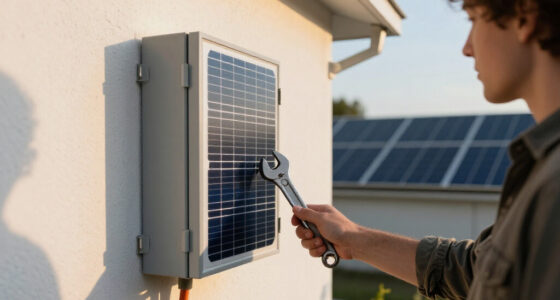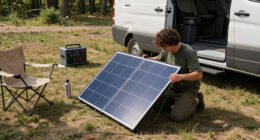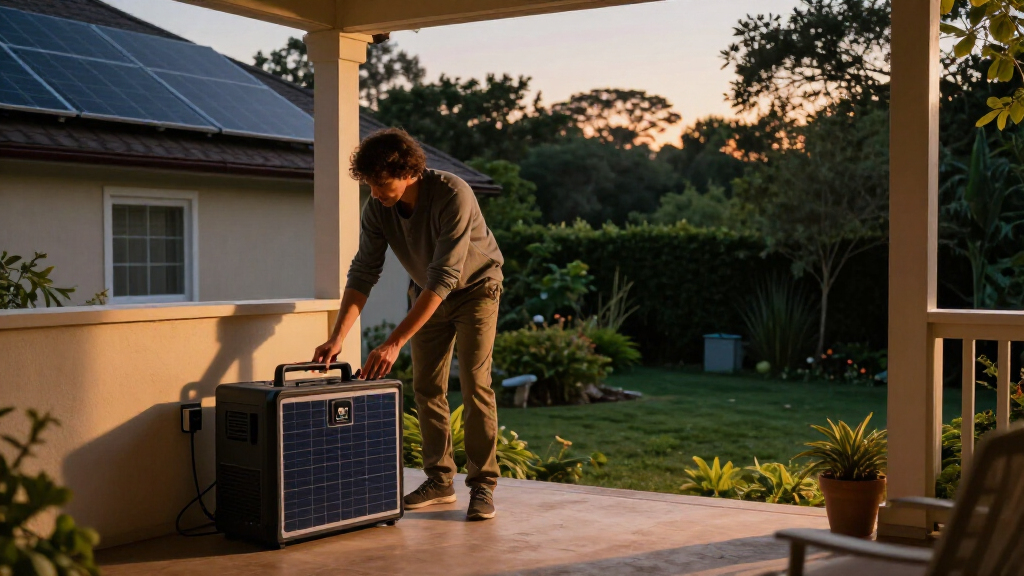

Solar backup power systems span an enormous range, from a 300W emergency box that keeps a phone and a lamp alive to a 16.1kWh off-grid kit capable of running an entire house. For most homeowners who want serious backup without hiring an installer, the Anker SOLIX S2000 stands out as the best overall pick, thanks to its 2010Wh capacity, 3000W peak output, and home-friendly design. If you need true whole-home coverage, the ECO WORTHY 10kW kit with 16.1kWh of battery storage offers the most complete off-grid package in this lineup, while the EF ECOFLOW Delta 3 Classic is the smart choice for beginners who want a simple solar generator that just works. The main tradeoff you’ll face is capacity versus portability versus price — bigger systems cost more, weigh more, and take longer to install, but they’re the only ones that can carry a fridge or well pump through a multi-day outage. Read on for the full breakdown of all 13 systems and which one fits your situation.

Get backup power and energy gear delivered free with Prime
- Fast, free delivery on millions of items
- Prime Video, Amazon Music and more included
- Member-only deals all year
Complete the kit


Key Takeaways
- Whole-home kits (ECO WORTHY 10kW, Solar Complete 9.36kWh) deliver roughly 8-10x the usable energy of portable stations, but only make financial sense if you experience frequent or extended outages.
- Portable stations between 1000Wh and 2000Wh — the Anker SOLIX S2000, ABOK Ark3600, and ECOFLOW Delta 3 — hit the sweet spot for fridge-plus-essentials backup, and they move easily between home, RV, and campsite.
- Several Jackery models made the list, but they serve very different buyers: the Solar Generator 1000 V2 suits light users, while the HomePower 5000 Plus and 3600 Plus target permanent home installation.
- Built-in solar panel units (BROWEY, Blavor) recharge conveniently but collect only a fraction of the power that detachable panel kits provide — fine for topping up, poor for recovery during an outage.
- The 300W mini generator class is a false economy for home backup; it works as a camping or emergency electronics kit, but it cannot bridge even a short power outage for essential appliances.
| Anker SOLIX S2000 Portable Power Station, 2010Wh, 3000W Peak |  | Best Overall Portable Backup | Capacity: 2010Wh | Continuous Power: 1500W | Peak Power: 3000W | VIEW LATEST PRICE | See Our Full Breakdown |
| Solar Complete 9.36KWH Off-Grid System with 12KW Inverter |  | Best Whole-Home Off-Grid System | System Capacity: 9.36KWH | Inverter Power: 12KW split-phase | Inverter Voltage: 120V/240V | VIEW LATEST PRICE | See Our Full Breakdown |
| ECO-WORTHY 10KW Off-Grid Solar System Kit with 12 Bifacial Panels |  | Best Value Complete Off-Grid Kit | Solar Panels: 12 x 195W N-Type bifacial | Total Panel Power: 2340W | Inverter: 10KW 120V/240V, UL 1741 certified | VIEW LATEST PRICE | See Our Full Breakdown |
| ABOK Ark3600 Portable Power Station 3600W, 3840Wh |  | Best Expandable High-Capacity Station | Battery Capacity: 3840Wh (expandable to 11520Wh) | Continuous Power: 3600W | Peak Power: 4500W | VIEW LATEST PRICE | See Our Full Breakdown |
| Portable Solar Generator 300W with 40W Solar Panel |  | Best Budget Starter Pick | Battery Capacity: 220Wh | Running Wattage: 300W | Starting Wattage: 600W | VIEW LATEST PRICE | See Our Full Breakdown |
| Jackery Solar Generator 1000 V2 and 200W Solar Panel |  | Best Portable Pick | Capacity: 1070Wh | AC Output: 1500W (3000W surge) | Battery Type: LFP | VIEW LATEST PRICE | See Our Full Breakdown |
| ECO WORTHY 10,000W Off-Grid Solar Panel Kit with 10kW Inverter and 16.1kWh Battery |  | Best Whole-Home Off-Grid System | Inverter Output: 10kW | Battery Capacity: 16.1 kWh (48V) | Solar Array: 2950W total (5 x 590W panels) | VIEW LATEST PRICE | See Our Full Breakdown |
| BROWEY 1600W Portable Power Station with 1024Wh LiFePO4 Battery and Built-in Solar Panel |  | Best Self-Contained Design | Capacity: 1024Wh | Output: 1600W (3200W peak), pure sine wave | Battery Type: LiFePO4 | VIEW LATEST PRICE | See Our Full Breakdown |
| EF ECOFLOW Solar Generator Delta 3 Classic with 220W Solar Panel |  | Best for Home Electronics Backup | Capacity: 1024Wh | Output: 1800W (3600W surge) | Battery Type: LiFePO4 | VIEW LATEST PRICE | See Our Full Breakdown |
| Jackery Solar Generator 5000 Plus with 2x200W Solar Panels |  | Best for Extended Outages | Capacity: 5040Wh (expandable to 60kWh) | Max Output: 7200W (14,400W surge) | Battery Type: LiFePO4 | VIEW LATEST PRICE | See Our Full Breakdown |
| Jackery HomePower 3000 with 2x200W Solar Panels |  | Best for Home Essentials Backup | Capacity: 3072Wh | AC Output: 3600W | Surge Power: 7200W | VIEW LATEST PRICE | See Our Full Breakdown |
| Jackery HomePower 3600 Plus Portable Power Station with Solar Panels |  | Best Expandable Premium System | Capacity: 3584Wh | Expandable Capacity: Up to 21kWh | Output Power: 3600W | VIEW LATEST PRICE | See Our Full Breakdown |
| Blavor Portable Power Station 1600W with Built-in Solar Panel |  | Best All-in-One Solar Value | Power Output: 1600W (Peak 3200W) | Battery Capacity: 1024Wh | Battery Type: LiFePO4 | VIEW LATEST PRICE | See Our Full Breakdown |
| solar backup power system | Battery Type | Capacity |
|---|---|---|
| Anker SOLIX S2000 Portable Pow | LiFePO4 (LFP) | 2010Wh |
| Solar Complete 9.36KWH Off-Gri | — | — |
| ECO-WORTHY 10KW Off-Grid Solar | — | — |
| ABOK Ark3600 Portable Power St | LiFePO4 | — |
| Portable Solar Generator 300W | — | — |
| Jackery Solar Generator 1000 V | LFP | 1070Wh |
| ECO WORTHY 10,000W Off-Grid So | — | — |
| BROWEY 1600W Portable Power St | LiFePO4 | 1024Wh |
| EF ECOFLOW Solar Generator Del | LiFePO4 | 1024Wh |
| Jackery Solar Generator 5000 P | LiFePO4 | 5040Wh (expandable to 60kWh) |
| Jackery HomePower 3000 with 2x | LiFePO4 | 3072Wh |
| Jackery HomePower 3600 Plus Po | — | 3584Wh |
| Blavor Portable Power Station | LiFePO4 | — |
More Details on Our Top Picks
Anker SOLIX S2000 Portable Power Station, 2010Wh, 3000W Peak
This option stands out for balancing capacity, portability, and battery longevity better than anything else in the portable category. The 2010Wh capacity paired with a 10,000-cycle LiFePO4 battery means this unit could outlast most appliances you’d plug into it. Compared with the Jackery Solar Generator 1000 V2, you get nearly double the stored energy in a package that’s still manageable at 35.7 lbs — small enough to move between rooms or load into a car during an evacuation. The 1500W continuous output runs refrigerators, CPAP machines, and routers without strain, and the 3000W peak handles motor startup. The main compromises: solar input tops out at 400W, so a full solar recharge takes patience, and the missing 12V DC port annoys anyone hoping to run car accessories directly.
Pros:- 10,000-cycle LiFePO4 battery far outlasts standard lithium-ion rivals
- Compact 35.7 lb build is genuinely portable unlike fixed off-grid kits
- 3000W peak power handles appliance motor startup
- Multiple recharge paths: solar, AC wall, and car outlet
Cons:- Solar input capped at 400W makes full solar recharges slow
- No 12V DC port limits compatibility with car-style accessories
Best for: Homeowners who want grab-and-go emergency power for fridges, medical devices, and electronics during outages
Not ideal for: Off-grid cabins or whole-home backup buyers — the capacity is too small and solar recharge too slow for daily living
- Capacity:2010Wh
- Continuous Power:1500W
- Peak Power:3000W
- Battery Type:LiFePO4 (LFP)
- Battery Cycle Life:10,000 cycles
- Solar Input:Up to 400W
- Weight:35.7 lbs
Our verdict“The strongest all-around pick for households that want reliable, portable outage insurance without hiring an installer.”
Solar Complete 9.36KWH Off-Grid System with 12KW Inverter
For buyers whose goal is energy independence rather than emergency convenience, this kit plays in a different league than portables like the Anker SOLIX S2000. The 12KW split-phase inverter produces both 120V and 240V, which matters if you need to run well pumps, welders, or central HVAC — none of which a portable station can touch. With 9.36KWh of storage and 2400W of panel input, it sustains a modest household day after day, not just through a single outage. The 10-year warranty on the battery and system is longer coverage than the ECO-WORTHY 10KW kit advertises, which reduces long-term risk on a big investment. The tradeoffs are real: expect professional installation costs, significant roof or ground space for panels, and an upfront price that dwarfs any power station.
Pros:- 12KW split-phase inverter delivers true 120V/240V whole-home power
- 10-year warranty covers the full system, not just the battery
- Up to 99% MPPT tracking efficiency maximizes solar harvest
- WiFi and LCD monitoring give real-time visibility into energy flow
Cons:- Installation demands licensed electrician-level expertise and added cost
- High upfront investment compared to portable alternatives
- Requires substantial space for panels and battery placement
Best for: Rural homeowners and cabin builders who want to eliminate utility bills and run 240V appliances off-grid
Not ideal for: Renters, apartment dwellers, or anyone wanting plug-and-play backup — this requires permanent installation and technical expertise
- System Capacity:9.36KWH
- Inverter Power:12KW split-phase
- Inverter Voltage:120V/240V
- Solar Panel Power:2400W
- Battery:51.2V 200Ah LiFePO4
- Battery Life:Over 10 years
- Warranty:10 years
Our verdict“A serious commitment for people serious about going off-grid, with warranty backing most kits can’t match.”
ECO-WORTHY 10KW Off-Grid Solar System Kit with 12 Bifacial Panels
Where the Solar Complete 9.36KWH system emphasizes inverter headroom, this ECO-WORTHY kit wins on generation efficiency and long-term durability per dollar. The N-type bifacial panels capture light from both sides at 25% conversion efficiency, and with an IP68 rating and 30-year lifespan, the array itself will likely outlast the house paint. The UL 1741 certified 10KW inverter supports parallel connection, meaning you can scale the system later instead of starting over — a flexibility the 9.36KWH kit doesn’t advertise as clearly. App-based battery monitoring rounds out a genuinely modern package. Be realistic about the downsides: professional installation is effectively mandatory, twelve panels demand serious mounting space, and the total investment still runs into five figures. Compared with the ECO WORTHY 10,000W kit with 16.1kWh of storage, you’re getting less battery here but stronger panels.
Pros:- 25%-efficient bifacial panels outperform standard monocrystalline arrays
- Parallel-capable inverter allows system expansion without replacing components
- 2 x 48V 100Ah lithium batteries with real-time app monitoring
- IP68 waterproof panels rated for 30 years of service
Cons:- Professional installation effectively required, adding significant cost
- Twelve large panels need substantial roof or ground space
- High total investment relative to smaller portable options
Best for: Homesteaders and small-farm owners planning to expand their system over time and wanting panels that last decades
Not ideal for: DIY beginners or budget-limited buyers — the complexity and total installed cost will overwhelm casual projects
- Solar Panels:12 x 195W N-Type bifacial
- Total Panel Power:2340W
- Inverter:10KW 120V/240V, UL 1741 certified
- Batteries:2 x 48V 100Ah lithium
- Conversion Efficiency:25%
- Waterproof Rating:IP68
- Lifespan:30 years (panels)
Our verdict“The smartest off-grid buy if you value upgradeability and panel longevity over maximum storage on day one.”
ABOK Ark3600 Portable Power Station 3600W, 3840Wh
This model is better suited to buyers who’ve outgrown mid-size stations but aren’t ready for a fixed off-grid install. With 3840Wh expandable to 11,520Wh, it nearly doubles the Anker SOLIX S2000’s capacity and sits in the same weight class as the Jackery HomePower 3000 while offering more headroom to grow. The 15 output ports — including USB-C, XT60, and DC5521 — mean you can run a camp kitchen, charge tools, and keep medical devices alive simultaneously. Bluetooth monitoring lets you check charge status remotely, a convenience the Anker lacks. The compromises: charging below 32°F is off-limits, which matters for cold-climate emergencies, and ABOK’s 4,000-cycle rating trails Anker’s 10,000 cycles, so heavy daily cycling will age this battery faster. The unspecified weight is also a quiet warning that this isn’t something you’ll carry far.
Pros:- Expandable from 3840Wh to 11,520Wh protects against outgrowing the unit
- 15 versatile ports handle mixed device loads at once
- Bluetooth app enables remote charge and status monitoring
- 3600W continuous output powers demanding appliances most portables can’t
Cons:- Cannot charge below 32°F, limiting cold-weather reliability
- 4,000-cycle battery life trails leading LiFePO4 competitors
- Undisclosed weight suggests poor portability despite the category
Best for: RV owners and extended-off-grid campers who need serious expandable capacity without permanent installation
Not ideal for: Casual users or cold-climate buyers — the sub-32°F charging lockout and sheer size make it impractical for light or winter use
- Battery Capacity:3840Wh (expandable to 11520Wh)
- Continuous Power:3600W
- Peak Power:4500W
- Battery Type:LiFePO4
- Cycle Life:Over 4,000 cycles / up to 10 years
- Output Ports:15 (AC, USB-A, USB-C, DC5521, XT60, more)
- Charging Methods:AC, solar (PV), car charging
Our verdict“The right pick when you need power-station convenience at near whole-home capacity, provided freezing climates aren’t in the plan.”
Portable Solar Generator 300W with 40W Solar Panel
This pick makes the most sense for someone testing whether solar backup fits their lifestyle before spending hundreds or thousands. At roughly five pounds with a bundled 40W panel, it costs a fraction of the Anker SOLIX S2000 and teaches you the basics — solar charging, battery management, load prioritization — with almost no risk. The built-in LED floodlight and multiple output ports cover the essentials: phones, headlamps, a small fan, a router. The limitations are equally clear: 220Wh and 300W output mean a refrigerator is off the table, and roughly two hours at full load means this is a bridge, not a solution. Compared with the Blavor 1600W station, you’re giving up most real appliance support but gaining genuine grab-and-go portability and a much friendlier price. Safety features like automatic shutdown and voltage regulation are welcome at this cost.
Pros:- Ultra-affordable entry point into solar backup
- 5 lb weight with included 40W panel makes it truly backpack-friendly
- Built-in LED floodlight doubles as emergency lighting
- Automatic shutdown and voltage regulation protect devices
Cons:- 220Wh capacity delivers only about 2 hours at full load
- 300W ceiling rules out nearly all kitchen and HVAC appliances
- Frequent recharging needed for anything beyond light use
Best for: Campers, students, and first-time buyers who want a low-risk introduction to solar backup for phones and small devices
Not ideal for: Anyone backing up a fridge, CPAP machine, or household essentials — 220Wh simply can’t sustain real appliances
- Battery Capacity:220Wh
- Running Wattage:300W
- Starting Wattage:600W
- Included Panel:40W solar panel
- Voltage:110V, 60Hz
- Outlets:2 AC outlets
- Dimensions:6.7 x 4.1 x 8.5 inches
Our verdict“A cheap, low-stakes way to learn solar backup basics — just don’t expect it to carry a real outage.”
Jackery Solar Generator 1000 V2 and 200W Solar Panel
This pairing stands out for buyers who want genuine grab-and-go capability without giving up real capacity. At 23.8 lbs with a foldable handle, it travels far more easily than the BROWEY or the EcoFlow Delta 3 Classic, and the 1-hour fast recharge means a wall outlet visit between outings rarely slows you down. The LFP battery rated for 4000 cycles translates to roughly a decade of recreational use — a meaningful step up from older NMC units. Compared with the BROWEY’s built-in solar panel, the detachable 200W panel here recharges faster (about 6 hours full sun) but adds a separate piece of gear to carry. The tradeoff for that portability is capacity: at 1070Wh, running a fridge through a multi-day outage means rationing, and the fast-charge feature depends on the companion app, which not everyone wants to depend on mid-emergency.
Pros:- Genuinely light at 23.8 lbs with a foldable handle for real portability
- 1-hour fast recharge gets you back in action quickly
- LFP battery rated for 4000 cycles — roughly 10+ years of use
- Versatile port selection including 100W USB-C PD
Cons:- Panel and station ship separately, so arrival times can misalign
- Fast charging requires the app rather than working out of the box
- 1070Wh capacity limits runtime on bigger appliances
Best for: Campers, van lifers, and apartment dwellers who need a light, genuinely portable backup they can also recharge quickly from a wall outlet
Not ideal for: Homeowners preparing for multi-day outages — 1070Wh won’t sustain a refrigerator and essentials for more than a day or so
- Capacity:1070Wh
- AC Output:1500W (3000W surge)
- Battery Type:LFP
- Cycle Life:4000 cycles
- Recharge Time:1 hour (fast), 3 hours (600W charger), 6 hours (solar)
- Weight:23.8 lbs
- Ports:2 USB-C, 1 USB-A, 1 DC car port, 3 AC
Our verdict“The pick for people whose backup power needs to move with them rather than sit in a closet.”
ECO WORTHY 10,000W Off-Grid Solar Panel Kit with 10kW Inverter and 16.1kWh Battery
This kit plays in a different league than every portable option in this roundup. With 16.1kWh of 48V lithium storage and a 10kW inverter, it can genuinely run a household rather than a campsite — roughly fifteen times the capacity of the Jackery 1000 V2. The four 590W monocrystalline panels use tempered glass and aluminum framing, so they belong on a roof, not in a trunk. Bluetooth and Wi-Fi monitoring lets you track the system remotely, and parallel connections leave room to grow. Those strengths are also its drawbacks: installation realistically requires an electrician, the components are large and heavy enough to need freight delivery, and the upfront cost dwarfs any portable station here. Compared with the ECO-WORTHY 10KW kit using twelve 195W panels, this configuration offers fewer, higher-efficiency panels — cleaner wiring, but the same professional-installation burden.
Pros:- 16.1kWh storage and 10kW inverter can power an entire household
- High-efficiency 590W monocrystalline panels with durable tempered-glass construction
- Scalable with parallel connections and real-time Bluetooth/Wi-Fi monitoring
- 48V architecture supports expansion and multiple inverter configurations
Cons:- Installation demands professional expertise — not a DIY weekend project
- Large, heavy components complicate delivery and handling
- High initial cost that may not pay off for occasional-outage use
Best for: Rural homeowners or cabin builders who want a permanent, whole-house off-grid system and can hire professional installation
Not ideal for: Renters, apartment dwellers, or anyone wanting plug-and-play backup — this requires electrical expertise, permitting, and permanent mounting
- Inverter Output:10kW
- Battery Capacity:16.1 kWh (48V)
- Solar Array:2950W total (5 x 590W panels)
- Output Voltage:120V
- Panel Material:Monocrystalline silicon, tempered glass, aluminum
- Monitoring:Bluetooth and Wi-Fi
Our verdict“A real off-grid home system for people leaving the grid entirely — overkill for anyone who just wants outage insurance.”
BROWEY 1600W Portable Power Station with 1024Wh LiFePO4 Battery and Built-in Solar Panel
The BROWEY’s pitch is simplicity: the solar panel is built into the unit itself, so there is nothing extra to carry, connect, or forget. That makes it the most self-sufficient option here for spontaneous use — unfold it in the sun and it recharges itself, something the Jackery 1000 V2 and EcoFlow Delta 3 Classic can’t claim without their detachable panels. The 1600W pure sine wave output actually edges out the Jackery’s 1500W, so it handles slightly hungrier appliances. But the built-in panel caps your solar input well below a dedicated 200W+ panel, so full sun recharges take considerably longer than the Jackery’s 6 hours. At this weight class it is also awkward as a carry-everywhere unit — the Jackery is the better choice if portability is the priority. This model makes the most sense for buyers who value never fumbling with separate gear over raw charging speed.
Pros:- Built-in solar panel means no separate panels or cables to carry
- 1600W pure sine wave inverter safely runs sensitive electronics
- LiFePO4 chemistry offers long cycle life and thermal stability
- Eight ports cover AC, DC, and 100W USB-C PD charging needs
Cons:- Integrated panel limits solar input speed versus detachable panel kits
- Heavier than true portable rivals like the Jackery 1000 V2
Best for: Casual campers and emergency preppers who want one box that recharges itself with zero extra components to manage
Not ideal for: Anyone needing fast solar recovery — the built-in panel charges far slower than detachable 200W panels, and 1024Wh limits extended runtime
- Capacity:1024Wh
- Output:1600W (3200W peak), pure sine wave
- Battery Type:LiFePO4
- Recharge Time:3 hours to 80% (AC)
- Ports:8 total (AC/DC/USB-C PD 100W)
- Solar Panel:Built-in
Our verdict“Choose this if one-piece convenience matters more to you than charging speed or capacity.”
EF ECOFLOW Solar Generator Delta 3 Classic with 220W Solar Panel
The Delta 3 Classic earns its spot on charging speed and power quality. It hits 80% in 45 minutes from a wall outlet — faster than the Jackery 1000 V2’s advertised hour — and its 10ms UPS switchover means a plugged-in computer, router, or medical device keeps running through a blackout without even flickering. That UPS function is the real differentiator; the BROWEY and Jackery units here don’t offer it as a seamless pass-through feature. At 1800W continuous output, it also leads this capacity class, handling a microwave alongside your essentials. The included 220W panel outpaces the Jackery’s 200W slightly, with full solar recharge in under 6 hours. The tradeoffs are familiar: station and panel arrive in separate shipments, the unit is chunky at nearly 16 inches deep, and at 1024Wh you’re covered for a day of essentials — not the multi-day endurance of the Jackery 5000 Plus.
Pros:- 10ms UPS switchover keeps computers and sensitive devices running seamlessly
- 0-80% recharge in 45 minutes is among the fastest in its class
- 1800W continuous output leads the 1kWh capacity tier
- 220W panel recharges the unit in under 6 hours of good sun
Cons:- Generator and solar panel ship separately
- Large and heavy relative to genuinely portable rivals
- Capacity caps runtime during extended outages
Best for: Remote workers and households with sensitive electronics who need uninterrupted power during brief outages
Not ideal for: Extended-outage preppers — 1024Wh runs out after roughly a day of fridge-plus-router duty, and the size makes it a poor camping companion
- Capacity:1024Wh
- Output:1800W (3600W surge)
- Battery Type:LiFePO4
- AC Recharge:0-80% in 45 minutes
- Solar Panel:220W
- UPS Switchover:10ms
- Dimensions:7.9 x 11.1 x 15.7 inches
Our verdict“The smart pick if your backup priority is keeping a home office or sensitive equipment alive through short outages.”
Jackery Solar Generator 5000 Plus with 2x200W Solar Panels
When a storm knocks power out for three days, the 1kWh units in this lineup fall short — and that is exactly the gap the 5000 Plus fills. With 5040Wh of storage and 7200W of output, it runs a fridge, well pump, and HVAC simultaneously, and the 14,400W surge rating handles motor startup that would trip smaller inverters. Dual-voltage support (120V/240V) covers dryers and well pumps the portable tier simply cannot touch. Compared with the ECO WORTHY off-grid kit, this sits in the middle ground: far more capacity than any portable, far less installation hassle than a hardwired system — though it accepts up to 4000W of input for a roughly 2-hour wall recharge. The honest catch: the two included 200W panels barely dent a battery this size (a full solar recharge takes days), a transfer switch is sold separately, and at this weight it is ‘portable’ in name only.
Pros:- 5040Wh capacity with expansion up to 60kWh for near-unlimited scalability
- 7200W output and 14,400W surge run major appliances including 240V equipment
- Up to 4000W input enables roughly 2-hour wall recharges
- LiFePO4 chemistry rated for up to 11 years of service
Cons:- Included 400W of solar is undersized for a battery this large — days for a full solar recharge
- Transfer switch for home integration sold separately
- Too heavy and bulky for genuine portability
Best for: Suburban homeowners in outage-prone areas who want multi-day, whole-appliance backup without a permanent installation
Not ideal for: Apartment dwellers and campers — it is far too heavy to move casually, and the included panels can’t meaningfully recharge it off-grid
- Capacity:5040Wh (expandable to 60kWh)
- Max Output:7200W (14,400W surge)
- Battery Type:LiFePO4
- Max Input:4000W
- Recharge Time:About 2 hours (wall)
- Voltage Support:120V and 240V
- Solar Panels Included:2 x 200W
Our verdict“The strongest choice in this batch for riding out multi-day outages at home, provided you add solar panels and a transfer switch to the budget.”
Jackery HomePower 3000 with 2x200W Solar Panels
This option stands out for buyers who want whole-room backup without a whole-house installation. With 3072Wh of capacity and a 3600W inverter, it can run a refrigerator, lights, and a CPAP machine simultaneously through an overnight outage — something the smaller Jackery Solar Generator 1000 V2 simply cannot manage at half the capacity. The 2.2-hour AC recharge is faster than most rivals, and the UL-certified UPS pass-through lets it sit between the wall and your fridge so it kicks in instantly during an outage.
The tradeoffs are real, though. The bundled 400W of solar only refills the battery in about nine hours of good sun, so this is better understood as a fast-charging battery than a true off-grid workhorse. The included panels also ship separately, which can complicate setup timing.
Pros:- 3072Wh capacity runs home essentials through extended outages
- 2.2-hour AC recharge and 1.7-hour hybrid charging get you back to full quickly
- UL-certified UPS pass-through switches to battery power automatically
- LiFePO4 cells rated for 4,000 cycles mean roughly a decade of regular use
Cons:- Bundled solar panels recharge the battery slowly (up to 9 hours to 80%)
- Panels and station ship separately, which can complicate delivery and setup
Best for: Homeowners who want automatic, fridge-and-essentials backup during outages without hiring an electrician
Not ideal for: Off-grid cabins or anyone expecting solar-only recharging to be practical — 400W of panels charges this battery slowly
- Capacity:3072Wh
- AC Output:3600W
- Surge Power:7200W
- Recharge Time (AC):2.2 hours
- Recharge Time (Hybrid):1.7 hours
- Recharge Time (Solar):Up to 80% in 9 hours
- Battery Type:LiFePO4
- Cycle Life:4,000 cycles
Our verdict“The most sensible pick if your priority is keeping a fridge and household essentials alive during grid outages with plug-and-play simplicity.”
Jackery HomePower 3600 Plus Portable Power Station with Solar Panels
Compared with the Jackery HomePower 3000, the 3600 Plus trades a slight portability edge for serious growth potential: expandability up to 21kWh and 240V output in parallel mode. That headroom is what separates it from every other portable unit in this roundup except the larger Jackery Solar Generator 5000 Plus — it can start as an emergency battery today and grow into a system that runs a well pump or keeps a household running for days.
The 4-hour solar recharge beats the HomePower 3000’s nine-hour figure by a wide margin, assuming enough panel wattage. But at 77.2 pounds, the luggage-style wheels are a courtesy, not a real portability feature — this is a unit you station in a garage or utility room, not one you carry to a campsite. Buyers wanting genuine portability should look at smaller units instead.
Pros:- Expandable from 3584Wh up to 21kWh for multi-day whole-home scenarios
- 240V output in parallel mode supports heavy appliances like well pumps
- Hybrid charging tops up the battery in 2 hours
- Solar recharge in roughly 4 hours with sufficient panels
Cons:- At 77.2 pounds, it’s heavy despite the luggage-style design
- Reaching large capacities requires buying additional expansion units, adding cost
Best for: Homeowners planning to scale up over time — starting with backup power now and expanding toward multi-day or 240V coverage later
Not ideal for: Campers and RV users who need to lift and move the unit frequently — 77 pounds is a two-person job
- Capacity:3584Wh
- Expandable Capacity:Up to 21kWh
- Output Power:3600W
- Voltage:120V & 240V in parallel
- Charging Time:AC 2.5 hrs, solar 4 hrs, hybrid 2 hrs
- Weight:77.2 lbs
- Dimensions:15.2 x 12.2 x 19.3 inches
- Number of Outlets:4
Our verdict“The pick for buyers who want a backup system that grows with their needs rather than being replaced in two years.”
Blavor Portable Power Station 1600W with Built-in Solar Panel
This model makes the most sense for buyers who want solar capability built in rather than bolted on. The foldable 40W panel is integrated into the unit itself, so unlike the Jackery HomePower 3000 — where panels ship separately and need setup — the Blavor is a single box that trickle-charges itself sitting near a window. The 100W two-way USB-C port also handles both fast charging of the station and fast charging of laptops from it, a flexibility the budget Portable Solar Generator 300W in this roundup lacks entirely.
The honest tradeoff: that built-in panel is a trickle, not a strategy. Forty watts means days, not hours, to refill 1024Wh from sunlight alone — external panels are practically required for real solar recharging. And while 1600W runs most small appliances, it won’t start a large fridge compressor the way 3600W units can.
Pros:- Built-in foldable 40W panel means true all-in-one solar capability out of the box
- LiFePO4 battery rated for 3,500+ cycles and a 10-year lifespan
- 100W two-way USB-C fast charge handles both input and device charging
- Multiple charging paths: wall, car socket, built-in panel, or external panels
Cons:- The 40W built-in panel recharges the battery far too slowly for real recovery — external panels are needed
- 1600W output limits which home appliances it can actually run
Best for: Apartment dwellers and casual campers who want one self-contained box for outages and off-grid weekends
Not ideal for: Households needing to run a refrigerator or power tools — 1600W output won’t handle high-draw appliances
- Power Output:1600W (Peak 3200W)
- Battery Capacity:1024Wh
- Battery Type:LiFePO4
- Solar Panel:40W foldable built-in
- USB-C Port:100W two-way fast charge
- Charging Methods:Wall outlet, car socket, built-in solar, external solar
- Cycle Life:Over 3,500 cycles
- Display:LCD with input/output power and battery level
Our verdict“A smart choice if you value one-portable-box convenience and modest capacity over raw backup power.”
How We Picked
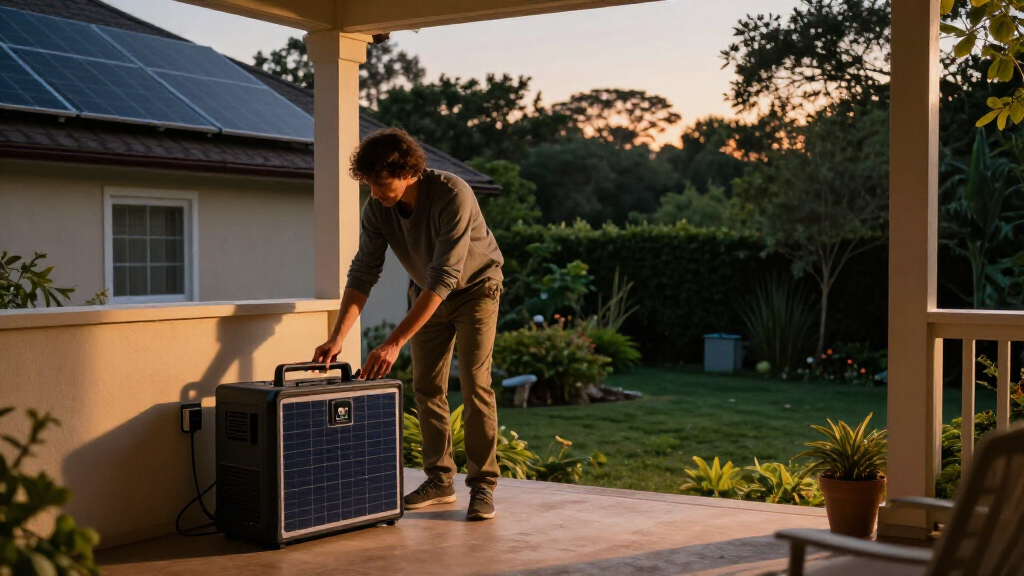
I evaluated each system through the lens that matters most for backup power: how long it can sustain real household loads during an outage. That meant looking at usable watt-hours, inverter output (both continuous and peak, since fridges and well pumps surge at startup), recharge speed from solar, and battery chemistry. LiFePO4 batteries earned preference over older lithium-ion for their longer cycle life, which directly affects cost per year of ownership.
Beyond raw specs, I weighed installation burden and expandability. Whole-home kits were judged on completeness — whether panels, inverter, batteries, and cabling arrive as a matched set — while portable stations were judged on portability, output variety, and how quickly they can be deployed when the grid goes down. Finally, I compared price per watt-hour across categories, because a cheap system that can’t run your essentials isn’t a value at any price. Products are ranked by how well they balance capacity, reliability, and practical usability for their intended buyer, not by specs alone.
| solar backup power system | Battery Type |
|---|---|
| Anker SOLIX S2000 Portable Pow | LiFePO4 (LFP) |
| Solar Complete 9.36KWH Off-Gri | — |
| ECO-WORTHY 10KW Off-Grid Solar | — |
| ABOK Ark3600 Portable Power St | LiFePO4 |
| Portable Solar Generator 300W | — |
| Jackery Solar Generator 1000 V | LFP |
| ECO WORTHY 10,000W Off-Grid So | — |
| BROWEY 1600W Portable Power St | LiFePO4 |
| EF ECOFLOW Solar Generator Del | LiFePO4 |
| Jackery Solar Generator 5000 P | LiFePO4 |
| Jackery HomePower 3000 with 2x | LiFePO4 |
| Jackery HomePower 3600 Plus Po | — |
| Blavor Portable Power Station | LiFePO4 |
Factors to Consider When Choosing Solar Backup Power Systems
Choosing a solar backup system is less about finding the “best” product and more about matching capacity to what you actually need to keep running. Before spending anything, these are the factors that separate a smart purchase from an expensive mistake.Calculate Your Real Watt-Hour Needs First
The most common mistake buyers make is purchasing capacity based on marketing numbers rather than their actual load profile. A refrigerator uses roughly 1-2kWh per day, a CPAP machine about 0.5kWh overnight, and a window AC unit can burn through 1.5kWh every few hours. Write down the appliances you genuinely need during an outage, find their daily consumption, and multiply by the number of days you want coverage — then add 20% for inverter losses and battery degradation. A 1kWh unit covers phones, lights, and a laptop; 2-4kWh covers a fridge and some basics; whole-home comfort starts around 9-16kWh. Buying double what you need wastes money on batteries that sit unused, while buying half of what you need leaves you in the dark on night two.
Surge Output Matters More Than You Think
Continuous wattage gets all the attention, but startup surge is what actually trips systems offline. Motors in refrigerators, well pumps, furnaces, and power tools can draw 2-4 times their running wattage for a fraction of a second at startup. A 1000W inverter may technically run a 700W fridge, but fail the moment the compressor kicks on. Look for peak ratings of at least 2-3 times your largest appliance’s running load — this is why the Anker’s 3000W peak and the ABOK’s 3600W output matter more than their battery size suggests. If your essential loads include any motor-driven appliance, undersized surge capacity is the single most likely reason your backup system disappoints you.
Battery Chemistry and Cycle Life
Most quality systems now use LiFePO4 (lithium iron phosphate) chemistry, rated for 3,000-6,000 charge cycles versus roughly 500-800 for older lithium-ion cells. Over a ten-year horizon, that difference means the battery will still hold most of its capacity when a lithium-ion unit would need replacement — effectively halving long-term cost. Check the cycle rating and the warranty terms, since a five-year warranty on a LiFePO4 pack signals the manufacturer actually expects it to last. Also check whether the system is expandable: several models here allow adding battery modules later, which lets you start small and scale up rather than paying for everything upfront.
Solar Input and Recharge Speed During an Outage
Battery capacity only gets you through the first hours; solar recharge determines how long you last. Pay close attention to maximum solar input wattage — a station that accepts 400W of panel input will recharge twice as fast as one limited to 200W, even with identical batteries. Winter weather, cloud cover, and panel angle can cut real-world output to 25-50% of rated figures, so size panels generously. Also consider whether panels are detachable: built-in panels are convenient but stationary, meaning you can’t angle them toward the sun or move them out of shade. For multi-day outages, recharge speed is often the difference between a system that lasts and one that goes dark by day two.
Whole-Home Kit vs. Portable Station
Permanent off-grid kits (ECO WORTHY, Solar Complete) involve mounting panels, wiring an inverter, and possibly working with your electrical panel — work that may require a permit or an electrician depending on your jurisdiction. Portable stations plug in and work immediately but require you to manually route extension cords to essentials during an outage. The honest tradeoff: kits cost less per watt-hour and recharge faster via rooftop panels, while portables offer flexibility for camping, RV trips, and rentals where permanent installation isn’t possible. A middle path is a large wheeled station like the ABOK Ark3600 or Jackery HomePower models paired with a transfer switch, giving you semi-permanent home backup that can still move when needed.
Avoiding False Economy at the Low End
Small 300W-class generators with tiny bundled panels look attractive at their price point, but they recharge so slowly and store so little energy that they function as gadget chargers, not backup systems. A 40W panel needs roughly 25 hours of ideal sunlight to fill a 1kWh battery — one cloudy week might not fully charge it. If your motivation is home backup, that money is better saved toward a 1kWh-class system with a 200W panel. Small units earn their place for campers, van lifers, and emergency kit builders, but calling them “solar backup power” for a home sets the wrong expectation and is the most common disappointment I see reported in this category.
Frequently Asked Questions
Can a portable power station really run my refrigerator during an outage?
Yes, but only if two conditions are met: enough stored energy and adequate surge output. A typical fridge consumes 1-2kWh per day and surges to 800-1200W at compressor startup, so a 1000Wh station with a 1500W inverter like the Jackery 1000 V2 can run one for most of a day, while a 2000Wh+ unit like the Anker SOLIX S2000 can stretch to two days with careful use. The catch is recharge speed — if your solar input is only 200W, you may not replace what the fridge draws each day, especially under clouds. For multi-day fridge coverage, prioritize both capacity above 2000Wh and solar input above 400W, which is exactly where the ABOK Ark3600 and ECOFLOW Delta 3 setups differentiate themselves from smaller units.
Is a DIY whole-home solar kit like the ECO WORTHY 10kW realistic to install myself?
For a reasonably handy homeowner, the mechanical side — mounting panels and connecting the included components — is achievable over a weekend or two, since these kits ship as matched sets with instructions. The electrical integration is where it gets serious: connecting a 10kW inverter to your home’s panel usually requires a transfer switch, and many jurisdictions require permits, inspection, or a licensed electrician for that step. Skipping it can void your homeowner’s insurance and creates real safety risk for utility workers. My advice is to budget for an electrician even if you install the panels yourself — the labor cost is small relative to the kit price and makes the difference between a legal, insurable installation and a liability.
How many solar panels do I actually need to recharge a power station during an outage?
Work backward from your daily consumption, then add 50% margin for clouds and poor angles. If you use 2kWh per day, you need panels capable of generating 3kWh under real conditions — roughly 600W of rated panel capacity in decent sun, more in winter. Panel kits included with these systems are often undersized for the battery they charge: a 200W panel may take 6-8 sunny hours to refill 1kWh of storage. Also check the station’s maximum solar input, because adding panels beyond that limit wastes money. If extended outages are your main concern, buying extra panels and a higher-input station is usually a better investment than a bigger battery alone.
Are built-in solar panels on portable stations worth the convenience?
They’re a genuine convenience for topping up during outdoor use — the BROWEY and Blavor models let you recharge by simply setting the unit in sunlight with no setup at all. The tradeoff is physics: a panel folded into a power station’s chassis is small, fixed at one angle, and often partially shaded by the unit itself, so it generates a fraction of what a separate 200W panel produces. For camping trips and slow weekend top-ups, that’s perfectly fine. For outage recovery, where you need to refill thousands of watt-hours quickly, built-in panels are too slow to rely on. Treat them as a convenience feature, not a primary charging method.
Should I buy one large system or several smaller ones for redundancy?
One large system wins on cost per watt-hour, efficiency, and simplicity — a single 4kWh unit is cheaper than four 1kWh units and avoids juggling multiple chargers and panels. Multiple smaller units win on resilience and flexibility: if one fails or runs dry, you still have power, and you can split them across locations like a home office, medical equipment, and a kitchen. Households with medical devices or critical loads often benefit from keeping one dedicated small unit isolated from general use. For most buyers, though, a single mid-size system with expandability — like the Jackery HomePower line or ABOK with add-on batteries — gives you both growth room and simplicity without managing a fleet of devices.
Conclusion
After comparing all 13 systems, the right choice depends almost entirely on what you’re backing up and for how long. For best overall, the Anker SOLIX S2000 delivers the best balance of capacity, surge output, and home-backup usability for typical households. The best value pick is the EF ECOFLOW Delta 3 Classic with 220W panel, which pairs a solid 1024Wh LiFePO4 battery with fast recharging at a price that undercuts most rivals. Best premium goes to the ECO WORTHY 10kW kit with 16.1kWh of storage — nothing else here approaches its whole-home capability. Best for beginners is the Jackery Solar Generator 1000 V2, a plug-and-play kit that requires zero installation knowledge.
For specific needs: the ABOK Ark3600 suits buyers wanting near-whole-home power in a movable package; the Jackery HomePower 5000 Plus and 3600 Plus target permanent installation with expansion room; the BROWEY and Blavor built-in-panel units fit campers and casual users; and the 300W mini generator is best reserved for emergency electronics kits rather than home backup. Whatever you choose, size for your actual loads with margin — an oversized system costs money upfront, but an undersized one fails you exactly when you need it most.
Fall Picks
fall essentials
As an affiliate, we earn on qualifying purchases.