
If you’re searching for the best NAS devices, you’re likely balancing performance, ease of use, and budget. The top choice for overall value is the Synology DS223, offering reliable features at a reasonable price. For those needing serious storage capacity, the Asustor Lockerstor 10 stands out with its 10-bay design and high-speed connectivity. Meanwhile, the BUFFALO TeraStation delivers a straightforward, ready-to-go solution for small offices. But with so many options, knowing what to prioritize can be challenging. Keep reading for a detailed breakdown that helps you find the best fit for your storage needs.

Get backup power and energy gear delivered free with Prime
- Fast, free delivery on millions of items
- Prime Video, Amazon Music and more included
- Member-only deals all year
Key Takeaways
- High-core, enterprise-grade CPUs like AMD Ryzen and Intel Core significantly boost performance for demanding tasks.
- More bays generally mean greater expandability, but they also increase complexity and cost.
- A balance between speed (10GbE, dual ports) and ease of setup is critical for most users.
- Diskless models often offer better flexibility but require additional investment in drives.
- Features like M.2 NVMe slots and HDMI outputs tend to be found on higher-end models, appealing to power users.


| NAS device | RAM | Processor |
|---|---|---|
| Synology DS223 2-Bay Diskless | — | — |
| Synology DS425+ 4-Bay Diskless | — | — |
| BUFFALO LinkStation SoHo 220 2 | — | — |
| UGREEN NAS DXP4800 Plus 4-Bay | 8GB DDR5 | Intel Pentium Gold 8505 5-Core |
| Asustor Drivestor 4 Gen 2 AS12 | 1GB DDR4 | Realtek RTD1619B 1.7GHz Quad-Core |
| Yxk Zero1 2-Bay Desktop NAS wi | 4GB | — |
| UGREEN NAS DXP8800 Plus 8-Bay | 8GB DDR5 | Intel i5 1235u 10-Core |
| MINISFORUM N5 Pro 5-Bay Deskto | — | AMD Ryzen AI 9 HX PRO 370 |
| UGREEN NAS DXP4800 Pro 4-Bay D | 8GB DDR5 | Intel Core i3-1315U 6-Core |
| Asustor Lockerstor 10 AS6510T | 8GB DDR4 | Intel Atom C3538 Quad-Core |
| Yxk Zero1 Pro 4-Bay Desktop NA | 8GB DDR4 | Intel N100 Quad-Core |
| UGREEN NAS DXP4800 GT 4-Bay De | 8GB DDR4, expandable to 64GB | — |
| Synology DS223j 2-Bay DiskStat | — | — |
More Details on Our Top Picks
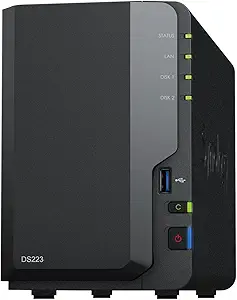
Synology DS223 2-Bay Diskless NAS Home & Office Backup Hub
The Synology DS223 stands out as the most versatile choice in this lineup, combining ease of use with robust features for both home and small office environments. Unlike the BUFFALO LinkStation SoHo 220, which includes drives and is ready to go, the DS223 requires buyers to purchase drives separately, but offers a more refined software ecosystem and ongoing updates. Its support for automated backups, file sharing, and surveillance makes it a reliable central hub for data. The main tradeoff is its limited capacity—just two bays—making it less suitable for users with extensive storage needs or those planning to expand long term. This pick makes the most sense for users who want a straightforward, reliable device for data protection without the fuss of enterprise features.
Pros:- Easy centralized data management from multiple devices
- Supports automated backups for Windows and macOS
- Includes surveillance features with IP camera integration
- Reliable hardware with regular software updates
Cons:- Requires purchasing hard drives separately
- Learning curve for new users unfamiliar with NAS interfaces
- Limited to 2 drive bays, restricting future expansion
Best for: Home users and small offices needing a simple, reliable backup and file sharing solution
Not ideal for: Power users with large storage needs or those wanting built-in drives; it’s limited to 2 bays, restricting capacity
- Model:DS223
- Type:2-Bay Diskless NAS
- Use:Home & Office Backup
- Warranty:2 Years
Our verdict“This device is ideal for those seeking a straightforward, dependable NAS for home or small office backups and surveillance.”
Synology DS425+ 4-Bay Diskless NAS Private Cloud Media Server
The Synology DS425+ is a powerful 4-bay NAS tailored for users who need more storage and faster data transfer, making it ideal for media professionals or small teams. Compared with the Asustor Drivestor 4, which offers decent performance but less robust media features, the DS425+ delivers a higher transfer speed of up to 278 MB/s, supporting multiple users and surveillance cameras simultaneously. It provides a comprehensive data protection setup with RAID, snapshots, and backups, but buyers should note that the drives are sold separately, adding to setup costs. Its advanced features and enterprise support make it better suited for users with higher demands on speed and multi-user access, rather than those seeking simple, plug-and-play solutions.
Pros:- High data transfer speeds suitable for media streaming and editing
- Supports multiple users and surveillance cameras simultaneously
- Robust data protection with RAID and snapshots
- Includes a 3-year warranty and enterprise-level support
Cons:- Requires separate purchase of drives
- Setup and management can be complex for beginners
- Limited details on remote access security features
Best for: Small businesses, media creators, or multi-user households needing fast, shared storage
Not ideal for: Beginners seeking an easy setup—its complexity and higher price tag aren’t ideal for those new to NAS devices
- Number of Bays:4
- Type:Diskless NAS
- Data Transfer Speed:278 MB/s
- Supports:Concurrent access from 10+ users, 30 IP cameras
- Warranty:3 years
Our verdict“This NAS is best for those who need high performance, multi-user support, and media capabilities, willing to handle a more complex setup.”
BUFFALO LinkStation SoHo 220 2-Bay Personal Cloud Office NAS 8TB with Hard Drives Included
The BUFFALO LinkStation SoHo 220 provides an accessible, all-in-one solution with hard drives included, making it a good entry point for small offices or home users who want plug-and-play simplicity. Unlike the Synology DS223, which requires separate drive purchase, this model offers immediate storage with 8TB of capacity. Its RAID support adds data security, and its 2.5 GbE connectivity offers decent transfer speeds for everyday tasks. However, it’s limited to older macOS versions for some features and offers fewer advanced options. This device is perfect for users who want straightforward network storage without additional setup or hardware costs, but it might fall short for those with more demanding or expanding storage needs.
Pros:- Includes hard drives, ready to use out of the box
- Supports RAID for data security
- Affordable entry point with decent performance
- Supports automated backups and file sharing
Cons:- Limited to older macOS versions for some features
- RAID 1 reduces usable capacity to 4TB
- Fewer advanced management features compared to Synology models
Best for: Small offices or home users needing a simple, budget-friendly NAS with drives included
Not ideal for: Power users or those requiring advanced features, larger capacity, or future expansion options
- Total Capacity:8TB
- Drive Bays:2
- RAID Support:Yes (RAID 0 and RAID 1)
- Connectivity:2.5 GbE
- Supported OS:Windows, macOS*
- Warranty:3 years
Our verdict“This NAS offers a simple, cost-effective solution with drives included, ideal for users prioritizing ease and immediate storage.”
UGREEN NAS DXP4800 Plus 4-Bay Desktop NAS with Intel Pentium Gold 8505, 8GB DDR5 RAM, 128GB SSD, 10GbE, 2.5GbE, M.2 NVMe Slots, 4K HDMI, Diskless
The UGREEN NAS DXP4800 Plus is a robust, high-powered NAS designed for demanding users who need speed and flexibility. Featuring an Intel Pentium Gold processor and 8GB DDR5 RAM, it surpasses the performance of the Asustor Drivestor 4 with its ability to handle intensive multitasking, virtual machines, and Docker containers. Its 10GbE and 2.5GbE ports enable blazing-fast data transfer, making it suitable for media editing and large backups. The inclusion of M.2 NVMe slots offers expandability, and the 4K HDMI output supports media streaming directly to a monitor. The main tradeoff is that drives are sold separately, and its wired-only connection might limit flexibility for some setups. This device is ideal for tech-savvy users needing high performance and expandability.
Pros:- High-performance Intel processor and ample DDR5 RAM
- Supports fast 10GbE and 2.5GbE networking for quick transfers
- Supports M.2 NVMe SSD expansion and 4K HDMI output
- Flexible storage capacity up to 144TB
Cons:- Hard drives are sold separately, adding to costs
- Supports only wired Ethernet—no Wi-Fi support
- More complex setup and management compared to simpler NAS devices
Best for: Small offices and advanced home users needing high speed, virtualization, and flexible storage options
Not ideal for: Basic users or those seeking a ready-to-go, plug-and-play NAS; setup complexity and higher cost may be barriers
- Processor:Intel Pentium Gold 8505 5-Core
- RAM:8GB DDR5
- Storage:Built-in 128GB SSD (diskless)
- Network Ports:1 x 10GbE, 1 x 2.5GbE
- M.2 NVMe Slots:2
- Maximum Storage Capacity:144TB
Our verdict“This NAS is best suited for power users and small offices demanding high performance, expandability, and advanced features over simplicity.”
Asustor Drivestor 4 Gen 2 AS1204T 4-Bay NAS, Quad-Core 1.7GHz, 2.5GbE, 1GB DDR4, USB 3.0, Diskless
The Asustor Drivestor 4 provides a solid entry-level 4-bay NAS, offering decent performance for everyday tasks like backups, media streaming, and remote access. Compared with the Synology DS223, it features a slightly higher processor clock speed but only 1GB of RAM, limiting multitasking for demanding users. It supports RAID configurations, including RAID 5, but with a more modest feature set and management interface. Its 2.5GbE port offers reasonable speeds for small networks, yet it may struggle with heavy multi-user workloads or large media editing. This model works well for users who need a straightforward, budget-conscious device but aren’t planning to run intensive applications or large-scale virtualization.
Pros:- Affordable 4-bay NAS with decent performance
- Supports multiple RAID configurations for data security
- 4K media streaming capabilities
- Personable remote access and data protection
Cons:- Limited 1GB RAM may bottleneck performance under heavy load
- No included drives, additional purchase needed
- Basic management interface compared to higher-end models
Best for: Home users or small offices with moderate data and media sharing needs
Not ideal for: Heavy multitaskers or professional media editors requiring higher RAM and performance
- Processor:Realtek RTD1619B 1.7GHz Quad-Core
- RAM:1GB DDR4
- Drive Bays:4
- Network:2.5GbE
- RAID Support:0/1/5/6/10
- Connectivity:3 USB 3.0 ports
Our verdict“This NAS offers essential features for small-scale use, ideal for users needing basic data sharing and backup solutions without complex setups.”
Yxk Zero1 2-Bay Desktop NAS with 2.5GbE, Support for Docker, 60TB Capacity (Diskless), Remote Access, 4GB RAM, 4K HDMI
The Yxk Zero1 excels as an entry-level NAS that simplifies home storage, offering features like remote access and 2.5GbE speeds, which outperform typical 1GbE setups. Its support for Docker adds versatility for users wanting to experiment with containers, although customer satisfaction appears low, with reviews citing reliability issues. Compared to more robust options like the UGREEN NAS DXP4800 Pro, this model may lack long-term stability and comprehensive support. Its diskless design allows customization, but the absence of included drives increases initial costs and complexity. This device makes the most sense for newcomers seeking straightforward media streaming and backup, but less so for those prioritizing reliability or advanced features.
Pros:- Simple setup and user-friendly interface
- Fast 2.5GbE network speeds for quick file transfers
- Supports Docker for container-based applications
Cons:- Customer reviews indicate low satisfaction and potential reliability issues
- Hard drive not included, adding to overall cost
- Limited warranty support
Best for: Beginners or home users who want easy setup and basic media storage
Not ideal for: Power users or those needing enterprise-grade reliability and support
- Capacity:Up to 60TB (diskless)
- Number of Bays:2
- Network Speed:2.5GbE
- RAM:4GB
- Supports:Docker, Remote Access, 4K HDMI
- Weight:2kg
Our verdict“This NAS is ideal for beginners prioritizing ease of use and media streaming but may fall short on reliability for long-term use.”
UGREEN NAS DXP8800 Plus 8-Bay Desktop NASync with Intel i5 1235u, 8GB DDR5, 128GB SSD, Dual 10GbE, 8K HDMI, TBT4, Diskless
The UGREEN NAS DXP8800 Plus stands out for its powerful Intel i5 processor and extensive storage capacity, making it suitable for demanding enterprise applications. Its dual 10GbE ports and support for up to 272TB of storage provide a level of performance that surpasses many home-oriented NAS devices like the Yxk Zero1. However, its complex setup and lack of built-in Wi-Fi mean it’s less accessible for less technical users and relies heavily on wired connections. Its high-performance specs support virtualization, media, and data management across multiple platforms, but the need for additional drives and advanced setup may deter casual users. This model makes the most sense for businesses requiring high throughput and large storage pools, willing to handle a steeper learning curve.
Pros:- High-performance Intel i5 processor suitable for demanding tasks
- Massive storage potential up to 272TB with flexible RAID configurations
- Dual 10GbE ports for rapid network throughput
Cons:- Setup complexity may require technical expertise
- No built-in Wi-Fi, limiting wireless flexibility
- Additional drives needed, increasing initial investment
Best for: Small to medium-sized businesses and power users needing high performance and large storage options
Not ideal for: Home users or those with limited technical experience due to complex setup
- Processor:Intel i5 1235u 10-Core
- RAM:8GB DDR5
- Storage:Built-in 128GB SSD, supports up to 272TB
- Network Ports:2 x 10GbE
- Drive Bays:8 SATA, 2 M.2 NVMe
- Supported RAID Levels:JBOD, Basic, RAID0, RAID1, RAID5, RAID6, RAID10
Our verdict“This NAS excels in high-throughput environments where large storage and performance are priorities, but it demands technical skills for optimal setup.”
MINISFORUM N5 Pro 5-Bay Desktop AI NAS with AMD Ryzen AI 9 HX PRO 370, 128GB SSD, 10GbE, 8K HDMI, Modular Design, Diskless
The MINISFORUM N5 Pro makes a compelling case with its AMD Ryzen AI 9 processor, supporting AI acceleration alongside extensive storage options up to 188TB. Its modular design offers significant flexibility for upgrades, with multiple drive slots and high-speed network ports, including 10GbE and 8K HDMI outputs, ideal for multimedia professionals and AI workloads. Compared to the UGREEN NAS DXP8800 Plus, its AI capabilities and modularity give it an edge for specialized tasks. However, the system disk occupying an M.2 slot and lack of hot-swapping for the U.2 port make expansion less straightforward. Setup can be intricate, but for users seeking advanced AI and multimedia functionality, this model delivers powerful performance and upgradeability.
Pros:- Powerful AMD Ryzen AI 9 processor with AI acceleration
- Supports up to 188TB storage with versatile drive slots
- Modular design for easy upgrades and maintenance
Cons:- System disk reduces available M.2 slots for storage expansion
- No hot-swapping for U.2 port, complicating upgrades
- Setup may require advanced technical knowledge
Best for: AI developers, multimedia creators, and tech-savvy users needing flexible, high-performance storage
Not ideal for: Casual users or those with limited technical skills due to complex customization
- Processor:AMD Ryzen AI 9 HX PRO 370
- Storage Capacity:Up to 188TB
- Drive Bays:5 SATA HDD, 3 M.2 NVMe, 2 U.2 NVMe
- Network Ports:1x 10GbE, 1x 5GbE
- Video Outputs:1x HDMI 8K@60Hz
- Special Features:Modular motherboard, active cooling
Our verdict“This NAS suits users needing AI processing, multimedia output, and extensive customization, provided they can handle its complexity.”
UGREEN NAS DXP4800 Pro 4-Bay Desktop Network Attached Storage with Intel Core i3-1315U, 8GB DDR5 RAM, 128GB SSD, 10GbE & 2.5GbE, M.2 NVMe Slots, 4K HDMI, Diskless
The UGREEN DXP4800 Pro offers a well-rounded mix of performance and expandability for demanding workflows, featuring an Intel Core i3-1315U processor and support for virtualization, Docker, and AI applications. Its support for up to 144TB of total storage and dual high-speed network ports makes it suitable for small business environments. Compared to the Yxk Zero1, it provides greater reliability and more advanced features, though its diskless design requires additional investment in drives. This NAS is best for professionals who need a combination of high performance, security, and flexibility, but less ideal for casual users or those seeking a plug-and-play experience.
Pros:- High-performance Intel Core i3 processor for demanding tasks
- Supports virtualization, Docker, and AI features
- Flexible RAID options and extensive storage capacity
Cons:- Requires purchasing drives separately, raising initial cost
- Setup complexity may challenge inexperienced users
- Higher price point for advanced capabilities
Best for: Small businesses and tech-savvy power users needing reliable, versatile storage
Not ideal for: Home users or beginners who prefer simple, pre-configured solutions
- Processor:Intel Core i3-1315U 6-Core
- RAM:8GB DDR5
- Storage:Supports up to 144TB with drives
- Network Ports:1x 10GbE, 1x 2.5GbE
- M.2 Slots:2x NVMe
- Maximum Storage Capacity:144TB
Our verdict“This NAS is designed for professionals who require performance, security, and expandability, accepting a more involved setup process.”
Asustor Lockerstor 10 AS6510T – 10 Bay NAS with Dual 10GbE and M.2 NVMe SSD Slots
This high-capacity NAS stands out for its robust scalability and enterprise features, making it ideal for small businesses needing flexible storage solutions. Its dual 10GbE ports deliver blistering data transfer speeds, surpassing many competitors like the Synology DS425+ that focus more on ease of use than raw throughput. The AS6510T excels in RAID configurations, providing strong redundancy, but it does come with a higher price and no included drives, which could be a hurdle for smaller setups. Its 8GB RAM and dual M.2 NVMe slots for caching are tailored for demanding environments, yet the setup complexity might deter beginners.
Pros:- Dual 10GbE ports for ultra-fast data transfer
- Supports multiple RAID levels for redundancy
- Scalable with 10 bays and NVMe caching options
- Enterprise-grade features for growing businesses
Cons:- Requires additional investment for drives
- Complex setup process for those unfamiliar with enterprise NAS
Best for: Small business IT teams requiring scalable, high-speed storage with enterprise features
Not ideal for: Home users or small offices seeking a simple, plug-and-play NAS without enterprise complexity
- Processor:Intel Atom C3538 Quad-Core
- Number of Bays:10
- Network Ports:Dual 10GbE, Dual 2.5GbE
- RAM:8GB DDR4
- SSD Slots:2 M.2 NVMe
- Form Factor:Diskless
Our verdict“This NAS fits organizations prioritizing high performance and scalability over ease of use or initial cost.”
Yxk Zero1 Pro 4-Bay Desktop NAS with Intel N100, 8GB RAM, 2 M.2 NVMe Slots, Dual 2.5GbE, 4K HDMI, Diskless
The Yxk Zero1 Pro offers a versatile platform for home users and hobbyists, combining good performance with multimedia capabilities. Compared with the Synology DS223j, which emphasizes simplicity for basic file sharing, the Zero1 Pro delivers 4K HDR streaming and AI photo organization, appealing to those who want more than just storage. Its support for third-party OS like TrueNAS or Unraid enables deep customization, but this flexibility comes at the expense of a more involved setup process—drives are sold separately, and installing OS requires some technical know-how. Its 8GB RAM ensures smooth multitasking, but the no-included drives and manual configuration make it less straightforward for non-technical users.
Pros:- Supports up to 144TB storage with multiple drives
- 4K HDR streaming and HDMI output
- Supports Docker and third-party OS for customization
- AI photo organization and duplicate detection
Cons:- No drives included—additional purchase needed
- Requires manual OS installation and setup
Best for: Tech-savvy home users seeking multimedia, AI features, and customization options
Not ideal for: Less experienced users needing a straightforward, pre-configured NAS without extra setup effort
- Processor:Intel N100 Quad-Core
- RAM:8GB DDR4
- Drive Bays:4 SATA 3.0
- M.2 NVMe Slots:2
- Max Storage Capacity:144TB (RAID 0)
- Network:2 x 2.5GbE
Our verdict“This NAS suits advanced users who want a flexible, multimedia-rich storage solution and are comfortable with technical setup.”
UGREEN NAS DXP4800 GT 4-Bay Desktop Network Attached Storage, AMD R2514 CPU, 8GB DDR4 RAM, 2x 10GbE, M.2 NVMe Slots, 4K HDMI, Diskless
The UGREEN DXP4800 GT is designed for users who need heavy multitasking, virtualization, and media processing. Its AMD Ryzen embedded CPU offers more raw power than typical Intel J-series or N-series processors, making it a strong choice for advanced workflows. Compared with the Asustor Lockerstor 10, which focuses on enterprise scalability, the DXP4800 provides a more balanced desktop experience with built-in surveillance features. Its dual 10GbE ports support link aggregation, ensuring fast data throughput for demanding tasks. However, drive bays require additional purchase, and setting up features like Docker or virtual machines can be complex for less experienced users.
Pros:- Powerful AMD Ryzen CPU for multitasking
- Flexible storage options with multiple SSD and HDD bays
- Dual 10GbE ports with link aggregation
- Built-in surveillance capabilities
Cons:- Drives not included—additional cost
- Complex setup for advanced features
Best for: Power users needing virtualization, media editing, and security features in a desktop NAS
Not ideal for: Casual users or those seeking a simple, out-of-the-box NAS without advanced features or setup complexity
- CPU:AMD Ryzen Embedded R2514, 4 cores
- RAM:8GB DDR4, expandable to 64GB
- Drive Bays:4 SATA, 2 U.2 NVMe, 2 M.2
- Network:2x 10GbE
- Max Storage Capacity:Up to 144TB
- OS Support:UGOS Pro, Docker, third-party OS
Our verdict“This NAS appeals to those demanding high performance, virtualization, and security, willing to handle a more involved setup process.”
Synology DS223j 2-Bay DiskStation NAS 8TB Bundle with 2x 4TB Seagate IronWolf
The Synology DS223j simplifies home data management, making it accessible for users new to NAS. Its modest Realtek RTD1619B processor and 1GB RAM are sufficient for basic file sharing, backups, and media streaming, but may fall short under heavy multitasking compared to more robust options like the UGREEN DXP4800. The included Seagate IronWolf drives provide a plug-and-play experience, and Synology’s intuitive interface streamlines setup, ideal for those unfamiliar with enterprise-grade features. However, the limited RAM and basic specs restrict performance for demanding applications or multiple simultaneous users, positioning this device as a straightforward, budget-friendly solution.
Pros:- Easy to set up and manage
- Includes reliable Seagate IronWolf drives
- Strong ecosystem with apps for media and surveillance
- Great for basic backup and sharing needs
Cons:- Limited 1GB RAM impacts performance
- Not suitable for intensive multitasking or enterprise use
Best for: Home users or small offices needing reliable, easy-to-use storage and media sharing
Not ideal for: Power users or small businesses requiring advanced features, high performance, or virtualization support
- CPU Model:Realtek RTD1619B
- System Memory:1 GB DDR4
- Number of Bays:2
- Storage Capacity:8TB included
- LAN Port:1x 1GbE
- Included Drives:2x 4TB Seagate IronWolf
Our verdict“This NAS is perfect for newcomers seeking simple, reliable storage without the complexity of advanced features.”
How We Picked
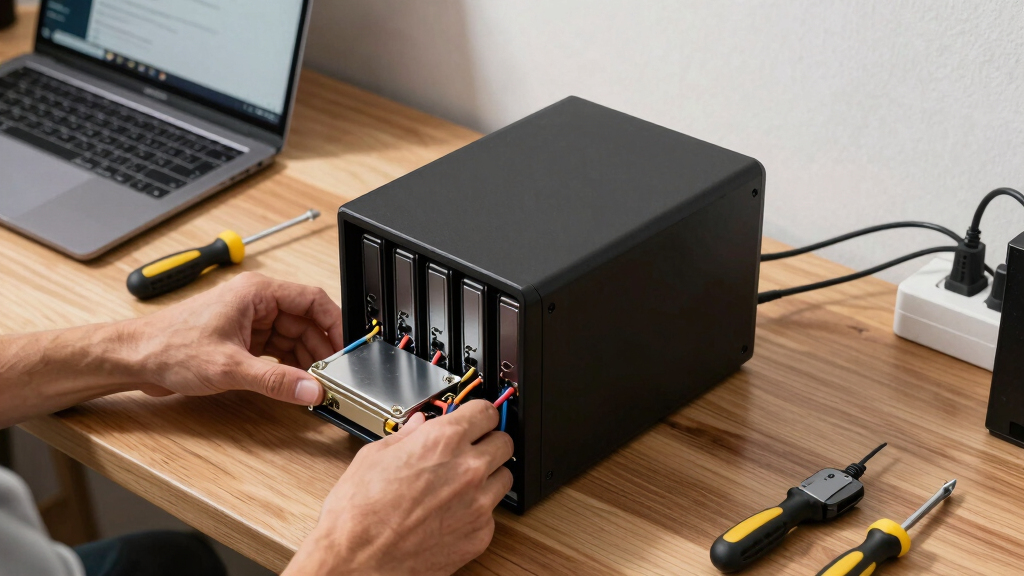
Products were evaluated based on performance, build quality, expandability, ease of use, and value for money. I compared hardware specs, connectivity options, supported features, and user interface design to determine how well each NAS meets different user needs. Ranking was driven by how these factors combine to offer reliable, flexible, and future-proof storage solutions. The top picks strike a balance between advanced capabilities and accessibility, ensuring they are suitable for both home users and small businesses.Factors to Consider When Choosing Best NAS Devices
Choosing the right NAS device involves understanding your specific needs and how different features align with them. Beyond basic storage, consider factors like scalability, connectivity, and software support. A well-chosen NAS can streamline your data management, enhance media streaming, or support small office workflows, but making the wrong choice can lead to frustration or wasted investment. Here are some key considerations to keep in mind when selecting your ideal NAS.Performance and Processor Power
Processing power directly impacts how smoothly your NAS handles multiple users, large file transfers, and demanding applications like media servers or virtualization. High-end CPUs like AMD Ryzen or Intel Core processors enable faster data processing, better multitasking, and future-proofing. However, these models tend to come at a higher price and often include advanced features that may be unnecessary for casual users. Carefully evaluate your workload to decide if investing in a more powerful processor justifies the extra cost.
Storage Capacity and Expandability
Most NAS devices offer multiple bays for drives, but the number varies widely—from compact 2-bay models to expansive 10-bay units. Think about your current storage needs and potential growth. If you’re running a small home setup, 2-4 bays might suffice, especially if you choose drives with larger capacities. Larger setups, like 8 or 10 bays, suit small offices or users with extensive media libraries. Remember, some models support drive expansion units or M.2 slots for SSD caching, which can extend your storage without replacing existing drives.
Connectivity and Network Speed
Fast data transfer relies heavily on network interfaces. Dual 10GbE ports or multi-Gigabit Ethernet options significantly reduce transfer times, especially when backing up large files or streaming high-resolution media. For most home users, 1GbE is sufficient, but power users should prioritize models with higher-speed options. Additionally, features like link aggregation can boost throughput but may require compatible network hardware. Keep in mind that the actual speed also depends on your network infrastructure, so investing in quality switches and cabling is advisable.
Ease of Use and Software Features
User-friendly interfaces and robust software ecosystems make managing your NAS much more straightforward. Brands like Synology and QNAP excel here, offering intuitive apps, remote access, and data management tools. Consider whether the device offers features like automatic backups, media servers, or virtualization support, which add value for different user needs. Keep in mind that more advanced software features often come with a learning curve, so assess your comfort level with tech setup and management.
Price and Value
Budget constraints influence the choice significantly. While cheaper models may lack advanced features or expandability, they often provide sufficient performance for basic tasks. Conversely, premium models deliver enterprise-grade hardware, faster processors, and extensive features but at a higher cost. It’s essential to weigh which features are truly necessary versus those that are nice-to-have. Sometimes, investing a bit more upfront can extend the lifespan of your NAS and reduce the need for future upgrades.
Frequently Asked Questions
Do I need a NAS with an Intel or AMD processor for home use?
For most home users, a NAS with a basic Intel or AMD processor provides ample performance for file sharing, media streaming, and backups. Higher-end processors become more relevant if you plan to run virtual machines, host media servers with transcoding, or support multiple users simultaneously. For simple tasks, a less powerful CPU will keep costs down without sacrificing everyday functionality. However, for future-proofing and more demanding workloads, investing in a more capable processor can be beneficial.
Is it better to get a diskless NAS or one with drives included?
Choosing a diskless NAS offers maximum flexibility, allowing you to select drives that match your capacity and performance preferences. It also tends to be more cost-effective since drives can be purchased separately. However, it requires additional effort and knowledge to set up drives correctly. On the other hand, NAS bundles with pre-installed drives are convenient and ready to use immediately, making them a good choice for less technical users or those who want a quick setup. Consider your comfort level with hardware installation and your storage needs when making this decision.
How important are M.2 NVMe slots in a NAS?
M.2 NVMe slots are valuable for adding high-speed SSD cache, which can dramatically improve performance for frequent file access or virtualization. They are especially useful in higher-end models designed for demanding tasks. However, for basic backups or media streaming, the benefit may be minimal, and the added cost might not justify the feature. If your workflow involves heavy multitasking or large data transfers, opting for a NAS with NVMe support can be a worthwhile investment.
Should I prioritize a NAS with HDMI output?
HDMI output allows direct connection to monitors or TVs, making it easier to run media servers or manage the device visually. This feature appeals to users who want a multimedia hub or prefer local management. However, it adds to the device’s cost and complexity, and many users might find remote management via apps or web interfaces sufficient. If you plan to use your NAS primarily as a media server or media center, a model with HDMI can enhance your experience, but for simple backups, it’s optional.
Is a 10GbE network necessary for most users?
For typical home or small office environments, 1GbE network speeds are usually sufficient. However, if you’re working with large files regularly, such as high-resolution videos or backups of multiple high-capacity drives, 10GbE can significantly reduce transfer times. It also future-proofs your setup as network infrastructure upgrades become more affordable and widespread. Keep in mind that a high-speed network requires compatible switches and cabling, which may increase your initial setup costs.
Conclusion
For most users, the Synology DS223 offers a balanced mix of features, ease of use, and value, making it ideal as the best overall pick. Small businesses or power users seeking maximum expandability should consider the Asustor Lockerstor 10 or Ugreen NAS DXP8800 Plus. Those on a tighter budget or new to NAS devices might find the Synology DS223j or BUFFALO LinkStation meet their needs without complexity. Finally, if you require advanced hardware like multiple 10GbE ports or enterprise-grade features, premium options like the Yxk Zero1 Pro or Ugreen NAS DXP4800 GT make the most sense. Your choice should hinge on your current needs and future plans, ensuring your investment aligns with your storage and performance expectations.
Fall Picks
fall essentials
As an affiliate, we earn on qualifying purchases.