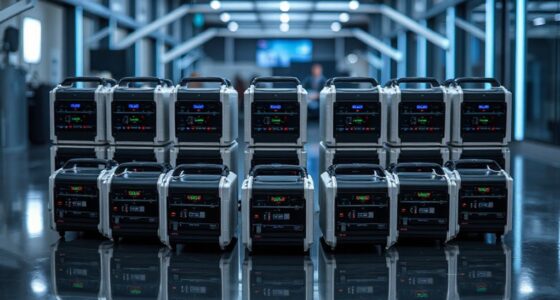
Choosing among solar panel kits for home backup comes down to one question: how much of your home do you actually need to run during an outage, and for how long? The ECO-WORTHY 10kW Kit with 32.2kWh Battery Storage earns the top spot because it pairs a whole-home inverter capacity with the largest battery bank in this lineup, enough to carry a fridge, well pump, and basic circuits through a multi-day grid failure. If your needs are smaller, the ECO-WORTHY 4.68kWh Complete Kit offers a far simpler entry point, while the SUNGOLDPOWER 8,000W Kit splits the difference with a solid 10.24kWh battery and 3,600W of panels. The main tradeoff you’ll face is upfront cost and installation complexity versus true energy independence — smaller kits are plug-and-play but tap out quickly, while the big off-grid systems demand wiring work and a real budget. Keep reading for the full breakdown of what each kit does well, where it falls short, and which one fits your home.

Get backup power and energy gear delivered free with Prime
- Fast, free delivery on millions of items
- Prime Video, Amazon Music and more included
- Member-only deals all year
Key Takeaways
- Battery capacity was the single biggest differentiator in this roundup: kits ranged from roughly 4.7kWh (enough for a fridge and lights for a day) to 32.2kWh (multi-day whole-home coverage), and that gap matters more than panel wattage for backup use.
- ECO-WORTHY dominates this category with seven of the ten slots, but its kits are not interchangeable — the 32.2kWh, 20.48kWh, and 16.1kWh versions of its 10kW system serve very different runtime needs at very different price points.
- Bifacial N-type panels (found in the 7080W kit and the 4.68kWh kit) deliver noticeably more energy in winter and cloudy conditions than standard monocrystalline panels, which is exactly when home backup power matters most.
- The Renogy 400W kit is the only true beginner option here, but it’s a power station for essentials, not a whole-home system — buyers who need more than a fridge and some devices will outgrow it fast.
- None of these kits include installation; the larger 8kW–10kW systems realistically require an electrician, and that labor cost can add a meaningful percentage to the total project budget.
| ECO-WORTHY 10kW Off-Grid Solar Panel Kit with 32.2kWh Battery Storage |  | Best for Whole-Home Off-Grid Power | Inverter output: 10,000W continuous / 20,000W peak | Output voltage: 120V or 120V/240V split phase | Solar array: 18 panels, 10,620W total | VIEW LATEST PRICE | See Our Full Breakdown |
| ECO-WORTHY 10kW Off-Grid Solar Panel Kit with 16.1kWh Battery |  | Best Balance of Power and Practicality | Inverter output: 10,000W continuous / 20,000W peak | Output voltage: 120V/240V split phase | Solar array: 5 × 590W monocrystalline panels (2,950W) | VIEW LATEST PRICE | See Our Full Breakdown |
| ECO-WORTHY 10 kW Off-Grid Solar System Kit with 2,340 W Solar Panels and 48 V Lithium Batteries |  | Best Value Entry Into Whole-Home Backup | Solar array: 12 × 195W bifacial panels, 2,340W total | Panel efficiency: 25%, N-type bifacial with 18 busbars | Inverter output: 10,000W maximum continuous | VIEW LATEST PRICE | See Our Full Breakdown |
| ECO-WORTHY 32 kWh Solar Panel and LiFePO4 Home Backup System |  | Best Premium Storage With Safety Features | Solar array: 6 × 590W N-type monocrystalline panels | Inverter: 10kW hybrid | Battery storage: 2 × 48V 314Ah LiFePO₄, 30kWh+ usable | VIEW LATEST PRICE | See Our Full Breakdown |
| SUNGOLDPOWER 8,000W Off-Grid Solar Kit with 10.24kWh LiFePO4 Battery and 3,600W Solar Panels |  | Best Mid-Size All-Rounder | Inverter output: 8,000W, 120V/240V single or split phase | Solar array: 8 × 450W bifacial panels, 3,600W total | Max PV input: 11,000W | VIEW LATEST PRICE | See Our Full Breakdown |
| ECO-WORTHY 4.68KWH Solar Power Complete Kit 1200W 48V with Lithium Battery and Inverter |  | Best Starter Whole-Home Kit | Solar Array: 6 × 195W N-Type bifacial (1200W total) | Inverter Output: 3500W continuous, 7000W surge | Battery: 48V 50Ah LiFePO4 (2560Wh) | VIEW LATEST PRICE | See Our Full Breakdown |
| 3000W 24V Solar Power System Complete Kit with 1440W Solar Panels and 5.12kWh LiFePO4 Battery |  | Best Storage-to-Cost Ratio | Solar Array: 12 × 120W monocrystalline (1440W total) | Inverter Output: 3000W pure sine wave, 6000W peak | Battery: 4 × 12.8V 100Ah LiFePO4 (5.12kWh) | VIEW LATEST PRICE | See Our Full Breakdown |
| Renogy 400W Premium Solar Kit with 40A MPPT Charge Controller |  | Best for Small-Scale Backup | Solar Array: 4 × 100W monocrystalline (400W total) | Charge Controller: 40A MPPT | System Voltage: 12V | VIEW LATEST PRICE | See Our Full Breakdown |
| ECO-WORTHY 10kW Off-Grid Solar System Kit with 5.31kW Panels and 20.48kWh Battery Storage |  | Best Premium Whole-Home System | Solar Array: 9 × 590W (5310W total) | Inverter Output: 10,000W continuous, 20,000W peak | Output Voltage: 120V/240V split-phase | VIEW LATEST PRICE | See Our Full Breakdown |
| ECO-WORTHY 7080W Solar Panel Kit – 12 x 590W N-Type Bifacial Panels with 2 x 48V 314Ah LiFePO4 Batteries |  | Best for Maximum Storage and Expansion | Solar Array: 12 × 590W N-Type bifacial (7080W total) | Battery: 2 × 48V 314Ah LiFePO4 (32.15kWh) | Daily Generation: Up to 14kWh | VIEW LATEST PRICE | See Our Full Breakdown |
| solar panel kits for home backup | Solar array | Inverter output | Output voltage | Battery storage |
|---|---|---|---|---|
| ECO-WORTHY 10kW Off-Grid Solar | 18 panels, 10,620W total | 10,000W continuous / 20,000W peak | 120V or 120V/240V split phase | 2 × 48V 314Ah LiFePO₄, 32.2kWh total |
| ECO-WORTHY 10kW Off-Grid Solar | 5 × 590W monocrystalline panels (2,950W) | 10,000W continuous / 20,000W peak | 120V/240V split phase | 48V 314Ah LiFePO₄, 16.1kWh |
| ECO-WORTHY 10 kW Off-Grid Sola | 12 × 195W bifacial panels, 2,340W total | 10,000W maximum continuous | 120V/240V | 2 × 48V 100Ah lithium, ~9.6kWh total |
| ECO-WORTHY 32 kWh Solar Panel | 6 × 590W N-type monocrystalline panels | — | 120V and 240V | 2 × 48V 314Ah LiFePO₄, 30kWh+ usable |
| SUNGOLDPOWER 8,000W Off-Grid S | 8 × 450W bifacial panels, 3,600W total | 8,000W, 120V/240V single or split phase | — | 2 × 51.2V 100Ah LiFePO₄, 10.24kWh |
| ECO-WORTHY 4.68KWH Solar Power | 6 × 195W N-Type bifacial (1200W total) | 3500W continuous, 7000W surge | — | — |
| 3000W 24V Solar Power System C | 12 × 120W monocrystalline (1440W total) | 3000W pure sine wave, 6000W peak | — | — |
| Renogy 400W Premium Solar Kit | 4 × 100W monocrystalline (400W total) | — | — | — |
| ECO-WORTHY 10kW Off-Grid Solar | 9 × 590W (5310W total) | 10,000W continuous, 20,000W peak | 120V/240V split-phase | — |
| ECO-WORTHY 7080W Solar Panel K | 12 × 590W N-Type bifacial (7080W total) | — | — | — |
More Details on Our Top Picks
ECO-WORTHY 10kW Off-Grid Solar Panel Kit with 32.2kWh Battery Storage
This is the most ambitious system in the lineup, pairing 18 panels (10,620W of PV) with 32.2kWh of LiFePO₄ storage — enough generation and reserve to run a household rather than just a few circuits. Compared with the ECO-WORTHY 16.1kWh kit, this option roughly doubles both solar input and stored energy, which matters most during multi-day cloudy stretches when smaller banks deplete fast. The 10kW split-phase inverter handles 120V/240V loads, so well pumps, dryers, and HVAC equipment stay in play. The tradeoff is scale: pallet freight, professional installation, and a roof or ground array large enough for 18 panels. This pick makes the most sense for buyers committing to full off-grid living rather than occasional backup.
Pros:- 10,620W of solar generation keeps 32.2kWh of storage reliably topped up
- Split-phase 120V/240V output runs heavy household appliances
- Dual MPPT controllers and 200A charging speed up battery recovery
- Batteries support parallel expansion and detailed remote monitoring
Cons:- Professional installation is recommended, adding to total project cost
- Pallet-by-truck shipping requires a delivery address that can accept freight
Best for: Homeowners going fully off-grid who need whole-house power including 240V appliances
Not ideal for: Buyers wanting occasional backup for a fridge and a few lights — the capacity and cost of 18 panels would be wasted
- Inverter output:10,000W continuous / 20,000W peak
- Output voltage:120V or 120V/240V split phase
- Solar array:18 panels, 10,620W total
- Battery storage:2 × 48V 314Ah LiFePO₄, 32.2kWh total
- Charge controllers:Dual MPPT
- Battery monitoring:Bluetooth, Wi-Fi, RS485, CAN, PC
- Installation:Professional installation recommended
Our verdict“If the goal is genuine off-grid independence with real appliance headroom, this is the kit that actually delivers it.”
ECO-WORTHY 10kW Off-Grid Solar Panel Kit with 16.1kWh Battery
This kit splits the difference between the massive 32.2kWh flagship and smaller starter systems. You still get the same 10kW split-phase inverter and a substantial 16.1kWh battery, but with only five 590W panels — meaning far less roof space, simpler installation, and lower upfront commitment. The catch is arithmetic: 2,950W of PV generates up to 11.8kWh daily under ideal sun, which can fall short of refilling a 16.1kWh bank in winter or cloudy weather. Compared with the SUNGOLDPOWER 8,000W kit, this option offers more inverter muscle and storage but less solar input relative to capacity. This model is better suited to buyers who prioritize appliance-grade output now and plan to add panels or parallel batteries later.
Pros:- Complete kit with panels, inverter, battery, and cables included
- 10kW continuous split-phase output rivals larger systems
- Battery expandable up to 15 units in parallel
- Multiple monitoring channels including Bluetooth, Wi-Fi, and PC
Cons:- Solar generation (2,950W) is modest relative to the battery bank size
- Professional installation recommended; pallet freight required
Best for: Buyers who need 240V appliance power and solid storage but want to start with a smaller panel array and expand
Not ideal for: Cloudy-climate homeowners — the 2,950W array may struggle to recharge the 16.1kWh battery in poor sun
- Inverter output:10,000W continuous / 20,000W peak
- Output voltage:120V/240V split phase
- Solar array:5 × 590W monocrystalline panels (2,950W)
- Daily generation:Up to 11.8kWh in optimal conditions
- Battery storage:48V 314Ah LiFePO₄, 16.1kWh
- Battery expansion:Up to 15 units in parallel
- Charge controllers:Dual MPPT, up to 200A charging
Our verdict“A smart middle path for buyers who want flagship inverter power without the flagship panel count.”
ECO-WORTHY 10 kW Off-Grid Solar System Kit with 2,340 W Solar Panels and 48 V Lithium Batteries
Among the 10kW-class kits here, this one stands out for value and manageability. Twelve compact 195W bifacial panels are easier for two people to handle and mount than the 590W giants in the 16.1kWh kit, and the bifacial design plus 25% efficiency squeezes extra yield from reflective surfaces like snow or light-colored roofs. Storage is the compromise: 9.6kWh across two 100Ah batteries is roughly half the capacity of the 16.1kWh kit, so runtime is shorter — fine for essentials, tight for whole-home living. The UL-certified inverter and batteries and the ability to parallel up to six inverters give it room to grow. This pick makes the most sense for budget-conscious buyers building a serious backup system in stages.
Pros:- Smaller 195W bifacial panels are easier to handle and mount
- UL 1741 inverter and UL 1973/9540A certified batteries
- Inverter can be paralleled with up to six units for future growth
- Includes mounting brackets and accessories in one package
Cons:- Only 9.6kWh of storage — the smallest capacity among the 10kW kits here
- Real-world daily output varies heavily with sunlight conditions
Best for: Budget-focused buyers who want UL-certified whole-home backup they can expand over time
Not ideal for: Households needing multi-day autonomy — 9.6kWh of storage drains quickly under real household loads
- Solar array:12 × 195W bifacial panels, 2,340W total
- Panel efficiency:25%, N-type bifacial with 18 busbars
- Inverter output:10,000W maximum continuous
- Output voltage:120V/240V
- Battery storage:2 × 48V 100Ah lithium, ~9.6kWh total
- Monitoring:CAN/RS485 with Bluetooth and Wi-Fi app
- Inverter expansion:Parallel up to 6 units
- Certifications:UL 1741, UL 1973, UL 9540A
Our verdict“The most affordable credible path into split-phase home backup, as long as you accept shorter runtime and plan to expand.”
ECO-WORTHY 32 kWh Solar Panel and LiFePO4 Home Backup System
This system occupies similar territory to the 32.2kWh flagship kit, but the emphasis shifts from raw solar generation to battery quality and safety. Six 590W panels provide 3,540W of PV — much less than the flagship’s 18-panel array — but the two 314Ah batteries are rated for 9,000+ cycles and include an active balancing BMS, circuit breaker, fire suppression module, and buzzer alarm. That protection stack is unique in this lineup and matters for buyers mounting large banks indoors or near living spaces. Compared with the 16.1kWh kit, you get double the storage with similar panel count. One genuine frustration: ECO-WORTHY ships random inverter versions, so the unit received may not match listing photos.
Pros:- 30kWh+ usable storage with 9,000+ cycle battery rating
- Safety package includes fire suppression module and active balancing BMS
- Monitoring via app, Bluetooth, Wi-Fi, and LCD screen
- Supports both 120V single-phase and 240V split-phase output
Cons:- Only 3,540W of solar input — slow to recharge a 30kWh+ bank
- Inverter version ships randomly and appearance may differ from listing
Best for: Buyers prioritizing maximum safe battery storage and longevity over maximum solar generation
Not ideal for: Perfectionists who expect the exact inverter model pictured — version selection is random
- Solar array:6 × 590W N-type monocrystalline panels
- Inverter:10kW hybrid
- Battery storage:2 × 48V 314Ah LiFePO₄, 30kWh+ usable
- Cycle life:9,000+ cycles at 80% DoD
- MPPT efficiency:99.9%
- Output voltage:120V and 240V
- Safety features:Active balancing BMS, breaker, fire suppression, alarm
- Monitoring:Bluetooth, Wi-Fi, LCD screen
Our verdict“Choose this when stored energy and battery safety outrank solar generation speed on your priority list.”
SUNGOLDPOWER 8,000W Off-Grid Solar Kit with 10.24kWh LiFePO4 Battery and 3,600W Solar Panels
SUNGOLDPOWER’s kit is the most balanced small-system package in this batch: 3,600W of bifacial panels, 10.24kWh of storage, and an 8,000W split-phase inverter that comfortably runs a fridge, freezer, well pump, and lighting simultaneously. Its edge over the ECO-WORTHY 2,340W kit is solar-to-storage matching — the array here can realistically refill the battery on a decent sunny day, something smaller kits struggle with. The 11,000W maximum PV input also leaves generous room to add panels without swapping the inverter. Batteries are rated for 7,000+ deep cycles and carry UL certifications. The tradeoff: 8kW of output trails the 10kW ECO-WORTHY systems, so simultaneously running multiple high-draw 240V appliances may hit the ceiling.
Pros:- 3,600W solar array is well matched to the 10.24kWh battery capacity
- Supports up to 11,000W of PV input for panel expansion
- 7,000+ cycle UL-certified LiFePO₄ batteries
- Includes brackets, cables, and breakers for a complete install
Cons:- 8,000W output limits simultaneous heavy 240V loads
- Daily generation estimates assume four hours of full sun
Best for: Homeowners who want right-sized essentials backup where the solar array can actually recharge the battery daily
Not ideal for: Households running several large 240V appliances at once — 8kW of headroom is tighter than the 10kW kits
- Inverter output:8,000W, 120V/240V single or split phase
- Solar array:8 × 450W bifacial panels, 3,600W total
- Max PV input:11,000W
- Battery storage:2 × 51.2V 100Ah LiFePO₄, 10.24kWh
- Cycle life:7,000+ deep cycles
- Certifications:UL1973, UL9540A, UL61730
- Included hardware:Mounting brackets, extension cables, PV and battery breakers
Our verdict“The best-proportioned kit for daily essentials backup where generation and storage are actually in balance.”
ECO-WORTHY 4.68KWH Solar Power Complete Kit 1200W 48V with Lithium Battery and Inverter
Between the small Renogy 400W kit and the massive 10kW ECO-WORTHY systems sits this 1200W package, and that middle position is exactly where it earns its place. The 3500W inverter with built-in 80A MPPT and 20ms UPS switching means it can actually back up a refrigerator and a few essentials during an outage — something a panels-and-controller-only kit cannot do. The 48V architecture keeps current low and wiring manageable, and the single 50Ah battery at just 58 lbs is easy for one person to position. The tradeoff is storage: 2560Wh runs out fast if you pull the full 3500W, so you’ll want to add batteries for multi-day outages. N-type bifacial panels help stretch harvest, but six large panels still demand real roof or ground space.
Pros:- 3500W inverter with 7000W surge runs most household appliances including a fridge or window AC
- Built-in 80A MPPT and 20ms UPS switchover gives near-seamless backup behavior
- 48V LiFePO4 battery is lightweight and rated for 4000+ cycles
- Supports parallel expansion up to 21kW for future growth
Cons:- Only 2560Wh of included storage — less than a third of the 5.12kWh kit in this roundup
- Six large bifacial panels require substantial mounting space and labor
Best for: Homeowners wanting a true whole-circuit backup starter system with room to expand battery capacity later
Not ideal for: Buyers expecting multi-day autonomy out of the box — the single 50Ah battery is the bottleneck
- Solar Array:6 × 195W N-Type bifacial (1200W total)
- Inverter Output:3500W continuous, 7000W surge
- Battery:48V 50Ah LiFePO4 (2560Wh)
- Charge Controller:Built-in 80A MPPT
- Daily Generation:Approx. 4.68kWh (4 sun hours)
- Panel Efficiency:25% (N-Type, 18BB)
- Expansion:Up to 6 parallel units (21kW)
Our verdict“The right first step for a household that wants real appliance backup and plans to grow the battery bank over time.”
3000W 24V Solar Power System Complete Kit with 1440W Solar Panels and 5.12kWh LiFePO4 Battery
Where the ECO-WORTHY 1200W kit gives you more inverter muscle, this kit flips the balance: double the battery capacity (5.12kWh) with a slightly smaller 3000W inverter. For home backup, that trade makes sense — most outages are about riding through hours, not running everything at once. The 4-to-1 PV combiner box with DC surge protection is a detail competitors skip, protecting the controller and batteries from lightning-induced spikes, which matters when you have twelve panels wired together. The pure sine wave inverter handles a 1HP AC compressor or fridge without humming, and four modular 12.8V batteries are easier to place than one monolithic block. The catch: twelve separate 120W panels mean twelve mounting spots and a messier install than fewer larger panels, and a 24V system carries more current than the 48V alternatives here.
Pros:- 5.12kWh of modular LiFePO4 storage — the most capacity per kit at this scale in this lineup
- PV combiner box adds genuine lightning and surge protection rare in budget kits
- Pure sine wave output with THD ≤3% is safe for sensitive electronics
- 60A MPPT controller with >99% tracking and full LCD diagnostics
Cons:- Twelve small panels create a cluttered, labor-intensive installation versus six larger panels
- 24V system architecture means thicker cables and higher losses at full load compared to 48V kits
Best for: Buyers prioritizing stored energy over peak inverter power — ideal for long afternoon/evening outages
Not ideal for: Households wanting to run a well pump and AC simultaneously — 3000W continuous limits simultaneous loads
- Solar Array:12 × 120W monocrystalline (1440W total)
- Inverter Output:3000W pure sine wave, 6000W peak
- Battery:4 × 12.8V 100Ah LiFePO4 (5.12kWh)
- Charge Controller:60A MPPT, >99% tracking efficiency
- Daily Generation:4–5kWh in good sun
- System Voltage:24V DC
- Surge Protection:4-to-1 PV combiner box with DC SPD
Our verdict“The smart pick when stored runtime matters more than raw inverter wattage.”
Renogy 400W Premium Solar Kit with 40A MPPT Charge Controller
This is the honest small-system option in a lineup full of multi-kilowatt giants. Unlike the ECO-WORTHY 1200W kit, the Renogy 400W includes no inverter or battery — it’s a harvesting kit that pairs with whatever 12V battery bank you already own or add separately. That modularity is the point: for backing up a fridge, router, and lights via an existing power station or battery, 400W of panels and a quality 40A MPPT controller is often all that’s needed. The included Bluetooth module lets you monitor charging from your phone, a convenience bigger kits here charge extra for or bury in a separate app dongle. The tradeoff is ceiling — at 400W you’ll generate roughly 1.6kWh on a good day, and the 12V architecture caps how far this system can grow before you’re better off with a 48V setup.
Pros:- Renogy’s panels and MPPT controller have a long track record of reliability
- Bluetooth monitoring included at no added complexity
- Complete mounting hardware, cables, and MC4 adapter kit in the box
- Scales easily by adding panels in pairs
Cons:- No inverter or battery included — this is only half a backup system
- 12V architecture becomes inefficient beyond 800W of panels
Best for: Apartment dwellers, shed owners, or anyone adding solar to an existing 12V battery or power station
Not ideal for: Homeowners wanting whole-house backup — 400W cannot sustain a household’s essential loads
- Solar Array:4 × 100W monocrystalline (400W total)
- Charge Controller:40A MPPT
- System Voltage:12V
- Maximum Battery Voltage:32V
- Connectors:MC4
- Panel Dimensions:41.8 × 20.9 × 1.38 in each
- Total Weight:56.4 lb
Our verdict“A dependable building block for small backup needs, not a whole-home solution.”
ECO-WORTHY 10kW Off-Grid Solar System Kit with 5.31kW Panels and 20.48kWh Battery Storage
This is the kit that treats home backup as a whole-house proposition. The 10,000W split-phase inverter with 120V/240V output is what separates it from everything else here — the 3000W 24V kit can run essentials, but this one runs a well pump, electric dryer, and central HVAC compressor simultaneously. 20.48kWh of storage across four 48V 100Ah batteries covers a full day of typical household consumption, and the UL 1973 / UL 9540A / CEC certifications on the batteries are a genuine differentiator for insurance and permitting. Dual MPPT controllers and WiFi monitoring round out a serious package. The costs are equally serious: nine 590W panels each nearly 7.5 feet long arrive by freight, professional installation is effectively required, and you’re paying for capacity you may never use if your outages are rare and short.
Pros:- 120V/240V split-phase output runs 240V appliances no other kit here can handle
- 20.48kWh of UL-certified LiFePO4 storage covers a full day of typical usage
- 20,000W surge capacity starts demanding motor loads
- Dual MPPT controllers optimize two independent panel strings
Cons:- Nine large-format panels require palletized truck delivery and professional installation
- Substantial upfront commitment for capacity that light users won’t utilize
Best for: Homeowners who want to run an entire house — including 240V appliances — through extended outages
Not ideal for: Renters or occasional-outage households — the scale, freight delivery, and install cost are wasted on light backup duty
- Solar Array:9 × 590W (5310W total)
- Inverter Output:10,000W continuous, 20,000W peak
- Output Voltage:120V/240V split-phase
- Battery:4 × 48V 100Ah LiFePO4 (20.48kWh)
- Panel Efficiency:23.23%
- Certifications:UL 1973, UL 9540A, CEC, TÜV, CSA
- Monitoring:WiFi with parallel inverter support
Our verdict“The closest thing in this roundup to a true whole-house replacement for grid power.”
ECO-WORTHY 7080W Solar Panel Kit – 12 x 590W N-Type Bifacial Panels with 2 x 48V 314Ah LiFePO4 Batteries
If the 10kW ECO-WORTHY system is the whole-house option, this one is the energy-hoarding option: 32.15kWh of storage — over 50% more — paired with 7080W of bifacial panels generating up to 14kWh daily. That combination means multi-day autonomy, not just one evening of lights and a fridge. The 314Ah batteries with 200A smart BMS and active cell balancing are built for a decade of daily cycling, and the ceiling matters: expandable to 241kWh, this system can grow into a farm workshop or full off-grid homestead. The catch is a real one — no inverter is included, unlike every complete kit above it here, so you’re budgeting separately for a 48V inverter sized to your loads. Twelve freight-shipped panels arriving across multiple pallets and dates is an added logistical headache.
Pros:- 32.15kWh of storage delivers genuine multi-day backup
- Expandable to 241kWh with up to 15 parallel batteries
- N-Type bifacial panels gain up to 25% extra energy from rear-side reflection
- IP68-rated dual-glass construction for harsh weather exposure
Cons:- Inverter not included — a significant additional cost and design decision
- Multi-pallet, multi-shipment freight delivery complicates receiving and staging
Best for: Off-grid cabins, farms, and workshops needing multi-day autonomy with a decade-long expansion path
Not ideal for: Buyers wanting a plug-and-play kit — no inverter means this requires separate sourcing and system design
- Solar Array:12 × 590W N-Type bifacial (7080W total)
- Battery:2 × 48V 314Ah LiFePO4 (32.15kWh)
- Daily Generation:Up to 14kWh
- Panel Efficiency:23.23% with rear-side gain
- Battery Management:200A Smart BMS with active balancing
- Expansion:Up to 15 batteries (241kWh)
Our verdict“The pick for buyers thinking in terms of energy independence over years, not just weathering the next storm.”

How We Picked
I evaluated every kit through a single lens: reliable backup performance during a grid outage. That meant ranking battery capacity first (measured in usable kWh), then matching inverter wattage against realistic household loads — a 10kW inverter can start a well pump or air conditioner where a 3kW unit cannot. Panel output mattered third, since panels only refill the battery; a big battery with undersized panels still runs dry in an extended outage. I also weighed expandability, since most buyers want to add capacity later rather than replace a system.
Build factors separated the mid-tier picks: LiFePO4 chemistry over older lithium-ion, MPPT controllers over PWM, and pure sine wave inverters over modified sine, which can damage sensitive electronics. Finally, I factored in installation complexity and completeness of included components — a kit missing a combiner box or BMS costs you more than the sticker suggests. The ranking favors kits that balance all of these rather than excelling at one spec while failing at runtime or safety.
Factors to Consider When Choosing Solar Panel Kits For Home Backup
Before comparing specs sheet by sheet, it helps to understand what actually determines whether a solar backup kit will carry your home through an outage — and where buyers most often go wrong. These are the factors that shaped my ranking, explained in practical terms.Size Your Battery to Real Loads, Not Peak Ambitions
The most common mistake in this category is buying panel wattage instead of battery capacity. Panels only charge the bank; the battery is what runs your home at night and during storms, which is precisely when outages happen. A practical starting point is to list your essential loads — refrigerator (roughly 1.5–2kWh per day), freezer, well or sump pump, lights, internet, and phone charging — and multiply by the number of days you want coverage. Most families find that 10kWh covers essentials for a day or two, while 20kWh-plus is needed for comfort items like a furnace blower or window AC unit. Buyers who skip this math either overspend on capacity they’ll never use or end up with a kit that dies halfway through the first night. The kits in this lineup span that entire range deliberately, so your load list should drive your pick more than any feature.
Inverter Wattage Determines What You Can Run at All
Battery runtime is about duration, but inverter capacity is about what will physically turn on. Motors in refrigerators, well pumps, and furnaces draw a surge of two to three times their running wattage at startup, and an undersized inverter will simply shut down. A 3kW inverter handles lights, fridge, and electronics comfortably but will trip on a well pump; an 8kW–10kW unit runs most of a house including 240V appliances. This is why the larger ECO-WORTHY and SUNGOLDPOWER systems rank higher for whole-home buyers despite their cost. Also confirm the inverter outputs pure sine wave — every kit on this list does, but cheaper marketplace alternatives often don’t, and modified sine power can damage variable-speed furnace blowers and some appliances. Check whether you need 120V only or 120/240V split phase before buying, since adding a second inverter later is more expensive than buying the right one now.
Panel Quality Matters Most in Bad Weather
Backup solar has a paradox: the moments you need it most — overcast winter days, storms — are exactly when panels produce the least. This is where panel technology genuinely matters. N-type bifacial panels, like those in the ECO-WORTHY 7080W kit, capture reflected light from the ground and degrade more slowly over 25 years than standard P-type panels, and they hold output better in low-light conditions. Standard monocrystalline panels like Renogy’s are proven and affordable but give up 10–15% in winter production. Orientation and mounting matter as much as the panel itself: a steep tilt angle sheds snow and captures low winter sun. If your region gets frequent cloudy stretches, lean toward more panel wattage than your battery math strictly requires, because a battery that can’t recharge is just a very expensive paperweight after day two.
Installation Reality Check: DIY Versus Electrician
Every kit on this list ships as components in boxes, not as a working system — and honest budgeting means accounting for that. Small kits like the Renogy 400W or the 4.68kWh ECO-WORTHY are genuinely DIY-friendly for anyone comfortable with basic wiring: mount panels, connect through the charge controller, and plug loads into the inverter. The 8kW–10kW whole-home systems are a different project entirely, involving 48V battery banks, high-amperage cabling, combiner boxes, and often a transfer switch or subpanel to legally connect to your home’s circuits. Most jurisdictions require permits and a licensed electrician for that portion. Budget 20–40% of the kit price for installation, racking, and wiring on the large systems. Also plan for panel placement: ground mounts are easier to maintain and adjust seasonally, while roof mounts save yard space but complicate repairs.
Expandability: Buy Into an Ecosystem, Not a Product
Your power needs will grow — a new EV, a heat pump, a bigger freezer — and the kits that rank highest here are the ones designed to grow with you. ECO-WORTHY’s 48V systems in particular use modular batteries that parallel cleanly, so a 16.1kWh system can become a 32.2kWh system by adding battery packs rather than starting over. Before buying any kit, check three things: whether the inverter supports parallel operation with a second unit, whether the charge controller has headroom above your current panel array, and whether the battery management system accepts additional packs from the same manufacturer. Mixing brands of batteries or panels almost always causes compatibility headaches. Buying slightly more inverter and controller capacity than you need today is cheap insurance; replacing an undersized inverter in two years is not.
Battery Chemistry and Lifespan: Why LiFePO4 Won
Every kit in this roundup uses LiFePO4 (lithium iron phosphate) batteries, and that uniformity reflects where the market has settled — but the details still matter. LiFePO4 chemistry is safer than older lithium-ion, resisting thermal runaway, and typically rated for 3,000–6,000 charge cycles, which translates to a decade or more of daily cycling. Check the rated cycle count and whether the warranty is based on years or throughput, since a battery rated to 80% capacity after 4,000 cycles will outlast one rated to 6,000 cycles at 60% capacity. Depth of discharge also varies: some budget brands advertise total capacity while only allowing 80% usable. Finally, keep batteries in conditioned space if you live somewhere cold — LiFePO4 charging below freezing damages cells unless the pack includes low-temperature protection, which several ECO-WORTHY bundles do include and cheaper alternatives skip.
Frequently Asked Questions
How many kWh do I actually need to back up my home?
Start by listing only your essentials rather than trying to run everything. A refrigerator uses about 1.5–2kWh per day, lights and phone charging add another 1–2kWh, and a furnace blower or well pump can add 3–5kWh daily depending on runtime. For most homes, that lands around 5–10kWh per day for essentials, which is why the 10.24kWh SUNGOLDPOWER kit and 16.1kWh ECO-WORTHY configurations hit a sweet spot for typical outage coverage. If you want air conditioning, electric water heating, or multi-day autonomy without sun, you’re in 20kWh-plus territory, which is exactly what the 32.2kWh and 20.48kWh kits deliver. The honest answer is to measure your actual usage with a kill-a-watt meter for a week before buying anything, because guesses are usually off by 50% in one direction or the other.
Can I install one of these larger 10kW kits myself?
The panel mounting and battery-to-controller wiring are within reach of a capable DIYer, but the grid-interconnection side almost certainly is not. Connecting a whole-home inverter to your household circuits legally requires a transfer switch or critical-loads subpanel, permits, and in most jurisdictions a licensed electrician’s sign-off — insurance claims can be denied for unpermitted electrical work. The 48V battery banks in these kits also move serious current, and incorrect cabling gauge or torque is a fire risk, not just a performance issue. A realistic approach is DIY on the panels, racking, and low-voltage wiring, then hiring an electrician for the final connection, which typically costs far less than a full professional install. Smaller kits under 2kW that you plug appliances into directly avoid this entirely, which is part of their appeal for beginners.
Why do the ECO-WORTHY 10kW kits have different battery sizes, and which should I pick?
The 10kW figure refers to the inverter, which determines what appliances you can run simultaneously — the battery determines how long you can run them. The 16.1kWh version covers roughly a day and a half of essential loads, the 20.48kWh version stretches that to two-plus days, and the 32.2kWh version handles a long cloudy stretch or heavier loads like air conditioning. Since the inverters are effectively the same, your choice should come down to outage duration in your area and whether you can add batteries later. If your region mostly sees day-long outages, the smaller bank saves serious money; if you face multi-day storms or want to offset daily grid usage, the larger bank pays for itself in convenience. Check whether the specific bundle supports adding parallel battery packs, because upgrading incrementally is cheaper than buying maximum capacity upfront.
Are bifacial panels worth it for a backup system?
For backup specifically, yes, because bifacial panels earn their keep exactly when conditions are worst. Their rear face captures light reflected off the ground — snow, light-colored gravel, and even concrete boost output meaningfully — and they perform better in diffuse, cloudy light than standard panels. Snow on the ground is effectively a free reflector, which is why the ECO-WORTHY 7080W bifacial kit ranks so well for cold-climate buyers. The tradeoffs are modest: bifacial panels perform best when mounted elevated or ground-mounted with clearance underneath, so a flush rooftop installation wastes much of the benefit. N-type cells also degrade more slowly over their lifespan, holding more output in year 15 than P-type equivalents. If your mounting plan gives them room to breathe, they’re a genuine advantage rather than a marketing gimmick.
Is a small kit like the Renogy 400W enough for home backup, or will I regret it?
It depends entirely on what you define as backup. The Renogy 400W kit with its charge controller is designed to feed a battery bank you supply, and at 400W of panels it produces roughly 1.5–2kWh on a good day — enough to keep a fridge, internet, and lights running indefinitely in sunny weather with an adequate battery. What it cannot do is run heating, well pumps, or any 240V appliance, and a stretch of cloudy days will drain your bank with no meaningful recharge. Buyers who regret small kits are usually the ones who didn’t list their essential loads first. It makes sense as a budget starter you can expand with more panels and batteries, or as an apartment or cabin solution. If your goal is genuine whole-home resilience, treat it as a learning system rather than the answer.
Conclusion
After comparing all ten kits, the right choice maps cleanly to what you’re backing up and for how long. For best overall, the ECO-WORTHY 10kW Kit with 32.2kWh Battery Storage stands out for delivering true multi-day whole-home coverage with room to grow, and the 20.48kW-panel version is a strong runner-up if you want faster recharging in cloudy weather. The best value pick is the SUNGOLDPOWER 8,000W Kit — it delivers 10.24kWh of storage and whole-home inverter capacity at a lower commitment than the larger ECO-WORTHY bundles, making it the smartest buy for typical one-to-two-day outages. For best premium, the ECO-WORTHY 7080W Bifacial Kit justifies its price with N-type bifacial panels and a massive 30kWh-plus battery bank, ideal for cold climates and buyers who want decades of headroom. The ECO-WORTHY 4.68kWh Complete Kit takes best for beginners thanks to its all-in-one inverter-charger and manageable scale, while the Renogy 400W Kit serves a specific need: an affordable, expandable essentials-only system for apartments, cabins, or first-time solar buyers. Whatever you choose, size the battery to a written list of your actual loads first — that single step will steer you to the right kit faster than any spec sheet.
Halloween Picks
halloween
As an affiliate, we earn on qualifying purchases.