
TL;DR
Eskom has launched Eskom Green, a new renewable energy unit, to focus on utility-scale and industrial solar and wind projects. This move aims to support Eskom’s unbundling and market reform efforts amid ongoing financial and operational challenges.
Eskom has launched Eskom Green, a new renewable energy unit, as part of its strategy to expand its renewable portfolio and support operational stability. The move is aimed at positioning Eskom for a more competitive, renewable-driven electricity market and is part of the company’s broader unbundling efforts.
Eskom Green is established as a wholly owned subsidiary of Eskom Holdings, with an independent board to facilitate agile decision-making and access to diverse sources of capital. The unit will focus on utility-scale renewable projects and the commercial and industrial (C&I) segment, reflecting insights from global benchmarking research that emphasize partnership-based delivery models and bankable project structures.
The launch follows Eskom’s recent milestone of 365 consecutive days without loadshedding, attributed to improved plant performance, operational discipline, and increased system reliability. Despite operational gains, Eskom continues to face financial pressures due to reliance on costly coal-fired and diesel peaking plants, though diesel expenditure has decreased significantly year-on-year.
Meanwhile, South Africa is preparing for electricity market reforms, including a planned wholesale market that could alter Eskom’s role. Analysts caution that regulatory protections for Eskom’s coal assets could hinder private investment and efficiency gains, potentially impacting consumer costs in the long term.
Strategic Shift Toward Renewable Energy and Market Reform
The creation of Eskom Green signals a strategic shift for Eskom toward renewable energy, aiming to reduce reliance on costly fossil fuels and align with market reforms. This move could attract private investment, foster innovation, and improve Eskom’s financial sustainability. However, the success of this initiative depends on how effectively the company navigates regulatory changes and market liberalization, which are critical for unlocking private sector participation and ensuring long-term affordability for consumers.

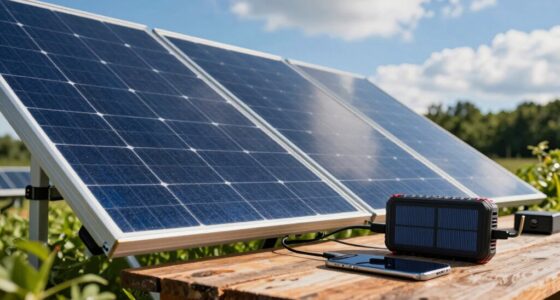
JJN Bifacial 425 Watt Solar Panel, N-Type UL 61730 16BB Solar Panels, 25% High Efficiency Monocrystalline Solar Module for 12V/24V/48V PV System for Homes Rooftop Farm RV and Off-Grid Applications
- Bifacial Technology: Generates power from both sides for 25% efficiency boost
- N-Type 16BB Cells: High-efficiency cells reduce shading impact
- Weather-Resistant Construction: Corrosion-resistant frame with waterproof junction box
As an affiliate, we earn on qualifying purchases.
As an affiliate, we earn on qualifying purchases.
Eskom’s Operational and Financial Background
Eskom has historically relied heavily on coal-fired generation, which has contributed to financial strain due to high operational costs. The utility recently achieved a rare milestone of a year without loadshedding, driven by better plant maintenance and increased renewable integration at the system level. Nonetheless, Eskom’s financial outlook remains fragile, with ongoing reliance on expensive diesel peaking plants and uncertain market reforms that could reshape its role in South Africa’s electricity sector.
The unbundling strategy launched in 2023 aims to separate Eskom’s generation, transmission, and distribution functions, with Eskom Green representing the company’s renewed focus on renewable energy development. This aligns with global trends and South Africa’s commitments to decarbonization and energy diversification.
“Eskom Green has been designed to enable agile decision-making and access to diverse capital sources, which are essential for scaling renewable projects.”
— an anonymous researcher

Lbxlhr 10000W/12000W Upgraded Wind Vertical Axis Turbine Generator 12V 24V 48V 220V with MPPT Controller Wind Turbine Kit for Hybrid Wind Solar System(12000w,24v)
- Vertical Wind Turbine Design: Aerodynamic spiral blades for smooth operation
- High-Strength Blade Material: Injection-molded FRP for durability
- Breeze-Start Capability: Operates in low wind conditions
As an affiliate, we earn on qualifying purchases.
As an affiliate, we earn on qualifying purchases.
Unclear Impact of Market Reforms on Eskom’s Future
It is not yet clear how South Africa’s upcoming electricity market reforms will influence Eskom’s role and financial health, particularly regarding regulatory protections for coal assets and private sector participation. The effectiveness of Eskom Green in attracting investment and scaling renewable projects remains to be seen.

As an affiliate, we earn on qualifying purchases.
Next Steps for Eskom’s Renewable Expansion and Market Reforms
Eskom plans to develop initial renewable projects through Eskom Green and is expected to detail its investment pipeline in the coming months. Additionally, the government’s market reform proposals will be scrutinized for their potential to facilitate private sector involvement and reshape Eskom’s operational landscape. Monitoring these developments will be critical for assessing the utility’s future trajectory.

High-Efficiency 400W/600W/800W/1000W/1200W Vertical Wind Turbine Generator Kit – Quiet 5-Blade Design, 24V Power for Home & Commercial Renewable Energy Solutions
- Durable Synthetic Reinforced Nylon Blades: Long-lasting and stylish spiral design
- Enhanced Energy Efficiency: Three-phase AC PMG and smart regulation
- Optimized Rotor Design: Increases blade rotation speed for better output
As an affiliate, we earn on qualifying purchases.
As an affiliate, we earn on qualifying purchases.
Key Questions
What is Eskom Green?
Eskom Green is a new renewable energy subsidiary launched by Eskom to focus on utility-scale and industrial renewable projects, aiming to support the company’s shift towards cleaner energy and market competitiveness.
Why did Eskom create Eskom Green?
The move is part of Eskom’s unbundling strategy and is designed to enable more agile decision-making, access to diverse capital, and partnership-based project delivery, aligned with global best practices.
How does Eskom Green relate to Eskom’s operational performance?
While Eskom’s recent operational performance has improved, the new unit aims to further enhance renewable project development, which is critical for long-term sustainability amid ongoing financial challenges.
Will Eskom Green help reduce Eskom’s reliance on coal?
Yes, the focus on renewable projects is intended to diversify Eskom’s energy mix and reduce dependence on costly coal-fired generation, though the scale and timeline remain to be seen.
What are the risks associated with Eskom’s market reforms?
Potential risks include regulatory protections that favor coal assets, which could discourage private investment and limit efficiency gains, impacting long-term affordability and sustainability.
Source: PV Magazine