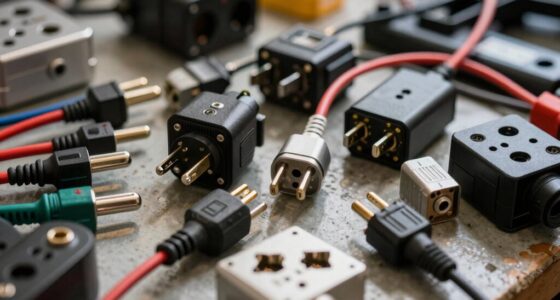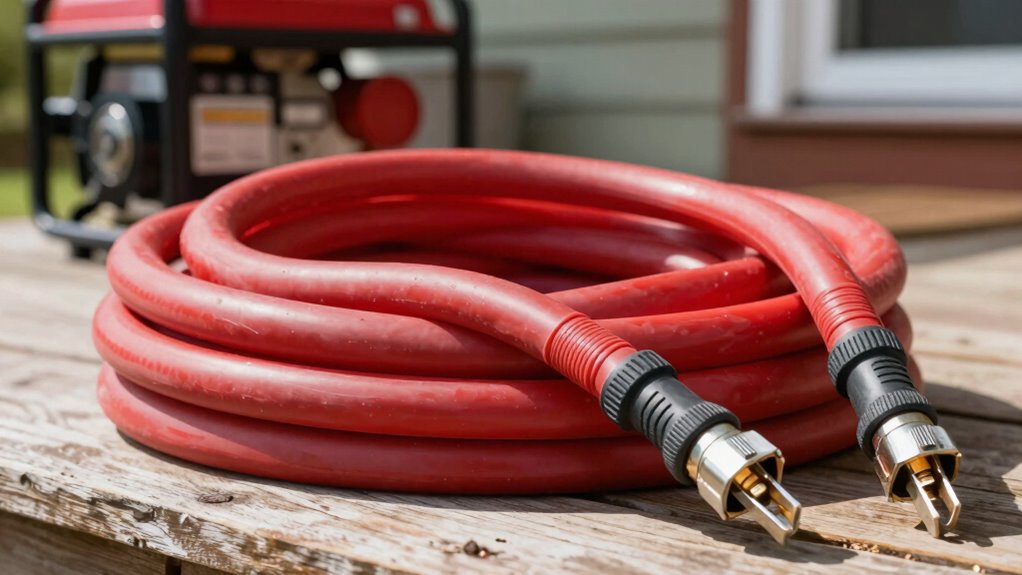

A good generator cord for temporary home backup is designed for safety, durability, and efficient power delivery. Look for a cord with proper grounding, weather-resistant insulation, and the right length to prevent tripping or voltage drop issues. Make certain it has the correct wire gauge to handle the load and avoid overheating. Regularly inspecting your cord helps maintain safety and performance. Keep these factors in mind, and you’ll be prepared—if you continue, you’ll find even more tips to ensure reliable backup power.
Key Takeaways
- Proper grounding ensures safety during temporary power outages.
- High-quality insulation protects against weather and physical damage.
- Appropriate length minimizes tripping hazards and voltage drops.
- Correct wire gauge supports high current without overheating.
- Regular inspection maintains safety and reliable power delivery.

Have you ever experienced a power outage and wondered how to keep your essential appliances running? When you’re relying on a generator for temporary home backup, choosing the right generator cord makes all the difference. A good generator cord isn’t just about length or price; it’s about safety, reliability, and durability. You want a cord that guarantees portable safety, preventing shocks or fires while delivering stable power to your home. You also need a cord built to withstand the demands of emergency use, with cord durability that lasts through multiple uses and harsh conditions.
First, consider the safety features of a generator cord. Portable safety is paramount when you’re operating a generator in your driveway or yard. Look for cords with proper grounding and insulation. A grounded cord helps prevent electrical shocks, especially if the cord gets damaged or exposed to moisture. Insulation must be thick and high-quality to resist cuts, abrasions, and weather elements. A well-designed cord minimizes the risk of short circuits and keeps you and your family safe during power outages. Understanding electrical safety can help you select the most appropriate cord for your needs. Additionally, inspecting cords regularly for signs of wear can prevent potential hazards.
Next, pay attention to cord durability. When you’re dealing with temporary backup, you need a cord that can handle frequent connecting and disconnecting, exposure to outdoor conditions, and the weight of heavy appliances. A durable cord is made from robust materials—such as reinforced rubber or heavy-duty vinyl—that resist cracking, tearing, and wear over time. The cord’s wiring should be thick enough to handle the required amperage without overheating, which can cause fires or damage your appliances. The connectors at both ends need to be sturdy, weather-resistant, and able to withstand repeated use without loosening or breaking. Durability also involves resistance to environmental factors like moisture and UV rays, which can degrade lesser-quality cords over time.
Additionally, the length of the cord matters. It should be long enough to reach from your generator to your essential appliances without creating excessive slack, which could cause tripping hazards. However, avoid overly long cords that may lead to voltage drops, reducing the power reaching your devices. The wire gauge is also indispensable; a thicker gauge (lower gauge number) can carry more current safely and reduce the risk of overheating. Ensuring the correct wire gauge for your setup increases safety and efficiency during power outages.

PlugSaf 25FT 30 Amp Generator Extension Cord 4 Prong, NEMA L14-30P/L14-30R 10 Gauge STW 125/250V Twist Lock Generator Cord Heavy Duty, Black ETL Listed
Features & Benefits: 25 foot 4 prong generator extension cord 30amp; STW 125/250v; 3750w/7500w; NEMA L14-30P to L14-30R;…
As an affiliate, we earn on qualifying purchases.
As an affiliate, we earn on qualifying purchases.
Frequently Asked Questions
Can I Use a Regular Extension Cord for Generator Backup?
You shouldn’t use a regular extension cord for generator backup because it may compromise extension cord safety and reduce power transfer efficiency. Regular cords aren’t designed to handle the high current from generators, risking overheating or damage. Instead, opt for heavy-duty, outdoor-rated extension cords specifically made for generator use. These guarantee safe power transfer, prevent overheating, and make your backup setup more reliable during outages.
What Is the Maximum Length for a Generator Cord?
You should keep your generator cord length within 25 feet to guarantee ideal power capacity and durability. Longer cords can cause voltage drops, reducing the power your generator delivers and risking damage to your equipment. A shorter, heavy-duty generator cord maintains strength and prevents overheating. Always choose a cord rated for your generator’s power capacity, and make sure it’s durable enough to handle outdoor conditions for safe, reliable backup power.
Are There Specific Safety Standards for Generator Cords?
Are there specific safety standards for generator cords? Absolutely. You should look for cords that meet established safety standards like UL (Underwriters Laboratories) certification, ensuring generator safety and reliable cord durability. These standards verify that the cord can handle the power load safely, resist wear, and prevent electrical hazards during use. Always choose cords with appropriate ratings to protect your home and family during backup power situations.
How Do I Prevent Voltage Drops in Long Cords?
To prevent voltage drops in long cords, you should choose a cord with high-quality insulation to reduce resistance and maintain voltage stability. Keep the cord as short as possible, and avoid overloading it by plugging in too many devices. Regularly inspect the insulation for damage, and use a gauge size suitable for your load. Properly rated cords guarantee consistent power delivery and protect your equipment from voltage fluctuations.
Can I Connect Multiple Cords Together for More Power?
You shouldn’t connect multiple cords together for more power, as it’s unsafe and can cause damage. Instead, use a multipurpose adapter designed for generator use, which guarantees proper power distribution. High-quality cords with excellent cord durability are essential for reliable backup power. Did you know that using improper connections can lead to electrical fires? Always follow safety guidelines and use equipment rated for your power needs to keep your home safe.
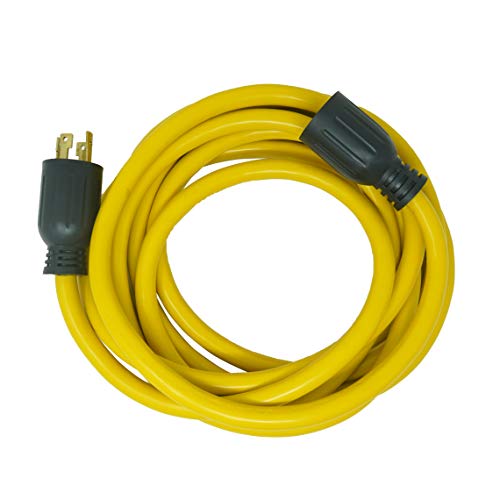
Southwire Generator Cord – 10-Gauge Heavy Duty Electrical Power Cable with L14-30 Locking Plug & Receptacle – Dual Voltage 125V/250V – Molded Connectors – Weather Resistant – Yellow & Black – 20 Feet
Secure Power for Outdoor Generators: The Southwire Generator Cord delivers 20 feet of rugged 10-gauge reach with twist…
As an affiliate, we earn on qualifying purchases.
As an affiliate, we earn on qualifying purchases.
Conclusion
A good generator cord is your lifeline in a temporary home backup, symbolizing trust and connection amid uncertainty. Just as a sturdy bridge links two sides, a reliable cord bridges the gap between power and safety, ensuring your home remains alive and warm. When you choose wisely, you’re not just selecting a cord—you’re forging a path through darkness, guiding your family safely back to comfort and security, no matter how stormy the night.

Vevor 75Ft 50 Amp Generator Extension Cord 4 Wire 8 Gauge Generator Cord 125V 250V Generator Power Cord N14-50P & SS2-50R & CS6364 Twist Lock Connectors : Everything Else
Heavy-Duty 8 Gauge 4-Wire Copper: 75FT 50A generator cord with 8/4 AWG pure copper conductors. Supports 50A max…
As an affiliate, we earn on qualifying purchases.
As an affiliate, we earn on qualifying purchases.

15FT 50 Amp Generator Cord, NEMA 14-50P/SS2-50R Heavy-Duty 4 Conductors Cable, Pure Copper STW RV Extension Cord, Female Plug with Twist Lock, Suitable for RV or Camper, ETL Listed
Emergency Adaptation: High-spec structure with multi-strand stranded pure copper cores and precisely matched male-female connectors,NEMA 14-50P to NEMA…
As an affiliate, we earn on qualifying purchases.
As an affiliate, we earn on qualifying purchases.