
TL;DR

Get backup power and energy gear delivered free — and shop member deals
- Fast, free delivery on millions of items
- Access to Prime Big Deal Days deals on October 6–7
- Prime Video, Amazon Music and more included
A research team from India has simulated a home cooling panel combining PV modules, thermoelectric cooling, and waste cooking oil as a bio-based phase change material. The system can deliver up to 15 kWh/day of cooling and reduce indoor temperatures, with promising economic and environmental benefits.
An Indian research team has simulated a hybrid home cooling panel that combines photovoltaic (PV) power generation, thermoelectric (TE) cooling, and waste cooking oil as a phase change material, demonstrating promising performance for sustainable indoor cooling. This development could significantly reduce energy consumption and carbon emissions associated with traditional air conditioning systems.
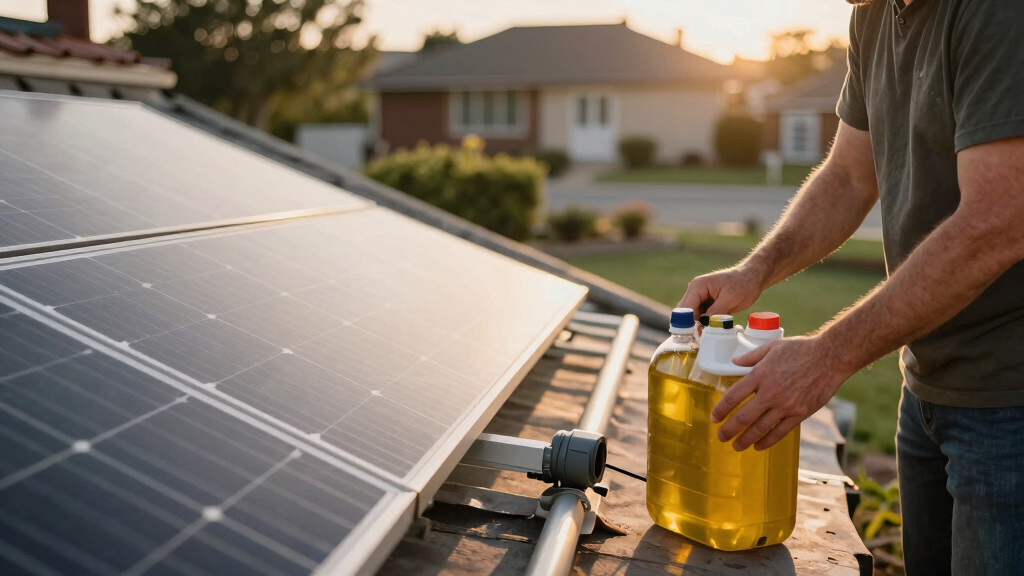
The system features a PV module that converts sunlight into electricity, which then powers a thermoelectric module. The TE module actively removes heat from a waste cooking oil-based phase change material (PCM), storing cooling capacity during the day. At night, the PCM absorbs heat from indoor spaces, maintaining lower temperatures. The system was simulated using a multi-fidelity modeling framework, indicating that a single panel can provide between 6 and 15 kWh of cooling daily, reduce indoor peak temperatures by up to 3°C, and shift cooling loads by approximately three hours.
Economic analysis suggests a payback period of three to four years, potentially reduced to around two with incentives. The life cycle assessment indicates the panel can avoid roughly 1.2 tons of CO₂ emissions annually, utilizing about 40 kilograms of waste cooking oil. The researchers aim to explore scalable manufacturing, AI-driven controls, and improved PCM formulations to enhance long-term viability and cost-effectiveness.
Potential Impact of PV-Waste Oil Cooling Panels
This innovative cooling panel offers a sustainable alternative to conventional air conditioning, utilizing waste cooking oil as a low-cost, environmentally friendly thermal storage medium. Its ability to provide significant cooling with renewable energy could reduce energy demand and greenhouse gas emissions, especially in regions with high cooling loads. The economic viability, with a payback period of around three years, makes it a promising solution for residential applications, potentially transforming energy use in hot climates.
As an affiliate, we earn on qualifying purchases.
Background on Solar-Driven Cooling Technologies
Building-integrated cooling systems using PV, phase change materials, and thermoelectric devices are an emerging area of research aimed at reducing reliance on grid electricity and fossil fuels. Previous studies have explored various PCM materials and hybrid systems, but the use of waste cooking oil as a bio-based PCM is a novel approach highlighted in this recent simulation study. The research aligns with global efforts to develop sustainable, low-cost cooling solutions amid rising energy costs and climate change concerns.
“Our study introduces a multi-fidelity modeling approach for solar-driven hybrid cooling panels using waste cooking oil as a phase change material.”
— an anonymous researcher
As an affiliate, we earn on qualifying purchases.
Uncertainties in Long-Term Performance and Scalability
It is not yet clear how the system will perform under real climatic conditions over extended periods. Long-term stability of the waste cooking oil PCM, potential degradation, and efficiency of large-scale manufacturing remain unconfirmed. Further field testing and real-world deployments are needed to validate simulation results and economic projections.
phase change material waste cooking oil
As an affiliate, we earn on qualifying purchases.
As an affiliate, we earn on qualifying purchases.
Next Steps for Development and Deployment
The research team plans to investigate real-world performance through pilot projects, refine PCM formulations for durability, and develop scalable manufacturing processes. Additionally, efforts will focus on integrating AI-based control systems to optimize energy use and system operation. These steps aim to transition from simulation to practical application, potentially enabling commercial deployment within the next few years.
home cooling system renewable energy
As an affiliate, we earn on qualifying purchases.
As an affiliate, we earn on qualifying purchases.
Key Questions
How does the waste cooking oil improve cooling performance?
Waste cooking oil acts as a phase change material, storing and releasing thermal energy through its melting and solidifying process, which helps regulate indoor temperatures more efficiently.
Is this system ready for commercial use?
No, the system is currently in the simulation and testing phase. Further real-world testing and development are needed before commercial deployment.
What are the environmental benefits of this technology?
The system utilizes waste cooking oil, reducing waste and avoiding the use of conventional, often environmentally harmful, PCM materials. It also reduces reliance on grid electricity, lowering carbon emissions.
How cost-effective is this cooling panel?
Preliminary economic analysis suggests a payback period of three to four years, which could be shortened with incentives and scaling up manufacturing.
What challenges remain for this technology?
Key challenges include ensuring long-term PCM stability, developing cost-effective manufacturing, and validating performance in diverse climatic conditions.
Source: PV Magazine
Halloween Picks
halloween
As an affiliate, we earn on qualifying purchases.