TL;DR

Get backup power and energy gear delivered free with Prime
- Fast, free delivery on millions of items
- Prime Video, Amazon Music and more included
- Member-only deals all year
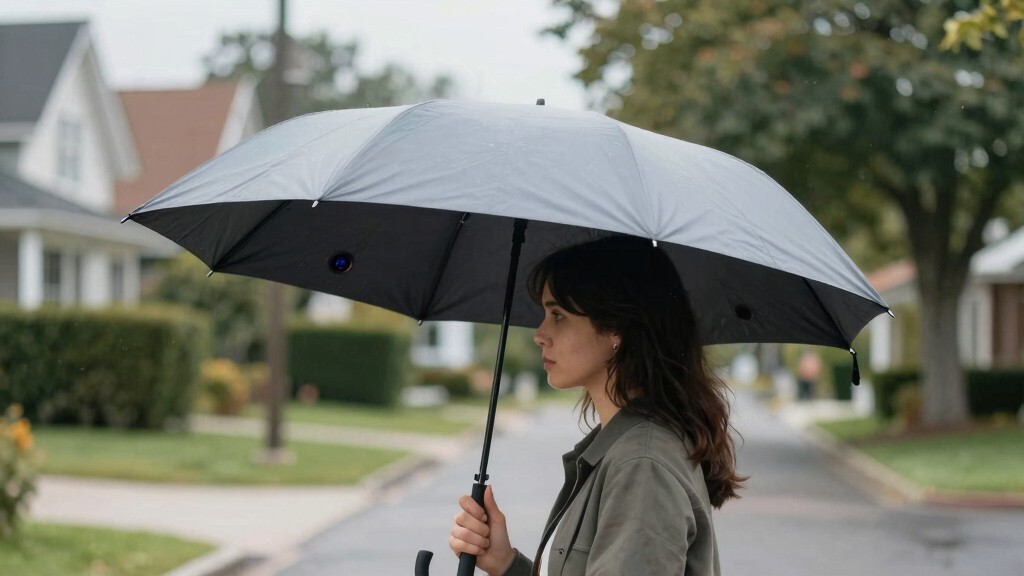
A prototype autonomous flying umbrella has been developed that can follow users and shield them from rain and sunlight. The device uses AI and drone technology to provide personalized weather protection. The development is in early testing stages, with commercial availability still uncertain.
A new autonomous flying umbrella has been demonstrated that can follow users and shield them from rain and sunlight. The device, which combines drone technology with AI, is currently in prototype testing, with commercial release not yet announced. This innovation could transform personal weather protection, offering a hands-free, mobile shield that adapts to weather changes and user movement.
The prototype, developed by a team of engineers and AI specialists, uses sensors and GPS to track user movement and adjust its position accordingly. It is equipped with weather sensors to detect rain and sunlight, activating its shield function automatically. The device is designed to hover at a safe distance above the user, providing continuous coverage without manual control.
According to the developers, the umbrella employs a combination of AI algorithms and drone flight controls to maintain stable positioning and avoid obstacles. The system is powered by rechargeable batteries, with a flight time estimated at 30 minutes per charge. The project is still in the testing phase, with demonstrations conducted in controlled outdoor environments.
Experts suggest that, if commercialized, this technology could have applications beyond personal weather protection, including outdoor events, commuting, and emergency response. However, it remains uncertain when or if the device will be available for consumer purchase.
Potential Impact on Personal Weather Protection
This development could significantly change how individuals protect themselves from weather conditions, especially in urban environments where carrying umbrellas can be inconvenient. The autonomous umbrella offers a hands-free, adaptive solution that could enhance comfort and safety during rain or intense sunlight. It also showcases advancements in drone technology and AI integration, potentially paving the way for other autonomous personal devices.
However, widespread adoption will depend on factors such as safety, affordability, and regulatory approval. The innovation raises questions about privacy, airspace management, and device reliability, which will need addressing before commercial deployment.
As an affiliate, we earn on qualifying purchases.
Advances in Drone and AI Technologies for Personal Use
The concept of autonomous personal drones has been explored in recent years, with applications ranging from delivery to entertainment. This new flying umbrella builds on these developments, combining weather sensors with AI-driven flight control. Previous prototypes have demonstrated drone-based personal assistants, but a weather-shielding umbrella is a novel application.
The project’s origins trace back to research initiatives in wearable robotics and drone safety, with initial prototypes tested in 2022. While similar concepts have been proposed, this is among the first to combine autonomous flight with weather protection specifically designed for individual users.
There is ongoing research into improving flight duration, obstacle avoidance, and weather sensing accuracy. Regulatory discussions around drone safety and airspace integration are also progressing, which could influence the device’s future deployment.
“Our autonomous umbrella uses advanced sensors and AI to follow users and provide reliable weather protection without manual control.”
— Lead engineer at the development team
As an affiliate, we earn on qualifying purchases.
Unanswered Questions About Safety and Commercial Viability
It is not yet clear when the device will be available commercially or how it will be regulated in different jurisdictions. Safety concerns regarding autonomous flight in populated areas, obstacle avoidance reliability, and battery life remain unconfirmed. Additionally, the cost of production and user acceptance are still unknown factors that could influence its market success.
As an affiliate, we earn on qualifying purchases.
Next Steps in Development and Testing
The development team plans to conduct further outdoor testing to assess obstacle avoidance and flight stability in diverse weather conditions. They are also working with regulatory bodies to address safety standards and airspace regulations. Aiming for pilot programs or limited public demonstrations could occur within the next 12-18 months, with potential commercial release contingent on regulatory approval and technological refinement.
As an affiliate, we earn on qualifying purchases.
Key Questions
How does the autonomous umbrella follow the user?
The device uses GPS, sensors, and AI algorithms to track the user’s movement and adjust its position accordingly, maintaining a safe distance while providing coverage.
Can the umbrella protect from both rain and sunlight simultaneously?
Yes, the prototype is designed with sensors to detect both rain and sunlight, activating its protective shield accordingly.
Is this technology safe to use around other people and in crowded areas?
Safety is a key concern; the developers are testing obstacle avoidance and stability, but regulatory approval will be needed before widespread use.
When might this device be available for consumers?
There is no confirmed timeline yet. The developers aim to conduct further testing over the next year, with commercial availability possibly several years away depending on regulatory and technical progress.
What are the main challenges facing this technology?
Challenges include ensuring obstacle avoidance reliability, battery life, safety in populated areas, regulatory approval, and manufacturing costs.
Source: hn
Halloween Picks
halloween
As an affiliate, we earn on qualifying purchases.