
Split-phase power provides both 120V and 240V electricity to your home by splitting high-voltage supply into two out-of-phase hot wires, each delivering 120V relative to neutral. This system allows you to safely operate household lights, outlets, and large appliances like dryers and ranges. Understanding how your system works helps you guarantee safety and proper load distribution. Keep exploring to learn more about how this setup keeps your home running smoothly.
Key Takeaways
- Split-phase power provides two hot wires 180° out of phase, delivering 120V each and 240V between them for home use.
- Household circuits typically use one hot wire and neutral for 120V appliances, while larger appliances connect across both hot wires for 240V.
- Proper wiring, breaker sizing, and grounding are essential for safety, efficiency, and code compliance in a split-phase system.
- Neutral carries imbalance current; balanced loads reduce neutral current and improve system stability.
- Regular system inspections and correct load distribution help maintain safety and prevent electrical issues at home.

Jackery HomePower 3000 Portable Power Station with 2X 200W Solar Panels, 3600W (Surge 7200W) Output, 3072Wh LFP Battery Solar Generator, Essential Backup for Home Use, Power Outage, RV, Emergencies
Essential Home Backup: With a robust 3600W output (7200W surge) and a 3072Wh capacity, the Jackery HomePower 3000...
As an affiliate, we earn on qualifying purchases.
How Split-Phase Power Is Generated and Delivered to Your Home
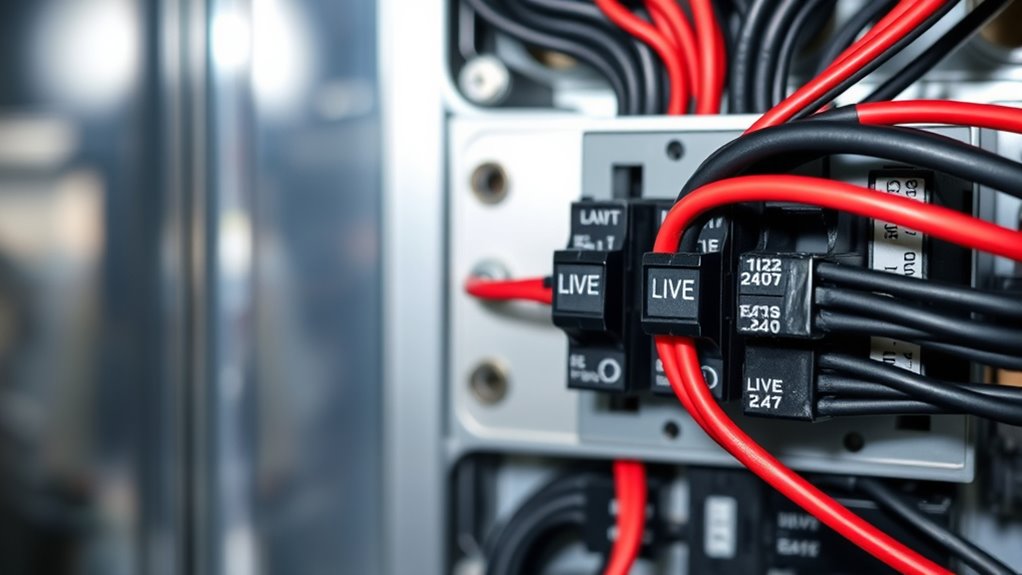
Split-phase power is generated at your utility’s distribution transformer, which steps down high-voltage transmission lines to a safer, household level. Inside the transformer, a copper or aluminum coil wraps around a core, with a center tap on the secondary winding creating three wires: two hot legs and a neutral. The neutral is connected back to the transformer’s center tap, forming a single-phase, three-wire system. The two hot legs are 180° out of phase, each providing about 120 volts relative to neutral, but together offering 240 volts between them. The utility delivers this split-phase power via service conductors—L1, L2 (hot), and N (neutral)—to your home’s main service panel, ensuring you have both 120 V and 240 V supplies for various household needs. Additionally, the power distribution system is designed to balance loads and maintain voltage stability across your home. Understanding how power is generated and delivered can help homeowners better appreciate the reliability and safety of their electrical system.

Jackery Portable Power Station Explorer 300, 293Wh Backup Lithium Battery, Solar Generator for Outdoors Camping Travel Hunting Blackout (Solar Panel Optional)
SPEED UP YOUR RECHARGEABILITY: It takes only 2 hours to recharge 80% battery of the power station through...
As an affiliate, we earn on qualifying purchases.
Understanding the Components of Your Residential Electrical System

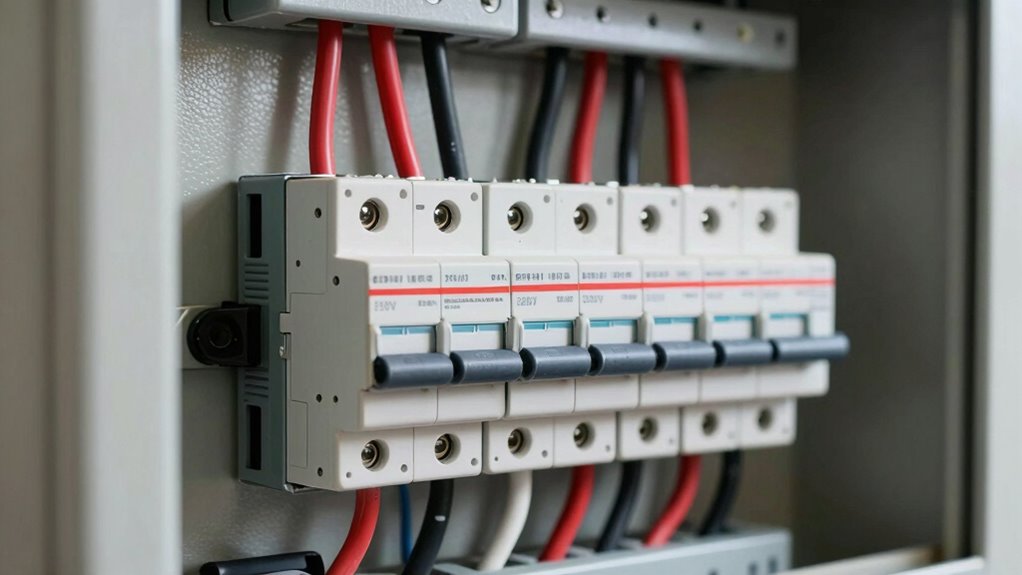
Your residential electrical system consists of several key components that work together to deliver safe and reliable power throughout your home. The main service panel, or breaker box, is the central hub, containing circuit breakers that protect your wiring and devices. From there, individual circuits branch out to serve outlets, lighting, appliances, and dedicated loads. The service entrance includes the meter, which measures electricity consumption, and the main disconnect switch, which isolates power during maintenance. Your system also has conductors: hot wires (L1 and L2) deliver voltage, a neutral wire completes the circuit, and an equipment grounding conductor ensures safety by directing fault currents to the ground. Properly functioning components are essential for safe operation, efficient energy use, and compliance with electrical codes. Additionally, understanding the split-phase power system helps homeowners recognize how voltage is distributed to support various household appliances effectively. Recognizing the role of circuit protection devices like breakers is vital for preventing electrical hazards and ensuring system reliability. Furthermore, a clear understanding of the power distribution setup can assist in troubleshooting and optimizing your electrical system for safety and efficiency. Being aware of how the transformer steps down the voltage from the utility supply is also crucial for maintaining system performance and safety. Regular inspections and knowledge of herbal properties can also help in maintaining the overall health of your electrical system, much like how understanding plant parts enhances herbal remedies.

Portable Solar Generator, 300W Portable Power Station with Foldable 60W Solar Panel,110V Pure Sine Wave 280Wh Battery Power Pack with USB DC AC Outlet for Camping Smart Devices RV Van Outdoor-Orange
Portable Generator with 60W Solar Panel Included: with a big battery pack, ZeroKor 300W power stations Generator are...
As an affiliate, we earn on qualifying purchases.
How 120 V and 240 V Circuits Work in Your House

In most homes, both 120 V and 240 V circuits work together to power everything from lights to large appliances. The system uses two hot wires, L1 and L2, each providing around 120 V relative to neutral. When you connect an appliance between one hot wire and neutral, it runs on 120 V, ideal for lights and outlets. For larger appliances like dryers or ranges, you connect across both hot wires, which gives you about 240 V. These appliances draw current from both legs simultaneously, reducing overall current and allowing for higher power. Neutral carries any imbalance in current between the two hot wires, but when loads are balanced, neutral current stays minimal. This setup ensures safe, efficient power delivery, and understanding how the split-phase system operates can help prevent overloads. Recognizing how voltage levels are distributed in a split-phase system can help prevent overloads and ensure safety. Proper understanding of split-phase power helps homeowners appreciate how their electrical system provides reliable, versatile energy for daily use. Additionally, proper understanding of SWIFT/BIC codes can be essential when managing financial transactions related to home improvements or purchases.
Jackery HomePower 3600 Plus Portable Power Station with 2x 200W Solar Panels, 3600W AC Output, 3584Wh LFP Solar Generator, Expandable up to 21kWh, Essential Home Backup for Home Use, Emergencies, RV
Essential Home Backup: The Jackery HomePower 3600 Plus delivers 3600W output (7200W in parallel) to run pumps, heaters,...
As an affiliate, we earn on qualifying purchases.
Common Appliances and Their Power Needs

Most of your household appliances run on 120V circuits, like lights, TVs, and small kitchen gadgets. Larger appliances, such as dryers, ranges, and water heaters, need 240V power from both hot legs. Understanding which appliances require which voltage helps you guarantee your system handles your home’s power needs safely and efficiently. Additionally, smart home integration can optimize energy use and monitor power consumption for these high-demand appliances. Recognizing the electrical load of each appliance ensures your wiring and circuit breakers are properly rated to prevent overloads or hazards. Properly assessing power requirements aids in designing a safe and efficient electrical system for your home. Being aware of breaker ratings can further prevent potential electrical issues and ensure reliable operation of your appliances. Knowing the voltage specifications of each device is essential for safe operation and compliance with electrical codes.
Typical 120V Loads
Are you aware of which common household appliances run on 120V and how much power they typically consume? Many everyday devices use this voltage, including lights, TVs, and small kitchen appliances. Knowing their power needs helps you understand load distribution and circuit capacity. Here’s a quick overview:
| Appliance | Typical Power Use | Common Circuit Type |
|---|---|---|
| LED Light Bulb | 8-15 watts | Single-pole, 120V |
| Refrigerator | 100-800 watts | Dedicated 120V |
| Microwave | 600-1200 watts | Single-pole, 120V |
| Laptop/Charging Devices | 50-150 watts | Single-pole, 120V |
| Toaster | 800-1500 watts | Single-pole, 120V |
These loads are wired to 120V circuits, enabling safe, efficient operation.
Heavy 240V Appliances
Heavy 240V appliances such as electric ranges, clothes dryers, water heaters, and central air conditioners draw significant power from both hot legs of your split-phase system. These appliances connect across both L1 and L2, utilizing two-pole breakers to access the full 240 volts. They typically have heating elements or motors that require high current, which is why they need dedicated circuits. Since they draw equal power from both legs, they usually don’t use neutral unless they incorporate 120V control circuits. Proper wiring and breaker sizing are essential to handle their load safely. Balancing these large appliances across both hot legs helps prevent overloading and reduces neutral current. Additionally, correct wiring practices are crucial to ensure safety and efficiency in these installations. Always follow local electrical codes and manufacturer instructions when installing or servicing these heavy-duty devices.
Safety Measures and Proper Circuit Protection

Ensuring safety and proper circuit protection in a split-phase electrical system is essential to prevent hazards and maintain reliable operation. You should always use the correct size breakers and conductors for each circuit, following local codes and manufacturer instructions. Two-pole breakers protect 240 V loads and ensure both hot legs disconnect simultaneously, reducing shock risk. Proper grounding and bonding prevent objectionable currents on grounding paths, minimizing fire hazards. Install GFCI and AFCI devices where required to protect against ground faults and arc faults, especially in areas exposed to moisture or vulnerable to fires. Label circuits clearly to avoid accidental misuse. Regularly inspect and maintain your panel to detect loose connections or signs of wear. Following these measures keeps your system safe, efficient, and compliant. Additionally, understanding the split-phase system helps ensure you select appropriate components and troubleshoot effectively. Being familiar with the circuit protection devices and their proper application can help prevent electrical failures and enhance overall safety. Proper installation practices are vital to ensure the longevity and safety of your electrical system. Incorporating compliance with electrical codes further supports safe and reliable operation. Moreover, understanding the role of circuit breakers aids in selecting the correct protective devices for various applications.
Using Inverter Systems With Split-Phase Power

Inverter systems designed for split-phase power must generate two hot legs that are 180° out of phase to match the utility’s supply. They typically incorporate internal transformers or phase-shifting circuitry to produce the two separate AC outputs. This setup allows your inverter to power your home’s existing split-phase system seamlessly. When selecting an inverter, guarantee it can handle both the continuous load and the surge current for heavy appliances like dryers or ranges. Proper transfer switches are vital to switch between utility and inverter power safely, maintaining the correct phase relationship. Some inverters produce true split-phase power, while others simulate it using internal transformers. Always verify compatibility with your home’s wiring and grounding system to ensure safe, reliable operation during outages or grid-tied use.
Myths and Misunderstandings About Split-Phase Electricity

Many homeowners have misunderstandings about how split-phase electricity works, leading to incorrect assumptions about safety, wiring, and load capacity. Some believe that having two hot legs means a continuous two-phase system like industrial power, but it’s actually a single-phase system with two opposite-phase hot wires. Others think the 240 V between legs creates a rotating magnetic field, which is false—this setup doesn’t power three-phase motors. Many assume that if one breaker trips, the entire system shuts down, but only that circuit disconnects unless breakers are tied or a two-pole breaker is used. Finally, some believe neutral current flows constantly on both legs, but in balanced loads, neutral current is minimal. Clarifying these myths helps you better understand your home’s electrical system and improve safety.
Tips for Balancing Loads and Ensuring Safe Electrical Use
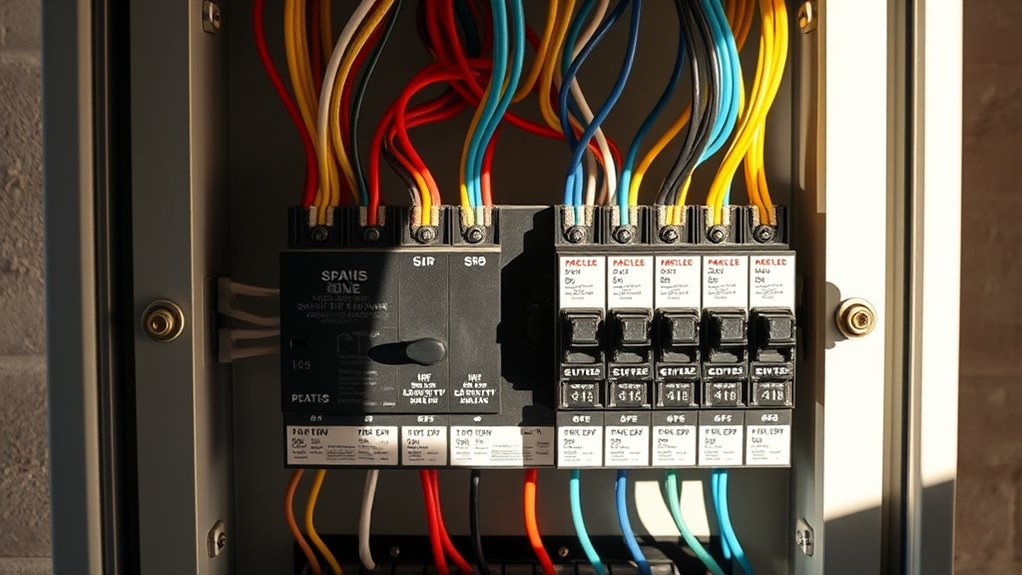
Balancing electrical loads across the two hot legs helps prevent overheating, reduces peak demand, and improves overall system safety. To do this, distribute high-power appliances and heavy loads evenly between L1 and L2. Avoid connecting all large devices to the same circuit or leg. Use your panel’s labeling to identify circuits on each leg, and plan your wiring accordingly. When installing new outlets or appliances, spread them out between the two hot legs. For multi-wire branch circuits, ensure the neutral is properly tied with a double-pole breaker to prevent unbalanced currents. Regularly check for signs of overheating, such as warm outlets or circuit breakers tripping frequently. Proper load balancing minimizes neutral current and reduces the risk of electrical issues, keeping your home safe and efficient.
Frequently Asked Questions
How Does a Split-Phase System Differ From Traditional Three-Phase Power?
You might think a split-phase system differs from traditional three-phase power because it provides both 120 V and 240 V from a single-phase supply, using two hot legs out of phase. Unlike three-phase power, which has three alternating currents creating a rotating magnetic field for motors, split-phase uses only two hot legs, making it simpler and mainly suited for residential use. It doesn’t deliver the continuous, balanced power typical of three-phase systems.
Can I Add an Extra Circuit to My Existing Split-Phase System?
Yes, you can add an extra circuit to your existing split-phase system. First, determine whether it’s a 120 V or 240 V circuit. Then, select the appropriate breaker size and verify the new wiring matches your panel’s configuration. It’s important to balance the load across both hot legs to avoid overloading. Always follow electrical codes and consider consulting a licensed electrician for safe, proper installation.
Why Do Some Appliances Need Both 120 V and 240 V Connections?
Did you know that most home appliances use both 120 V and 240 V connections? You need both because 120 V is ideal for lighting and small devices, while 240 V powers heavy-duty appliances like dryers and ranges. These appliances draw more current and require the higher voltage for efficient operation. Using both connections guarantees your appliances work safely and effectively without overloading your system.
What Happens if One Hot Leg Fails or Trips?
If one hot leg trips or fails, your 120 V circuits on that leg will lose power, causing lights and outlets to go out. Your 240 V appliances won’t operate because they rely on both hot legs. You might also notice the breaker trip or a loss of power in specific areas. To fix this, you need to identify and repair the faulty breaker or connection, ensuring both legs are functioning correctly.
Are There Specific Code Requirements for Wiring Multi-Wire Branch Circuits?
Think of wiring multi-wire branch circuits like balancing a tightrope—if one side is too heavy, everything becomes unstable. The code requires that you use a single, double-pole breaker to connect both hot legs, ensuring they trip together if needed. You must also bond the neutral at the panel and keep ungrounded conductors separated. Proper wiring safeguards your home and ensures safe, reliable power distribution.
Conclusion
Understanding split-phase power is like mastering the heartbeat of your home’s electrical symphony. With this knowledge, you can navigate safely through your daily routines, ensuring every appliance hums smoothly and every circuit stays protected. Think of your electrical system as a well-orchestrated dance—when balanced and cared for, it keeps your home running seamlessly. Embrace these insights, and you’ll keep your home’s electrical rhythm steady, like a conductor guiding a harmonious melody.