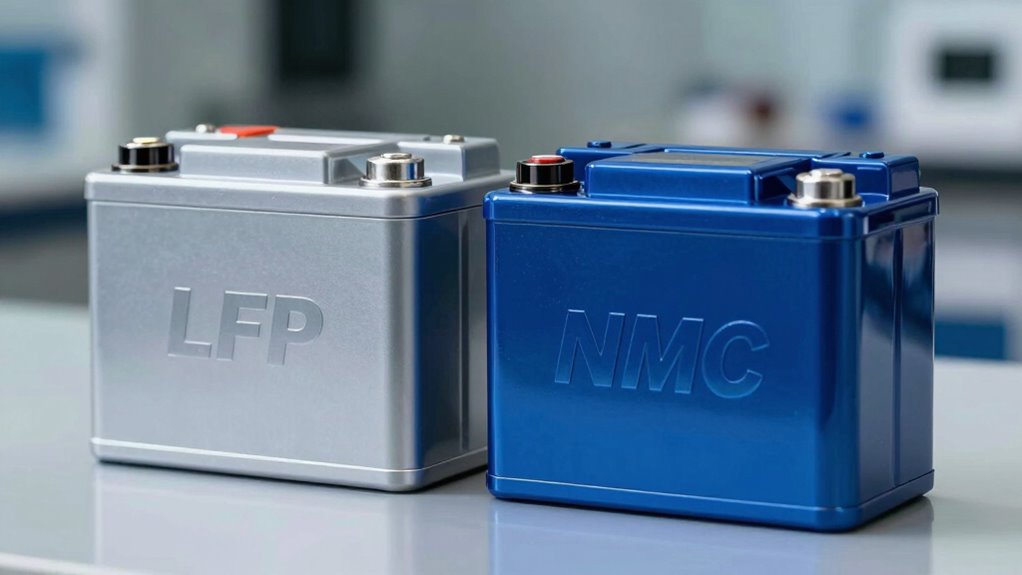

When choosing between LFP and NMC batteries, you should consider safety, cost, and lifespan. LFP batteries are safer and more thermally stable, especially in high temperatures, but they weigh more and are generally more affordable. NMC batteries offer higher energy density and are widely available but pose safety risks and degrade faster under stress. Understanding these tradeoffs can help you make a better choice—keep exploring to uncover more essential differences.
Key Takeaways
- LFP batteries offer superior safety and thermal stability, reducing fire risk and overheating concerns.
- NMC batteries generally have higher energy density, providing more compact and lightweight solutions.
- LFP batteries deliver longer cycle life and better durability under frequent charging.
- NMC batteries are more expensive but benefit from wider market availability and advanced recycling challenges.
- LFP performs better in extreme temperatures, maintaining safety and capacity in hot or cold environments.

Bioenno Power 12V, 12Ah LFP LiFePO4 Lithium Iron Phosphate Battery (PVC, BLF-1212A)
Voltage: 12V Capacity: 12Ah Case Type: PVC Pack
As an affiliate, we earn on qualifying purchases.
As an affiliate, we earn on qualifying purchases.
Comparing Safety and Thermal Stability

When it comes to safety and thermal stability, LFP (Lithium Iron Phosphate) batteries generally outperform NMC (Nickel Manganese Cobalt) batteries. LFP cells are more fire-resistant because their chemical composition makes them less prone to catching fire or experiencing thermal runaway. Unlike NMC batteries, which can rapidly escalate in heat during a malfunction, LFP batteries resist overheating and are less likely to ignite under stress. This inherent stability reduces the risk of dangerous failures, making them a safer choice for many applications. Their robust thermal stability means they can handle higher temperatures without degrading or becoming hazardous. Additionally, thermal management strategies can further enhance safety by optimizing thermal control and reducing heat buildup. Understanding the chemical stability of LFP batteries highlights their advantage in safety and thermal resilience, especially in high-demand environments. If safety and fire resistance are your priorities, LFP batteries provide a significant advantage over NMC options. Moreover, thermal runaway resistance is a critical factor that underscores their safer profile in real-world usage. Incorporating advanced cooling solutions can further mitigate risks associated with high-performance applications.

Battery pack design and testing guide: Handbook to understand and design, faster, better packs from a blank sheet of paper, saving time and cost (Lithium-ion reference 2024)
As an affiliate, we earn on qualifying purchases.
As an affiliate, we earn on qualifying purchases.
Cost Considerations and Market Availability

Cost considerations and market availability play a crucial role in choosing between LFP and NMC batteries. LFP batteries generally offer better cost efficiency due to cheaper raw materials and simpler manufacturing processes, making them attractive for budget-conscious applications. Conversely, NMC batteries tend to be more expensive but are widely available because of higher market saturation and demand. To understand the implications, consider:
LFP batteries are more cost-effective and accessible in budget-sensitive applications compared to NMC.
- LFP batteries are often more affordable upfront, especially in large-scale deployments.
- NMC’s higher market saturation ensures easier procurement and supply chain stability.
- Cost efficiency favors LFP in regions with limited access to advanced manufacturing.
- Market saturation influences availability, with NMC batteries more readily accessible worldwide.
Your choice depends on balancing initial costs against availability, especially for long-term deployment and scaling.

4pcs CATL 3.2V 340Ah High Capacity Lifepo4 Battery EV 340Ah Rechargeable Battery for Solar System Lithium Ion Batteries
These 3.2V CATL 340ah Battery cells are produced by CATL, benefit from advanced equipment and strict quality testing…
As an affiliate, we earn on qualifying purchases.
As an affiliate, we earn on qualifying purchases.
Longevity and Cycle Life Differences

Although both LFP and NMC batteries have impressive cycle lives, they differ markedly in longevity. LFP batteries typically endure more charge cycles, often exceeding 3,000, due to their stable chemistry. NMC batteries usually offer around 1,000 to 2,000 cycles, but their higher energy density can lead to faster capacity degradation if charged too aggressively. A high charge rate stresses the chemistry, shortening lifespan, especially for NMC chemistries. LFP batteries are more tolerant of rapid charging, which helps extend their longevity. Proper battery maintenance can significantly influence overall lifespan and performance. Additionally, understanding the chemistry differences between these batteries can help optimize their usage for specific applications. For example, environmental factors such as temperature also play a crucial role in battery performance and longevity. The manufacturing quality of the cells can further impact their durability over time. Ultimately, your use case determines whether longevity or energy density takes priority.
Thermal Management System for Lithium-Ion Batteries
As an affiliate, we earn on qualifying purchases.
As an affiliate, we earn on qualifying purchases.
Environmental Impact and Recycling Challenges

Both LFP and NMC batteries pose significant environmental challenges, particularly in their production and end-of-life management. The environmental footprint depends heavily on recycling infrastructure and how efficiently materials are recovered. You should consider:
Both LFP and NMC batteries face environmental challenges, especially in recycling and resource recovery.
- The difficulty in recycling NMC batteries due to complex material separation.
- Limited recycling infrastructure, which hampers effective reuse of valuable resources.
- The environmental impact of mining raw materials, especially for NMC’s cobalt and nickel components.
- The potential for hazardous waste if batteries aren’t properly recycled. These issues mean that, without robust recycling systems, both battery types contribute to pollution and resource depletion. Improving recycling infrastructure is essential to reducing their overall environmental footprint and ensuring sustainable disposal. Additionally, total‑cost clarity in recycling processes can help drive better policies and investments toward more sustainable battery lifecycle management. Developing advanced recycling technologies is crucial for tackling these challenges and promoting a circular economy for batteries. Strengthening recycling standards can also play a key role in minimizing environmental impacts and ensuring safe disposal practices.
Performance in Different Temperature Ranges

When it comes to operating in different temperature ranges, LFP and NMC batteries exhibit distinct performance characteristics. LFP batteries tend to handle high and low temperatures better, maintaining stability and safety. They often have a slightly heavier battery weight, but this doesn’t hinder performance in extreme conditions. NMC batteries, on the other hand, perform ideally at moderate temperatures, but their charging speed can greatly decrease in cold environments, slowing down charging or reducing capacity temporarily. In hot temperatures, NMC batteries risk faster degradation, impacting lifespan. If you need faster charging in varied climates, LFP batteries might be more reliable, while NMCs excel in controlled, moderate conditions. Understanding these nuances helps you choose the right battery based on your temperature-specific performance needs.
Frequently Asked Questions
How Do LFP and NMC Batteries Perform Under Extreme Weather Conditions?
You’ll find that LFP batteries offer better thermal resilience and weather resilience in extreme conditions, making them less prone to performance drops in cold or hot weather. NMC batteries, however, might experience reduced efficiency or safety concerns under such conditions. If you need reliable operation in harsh climates, LFP batteries are generally the better choice because they handle temperature swings more effectively and maintain stability longer.
What Are the Specific Weight Differences Between LFP and NMC Batteries?
Think of LFP and NMC batteries as two dancers, each with a different weight. LFP batteries are lighter, making them easier to handle and install, but they may have a shorter lifespan and face recycling challenges. NMC batteries tend to be heavier, which can impact vehicle weight and efficiency. Your choice depends on balancing weight, lifespan, and recycling considerations for your specific needs.
How Does Charger Compatibility Vary Between LFP and NMC Systems?
You’ll find that charger compatibility varies between LFP and NMC systems due to differing charging standards. LFP batteries often support faster charging and are compatible with chargers designed for high current flows, while NMC batteries may require chargers optimized for their specific chemistry. Always check the manufacturer’s specifications to verify your charger matches the battery’s charging standards, preventing damage and optimizing performance.
Are There Notable Differences in Manufacturing Complexity for These Batteries?
Manufacturing marvels and material minutiae make LFP batteries simpler to produce than NMC variants. You’ll find fewer production challenges with LFP, thanks to their straightforward chemistry and stable structure. NMC batteries, however, involve complex layering and precise mixing, increasing manufacturing intricacies. This difference means that while LFPs often boast easier, more efficient production, NMCs demand meticulous, multi-step processes, impacting overall cost and manufacturing timelines.
How Do LFP and NMC Batteries Compare in Terms of Energy Density?
You’ll find that NMC batteries typically have a higher energy density than LFP batteries, meaning they store more energy in the same size. However, NMC batteries often have a shorter battery lifespan, which impacts long-term use. Recycling challenges are more pronounced with NMC due to their complex chemistry, while LFP’s simpler composition makes recycling easier. Consider your priorities—whether energy density or longevity and recyclability—when choosing between them.
Conclusion
As you weigh the tradeoffs between LFP and NMC batteries, one factor remains unexpectedly vital—yet often overlooked. Will the safety and longevity of one outweigh the cost and environmental concerns of the other? The choice isn’t as clear-cut as it seems, and the final decision could hinge on the subtle details you haven’t yet considered. In the end, only you can decide which battery type truly aligns with your priorities—and the true implications may surprise you.