
Battery cycle life ratings show how many full charge-discharge cycles a battery can handle before capacity drops below 80%. However, these figures often assume ideal conditions and deep discharges, which aren’t typical in real life. In reality, shallow cycling, good maintenance, and proper usage can extend your battery’s lifespan to several years. If you keep learning, you’ll discover how to turn these numbers into practical, longer-lasting solutions.
Key Takeaways
- Battery cycle life is measured by full charge-discharge cycles until capacity drops below 80%.
- Real-world lifespan depends on usage patterns, including depth of discharge, temperature, and charging habits.
- Higher-quality batteries like LiFePO4 can last over 5,000 cycles, translating to 5+ years of typical use.
- To estimate years, divide total cycle life by annual cycle frequency; e.g., 1,000 cycles at 300/year ≈ 3.3 years.
- Proper maintenance and optimal charging practices extend actual battery lifespan beyond marketing claims.

Anker SOLIX C1000 Gen 2 Portable Power Station, 2,000W (Peak 3,000W) Solar Generator, Full Charge in 49 Min, 1,024Wh LiFePO4 Battery for Home Backup, Power Outages, and Camping (Optional Solar Panel)
49 Min UltraFast Recharging: With upgraded HyperFlash tech, fully recharge at 1,600W—for outage prepping, camping trips, or tailgating...
As an affiliate, we earn on qualifying purchases.
Understanding Battery Cycle Life and Its Significance
Have you ever wondered how long a battery will last before it starts losing its ability to hold a charge? Battery cycle life measures this, defining how many full charge-discharge cycles a battery can endure before capacity drops below 80%. This threshold marks the end of its useful life, meaning it won’t deliver reliable power anymore. Each cycle equals discharging the battery to its rated capacity, regardless of how many partial charges happen in between. This metric is vital because it helps you understand how long your battery will perform well in real-world use, whether in electric vehicles, energy storage, or portable devices. Recognizing this helps you plan replacements and extend your battery’s efficient lifespan, saving money and avoiding unexpected failures. Additionally, understanding the impact of technology on cycle life can guide you in choosing batteries with better durability and performance. Advances in material science continue to improve cycle life, making batteries more reliable over time. Staying informed about manufacturing improvements can further enhance your ability to select long-lasting batteries. Moreover, ongoing research in nanotechnology promises to push the boundaries of battery durability and efficiency even further.

Jackery Portable Power Station Explorer 300, 293Wh Backup Lithium Battery, Solar Generator for Outdoors Camping Travel Hunting Blackout (Solar Panel Optional)
SPEED UP YOUR RECHARGEABILITY: It takes only 2 hours to recharge 80% battery of the power station through...
As an affiliate, we earn on qualifying purchases.
How Manufacturers Define and Rate Cycle Life

Manufacturers determine and rate cycle life based on standardized testing methods that simulate real-world usage conditions. These tests involve repeatedly charging and discharging the battery under controlled parameters, such as specific voltage, temperature, and discharge rates. The cycle count is recorded until the battery’s capacity drops below 80% of its original value, marking its end of useful life. The ratings typically specify conditions like depth of discharge (DoD), usually at 80%, and specific voltage limits. It’s important to note that these ratings are based on idealized lab conditions, which may differ from actual usage. Manufacturers often publish cycle life numbers to showcase battery durability, but real-world performance can vary depending on how you use and maintain your battery. Additionally, understanding the testing standards used in these assessments can help consumers better interpret the longevity claims. Proper battery maintenance can also significantly influence actual cycle life and overall performance. Recognizing that usage patterns play a crucial role in battery lifespan can help users optimize their device longevity. Being aware of environmental factors such as temperature and humidity can further extend your battery’s lifespan and performance. Regularly monitoring and adjusting your charging habits can also contribute to maximizing cycle life and maintaining battery health over time.

Jackery Solar Generator 1000 v2 with 200W Solar Panel,1070Wh Portable Power Station LiFePO4 Battery,1500W AC/100W USB-C Output, 1Hr Fast Charge for Outdoor,Off-Grid Living,RV,Emergency
Powerful yet Compact: Boasting a 1,500W AC output and a 3,000W surge peak, the Solar Generator 1000 V2...
As an affiliate, we earn on qualifying purchases.
The Role of Depth of Discharge in Battery Longevity

Depth of Discharge (DoD) plays a crucial role in determining your battery’s lifespan because it directly influences how many charge-discharge cycles it can endure. The deeper you discharge your battery each cycle, the fewer total cycles it will provide before capacity drops below 80%. This is because deeper discharges cause more stress on the battery’s internal structure, accelerating capacity loss. Keeping DoD low helps prolong your battery’s life, especially in applications like solar energy storage or electric vehicles. By managing how much you drain your battery during each cycle, you maximize its longevity and get more value out of your investment. Additionally, understanding battery chemistry can help you choose the best type for your needs and optimize its cycle life. Considering battery management systems can also improve how well you control discharge levels and extend overall battery health. Properly monitoring discharge levels is essential for maintaining consistent performance over time, and using advanced cycle management techniques can further enhance battery durability. Implementing proper charging practices can further reduce stress on the battery and extend its service life.

Portable Solar Generator, 300W Portable Power Station with Foldable 60W Solar Panel,110V Pure Sine Wave 280Wh Battery Power Pack with USB DC AC Outlet for Camping Smart Devices RV Van Outdoor-Orange
Portable Generator with 60W Solar Panel Included: with a big battery pack, ZeroKor 300W power stations Generator are...
As an affiliate, we earn on qualifying purchases.
Comparing Different Battery Technologies and Their Lifespans
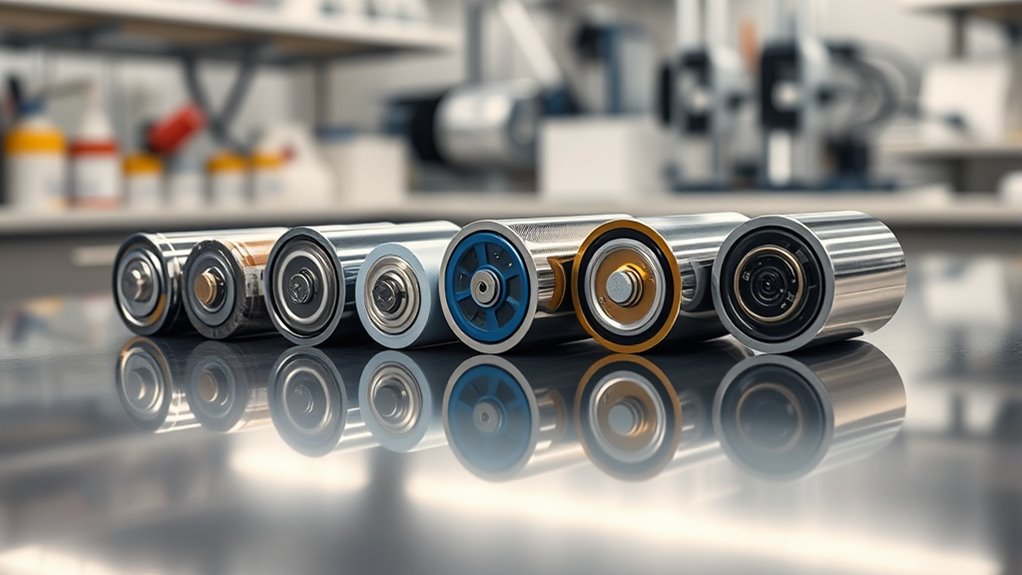
Different battery technologies offer varying lifespans, affecting how long they stay effective in your applications. Lithium-ion batteries, commonly used in electronics and EVs, typically last between 300 and 2,000 cycles, equating to about 1 to 5 years depending on usage. LiFePO4 batteries outperform many others, often exceeding 5,000 cycles or over 10 years, especially with proper maintenance. Lead-acid batteries have shorter lifespans, usually 200 to 300 cycles, lasting around 1 to 2 years. Advanced lithium batteries like Dragonfly Energy can reach 3,000 to 5,000 cycles, making them ideal for heavy-duty or renewable energy storage. Your choice depends on your needs for longevity, cost, and application, with higher-quality batteries offering longer cycle lives. Battery lifespan varies significantly based on technology and usage conditions, so understanding these differences can help you make informed decisions. Additionally, understanding auditory processing can help optimize the use of sound-based technologies in various applications.
Translating Cycle Counts Into Real-World Usage Years
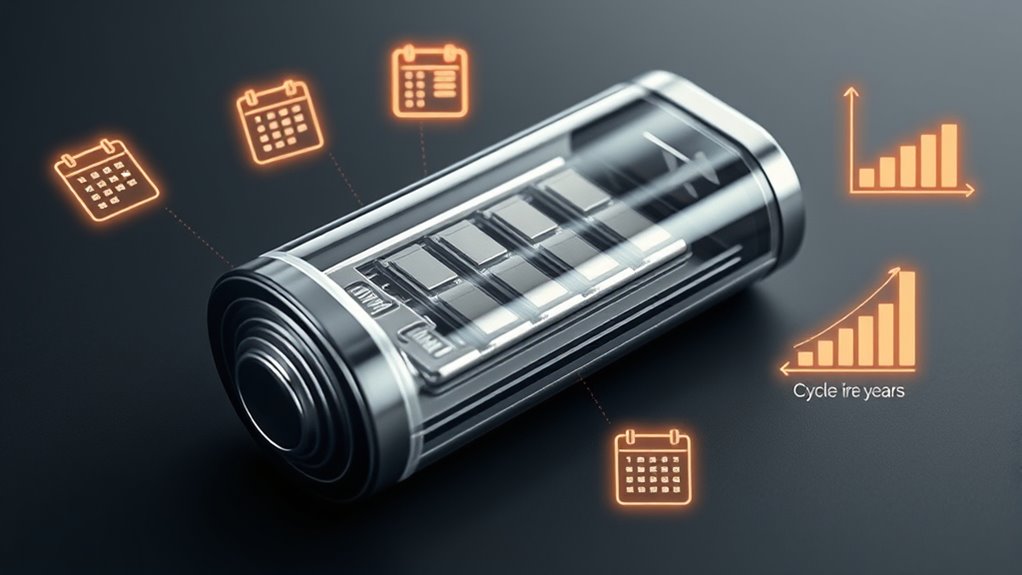
Understanding how cycle counts translate into real-world years helps you gauge your battery’s longevity. Factors like usage intensity and battery type markedly influence how long your battery will last before needing replacement. By considering these elements, you can better estimate how many years your battery will serve you effectively. Recognizing the impact of Free Floating on battery performance can also help in making informed maintenance decisions. Additionally, understanding the net worth of individuals associated with the industry can provide insights into market trends and value fluctuations. Staying informed about battery technology advancements can further enhance your ability to predict and extend your battery’s lifespan. Being aware of lithium-ion chemistry and its characteristics can also aid in optimizing battery management practices. Moreover, paying attention to thermal management can significantly affect overall battery cycle life and safety.
Cycle Count to Years
Converting battery cycle counts into real-world usage years helps you estimate how long a battery will last under typical conditions. To do this, you need to know your expected cycle life and how many cycles you use annually. For instance, if your battery is rated for 1,000 cycles and you average 300 cycles per year, it should last about three and a third years. Keep in mind, this estimate assumes consistent usage and doesn’t account for factors like Deep Discharge or charging habits. Batteries with higher cycle life—like LiFePO4—may last five or more years at typical use levels. Conversely, batteries with fewer cycles may need replacement sooner. Tracking your actual usage helps you better predict the real lifespan of your battery in everyday scenarios. Additionally, incorporating balanced design elements can help optimize battery performance and longevity over time. Understanding battery maintenance practices can further extend the effective lifespan of your battery. Incorporating proper charging techniques can also significantly impact overall battery life and reliability, especially when combined with regular monitoring of cycle count to prevent overuse.
Usage Intensity Factors
Your actual usage patterns considerably influence how long a battery will last in real-world conditions. If you frequently perform deep discharges, your battery’s cycle count will drop faster, shortening its lifespan. Conversely, shallow discharges—recharging before reaching 80% capacity—extend cycle life markedly. High charging rates and frequent top-ups accelerate internal resistance buildup, degrading performance. Heavy usage, such as daily full cycles or rapid charging, also wears the battery more quickly. On the other hand, lighter use with partial discharges and moderate charging prolongs longevity. Factors like temperature, DoD (Depth of Discharge), and charging practices directly impact how many cycles you get before capacity drops below 80%. By understanding and adjusting your usage habits, you can better translate cycle counts into realistic, real-world lifespan estimates.
Battery Type Differences
Different battery chemistries offer vastly different lifespans in real-world use, even if their cycle counts seem similar on paper. Your actual lifespan depends on the type you choose. Here’s what you should know:
- Lithium-ion batteries typically last 300-2,000 cycles, translating to about 1-3 years with moderate use.
- Lead-acid batteries often endure 200-300 cycles, roughly 1-2 years under regular conditions.
- Lithium Iron Phosphate (LiFePO4) batteries can reach over 5,000 cycles, providing 5+ years of reliable service.
- High-quality lithium-ion batteries from brands like Dragonfly Energy can deliver 3,000-5,000 cycles, equating to roughly 4-6 years of heavy use.
Knowing your battery type helps translate cycle counts into real-world longevity.
Factors That Influence Actual Battery Performance Over Time

Several factors directly impact how well a battery performs over time, beyond its initial specifications. Your depth of discharge (DoD) plays a vital role: shallower cycles extend lifespan, while deep discharges shorten it. Charging voltage also matters; charging at lower voltages can considerably increase cycle count. The quality of your battery, including materials and manufacturing standards, influences durability—cheaper options often degrade faster. Usage patterns, such as frequent fast charging or high current draws, accelerate capacity loss. Temperature affects performance too; high heat speeds up internal degradation, while cold environments can reduce capacity temporarily. Additionally, how well you maintain proper charge levels and avoid over-discharging will help preserve your battery’s health, ensuring it performs reliably over its expected lifespan.
Common Misconceptions About Battery Durability and Marketing Claims
Many marketing claims promise thousands of cycles, but these often assume ideal conditions that rarely match real-world use. You might see a battery rated at 2,000 cycles, yet actual lifespan depends heavily on how deep you discharge it and daily usage habits. Understanding these differences helps you avoid overestimating a battery’s true durability.
Marketing vs. Actual Cycles
While manufacturers often advertise battery cycle life based on ideal conditions, these claims can be misleading when you consider real-world usage. Many marketing claims assume perfect charging and discharging at specific depths, which rarely happen in daily life. Here’s what to keep in mind:
- Manufacturers usually rate cycles at 80% capacity, but actual use often involves shallower or deeper discharges.
- Real-world conditions, like temperature and charging habits, shorten lifespan compared to lab tests.
- Many batteries don’t reach the advertised cycle count because users rarely fully discharge or recharge as specified.
- Some brands inflate cycle numbers for marketing, but the actual lifespan depends on how you use the battery daily.
Expect real-world cycle counts to be lower than promotional claims, especially with heavy use.
Discharge Depth Impact
A common misconception about battery durability is that deeper discharges always lead to markedly shorter cycle life, but in reality, the impact of discharge depth varies depending on the battery chemistry and usage conditions. Lowering the depth of discharge (DoD) can profoundly extend your battery’s lifespan. For example, discharging to 50% instead of 80% reduces stress and preserves capacity. Here’s a clearer picture:
| DoD Level | Typical Cycle Life |
|---|---|
| 80% | 500–1,000 cycles |
| 50% | 1,000–2,000 cycles |
| 20% | 2,500–5,000 cycles |
Real-World Usage Variances
Understanding the difference between marketing claims and real-world battery performance is crucial because manufacturers often report idealized cycle life numbers that don’t reflect everyday use. In reality, your battery’s lifespan depends on various factors beyond advertised ratings.
Here are four key variances:
- Discharge habits: Frequent shallow cycles last longer than deep discharges.
- Charging practices: Overcharging or using high voltage reduces lifespan.
- Temperature: High heat accelerates capacity loss, cold slows chemistry but can cause other issues.
- Usage patterns: Cycles performed during heavy workloads or rapid charging diminish overall longevity.
These factors cause batteries to degrade faster than marketing suggests. Your actual cycle count often falls short of the idealized numbers due to these real-world influences.
Strategies to Maximize Your Battery’s Effective Lifespan

To maximize your battery’s effective lifespan, you should focus on managing how you charge and discharge it. Keep the State of Charge (SoC) between 20% and 80% whenever possible, avoiding deep discharges and full charges that strain the cells. Use a charger with a voltage limit suited to your battery type, such as 4.0V per cell for lithium-ion, to reduce stress. Minimize rapid charging and high-voltage charging, as these accelerate capacity fade. Store your battery in a cool, dry place when not in use, and avoid exposing it to extreme temperatures. Regularly monitor capacity and perform partial cycles instead of full discharges. These practices help reduce internal resistance buildup, prevent overuse, and extend your battery’s overall lifespan, ensuring it performs reliably for years.
Frequently Asked Questions
How Accurate Are Manufacturer-Specified Cycle Life Ratings in Real-World Use?
Manufacturer-specified cycle life ratings often overestimate real-world performance, especially since they’re usually tested under ideal conditions at 80% DoD. In your actual use, factors like deeper discharges, higher temperatures, and frequent charging reduce battery longevity. You might see fewer cycles than advertised, and the battery could degrade faster. Always consider these factors and real-world conditions to get a more accurate expectation of your battery’s lifespan.
What Impact Does Temperature Have on Battery Cycle Life and Longevity?
You might notice your battery lasts longer when kept cool, and that’s no coincidence. Temperature has a huge impact on cycle life; high heat accelerates internal resistance and capacity loss, reducing longevity. Conversely, cold temperatures can slow chemical reactions, also impairing performance over time. To maximize your battery’s lifespan, keep it within recommended temperature ranges, avoid extreme heat or cold, and ensure proper ventilation during charging and use.
Can Regular Cycling Practices Extend a Battery’s Effective Lifespan?
Yes, regular cycling practices can extend your battery’s effective lifespan. By avoiding deep discharges and keeping charges within ideal ranges, you reduce stress on the battery, slowing capacity fade. Shallow, consistent cycles are gentler and help maintain capacity longer. Additionally, following manufacturer recommendations for charging and discharging, and avoiding extreme temperatures, further preserves battery health, ensuring it performs well over more cycles and years.
How Does Partial Charging Versus Full Charging Affect Cycle Count?
Think of your battery like a marathon runner. Partial charging is like taking short, steady sprints, which help extend their stamina and overall race distance. Full charging, on the other hand, is like pushing for a long, exhausting run, wearing them out faster. So, by avoiding full charges and sticking to partial ones, you help your battery run longer, increasing its total cycle count and lifespan.
Are There Ways to Reliably Test a Battery’s Remaining Capacity Over Time?
You can reliably test your battery’s remaining capacity over time by regularly performing capacity tests, which involve fully charging and then discharging it under controlled conditions. Use a battery monitor or specialized software to track performance, and compare the current capacity to the original. Consistent testing helps identify capacity fade early, ensuring you know when the battery approaches the end of its useful life, so you can plan replacements or maintenance accordingly.
Conclusion
By understanding the nuances of battery cycle life, you can better balance brilliance and longevity. Don’t be duped by deceptive marketing—delve deeper into details, and make smarter, sustained selections. By managing discharge depths and maintaining mindful usage, you maximize your battery’s lifespan, prolonging power and performance. Remember, realistic ratings and responsible routines promote prolonged performance, preventing premature problems. Prioritize prudent practices to protect your power, prolong your peace, and preserve your device’s durability over time.