During a power outage, your top priority is to restore oxygen flow to prevent fish stress and mortality, as low dissolved oxygen can happen within hours. Focus on powering aeration devices or manually agitating the water first, before worrying about heating. Keeping water oxygenated guarantees your fish stay safe while temperature fluctuations are stabilized afterward. If you continue, you’ll discover effective strategies to backup power and protect your tank every step of the way.
Key Takeaways
- Restoring aeration and water movement to maintain dissolved oxygen levels is the top priority during power outages.
- Use battery-powered pumps or manual agitation to quickly increase oxygen supply to fish.
- Implement passive heating and insulation to prevent temperature drops after oxygen needs are stabilized.
- Prioritize backup systems that sustain both oxygenation and temperature control simultaneously.
- Regular testing and drills ensure backup power effectively addresses oxygen and heat priorities during emergencies.

fishkeeper Battery Powered Aquarium Air Pump, USB Rechargeable Aerator Fish Tank Air Pump for 5-125 Gallons Portable Oxygen Pump for Outdoor Fishing, Power Outages and Emergency (4W 80GPH)
Superior Performance and Stable Airflow Output: fishkeeper Aquarium Air Pump provides a maximum airflow rate of 80GPH, pressure…
As an affiliate, we earn on qualifying purchases.
As an affiliate, we earn on qualifying purchases.
Understanding the Critical Role of Dissolved Oxygen During Power Outages
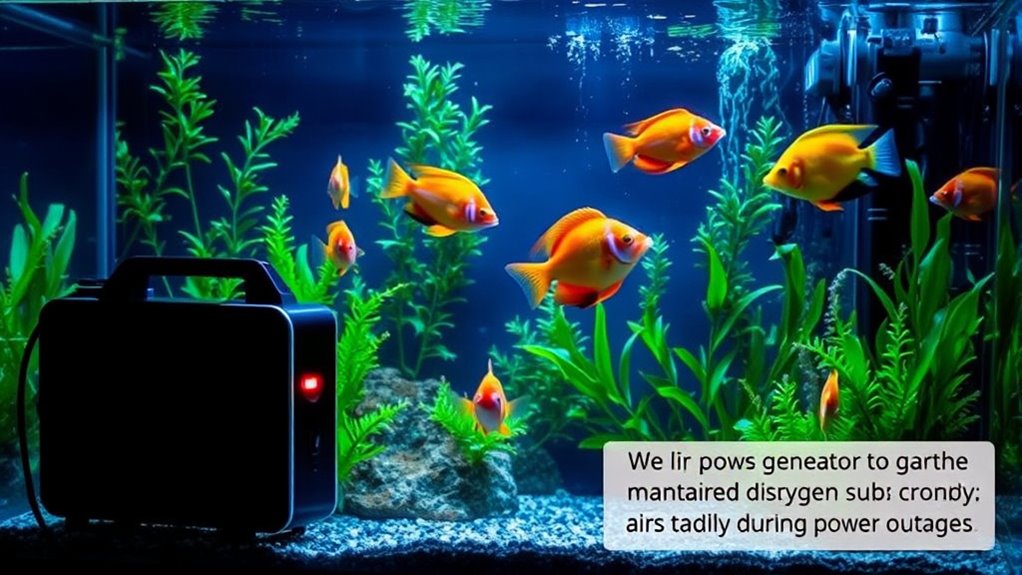
During a power outage, maintaining dissolved oxygen (DO) levels in your fish tank is essential because oxygen depletion can occur rapidly, threatening the health of your aquatic life. Within just 4 to 6 hours, many ornamental fish species start gasping at the surface as oxygen levels drop. Aeration devices like air stones and water movement systems such as filters are the primary means of gas exchange, but they stop working without power. Low DO causes stress, weakens immune responses, and can lead to fish mortality if not addressed quickly. Overstocked tanks, higher temperatures, and increased biological activity accelerate oxygen loss. To prevent disaster, you need backup methods like battery-powered pumps or manual agitation that temporarily restore oxygen, buying you valuable time during outages. Implementing smart automation can help monitor oxygen levels and alert you before critical thresholds are reached, enhancing your response during emergencies. Additionally, understanding oxygen diffusion principles helps optimize backup strategies to keep your fish safe. Recognizing the importance of aeration efficiency can ensure your backup systems are sufficient to meet your tank’s oxygen demands. Establishing redundant aeration systems can provide an extra layer of security in case primary devices fail, ensuring continuous oxygen supply. Properly sizing and maintaining these systems based on fish tank capacity is crucial for their effectiveness.
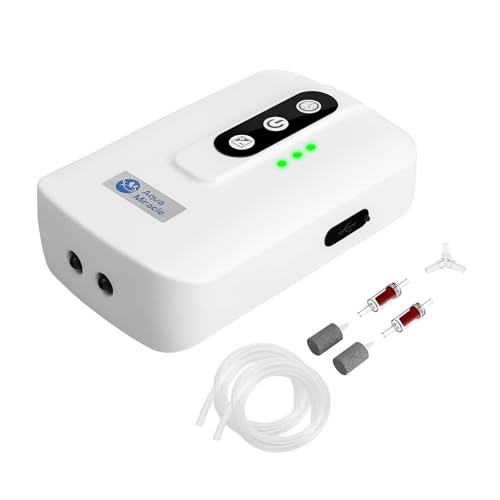
AquaMiracle Lithium Battery Powered Portable Dual Outlet Aquarium Air Pump for Fish Tank up to 120Gals, USB Rechargeable Aquarium Bubbler Aerator for Fishing, Power Outages and Emergency
PERFORMANCE – This aquarium air pump is designed for fish tank of 40-120 Gallons. Flow rate 11-24GPH (0.7-1.5LPM)…
As an affiliate, we earn on qualifying purchases.
As an affiliate, we earn on qualifying purchases.
Prioritizing Backup Power for Aeration and Water Movement
When a power outage occurs, restoring and maintaining water movement and aeration should be your top priority. Proper water flow ensures gas exchange, preventing oxygen depletion and buildup of waste. If your filtration system relies on electricity, have backup options like battery-powered pumps or manual methods ready. Small battery-operated air pumps can run for hours or days, keeping oxygen levels stable. Manual agitation—splashing or hand-stirring—can provide temporary relief but isn’t a long-term solution. Prioritize powering aeration devices first, as oxygen is essential for fish survival. Once oxygenation is secured, focus on water movement systems such as filters and return pumps. Maintaining consistent flow helps prevent stagnation and supports biological filtration, ultimately stabilizing water quality during an outage. Incorporating outdoor preparedness strategies, such as portable power sources, can enhance your ability to respond effectively to outages and protect your aquatic life. Additionally, understanding emergency power options can make a significant difference in maintaining a healthy environment for your fish during extended outages. Ensuring that you have backup power solutions in place can further safeguard your tank from the impacts of power disruptions. Being aware of power management techniques can help optimize your existing systems to reduce risks during unexpected outages, including implementing system redundancy to ensure continuous operation.

AQUANEAT Aquarium Vacuum Siphon, Fish Tank Water Changer, Gravel Cleaner, Hand Pump
Use for aquarium draining and filling water
As an affiliate, we earn on qualifying purchases.
As an affiliate, we earn on qualifying purchases.
Selecting and Managing Battery and Generator Options for Immediate Response

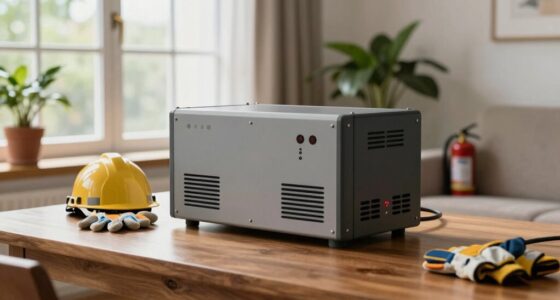
To respond quickly during outages, you need to choose the right battery and generator options that meet your tank’s demands. Planning your battery capacity guarantees your essential devices keep running long enough, while understanding generator safety helps prevent accidents. Proper management of these power sources keeps your fish safe and minimizes downtime. Additionally, incorporating ventilation considerations can help prevent heat buildup and ensure safe operation of your backup systems. Ensuring adequate airflow is crucial for maintaining safe conditions and preventing overheating of backup equipment. Recognizing the importance of professional consultation can further optimize your setup for safety and efficiency. Moreover, selecting a quiet inverter generator suitable for your needs can reduce noise pollution and disturbance during operation. Understanding power management techniques is essential for maximizing system reliability and safety during emergencies.
Battery Capacity Planning
Effective battery capacity planning begins with accurately evaluating your essential equipment’s power needs, including air pumps, small heaters, and filtration devices. Measure each device’s wattage and estimate the total load during a power outage. Use this data to determine how long your batteries or portable power stations can run your critical systems. For example, if your air pump draws 4W and your heater 50W, a 500Wh battery can power both for approximately 8 hours, accounting for inverter losses. Keep in mind that startup surges may require higher capacity. Consider redundancy with spare batteries or multiple power banks to extend runtime. Regularly test your setup under load, verify actual run times, and keep detailed records to ensure your backup system reliably meets your tank’s urgent oxygen and temperature needs. Additionally, understanding battery specifications can help optimize your power management for emergency situations. Incorporating power management strategies can further enhance your system’s efficiency and longevity during outages. Properly selecting generator options can also provide a reliable backup, especially for longer outages. Incorporating backup system maintenance into your planning ensures consistent performance when it matters most. Recognizing the importance of piercings in body health can also inform precautions to prevent complications during emergency scenarios.
Generator Safety Tips
Choosing the right generator or backup power source requires careful attention to safety and proper management. Always operate generators outdoors in well-ventilated areas to prevent carbon monoxide buildup. Never run generators inside your home, garage, or near open windows or vents. Use heavy-duty extension cords rated for outdoor use, and ensure they are in good condition. Keep generators dry and protected from rain or moisture to avoid electrical hazards. Regularly inspect and maintain your generator according to the manufacturer’s instructions, checking fuel levels and oil. Never refuel a hot generator; turn it off and let it cool first. Use a transfer switch to connect your generator safely to your aquarium system, preventing backfeeding and electrical shock risks. Practice safety drills to familiarize yourself with startup and shutdown procedures. Additionally, selecting energy-efficient and environmentally friendly backup options can enhance overall safety and sustainability during power outages. Incorporating automatic transfer switches can also improve response times and safety during outages, ensuring your aquarium remains protected without manual intervention. Proper generator placement is crucial to maximize safety and efficiency during an outage, and considering fuel storage safety helps prevent potential hazards during extended outages.

PAIZOO Fish Tank Digital Thermometer Accurate LED Display to ±0.9°F Tank Thermometer Aquarium Temperature Measurement Suitable for Fish, Axolotl, Turtle or Aquatic
HD LED Display: PAIZOO Aquarium Thermometer adopts LED screen to display temperature, LED can provide wide viewing angle…
As an affiliate, we earn on qualifying purchases.
As an affiliate, we earn on qualifying purchases.
Protecting Fish From Temperature Fluctuations When Power Is Interrupted
When power is interrupted, insulation and covering strategies can slow temperature changes and buy you time to restore heat or cooling. Passive heating techniques, like placing hot water bottles in sealed bags or moving the tank away from external walls, help stabilize tank temperature without electricity. Implementing these methods promptly can prevent stress and protect your fish during outages.
Insulation and Covering Strategies
During a power outage, insulating your fish tank is crucial to maintaining stable temperatures and preventing stress or death. Use blankets, Styrofoam, or foam board around the tank to reduce heat exchange with the environment. Cover the top with a lid or plastic wrap to minimize heat loss and trap warmth. Placing the tank away from exterior walls and windows reduces exposure to drafts and temperature swings. You can also float sealed hot water bottles or heat packs in the tank—ensuring they’re well-sealed to avoid water contamination. Keep a tight-fitting cover or hood on the tank to prevent heat escape. These strategies buy you time, especially when active heating isn’t available, helping your fish survive until power is restored.
Passive Heating Techniques
Passive heating techniques are essential for maintaining stable tank temperatures without electricity. By insulating your tank with foam boards, blankets, or styrofoam, you can reduce heat loss or gain, helping to keep water temperatures steady during outages. Moving the tank away from exterior walls or windows minimizes exposure to drafts and temperature swings. Shading the tank from direct sunlight prevents unwanted heat buildup, while placing the tank in a sheltered spot offers additional protection from cold drafts. Using sealed hot water bottles or heat packs wrapped in waterproof material can provide localized warmth. These strategies buy you valuable time, but require regular monitoring to prevent rapid temperature fluctuations. Combining insulation, placement, and simple heat sources allows you to better protect your fish when power is disrupted.
Practical Strategies for Maintaining Water Quality in Emergency Situations
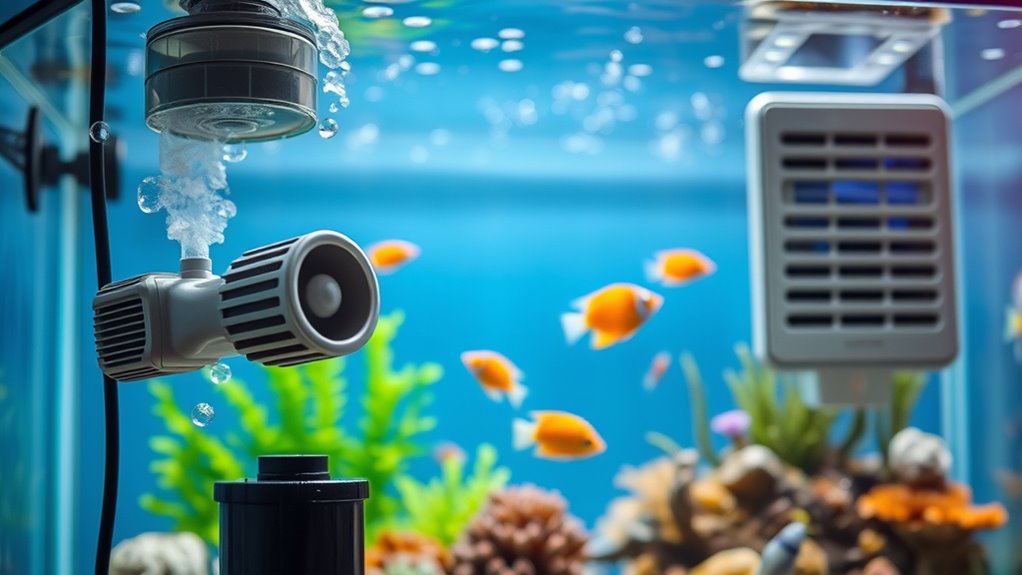
Maintaining water quality in an emergency requires swift and strategic action to prevent toxic buildup and guarantee the health of your aquatic life. Start by ensuring continuous aeration using backup power sources like battery-operated air pumps or USB power banks, which sustain dissolved oxygen levels. Perform partial water changes with conditioned water if ammonia or nitrite levels rise, but do so carefully to avoid temperature and oxygen shocks. Use sponge filters powered by battery air pumps as low-energy filtration alternatives. Monitor water parameters regularly with portable test kits to detect changes early. Reduce feeding to limit waste. Prioritize systems critical to survival, like biofilters and oxygenation devices, and keep spare batteries, fuel, and emergency supplies ready. Quick, targeted responses are essential to maintain water quality during power outages.
Implementing Monitoring and Testing to Ensure Backup Effectiveness

To guarantee your backup systems will perform when needed, you must regularly test and monitor their functionality under simulated outage conditions. Start by running scheduled drills that turn off main power to assess how long your battery-powered pumps, UPS, or generators can sustain critical devices like aerators and heaters. Use a thermometer and battery tester to verify temperature stability and power capacity during these tests. Document the results, noting any discrepancies or equipment failures. This practice helps you identify weak points, ensure compatibility, and adjust your backup plan accordingly. Periodic testing also familiarizes you with manual procedures and response times, reducing panic during real outages. Consistent monitoring and testing keep your backup systems reliable and ready to protect your fish tank’s health when power fails.
Preparing a Ready-to-Use Emergency Kit for Fish Tank Power Failures
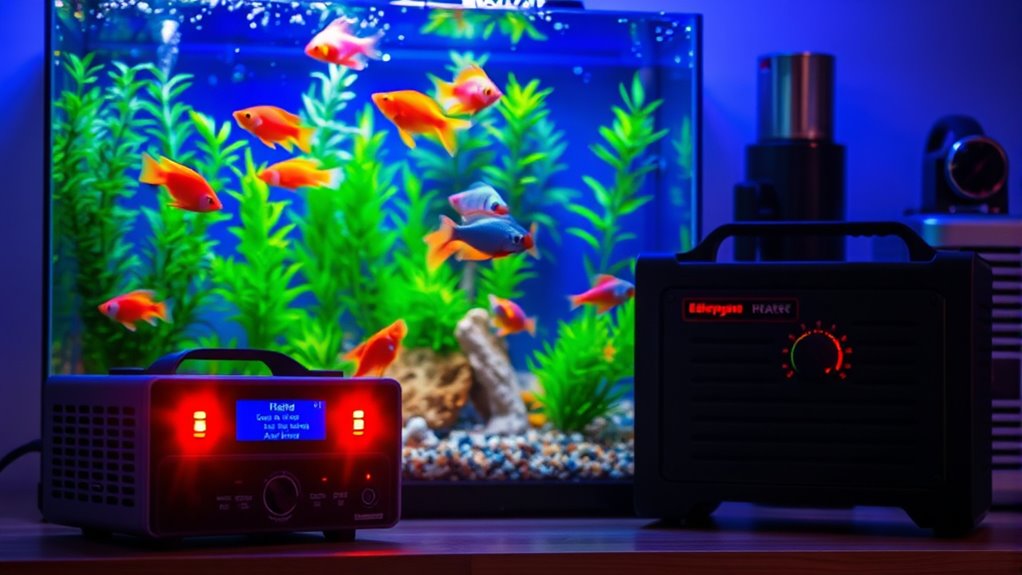
Having a ready-to-use emergency kit is essential for quickly responding to power failures and safeguarding your fish tank’s health. Your kit should include battery-powered air pumps or USB power banks to maintain oxygen levels immediately. Spare batteries for air pumps and small portable power stations ensure longer backup capacity. An inverter or UPS sized for essential devices helps keep filtration and heating running during outages. Insulating materials like foam or blankets can slow temperature swings. Keep a thermometer, battery tester, and clear instructions for manual aeration and water changes in the kit. Regularly test your setup under simulated outages to verify run-time and reliability. Store everything in a waterproof container, and maintain spare consumables, so you’re always prepared to act swiftly when power fails.
Frequently Asked Questions
How Do I Calculate the Total Battery Capacity Needed for My Tank’s Essentials?
To calculate the total battery capacity for your tank essentials, first list all devices you want to run, noting their wattage. Add up their total power consumption to find the combined wattage. Decide how many hours you need backup, then multiply the total wattage by those hours to get watt-hours (Wh). Finally, add a safety margin (about 20%) and divide by your battery’s voltage to determine the required amp-hour (Ah) capacity.
What Are the Best Manual Methods to Temporarily Increase Oxygen During Outages?
You can manually increase oxygen by agitating the water surface through splashing, hand-stirring, or creating waves. Quickly pouring water back into the tank from a height helps add surface agitation. Using a clean cup or container, splash water repeatedly to increase gas exchange. These methods are labor-intensive but effective short-term solutions to boost oxygen levels during power outages until backup systems are operational.
How Can I Prevent Temperature Swings if My Heater Fails During a Power Outage?
Imagine your tank as a delicate dance floor where temperature swings can cause chaos. To prevent this, insulate your tank with blankets, styrofoam, or foam lids to keep heat in. Move it away from outside walls or windows, and shade it from direct sunlight. Drop in a hot water bottle or sealed warm packs for quick warmth. Regularly monitor the temperature to guarantee stability during power outages.
Which Fish Species Require the Most Aggressive Backup Power Strategies?
You need the most aggressive backup power strategies for high-oxygen-demand species like trout, marine fish, and heavily stocked tanks. These fish are sensitive to oxygen drops and can die quickly without proper aeration. Prioritize continuous oxygen supply with battery-powered air pumps, backup generators, and multiple batteries. Regularly test your backup systems, keep spare batteries handy, and consider dedicated micro-backups for these species to make certain of their survival during outages.
How Often Should I Test My Backup Systems to Ensure They Work Properly?
You should test your backup systems at least quarterly to make certain they work properly. Regular testing helps you identify issues with runtime, startup, and overall reliability before an emergency occurs. Simulate outages by running your equipment under load for the expected duration, and review results. Keep detailed records of each test, and update your setup as needed to maintain confidence that your backup systems will perform when needed most.
Conclusion
When power fails, it’s essential to keep oxygen flowing first and control temperature second. By staying prepared and acting quickly, you can avoid a fish tank disaster before it’s too late. Think of it as riding a wave—you want to stay on top and keep everything steady. With the right backup plans and monitoring in place, you’ll safeguard your aquatic friends and prevent small issues from turning into big problems.