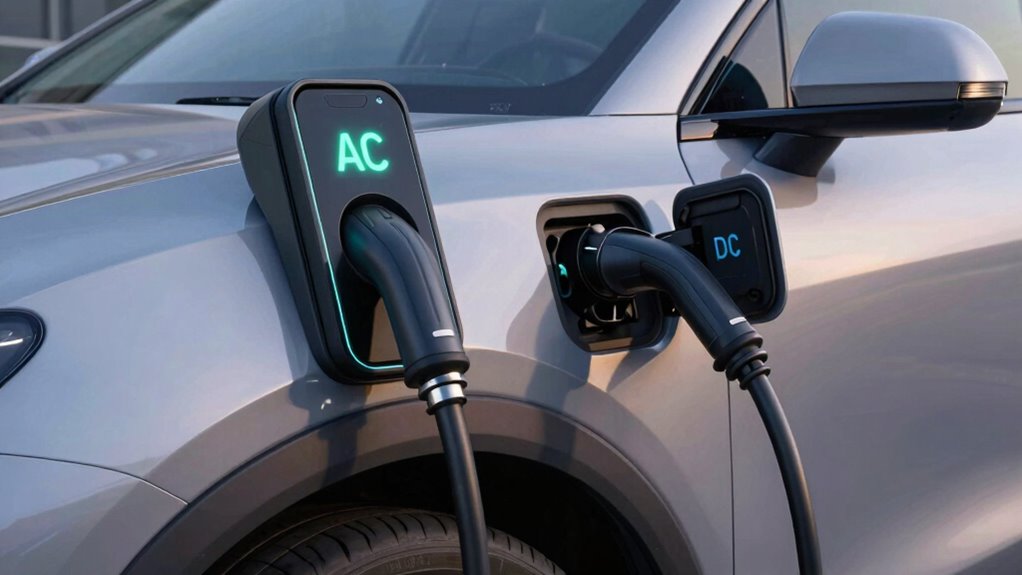

AC charging is gentler on your EV battery because it provides a steady, low-rate power flow that generates less heat and reduces voltage stress, helping to preserve battery health over time. In contrast, DC fast charging supplies high current directly to the battery, producing more heat and chemical stress, which can speed up degradation. Want to discover how to optimize your charging habits for maximum battery longevity? Keep exploring for expert tips.
Key Takeaways
- AC charging provides steady, low-rate power, generating less heat and voltage stress, making it gentler on batteries.
- DC fast charging delivers high current quickly, causing more heat and chemical stress, which accelerates battery degradation.
- Regular use of AC charging helps prolong battery lifespan by minimizing thermal and voltage fluctuations.
- Limiting DC fast charging reduces heat buildup and chemical wear, preserving battery capacity over time.
- Advanced thermal management and smart protocols further optimize charging to protect battery health regardless of method.

Autel Home Smart Electric Vehicle (EV) Charger up to 50Amp, 240V, Indoor/Outdoor Car Charging Station with Level 2, Wi-Fi and Bluetooth Enabled EVSE, 25-Foot Cable(Dark Gray)
【Trusted Brand】Autel has been making automotive intelligent diagnostic, inspection, and analysis products since 2004. The MaxiCharger AC Home…
As an affiliate, we earn on qualifying purchases.
As an affiliate, we earn on qualifying purchases.
Understanding the Basics of AC and DC Charging

To understand the basics of AC and DC charging, it’s important to know how each method delivers power to your electric vehicle. AC charging converts power onboard using your vehicle’s internal charger, making it suitable for home or workplace use. It provides a steady, lower power output, adding about 3-40 miles of range per hour, and involves simpler, more affordable infrastructure. Conversely, DC charging supplies power directly to the battery at the station, bypassing the onboard charger. This enables rapid charging, often reaching 80% in just 20-30 minutes, ideal for quick stops during long trips. DC chargers require heavy-duty connections and higher costs. While AC chargers are slower but gentler on the battery, DC chargers are designed for speed but can cause more battery stress over time. Additionally, understanding charging power levels can help you choose the most appropriate method for your needs. Charging speed is also an important factor to consider when selecting a charging type, as it impacts how quickly you can recharge your vehicle. Being aware of battery health and how different chargers affect it can help prolong your vehicle’s lifespan. Some chargers incorporate advanced cooling systems to minimize heat buildup and protect the battery during fast charging sessions. Moreover, new developments in smart charging technology aim to optimize charging efficiency and battery longevity.

FOCSPROD for NACS to CCS1 Charger Adapter, Max 500A 1000V Fast Charge NACS to CCS Adapter, CCS1 Electric Vehicle Charging Compatible with Tesla Superchargers -UL 2252
NOTE: Verify Compatibility Before Purchase -PLEASE CONFIRM your CCS electric vehicle manufacturer has enabled access to the respective…
As an affiliate, we earn on qualifying purchases.
As an affiliate, we earn on qualifying purchases.
How Charging Speed Affects Battery Wear
Charging speed directly impacts your battery’s health over time. Faster charging, especially with DC fast chargers, generates more heat and voltage stress, which can accelerate battery degradation. When you frequently rely on rapid charges, your battery’s capacity may decline faster, leading to reduced range over the years. On the other hand, slower AC charging maintains a gentler environment for your battery, minimizing heat buildup and voltage fluctuations. This energy-efficient approach helps preserve long-term capacity and extends the overall lifespan. Using a gentle charging method can significantly slow down the wear on your battery, making it more reliable over time. Additionally, managing your charging habits to include more slow charging sessions can further enhance battery longevity. Incorporating proper charging practices can also help prevent unnecessary stress on your battery cells. For example, avoiding high temperatures during charging can further reduce thermal stress, which is crucial for maintaining battery health. While quick charging is convenient for short trips or urgent needs, regular use of high-speed chargers can wear your battery faster. To keep your battery healthy, it’s best to balance fast charging with slower, more steady charging sessions whenever possible.
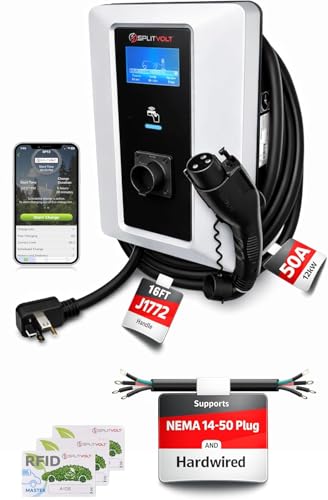
Splitvolt Level 2 Smart EV Charging Station – Connected, Adjustable 12kW, Display, Scheduling, RFID, NEMA 14-50, J1772, OCPP Compatible, Outdoor Rated, 16ft
PLUG AND PLAY AND HARDWIRE ALL IN ONE – Plug directly into a household 220v – 240V NEMA…
As an affiliate, we earn on qualifying purchases.
As an affiliate, we earn on qualifying purchases.
The Impact of Power Delivery on Lithium-Ion Batteries
The way power is delivered to a lithium-ion battery substantially influences its lifespan and performance. When you use AC charging, the power flows steadily and at a lower rate, reducing stress on the battery’s internal components. This gentle, consistent delivery minimizes heat buildup and voltage swings, helping preserve capacity over time. Conversely, DC charging supplies high current directly to the battery, often resulting in rapid temperature increases and voltage fluctuations. This high-impact delivery accelerates battery wear, especially with frequent use. The intense power influx can cause more thermal stress and degrade battery chemistry faster. Additionally, the charge cycle process is affected by the type of power delivery, influencing how many times a battery can be recharged before capacity diminishes. Moreover, the charging method can influence the overall efficiency and safety of the charging process. Proper management of charging parameters is essential to prevent thermal stress and ensure longevity. Hence, the method of power delivery plays an essential role in battery longevity, with AC charging generally being gentler and better suited for regular, long-term use.

Electric Vehicle & Hybrid Diagnostics: EV Battery Systems, BMS, Thermal Management, Power Electronics, and Software Troubleshooting for Modern Cars (AutoTech series Book 4)
As an affiliate, we earn on qualifying purchases.
As an affiliate, we earn on qualifying purchases.
Comparing Heat Generation in AC Versus DC Charging
When you compare heat generated during AC and DC charging, you’ll notice that DC charging produces considerably more heat due to higher current flow directly into the battery. This intense current causes increased electrical resistance and internal friction, generating more thermal energy. In contrast, AC charging delivers lower, steadier power through the onboard charger, resulting in less heat buildup. Because DC fast chargers push large amounts of energy quickly, the battery’s internal components face higher thermal stress. This excess heat accelerates chemical reactions that degrade battery materials over time. As a result, frequent DC fast charging can lead to increased heat-related wear, reducing long-term battery health. Additionally, battery thermal management systems are critical in mitigating heat buildup during high-rate charging. Proper thermal regulation in charging stations also plays a vital role in protecting the battery from overheating. Moreover, charging speed influences heat production, with faster charging rates generally generating more heat. Conversely, AC charging’s gentler, consistent power flow minimizes heat production, helping preserve your battery’s lifespan. Furthermore, implementing smart charging protocols can help optimize heat management and extend battery longevity. In addition, the thermal behavior of batteries varies based on their chemistry and design, impacting how they respond to different charging methods.
The Role of Charging Voltage and Current in Battery Degradation
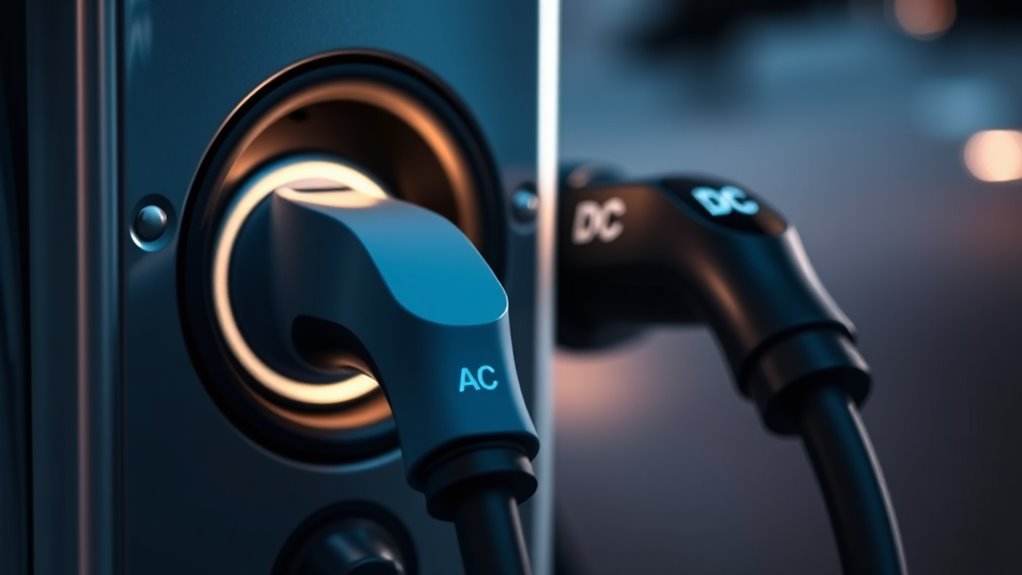
Higher voltages and currents during charging accelerate battery degradation because they increase internal heat and stress the chemical components. When you charge at high voltage or current, your battery experiences more electrical pressure, which can cause faster breakdown of the lithium-ion materials. This leads to increased formation of solid electrolyte interphase (SEI) layers and other degradation products, reducing capacity over time. Solid electrolyte interphase (SEI) layers are crucial in battery chemistry, but their excessive formation can hinder performance. High current flow also generates more heat, which further accelerates chemical aging. Rapid charging pushes these limits, causing more strain on the battery’s internal structure. Conversely, lower voltage and current levels reduce stress, helping preserve battery health. By controlling voltage and current during charging, you can slow down degradation and extend your battery’s lifespan. Proper charging protocols are essential for maintaining optimal battery performance and longevity.
Long-Term Battery Health: What the Studies Say
Your charging habits, especially how often and how quickly you recharge, directly impact your battery’s long-term health. Studies show that frequent use of fast charging methods can accelerate degradation, but the effects are less clear in early battery life. Understanding these factors helps you make smarter decisions to extend your battery’s lifespan. Additionally, charge cycles play a significant role in overall battery longevity, influencing how many times the battery can be charged and discharged before performance declines. The initial battery quality also influences how well it withstands repeated charging and discharging over time. Proper charging practices are essential for maintaining optimal battery health over the long term. Moreover, choosing between AC and DC charging methods can influence the rate of battery wear, with some studies indicating charging method impacts overall longevity.
Impact of Charging Frequency
Research indicates that the frequency of charging sessions plays a significant role in long-term battery health. Frequent charging, especially with high-power DC stations, can accelerate battery degradation due to increased heat and voltage stress. Studies show that regularly using fast charging may lead to faster capacity loss over time, though early data suggests the impact isn’t always statistically significant. Conversely, consistent use of slower AC charging minimizes stress, helping preserve battery longevity. You should avoid frequent deep discharges and rapid top-ups, especially in hot or cold environments. Limiting fast charging to essential trips and sticking to regular, moderate charging sessions can extend your battery’s lifespan. Over time, fewer high-stress charges mean your battery maintains capacity longer, ultimately saving you money and reducing replacement frequency. Additionally, understanding battery degradation mechanisms can help you make better decisions about charging habits to prolong battery life.
Battery Degradation Factors
Long-term battery health is influenced by several key factors that can accelerate or slow degradation over time. High voltage, frequent fast charging, and elevated temperatures speed up wear, while moderate charging and cooler conditions help preserve capacity. Regularly charging above 80% or letting batteries drop below 5% increases stress, leading to faster degradation. High current from DC fast chargers produces heat that damages cells, while lower, steady AC charging minimizes thermal strain. Battery age also plays a role; all lithium-ion batteries naturally decline over time, regardless of charging method. Studies show that frequent use of rapid DC charging can accelerate capacity loss, but the impact varies based on usage patterns. Managing charge levels, avoiding extreme conditions, and choosing appropriate charging methods can extend your battery’s lifespan.
Practical Recommendations for Daily Charging Habits
To keep your battery healthy, prioritize using AC charging for your daily needs, as it’s gentler and helps extend lifespan. Limit your use of DC fast chargers to essential trips to prevent unnecessary wear. Also, avoid charging your battery to 100% or letting it drop below 5%, as extreme states can speed up degradation.
Prioritize AC Charging Daily
For everyday charging, prioritizing AC charging is a smart choice because it offers a gentle, steady power supply that minimizes battery wear. Using AC at home or work helps maintain battery health by delivering consistent, lower power levels that reduce heat buildup and voltage stress. Aim to keep your battery between 20% and 80% to avoid overcharging or deep discharges, which can accelerate degradation. Charging overnight with AC allows your vehicle to recharge gradually, preserving long-term capacity. While it may take longer than DC fast charging, this method is less taxing and better for your battery’s lifespan. Making AC your primary charging method for daily use guarantees your battery remains healthier, extending its overall life and reducing costly replacements.
Limit DC Fast Use
While prioritizing AC charging helps protect your battery during daily use, it’s important to be mindful about how often you rely on DC fast charging. Frequent use of high-power DC chargers can accelerate battery wear due to increased heat and voltage stress. Limit your DC fast charges to essential trips or when you need quick top-ups. Avoid using DC fast charging regularly, especially if your battery is already warm or near full. Instead, rely on slower AC charging for daily topping off, which is gentler on your battery’s health. By controlling your fast charging habits, you help prolong your battery’s lifespan and maintain *ideal* performance over time. Remember, moderation is key to balancing convenience with long-term battery health.
Avoid Extreme Battery States
Avoid letting your battery sit at extreme levels—either very low or very high—for extended periods. Keeping your charge between 20% and 80% reduces stress on the battery and slows degradation. Charging to 100% regularly can cause unnecessary wear, especially if you don’t need the full range. Similarly, allowing the battery to drop below 5% may increase the risk of capacity loss and reduce lifespan. Aim to plug in your vehicle before hitting critically low levels and avoid leaving it at full charge overnight unless necessary. Maintaining moderate charge levels minimizes heat buildup and voltage strain, both of which accelerate aging. By sticking to more balanced charge states, you help preserve your battery’s health over time and extend its overall lifespan.
When to Use AC Versus DC Charging for Your EV
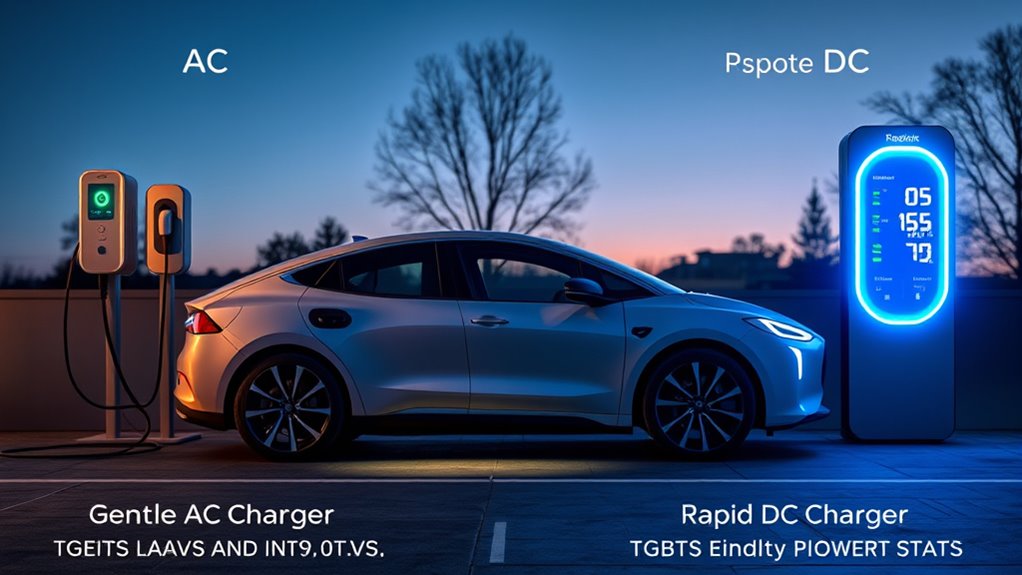
Choosing the right charging method depends on your daily driving habits and immediate needs. Use AC charging when you primarily charge at home or work, especially overnight, for gentle, steady power that preserves your battery. It’s ideal for regular top-offs and long-term health. Opt for DC fast charging when you need a quick recharge during long trips or on short notice, despite its higher wear risk.
Use AC charging for daily top-offs and battery health; choose DC fast charging only for urgent, short-term needs.
Consider these points:
- Use AC for daily, routine charging to extend battery life.
- Turn to DC fast charging for urgent needs or when time is limited.
- Avoid frequent DC charging if you want to maximize battery longevity.
Balancing these options helps you maintain your EV’s health while meeting your daily schedule.
The Future of Battery Management and Charging Technologies
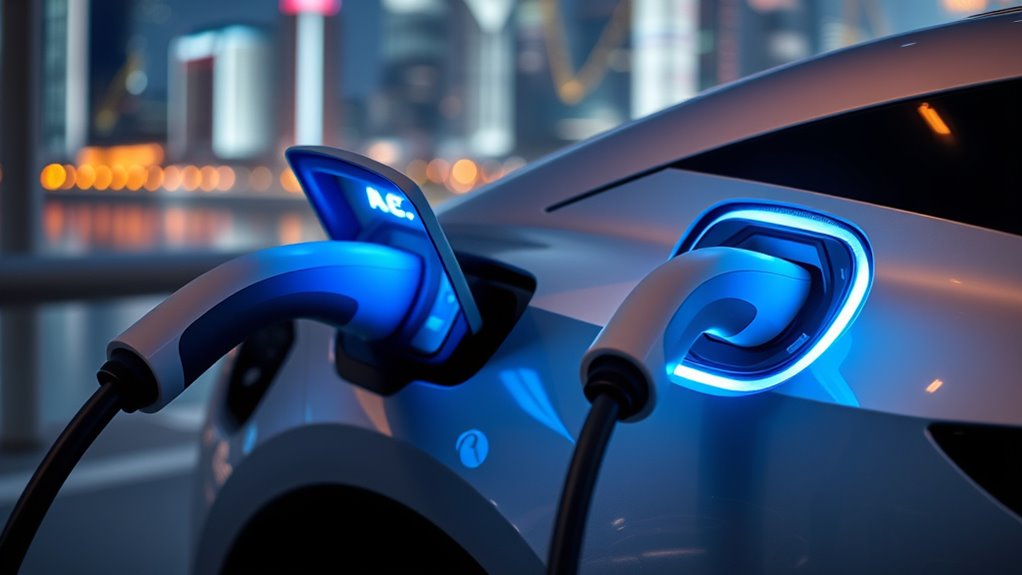
The future of battery management and charging will rely on smarter systems that optimize performance and lifespan. You’ll see advanced algorithms that adjust charging in real-time, preventing battery stress and wear. Next-generation fast charging will become more efficient, reducing time and preserving battery health simultaneously.
Advanced Charging Algorithms
Advancements in charging algorithms are transforming how electric vehicles manage power delivery, making the process smarter and more efficient. These algorithms dynamically adjust charging parameters based on battery health, temperature, and usage patterns, optimizing for longevity and performance. They enable precise control over voltage and current, reducing stress during charging cycles. With intelligent algorithms, chargers can:
- Modulate charging rates in real-time to prevent overheating and degradation.
- Implement multi-stage charging that adapts to battery conditions, extending lifespan.
- Coordinate between AC and DC charging to balance speed with battery health, ensuring safer, longer-lasting batteries.
Smart Battery Monitoring
Smart battery monitoring is revolutionizing how electric vehicles optimize performance and lifespan by providing real-time data on battery health, temperature, and charge levels. With this technology, you can track your battery’s condition constantly, ensuring it stays within safe operating ranges. It alerts you to potential issues like overheating or capacity loss early, allowing for proactive maintenance and reducing the risk of sudden failures. By analyzing this data, your vehicle’s management system adjusts charging rates to minimize stress, especially during fast charging sessions. This targeted approach helps extend battery life and improves efficiency. As monitoring becomes more sophisticated, it enables smarter charging strategies, balancing performance with longevity. Ultimately, smart battery monitoring gives you greater control, ensuring your EV’s battery remains healthy and reliable over time.
Next-Gen Fast Charging
Next-generation fast charging is set to transform how you manage your EV’s battery life and charging experience by integrating advanced technologies that optimize speed, safety, and longevity. These innovations include smarter power management, improved thermal controls, and adaptive algorithms that monitor battery health in real-time. Here are three key advancements:
- Dynamic Charging Rates: Adjusts power delivery based on battery temperature and state of charge to minimize stress.
- Solid-State Batteries: Offer higher energy density, faster charging, and better thermal stability.
- Wireless Charging: Enables contactless, on-the-go charging, reducing wear and tear on connectors.
These technologies aim to make fast charging safer and more sustainable, extending your battery’s lifespan while reducing charging times. The future promises smarter, gentler, and more efficient energy replenishment for your EV.
Tips to Maximize Battery Lifespan Regardless of Charging Method
Maximizing your EV battery’s lifespan requires mindful charging habits, regardless of whether you’re using AC or DC. Keep your battery between 20% and 80% whenever possible, avoiding full charges or deep discharges that stress the cells. Use slower charging speeds for daily top-ups, as this generates less heat and reduces voltage strain. Limit frequent rapid DC charging to essential trips, as high currents accelerate degradation over time. Store your vehicle in a cool, shaded place and avoid exposing it to extreme temperatures, which can harm battery health. Regularly drive your EV to prevent long periods of inactivity that can cause capacity loss. By adopting these habits, you’ll help extend your battery’s overall life, ensuring reliable performance and maximizing your investment.
Frequently Asked Questions
Does Charging Speed Directly Correlate With Battery Degradation?
Charging speed does directly impact battery degradation. Faster charging, especially with DC, generates more heat and voltage stress, which accelerates battery wear over time. Slow or moderate charging, like AC charging at lower power levels, produces less heat and preserves your battery’s health longer. To extend your battery’s lifespan, avoid frequent rapid charging and stick to slower, steady charging whenever possible.
Can Frequent Fast Charging Significantly Shorten Battery Lifespan?
Frequent fast charging is like running a marathon every day; it can wear down your battery faster. Studies show that high-voltage quick charges accelerate degradation, with Nissan Leaf owners experiencing 16% more capacity loss. While occasional rapid charging is fine, relying on it daily stresses the battery, reducing its lifespan over time. To keep your battery healthy, use fast charging sparingly and stick to regular, slower charging when possible.
How Does Ambient Temperature Influence Charging-Related Battery Wear?
Ambient temperature greatly affects your battery’s wear during charging. When it’s hot, high temperatures accelerate chemical reactions, increasing heat and voltage stress, which can speed up degradation. Cold temperatures slow down chemical processes, making charging less efficient and potentially causing strain. You should charge in moderate temperatures when possible, avoid extreme heat or cold, and consider preconditioning your battery to optimize health and longevity during charging sessions.
Is There a Safe Maximum Number of DC Fast Charges per Month?
You can’t put a cap on how many DC fast charges are safe each month, but “everything in moderation” still applies. Frequent rapid charging accelerates battery wear over time, so try to limit it to essential trips. Use AC charging for daily needs whenever possible, and reserve DC fast charging for emergencies or long trips. Keep an eye on your battery’s health and avoid overdoing fast charges to extend its lifespan.
Do Newer EV Models Handle Fast Charging Better Than Older Ones?
You’ll find newer EV models generally handle fast charging better than older ones, thanks to improved battery chemistry and management systems. These advancements help reduce heat and voltage stress during rapid charging, extending battery life. However, it’s still wise to limit fast charging sessions when possible, as frequent use can accelerate degradation. Always follow your vehicle’s manufacturer guidelines to promote battery health and ensure longevity.
Conclusion
Choosing between AC and DC charging isn’t just a simple decision—it’s the secret to revealing your battery’s immortality. By understanding how each method impacts heat, voltage, and wear, you hold the power to turn your EV’s lifespan into an unstoppable legend. Follow smart habits, pick the right charging method at the right time, and watch your battery defy the limits of time and wear. Your car’s future depends on these choices—make them wisely!