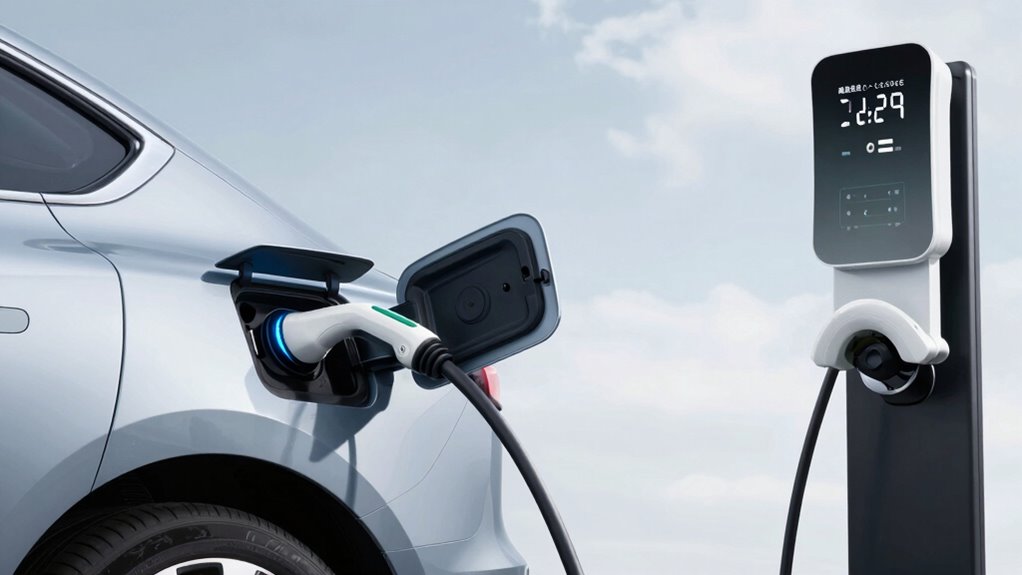

To safely charge a power station in your car, use compatible ports like the 12V socket or USB-C with quality cables designed for your devices, avoiding low-quality or damaged cords. Slow charging can happen due to low power output, poor connections, or battery issues, so check for proper setup and cables. Understanding these factors helps prevent damage and improve charging speed—keep exploring to learn how to optimize your vehicle’s charging process safely.

Get backup power and energy gear delivered free with Prime
- Fast, free delivery on millions of items
- Prime Video, Amazon Music and more included
- Member-only deals all year
Key Takeaways
- Use compatible cables and ports to match your vehicle’s charging system and power station input specifications.
- Avoid overloading the vehicle’s electrical system by not exceeding recommended power levels during charging.
- Ensure cables are high-quality, rated for the wattage, and properly connected to prevent slow charging or damage.
- Slow charging often results from low power station output, damaged cables, or poor connections; address these issues first.
- Regularly inspect and maintain cables, connectors, and your vehicle’s battery health to optimize charging speed and safety.
Understanding Car Charging Ports and Power Station Compatibility
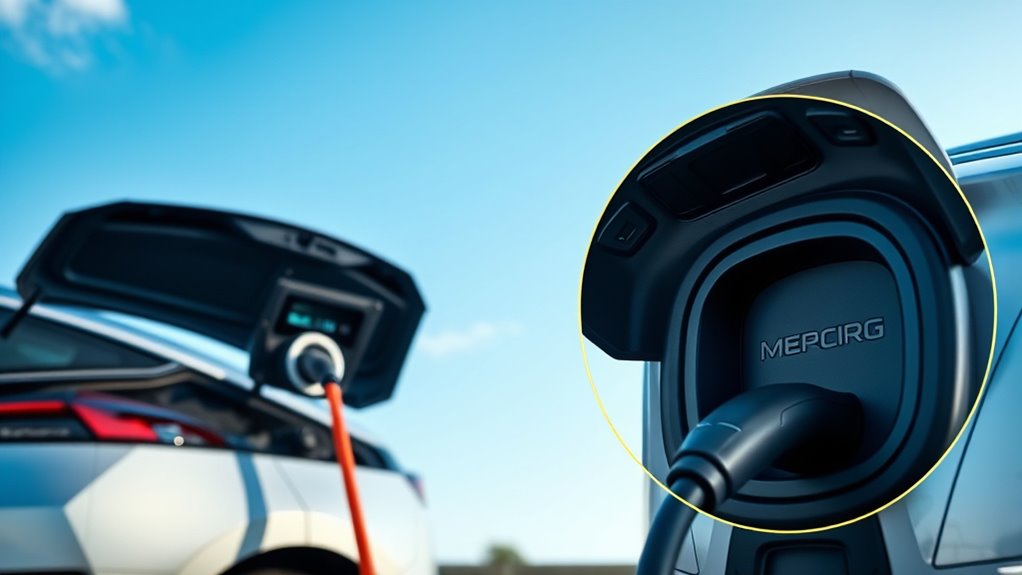
To effectively charge your power station in a car, it’s essential to understand the different types of car charging ports and how they match with your power station’s input options. Battery chemistry plays a crucial role here, as it influences how the power station handles charging cycles and overall longevity. For example, lithium-ion batteries require specific voltage and current levels to maximize lifespan, so compatibility with your vehicle’s charging ports is vital. Many cars feature USB-C, 12V DC, or AC outlets—each with different power outputs. Ensuring your power station supports the port types and voltage ranges prevents damage and guarantees efficient charging. Understanding Battery chemistry can help you select appropriate charging methods and extend your device’s lifespan. Additionally, knowledge of power transfer efficiency can help you choose faster and more reliable charging options. Recognizing charging standards across different vehicles and power stations can further optimize your charging setup. Being aware of current limitations is also important to prevent overloading your power station or vehicle’s electrical system. Moreover, understanding input power specifications can assist in selecting the most suitable charging method for your setup. By understanding these connections, you can optimize charging cycles and protect your power station’s battery chemistry for longer, safer use.
Safe Charging Methods for Your Power Station in a Vehicle
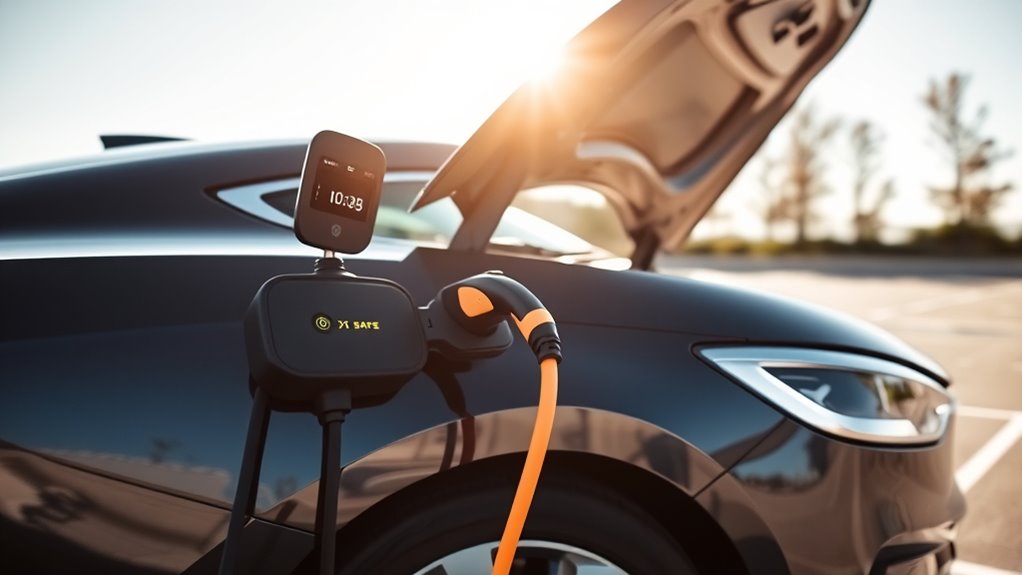
You can safely charge your power station using your vehicle’s USB ports or the 12V socket, but it’s essential to use the right cables. Confirm the cables are compatible with your power station to prevent damage or safety hazards. Always follow manufacturer instructions to keep your setup secure during charging. Additionally, ensuring your vehicle’s electrical system can handle the charging load helps maintain safe and reliable power transfer. Being aware of smart‑home integrations can also help you monitor and control your power station remotely, enhancing overall safety and convenience. To optimize your setup, consider the role of current capacity in your vehicle’s electrical system to avoid overloading during charging. Properly managing affiliate relationships can also ensure you select trusted accessories that are safe for your devices. Moreover, understanding lifevest advisors’ guidance on safe investments can indirectly inform your approach to managing electronic equipment safely and securely.
Use Vehicle USB Ports
Using your vehicle’s USB ports is a convenient way to charge a power station on the go, but it’s important to do so safely. First, confirm your power station supports charging via USB; not all models do. Second, avoid using low-quality or incompatible cables that can cause overheating or damage. Third, remember that vehicle USB ports typically provide less power than wall outlets, so charging may be slow. For faster charging, consider integrating solar panels when parked or using dedicated wall outlets at home. These options can considerably speed up the process and reduce strain on your car’s electrical system. Always monitor your device during charging to prevent overheating, and avoid overusing USB ports while the vehicle engine is off. Additionally, checking device compatibility can help ensure safe and efficient charging.
Connect to 12V Socket
Connecting your power station to the vehicle’s 12V socket offers a reliable and straightforward way to charge on the go. This method is compatible with most vehicle types, including cars, trucks, and RVs. However, consider your power station’s battery chemistry; some chemistries, like lithium-ion, handle frequent charging better than others. Using the 12V socket provides a steady, low-voltage current that’s generally safe if you use a proper adapter. Keep in mind that charging speed may be slow, especially if your vehicle’s engine is off. Always verify your socket can supply sufficient power to avoid draining your vehicle’s battery. This method is ideal for casual, low-power recharges but not for rapid or high-capacity needs. Additionally, safe installation practices help ensure your setup remains secure and reliable. Properly connectors and adapters also reduce the risk of electrical issues during charging. Be aware that the vehicle’s electrical system can influence charging efficiency and safety, so understanding your vehicle’s capabilities is important. Selecting the right power management system can further optimize your charging process and protect both your power station and vehicle. Moreover, understanding the thermal behavior of your power station during charging can help prevent overheating and ensure longevity.
Use Proper Cables
To guarantee safe and efficient charging, selecting the proper cables is essential. Using the right cables prevents damage and guarantees maximum power transfer. First, always choose heavy-duty, appropriately rated cables designed for your power station’s wattage to avoid overheating. Second, if you’re considering wireless charging options, ensure your cables support fast data transfer and compatible connectors. Third, when integrating a solar panel, use cables with weatherproof insulation and the correct connectors to handle outdoor conditions. Additionally, selecting vetted cables ensures compatibility and safety during all charging methods. Always verify that your cables meet safety standards for electrical connections to prevent hazards and ensure reliable operation. Proper cables also minimize power loss, ensuring your device charges as quickly and efficiently as possible. Incorporating reliable electrical components can further enhance the safety and efficiency of your charging setup. Being aware of Gold IRA markets can help investors find trustworthy providers for precious metal investments.
Recognizing Slow Charging and Its Causes

If your power station charges slowly, it might be due to low power output from your vehicle or charger. Check if your charging cable is damaged or not connected properly, as this can also reduce charging speed. Identifying these issues helps you get your power station charged efficiently again. Additionally, ensuring that your charging equipment meets safety standards can prevent potential hazards and optimize charging performance. Regularly inspecting your setup and being aware of industry trends can further improve your charging process and safety. Being familiar with safe charging practices can help you avoid risks and ensure reliable operation. Moreover, verifying that your vehicle’s electrical system can support the necessary power output is crucial for efficient charging. Staying informed about technological advancements in charging technology can also help you adopt newer, faster, and safer methods.
Low Power Output
Slow charging when using a power station in your car can be frustrating, but understanding the causes helps you troubleshoot effectively. Low power output often results from issues like battery drain or power fluctuations that limit charging speed. If your vehicle’s battery drain is high, it reduces available energy for the power station, slowing down charging. Power fluctuations caused by inconsistent car electrical systems can also interfere with steady power flow. To address these issues, consider these factors:
- Vehicle electrical load, which can cause inconsistent power delivery.
- Battery health, where an aging or weak battery drains power faster.
- Connection quality, as loose or corroded contacts reduce effective power transfer.
Charging Cable Issues
Charging cable issues are a common cause of slow charging in your car’s power station setup. If the cable isn’t durable or compatible with your device, charging slows down considerably. Check the cable’s integrity—frayed wires or bent connectors indicate poor cable durability. Also, ensure the connector fits snugly; incompatible connectors cause poor contact and slow charging. Visualize these issues with the following:
| Cable Condition | Compatibility | Charging Speed |
|---|---|---|
| Frayed or worn | Wrong connector type | Very slow or none |
| Loose connection | Incompatible port | Intermittent charge |
| Damaged insulation | Mismatched voltage | Extended charging time |
Using the right, durable cable with proper connector compatibility speeds up charging and prevents issues. Additionally, ensuring proper air purifier maintenance can help keep your devices running efficiently, as dust and debris can also impact electronic performance. Regularly checking your electric dirt bike components and connections can help prevent similar charging issues in other devices.
Factors That Affect Charging Speed in a Car
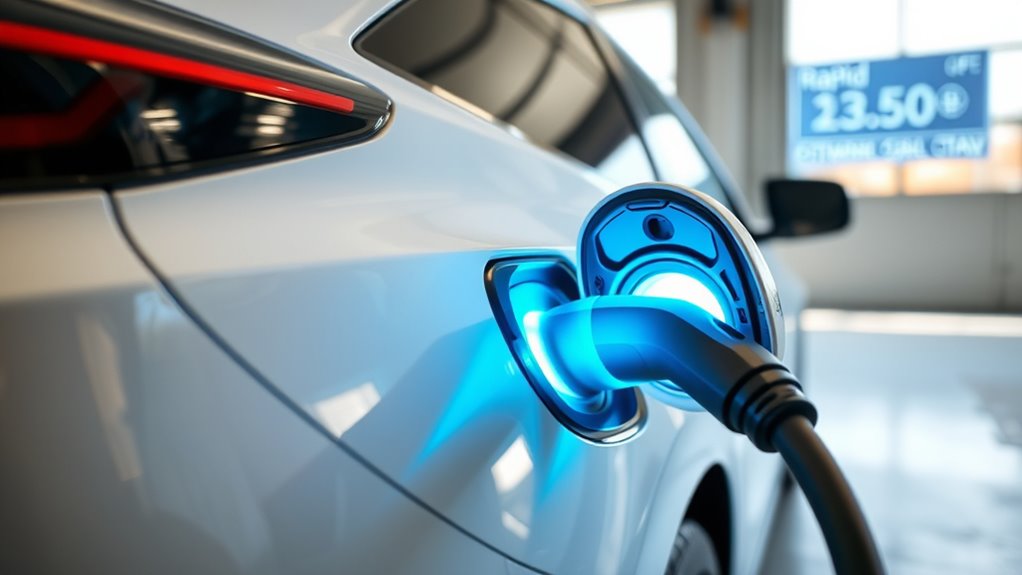
Several factors influence how quickly your car’s power station charges, and understanding them can help you optimize the process. One key factor is the battery capacity; larger capacities take longer to charge. Ambient temperature also plays a role, as extreme cold or heat can slow charging or damage the battery. Additionally, the power source’s output capacity impacts speed—more powerful outlets charge faster.
To sum up:
- Battery capacity determines overall charging time.
- Ambient temperature can either accelerate or hinder the process.
- The charging source’s power output directly affects how quickly your power station charges.
Tips to Optimize Charging Efficiency Safely
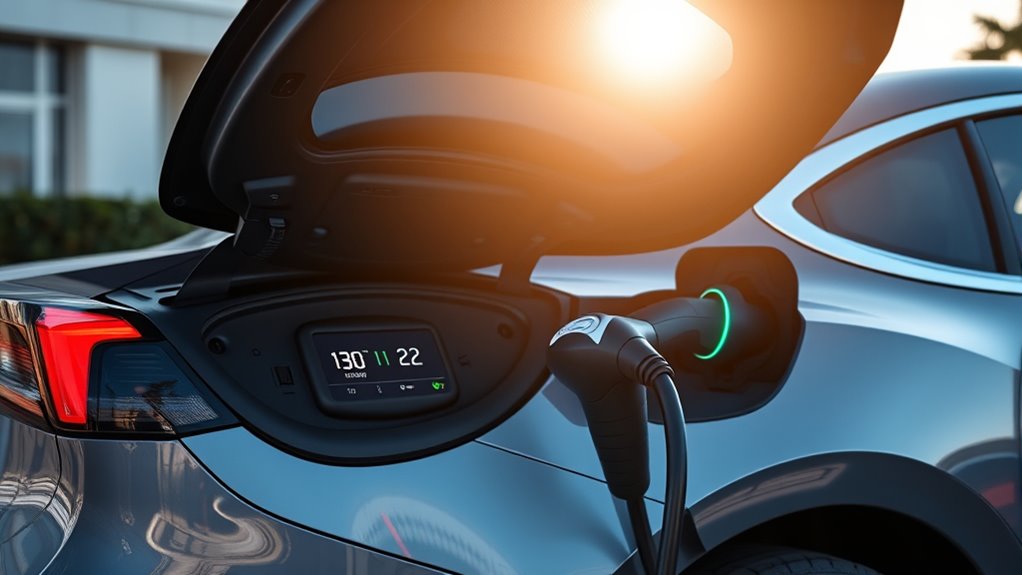
To maximize your power station’s charging efficiency while keeping safety in mind, it’s important to follow best practices that prevent damage and guarantee ideal performance. Regular battery maintenance ensures your device stays healthy, reducing the risk of overheating or failure. Using portable solar panels can be an efficient, eco-friendly way to charge, especially in remote settings. Always monitor charging levels and avoid overcharging to protect the battery’s lifespan. Keep your cables in good condition and avoid using incompatible chargers. Here’s a quick guide to optimize your charging experience:
| Tip | Benefit | Emotion |
|---|---|---|
| Use portable solar | Eco-friendly, cost-effective | Peace of mind |
| Maintain batteries | Long-lasting performance | Confidence |
| Avoid overcharging | Extends battery life | Satisfaction |
| Check cables regularly | Prevents damage, ensures safety | Security |
Common Mistakes to Avoid When Charging in a Vehicle
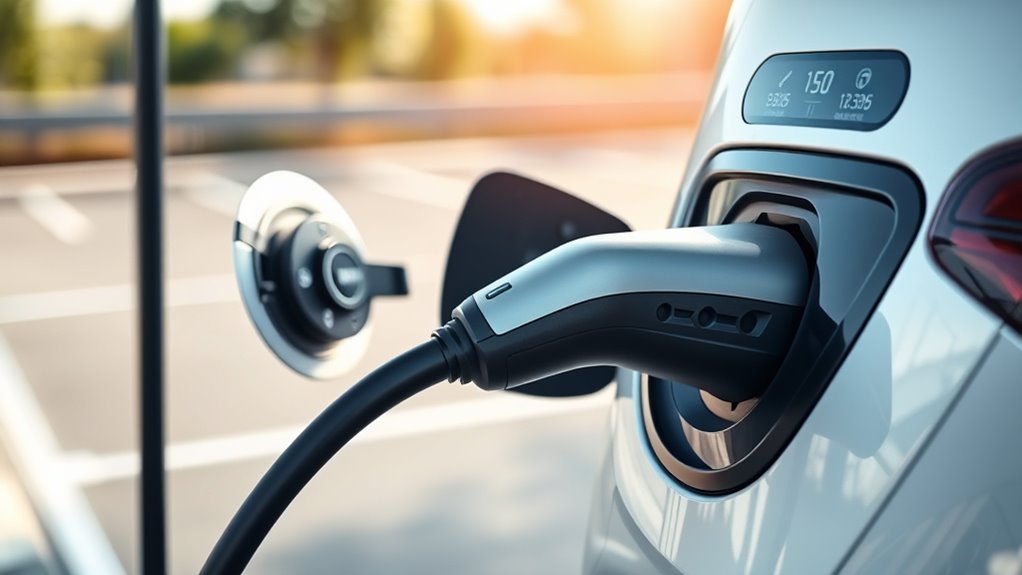
When charging your power station in a vehicle, one common mistake is using incompatible or low-quality cables, which can lead to poor connections, slow charging, or even damage. To guarantee proper battery maintenance and maintain car interior safety, avoid these pitfalls:
- Using damaged or uncertified cables that may cause short circuits or overheating.
- Ignoring manufacturer guidelines for charging ports, risking electrical issues.
- Overloading your vehicle’s power outlets, which can strain the car’s electrical system and compromise safety.
Frequently Asked Questions
Can Charging Damage My Car’s Battery or Electrical System?
Charging a power station in your car generally won’t damage your vehicle’s battery or electrical system if you follow proper procedures. It helps maintain your battery health by preventing deep discharges. However, if you connect or disconnect improperly, it can cause electrical load spikes, risking damage. Always use compatible chargers, avoid overcharging, and monitor the process to make sure your car’s battery remains healthy and safe during charging.
Is It Safe to Leave a Power Station Charging Overnight in a Vehicle?
Leaving a power station charging overnight in your vehicle can be safe if you monitor it regularly. However, you should watch for battery overheating and electrical interference, which could pose risks. make certain the power station has built-in safety features like overcharge protection. If you notice any signs of overheating or interference, disconnect it immediately. Always follow the manufacturer’s instructions to minimize potential hazards and protect your vehicle’s electrical system.
What’s the Maximum Charging Time Recommended for a Power Station in a Car?
You should limit charging your power station in a car to around 4-6 hours to avoid turning your vehicle into a mini power plant. Overcharging can damage the battery capacity, making it less reliable. Use high-quality charging cables and keep an eye on the time. Think of it as a race against the clock—charging just enough to keep your device alive without risking a battery meltdown that could fill your car with sparks.
Are There Specific Car Models Better Suited for Fast Charging Power Stations?
Certain car models are better suited for fast charging power stations because they offer compatible vehicle compatibility and the right charging port types. Look for vehicles with fast-charging capabilities, such as those with CCS or CHAdeMO ports. These models support higher power input, reducing charging times. Always check your vehicle’s specifications to confirm it matches the power station’s output and port type for efficient, safe fast charging.
How Do External Factors Like Temperature Affect Charging Speed and Safety?
Ambient temperature considerably impacts your charging speed and safety. When it’s too cold or hot, your power station may charge slower or risk overheating, so monitor conditions closely. Good insulation quality helps maintain ideal temperatures, protecting your equipment and ensuring efficient charging. Keep the power station in a shaded, cool spot during hot weather and avoid extreme cold to maximize charging speed and prevent potential safety issues.
Conclusion
Charging your power station in a car can be safe and efficient if you follow the right methods. While slow charging might seem inconvenient, it’s often the safest option to protect your equipment and vehicle. Don’t worry—by understanding your ports and avoiding common mistakes, you’ll maximize efficiency without risking damage. So, take your time, stay informed, and enjoy the reliable power on the go without compromising safety or performance.
Halloween Picks
halloween
As an affiliate, we earn on qualifying purchases.