To keep your hotspot running smoothly without draining your battery, activate power saving mode and manage connectivity settings—turn off Wi-Fi, Bluetooth, and unnecessary location services. Limit background apps and notifications, keep the phone in open, elevated spots, and place connected devices close for a stronger signal. Regularly restart your device and update software for peak performance. Following these tips helps balance connection strength and battery life—discover more ways to optimize your hotspot effectively.
Get ready for Prime Big Deal Days — try Prime free
Exclusive member deals on October 6–7, plus fast free delivery. Cancel anytime.
As an affiliate, we earn on qualifying purchases.
Key Takeaways
- Enable power saving mode to extend battery life during hotspot use while balancing performance needs.
- Turn off Wi-Fi, Bluetooth, and GPS when not in use to reduce unnecessary battery drain.
- Position your device in open, elevated areas for a stronger signal and less power consumption.
- Limit background app activity and notifications to prevent extra battery and data usage.
- Regularly restart your device and keep software updated to maintain optimal hotspot performance and battery health.
Activate Power Saving Mode for Extended Battery Life
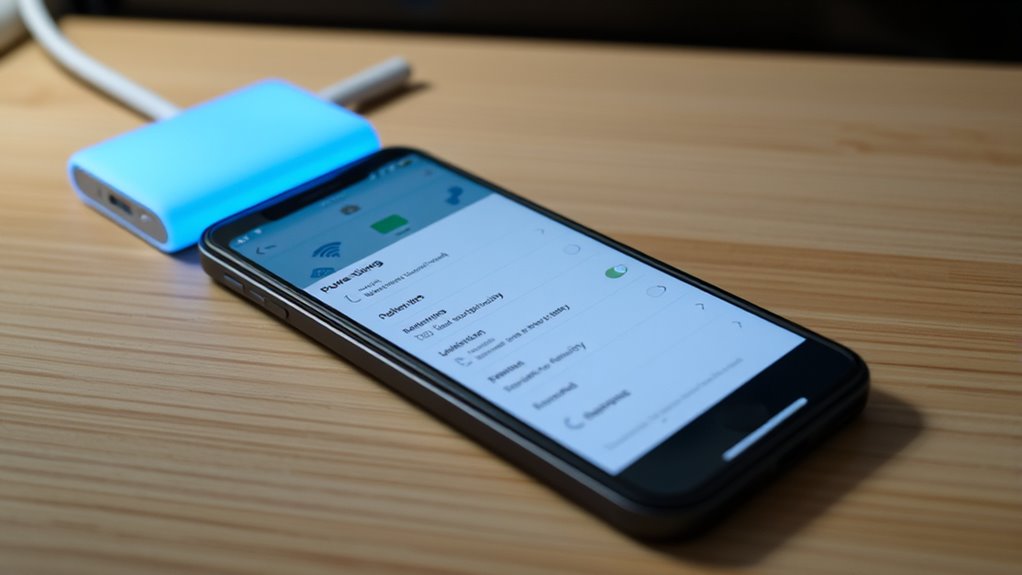
Activating Power Saving Mode on your mobile hotspot can substantially extend its battery life, especially during long usage sessions. To enable it, go to Settings, then Connections, followed by Mobile Hotspot and Tethering. Select your network name, tap Advanced, and find Power Saving Mode. Once activated, your device reduces power consumption by analyzing traffic and limiting background activity. This feature is particularly useful when you need your device to operate efficiently over extended periods without frequent charging and can help prevent unexpected shutdowns. Energy-efficient settings also contribute to better overall battery management. Keep in mind, though, that it may slow down demanding activities such as gaming or streaming. Implementing a high refresh rate display setting can also improve your overall experience when using the hotspot. Additionally, managing background app activity can further optimize energy usage. Using Power Saving Mode ensures your hotspot lasts longer on a single charge, making it perfect for extended outings or when charging options are limited. Adjusting device settings to optimize power consumption can further enhance battery longevity. For even better results, consider using battery optimization features available on your device to fine-tune energy savings.
Manage Connectivity Settings to Minimize Power Drain
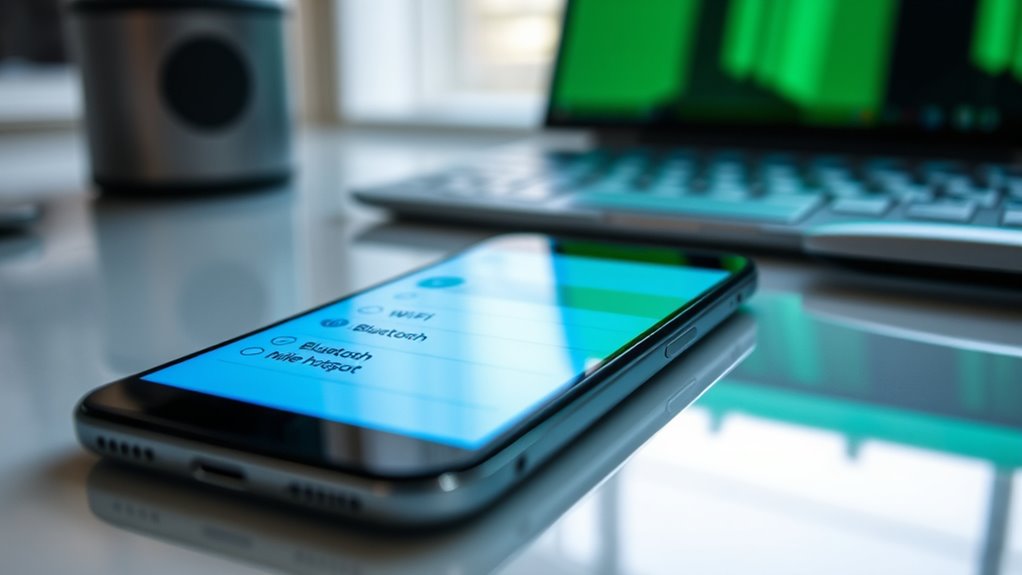
To minimize power drain from your mobile hotspot, managing connectivity settings is essential. Turn off Wi-Fi when you’re not actively sharing your connection to prevent unnecessary scanning that wastes battery. Disable Bluetooth unless you need it for specific devices, as it constantly searches for connections. Limit GPS or location services to only essential apps, or switch to offline maps to reduce location tracking energy use. If you don’t need constant connectivity, enable Airplane Mode to disable all wireless functions temporarily. Using an eSIM can also help by providing efficient data usage without draining your battery through frequent network searches. Regularly reviewing and adjusting these settings guarantees your phone conserves power while keeping your hotspot ready when you need it most. Additionally, monitoring network activity can help identify apps or processes that unnecessarily consume power, allowing for targeted adjustments. Being aware of power management features on your device can further optimize battery life during hotspot use. Incorporating adaptive brightness settings can also reduce screen energy consumption when managing your device in hotspot mode. Furthermore, enabling background activity restrictions can limit apps from running in the background and draining battery life. Understanding battery optimization techniques can further extend your device’s uptime while using hotspots.
Optimize App Usage and Background Activity
To maximize your hotspot’s battery life, you should limit background app refresh and manage notifications carefully. Closing unnecessary apps frees up resources and prevents them from draining power in the background. Keeping only essential notifications active reduces screen wake-ups and conserves energy. Additionally, enabling power-saving modes can further extend your device’s battery life during prolonged usage. For optimal performance, consider device placement and minimizing ambient light interference to reduce strain on your device’s processor and battery. Being aware of trusted local services can also help you avoid unnecessary network activity that may drain your hotspot’s battery. Understanding clean-home systems and how they influence network usage can help you optimize your connection and extend your device’s longevity. A well‑sourced name coverage ensures you rely on accurate information about these settings and features.
Limit Background Refresh
Limiting background refresh helps conserve battery life by preventing apps from running unnecessary updates when you’re not actively using them. When you restrict background activity, your phone avoids draining power on apps that update or sync without your input. This approach aligns with optimizing app usage and background activity. Additionally, managing background processes helps ensure your device’s resources are focused on what matters most, reducing unnecessary data use and screen wake-ups. Regularly reviewing and adjusting these settings can further enhance your device’s energy efficiency and overall performance, especially when combined with privacy considerations that help you control how your data is handled.
Manage Notifications Effectively
Ever wonder how managing notifications can boost your hotspot’s battery life? When you receive constant alerts, your screen wakes up frequently, draining power. By limiting notifications to only essential alerts, you reduce screen-on time and prevent unnecessary background activity. Turn off notifications for apps that aren’t critical, and customize alert settings to minimize interruptions. This way, your phone stays in low-power mode longer, conserving energy for your hotspot. Additionally, disabling non-essential app refreshes prevents apps from waking up in the background, further saving battery. Keep an eye on notification settings in your device’s settings menu, and adjust them regularly to fit your usage. Managing notifications effectively helps you extend your hotspot’s battery life without sacrificing important updates. Being aware of background activity can also help you identify which apps are consuming unnecessary power and disable or restrict their operation.
Close Unnecessary Apps
Closing unnecessary apps is one of the most effective ways to conserve your hotspot’s battery life. When you keep apps running in the background, they consume resources and drain power, even when you’re not actively using them. To optimize your device, regularly close apps you no longer need, especially those that refresh in the background or use data. This helps prevent battery drain caused by unnecessary background activity. Disabling background app refresh and limiting notifications can also prevent apps from waking your device unnecessarily. Clearing out digital clutter and closing apps not only saves battery but also improves overall device performance. Being aware of power management settings can further help extend your device’s battery life. Make it a habit to review and close apps periodically, especially when you’re relying on your hotspot for extended periods.
Fine-Tune Network and Signal Preferences

Fine-tuning your network and signal preferences can substantially boost hotspot performance and battery life. Start by switching to the 5G band if your device supports it; this offers faster, more efficient connections. Keep connected devices within five feet of your phone for a stronger signal and better speeds. Turn off the general battery-saving mode, as it can throttle hotspot performance, and avoid data-saving mode to prevent speed reductions. Regularly check your data cap to avoid throttling that hampers performance. Position your phone in an open, elevated spot to improve signal strength. Disabling unnecessary wireless features like Wi-Fi scanning in poor coverage areas reduces battery drain. Additionally, understanding your device’s wireless capabilities can help you optimize settings further. Being aware of your signal strength and coverage areas allows you to make smarter adjustments for a more reliable connection. These adjustments confirm your hotspot remains fast and efficient without draining your device unnecessarily.
Perform Regular Device Maintenance for Peak Performance

Regular device maintenance is essential to keep your mobile hotspot running at peak performance. By routinely checking and updating your device, you prevent slowdowns and battery drain. Here are three key steps:
- Restart your phone regularly to clear temporary files and refresh system resources, ensuring smoother hotspot operation.
- Keep your software updated to benefit from the latest battery management and security improvements.
- Clear cache and close unnecessary apps to reduce background activity that can slow down your device and drain power.
Performing these simple tasks helps maintain ideal speed and battery life, making sure your hotspot remains reliable when you need it most. Staying proactive keeps your connection steady and your device healthy.
Use Hotspot Features Wisely to Conserve Energy

To conserve energy when using your mobile hotspot, it’s important to activate and configure features thoughtfully. Enable power saving mode to reduce unnecessary battery drain, especially during light tasks like browsing. Limit background activities by disabling auto-refresh and reducing notifications. When possible, turn off Wi-Fi, Bluetooth, and GPS when they’re not needed—these consume power even when idle. Position your connected devices close to your phone to ensure a strong signal, reducing power used for transmission. Regularly monitor your device’s battery health to maintain optimal efficiency and effective power management. Use the table below to see key strategies:
| Feature | Tip |
|---|---|
| Power Saving Mode | Turn it on for minimal energy use |
| Limit Background Apps | Disable non-essential app refreshes |
| Disable Bluetooth & GPS | Only enable when necessary |
| Position Devices Near | Keep connected devices close for efficiency |
Tips for Connecting Devices Efficiently

To connect devices efficiently, start by placing them close to your hotspot to guarantee a strong signal. Keep the connected devices within a few feet to prevent connection issues and reduce power drain. Adjust your hotspot settings to select the best frequency band for ideal performance.
Device Placement Tips
Position your connected devices within 5 feet of your mobile hotspot to guarantee a strong, stable signal. This minimizes signal loss and keeps your connection fast and reliable. Proper placement reduces the need for your phone to boost power or reroute signals, saving battery. To optimize device placement, consider these tips:
- Keep devices close and in the same room to ensure minimal signal interference.
- Avoid metal objects or thick walls that block Wi-Fi signals.
- Elevate devices slightly off surfaces to improve reception and reduce interference from nearby electronics.
Optimal Signal Strength Strategies
Ensuring a strong signal when connecting devices to your mobile hotspot requires strategic placement and management. Keep your phone in a central location, elevated if possible, to maximize coverage. Position connected devices within five feet of your hotspot to reduce signal loss and improve speed. Avoid obstructions like walls, metal objects, or thick furniture that weaken the connection. Use the 5G band if your device supports it, as it offers faster and more reliable speeds. Disable unused wireless features like Bluetooth or Wi-Fi scanning to prevent interference. Regularly restart your phone and connected devices to refresh the connection. Keep firmware updated for ideal performance. Lastly, monitor signal strength through your device’s settings and adjust placement accordingly for consistent, efficient connectivity.
Frequently Asked Questions
How Does Enabling Power Saving Mode Affect Hotspot Speed?
Enabling power saving mode slows down your hotspot speed because it limits background processes and reduces overall device performance. When activated, your phone conserves battery by reducing data transfer rates and lowering processing power, which can cause slower connection speeds for connected devices. While it extends battery life, it may lead to less ideal hotspot performance, especially during activities like streaming or gaming.
What Are the Best Settings to Extend Hotspot Battery Life?
Imagine your phone as a diligent traveler on a long journey. To extend your hotspot’s battery life, turn on power saving mode, which acts like a gentle breeze slowing down the engine. Turn off Wi-Fi and Bluetooth when not needed, limit background apps, and lower screen brightness. Keep devices close for a strong signal, and avoid unnecessary data use. These steps help your phone conserve energy, ensuring your hotspot stays connected longer.
Can Turning off Bluetooth and GPS Improve Hotspot Efficiency?
Turning off Bluetooth and GPS can considerably improve your hotspot efficiency. When you disable Bluetooth, your phone stops wasting power scanning for nearby devices, and turning off GPS prevents unnecessary location updates that drain the battery. Both actions reduce background activity, which conserves energy and enhances your hotspot’s performance. So, make sure to turn these off when you don’t need them to extend your phone’s battery life and keep your hotspot running smoothly.
How Often Should I Restart My Device to Maintain Hotspot Performance?
Restart your device like hitting a reset button on a busy workspace—it’s a quick refresh. You should restart your phone weekly or when you notice a slowdown in hotspot performance. Regular restarts clear cache, close background apps, and refresh connections, keeping your hotspot running smoothly. Don’t wait for issues; proactive resets help maintain peak speed and battery life, ensuring a reliable internet connection whenever you need it.
Is It Better to Use 5G or 4G for Hotspot Connectivity?
Using 5G for hotspot connectivity is generally better if you need faster speeds and lower latency, especially when streaming or gaming. However, it consumes more battery, so if you’re trying to save power or have a weak signal, 4G might be a smarter choice. You should switch to 5G when you need high performance, but revert to 4G for extended use or when conserving battery life.
Conclusion
By tweaking your settings and managing your device wisely, you can keep your hotspot running smoothly without draining your battery like a sinking ship. Think of your phone as a well-tuned engine — with a few simple adjustments, you’ll cruise through your day without hitting dead ends. So, stay mindful of your power habits, and your device will serve you faithfully, humming along like a well-oiled machine. Keep these tips in mind and enjoy seamless connectivity without the crash landing.
NFL season / tailgating Picks
team gear
As an affiliate, we earn on qualifying purchases.